William Payre, Jaume Perelló-March, Giedre Sabaliauskaite, Hesamaldin Jadidbonab, Siraj Shaikh, Stewart Birrell (2022). How system failures and ransomwares affect drivers' trust and attitudes in an automated car? A simulator study. In: Human Interaction & Emerging Technologies (IHIET 2022): Artificial Intelligence & Future Applications. AHFE Open Access, vol. 68, pp. 453–460. https://doi.org/10.54941/ahfe1002764
Conditionally automated driving systems (SAE level 3) are able to process the lateral and longitudinal control of a vehicle and warn the driver of the status of the system and ongoing operations. The driver must monitor the system and resume control if prompted to. Previous research in the realm of automated driving explored how in-vehicle information should be presented to optimise drivers’ trust in the system (Wintersberger et al, 2020). For instance, conveying the status and actions of the system contributes to transparency and support adequate trust in the system (Carsten & Martens, 2019). Yet, little is known on the consequences of failing to provide reliable information on the vehicle status and operations on trust. This is particularly salient in the case of silent failures, whereby the system fails to notify the driver of its limit and incapacity to operate reliably (Louw et al., 2019). This lack of empirical evidence is surprising as automation failures are likely to affect drivers’ trust in the system (Payre et al., 2015; 2017), therefore leading to disuse (e.g. no use), misuse (e.g. unsafe operation as reported by the National Transportation Safety Board Tesla crash report, 2017) or abuse (e.g. take advantage of the limits) of such system (Parasuraman, 1997). Past work has stressed that the subjective level of trust of users should be aligned with the capabilities of the automation to mitigate the undesirable effect of overtrust (i.e. using the automated system despite its unreliability) and distrust (i.e. not using the system although it is reliable; Khastgir et al., 2018). This process has been identified as trust calibration (Lee & See, 2004). Even though a wealth of studies has shown what and how information should be presented to support trust calibration, little research attention has been devoted to understand if, how and when failures affect individuals’ trust in the automated system and subsequent impact on driving performance. Addressing this research gap, the present study combines a cyber security and human factors approach to investigate the effect of the type of failure (silent vs. explicit) and its timing (early vs. late during the journey) on individuals’ trust, attitudes and safety. From the cyber security perspective, a threat analysis of in-vehicle digital displays was conducted. This led to a series of use cases being developed when possible malfunction or intrusion (e.g. hacking) would occur. These use cases were developed in a driver-in-the-loop simulator where participants’ responses (N = 37) with respect to trust in the automation, driving performance, and safety were collected. Results from this experiment are discussed in the context of road safety, attitudes and driver behaviour (e.g. manual handover, acceptance and trust).
With the constant implementation of software solutions and digital interfaces in modern vehicles, cars have become increasingly connected and automa- ted, making road safety and cybersecurity intertwined (Trope et al., 2018). Cybersecurity applied to automotive seeks to protect cars from malevolent electronic attacks. Connected and automated vehicles (CAVs) are expected to provide drivers with more comfort and safety, provided that automated driving systems perform better than human drivers and are not vulnerable to security breaches.
While some qualitative research has investigated cybersecurity knowledge and associated risks in the automotive industry (Morris et al., 2020), little attention has been devoted to drivers’ responses to cyber-attacks while using
an automated car. The main benefits of a qualitative approach are (a) pro- viding insight into drivers’ experience when exposed to a cyber-attack in a CAV; (b) generating an understanding of the effect of a security breach on drivers’ perception of CAV, and (c) the capacity to focus on subjective aspe- cts of trust in automated driving related to cybersecurity. The present study sought to bridge a gap in the human factors-cybersecurity qualitative know- ledge base. To fulfil this objective, participants were administered closed and open-ended questions after experiencing a cyber-attack, i.e. ransomware, in an automated driving simulator. The textual data collected were analysed using inductive content analysis, a method deemed suitable when the topic investigated has not been yet examined (Elo & Kyngäs, 2008).
The epistemological stance adopted for this study is pragmatism, which means researchers are knowledgeable on the subject investigated. Hence, they are not completely objective when analysing and interpreting the data, which will influence the findings (Bryant, 2009). In this instance, all the authors have a background in psychology or cybersecurity, including some experience in automotive experience.
This study aimed to perform an inductive content analysis on responses to open-ended questions that followed a cyber-attack during a driving simu- lator study. No a priori hypotheses were formulated because this study was inductive.
METHOD
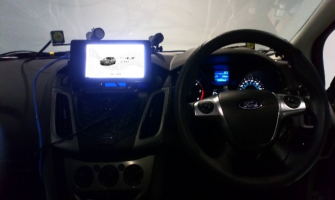
Material, Experimental Procedure and Measures Volunteer participants comprised of a convenience sample of 38 adults with 15 females and 22 males. On average, they were 36.2 years old (SD = 12.5) with 15.7 years of driving experience (SD = 13.1), and reported a yearly mile- age of 7737 (SD = 5891). One participant dropped out from the study due to simulator sickness (N = 37). The high fidelity driving simulator consisted of a full-body vehicle with three degrees of freedom. A 7” touchscreen display attached to the centre console allowed drivers to toggle the automated dri- ving mode on or off, see the status of the vehicle (i.e., manual vs. automated mode) and create a user profile including forename, surname, email and pas- sword (Fig. 1). These details would later be used to simulate a ransomware attack but were neither stored nor recorded. Participants provided informed consent and the study complied with the Coventry University Research Ethics Committee code and the General Data Protection Regulation.
Participants started with a 5 min familiarisation practice involving driving manually on suburban roads and activating automated driving after merging onto a motorway. Then, they completed three counter-balanced 12 min tri- als on a motorway for 15 miles, where the automated system would operate either seamlessly (i.e., no failure) or unreliably (i.e., turn signals not activa- ting during an overtaking manoeuvre for the silent failure vs. ransomware attack for the explicit failure). After activating automated driving, parti- cipants undertook a word search task that lasted for the whole trial. The ransomware popped on the in-vehicle display while the car drove in automa- ted mode (inspired by the WannaCry ransomware and Wolf et al., Lambert,
How System Failures and Ransomwares Affect Drivers’ 455
Figure 1: (left) Driver’s view of the instrument cluster and HMI used for activating the automation (right) Ransomware displayed on the in-vehicle screen.
2017; see Fig. 1). Drivers were free to resume manual control and reacti- vate the automation at any time. The study lasted 2 hours and participants received a £20 voucher as a compensation for their time.
Drivers answered the following open-ended question after the silent and the explicit failure scenarios to understand their perception of the incident: Did you notice anything abnormal with the conditionally automated vehi- cle? For the sake of conciseness, this paper will only cover answers from the explicit failure scenario.
Analytical Strategy The inductive content analysis serves to produce knowledge and understand the meaning of qualitative data (Hsieh & Shannon, 2005; Schreier, 2012). Kyngäs (2020) defined it as an open method. The first step is to set a unit of analysis that will allow identifying open codes in the text corpus. Afterwards, the similarities and differences of these open codes are assessed and then clas- sified in sub-themes accordingly. The sub-themes are then categorised into first-order themes, which are further organised into broader, second-order themes. These second-order themes can be classified into wider categories i.e. general dimensions. This last step of the data classification depends on the notions elicited by the respondents and the nature of the data. Every dimensions and themes identified are labelled with content-characteristic words.
The inductive content analysis started with two researchers getting famili- arised with the data. This step is crucial to capture a broader understanding of the textual data (Gale et al., 2013). Then, the two researchers who coded the drivers’ responses returned to the original transcripts a few times during the analysis. The aim was to make sure the data they analysed and the results were connected. Following from that iterative process, the researchers debri- efed each other to consolidate the trustworthiness of the results. The driving simulation context of the study was taken into consideration to avoid misin- terpretation of the data. Trial coding helped testing the consistency (i.e., categories do not overlap) and validity (i.e., the extent to which the cate- gories depict the material) of the coding frame created. After amending the coding frame a few times, its final version was utilised for interpretation and analysis.
RESULTS
Overall, 78 transcripts were extracted. Similar transcripts were merged to form 62 raw data themes. Table 1 presents the raw data, first-order and second-order themes with the general dimensions. For the sake of brevity, only one example illustrates each first-order theme. Four transcripts were excluded from the analysis as they were unrelated to the ransomware attack. Data saturation was completed after processing about 80% of the transcripts, yet all the transcripts were analysed.
First-Order Themes The raw data themes were analysed by two researchers who then extracted 19 first-order themes related to the in-vehicle display (e.g., spam, ransomware and perception), vehicular safety (e.g., attack mitigation, control and perfor- mance) and drivers’ personal experience of the situation (e.g., responsibility, realism and alertness). Results are presented in Table 1.
Second-Order Themes The first-order themes were merged into eight second-order themes accor- ding to their conceptual resemblance. These second-order themes stemmed from the following logic: drivers saw an unusual message on the in-vehicle display that they evaluated in terms of the actions to be undertaken, and then reflected on their cognitive and affective state. The first set of second-order themes elicited by drivers was 1) malfunction 2) security and 3) comprehen- sion. Malfunction encompassed errors (e.g. ‘glitch’) and defects (e.g. failure to block a spam: ‘A spam popped up’) from the Human-Machine Interface (HMI). Security-related to the cyber protection of the HMI and its exposure to external electronic threats, including the consequences on drivers’ personal data (e.g. ‘I had been hacked’) and finances (e.g. ‘bitcoin warning payment’). Comprehension described how long it took drivers to perceive the ransomw- are (e.g. ‘it took me some time’) and whether they understood which of the HMI or the automated driving system was affected.
Drivers also evoked the actions they performed and strategies they applied to mitigate the ransomware attack. These second-order themes were labelled 1) behaviour and 2) safety. Behaviour included the decisions made by drivers to lower the impact of the cyber-attack (e.g. ‘[I didn’t] tap on the link’) on driving (e.g. ‘I needed to take over control’). With respect to safety, partici- pants commented that they were concerned about whether resuming control was possible (e.g. ‘I wasn’t sure’) and the driving performance (e.g. ‘ransom does not affect driving performance’).
The third set of second-order themes emphasised drivers’ perception of their affective and cognitive state, along with the experimental environment. These three themes were labelled 1) attitudes and feelings, 2) experimental environment and 3) situation awareness. Comments participants made about their attitudes and feelings concerned how responsible they felt (e.g. ‘It’s the carmaker’s problem’), their level of anxiety (e.g. ‘it made me freak out’), trust in the vehicle-computer system (e.g. ‘far less confident with the technology’)
How System Failures and Ransomwares Affect Drivers’ 457
Equation reproduced from the original PDF.
Human-Machine
Interface (HMI)
Driver’s insights
Malfunction
Comprehension
Safety
Attitudes and feelings
Table 1. Results of the inductive content analysis.
Table available in the original PDF paper.
Raw data themes examples (k = 62) 1st order themes (k = 19) 2nd order themes (k = 8) General dimensions
The screen showed that I had been hacked Malware Security Bitcoin warning payment popped up Ransomware
Took me some time to notice the ransomware because of the
word search puzzle Perception
Is it the tablet or the automated driving system that is hacked? System status
You only get hacked when you tap on the link so I didn’t Attack mitigation Behaviour Driving task I needed to take over control of the car Decision making
I wasn’t sure if the system could conflict with me taking back
control Control
Ransom does not affect driving performance Performance Driving task
It is the carmaker’s problem, not mine Responsibility
It made me freak out Stress
Far less confident with the technology Trust
Privacy is less important than vehicle control Exposure
I was more alert Alertness Situation awareness Paid more attention to the surroundings Attentional focus
Hacking didn’t feel real Realism Experimental
environment It was a simulation Experimental setting
and how driving safety was more important than personal data in this situ- ation. Regarding situation awareness, they elicited that they were more alert and vigilant after the ransomware attack. Finally, some drivers commented on the experimental environment mentioning that the ransomware was bogus and that they were conscious of taking part in a study.
General Dimensions The eight second-order themes were associated according to their similarities within the same topic. As a result, the three following general dimensions emerged from the verbatim collected during the study: 1) HMI, 2) Driving task and 3) Driver’s insights.
With respect to HMI, drivers mentioned what they saw on the in-vehicle screen and how they interpreted it: a cyber-attack, a failure or a pop-up spam. Participants mentioned that they were unsure as to which of the infotainment or driving system was affected by the ransomware. It seemed to bring confu- sion to the situation and being engaged in a non-driving related task did not help drivers understand quickly what was going on. This relates to system transparency where users fail to understand the status of a system and its predictability (Alonso et al., 2018). Malfunction, security and comprehension are the components of the HMI dimension.
In terms of driving task, the ransomware led participants to ensure the automated driving system was operating satisfactorily. They also raised concerns on whether they could resume control, when they did not already. Some drivers also explained how they mitigated the propagation and male- volent effect of the ransomware by not tapping any link or button presented on the HMI (Fig. 1). The driving task dimension is composed of the second- order themes behaviour and safety. It focuses on the direct operations of the car’s controllers and interfaces to ensure driving safety.
With reference to driver’s insights, participants commented as to how the ransomware and the experimental settings affected their perception of the cyber-attack. This was illustrated in the attitudes and feelings theme. For instance, some individuals did not feel accountable for the ransomware and ignored it, despite the cyber-attack potentially affecting automated driving performance operation or personal data. This result is surprising as individu- als are responsible for the driving but seem to be complacent when exposed to a cyber-attack. On the contrary, it was reported that this experience was stressful, resulting in a decrease in trust in the technology. In addition, some participants made real-time decisions to evaluate if the ransomware or the vehicle control was the most critical and urgent to deal with. The priority some participants gave to the ransomware over the control of the vehicle was insightful because it stressed the momentary shift of attention away from the driving task to concentrate on the HMI. This short period of distraction, where drivers sought seek to understand and assess the situation, may hinder road safety. However, after that assessment, some drivers declared they were more attentive to the road environment, which was reflected in the situation awareness theme. Finally, several participants indicated that the ransomware did not affect them a lot because of the experimental environment, the third
How System Failures and Ransomwares Affect Drivers’ 459
and last component of the driver’s insights dimensions. This is a limitation of the present research as using a driving simulator may have decreased the perception of risk coming from the cyber-attack. As a result, some partici- pants may not have felt threatened or concerned by the ransomware, despite sharing personal information at the beginning of the study.
CONCLUSION
The findings from the inductive content analysis suggest that individuals’ pri- ncipal concerns after experiencing a cyber-attack while in automated driving mode are:
1. The perceived type of the message displayed on the HMI: spam, cyber- attack or display failure, 2. Estimating the effect of the ransomware on the automated vehicle’s performance and their capability to resume manual driving control, 3. Drivers’ mostly negative attitudes and feelings towards the cyber-attack, even though some of them were not much concerned.
Results also shed light on the concepts affecting drivers after a ransomware appears on their in-vehicle display: trust in automation, situation awareness and driver behaviour. Responses proved diverse and went beyond the expe- cted theme of trust that had been explored in previous quantitative research (Payre et al., 2022). Manufacturers and designers would benefit from these findings to help drivers focus on what is crucial when a vehicle is hacked: veh- icle control and road safety. The aim is to avoid driver distraction and support road safety. For instance, an acoustic and visual warning system independent from the hacked HMI could be used to confirm the status of the vehicle and the automation to the drivers, call for assistance after the ongoing trip is over and avoid using the automated driving system until further notice.
ACKNOWLEDGMENT
This research was supported by the UKRI Trustworthy Autonomous Systems Hub (EP/V00784X/1).
REFERENCES
Alonso, V. and De La Puente, P., 2018. System transparency in shared autonomy: A mini review. Frontiers in Neurorobotics, 12, p. 83. Bryant, A. (2009). Grounded Theory and Pragmatism: The Curious Case of Anselm
Strauss. In Forum Qualitative Sozialforschung/Forum: Qualitative Social Resea- rch 10 (3), pp. 1–38. Elo, S. and Kyngäs, H. (2008). The qualitative content analysis process. Journal of advanced nursing, 62(1), pp. 107–115. Gale, N. K., Heath, G., Cameron, E., Rashid, S., and Redwood, S. (2013). Using the
framework method for the analysis of qualitative data in multi-disciplinary health research. BMC Medical Research Methodology, 13(1), pp. 1–8. Hsieh, H. F. and S. E. Shannon. (2005). Three Approaches to Qualitative Content Analysis.Qualitative Health Research 15 (9), pp. 1277–1288
Kyngäs, H. (2020). Inductive content analysis. In The application of content analysis in nursing science research, pp. 13–21. Springer, Cham. Morris, D., Madzudzo, G. and Garcia-Perez, A. (2020). Cybersecurity threats in the
auto industry: Tensions in the knowledge environment. Technological Forecasting and Social Change, 157, p. 120102. Payre, W., Perelló-March, J., Sabaliauskaite, G., Jadidbonab, H., Shaikh, S., Nguyen, H. and Birrell, S. (2022). Understanding Drivers’ Trust After Software Malfuncti- ons and Cyber Intrusions of Digital Displays in Automated Cars. International Conference on Applied Human Factors and Ergonomics. Springer, Cham. Schreier, M. (2012). Qualitative Content Analysis in Practice. Thousand Oaks, CA:
Sage. Trope, R.L. and Smedinghoff, T.J. (2018). Why smart car safety depends on cybersecurity. Scitech Lawyer, 14(4), pp. 8–13. Wolf, M. and Lambert, R. (2017). Hacking trucks-cybersecurity risks and effective
cybersecurity protection for heavy duty vehicles. Automotive-Safety & Security 2017-Sicherheit und Zuverlässigkeit für automobile Informationstechnik.
Read this individual research paper free through the original publisher, or explore the full digital proceedings book.
ISBN 978-1-958651-44-5
Explore this ISBN in the AHFE Bookstore ↗Listed in the July 2026 bookstore catalogue; search by ISBN to confirm current availability · Digital book purchase optional