Markus Warg (2022). Fostering Actor Engagement Through Human Centered Service Design (HCSD): Lessons Learned from the Cross Domain Examples of Service Dominant Architecture. In: The Human Side of Service Engineering. AHFE Open Access, vol. 62, pp. 367–375. https://doi.org/10.54941/ahfe1002578
Publisher statistics will load when you open Metrics.
AHFE OPEN ACCESS OPEN ACCESS CONFERENCE PROCEEDINGS PAPER
Fostering Actor Engagement Through Human Centered Service Design (HCSD): Lessons Learned from the Cross Domain Examples of Service Dominant Architecture
The research question of this work is "how to foster actor engagement with the help of Human Centered Service Design (HCSD)". Based on the foundations of Service-Dominant Logic (Vargo and Lusch 2018), Service Science (Spohrer, Kieliszewski et al. 2019) and Design Science (Papanek and Fuller 1972, Peffers, Tuunanen et al. 2008), in a first step the building blocks of HCSD are elaborated. In a second step the relevance of the building blocks is analyzed in the context of actor engagement. The key findings are used to develop a set of explicitly applicable solution pattern for promoting actor engagement (Peffers, Tuunanen et al. 2008). Finally, the relevance of the developed solution pattern is demonstrated using cross domain examples of Service Dominant Architecture (SDA).
MOTIVATION The research question of this work is “how to foster actor engagement with the help of Human Centered Service Design (HCSD)”. Humans become actors by engaging in situations linked to value propositions as potential outcomes. They consider the costs and benefits of various behaviors and take actions according to their personal disposition their preferences and the potential outcome (Rudd, 2004; Ostrom, 2005; Ostrom et al., 1994). This work examines how Human Centered Service Design can be used to support and facilitate the engagement of human actors in service exchange. Based on the domain theories the building blocks of Human Centered Service Design are elaborated and analyzed in the context of actor engagement. The fin- dings are used to develop generic solution pattern. Finally the relevance of the solution pattern is demonstrated on an cross domain examples of Service Dominant Architecture (SDA).
design process as an “act of creating an explicitly applicable solution to a pro- blem”(Peffers et al., 2019). To gain a better understanding of the relevance of the solution (pattern) created we complement the DSRM with cross domain examples (Yin, 2018; Bass, nd). Referring to DSRM (Peffers et al., 2019) our research proceeding is divided into six activities which are presented in the following.
Activity 1: Problem Identification and Motivation: How can organizations foster actor engagement with the help of Human Centered Service Design?
Activity 2: Define Objectives of a Solution: Our goal is to define the core elements of actor engagement as building blocks of a generic solution pattern.
Activity 3: Design and Development: According to the understanding of Design as “the conscious and intuitive effort to impose meaningful order” (Papanek and Fuller, 1972) in this step of the DSRM, the building blocks are put into a purposeful structure as design pattern (Peffers et al., 2019).
Activity 4: Demonstration: The demonstration of the solution is based on cross domain examples of Service Dominant Architecture (SDA). For this purpose, different examples for the application odf SDA are analyzed to demonstrate the relevance of the building blocks for actor engagement.
Activity 5 Evaluation: The evaluation of the cross domain examples exa- mines to what extent HCSD is suitable for fostering actor engagement and achieving the objectives of solution.
Activity 6: Communication: Our work results will be disseminated in the relevant scientific and practical community.
DOMAIN THEORIES Based on a research of the domain theories and concepts of Service-Dominant Logic, Service Science and Design Science, the core building blocks of HCSD (Wieringa, 2014; Imenda, 2014) and Actor Engagement (Storbacka et al., 2016; Blasco-Arcas et al., 2020) are elaborated. In a second step, solution patterns for the fostering of actor engagement are designed from these.
Service-Dominant Logic (S-D Logic) is a meta-theoretical framework for explaining the process and narrative of value creation through service exchange among multiple resource-integrating actors forming institutionally coordinated service ecosystems (Vargo and Lusch, 2018; 2004). Service Systems and Service-Dominant Logic are the key constructs of Service Sci- ence (Maglio and Spohrer, 2008; Spohrer and Maglio, 2010). The core principles of Service Science center on how value is created among enti- ties, how interaction depends on access to resources and capabilities, and on how value-creation depends on the context of mutually agreed upon value propositions (intention) (Maglio and Spohrer, 2013).
Both from the perspective of S-D Logic as well as from the perspective of Service Science human actors engage for the creation of value understood as positive valanced change in well-being of others, themselves or a particu- lar system. Incentivated by value propositions - as potential value - humans engage in an interactive process of resource integration and service exchange within polycentric service (eco) systems. Service as the application of resou- rces for the benefit of another actor or oneself is the fundamental basis of
Fostering Actor Engagement Through Human Centered Service Design (HCSD) 369
Table 1. Building blocks of human centered service design.
Table available in the original PDF paper.
HCSD Human Centered Service Design Ref.
human (actor)
(Vargo and Lusch, 2018; Löbler, 2013; Danatzis et al., 2021)
–humans as carrier of operand and/or operant resources; – as actors humans are capable of acting on potential resources to cooperate by cocreating value, either positively or negatively valanced human centered (value pro- position)
(Spohrer et al., 2019; 2008; Warg and Deetjen, nd; Wieland et al., 2012)
– humans as socio-economic actors who connect through value propositions within “complex Service Systems” and perform actions aimed at reaching desired outcomes – as approach that intents to co-create positively valued changes in human well-being by shaping service exchange service (exchange)
(Vargo and Lusch, 2018; Maglio et al., 2015)
– as the application of resources for the benefit of others or oneself – service exchange as a reformulation of the foundational unit of exchange – shifting from an emphasis on the exchange of goods-for-money to service-for-service – in which service is broadly defined as applied skills and knowledge
(Papanek and Fuller, 1972; Peffers et al., 2008)
design – as act of creating an explicitly applicable solution to an problem; – as the conscious and intuitive effort to impose meaningful order
exchange and thus of cooperation and capability-sharing (Vargo and Lusch, 2018; Storbacka et al., 2016; Maglio and Spohrer, 2008; Ostrom, 2010). Value is always uniquely and phenomenologically determined by the human beneficiary. Accordingly, the respective benefit depends on the indi- vidual context of the actor; that is, on his situation, position and disposition (Vargo and Lusch, 2018; 2004; Coleman, 1990; Reckwitz, 2002; Brodie et al., 2019). Actors can in particular positions – as placeholders for authorized sets of action - take actions. Action situations are the social space where par- ticipants with diverse preferences interact, exchange goods and services, solve problems or dominate one another (Ostrom, 2005; Ostrom et al., 1994).
From a service perspective Design Science is understood as explorative approach to creating novel forms of value co-creation (Vink et al., 2019). In order to be human centered service design the creative act and its results must serve human needs (Goodwin, 2011; Warg, nd). In this context, design contributes by providing meaningful order, structures, and patterns that are constitutive because they are both medium and outcome of value co-creation (Papanek and Fuller, 1972; Giddens, 1984).
BUILDING BLOCKS OF HCSD, ACTOR ENGAGEMENT AND DERIVED SOLUTION PATTERN This knowledge and understanding of service and service design leads to the following definition for HCSD: Human centered service design (HCSD) seeks
370 Warg
Table 2. Building blocks of actor engagement.
Table available in the original PDF paper.
HCSD Actor Engagement Ref.
human (actor engagement)
(Ostrom, 2005; Ostrom et al., 1994; Storbacka et al., 2016; Blasco-Arcas et al., 2020)
– human action in recourse to individual purposes (homo economicus) to social norms (homo sociologicus) or in recourse to implicit or unconscious, collective symbolic structures (cultural theory) – human actor engagement as participating in action situations by interacting and applying resources
(Vargo and Lusch, 2018; 2016; Lusch and Nambisan, 2015)
human centered (value pro- positions)
– value is co-created by many actors always including the beneficiary – as the process through which multiple actors, often unaware of each other, jointly contribute to an humans wellbeing – as potential value, or benefit, associated with a service provision
(Vargo and Lusch, 2018; 2004)
service ((eco) systems)
– human-centered Service Systems as configurations of people, information, organizations, and technology that operate together for mutual benefit. They depend critically in sharing capabilities among distinct economic entities to increase joint value – a relatively self-contained, self-adjusting system of resource-integrating actors connected by shared institutional arrangements and mutual value creation through service exchange design – meaningful order of capabilities – assures the desirability and effectiveness of the Service System
(Vargo and Lusch, 2016; 2008; Lusch and Nambisan, 2015; Spohrer et al., 2017; Foundation, 2014)
positively valuated change in human well-being through the shaping of a mea- ningful order facilitating service exchange in actor-to-actor networks (Warg and Deetjen, nd). In the following, the properties originating from the domain theories are assigned to the building blocks in Table 1.
From the perspective of actor engagement, the building blocks of HCSD can be specified as in Table 2.
These building blocks are used for distilling a set of solution pattern for promoting Actor Engagement: Pattern for interacting (human actor engagement) institutions for interaction as application of resources connectivity and interoperability within actor-to-actor networks high degree of openness Pattern for building (co-producing) value propositions institutions for resource integration (data, AI, et. al.) enhance resource density co-production of value propositions “architecture of participation” meaningful order of capabilities
Fostering Actor Engagement Through Human Centered Service Design (HCSD) 371
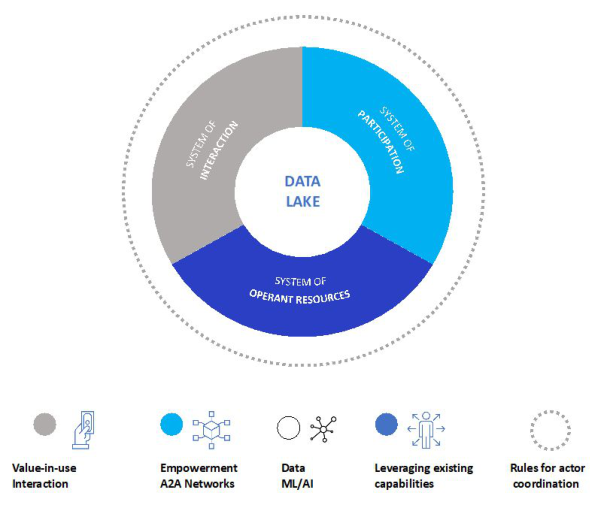
Figure 1: Service dominant architecture.
Pattern for orchestrating resources and capabilities institutions as shared rules for cooperation resource integration and service exchange value in use service systems (entities) as facilitator of mutual value creation The relevance of the solution pattern is analyzed with cross domain examples of SDA.
CROSS DOMAIN EXAMPLES OF SERVICE DOMINANT ARCHITECTURE SDA is grounded in S-D logic and Service Science and provides an organizing logic for shaping Service Platforms and Service Ecosystems. The SDA design pattern intend to build and orchestrate capabilities in a systematic way. That allows for more rapid change and adoption of new technologies, including AI, to accelerate the Digital Transformation and to turning resource density into service innovation. The purpose is to make businesses better – more agile, more sense-and-respond, better able to keep up with and drive meaningful human centered change in a fast-paced world. The architecture consists of five Service Systems (Fig. 1):
System of Interaction: enables real-time interaction between customers, providers, and other stakeholders
System of Participation: enables the integration of external capabilities, solutions, services
372 Warg
System of Operant Resources: enables the strategically relevant capabi- lities to be built, combined and included in the solution (value) creation process
System of Data (Data Lake): enables building a data-based customer understanding from interaction
System of Institutions (SDA Service Catalog): The systems are supplemen- ted by rules (institutions) that coordinate actors and enable or limit access to capabilities.
Example Stroke Prevention Ai4medicine is a personal health advice service for stroke prevention (Zol- nowski and Frey, 2020). The underlying prediction model was developed with machine learning algorithms based on clinical data of Berlin Charite from patients with an increased risk of stroke. Stroke prevention offers both a high patient benefit and opportunities to improve customer relations for partner companies. Using SDA partners such as insurance companies can pro- vide historical health data of the customer to further improve data quality. Actor engagement is fostered by institutions like interoperable health data such as Health Level 7 (HL 7) or Fast Healthcare Interoperability Resources (FHIR). This way weareables, for example, are connected and integrated. This eliminates the need for the user to manually enter the data. In this man- ner SDA facilitates actor engagement and interacting with connectivity and interoperability.
Example Claims Management A claim is an event in which customers expect immediate feedback as well as fast and uncomplicated help - a “moment of truth” because customers have taken out insurance for this situation. From “zero to one hundred”, insurance companies have to prove that they are a reliable partner in these often emotional moments.
The expansion of digital service experiences requires the leveraging of existing - and the integration of external capabilities - from chatbots and authentication processes to integrated payment service providers and direct assistance services. Technical connections of external partners and their solu- tions as well as the application of artificial intelligence must be ensured in order to benefit from the cost potentials through higher degrees of auto- mation. Processes must be scalable - as demonstrated by the pandemic and the flood disaster in Germany. “Classic” scaling, such as increasing staff, for example in call centers, is not an alternative in such extreme situations. Based on SDA platform, the insurer SIGNAL IDUNA Group has created a market-leading customer-centric service experience. All services are modu- lar and composable. This ensures that external partners can be connected quickly and easily via standardized APIs, while cloud-based solutions enable the scalability of processes - and all this has already proven its worth in the context of the severe weather catastrophe “Bernd” (SDA SE Open Industry Solutions, nd; Hans, 2021).
Fostering Actor Engagement Through Human Centered Service Design (HCSD) 373
Example Mobility The three German motor insurers HUK-Coburg, LVM and HDI insure toge- ther around 18 million vehicles, which is just under a third of all vehicles registered in Germany. They are founding a new mobility platform to offer their customers services related to driving - outside of insurance. These can include workshop services and general inspections as well as financing a car or buying a used car. With the help of artificial intelligence, the platform aims to make customers offers that are precisely tailored to their needs. The platform enables insurers to integrate and combine non-insurance services quickly and seamlessly (Fromme, 2021). App store as a role model. The services offered by the mobility platform can be created just as easily as in the app store. This is made possible by the Service Dominant Architecture and its service catalog as pattern for resource density and value propositions (Fromme, 2021a; 2021b).
EVALUATION AND FINDINGS This work demonstrates from a theoretical and practical perspective the relevance of HCSD for actor engagement. Actor engagement is suppor- ted by HCSD in the core-perspectives of participation, interaction and co-production; institutions are particularly important in this regard. Actor participation is promoted by institutions allowing openness and connectivity e.g. technical standards like APIs. Interaction is supported with institutions enabling resource integration and service exchange applying e.g. standards for health data exchange. Co-production of value propositions is driven by resource density opening up the opportunity of new combinations of capa- bilities and thus innovative value propositions as further incentive for actor engagement. Institutions are particularly important in fostering actor enga- gement by design and also to adress governance challenges in the context of service (eco) systems.
REFERENCES
Bass, J.M., Beecham, S., Noll, J. (nd) Experience of industry case studies: A comparison of multi-case and embedded case study methods. In: Proceedings of the 6th International Workshop on Conducting Empirical Studies in Industry. Blasco-Arcas, L., Alexander, M., Sörhammar, D., Jonas, J.M., Raithel, S., Chen, T.
(2020) Organizing actor Engagement: A platform perspective. Journal of Business Research 118. Brodie, R.J., Fehrer, J.A., Jaakkola, E., Conduit, J. (2019) Actor engagement in networks: Defining the conceptual domain. Journal of Service Research 22. Coleman, J.S. (1990) Foundations of social theory. Harvard university press. Danatzis, I., Karpen, I.O., Kleinaltenkamp, M. (2021) Actor Ecosystem Readiness:
Understanding the Nature and Role of Human Abilities and Motivation in a Service Ecosystem. Journal of Service Research. Foundation, N.S. (2014) Partnerships for innovation: building innovation capacity (PFI:BIC), Program Solicitation NSF-14-610. Fromme, H. (2021a) HUK, LVM und HDI gründen Plattform. Versicherungsmonitor.
374 Warg
Fromme, H. (2021b) Digitale Plattform Versicherer gründen Rundum-Betreuung für Autofahrer. Süddeutsche Zeitung Giddens, A. (1984) The constitution of society: Outline of the theory of structuration.
Univ of California Press. Goodwin, K. (2011) Designing for the digital age: How to create human-centered products and services. John Wiley & Sons. Hans, S. (2021) Der Moment of Truth. Versicherungsbetriebe. Imenda, S. (2014) Is there a conceptual difference between theoretical and conceptual
frameworks? Journal of Social Sciences 38. Löbler, H. (2013) Service-dominant networks. Journal of Service Management. Lusch, R.F., Nambisan, S. (2015) Service Innovation: A Service-Dominant Logic Perspective. Mis Quarterly 39. Maglio, P.P., Kwan, S.K., Spohrer, J. (2015) Commentary–Toward a research agenda
for human-centered service system innovation. Service Science 7. Maglio, P.P., Spohrer, J. (2008) Fundamentals of service science. Journal of the Academy of Marketing Science 36. Maglio, P.P., Spohrer, J. (2013) A service science perspective on business model
innovation. Industrial Marketing Management 42. Ostrom, E. (2005) Understanding institutional diversity. Princeton university press. Ostrom, E. (2010) Institutional analysis and development: Elements of the framework in historical perspective. Historical developments and theoretical approaches in sociology 2. Ostrom, E., Gardner, R., Walker, J., Walker, J.M., Walker, J. (1994) Rules, games,
and common-pool resources. University of Michigan Press. Papanek, V., Fuller, R.B. (1972) Design for the real world. Thames & Hudson London. Peffers, K., Tuunanen, T., Rothenberger, M.A., Chatterjee, S. (2008) A Design
Science Research Methodology for Information Systems Research. Journal of Management Information Systems 24. Reckwitz, A. (2002) Toward a theory of social practices: A development in culturalist theorizing. European journal of social theory 5. Rudd, M.A. (2004) An institutional framework for designing and monitoring
ecosystem-based fisheries management policy experiments. Ecological Economics 48. SDA SE Open Industry Solutions, (nd), https://sda.se/loesungen/claims-management/ Spohrer, J., Siddike, M.A.K., Kohda, Y. (2017) Rebuilding evolution: a service science perspective. Spohrer, J., Vargo, S.L., Caswell, N., Maglio, P.P. (2008) The service system is the
basic abstraction of service science. In: Proceedings of the 41st Annual Hawaii International Conference on System Sciences (HICSS 2008). Spohrer, J.C., Kieliszewski, C.A., Lyons, K., Maglio, P.P., Sawatani, Y., Patrício, L.
(2019) Handbook of service science. Springer. Spohrer, J.C., Maglio, P.P. (eds.) (2010) Toward a Science of Service Systems. Springer, New York, Dordrecht, Heidelberg, London. Storbacka, K., Brodie, R.J., Böhmann, T., Maglio, P.P., Nenonen, S. (2016) Actor
engagement as a microfoundation for value co-creation. Journal of Business Research 69. Vargo, S.L., Lusch, R.F. (2004) Evolving to a New Dominant Logic for Marketing.
Journal of Marketing 68. Vargo, S.L., Lusch, R.F. (2008) Service-dominant logic: continuing the evolution.
Journal of the Academy of Marketing Science 36.
Fostering Actor Engagement Through Human Centered Service Design (HCSD) 375
Vargo, S.L., Lusch, R.F. (2016) Institutions and axioms: an extension and update of service-dominant logic. Journal of the Academy of Marketing Science 44. Vargo, S.L., Lusch, R.F. (2018) The SAGE handbook of service-dominant logic. SAGE
Publications Limited. Vink, J., Edvardsson, B., Wetter-Edman, K. (2019) Reshaping mental modelsenabling innovation through service design. Journal of Service Management. Warg, M. (nd) Architecture and Its Multifaceted Roles in Enabling Value Co-creation
in the Context of Human-Centered Service Design. In: International Conference on Applied Human Factors and Ergonomics. Warg, M., Deetjen, U. (nd) Human Centered Service Design (HCSD): Why HCSD Needs a Multi-level Architectural View. In: International Conference on Applied Human Factors and Ergonomics. Wieland, H., Polese, F., Vargo, S.L., Lusch, R.F. (2012) Toward a service (eco)
systems perspective on value creation. International Journal of Service Science, Management, Engineering, and Technology (IJSSMET) 3. Wieringa, R.J. (2014) Design science methodology for information systems and software engineering. Springer Yin, R.K. (2018) Case study research and applications. Design and methods. Zolnowski, A., Frey, D. (2020) Analyzing the Role of Artificial Intelligence in the
Development of Human-Centered Service. Springer.
LISTED IN THE AHFE DIGITAL BOOKSTORE CATALOGUE
Explore the complete digital volume
The Human Side of Service Engineering
Read this individual research paper free through the original publisher, or explore the full digital proceedings book.
ISBN 978-1-958651-38-4
Explore this ISBN in the AHFE Bookstore ↗Listed in the July 2026 bookstore catalogue; search by ISBN to confirm current availability · Digital book purchase optional