Pei Yan, Wang Manman, Zhao Yating, Yihang Du (2022). Models and Measures of Arts Teacher Competency under COVID-19 Normalization. In: Training, Education, and Learning Sciences. AHFE Open Access, vol. 59, pp. 372–379. https://doi.org/10.54941/ahfe1002424
Arts teacher competency refer to the collection of professional skills and personality traits that contribute to excellent working performance in accordance to occupation requirements. The education has a huge changed from traditional face-to-face classroom to online environment when the epidemic normalization of COVID-19, and the change has a profound impact on teaching method and puts forward higher requirements for arts teacher's competency. In this paper, we adopt analytic hierarchy process (AHP) to establish an evaluation model for arts teacher competency. The model contained ethic, teaching skills, IT application and non-technical skills (NTS), which provided a theoretical basis for arts teacher selection and continuing education.
With the continuous development of internet technology, college arts tea- cher has been adaption new education forms combining traditional classroom with multimedia technology, while the sudden emergence of COVID-19 has completely changed the education forms of college arts teacher in 2020. The teaching mode changed from spontaneous exploration activities to manda- tory teaching routine, and online teaching swept the college classroom as a new form of education (Du et al.,2020). The sudden change makes it urgent for college art teachers to improve their competency to adaption the growth required under COVID-19 normalization. Competency is a set of professi- onal skills and personality traits that are essential for a certain profession, which includes ethics, teaching skills, knowledge reserve and other aspects especially for arts teacher. Competency is not only the basic ability for teach- ers to engage in educational work, but also an important aspect to cope with the changes of epidemic environment. The study of arts teacher’s compete- ncy would be application for arts discipline education improvement and arts teacher selection.
The research of competency originated in early 1950s and was first pro- posed by Dr. McClelland. The research of competency is mainly applied to industry job training, human resource management and education tea- ching system research. In terms of competency, Liu Chuanjian summarized
Models and Measures of Arts Teacher Competency Under COVID-19 Normalization 373
seven types of civil aviation pilot competency characteristics based on the literature induction method, and adopted the grounded theory proposed by Strauss and Glaser (1967) to code the interview content, and finally iden- tified six psychological competency characteristics of civil aviation pilots in crisis situations, namely, mental toughness, acumen, decisiveness, composure, self-efficacy, and self-efficacy, decisiveness, calmness, self-efficacy, strength of will, and courage to take responsibility (Liu, 2021). Han Lu et al. pro- posed “T” competency model for public hospital managers, which breaks through the two-dimensional limitations of existing competency models and presents the competency characteristics of public hospital managers in a more comprehensive and three-dimensional way (Han et al., 2022).
The research on competency in the field of education and teaching is more focused on college teachers. Ren Jingjing et al. constructed a competency evaluation model for a team of college counselors, and used hierarchical analysis and expert scoring to find that individual team members have a strong internal drive to pursue self-breakthrough and improvement, which is more helpful to improve the overall competency level of the team(Ren and Dong, 2021). Liu Yanfang et al. studied the competency of college teachers in the context of new liberal arts, defined “new liberal arts” and “teacher competency”, summarized the new requirements for the competency of col- lege teachers in the context of new liberal arts, and proposed specific ways to improve the competency of college teachers (Liu et al.,2022). Sun et al. analyzed how the Digital Competence framework for teachers from UNE- SCO, the European Union, Norway, and Spain reflects the Learner-Centered principle based on the overall competency model for the Education Informa- tization 2.0 Action Plan issued by the Ministry of Education in April 2018. Learner-Centered” principle (Sun and Li, 2022).
In summary, arts teacher competency is critical aspect for development and the overall progress of the education field. This paper attempts to construct arts teacher competency evaluation model in four aspects: ethics, teaching skills, information technology (IT) application and NTS, and to explore the improvement and optimization of teaching quality in the COVID-19. In order to provide theoretical basis and data support for the selection, management and evaluation of arts teachers in college.
CONSTRUCTING COMPETENCY INDEXES FOR ARTS TEACHER Since McClelland proposed the concept of competency, it has received atten- tion from various circles of education and management, and the connotation of competency has been enriched and the evaluation indicators have been subdivided. Nowadays, most international scholars define competencies based on the definition proposed by Spencer in 1993: competencies are deep-seated characteristics of individuals such as knowledge, skills, abilities, motivation, attitudes, values, and self-image in a certain field that can be reli- ably measured or counted (Saaty and Kearns, 1985). Since 1989 McClelland began to observe and study the competency qualities involved in different industries, and after gradual development and refinement distilled 21 generic
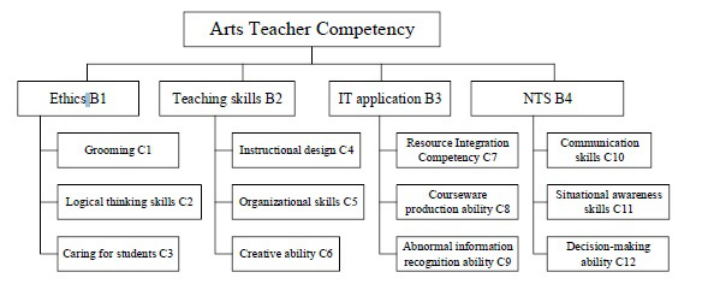
Figure 1: Arts teacher competency evaluation model.
competency elements and constituted a competency dictionary (Compete- ncy Dictionary), which includes characteristics such as knowledge and skills, social roles, self-concept, traits, and motivation. At present, the Iceberg com- petency model (Li et al., 2021) and the Onion competency model are more frequently used in competency research. The Iceberg model divides the com- position of human qualities into two parts: the first part is the baseline qualities above the sea level, including human behavior as well as know- ledge and skills, and the second part is the potential qualities below the sea level, including social roles, self-concept, traits, and motivation. The onion model is more hierarchical than the iceberg model. The outermost part of this model is the most superficial knowledge and skills, and the innermost part is the most difficult and core motivation and traits of individuals.
The ultimate purpose of the research on the competency of college teachers is to improve the personal qualities of teachers and promote the optimization of teaching quality in college classrooms, as well as to provide specific guide- lines for the recruitment, training, assessment and training of college teachers for their positions (Li et al., 2021). In this paper, based on the iceberg model theory, the evaluation indexes were initially determined through open-ended questionnaire research, and then after several rounds of discussion by a group of experts consisting of several teachers who had served for more than 2 years and whose annual assessment was qualified or above, four dimensions and twelve evaluation indexes were finally determined. Specifically, we can consi- der the overall competence quality of college teachers from the level of teacher moral style, teaching skills, IT application and NTS, among which the teacher moral style includes three parts of appearance, classroom charm and care for students; Teaching skills includes three parts of teaching design, organization ability and innovation ability; IT application includes three parts of resource integration ability, courseware production ability and abnormal informa- tion recognition ability; and IT application includes three parts of resource integration ability, courseware production ability and abnormal information recognition ability. The level of NTS includes three parts: communication ability, situational awareness ability and decision-making ability, see Figure 1.
Models and Measures of Arts Teacher Competency Under COVID-19 Normalization 375
Table 1. Importance assignment.
Table available in the original PDF paper.
Scale Meaning 1 i and j are of equal importance 3 i is slightly important compared with j 5 i is relatively important compared with j 7 i is absolutely important compared to j 2, 4, 6 Intermediate state of the above comparison
CONSTRUCTION OF COMPREHENSIVE EVALUATION MODEL BASED ON AHP Hierarchy model
American operation researcher Professor Saaty proposed the Analytic Hiera- rchy Process (AHP) in the 1970s (Saaty and Kearns, 1985), this mathematical method of multi-criteria decision making can realize the transformation from qualitative to quantitative, decompose the complex problem into different constituent factors of multiple levels, decide the relative importance of each level of factors by means of two-by-two comparison The relative importance of the factors at each level is determined by a two-by-two comparison, the weights of the factors at each level are calculated and determined by a speci- fic mathematical method, and finally the essence of the research problem is analyzed based on the ranking of the weights of the factors as a result of the calculation (Li, 2021). The AHP method is hierarchical and systematic, and is often used in the construction of comprehensive evaluation models. Base on the competency list and reference to relevant domestic and foreign materials, the AHP method is used to categorize the evaluation indexes according to the target level, criterion level and sub-criterion level, as shown in Figure 1.
Calculation of Weights A complete recursive hierarchy is formed for the screened index framew- ork, and the Delphi method is applied to organize the expert group to give feedback on the critical degree of the indexes, respectively, and the two-two judgment matrix is obtained and the weights are calculated through discus- sion and summary. The importance assignment was constructed by using the 1-7 scale method, which is shown in Table 1. Inverse the degree of importance of the latter compared to the former when two factors are compared.
The A = (aij)n×n matrix, represents the relative importance between n indicators, where aij is the expert’s assessment of the importance of factor i relative to factor j. The judgment matrix is constructed as follows.
[Equation or mathematical symbol available in the original paper PDF]
[Equation or mathematical symbol available in the original paper PDF]
[Equation or mathematical symbol available in the original paper PDF]
[Equation or mathematical symbol available in the original paper PDF]
Equations and mathematical formulas are available in the original paper PDF.
1 2 4 5 1/2 1 1/2 3 1/5 1/2 1 2 1/5 1/3 1/2 1
a1 a2 L a1n a21 a22 L a2n M M O L an1 an2 L amn
Table 2. Weight of indicators.
Table available in the original PDF paper.
Indicators Ethics Teaching skills IT application Skills NTS Weight value 0.5025 0.2650 0.1425 0.0875
The relative weights of the compared elements for the hierarchical elements are calculated from the judgment matrix. Taking the judgment matrix A1 as an example, note that the maximum characteristic root is λ max and its corresponding eigenvector is adopted as Eq.
Calculating the weight vector from the judgment matrix equation requires the judgment matrix to have a general consistency. Consistency Index (C.I.) needs to be calculated
When C.R. < 0.1, the consistency of the judgment matrix is considered acce- ptable. Since 0.0071 < 0.1, the matrix is proved to pass the consistency test. The weight values of the four first-level indicators were calculated as shown in Table 2.
The factors of the index level were calculated and ranked in the same way, and the correlation calculation results of judgment matrices B1, B2, B3, and B4 were derived in the same way, all of which passed the consistency test.
Finally, the constructed model is subjected to the hierarchical total ranking and its consistency test. The top-down hierarchical ranking is performed by calculating the weight of individual factors of each matrix relative to the overall target, and the relative weights of each index layer and its priority are finally obtained. According to the scoring situation of this decision, the relative weights of each factor in the index layer were calculated and ranked with extreme weights, as shown in Table 3.
DISCUSSION
The importance of ethics ranked first (as shown in Table 3) with a guideline level weight of 0.50. For all teachers, high professional ethics and good per- sonal cultivation are the basic guidelines for teachers to enter the classroom. Compared with secondary education, students’ initiative is stronger in higher education, and the subject contents are professional, independent and practi- cal. Teachers in higher education should pay more attention to mutual respect and understanding with students in the teaching process, pay attention to
Models and Measures of Arts Teacher Competency Under COVID-19 Normalization 377
the improvement of their own quality, show good teacher moral and teacher style, and create a good learning atmosphere and a relaxed and equal com- munication environment for students by example. In the dimension of ethics, caring for students has the highest rating, with an index weight of 0.855 and the first overall weight. College education is essentially a communication and cooperation between teachers and students, and genuine concern for students helps establish a good teacher-student relationship and create a more har- monious and beautiful classroom atmosphere. The second ranking is logical thinking ability, ranked 3rd in total weighting. Logical thinking ability is the key to carry out classroom teaching and communicate the teaching content, and the communication between students and teachers in the college class- room is closer, and logical thinking ability determines whether teachers can effectively communicate their teaching ideas and answer students’ academic questions in a timely manner. Grooming is a direct manifestation of teachers’ personal spirit and behavior, and it is an important part of university teachers that cannot be ignored in both online and offline teaching.
Teaching skills ranked second in importance, with a guideline tier weight of 0.27. Teaching skills is the fundamental guarantee of teachers’ classroom quality, which is reflected in three aspects: teachers’ teaching design ability, organization ability and innovation ability. Teaching design is based on tea- chers’ logical thinking ability and IT application, which requires teachers to complete the teaching content specified in the textbook, but also requires tea- chers to use their creative ability to combine with the actual situation and use new teaching methods such as multimedia courseware and online teaching to realize the organic combination of teaching theory and teaching practice. The second ranking in this dimension is organizational ability, which is ran- ked 5th in the total weight layer. Teaching organizational ability is closely related to the classroom learning atmosphere, and excellent organizational ability helps teachers create a more orderly and intense classroom learning atmosphere. The third ranking is innovation ability, ranked 8th in total wei- ghting. College teachers not only need to guide students to develop thinking
habits and encourage them to be bold and innovative, but also need to lead students to actively participate in practical innovation activities, in addition, innovation ability is also one of the important ways for teachers to improve themselves.
Information technology competence ranked third with a guideline tier wei- ght of 0.14. Information technology competency refers to teachers’ ability to understand, acquire, and use information as well as their familiarity with and mastery of Internet tools. With the popularity of online teaching formats, the importance of IT application for college teachers is growing. In this dimen- sion, the ability of resource integration ranks first, and the total weight ranks 4th. In the current information explosion, college teachers, as the main body of collecting information and imparting knowledge, the ability of processing information and integrating resources largely affects the classroom content and teaching forms of teachers. After the arrival of the epidemic, online teach- ing forms have been divided into three teaching forms: real-time live lectures, students’ independent learning and a combination of the two, and online courses include a combination of audio lectures and slide shows, software demonstration courses and hardware operation courses, etc. Such changes in teaching forms require college teachers to have more proficient courseware making ability and more rapid software learning ability. These changes in teaching formats require college teachers to have more proficient courseware creation and more rapid software learning ability. At the end of the ranking is the ability to identify abnormal information, and the total weight is 11th. Online teaching can play back the course because of the software feature, but the difference between live learning and watching recorded broadcast is not small for students, so even though online teaching provides convenient playback function, college teachers need to pay attention to the identification of abnormal information in the teaching process.
NTS ranked fourth, with a guideline tier weighting of 0.09. Situational awareness is a prerequisite for decision making and communication. Whether in online or offline classes, creating a good classroom atmosphere is more helpful for students to focus their thinking and innovation, and the creation of a good classroom atmosphere cannot be achieved without teachers’ excellent situational awareness ability. The second ranking is communication ability, which is ranked 10th in total weighting. Communication between teachers and students is indispensable in college teaching, so communication ability is a necessary NTS for college teachers. In addition, decision-making ability ranked third among the NTS, with a total weighting of 12th.
CONCLUSION
Arts teacher competency involves ethics, self-management, teaching skills and NTS. This study conducted a questionnaire survey based on literature analy- sis in four aspects: teacher moral, Teaching skills, IT application and NTS, and used the hierarchical analysis method combined with group decision making to assign the indexes, and finally constructed the competency model of college teachers. The role that teachers should play in teaching activities since the epidemic was explored and studied, and the teaching responsibilities
Models and Measures of Arts Teacher Competency Under COVID-19 Normalization 379
of college teachers were clarified. It is expected that through further resea- rch, a comprehensive evaluation system for college teachers can be formed to provide a basis for the selection, evaluation and cultivation of teachers and to better guide teaching practice and enrich relevant teaching theories.
ACKNOWLEDGMENT
This work has been supported by the Teaching research and reform project of National Academy of Chinese Theatre Arts (2020ZD010), Beijing Municipal Education Commission Science Program (KM202110049001) and the Ideo- logical and Political Education Program for college students of the National Academy of Chinese Theatre Arts (XSCZD2022001).
REFERENCES
Based on AHP. Journal of Xingtai Polytechnic College, 38(06), 46–51. Du, Y.H., Chi, X.F. and Pei, Y. (2020), Competency of Digital Media Arts College Teachers under the new Coronavirus Pneumonia. popular literary, (10), 231–232. Han, L., Ma, J.D. and Wan, A.H. (2006), T-type competency model for public
hospital managers. Chinese Hospitals, 26(02), 73–76. Li, A.L., Qu, L. and Liu, W. (2021), Research on Comprehensive Index System of Scientific and Technological Talents Evaluation Based on Analytic Hierarchy Process. Sience Technoligy and Industry, 21(04), 139–144. Li, B.H. (2021), A Study on Teacher Competency Model in Higher Education. Science
Fiction Illustrated, (04), 216–217. Liu, C.J. (2021), The Constyuction and Validation of Civil Aviation Pilots’ Psychological Competence Characteristics Model Under Crisis Situation. Jouenal of Civil Aviation, 5(04), 1–7. Liu, Y.F., Qi, C.M. and Chen, F. (2022), Research on the Composition of Teach-
ers’ Competency in Universities in the Context of New Liberal Arts. Journal of Heilongjiang Institute of Teacher Development, 41(01), 24–26. Ren, J.J. and Dong, F.C. (2021), The Research on the Competence Evaluation of College Counselor Team. Saaty, T. L., and K.P. Kearns. (1985), “The Analytic Hierarchy Process.” analytical
planning. Sun, X.H. and Li, Q. (2022), International Experience of “Learner-centered” Framework of Digital Competence for Teachers. Journal of Comparative Education, (01), 28–40.
LISTED IN THE AHFE DIGITAL BOOKSTORE CATALOGUE
Explore the complete digital volume
Training, Education, and Learning Sciences
Read this individual research paper free through the original publisher, or explore the full digital proceedings book.
ISBN 978-1-958651-35-3
Explore this ISBN in the AHFE Bookstore ↗Listed in the July 2026 bookstore catalogue; search by ISBN to confirm current availability · Digital book purchase optional