Boris Orellana-Alvear, Juan Hidalgo, Alfredo Ordoñez, Esteban Zalamea (2022). Mangrove infrastructure for the economic development of local communities in Naranjal - Ecuador. In: Human Factors in Architecture, Sustainable Urban Planning and Infrastructure. AHFE Open Access, vol. 58, pp. 303–309. https://doi.org/10.54941/ahfe1002365
Mangrove ecosystems are of significant environmental and economic importance. Large populations worldwide depend on mangroves for their resources and food supply. Following mangrove data of 1997, Ecuador had an area of 2,469 km² of mangroves. This area has suffered some reductions due to farming, industrial activities, and urbanization in recent years. At the same time, local communities depend on the collection and commercialization of mangrove products as their primary income source. Infrastructure projected in mangrove areas needs a remarkable treatment with a holistic approach to consider technological, social, environmental, and economic aspects. The project will focus on the community 6 de Julio of the zone of Naranjal-Ecuador. One of the primary income sources of this community is the collection and commercialization of the mangrove crab, which is collected at the nearby mangrove areas authorized by the Ministry of Environment, for which the community needs to abide by the regulations and closure periods to guarantee the sustainability of the activity. The primary research's objective is to study the best infrastructure options to help with the crab collection activity. So, it is safer and cleaner and aims to diversify activities such as touristic or educational that can become an alternative income source during the closure periods and reduce the dependence on the crab collection.
Mangroves are areas of high ecological and natural importance and sensiti- vity (Comer-Warner et al., 2022). Use and development impact the productive and socio-economic spheres of the peoples and communities that settle in them (Bera and Maiti, 2022). According to data from 1997, Ecuador had a total mangrove area of 2,469 km2. This area has transformed due to aqua- culture, livestock activities, and lack of conservation (Spalding, Blasco, and Field, 1997). At the same time, the need to develop the peoples and com- munities that settle in the mangrove areas through responsible development models is recognized as a basis for sustainable development of the society (FAO, 2006). A correct infrastructure design and proper management can foster accountable development consistent with the environment, conside- ring the conservation needs of sensitive ecosystems and the socio-economic
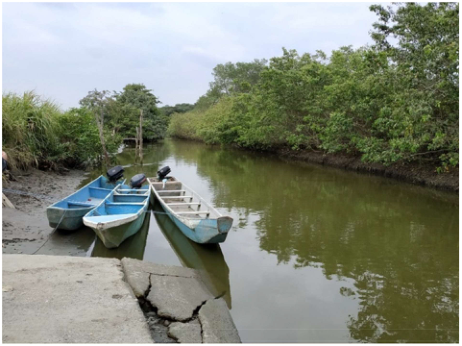
Figure 1: The current infrastructure for crab extraction activities in the 6 de Julio community.
needs of the communities that develop in them. Additionally, mangrove con- servation and sustainable management may reduce the risk of floods and other effects of climate change to which coastal communities are the most vulnerable (Soanes et al., 2021).
The 6% of the world population lives near coastal areas. This coa- stal area is rich in resources and biodiversity. These generate a concen- tration of human activities, especially in these fringe zones transformed by urbanization and poor infrastructure. This design does not consider these sensible and ecologically important areas (Pranchai, Jenke, and Ber- ger, 2019). The design and development of coastal infrastructure must take into account environmental and technological aspects, as well as climate change and economic development considerations to promote an adequate development and improvement of the quality of life of coastal populations (Perkol-Finkel et al., 2018).
According to the Food and Agriculture Organization of the United Nati- ons, various aspects must be addressed to address a project of these cha- racteristics. That contemplate not only the functional requirements concer- ning the productive activity, but it is also necessary to consider aspects concerning the needs of complementary infrastructure, port management, full-scale environmental impact, dredging, variable levels and accessibility to docks, construction materials, navigation aids, coastal infrastructure added to the implementation of renewable energy, sanitary and waste infrastru- cture, among other particular aspects to be identified for each specific case (Sciortino, 2010). With this background, the need to address coastal infra- structure design from a holistic and coordinated point of view becomes clear.
The specific study will focus on elaborating a project for a crab extraction pier in a mangrove zone that will benefit the community of Recinto 6 de Julio, located in a mangrove area in Naranjal, in the Guayas Province of Ecuador. The current infrastructure is deficient and does not guarantee a safe extraction process (Figure 1).
Mangrove Infrastructure for the Economic Development of Local Communities 305
The primary need identified by the population is to improve the crab extra- ction activity. It is necessary to analyze the possible collateral benefits that this infrastructure can generate in tourism, conservation, and diversification of productive community activities to generate an alternative income during the closure periods.
The project seeks to invigorate the socio-economic relations of the commu- nity, applying the most appropriate technologies available in the specific con- text of the location where the study will be carried out, with environmental and social soundness.
STATE OF THE ART Regarding the issue of the implementation of fishing docks, there is some documentation on case studies in urban areas, such as the case of the city of San Francisco conducted by Gehl Architects Consultants. They have publi- shed the stages and requirements to address a study of these characteristics (Gehl et al., 2001). Even if these recommendations are addressed in urban areas, some of the principles may apply to the study location considering the touristic and leisure function of the planned infrastructure. Another study by (Bilkovic et al., 2021) mentions the importance of considering the coastal fringe areas and the planned infrastructure as potential sites for the nursery of different fauna species that can be managed to generate additional income sources and, at the same time, conservation areas of natural marshes and wetlands.
In the Latin American context, there have been some studies addressing the artisanal fishing activity in different areas and the interactions and pressures from the urbanization, oil industry, pollution, and the loss of the natural habitats that support their activities (Maya-Jariego et al., 2017; Menéndez Delgado et al., 2021).
Other similar projects have been developed on the Ecuadorian Coast to integrate the fishing and gathering activity. For example, other complemen- tary activities are Anconcito in the Province of Santa Elena wherein 2004. In this, a group of academics from the ESPOL University detected that the low productivity of the fishing sector was mainly due to the absence of a port infrastructure that would allow direct supply to vessels of the inputs requi- red for fishing (Jara, 2004). Therefore, constructing a seaport in Anconcito became a priority need to boost the local economy. Thanks to this port, tou- rism was able to complement fishing activity and generate better strategies for the territorial development of the area (Cedeño et al., 2019). Another similar case study is found in the Cooperativa Nuevo Porvenir. It is located in Naran- jal in the Guayas province, where an association of crab catchers decided to integrate tourism activities to complement their main economic activity. They began efforts to build a dock that facilitates the collecting activity and contri- butes to the development of other activities. Based on the social and economic benefits this project may generate for the communities, the Ministry of the Environment donated confiscated wood to construct an ecological pier and trails for tourist activities as an example of a public-private alliance (Mejil- lones, 2018; MAAE, 2020). In this way, the cooperative inhabitants have
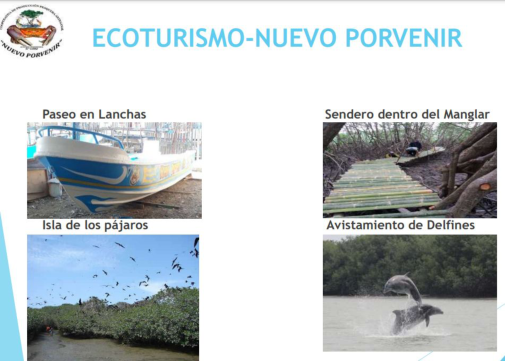
Figure 2: The Nuevo Porvenir association promoted alternative activities. Taken from (Mejillones, 2018).
implemented gastronomic activities, ecotourism, and environmental interpre- tation, which has allowed them to boost their local economy more balanced between the extraction and conservation activities (Figure 2).
METHODOLOGICAL APPROACH This research project aims to study the social and economic dynamics of the crab catchicrab-catching blue. The potential of the area to develop alternative actions that could generate additional income sources for the community and reduce their dependence on intense extractive activities that could harm the local ecosystem and endanger the sustainability of the movement.
The information collected will be done by applying surveys and interacti- ons with the association of crab catchers and their families.
A study about the construction materials available in the area will be done. The construction material can also become an income source if the techno- logies used are simple enough to be put in place by small industries that can build and execute the maintenance activities and pieces replacement of the structure.
The use of renewable resources will be one of the main approaches to planning the infrastructure. Among the materials that grow in abundance in the area and have a short renovation is bamboo and balsa wood. These materials can be studied to make the majority of the planned infrastructure in the mangrove area. Considerations about the wood and bamboo treatments will be considered to avoid using substances that may pose any environmental or health risks.
Bamboo is a material that has been studied for many years in tropical countries, and recent studies and research have demonstrated its benefits from environmental to structural. In Ecuador, a regional office of the Inter- national Bamboo and Rattan Organization (INBAR) has a lot of experience in education and experimentation with this material. INBAR has conducted
Mangrove Infrastructure for the Economic Development of Local Communities 307
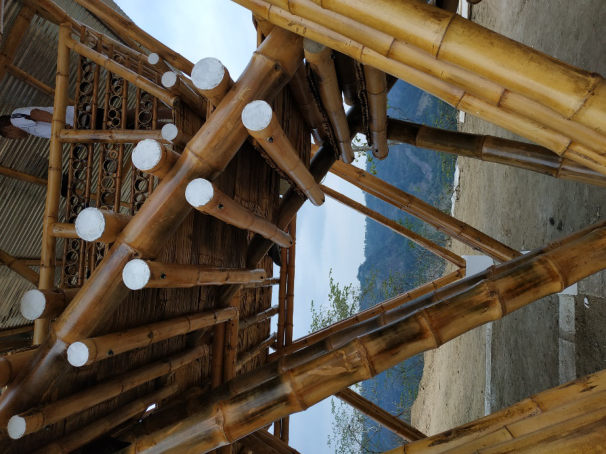
Figure 3: Bamboo structure built by the INBAR team.
workshops about bamboo construction to show the possibilities of this mate- rial for other communities and groups such as the Escuela Taller in Manabí (Figure 3). These seminars can be oriented to mangrove or wetlands infrastru- cture given to the 6 de Julio community to develop possibilities built using local materials and by the same community members.
CONCLUSION
A significant portion of the human population lives in coastal and mangrove regions because of their abundance of resources and the several livelih- ood possibilities supported by their biodiversity. However, mangroves have decreased in the area because of different anthropic pressures, deficient management policies, and poorly designed infrastructure for these areas.
The design of infrastructure for mangrove zones is a challenge that needs to be studied carefully and with a holistic approach to achieving a balance betw- een the development of local communities and the conservation of natural habitats and the system’s sustainability.
Local materials such as bamboo and balsa wood that grow abundantly in the area and have a short renovation time can be studied to develop con- struction techniques that the same community members can apply. The same community members can scale up the infrastructure following the needs or conditions.
The involvement of the 6 de Julio community in this research will make it possible for the solutions developed within the academic circle to have a tangible impact on society and the opportunity to study the dynamics of implementation and monitoring of this pilot project.
ACKNOWLEDGEMENT
We owe gratitude to the 6 de Julio community for their involvement in the project and for sharing their knowledge about the crab collection activity.
This project is supported by the Research and Relations Department of the University of Cuenca-Ecuador.
REFERENCES
Bera, R. and Maiti, R. (2022) ‘Mangrove dependency and livelihood challenges — A study on Sundarbans, India,’ Regional Studies in Marine Science. Elsevier B.V., 50, p. 102135. doi: 10.1016/j.rsma.2021.102135. Bilkovic, D. M. et al. (2021)’ Nursery habitat use by juvenile blue crabs in created
and natural fringing marshes’, Ecological Engineering. Elsevier B.V., 170(May), p. 106333. doi: 10.1016/j.ecoleng.2021.106333. Cedeño, J. et al. (2019) ‘Diagnóstico de la captura de la pesca blanca artesanal en la parroquia Anconcito, cantón Salinas, provincia de Santa Elena’, Espirales Revista Multidisciplinaria de investigación, 3(26), pp. 112–120. doi: 10.31876/re.v3i26.468. Comer-Warner, S. A. et al. (2022) ‘Restoration impacts on rates of denitrification
and greenhouse gas fluxes from tropical coastal wetlands’, Science of The Total Environment, 803, p. 149577. doi: 10.1016/j.scitotenv.2021.149577. FAO (2006) Descripción de los manglares en Ecuador. FAO. Available at: http://ww w.fao.org/forestry/mangrove/vegetation/es/ecu/. Gehl, J. et al. (2001) Fisherman’ s Wharf. San Francisco. Available at: https://sfplanning.s3.amazonaws.com/archives/CDG/docs/fishermans_wharf /Gehl_Report_P1.pdf. Jara, W. (2004) Informe final de la segunda fase del Proyecto Puerto Pesquero Anco-
ncito. Guayaquil. Available at: https://oa.upm.es/14340/2/Documentacion/1_Me moria/PuertosProyectos/Anconcito/2FasePtoPesquero.pdf. MAAE (2020) MAAE dona madera decomisada para construcción de infraestructuras. Quito. Available at: https://www.ambiente.gob.ec/maae-dona-madera-decom isada-para-construccion-de-infraestructuras/. Maya-Jariego, I. et al. (2017) ‘Escape the lion cage: Social networks by catch zones of
small-scale fisheries in the oil settlement of Lobitos (Peru)’, Marine Policy. Elsevier Ltd, 81(April), pp. 340–349. doi: 10.1016/j.marpol.2017.04.010. Mejillones, A. (2018) ‘Cooperativa de Producci’on Pesquera Artesanal “ Nuevo Porvenir “‘. Naranjal. Available at: http://par-manglares.net/images/gallery/activ idades/2018/julio/sesion_2/Nuevo_Porvenir.pdf. Menéndez Delgado, E. R. et al. (2021) ‘Artisanal fishery in Ecuador. A case study of
Manta city and its economic policies to improve competitiveness of the sector’, Marine Policy, 124(September 2019). doi: 10.1016/j.marpol.2020.104313. Perkol-Finkel, S. et al. (2018) ‘Seascape architecture – incorporating ecological considerations in design of coastal and marine infrastructure’, Ecological Engineering. Elsevier B.V., 120, pp. 645–654. doi: 10.1016/j.ecoleng.2017.06.051. Pranchai, A., Jenke, M. and Berger, U. (2019) ‘Well-intentioned , but poorly
implemented : Debris from coastal bamboo fences triggered mangrove decline in Thailand’, Marine Pollution Bulletin. Elsevier, 146(February), pp. 900–907. doi: 10.1016/j.marpolbul.2019.07.055.
Mangrove Infrastructure for the Economic Development of Local Communities 309
Sciortino, J. A. (2010) Fishing harbour planning, construction and management.
FAO, FAO Fisheries and Aquaculture Technical Paper. FAO. Rome: Food and Agriculture Organization of the United Nations. Available at: https://www.fao.or g/3/i1883e/i1883e.pdf. Soanes, L. M. et al. (2021) ‘Reducing the vulnerability of coastal communities in the Caribbean through sustainable mangrove management’, Ocean and Coastal Management. Elsevier Ltd, 210(May), p. 105702. doi: 10.1016/j.ocecoaman.2021.105702. Spalding, M., Blasco, F. and Field, C. (1997) Wolrd Mangrove Atlas. Edited by M.
Spalding, F. Blasco, and C. Field. Okinawa: The international Society or Mangrove Ecosystems.
LISTED IN THE AHFE DIGITAL BOOKSTORE CATALOGUE
Explore the complete digital volume
Human Factors in Architecture, Sustainable Urban Planning and Infrastructure
Read this individual research paper free through the original publisher, or explore the full digital proceedings book.
ISBN 978-1-958651-34-6
Explore this ISBN in the AHFE Bookstore ↗Listed in the July 2026 bookstore catalogue; search by ISBN to confirm current availability · Digital book purchase optional