Markus Sihvonen, Marina Weck (2022). Data Driven Sustainable Business Strategy. In: Human Factors, Business Management and Society. AHFE Open Access, vol. 56, pp. 323–328. https://doi.org/10.54941/ahfe1002284
This paper describes e-Tilat use case which is Seniotek company’s new product. The use case describes application of Data Driven Business Model (DDBM) in product development and business operations for the new e-Tilat product. The research question is: Is it possible for a small SME to achieve business advantage by applying DDBM and can it bring true value for its customers and its products end users? The research has been conducted by analyzing real life use case where municipality of Liminka acquired Seniortek’s new innovative e-Tilat system to provide sport facility reservation services for its residents. Based on use case analysis, it is obvious that applying DDBM did provide proven advantage for all interest groups; end users, Liminka municipality and Seniortek.
In today’s digital business environment, SMEs face significant transformation challenges in effectively using vast amounts of data and building data-driven business strategies that focus on utilizing information and computer tech- nology (ICT). To achieve sustainable business, whether that means creating new products or reorganizing current processes with the help of the latest developments in data-driven technologies, such as big data or artificial intel- ligence, to extract the value of data (Chen et al., 2012; Günther et al., 2017), necessitates becoming a data-centric organization. In addition, a data-driven business model (DDBM) must be applied to enable business value crea- tion through data processing and analytics (Hartmann et al., 2016; Wixom & Schüritz, 2017). In many innovative enterprises, using data to improve decision-making is widely acknowledged as beneficial. However, they fail or are increasingly ineffective in creating business value from data. Thus, con- siderable research interest has emerged in recent years around the transition towards DDBMs.
This paper introduces the case study analysis results to explore the fol- lowing research questions: Can a small SME achieve a business advantage by applying DDBM, bringing actual value for its customers and its product end users? The focus of the case study was the Seniortek company’s new
product—the e-Tilat reservation system for sports facilities, piloted in the Liminka municipality from March 2020 to June 2021.
The structure of this paper is as follows. First, the paper introduces big data as a viable asset for a company. Then, it discusses how a vast amount of data can be transferred into potential business impact. When the data are transferred into a valuable asset, the paper describes how this asset can be utilized by data-driven business models (DDBMs). Finally, how big data and DDBM were used in the e-Tilat product and business development processes is discussed.
BIG DATA ASSET Practically every company, big and small, is generating, collecting, and analy- zing meaningful data for its business operations. For microservice companies, traditional pen, paper, and manual data processing might be a sufficient data analysis method, even today. When data collecting points increase, busines- ses start utilizing tools such as Excel sheets and Microsoft Power BI for data processing. However, the volume and variety of data can grow so that it does not fit into such tools, and human limitations prevent efficient data analysis of the data. This time is when we need to start applying big data analysis tools.
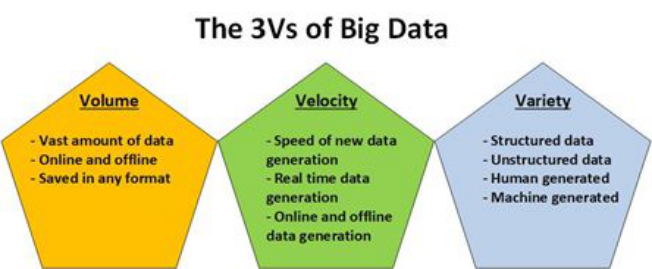
Big data has three main dimensions: volume, velocity, and variety (Laney, 2001). The volume of big data refers to an infinitely increasing amount of data. The velocity of big data refers to the rapidly diminishing value of the data, which compels real-time analysis. Lastly, the variety of big data refers to all structures and unstructured data that humans or machines can generate.
A vast amount of data can easily be generated and stored via a modern internet of things (IoT) sensor network. IoT devices such as IP cameras, motion sensors, and social media services can generate vast amounts of data in numerous data formats that need to be analyzed in real time to capture its value for business operations. Artificial intelligence (AI) technology is summoned to the task of transferring raw big data into valuable knowledge. Machine learning (ML) is a form of AI commonly used in commercial appli- cations to find patterns and make estimates based on raw big data. ML relies
Data-Driven Sustainable Business Strategy 325
Figure 2: Big data assets to impacts.
purely on the availability of data and the value of available data. The more reliable data are available, the better the analysis results of ML algorithms.
The big data management capabilities of businesses determine turning raw data into meaningful information that enhances business activities. Information management capabilities significantly impact developing other assets that positively increase business performance (Mithas, Ramasubbu, & Sambamurthy, 2011). When innovating, new knowledge is acquired from available data. Organizations can be innovative when certain conditions are met (Dyer, Gregersen, & Christensen, 2011). The digitalization megatrend forces businesses to utilize big data in their innovation processes, which can help enterprises accelerate product and business innovation processes (Jetzek, Avital, & Bjorn-Andersen, 2014).
Big data affects various factors that positively impact businesses. It tends to lower personnel costs, increase inventory accuracy, and improve opera- tional efficiency (Bärenfänger, Otto, & Österle, 2014; Roden et al., 2017). Businesses that utilize their big data assets can expect up to 20–30% savings in product development costs and 50–60% faster time-to-market cycles for their products (Manyika et al., 2011). Data have become an essential gradi- ent for innovating and producing new innovative products or adding value to existing products and services. The megatrend of digitalization has forced businesses to re-evaluate their existing business models and provided unex- pectedly profitable business opportunities for start-up companies that build their business models entirely for the total utilization of big data.
DATA-DRIVEN BUSINESS MODEL When a business has managed to create capabilities from its assets, it is time to think of a business model and strategy. A business model descri- bes the rationale for how an organization creates, delivers, and captures value (Osterwalder & Pigneur, 2010). Business strategy analyses a company’s environment, such as potential competition, and pays attention to product- to-market issues (Ylijoki, 2019). A business model’s purpose is to describe how a company implements its chosen strategy (Zott, Amit, & Massa, 2011). There are at least five business models for data-driven business: 1) to sell data as it is, 2) to innovate new products based on the data, 3) to enhance product offerings with value-added services, 4) to create interaction in the value chain, and 5) to create a network of value based on data exchange (Van’t Spijker, 2014).
326 Sihvonen and Weck
The first two, selling data and innovating new products based on col- lected data, are straightforward business models. The data itself is a new product, such as roaming information data that teleoperators sell. The web pages of a digital newspaper could also be a data product if news featured on the web pages are dynamically selected based on visitors’ previous navi- gation data. Value-added service is the enhancement or improvement of an existing product or service. Its purpose is to make the original offering more enticing to clients. For example, teleoperators may offer unlimited text mes- sages as a value-added service for their mobile reception clients. Data can improve operations efficiency in business networks, such as partner netw- orks for manufacturing cars. It can boost businesses’ internal and external value network efficiency; for example, products can be tailored to a client’s individual needs.
Data-driven business models (DDBMs) use data as a critical resource to create new insights for a value proposition for customers (Kuhne & Böh- mann, 2019). There are many advantages a company might achieve in utilizing DDBMs. Data are faster available for business operations, and the quality of user data is often enhanced. The safety and security of IT systems will increase due to the distribution of processing power and data storage. These advantages facilitate business growth and reduce operating costs, which adds complexity to IT systems that require more training for employees. Special attention must be given to security training since human failure in following security procedures has often provided access for unlaw- ful entry into the IT system. A cost–benefit analysis should be conducted for applying DDBMs to each case.
E-TILAT CASE The need for a new reservation system for sports facilities surfaced in the municipality of Liminka in Finland when the municipality decided to improve its sports services for its residents. Liminka hopes to increase the overall usage of its sports facilities. A new data-driven product—the e-Tilat reservation system—helped Liminka meet these goals. With the help of the product, resi- dents of the municipality can easily book and use all sports facilities operated by the municipality.
The e-Tilat reservation system includes smart electric door locks, facility security services, and a cloud-based calendar for reservation management. When the e-Tilat reservation system was under development, particular effort was made to make it easy to use. The customer can reserve the desired exercise space with a smartphone via a user-friendly interface. A user can immediately see available free spots on the smartphone for the chosen exercise facility. With the free downloadable e-Tilat app, a customer can also open the door to the reserved exercise facility when the reservation starts. As a result, the need to maintain sports facilities is reduced, and their use is safer and more pleasant for customers. Due to the versatility and flexibility of the e-Tilat digital platform, it is possible to add new third-party services at any point in time for sports facility users. In addition to providing better service, the
Data-Driven Sustainable Business Strategy 327
e-Tilat reservation system has managed to gain immediate cost savings for the Liminka municipality.
DISCUSSION
Seniortek’s new e-Tilat product is a result of applying a data-driven business model in product innovation to create new value for service operators and end users. The e-Tilat reservation system utilizes IoT technology to collect meaningful data to provide services for operators and end users. Data colle- ction devices include smart locks, IP cameras, and end users’ smartphones. Collected data are analyzed in distributed systems to provide additional value for service providers and end users. Strong authentication of an end user via mobile phone brings extra security for facilities with the e-Tilat system since no one can access them without identification. An additional value of strong end user authentication is that Liminka gets other data that correlate to the physical condition of its residents, which can help forecast its medical budget. Immediate savings were also achieved by abandoning the old tag-based entry system to sporting facilities.
Due to DDBMS, the e-Tilat platform enables the innovation of third-party services for end user and service providers. For example, one can add a messa- ging service to the platform to communicate sport-related news to end users based on their interest, as reflected by their sports facility reservation history. In Liminka’s case, a payment service was added to benefit both end users and the municipality. In conclusion, the system can utilize presently available value-added services and services that have yet to be innovated.
Liminka acquired the e-Tilat system based on a monthly service fee model, and therefore Seniortek installed the system and is in charge of operating it. This business model benefits e-Tilat service providers since it prevents DDBMS’s potential challenges, such as training people to run a new IT system and additional investing in cyber security. Both challenges are taken care of by experts from the e-Tilat system provider, Seniortek.
REFERENCES
Bärenfänger, R., Otto, B. & Österle, H. 2014. Business value of in-memory technology – multiple-case study insights. Industrial Management & Data Systems, 114(9), pp. 1396–1414. https://doi.org/10.1108/IMDS-07-2014-0212 Chen, H., Chiang, R. H. L. & Storey, V. C. 2012. Business intelligence and analytics:
From big data to big impact. Management of Information Systems Quarterly, 36(4), pp. 1165–1188. https://doi.org/10.2307/41703503 Dyer, J., Gregersen, H. & Christensen, C. 2011. The Innovator’s DNA: Mastering the Five Skills of Disruptive Innovators. Boston, Massachusetts: Harvard Business School Press. Günther, W. A., Rezazade Mehrizi, M. H., Huysman, M. & Feldberg, F. 2017. Deba-
ting big data: A literature review on realizing value from big data. The Journal of Strategic Information Systems, 26(3), pp. 191–209. https://doi.org/10.1016/j.jsis .2017.07.003
328 Sihvonen and Weck
Hartmann, P. M., Zaki, M., Feldmann, N. & Neely, A. 2016. Capturing value from big data – a taxonomy of data-driven business models used by start-up firms. International Journal of Operations and Production Management, 36 (10), 1382–1406. https://doi.org/10.1108/IJOPM-02-2014-0098 Jetzek, T., Avital, M. & Bjorn-Andersen, N. 2014. Data-driven innovation
through open government data. Journal of Theoretical and Applied Electro- nic Commerce Research, 9(2), pp. 100–120. http://dx.doi.org/10.4067/S0718- 18762014000200008 Kuhne, B. & Böhmann, T. 2019. Data-driven business models: Building the bridge between data and value. Twenty-Seventh European Conference on Information Systems (ECIS). Stockholm and Uppsala, Sweden, June 8-14, 2019. ISBN 978-1- 7336325-0-8 Research Papers. Available: https://aisel.aisnet.org/ecis2019_rp/167 Laney, D. 2001. 3D data management: Controlling data volume, velocity, and variety.
META Group Research Note, 6, pp. 70–73. Manyika, J., Chui, M., Brown, B., Bughin, J., Dobbs, R., Roxburgh, C. & Byers, A. H.
2011. Big data: The next frontier for innovation, competition, and productivity. McKinsey Global Institute: McKinsey&Company. Available: http://www.mckins ey.com/insights/business_technology/big_data_the_next_frontier_for_innovation Mithas, S., Ramasubbu, N. & Sambamurthy, V. 2011. How information management capability influences firm performance. MIS Quarterly, 35(1), pp. 237–256. https://doi.org/10.2307/23043496 Osterwalder, A. & Pigneur, Y. 2010. Business model generation: A handbook for
visionaries, game changers, and challengers. Hoboken, NJ: John Wiley & Sons. Roden, S., Nucciarelli, A., Li, F. & G. Graham, G. 2017. Big data and the transformation of operations models: A framework and a new research agenda. Production Planning & Control, 28(11–12), pp. 929–944. https://doi.org/10. 1080/09537287.2017.1336792 Van’t Spijker, A. 2014. The new oil: Using innovative business models to turn data
into profit. Basking Ridge, NJ: Technics Publications. Wixom, B. H. & Schüritz, R. 2017. Creating customer value using analytics.
MIT CSR Research Briefing (XVII–11). Available: https://cisr.mit.edu/publicati on/2017_1101_WrappingAtCochlear_WixomSchuritz Ylijoki, O. 2019. Big data: Towards data-driven business. Dissertation. LUT University: Lappeenranta-Lahti University of Technology University Press. ISBN 978-952-335-346-6. Zott, C., Amit, R. & Massa, L. 2011. The business model: Recent developments and
future research. Journal of Management, 37(4), pp. 1019–1042. https://doi.org/ 10.1177/0149206311406265
LISTED IN THE AHFE DIGITAL BOOKSTORE CATALOGUE
Explore the complete digital volume
Human Factors, Business Management and Society
Read this individual research paper free through the original publisher, or explore the full digital proceedings book.
ISBN 978-1-958651-32-2
Explore this ISBN in the AHFE Bookstore ↗Listed in the July 2026 bookstore catalogue; search by ISBN to confirm current availability · Digital book purchase optional