Charlotte Haid, Sebastian Stohrer, Charlotte Unruh, Tim Büthe, Johannes Fottner (2022). Accommodating Employee Preferences in Algorithmic Worker-Workplace Allocation. In: Human Factors in Management and Leadership. AHFE Open Access, vol. 55, pp. 79–87. https://doi.org/10.54941/ahfe1002235
Since many processes in logistics are difficult to automate, employees will continue to be a crucial part of the logistics ecosystem. Allocating employees to tasks on the shop floor continues to be essential, but should focus more on personal preferences. Traditional allocation systems have hardly taken employee preferences into consideration. We ensure that workers can specify their preferences in more detail, and enable best-fit allocation of workers and tasks. To gather information about employee preferences, we designed a survey that can be completed quickly and allows us to get information about employee preferences. We have developed a solution for our preference-based scheduling, namely a hybrid AI algorithm. The solution is discussed for our use case: matching employees to workplaces in logistics. With this work we contribute to a transparent consideration of preferences in scheduling and show details of the algorithm. We aim to extend research in this area with our open source code on github.
Digitalization and automation are changing logistics processes and tasks of logistics employees. More sensors, connected machines, and a new level of technology have increased the amount of available data, and new tools for data evaluation enable growing process transparency in logistics. Coming from the mindset of having to accurately monitor and measure all machi- nes, this mentality has become established for employees as well. Transparent employee performance at all times is derived from data analysis, enabled, for instance, by smart watches. Constant performance monitoring is a potential stress factor that can lead to health issues for employees in the long-term and can negatively impact employee creativity (Kolb and Aiello 1996).
In addition, the workforce in logistics is changing and employees tend to have more individual demands on their workplace and tasks (Hempfing and Schwemmer 2019). Consequently, employers need to position themselves as
attractive employers and avoid risking productivity decreases by not fulfilling demands of their workers.
For these two current problems, human-centered approaches appear to be promising in logistics: They contribute to greater well-being of employees and can improve employer attractiveness at the same time. Human-centered approaches are a relevant tool for employers to remain attractive in countries with an aging and shrinking workforce (Hochdörffer et al. 2018). In our solution, logistics employees can specify their preferences for workplaces and shifts and are thus more involved in shift planning. We implement feedback only via graphical response.
In this paper, we introduce our preference-based matching system for workplace allocation. After a sketch of the theoretical background, we show how employee preferences can be measured and explain how the preferences can be used as input data for our scheduling algorithm. We then provide an example of a matching problem that is solved with a constraint-programming algorithm. We examine the performance of the algorithm by scaling up our example and, in concluding, discuss the results and conclude with remarks on future work.
BACKGROUND
This section provides a brief overview of the current state of research of matching problems with the focus on preference-based matching systems. The assignment of employees to tasks or workplaces, as well as the cove- rage of different algorithms for solving matching problems, are of particular significance in this literature review. Our three-stage literature review, ana- logous to (Theurer et al. 2018), includes 31 papers from various operating areas, which we extracted from a long list of 128 papers in total. We made no distinction to which application area the employees were assigned to and examined all publications for the number of employees and number of tasks allocated (employee-task ratio), the optimization goal, the algorithm used and the source code, if available. In addition, we focused particularly on papers with employee preferences as an optimization goal.
Employee-task ratio. The majority of the papers reviewed models the agent-object relation with employees as agents who are assigned to tasks, shifts, jobs, or workstations, representing the associated objects. Between a minimum of 4 and a maximum of 250 employees were assigned to a number of tasks ranging from 2 to 1,000 tasks. Considering all 31 reviewed papers, on average 20 employees were as-signed to 9 tasks. The employee-task ratio varied across the different papers: strict one-to-one relationships occurred as often as many-to-many relationships.
Optimization goal. Each matching problem is solved and optimized accor- ding to a single objective or multiple objectives. Single-objective modeling is dominant in the literature, the more complex multi-objective problems are in the minority. Despite the strong focus on preference-based matching systems in the review as well as the increasing importance of employee preferences, the minimization of costs in terms of profitability is still the objective most mentioned in the papers. Costs in terms of feedback for the algorithm is
Accommodating Employee Preferences in Algorithmic Worker-Workplace Allocation 81
also used for the expense of assigning an employee to a particular task or as penalties due to violation of constraints (Hochdörffer et al. 2018). Fur- ther frequently mentioned objectives (listed by their frequency in the review) include maximizing employee satisfaction, minimizing the competency gap (Jaturanonda and Nanthavanij 2011), minimizing the overall completion time (Gupta 2019), and minimizing the number of unassigned employees (Soukour et al. 2013). Maximizing fairness (Blöchliger 2004), minimizing the number of non-assigned shifts, or maximizing rotations (Günther 2019) recorded only a low number of results in the literature analysis. The majority of papers created just one-time shift schedules.
Algorithms. Matching algorithms used in the review can be classified in the four main categories of optimal, heuristic, and hybrid solution methods as well as Artificial Intelligence (AI) approaches. Optimal solution meth- ods like linear programming are based on mathematical programming and explore the entire solution space. An optimal solution satisfies all constraints with the highest (maximization) or low-est (minimization) value. Consequ- ently, mathematical programming often requires large computation times to find the optimal solution. Real-world problems are usually very complex and difficult to solve. As a consequence, heuristic solution methods form an important class of solution methods because they are not obliged to return an optimal solution – they sacrifice the optimal solution for a shorter poly- nomial computation time and produce a feasible good, but not necessarily an optimal solution, suitable for the complex real-world problems (Chen et al. 2020). Hybrid solution methods combine different methods in a way that their individual advantages complement each other. Consequently, hybrid algorithms can achieve better results, obtain shorter calculation times, and solve problems with a larger input size more efficiently than others. If applied correctly, hybrid algorithms can usually reach these improvements without major disadvantages. Despite the universal trend towards AI systems, AI still plays a minor role in worker-workplace allocation. Constraint Programming (CP), a subfield of AI, solves constraint satisfaction problems by using con- straints to prune the search space before searching for solutions (Naveh et al. 2007). It eliminates infeasible candidate solutions with specialized filtering algorithms first. CP is particularly efficient for solving highly constrained pro- blems or problems that only require a feasible, but not necessarily optimal, solution (Ernst et al. 2004).
Source code. The majority of the papers reviewed did not publish their ori- ginal source code and instead focused on the results of their algorithm. Some authors included a pseudocode extracted from the original code which just gives a generalized presentation of the different algorithmic steps (Günther and Nissen 2014). An adequate reconstruction of the implemented algori- thms and an assessment of the reproducibility of scientific results is difficult and in most cases impossible, based on the information provided in the sup- porting materials for the publications. The lack of original source codes, moreover, complicates the comparison across different papers of the algori- thms with respect to, e.g., performance. There is also currently no established standard programming language for matching problems.
Conclusion. In summary, we note three main points: First, allocation systems mostly optimize by cost to achieve short-term savings. This ignores
long-term con-sequences for employees, such as health-related absenteeism. Second, heuristic and mathematical approaches are most often used in allo- cation systems. AI approaches are rarely implemented. Third, the source code of the allocations is hardly ever published, so there is a general lack of source code to build on for further research.
CONCEPT OF MEASURING PREFERENCES The following concept forms the data basis for the overall optimization concept. We focus on the needs and preferences of employees, going beyond the measurement of work performance, with the following approach. To measure those preferences, we developed a survey that can be completed by employees in five to ten minutes. The attributes and levels of the question- naire were defined and based on qualitative interviews with logistics planners. This method can be applied analogously for various areas.
First, employees receive a short questionnaire consisting of four questions which ask them to specify their preferences regarding job attributes, and a fifth question which asks to allocate points to the features according to subje- ctive importance. Each question corresponds to one attribute, with two levels per attribute specifying the answer options. As an example, see our questi- onnaire for logistics planning in Table 1, which we will now use to illustrate the procedure for preference measurement.
Table 1. Survey for measuring preferences (left) and jobs in sample scenario (right).
Table available in the original PDF paper.
Points Attribute Level Job A Job B Job C x x
15 Type of work ( ) Analyze data and processes
x
(X) Coordinate and communicate
40 Role in the organization
x
(X) Strategic planning x x ( ) Practical implementation x
25 Team environment
(X) Working with externals
x x
( ) Working in an internal team
20 Travel requirements
x x
( ) Travel often required x (X) Travel rarely required Correspondence with sample answers 100% 0% 60%
The employees first select their preferred level for each job attribute. Then they distribute a total of 100 points among the available attributes. A high number corresponds to a high level of personal importance. A sample emplo- yee ticks the levels of each attribute, as shown in Table 1, according to his personal preferences. Then he distributes the given 100 points across the four attributes. For our employee the role in the organization is most important.
Accommodating Employee Preferences in Algorithmic Worker-Workplace Allocation 83
He therefore awards 40 points in this attribute. Then he distributes the remai- ning points as follows: 25 to the team environment, 20 to travel requirements, and 15 to the type of work.
In addition, we have different tasks available in our example (Job A, B, and C; we subsequently also refer to them as workplaces). Jobs were scored in advance based on whether or not they met preferences. The chosen levels and the allocated points are used to calculate the extent to which a particular job, as a combination of levels, matches the employee’s preferences. Based on the responses given in Table 1, Job A corresponds 100% with the sample answers. Job B does not match. Job C corresponds with 60%: note that the 60 points allocated to Option C come from the inclu-sion of “strategic plan- ning” (assigned 40 points during the allocation exercise) and the inclusion of “travel rarely or never” (assigned 20 points during the allocation exercise). The preferences of all employees as well as the assessment of all available jobs as shown in Table 1 are used as input for the matching algorithm in the next step.
CONCEPT FOR OPTIMIZATION PROBLEM A general optimization problem consists of three main parts: one or multi- ple objective(s), decision variable(s), and constraints (Blöchliger 2004). The goal is to distribute the available employees among the workplaces or jobs to be filled in a way that the preferences of all employees are maximized. The days consist of several shifts s and each shift contains a constant number of different jobs j.
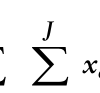
Objective Function: In this paper, the sum product does not consist of costs like in many papers in the literature review but of employee preferences. The matching problem is a maximization problem and the sum product consi- sts of the binary decision variable xesj and the individual preference score per employee pej. The sum product is calculated with the total number of employees N, the total number of shifts A, and the number of jobs per shift J.
N X
A X
Equation reproduced from the original PDF.
Decision Variable: xesj (binary) is 1 if employee e is assigned to job j in shift s, 0 otherwise {0, 1}.
Constraints: A) Each employee is only assigned to a maximum of one job per shift. B) Each shift needs to have one employee assigned to it. C) Minimal and maximal working hours per employee are respected. D) The employee must have the minimum required qualifications for any job to which s/he is assigned. E) Absent employees can never be considered for shifts. F) Employee preferences for rotation are respected. The higher the prefere- nce for rotation, the more an employee can rotate in general.
The constraints are formulated as hard constraints, except for constraint F, which is a soft constraint. A certain number of qualifications is defined at the beginning. Each employee has a set of qualifications q of the size Q and each job has minimum qualification requirements that have to be satisfied by the assigned employee. The planning horizon can be flexibly modeled in the matching problem and is represented by the days considered for the shift plan. The preference matrix pej contains the individual preferences of each employee e for each job j on a scale from 0 (lowest preference) to 100 (highest preference).
The optimization problem can be solved with different algorithms. In a structured evaluation of the algorithms, we selected the CP-SAT solver pro- vided by Google OR-Tools (Perron and Furnon 2021). The CP-SAT solver is a Constraint Programming (CP) solver based on Boolean satisfiability (SAT). It has performed particularly well in various competitions and is conside- red one of the best algorithms for matching problems (Da Col et al. 2019). Moreover, it is available open source. The CP-SAT solver uses the Lazy Clause Generation technique to calculate optimal solutions (Van Ekeris et al. 2021). The integer variables of the CP model are translated into Boolean variables on which the solver is applied. Boolean satisfiability helps prevent searching similar parts of an optimization problem as well as to determine variables which form a closely related hard part of the problem. Thus, Boolean satisfi- ability enables highly effective search strategies concentrating on these hard parts while preventing decisions that have already proven to be unhelpful (Stuckey 2010).
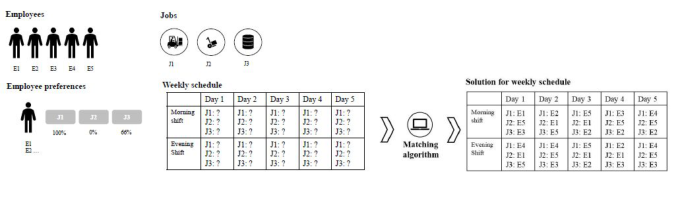
APPLICATION EXAMPLE Let us assume we have five employees (E1 to E5) and three jobs (J1 to J3) available. As usual in scheduling problems, the number of employees is higher than the number of jobs to compensate for illness, scheduled holidays, and other reasons [3]. Our weekly schedule consists of five days with two shifts each (see Fig. 1). The required qualifications for our jobs can be high, medium, or low, given as integers from 1 to 3 in an array. Accordingly, the qualifications of each employee are entered as an array and which job can be done by which employee based on the qualifications is calculated. Then, the maximum and minimum working hours as well as the availability per emplo- yee need to be adjusted, given as an array. The preferences of the individual employees for the available jobs are requested as explained in Section 3 and given as an input matrix. Rotation preferences are independently captured as an array and describe how often an employee wants to do a certain job in the schedule.
Then, the model is created including decision variables, the objective, which is to maximize employee preferences, and the constraints. We then use the CP-SAT solver (Constraint Programming with propositional satisfiabi- lity), implemented from Google OR Tools (Perron and Furnon 2021), to solve the matching problem. This algorithm can be classified as a hybrid AI algo- rithm. As a result, the algorithm outputs an overall schedule, with additional
Accommodating Employee Preferences in Algorithmic Worker-Workplace Allocation 85
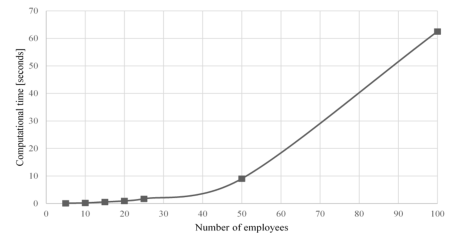
Figure 1: Graphical model of the matching algorithm with input data and output.Figure 2: Computational time of the scheduling algorithm (with interpolated line).
information such as the number of shifts per employee, the total prefere- nce score of all employees, and the individual preference score per employee. Finally, it is indicated whether a solution could be found and whether it is optimal. The solver is implemented in Python, which is popular in data science (Srinath 2017) and is available under https://github.com/tum-fml.
Scheduling problems range from a minimum of 4 to a maximum of 250 employees allocated to task numbers between 2 and 1,000 according to our literature research. To gain an indication of the performance of the algori- thm, we scaled our assignment problem from 5 employees to 100 employees. Results are shown in Figure 2.
The algorithm is able to obtain an optimal solution (maximization of total preference score) for each number of employees. In most cases, the match- ing problem is solved within a few seconds. Although the computational time increases with the number of employees, it takes on average only one minute to create a shift plan for 100 employees. In industrial applications, this number of employees covers the majority of matching problems in com- panies. Additionally, a computational time of one minute seems acceptable in comparison to manual scheduling of 100 employees.
CONCLUSION
Preference-based scheduling is a promising approach towards a human- centered allocation of tasks in logistics. This assignment of jobs is intended to counteract the workforce fluctuation in logistics as well as stress and health
issues of employees due to performance measurement. Most literature in sch- eduling so far focuses on optimizing costs as short-term saving, ignoring long-term consequences for employees. In this paper, we have conceptua- lized a preference measurement for logistics employees and an algorithmic assignment of employees to available jobs based on given preferences. We described matching constraints, matching process, and solve an application example with a CP-SAT algorithm. In the upscaled example with 100 emplo- yees, the algorithm scheduled employees to jobs in a calculation time of one minute. The implemented algorithm is published open source at the website noted above to encourage further development of these ideas. Future work will focus on fairness in the assignment of employees and on testing the conce- pts introduced here in a realistic industry environment. We are working on a user interface for employees and managers to create a holistic experience of the preference-based scheduling, and a handbook with design guidelines for future developers and managers introducing preference-based scheduling.
ACKNOWLEDGMENT
The authors would like to thank Julia Balowski for her support in imple- menting the concept of preference measurement and the Institute for Ethics in Artificial Intelligence from TU Munich for supporting the corresponding research project.
REFERENCES
Blöchliger, I. (2004), “Modeling staff scheduling problems. A tutorial.” European Journal of Operational Research 158(3), 533–542. Chen, P.-S., Huang, W.-T., Chiang, T.-H., Chen, G.Y.-H. (2020), “Applying Heu-
ristic Algorithms to Solve Inter-hospital Hierarchical Allocation and Scheduling Problems of Medical Staff.” Int. J. Comput. Intell. Syst., 13(1), 318–331. Da Col, G. and Teppan, E. (2019), “Google vs IBM: A Constraint Solving Challenge on the Job-Shop Scheduling Problem.” Electron. Proc. Theor. Comput. Sci., 306, 259–265. Ernst, A., Jiang, H., Krishnamoorthy, M., Sier, D. (2004), “Staff scheduling and
rostering: A review of applications, methods and models.” European Journal of Operational Research 153(1), 3–27. Günther, M. and Nissen, V. (2010), “Sub-daily Staff Scheduling for a Logistics Service Provider.” KI-Künstliche Intelligenz 24(2), 105–113. Günther, M. and Nissen, V. (2014), “A comparison of three heuristics on a practical
case of sub-daily staff scheduling.” Annals of Operations Research 218(1), 201– 219. Gupta, N. (2019), “Optimization of fuzzy bi-objective fractional assignment problem.” Opsearch 56(3), 1091–1102. Hempfing, A. and Schwemmer, M. (2019), “Fachkräftemangel in der Logistik. Vermessung, Struktur und Handlungsfelder. Fraunhofer SCS, Nürnberg. https://www.scs.fraunhofer.de/de/publikationen/studien/white-paper- fachkraeftemangel-logistik.html. Accessed 15 June 2021. Hochdörffer, J., Hedler, M., and Lanza, G. (2018), “Staff scheduling in job rotation
environments considering ergonomic aspects and preservation of qualifications.” Journal of Manufacturing Systems, 46, 103–114.
Accommodating Employee Preferences in Algorithmic Worker-Workplace Allocation 87
Jaturanonda, C. and Nanthavanij, S. (2011), “Analytic-based decision analysis tool for employee-job assignments based on competency and job preference.” Inter- national Journal of Industrial Engineering: Theory, Applications, and Practice 18(2). Kolb, K.J. and Aiello, J.R. (1996), “The effects of electronic performance monito-
ring on stress: Locus of control as a moderator variable.” Computers in Human Behavior, 12(3), 407–423. Naveh, Y., Richter, Y., Altshuler, Y., Gresh, D.L., and Connors, D.P. (2007), “Workforce optimization: Identification and assignment of professional workers using constraint programming.” IBM Journal of Research and Development, 51(3.4), 263–279. Perron, L. and Furnon, V. (2021), OR-Tools 7.2. https://developers.google.com/opti
mization/. Accessed 14 January 2022 Soukour, A.A., Devendeville, L., Lucet, C., an Moukrim, A. (2013), “A Memetic Algorithm for staff scheduling problem in airport security service.”Expert Systems with Applications, 40(18), 7504–7512. Srinath, K.R. (2017), “Python–the fastest growing programming language”, Interna-
tional Research Journal of Engineering and Technology 4(12), 354–357. Stuckey, P.J. (2010, June), “Lazy Clause Generation: Combining the Power of SAT and CP (and MIP?) Solving.” In Hutchison, D. et al. (eds.) Integration of AI and OR Techniques in Constraint Programming for Combinatorial Optimization Problems (pp. 5–9). Springer Berlin, Heidelberg. Theurer, C.P., Tumasjan, A., Welpe, I.M., and Lievens, F. (2018), “Employer
Branding: A Brand Equity-based Literature Review and Research Agenda.” International Journal of Management Reviews 20(1), 155–179. Van Ekeris, T., Meyes, R., Meisen, T. (2021), Discovering Heuristics aand Metaheuristics For Job Shop Scheduling From Scratch Via Deep Reinforcement Learning. In: Herberger, D.; Hübner, M. (eds.): Proceedings of the Conference on Production Systems and Logistics: CPSL 2021 (pp. 709–718). Hannover: Institutionelles Repositorium der Leibniz Universität Hannover, 2021.
LISTED IN THE AHFE DIGITAL BOOKSTORE CATALOGUE
Explore the complete digital volume
Human Factors in Management and Leadership
Read this individual research paper free through the original publisher, or explore the full digital proceedings book.
ISBN 978-1-958651-31-5
Explore this ISBN in the AHFE Bookstore ↗Listed in the July 2026 bookstore catalogue; search by ISBN to confirm current availability · Digital book purchase optional