Haoran Shao, Zhisheng Zhang, Zhijie Xia (2022). Evaluation of foreign e-commerce web interface element layout based on Moon-Spencer model. In: Ergonomics In Design. AHFE Open Access, vol. 47, pp. 345–352. https://doi.org/10.54941/ahfe1001955
The e-commerce platform is developing rapidly. Well-designed web interface can improve consumers' browsing experience and enhance market competitiveness. NGO Proposed an objective method to measure the aesthetic value of the interface by combining the characteristic elements of the interface design with the user's visual perception. The model is composed of 13 measurement features. However, it lacks objectivity because it does not consider the impact of color on interface aesthetics and human perceptual characteristics. In order to analyze the e-commerce website design more scientifically and reasonably, six aesthetic measures are selected and quantified combined with the Moon-Spencer model. And the analytic hierarchy process (AHP) is introduced to calculate the weight of each index, so as to get the comprehensive aesthetic value of the interface. Which in the end could help guide the designer to design and improve the e-commerce page.
Online shopping has become a mainstream way of shopping for people. The web browsing experience of consumers can be improved through inter- face design. However, there is no clear standard for web interface design in e-commerce.
At the same time, major e-commerce platforms are developing rapidly. However, many e-commerce companies do not realize the economic bene- fits and importance of beautiful web design. Many web pages have problems with abrupt colors and confusing layouts (Moshagen et al. 2010). This affects the browsing experience of consumers. At the same time, people’s aesthetics are evolving rapidly, which requires web design to cater to people’s changing aesthetics (Schmidt et al. 2009).
NGO et al. (2002) proposed an objective method to measure the aesthe- tics of an interface by combining characteristic elements of interface design with the visual perception of the user. The model consists of 13 measu- red characteristics but lacks objectivity as it does not consider the influ- ence of color on interface aesthetics and human perceptual characteristics (Cyr et al. 2010).
A good color scheme can highlight key information and improve efficie- ncy; on the other hand, it can also enhance the overall recognizability and comprehensibility of the interface. The style of the color scheme enhances the user’s psychological perception and experience.
This paper introduces the harmony model, which uses the harmony of interface colors as a new measurement feature. The Analytical Hierarchy Process (AHP) is used to obtain the weight values of each indicator, so as to obtain the formula for the calculation of the comprehensive aesthetics of the interface.
Foreign e-commerce platforms have been developed earlier and their web design is more mature. Therefore, the study of foreign e-commerce platforms is more valuable. In this paper, we will select the top five e-commerce websites in North America, which are Amazon, eBay, Etsy, Target, and Walmart.
METHODOLOGY
Six objective aesthetic measures were selected for quantitative analysis from the 13 measurement characteristics proposed by the NGO through data enquiries and research by the designers. Next, color harmony is analyzed according to the Moon-Spencer model.
Color harmony is a key factor in color aesthetics. The classical color har- mony models are the Matsuda color harmony template, which considers only hue and not saturation or brightness, and the Moon-Spencer color harmony model. The Moon-Spencer color harmony model overcomes this shortcoming. It measures the harmony of colors in Munsell’s color space by calculating the relative values of resident colors to other colors. Moon and Spencer considered colors to be harmonious when the differences between them are clear. They defined three color differences, independence, similarity, and contrast (Moon and Spencer, 1944).
Balance Degree Balance can be defined as the distribution of visual weight in a picture. Visual weight is the perception that some objects appear heavier than others. Larger objects are heavier and smaller objects are lighter. Balance in interface design is achieved by providing equally weighted interface elements, including left and right, top and bottom (Lai et al. 2010).
Symmetry Degree Symmetry refers to the degree of symmetry of interface elements along hori- zontal, vertical and diagonal directions, and it reflects whether the layout of the interface information makes sense while avoiding cognitive retardation for the user (Bauerly and Liu, 2008).
Cohesiveness In interface design, a similar aspect ratio enhances cohesion. Cohesion reflects the degree of visual coherence in the layout of interface elements.
Evaluation of Foreign E-Commerce Web Interface Element Layout Based 347
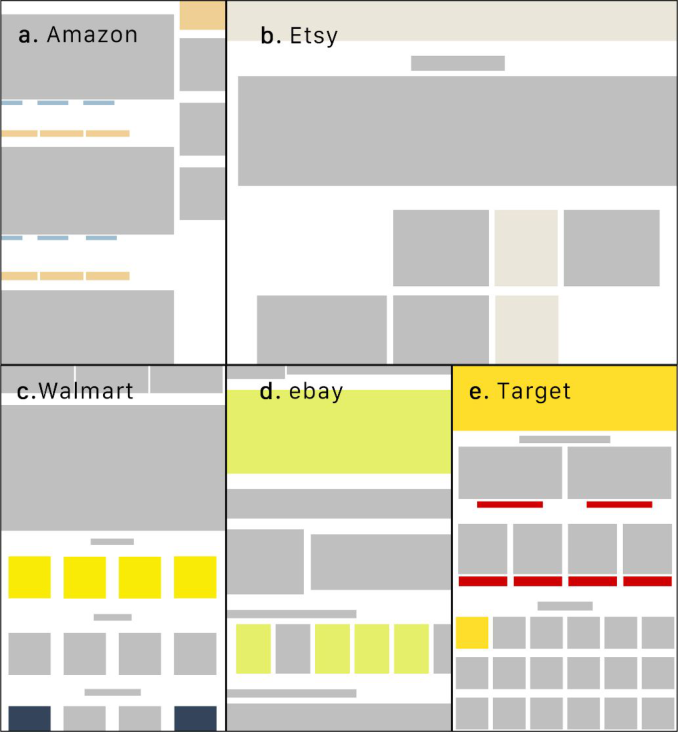
Figure 1: Simplified e-commerce web interface.
Integrity Integrity refers to the sum of the overall visual elements, which reflects the compactness of the layout of the interface elements and avoids loose distribution of information.
Simplicity Simplicity refers to the conciseness of interface elements, which will affect the user’s perception and memory burden.
Density Density refers to the density of the interface elements. In interface design, it is necessary to avoid an overly dense distribution of information that could affect the user’s browsing experience.
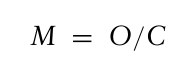
Color Harmony Color harmony is an important factor to determine the aesthetic value of interface. Moon-Spencer model can measure the color harmony by calculating the relative value of the main color and other colors. The formula of harmony degree is as follows.
Equation reproduced from the original PDF.
Where m stands for beauty, O stands for the order of color combination, C stands for color complexity; when m is greater than 0.5, it means color harmony; the larger m is, the higher the degree of color harmony is:
Equation reproduced from the original PDF.
N represents the number of color types of the picture, NH is the logarithm of colors with different hue values, NV represents the logarithm of colors with different lightness values, NC is the logarithm of colors with different saturation.
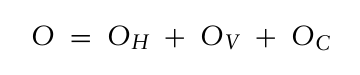
Equation reproduced from the original PDF.
OH stands for the order factor of color difference, OV stands for the order factor caused by the difference of brightness, OC represents the order factor of saturation.
The top left corner of the page is used as the origin to establish a coordinate system that determines the width and height of the overall interface, as well as the starting coordinates of the abstracted interface elements. This enables the positioning of all elements in the interface.
Firstly, the Amazon interface is processed to calculate the rectangular coordinates.
Xi ∈{0, 23.2, 118.2, 118.2, 118.2, 118.2, 4.5, 4.5, 4.5, 4.5}; Yi ∈{0, 18.8, 58.2, 95.2, 134.2, 80.7, 160.7, 247.3, 333.4}; wi ∈{156.32, 133.12, 38.12, 38.12, 38.12, 38.12, 110.2, 110.2, 110.2, 110.2}; hi ∈{16.3, 37.5, 31.9, 31.9, 31.9, 51.4, 51.4, 51.4, 51.4}; W = 156.32; H = 584.59; Secondly, the eBay interface is processed to calculate the rectangular coordinates.
Xi ∈{0, 2.5, 2.5, 45.2, 8, 2.5, 0, 2.7}; Yi ∈{18.3, 67.4, 87.3, 89.9, 134.3, 173.6, 215.3, 262.7}; wi ∈{150.81, 143.8, 39.2, 102.7, 134.5, 145.5, 150.81, 145.3}; hi ∈{41.5, 14.6, 32.3, 27.5, 24.7, 32.1, 41.2, 31}; W = 150.81; H = 395.29; The Etsy interface is processed to calculate the rectangular coordinates. Xi ∈{0, 0, 3.8, 10, 7.6, 4.1, 4.5, 0, 4.5, 0}; Yi ∈{8.9, 28.4, 83.4, 126.8, 192.3, 253.6, 315.7, 348.4, 431.4, 495.5};
Evaluation of Foreign E-Commerce Web Interface Element Layout Based 349
wi ∈{150.81, 150.81, 142.9, 131, 135.2, 142.6, 142.4, 150.81, 142.5, 150.81}; hi ∈{14.7, 43.5, 35.6, 52.7, 56.4, 52.1, 26.1, 74.6, 58.4, 75.3}; W = 150.81; H = 720.8; The Target interface is processed to calculate the rectangular coordinates. Xi ∈{0, 0, 4.5, 4.7, 77.6, 0, 4.6, 77.4, 4.1, 2.5, 0.5}; Yi ∈{0, 15.2, 75.7, 159.8, 159.8, 189.6, 253, 253, 304.1, 306.1, 474.7}; wi ∈{150.81, 150.81, 142.2, 69, 69, 150.81, 69, 69, 143, 146, 149.7}; hi ∈{9.5, 56.7, 55.3, 17.7, 17.7, 52.4, 35, 35, 41.6, 162.1, 34.3}; W = 150.81; H = 739.39; The Walmart interface is processed to calculate the rectangular coordinates.
Xi ∈{0, 2, 0, 6.8, 6.8, 6.2, 6.2, 6.2, 3.4, 0}; Yi ∈{0, 70.5, 122.1, 221.6, 272.7, 321.1, 371.8, 416.5, 507.6}; wi ∈{150.81, 146.7, 150.81, 137.6, 137.6, 138.2, 138.2, 141.2, 150.81}; hi ∈{64.1, 43.7, 83.1, 28.4, 27.9, 27.9, 28.2, 32.3, 77.8}; W = 150.81; H = 592.31;
RESULTS
Through MATLAB calculation, the aesthetic value of each measure of each e-commerce page is obtained, and the results are shown in Table 1.
A K-means cluster analysis algorithm is used to extract the colors of each web page, and the extracted interface colors were simplified and grouped to compare the color matches between the two. The main color components in the calculation were the pair of colors, the background colors, and the text color blocks, which make up a considerable proportion of the interface. The HSB model is then used to separate the brightness, hue and saturation of each color, and the color harmony is then calculated according to the Moon- Spencer model. Finally, the aesthetic value of color for each pair of colors on each page can be obtained.
Analytic hierarchy process (AHP) is a decision analysis method which combines qualitative and quantitative methods to solve multi-objective com- plex problems. This method combines quantitative analysis with qualitative analysis, uses experience to judge the relative importance of the standards to
Table 2. Color attributes.
Table available in the original PDF paper.
HSB Amazon eBay Etsy Target Walmart # 9ebccf e6ef6a ebe6da ce0002 34455b H 203 64 42 359 214 S 24 56 7 100 43 B 81 94 92 81 36 # f0cf95 1c3e54 373d52 ffde2b faeb07 H 38 204 227 51 56 S 38 67 33 83 97 B 94 33 32 100 98
Table 3. Color harmony value.
Table available in the original PDF paper.
Moon-Spencer Amazon eBay Etsy Target Walmart C 10 10 10 10 10 O 2.5 5.8 5.8 1.5 5.8 M 0.25 0.58 0.58 0.15 0.58
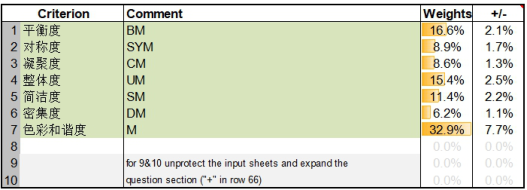
Figure 2: Analytic hierarchy process.
measure whether the objectives can be achieved or not, and gives the wei- ght of each standard of each decision-making scheme, and uses the weight to calculate the priority of each index. This method can be more effectively applied to those problems that are difficult to be solved by quantitative meth- ods. In this paper, the analytic hierarchy process will be used to calculate the weight value of each aesthetic measure. In the experiment, 10 design students were recruited as subjects. Firstly, five web pages were presented to the sub- jects. Secondly, the subjects were asked to compare each index to judge the relative importance and assign the value according to 1-9. The results are shown in Fig. 2.
It can be concluded from the table that the balance weight is 0.166, sym- metry weight is 0.089, cohesion weight is 0.086, integrity weight is 0.154, simplicity weight is 0.114, density weight is 0.062, color harmony weight is 0.329. It can be concluded that the biggest weight is color harmony, the second is balance, the third is integrity, and the smallest weight is density. After getting the weight, the comprehensive aesthetic value of each interface is shown in the Table 4.
Evaluation of Foreign E-Commerce Web Interface Element Layout Based 351
Table 4. Calculation of comprehensive aesthetic value.
After the weight was assigned, the comprehensive aesthetic value was ranked as Walmart > eBay > Etsy > Amazon > target in descending order.
DISCUSSION AND CONCLUSION In order to compare with the calculated results, a questionnaire was drawn up for subjective evaluation. The questionnaires were distributed online, and 15 valid questionnaires were eventually collected. The scores were tallied in descending order of Etsy > Walmart > eBay > Amazon > target.
First, the results of the calculation were compared with the subjective eva- luation results. It can be seen that, except for a large change in the order of Etsy, the order of the two matches perfectly, which laterally verifies that the method can better reflect the user’s preference for the web page.
Secondly, through the analysis of the results of AHP, we can see that color harmony is the most crucial factor. In the comprehensive aesthetic value calculation and subjective evaluation, Target is ranked the lowest. By analy- zing the colors of Target webpage, we can find that the color matching of Target webpage is a set of red and yellow with high saturation, while Etsy with better ranking is a set of colors with low saturation. Meanwhile, the two colors used on the target page are high in brightness, while Etsy, Wal- mart, and eBay, which rank relatively well, use high brightness colors with low brightness colors.
Saturation reflects the vibrancy of the color. In interface color schemes, variations in purity can reinforce the theme and enliven the atmosphere. Conversely, variations in purity can also have a plain and elegant effect. Colors are easier to reconcile when they are low in purity, and less easy to reconcile when they are high in purity and brightness. In interface design, common types of purity choices are bright weak tones, medium emphasis, medium tones, grey emphasis, grey medium tones, and no color contrast. Target’s color selection type can be categorized as bright-weak, which is cha- racterized by strong sensory stimulation from color combinations that may even collide and resist each other, resulting in an overly intense visual sti- mulation and discomfort for the user when navigating the interface. Etsy’s color palette can be categorized as grey-medium, which is characterized by a simple, stable and easygoing feel. The user does not feel strongly stimulated when browsing and is visually more relaxed and comfortable.
Brightness reflects the brightness of the colors. According to the Moon- Spencer model, interfaces with slight difference in brightness, such as amazon and target, scored lower, while interfaces with more difference in brightness, such as Etsy, Walmart, and eBay, generally scored higher. The color sch- eme with a greater difference in brightness gives a visually fresh, bright, and eye-catching impression, while the color scheme with a smaller difference in brightness gives a visually harsh and grey impression.
Through the analysis of other remaining aesthetic measures, we can find that Walmart has the highest score in balance and integrity, and eBay has the highest score in simplicity. Thus, in the design of e-commerce pages, the balance and simplicity of the interface will have a positive impact on the user’s browsing experience. On the other hand, Target has complex layout of page elements and unclear information distribution, which may increase the cognitive and memory burden of users in the browsing process.
Based on the harmony model, this paper constructs a comprehensive aesth- etic calculation method for the layout of interface elements by using color harmony as a new measurement feature. The objectivity of this evaluation method for evaluating the aesthetics of interfaces is verified through a study of foreign e-commerce pages. However, the research in this paper still has many shortcomings, such as simplifying the division of color pairs, which will be investigated in depth in the future.
ACKNOWLEDGMENT
I am grateful to my teacher Zhou Lei for her influence on me and academic help.
REFERENCES
Bauerly, M. and Liu, Y., 2008. Effects of symmetry and number of compositional elements on interface and design aesthetics. Intl. Journal of Human–Computer Interaction, 24(3), pp. 275–287. Cyr, D., Head, M. and Larios, H., 2010. Colour appeal in website design within
and across cultures: A multi-method evaluation. International journal of human- computer studies, 68(1-2), pp. 1–21. Lai, C.Y., Chen, P.H., Shih, S.W., Liu, Y. and Hong, J.S., 2010. Computational models and experimental investigations of effects of balance and symmetry on the aesthetics of text-overlaid images. International journal of human-computer studies, 68(1-2), pp. 41–56. Moshagen, M. and Thielsch, M.T., 2010. Facets of visual aesthetics. International
journal of human-computer studies, 68(10), pp. 689–709. Moon, P., and Spencer, D.E., 1944. Geometric formulation of classical color harmony. JOSA, 34(1), pp. 46–59. Ngo, D.C.L., Teo, L.S. and Byrne, J.G., 2002. Evaluating interface esthetics. Know-
ledge and Information Systems, 4(1), pp. 46–79. Schmidt, K.E., Liu, Y. and Sridharan, S., 2009. Webpage aesthetics, performance and usability: Design variables and their effects. Ergonomics, 52(6), pp. 631–643.
LISTED IN THE AHFE DIGITAL BOOKSTORE CATALOGUE
Explore the complete digital volume
Ergonomics In Design
Read this individual research paper free through the original publisher, or explore the full digital proceedings book.
ISBN 978-1-958651-23-0
Explore this ISBN in the AHFE Bookstore ↗Listed in the July 2026 bookstore catalogue; search by ISBN to confirm current availability · Digital book purchase optional