Samson Palmer, Dale Richards, Graham Shelton-Rayner (2022). An Innovative Measure of Cognitive Function in the Human-Autonomy Partnership. In: Neuroergonomics and Cognitive Engineering. AHFE Open Access, vol. 42, pp. 73–83. https://doi.org/10.54941/ahfe1001821
Understanding how the user will interact with the system is fundamental to ensuring success in achieving a given goal. Therefore adopting a human-centered design approach will assist in integrating the human as a key component of the system during the design process. With the increased use of autonomy across different domains, the role of the human will inevitably change; in that how the user interacts with the system is dependent on the level of delegated authority the system has been assigned. To understand these interactions and the impact this has on the user, it is important to assess how the human interacts with the system. However, as these systems become more complex we must ask whether the measures we currently use are sufficient in allowing us to better understand the underlying cognitive functions involved in human-autonomy interaction. Evaluating this partnership we can not only assess the effectiveness and efficiency of human-autonomy interaction, but also provide guidance for future designs. Novel techniques such as functional Near Infrared Spectroscopy (fNIRS) offer a direct measure of cortical blood flow changes related to brain activity. This paper discusses findings from an experiment that examined human-autonomy interaction in a simulated Autonomous Vehicle (AV) whilst exploring the neural correlates of trust and workload. Participants were asked to complete a series of primary driving scenarios with secondary distraction tasks using both manual and autonomous vehicles. fNIRS was used to assess driver cognition across both conditions. Participants were also confronted with different levels of system transparency to determine whether the level of information presented by the system effected driver trust. Findings suggest that when autonomy was presented then the cognitive activity in the right and left dorsolateral prefrontal cortex (dlPFC) and the left ventrolateral prefrontal cortex (vlPFC) was reduced, whilst secondary task performance improved. These regions are associated with effortful decision-making based on working memory (WM) and reasoning, suggesting that using autonomy helps to reduce cognitive effort by removing the user’s need to make these decisions. During the system transparency scenarios, areas of the right and left vlPFC and left dlPFC showed significantly increased activity when the system provided very little information. These regions have previously been associated with uncertainty of decision making and increased visual processing, suggesting that a lack of information provided by the system meant the driver attempted to process the decisions of the vehicle through monitoring the environment. These findings demonstrate how novel measures of cognitive function could inform the design of future systems and facilitate a more effective human-autonomy partnership.
Human Factors (HF) assessment is fundamental in the development of socio- technical systems. The ability for a system to meet its intended design goal depends on both the design of the system and an understanding of how the user will interact with it. For highly complex systems the user will need to perform many tasks in a highly dynamic environment, shifting attentional resources and processing visual and spatial information across different sce- narios (Faure et al., 2016). As the system becomes more complex it becomes more important to understand the HF associated with human-system intera- ction (HSI), as the limited capacity of the human brain to process information can result in mental overload and ineffective operation, leading to serious consequences (Berka et al. 2007; Durantin et al. 2014). This becomes incre- asingly relevant when we consider autonomous systems that are designed to reduce these effects. Research has shown that automation can significantly lower the user’s situation awareness (SA), particularly in out-of-the-loop sce- narios, demonstrating that as systems become more automated and reliable, the human user becomes less reliable and less aware of the current status of the system (Endsley 2019). This effect can be exacerbated when users place an overreliance on the system, and can result in it being used in circumsta- nces beyond its capabilities (Parasuraman et al. 2008). This demonstrates the importance of understanding HSI and places a fundamental reliance on developing and facilitating an effective human-autonomy partnership (HAP).
There are many different techniques that are currently used to assess cri- tical HF issues and to ensure they are addressed (Hart 2006). Generally speaking, these techniques come under three main categories: Subjective, Behavioural/Performance, and Physiological. Subjective measures such as the NASA-TLX workload questionnaire (Hart and Staveland 1988) or the Empirically Derived Trust Questionnaire (Jian et al. 2000) are a popular first choice in HSI evaluation due to their ease of use, non-invasiveness, and cost effectiveness (Rubio et al. 2004). However there are several drawbacks to subjective metrics such as task intrusiveness and the ability to only represent the entire task rather than changes within the task (Shaw et al. 2012). Fur- thermore, subjective metrics of more complex cognitive constructs such as trust are often influenced by user bias and training; often only inferring the user’s belief of the system capabilities and trustworthiness, which does not necessarily translate to behavioural response (Palmer et al. 2020; Lewis et al. 2018). As such, they are often combined with performance and behavioural metrics, such as task performance measures which are often used as a way of indicating mental workload during system interactions. The most common measures of human performance are reaction time and accuracy, normally presented as completion times and error rates. However team performance and user experience measures can also be used.
Physiological measures offer an objective measure of mental task load which can be recorded continuously during an entire task without intru- ding on performance and can provide information in “real time” (Fallahi et al. 2016; Ryu and Myung 2005). Physiological measures used to assess HF monitor changes to activation levels of the Autonomic Nervous System
An Innovative Measure of Cognitive Function in the Human-Autonomy Partnership 75
(ANS) by measuring changes in physiological state such as heart rate (HR), heart rate variability (HRV), electrodermal activity (EDA), and respiration rate. Whilst there is not one true measure for each type of HF, physiolo- gical measures capture individual HF aspects in response to task demands, whilst subjective measures can be confounded with individual perceptions of task difficulty, perceived performance, and level of expertise (Charles and Nixon 2019). However, physiological measures also have their limitations, such as a lack of processing requirements for specific tasks when using EDA, or limited sensitivity to only a small subset of the components of workload for cardiac measures (Kramer 1990). This is not to say that these metrics are obsolete, but rather they may lack the depth to provide detailed information on the neural mechanisms surrounding HSI, particularly with autonomous systems and with more complex HF such as trust (Palmer et al. 2020). The- refore, innovative measures of the neural correlates associated with trust and indeed other human performance elements (such as vigilance) may provide psychophysiological indices of the impact they have, especially in relation to human-autonomy interaction.
There is an increasing availability of neuroimaging tools and devices that can be used to provide direct measures of brain activity related to cogni- tive functions associated with different HF, particularly wearable sensors that allow for real-time analysis in the field. The most commonly used neu- roimaging techniques in HF assessment are Electroencephalography (EEG) and functional Magnetic Resonance Imaging (fMRI). Both have been used in applied settings, for example to demonstrate trust in human-automation interactions (Wang et al. 2018) or to assess trust in human vs agent advice in luggage-screening tasks (Parasuraman et al. 2014). However, both these methods are limited in their real-world applicability due to the lack of por- tability of fMRI and the susceptibility to electrical noise and movement artefacts of capturing EEG (Brouwer et al. 2012; Hirshfield et al. 2009; Izze- toglu et al., 2015). More recently, portable neuroimaging techniques such as functional near infrared spectroscopy (fNIRS) have been introduced as a novel imaging modality for conducting real-world studies (Xue et al. 2015; Izzetoglu and Richards, 2019).
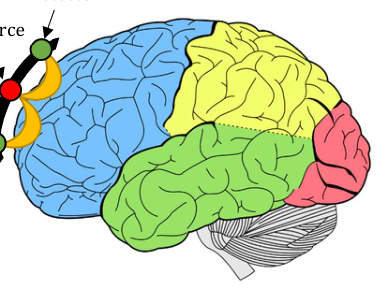
fNIRS is a functional imaging technology that monitors changes in corti- cal oxygenation as a direct result of changes in brain activity, referred to as neurovascular coupling (Leon-Carrion and Leon-Dominguez 2012). Infrared light at wavelengths between 700-900nm (referred to as the optical window) is emitted from a series of light sources, normally attached to a head cap, through to the capillaries on the surface of the brain where the light is then either absorbed by oxygenated (oxy-Hb) or deoxygenated (deoxy-Hb) hae- moglobin in the blood, or scattered by the intra- and extracellular boundaries within the head (such as the skin) and collected by a series of detectors also on the head cap (figure 1) (Izzetoglu et al. 2007; Leon-Carrion and Leon- Dominguez 2012). The levels of oxy-Hb and deoxy-Hb in the capillaries is directly related to cerebral blood flow (CBF) associated with changes in neurological activity and can be aligned with a specific event in time. Furth- ermore, the absorption spectra for oxy-Hb and deoxy-Hb are significantly
Detector Source
Figure 1: Schematic brain diagram showing infrared light emitted from a central source where it is absorbed by haemoglobin, or reflected back to the detectors.
different, allowing for spectroscopic separation using variable wavelengths within the optical window (Palmer et al. 2020).
fNIRS has seen a recent increase in its applied use to assess HF across natural environments, such as in expressway driving (Yoshino et al. 2013) and ship bridge simulations (Fan et al. 2020). It has also demonstrated its usability and versatility across multiple disciplines. However, whilst there is evidence of the potential for fNIRS as a robust measure of HSI, it has not yet benefitted from systematic validation in applied environments (such as in an autonomous vehicle). This paper discusses one of a series of studies designed to take systematic steps to validate fNIRS as a robust and relia- ble tool for measuring HF within the HAP. This study attempts to monitor and assess differences in cognitive function associated with manual and auto- nomous driving. A dual-task paradigm was used whereby participants were asked to complete a primary driving task whilst simultaneously completing a secondary non-driving related task (NDRT), and changes in cortical activity were compared to determine how autonomous systems can aid in reducing cognitive load and improving driving performance. This study also sought to determine how information transparency could influence trust within the HAP, particularly regarding the presentation of automated decision-making, and whether these changes can be monitored and assessed using fNIRS. This study examined whether the use of autonomy would help to reduce cognitive load from the primary driving task and thus allow more cognitive resources for the secondary task, and that fNIRS would be able to measure these diffe- rences. We also examine the level of system transparency associated with the decisions made by the autonomous system, and whether fNIRS can provide insight as to the neurocorrelates related to trust.
STUDY DESIGN A within-subjects study was conducted whereby participants (N = 32) were asked to complete several baseline tasks for comparison before completing a series of four manual and autonomous driving tasks, either whilst performing
An Innovative Measure of Cognitive Function in the Human-Autonomy Partnership 77
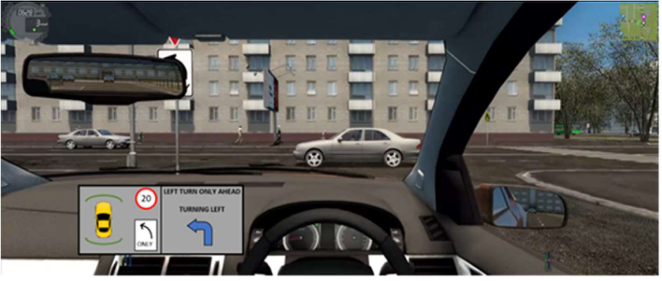
Figure 2: Example of the IVIS displayed in the simulated vehicle.
a secondary NDRT or whilst using an autonomous system with varying levels of information transparency. All driving tasks were conducted within City Car Driving Simulator (Forward Development Ltd.) and displayed on a single 27” monitor and controlled using a USB steering wheel and pedals. Autono- mous driving was achieved through a ‘Wizard of Oz’ (WoZ) approach in the form of screen recordings of the experimenter driving set routes within the simulator and then played back. An overlay was included in the autono- mous driving tasks that represented an in-vehicle information system (IVIS), and the information presented by the IVIS changed depending on the driving task (figure 2). The secondary NDRT task used in the study was a Stroop test presented on a tablet PC located next to the main simulator monitor, and participants interacted with the task through a small wireless number pad next to the simulator steering wheel. The four main driving tasks were counterbalanced to prevent confounding variables.
A series of baseline measures were taken to be used for comparison against the main task data. Firstly, a Resting Baseline (RB) was taken (no task), follo- wed by a Stroop Test Baseline (STB) (Stroop test only), and finally a Manual Driving Baseline (MDB) (manual driving only). Participants then conducted four main tasks: Manual Driving + Stroop Test (MDST) which required the completion of a Stroop Test whilst driving the simulator in manual mode; Autonomous Driving with Stroop Test (ADST) which required participants to complete a Stroop Test during autonomous driving simulation; Autonomous High Transparency (AHT) where participants monitored an autonomous dri- ving simulation with a high level of information transparency; Autonomous Low Transparency (ALT) where the level of information transparency was reduced.
RESULTS AND ANALYSIS fNIRS data was recorded throughout the study to assess prefrontal corti- cal activity via neurovascular coupling, with the ratio between oxy-Hb and deoxy-Hb as the primary assessment value. Virtual markers were placed within the fNIRS data collection software to indicate the start and finish of each baseline and main task, which was then used for analysis. Following
1
3
5
7
9
11
13
15
2
4
6
8
10
12
14
16
Figure 3: Schematic diagram showing how optodes were paired for analysis.
Figure available in the original PDF paper.
completion of the study, fNIRS data was filtered through a Low-Pass filter and an artefact removal processer, before optical density was extracted using a modified Beer-Lambert Law (MBLL) to calculate channel-specific changes in oxy-Hb and deoxy-Hb across 16 optodes (Palmer et al. 2020). Oxygena- tion data (OXY) was then exported for each optode before being paired for analysis (figure 3), due to the naturally occurring differences in participant head size and head band positioning, and the consequent overlap of optode placement on the prefrontal cortical regions.
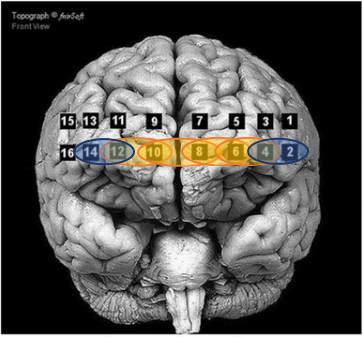
Due to high inter-participant variance in mean optode OXY values, an independent t-test was used to determine whether there was a significant main effect for the weighted mean of each optode pair, in turn preventing the effects of the high variance. Furthermore, OXY values are calculated relative to Resting Baseline data which results in the Resting Baseline values being normalised and exported as close to 0, therefore all task values are displa- yed as changes against Resting Baseline values. Comparison of the MDST and ADST data when compared to the STB task data showed a significant increase in CBF at cortical regions surrounding optode pair 2+4 and 12+14 (figure 4) during the MDST task that was not present during the ADST task. These regions can be aligned with Brodmann areas 9/46 or the left ventro- lateral PFC (vlPFC)/dorsolateral PFC (dlPFC), and Brodmann areas 9/10 or the right dlPFC, respectively. This suggests that these cortical regions may be utilised more during manual driving compared to autonomous driving. In addition, there was an increase in activity at cortical region surrounding optode pair 4+6, 6+8, 8+10, and 10+12, for both the MDST and ADST tasks compared to the STB task. These regions can be aligned with the left and right dorsomedial PFC (dmPFC)/orbitofrontal PFC, suggesting that these regions may be involved in the visual processing required to monitor the driving environment (as illustrated per figure 4).
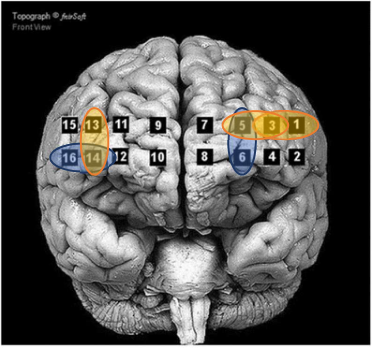
Figure 5 shows comparisons between the AHT and ALT task compared to Resting Baseline, which demonstrated significant increases in CBF at cor- tical regions surrounding optode pair 1+3 and 3+5 aligned with the left vlPFC/dlPFC, and optode pair 13+14 aligned with either the right vlPFC or dlPFC. Depending on the variations in delineation of cortical regions which often varies between studies (Carlén 2017), changes in CBF at these regions may represent changes in activity for both the vlPFC and dlPFC. Nonethe- less, these changes in activity during the ALT task compared to the AHT task suggests that these cortical regions may be associated with increased visual processing as a result of the lack of information presented by the ALT task. This is further supported in the comparison of the AHT and ALT tasks when
An Innovative Measure of Cognitive Function in the Human-Autonomy Partnership 79
Figure 4: Topographical image showing optode pairs with significant activity changes during the ADST task (yellow) and the MDST task (yellow and blue) compared to the STB task.Figure 5: Topographical image showing optode pairs with significant changes in acti- vity during the ALT task when compared to the RB (yellow) and the MDB task (blue), that were not present in the AHT comparisons.
compared to the MDB task, which demonstrated increased activity in regi- ons surrounding optode pair 5+6 and 14+16. These regions overlap with those in the Resting Baseline comparison and can also be aligned with the left vlPFC/dlPFC and right vlPFC/dlPFC regions depending on delineation. As such, changes at these optode regions may represent activity in both the vlPFC and dlPFC related to increased visual processing, but may also repre- sent uncertainty and distrust in the decision-making processes of the ALT system.
DISCUSSION
HF assessment is a critical component in the design and evaluation of a socio- technical system. As systems become more complex, with increasing levels of
automation and autonomy, the manner in which the human is integrated becomes more critical to understand. The advances in neuroimaging tools presents a key opportunity to assess how the user interacts with complex systems and provides insight as to HF elements that tend to be difficult to measure. Technologies such as fNIRS present portable and relatively affor- dable means that allow for extensive use in applied situations without being affected by environmental factors or the systems being tested. However, the novelty of these techniques mean they have yet to be systematically valida- ted in the context of HSI. This study is the third in a series of studies that were designed to take a systematic approach to validating fNIRS as a robust measure of cognitive function in the HAP, by applying fNIRS along with other commonly used HF assessment tools in a series of controlled labo- ratory and simulator experiments. Participants completed several manual and autonomous driving tasks in a simulated environment that were desi- gned to determine how autonomous systems can aid in reducing cognitive load associated with manual driving, whilst also attempting to assess the neural correlates of trust associated with information transparency of an autonomous system.
fNIRS data demonstrated significant increases in cognitive activity that can be aligned with the left dlPFC and vlPFC, and the right dlPFC, during the MDST task when compared to the Stroop Baseline task, but not during the ADST task. This may suggest that these regions are associated with chan- ges in cognitive function related to manual driving. However, these regions of the PFC, particularly the dlPFC, is known to facilitate decision-making (DM) based on working memory (WM) and reasoning, but is also implicated in DM that conflicts with the norm and with a person’s own response tende- ncies. Therefore, activity in this region may be more indicative of conflicting DM processes when operating a manual vehicle and completing a secondary NDRT, particularly the incompatible exposures of the Stroop test. Further- more, the vlPFC has been implicated previously in the development of distrust and uncertainty in DM (Palmer et al. 2020), and therefore could represent uncertainty in the DM capabilities of the participant and would also support performance data that, although excluded from analysis, demonstrated signi- ficantly higher error rates for the MDST task compared to the other Stroop tasks. In addition, comparisons between the MDST and Manual Baseline tasks also demonstrated increased activity in the dlPFC that was not shown when comparing the ADST task to the Manual Baseline task. This may fur- ther demonstrate increased effortful DM associated with the combination of manual driving and the Stroop test, both of which require constant DM processes to complete successfully. Nonetheless, these comparisons demon- strate the capability of autonomous systems to help reduce the cognitive load associated with manual driving and to free up cognitive resources to more effectively complete secondary tasks.
During the ALT task, there was a significant increase in cognitive activity in the left and right vlPFC/dlPFC when compared to the Resting Baseline and the Manual Driving Baseline that was not present when comparing the AHT task to these baselines. These tasks were designed to determine how variations in information transparency may impact cognitive response when
An Innovative Measure of Cognitive Function in the Human-Autonomy Partnership 81
participants are monitoring an autonomous system, particularly with regards to the neural correlates of trust and uncertainty. As the ALT task displayed very little information about system DM processes or the environment, acti- vity in these regions may be associated with increased visual processing as participants attempted to monitor the environment and determine the rea- sons behind the actions and decisions of the autonomous system. Indeed, research has shown that the vlPFC processes information from the ventral visual pathway regarding object identity (Sakagami and Pan 2007), which is supported by these findings. However, similar changes during the MDST task may suggest that increased activity in these regions during the ALT task may more likely represent uncertainty of DM processes with relation to the autonomous system. This is supported by the trust questionnaire data which, although excluded from analysis, showed participants felt there was a signi- ficant lack of information during the ALT task and a lack of confidence and safety during the MDST task. When combining this information together, it may suggest that cognitive functions related to DM processing, in parti- cular circumstances, could be indicative of changes in user confidence and consequently trust of an autonomous system.
CONCLUSION
This study illustrates how fNIRS could be used as a valuable neuroimaging tool within the HF toolkit to monitor human-autonomy interaction. The results indicate that fNIRS can provide accurate and reliable measures of cognitive function such as decision making and visual processing, and pro- vides the first steps in validating fNIRS as a tool that can be applied to real world scenarios. This research provides evidence for the use of fNIRS as a design/evaluation tool for complex socio-technical systems. Further to this, fNIRS can be used to understand the nature of the HAP and assist in guiding the design of this emerging paradigm of interaction.
REFERENCES
Berka, C., Levendowski, D., Lumicao, M., Yau, A., Davis, G., Zivkovic, V., Olmstead, R., Tremoulet, P. and Craven, P. (2007) “EEG Correlates of Task Engagement and Mental Workload in Vigilance, Learning, and Memory Tasks”. Aviation, Space, And Environmental Medicine, 78 (5), 231–244. Brouwer, A., Hogervorst, M., van Erp, J., Heffelaar, T., Zimmerman, P. and Ooste-
nveld, R. (2012) “Estimating Workload Using EEG Spectral Power and Erps in the N-Back Task”. Journal of Neural Engineering, 9 (4), 045008 Carlén, M. (2017) “What Constitutes the Prefrontal Cortex?”. Science, 358 (6362), 478–482. Charles, R. and Nixon, J. (2019) “Measuring Mental Workload Using Physiological
Measures: A Systematic Review”. Applied Ergonomics, 74, 221–232. Durantin, G., Gagnon, J., Tremblay, S. and Dehais, F. (2014) “Using Near Infrared Spectroscopy and Heart Rate Variability to Detect Mental Overload”. Behaviou- ral Brain Research, 259, 16–23. Endsley, M. (2019) “Situation Awareness In Future Autonomous Vehicles: Beware
of the Unexpected.” in Proceedings of The 20th Congress of the International Ergonomics Association (IEA 2018) ed. by Bagnara, S., Tartaglia, R., Albolino, S., Alexander, T. and Fujita, Y. Springer.
Fallahi, M., Motamedzade, M., Heidarimoghadam, R., Soltanian, A., Farhadian, M.
and Miyake, S. (2016) “Analysis of the Mental Workload of City Traffic Con- trol Operators While Monitoring Traffic Density: A Field Study”. International Journal of Industrial Ergonomics, 54, 170–177. Fan, S., Blanco-Davis, E., Zhang, J., Bury, A., Warren, J., Yang, Z., Yan, X., Wang, J. and Fairclough, S. (2020) “The Role of the Prefrontal Cortex and Functional Connectivity During Maritime Operations: An Fnirs Study”. Brain And Behavior, 11 (1), 1. Faure, V., Lobjois, R. and Benguigui, N. (2016) “The Effects of Driving Environment
Complexity and Dual Tasking on Drivers’ Mental Workload and Eye Blink Beh- avior”. Transportation Research Part F: Traffic Psychology and Behaviour, 40, 78–90. Hart, S. (2006) “Nasa-Task Load Index (NASA-TLX); 20 Years Later”. Proceedings of the Human Factors and Ergonomics Society Annual Meeting, 50 (9), 904–908. Hart, S. and Staveland, L. (1988) “Development of NASA-TLX (Task Load Index):
Results of Empirical and Theoretical Research”. Advances In Psychology, 52, 139–183. Hirshfield, L., Chauncey, K., Gulotta, R., Girouard, A., Solovey, E., Jacob, R., Sassaroli, A. and Fantini, S. (2009) “Combining Electroencephalograph and Functional Near Infrared Spectroscopy to Explore Users’ Mental Workload”. Foundati- ons of Augmented Cognition. Neuroergonomics and Operational Neuroscience, 239–247. Izzetoglu, K., Ayaz, H., Hing, J., Shewokis, P., Bunce, S., Oh, P. and Onaral, B.
(2015) “UAV Operators Workload Assessment by Optical Brain Imaging Techno- logy (Fnir).” in Handbook Of Unmanned Aerial Vehicles, ed. by Valavanis, K. and Vachtsevanos, G. Netherlands: Springer, 2475–2500. Izzetoglu, M., Bunce, S., Izzetoglu, K., Onaral, B. and Pourrezaei, a. (2007) “Functional Brain Imaging Using Near-Infrared Technology”. IEEE Engineering in Medicine and Biology Magazine 26 (4), 38–46 Izzetoglu, K. and Richards, D. (2019) “Human Performance Assessment: Evalua-
tion of Wearable Sensors For Monitoring Brain Activity.” in Improving Aviation Performance Through Applying Engineering Psychology: Advances in Aviation Psychology, Volume 3, 1st edn. ed. by Vidulich, M. and Tsang, P. London: CRC Press, 168–169. Jafari, M., Zaeri, F., Jafari, A., Payandeh Najafabadi, A., Al-Qaisi, S. and Hassanzadeh-Rangi, N. (2020) “Assessment and Monitoring of Mental Workload in Subway Train Operations Using Physiological, Subjective, and Performa- nce Measures”. Human Factors and Ergonomics in Manufacturing & Service Industries, 30 (3), 165–175. Jian, J., Bisantz, A. and Drury, C. (2000) “Foundations for an Empirically Deter-
mined Scale of Trust in Automated Systems”. International Journal of Cognitive Ergonomics, 4 (1), 53–71. Kramer, A. (1990) Physiological Metrics of Mental Workload: A Review of Recent Progress. Ft. Belvoir: Defense Technical Information Center. Leon-Carrion, J. and Leon-Dominguez, U. (2012) Functional Near-Infrared Spectro-
scopy (Fnirs): Principles and Neuroscientific Applications. in InotechOpen. Lewis, M., Sycara, K. and Walker, P. (2018) “The Role of Trust in Human-Robot Interaction.” in Foundations of Trusted Autonomy. Studies in Systems, Decision and Control, ed. by Abbass, H., Scholz, J. and D, R. Springer, Cham, 142–144.
An Innovative Measure of Cognitive Function in the Human-Autonomy Partnership 83
Palmer, S., Richards, D., Shelton-Rayner, G., Izzetoglu, K. and Inch, D. (2020) “Assessing Variable Levels of Delegated Control–A Novel Measure of Trust”. HCI International 2020– Late Breaking Papers: Cognition, Learning and Games, 202–215. Parasuraman, R., Sheridan, T. and Wickens, C. (2008) “Situation Awareness, Mental
Workload, and Trust in Automation: Viable, Empirically Supported Cognitive Engineering Constructs”. Journal of Cognitive Engineering and Decision Making, 2 (2), 140–160. Parasuraman, R., de Visser, E., Wiese, E. and Madhavan, P. (2014) “Human Trust in Other Humans, Automation, Robots, and Cognitive Agents”. Proceedings of the Human Factors and Ergonomics Society Annual Meeting, 58 (1), 340–344. Rubio, S., Diaz, E., Martin, J. and Puente, J. (2004) “Evaluation of Subjective
Mental Workload: A Comparison of SWAT, NASA-TLX, and Workload Profile Methods”. Applied Psychology, 53 (1), 61–86. Ryu, K. and Myung, R. (2005) “Evaluation of Mental Workload With a Combined Measure Based on Physiological Indices During a Dual Task of Tracking and Mental Arithmetic”. International Journal of Industrial Ergonomics, 35 (11), 991–1009. Sakagami, M. and Pan, X. (2007) “Functional Role of the Ventrolateral Prefrontal
Cortex in Decision Making”. Current Opinion in Neurobiology 17 (2), 228–233 Shaw, T., Satterfield, K., Ramirez, R. and Finomore, V. (2012) “A Comparison of Subjective and Physiological Workload Assessment Techniques during A 3- Dimensional Audio Vigilance Task”. Proceedings of the Human Factors and Ergonomics Society Annual Meeting, 56 (1), 1451–1455. Wang, M., Hussein, A., Rojas, R., Shafi, K. and Abbass, H. (2018) “EEG-Based
Neural Correlates of Trust in Human-Autonomy Interaction.”in IEEE Symposium Series on Computational Intelligence (SSCI), held 2018. IEEE. Xue, G., Chen, C., Lu, Z. and Dong, Q. (2010) “Brain Imaging Techniques and Their Applications in Decision-Making Research”. Acta Psychologica Sinica, 42 (1), 120–137. Yoshino, K., Oka, N., Yamamoto, K., Takahashi, H. and Kato, T. (2013) “Functional
Brain Imaging Using Near-Infrared Spectroscopy During Actual Driving on an Expressway”. Frontiers in Human Neuroscience, 7.
LISTED IN THE AHFE DIGITAL BOOKSTORE CATALOGUE
Explore the complete digital volume
Neuroergonomics and Cognitive Engineering
Read this individual research paper free through the original publisher, or explore the full digital proceedings book.
ISBN 978-1-958651-18-6
Explore this ISBN in the AHFE Bookstore ↗Listed in the July 2026 bookstore catalogue; search by ISBN to confirm current availability · Digital book purchase optional