Yiyue Li (2022). An Investigation Into Interpersonal Space and Conversation Distances of Chinese People for Different Artwork Styles and Genders. In: Affective and Pleasurable Design. AHFE Open Access, vol. 41, pp. 260–271. https://doi.org/10.54941/ahfe1001806
In modern life, people's demand for quality of life is also increasing, and the five senses experience is becoming the goal pursued by urban life, among which visual perception is the most direct and primary experience for human beings to receive external information, and is the most basic way of emotional experience. The so-called "judging people by their appearance" is a visually oriented "love at first sight", which actually affects people's psychology. The prevalence of artwork in overly busy offices suggests the hypothesis that, in addition to making interior spaces more aesthetically pleasing, the content of artwork may also affect our interpersonal distance as people's eyes scan over it. This study explored the interpersonal space (IPS) and conversation distances of Chinese people influenced by the presence of artwork in their interiors, and assessed the effects of both gender and artwork style (positive, neutral, and negative) on interpersonal space (IPS) and conversation distances. Fifty-one participants were recruited for this study. Participants were required to follow the same approach procedures in a face-to-face interpersonal space (IPS) and conversation distance task. The results showed that both gender and artwork style type had significant effects on interpersonal space (IPS) and conversational distance (p<0.05), where both greater interpersonal space (IPS) and conversational distance were preferred when the participant was female, and the effect of artwork style type was slightly more significant than gender(d1>d2), where both greater interpersonal space (IPS) and conversational distance were preferred when the artwork style was cluttered lines, gray colors, and negative emotions, and The opposite was true when the artwork style was fine lines, bright colors, and positive emotions, while the interpersonal space (IPS) and conversation distance values were in the middle of the distance generated by the positive and negative factors when the artwork style was not emotionally biased. This study may help to understand the benefits of people using positive or negative art decorations in a busy office environment with applications to interior design and social interaction.
Personal space is a spatial distance around our body that is not allowed to be violated by others. It is the place where we interact with the stimuli of the external world and is crucial to the interaction between individual behavior and their physical environment and directly affects their subjective feelings.
Personal space in 1959 by Edward Hall (ET-Hall) proposed that perso- nal space should be clearly defined: according to the degree of closeness in interpersonal relationships will be divided into four kinds of personal space distance, respectively, intimate distance (0 ~ 18 inches), which is only the husband and wife, parents and children of this type of relationship to get along and talk about the use of space range, intimate distance can be divided into close range intimate distance and remote intimate Distance; per- sonal distance (1.5 ~ 4 inches), which is between friends to get along and talk between the use of space range, this range of acquaintances and strangers can enter the range, the general range of acquaintances can enter the 1.5 inches, while the nearest range of strangers may be 4 inches; social distance (4 ~ 12 feet), generally applicable to non-personal matters in the place, such as dea- ling with work and other aspects. Public distance (12 to 25 feet), generally applies to personal social matters with strangers, such as speeches, lectures,
An Investigation Into Interpersonal Space and Conversation Distances 261
parties and some other large places. People should pay more attention to their personal space range while pursuing quality of life. People’s perception of interpersonal distance in interactions can be influenced by many factors, such as gender, age, regional culture, and the context of interaction (Sommer, 1969). In addition, when people are in hostile and uncomfortable situations they tend to maintain a greater interpersonal distance to avoid threatening intrusion; conversely, in friendly and comfortable situations, people tend to maintain a smaller interpersonal distance (Sommer, 1969). 1993, Gu Fan did an experiment on interpersonal distance from three categories: age, per- sonality, and gender, and concluded that age has an effect on interpersonal distance, personality factors change with age, the earthly distance is smal- ler for extroverted personalities and larger for introverted personalities, and the gender factor also changes with age, but the difference between the 16- year-old age group five significant effects. So the study of the spatial distance around our body has some significance for the study of human psychological cognition and behavior. And Ge Guohong et al. in 2009 explored the influe- nce of different personalities of college students on personal spatial circle and the orientation effect of personal spatial circle, and concluded that inward and outward personalities do not significantly affect personal spatial dista- nce, emotional stability or not triggered in a specific scene, so the conclusion that emotional stability also has no significant effect on earthly distance. Li Yuhua argued that people can only come from their environment to guide their behavior through cognitive environment. tajadura-Jiménez et al. found that positive and relaxing music in the environment mobilizes positive emoti- ons in subjects, thus allowing others to come closer to their bodies (Sommer, 1959). Li Yang et al. concluded that office design and personal space and sense of domain are factors that influence people’s office, but did not mention the place and role of artwork in office design. Zhu Yuting found the meta- phorical representation of “warm colors - close interpersonal distance” and “cold colors - far interpersonal distance”through different color pictures and vocabulary to measure interpersonal distance (Zhu, 2018). Li Ting showed that the spatial distance under the concept of emotion has an effect on inter- personal distance through three categories of emotional words, emotional faces, and emotional audio (Li, 2019).
As of today, there are many factors that influence interpersonal dista- nce relationships, and they are being paid more and more attention to. For example, research theories are centered on the personal spatial distance of interpersonal relationships, while there are few studies on interpersonal spa- tial distance around musculature and emotion, and this research theory is here to fill the gap of such studies.
This study will explore several issues of psychological distance based on the theory of comfort distance and conversation distance interpretation level, using the method of stopping distance. The experiments include:
1. Does the presence of artwork and the different overall emotional tone of the artwork as well as the texture make a difference to the psychological distance and talking distance of others? 2. Does the presence of artwork and the different placement of the artwork make a difference to the psychological distance and talking distance of individuals to others?
262 Li
MATERIALS AND METHODS
Subjects Fifty-one undergraduate and graduate students (23 males and 28 females) enrolled in full-time universities in different majors were randomly selected to be included in this study. All subjects were about 21 years old, right-handed, with normal or corrected bare eye vision, none of them had cognitive impair- ment or other disorders that could affect distance perception, and they gave informed consent to participate in this experiment. Each subject had no prior knowledge of the scientific purpose of this experimental study, the experi- mental methods, or the approval of the institutional psychology committee of South China University of Technology.
Experimental Apparatus and Measurements The hardware of this experiment was a laptop computer with display and keyboard input, as well as a rangefinder apparatus for measuring dista- nce, three artworks, and an instrument for measuring human psychological responses. The experiment was conducted using a forward stop study method using a digital laser meter (JM-G25240; JIMIHOME, Shanghai, China) with an accuracy of 2 mm and a measurement range of 0.05-40 m to measure the distance between the subject and the subject in an indoor space under the influence of the artwork. The digital laser meter was tested and corre- cted before each experiment to ensure the accuracy of the measurement data. Since it was limited to a specific scene in the office, the main subject was sit- ting and the subjects were standing, and the distance measured was from the center point of the main subject’s chin to the center point of each subject’s chin.
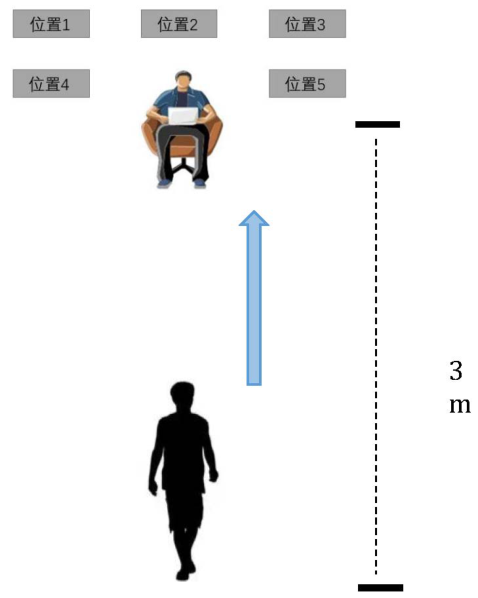
Experimental Setting and Subjects The experiments were conducted in an empty room with white painted walls on all sides. During the experiment, the subject (21 years old, 172 cm tall, normal looking, male) wore the same white shirt and black suit throughout the experiment, and the subject wore casual clothes without any accessories. In order to prevent the chair from moving and affecting the data, we marked the initial position of the chair on the floor, and the artwork was hung on the wall behind the chair, the length of the wall was x meters, we divided the wall into five equal parts, and the artwork was divided into five posi- tions, (see Figure 1 for the schematic diagram) and each subject was in the straight opposite of the main subject. center, experimental studies found that direct gaze produced more intrusive responses than avoidance of gaze, and that direct gaze can expand interpersonal distance (Bailenson et al., 2003; Ioannou et al., 2014). In order to simulate normal situations of everyday life on a straight-line test, the subject was asked to maintain a neutral expression during each experiment and would make eye contact with the subject.
Experimental Procedure Two tasks were conducted in this study: comfort distance judgment and conversation distance judgment. Preliminary work was needed to prepare
An Investigation Into Interpersonal Space and Conversation Distances 263
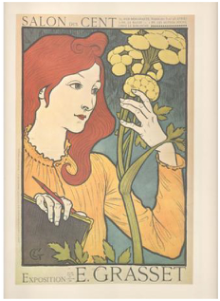
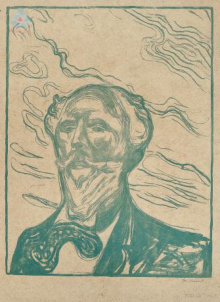
Figure 1: Exoposition E. Grasset, Eugène Grasset. 1894.Figure 2: Emotional, Edvard Munch.
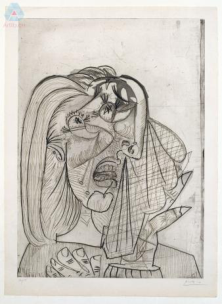
before testing in this study. We first pre-selected a dozen prints that met our requirements, and in order to verify the effect of the selected prints on the subjects’ emotions and feelings, the method was to ask the public to select, through a questionnaire, the three prints that met their psychological expecta- tions and best matched the three emotions (negative 5 - neutral 0 - positive 5). The results show that Figure 1 (AVG = 3.5) Figure 2 (AVG = 0.3) Figure 3 (AVG=−3.7).
The experiment was conducted in groups of three, with one person as the primary test subject, one person as the subject, and one person as the guide. Each subject received instructions on the experimental procedure in advance before starting the test. The prints were hung in five positions as shown in Figure 2. Three prints of different sizes and with the same content could be placed in each of the five positions shown in Figure 4 during the experiment. The initial distance between the main test subject and the subject was 3 m.
Then the participant was asked to enter the room, sit down at the farthest distance from the subject’s straight line level and observe the surroundings for 10 seconds before observing the artwork for 30 seconds, 30 seconds ended and then hear the instruction to get up and approach the subject according to the psychological distance or conversation distance, and stop approaching
264 Li
Figure 3: La femme qui pleure, I, Pablo Picasso (1881–1973).Figure 4: Schematic diagram of the experimental scene.
forward when the subject reached the ideal distance of the subject’s psych- ology, at which time the subject took out a distance meter and placed it in the center of his chin to measure the horizontal direction. In order to accu- rately measure the distance, the central surface of the chin and jaw of the subject was marked, and all participants were given the opportunity to sligh- tly adjust their mental position in order to determine the comfortable distance and conversation distance. Each subject’s mental distance and conversation
An Investigation Into Interpersonal Space and Conversation Distances 265
distance would be entered into the computer and converted into the appro- priate score to count toward that person’s score, and each distance trial was repeated three times, and this process was repeated for male alliance, female alliance, and male and female alliance in five positions. (5 positions * 3 alliances * 3 repetitions * 3 styles) Trials were assigned in random order.
Each subject performed a total of 30 trials throughout the experiment. A 10-minute break was taken between tasks to prevent visual fatigue.
STATISTICAL ANALYSIS The data were analyzed using spss, and the significance level was set at 0.05.The comfort distance and talking distance were measured in meters. The mean distance for each trial was calculated for further analysis, and separate ANOVAs and analyses were performed for each subject for both the comfort distance and talk distance tasks. Comfort distance and conversation distance were analyzed separately using ANOVA, and interpersonal distance and conversation distance were both analyzed using a 2*3*5 ANOVA with the subject’s gender (male, female), three artwork styles, and five artwork placements.
RESULTS
Conclusion of Comfortable Distance
Table 1 below shows the three-way ANOVA for the gender factor, artwork style factor, and artwork placement factor on the comfort distance index, and the ANOVA findings show that the test significance p for the subject’s gender factor and artwork style factor is less than 0.05, indicating that the gender factor [F(1, 1005) = 5.062, p<0.03)], artwork style factor [F(1, 1006) =8.188, p<0.01] are significantly different in terms of comfort distance. However, the ANOVA showed that the significant p for both the artwork placement factor and the interaction term were greater than 0.05, indicating that there was no significant difference in the artwork placement factor and there was no interaction between the factors.
With significant differences in the subject’s gender factor and artwork style factor, the differences in each category were further studied, which shows the analysis of the differences in the comfort distance index between the gender factors, from which it can be seen that the mean comfort distance for men is 1.938 m and for women is 2.036 m.The difference test corresponds to a significant P of 0.025<0.05, indicating a significant difference between men and women, with women having significantly higher mean comfort distances than men, a conclusion that can also be drawn from the following marginal plots (Table 2).
The following is the analysis of the difference between the artwork style positivity in the comfort distance index, from Table 3, it can be seen that the artwork picture as a whole expresses positive energy, positive factors corre- sponding to the average value of the comfort distance of 1.906 meters, the artwork picture as a whole expresses the neutral emotional factors corre- sponding to the average value of the comfort distance of 1.944 meters, the
Equation reproduced from the original PDF.Table 2. Pairwise comparison.
Table available in the original PDF paper.
Dependent variablecomfortable distance (I) sex (J) sex Mean Standard Sig.a 95% Confidence Difference (I-J) Error intervala
Lower limit Upper limit Male Female −.098* .044 .025 −.184 −.012 Female Male .098* .044 .025 .012 .184
Based on estimating the marginal mean *The difference in means is more significant at the .05 level. aAdjustment for multiple comparisons: Least significant difference (equivalent to no adjustment).
Table 3. Estimate.
Table available in the original PDF paper.
Dependent variable comfortable distance Artwork Style Average value Standard Error 95% Confidence intervala
artwork picture as a whole expresses negative energy, negative emotional factors corresponding to the comfort mean value of distance is 2.110 meters.
From the results of the difference test in the table below, it can be seen that the mean difference between negative emotion and positive emotion and neu- tral emotion expressed in the artwork screen as a whole is positive, and the
An Investigation Into Interpersonal Space and Conversation Distances 267
Table 4. Multiple comparisons.
Table available in the original PDF paper.
Comfortable distance LSD
(I)Artwork (J)Artwork Mean Standard Sig. 95% Confidence Style Style Difference (I-J) Error intervala Lower limit Upper limit
Active Neutral −.0375 .05306 .481 −.1418 .0669 Negative −.2094* .05306 .000 −.3138 −.1050 Neutral Active .0375 .05306 .481 −.0669 .1418 Negative −.1720* .05306 .001 −.2764 −.0676 Negative Active .2094* .05306 .000 .1050 .3138 Neutral .1720* .05306 .001 .0676 .2764 Based on observed mean values. The error term is the mean square (error) = .162. *The difference in means is more significant at the .05 level.
corresponding significant P is less than 0.05, indicating that there is a signifi- cant difference between the negative emotion factor and the positive emotion factor and the neutral emotion factor, and the comfort index corresponding to the negative emotion factor is significantly higher than the positive emo- tion factor and the neutral emotion factor, from the following marginal plot (Table 4) this conclusion also has to be drawn.
Conclusion of the Conversation Distance
Table 5 below shows the three-way ANOVA for gender, artwork style factor, and artwork location factor on the talk distance index, and from the follo- wing results, it can be seen that the test significance P for gender factor and artwork style factor are less than 0.05, indicating that there is a significant difference between gender factor [F(1, 1105)=8.340, p<0.03)], artwork style positivity factor [F(1, 1106)= 4.447, p<0.03)] were significantly different in terms of conversation distance, while the significant P for the artwork loca- tion factor and other interaction terms were greater than 0.05, indicating that there was no significant difference in the artwork placement location factor and no interaction between the factors.
In the case of significant differences, the differences in each category were further studied, which shows the analysis of the differences in the indica- tors of talking distance by gender factors, from which it can be seen that the mean value of talking distance for men is 1.835 m and for women is 1.950 m.The difference test corresponds to a significant P of 0.004<0.05, indica- ting a significant difference between men and women, with women having a significantly higher mean value of talking distance than men, a conclusion that can also be drawn from the following marginal chart6.
The following is the analysis of the difference between the artwork style emotional factors in the conversation distance index, from Table 7 can be seen, the artwork picture as a whole expressed positive energy, positive factors corresponding to the average value of the conversation distance of
268 Li
Table 5. Test for inter-subject effects.
Table available in the original PDF paper.
Dependent variable:Talking distance
Source Type III sum df Mean F Sig. of squares Square Calibration Model 2.894a 29 .100 .742 .833 intercept 1214.608 1 1214.608 9029.782 .000 sex 1.122 1 1.122 8.340 .004 Artwork Style 1.196 2 .598 4.447 .012 Location .076 4 .019 .141 .967 sex* Artwork Style .050 2 .025 .186 .831 sex* Location .043 4 .011 .079 .989 Artwork Style * Location .159 8 .020 .148 .997 sex* Artwork Style * Location .181 8 .023 .168 .995 Error 42.371 315 .135 Total 1290.711 345 Total of corrections 45.265 344
Equation reproduced from the original PDF.Table 6. Pairwise comparison.
Table available in the original PDF paper.
Dependent variable:Talking distance (I) Sex (J) Sex Mean Standard Sig.a 95% Confidence Difference(I-J) Error intervala
Lower limit Upper limit Male Female -.115* .040 .004 -.193 -.037 Female Male .115* .040 .004 .037 .193
Based on estimating the marginal mean *The difference in means is more significant at the .05 level. aAdjustment for multiple comparisons: Least significant difference (equivalent to no adjustment).
Table 7. Estimate.
Table available in the original PDF paper.
Dependent variable:Talking distance
Artwork Style Average value Standard Error 95% Confidence interval Lower limit Upper limit
1.824 meters, the artwork picture as a whole expressed neutral emotional factors corresponding to the average value of the conversation distance of 1.855 meters, the artwork picture as a whole expressed negative energy, nega- tive emotional factors corresponding to the conversation the mean value of distance is 1.969 meters.
An Investigation Into Interpersonal Space and Conversation Distances 269
Table 8. Multiple comparisons.
Table available in the original PDF paper.
Talking distance LSD
(I)Artwork (J)Artwork Mean Standard Sig. 95% Confidence Style Style Difference (I-J) Error interval Lower limit Upper limit
Active Neutral −.0606 .04837 .211 −.1558 .0346 Negative −.1475* .04837 .002 −.2426 −.0523 Neutral Active .0606 .04837 .211 −.0346 .1558 Negative −.0869 .04837 .073 −.1820 .0083 Negative Active .1475* .04837 .002 .0523 .2426 Neutral .0869 .04837 .073 −.0083 .1820 Based on the observed mean value. The error term is the mean square (error) = .135 *The difference in means is more significant at the .05 level.
From the results of the difference test in Table 8 below, it is clear that the mean difference between negative and positive is positive and corre- sponds to a significant P less than 0.05, indicating that there is a significant difference between negative and positive, and the comfort distance indi- cator corresponding to negative is significantly higher than the positive factor.
In the case of significant differences, further study the differences of each category, Cohen’sd effect size is a common effect size to calculate the gap between groups, comfort distance artwork style factor effect size d = 0.937, gender factor effect size d = 0.844, conversation distance artwork style factor effect size d = 0.905, gender factor effect amount d = 0.898, the larger the value of the effect amount indicates a slightly more significant effect, so the effect amount of the artwork style factor is smaller than the effect amount of the gender factor, indicating that the artwork style factor can influence the interpersonal space more than the gender factor.
Analysis of Experimental Results From the above experimental results, it can be seen that only the gender factor and artwork style factor differed in the index of comfortable interpersonal distance, while no significant differences existed in the other factors and the interaction term of each factor. On the gender factor, the average comfor- table interpersonal distance for women was 2.036 meters, and the average comfortable interpersonal distance for men was 1.938 meters. The average comfortable interpersonal distance for women was significantly higher than the average comfortable interpersonal distance for men, which means that when women and men approach face to face, the personal spatial distance required for women is greater than the personal spatial distance required for men. In terms of the positivity factor, there is a significant difference between the negative factor and the positive and neutral factors in the com- fortable interpersonal distance index, the comfortable interpersonal distance
270 Li
index corresponding to the negative factor is 2.110 meters, the comforta- ble interpersonal distance index corresponding to the neutral factor is 1.944 meters, the comfortable interpersonal distance index corresponding to the positive factor is 1.906 meters, the comfortable interpersonal distance corre- sponding to the negative factor is significantly higher than the positive factor , the effect of neutral factors on comfortable interpersonal distance, and the effect of neutral factors on comfortable interpersonal distance is again higher than the effect of positive factors on comfortable interpersonal distance. In the indicators of conversational interpersonal distance, there were also diffe- rences only in the gender factor, and the positive factor. In terms of gender, the interpersonal distance of conversation is 1.950 m for women and 1.835 m for men. The interpersonal distance required for women’s conversation is significantly greater than the interpersonal distance required for men’s conversation, and the overall interpersonal distance for women is farther than that for men in terms of both comfortable interpersonal distance and conversation interpersonal distance, which indicates that because women are slightly smaller and have a high sense of precaution making women’s need for greater distance from outside human contact. On the artwork style factor, the interpersonal distance of conversation corresponding to the positive factor is 1.824 m, the interpersonal distance of conversation corresponding to the neutral factor is 1.855 m, and the interpersonal distance of conversation corresponding to the negative factor is 1.969 m. The interpersonal distance of conversation corresponding to the negative factor is significantly higher than the interpersonal distance of conversation corresponding to the posi- tive factor, which means that on the gender factor, both males and females, their Talking interpersonal distance values are smaller than their comforta- ble interpersonal distance, implying that talking also subconsciously brings people closer to each other. Comparing the positive, neutral, and negative factors with the blank factor, the interpersonal distance with these factors has a significant change than the interpersonal distance without these factors, which means that the presence of these positive factors will make people clo- ser to each other, while the presence of negative factors will make people further away from each other. And the change in the location of the positive factors in the spatial range did not have a significant effect on interpersonal distance.
CONCLUSION
Through the analysis of the above-mentioned experimental results, emotions have an impact on human behavior, and if you see artwork with nega- tive factors, the negative emotions will slow down people’s actions. Visitors will most likely choose to visit the exhibition hall again. In addition, artw- ork can also choose to hang at home or personal workplace, people who like to socialize can choose artwork with positive emotions, to achieve the effect of social distance; while people with a strong personal awareness of the field can choose artwork with a slightly negative emotions, so that they and each other to maintain the distance that makes them feel most comfortable.
An Investigation Into Interpersonal Space and Conversation Distances 271
REFERENCES
Berti A, Frassinetti F. (2000). When far becomes near: Remapping of space by tool use [J]. Journal of cognitive neuroscience, 12(3): 415–420. De Vignemont F, Iannetti G D. (2015) How many peripersonal spaces?. Neuropsych-
ologia, 70: 327–334. Gifford R, Sacilotto P A. (1993). Social isolation and personal space: A field study. Canadian Journal of Behavioural Science/Revue canadienne des sciences du comportement, 25(2): 165. Kennedy D P, Gläscher J, Tyszka J M, et al. (2009). Personal space regulation by the
human amygdala [J]. Nature neuroscience, 12(10): 1226. Li T. (2019). Psychological Reality and Mapping Relationships of the Spatial Distance Metaphor of Emotion Concept. Chongqing Normal University. McBride G, King M G, James J W. (1965). Social proximity effects on galvanic skin
responses in adult humans. The Journal of psychology, 61(1): 153–157. Ruggiero G, Frassinetti F, Coello Y, et al. (2017). The effect of facial expressions on peripersonal and interpersonal spaces. Psychological research, 81(6): 1232–1240. Remland M S., Jones T S. (1995). Brinkman H. Interpersonal distance, body ori-
entation, and touch: Effects of culture, gender, and age. The Journal of social psychology, 135(3): 281–297. Sommer R. (1969). Personal Space. The Behavioral Basis of Design. Sommer R. (1959). Studies in personal space. Sociometry, 22(3): 247–260. Tajadura-Jiménez A, Pantelidou G, Rebacz P, et al. (2011). I-space: the effects of emotional valence and source of music on interpersonal distance. PloS one, 6(10): e26083. Uzzell D, Horne N. (2006). The influence of biological sex, sexuality and gender role
on interpersonal distance. British Journal of Social Psychology, 45(3): 579–597. Xiaoqing Yu, Wei Xiong and Yu-Chi Lee. (2020). An Investigation Into Interpersonal and Peripersonal Spaces of Chinese People for Different Directions and Genders,. Zhu Y. (2018). An Experimental Study on the Effect of Color on Interpersonal
Distance Perception. Nanjing Normal University.
LISTED IN THE AHFE DIGITAL BOOKSTORE CATALOGUE
Explore the complete digital volume
Affective and Pleasurable Design
Read this individual research paper free through the original publisher, or explore the full digital proceedings book.
ISBN 978-1-958651-17-9
Explore this ISBN in the AHFE Bookstore ↗Listed in the July 2026 bookstore catalogue; search by ISBN to confirm current availability · Digital book purchase optional