Seppo Väyrynen, Henri Jounila, Jukka Latva-Ranta (2019). HSEQ Assessment Procedure for Supplying Industrial Network: A Tool for Implementing Sustainability and Responsible Work Systems into SMES. In: Advances in Safety Management and Human Factors. AHFE Open Access, vol. 5. https://doi.org/10.54941/ahfe100177
Many Finnish manufacturing enterprises are utilizing a HSEQ Assessment Procedure (HSEQ AP) for suppliers as far as being a prerequisite factor of guaranteeing success in collaboration. Multi-organizational HSEQ management can be arranged by a proper participation of all employers at a shared work place and by not forgetting their work system with outcomes. Many of suppliers (N~120) have been assessed according to the HSEQ AP by the corresponding consortium. Typically, suppliers, often various contractors, belong to the category of microenterprises, small enterprises, and medium sized enterprises (SMEs). The paper not only describes the key features of HSEQ AP, but it as well shows a preliminary evidence of the positive effects of HSEQ AP. The general principles and practices behind HSEQ AP, in addition to the ones developed by local research and development (R&D), has comprised European Union and national legislation, Total Quality Management (TQM), Excellence and Quality Award Models, social responsibility, and a total of social, economic and ecological sustainability. HSEQ AP is able in practice to promote sustainability in a scale suitable for microenterprises or SMEs. HSEQ AP provides a potential to promote productivity and QConformity within a work system with desired and undesired outcomes.
The scope of this paper was to review both literature and empirical context of a Health (H), Safety (S), Environment (E), and Quality (Q) management model. The model used for assessment has been developed and applied within a manufacturing industry network in Finland. Further, the main emphasis of the review was to deal with the role of small enterprises and medium sized enterprises and even microenterprises, their work systems with outcomes, assessment results within them, and the concept of sustainability.
General backgrounds Human behavior and technology are generally interrelated, and they are also interrelated at work. Changes in technologies affect social relationships, attitudes, and feelings about work (Hatch and Cunliffe, 2006) and so do changes in organization and management. A work system (WS), a natural concept for the above and other relevant elements and aspects, is quite frequently utilized, and specifically tailored to fit various areas of work and business (e.g., health care and hospitals) (Carayon et al., 2014; Hignett et al., 2013).
WSs are traditionally seen as a microergonomic system that focuses only on persons and technologies (i.e., often on an individual person and his or her tools or some other technological artifact). When implementing new devices, technologies, or ways of work, it should be recognized that the work system evolves continuously even though planning and education are involved. This may be because users may explore new ways of using the technology or because the demands on the work system with outcomes from its environment continue to change (Eason, 2009).
Kleiner and Hendrick (2008) discussed the same concepts within a broader socio-technical work system framework (i.e., macroergonomically). They described a work system as a combination of
a technological subsystem (the things needed to perform the work);
a personnel subsystem (people needed to do the work);
an environmental subsystem (elements outside of the work system focused upon);
an internal environmental subsystem , for example, cultural and physical characteristics;
an organization subsystem, for example, organizational structure and processes.
All these separate work systems operate within a larger “systems of systems”. Systems are also engaged in transactions with other systems. Managing this complexity is a challenge (Eason, 2005; Kleiner and Hendrick, 2008). This paper understands work systems with outcomes as a combination of the microergonomics and macroergonomics approaches with a high level of complexity due to there being many employers, and they all contributed to the same production, intraorganizationally and interorganizationally. The collaborating enterprises at the same premises are in question.
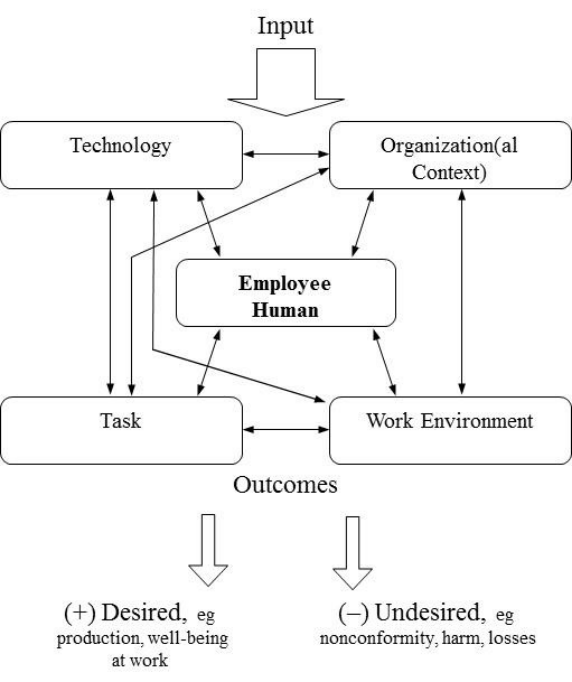
It is reasonable to make enhancements to all levels of the work system to gain maximum profit. The work system needs to be in good shape and balance. Some parts of the work system might be affected very easily, but some parts are not so definite. A work system “produces” desired, and also undesired, events such as accidents and material and environmental losses (Figure 1). For example, desired events are promoted by applying ergonomics knowledge to guarantee a high level of usability of tools and workstations. Therefore, it is important to discuss and analyze how these elements should be balanced and managed so that production can be satisfactory for the person doing it (Carayon and Smith, 2000; Smith and Carayon, 1995 ). In addition, these elements should be as productive, safe, and of as good quality as possible (cf., International and European Standard… 2004; Väyrynen, 2005; Väyrynen et al., 2006; Väyrynen and Nevala, 2010). When a balance is not achievable by minimizing the negative aspects of an element, the whole system balance should be improved by enhancing the positive aspects of other elements (Smith and Carayon, 2000).
All the components in the work system itself are potential objects of losses. Human beings can be injured through accidents and occupational diseases. Absences from work and too early retirements cause considerable losses to individuals, enterprises and society. According to the principles of occupational risk prevention, the person has to be protected within the whole entity. On the other hand, the person often plays a role when nonconformities, deviations and disturbances occur within the system, causing losses to the person, outside persons or other components, including the environment (Väyrynen, 2005; Väyrynen et al., 2006; Väyrynen et al., 2008; Väyrynen and Nevala, 2010; Reiman and Väyrynen, 2011).
On the whole, it is wise to link things so that one can speak about a holistic safety, health, environment, and quality (SHEQ) system, as do many modern enterprises (Hutchison, 1997). Väyrynen et al. (1997) described a holistic pilot model of a steel mill’s collaboration with a supplying company. In the field of safety, Levä (1998), one of the Finnish pioneers of this area, presented three reasons why safety, quality, and environmental issues should be managed as an integrated entity:
the conformity of techniques, meaning a common set of tools and techniques, which enables them to be used in handling problems of other areas;
the structural conformity of systems, which refers to building one comprehensive management system for all three areas;
the conformity of politics, aiming for shared strategic objectives and goals for all the areas.
Figure 1. So-called balanced work system with outcomes model modified from Carayon and Smith (2000) to represent a general structure "behind" desired and undesired outcomes at work (Väyrynen, 2005; Väyrynen and Nevala, 2010).
Safety management accentuations and practices are most efficient in a comprehensive management system. In this kind of total quality management (TQM) (Hutchison, 1997; Zink, 2000, 2011), system, quality management, safety management, and environmental management are all connected by the general management of the enterprise (Väyrynen, 2003; Väyrynen et al., 2012; Zülch et al., 1998). These management areas should, however, be discussed as separate entities, still seamlessly belonging to the TQM system.
The above can imply the need for integrated management systems (IMS) (Wilkinson and Dale, 2007). IMS assures customers that products and services satisfy quality requirements. Further, responsible organizations also have to be concerned about the well-being of their employees, their working environment, the impact of operations on the local community, and the long-term effects of their products while in use and after they have been discarded.
Work systems together with management systems should be seen as important and recognized elements in enterprises’ strategy development (Cecich and Hembarsky, 1999; Dzissah et al., 2000). Development actions are needed in order to succeed in strategy work in small enterprises (Rajala and Väyrynen, 2011; Reiman and Väyrynen, 2011). A totality of aims for development activities in enterprises is to increase productivity, shorten time-to-market, simplify processes, facilitate information and knowledge sharing, and also increase employee well-being. In organizational development activities, the characteristics of the organization are not always fully taken into account and developmental processes are implemented without a deeper understanding of the culture (Järvenpää and Eloranta, 2000). Usually it takes time to see what kinds of benefits and cost savings are gained through different developmental actions and improvements.
Current issues For instance, the global World Steel Association (2013) emphasizes strongly the importance of sustainability within the steel industry, and so does the global ISO standardization. ISO 26000 (International Organization for Standardization [ISO], 2010) adds value to existing initiatives for social responsibility by providing harmonized globally relevant guidance based on international consensus among expert representatives of the main stakeholder groups and so encourages the implementation of best practices in social responsibility worldwide. Zink and Fischer (2013) link in an interesting and important way human factors and sustainability:
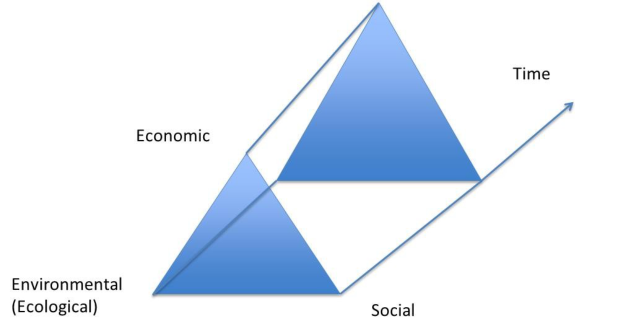
... to contribute to a broad discourse about opportunities and risks resulting from current societal “mega - trends” and their impacts on the interactions among humans and other elements of a system, e.g., in work systems. This paper focuses on the underlying key issues: how do the sustainability paradigm and human factors/ergonomics interplay and interact… (p. 348) Zink’s (2014) illustration clarifies the equal role of social dimension in sustainability and its links with systemic modeling by work systems (i.e., by the ones also being a function of time) (Figure 2). For instance, a little sign of “common interest of work systems and sustainability” was our team’s article about a truck drivers’ work system published recently in a journal dealing with sustainability in the transportation industry (Reiman et al., 2013). Management might be enriched by a work system and design science emphasis as a tool for participatory strategic company development (Rajala and Väyrynen, 2011a; Rajala and Väyrynen, 2011b)
Figure 2. Sustainability as a triangle-model (cf, Zink, 2014).
Multiple management systems (MMS), related quite closely to integrated management systems, and standards, but in a sense are relative to quality prize models too. The current MMS standard (ISO, 2011) describes how to "survive" better because in today’s business environment, many organizations incorporate a number of management systems, such as quality, environmental, IT services, and information security. As a result, these organizations want to harmonize and, where possible, combine the auditing of these systems (like ISO 9001, ISO 14001, in conformity with EU’s EMAS, and ISO 22301 plus OHSAS 18001). A new standard, "Societal security – Business continuity management systems – Requirements," is written by leading business continuity experts and provides the best framework for managing business continuity in an organization, and, furthermore, it can become certified by an accredited certification body (ISO, 2012). Its main approach is that business continuity is part of overall risk management in a company, with overlapping areas with information security management and IT management.
Quality prize evaluation criteria model holistic excellence management as far as various businesses are concerned. A European one, EFQM, is most important in Finland (EFQM, 2013). In the USA, the Baldrige national criteria are well-known as well as all around the world, and these include the emphasis both on work processes and work systems (Baldrige, 2013). The last mentioned is described as "how the work of your organization is accomplished" (Baldrige, 2013). In general, the criteria examine how your organization designs, implements, manages, and improves its key work processes to deliver customer value and achieve organizational success and sustainability.
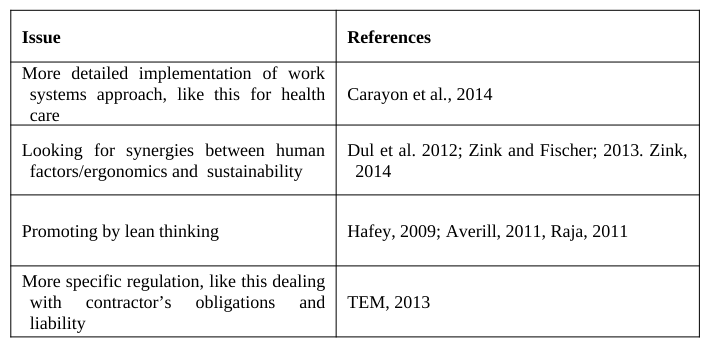
Table 1 lists some probably more emerging issues related to the topic of this paper on HSEQ.
Table 1: Some emerging issues probably related with HSEQ assessment promotion Issue References
Framework for applying HSEQ assessment procedure Based on the above literature reviews, this paper aims as well to review on an empirical context of how is the HSEQ assessment approach constructed, implemented, working, and managed, and what are its results as far as smaller company developments (indicators of a HSEQ situation and trends in both purchasing large enterprises and their suppliers). Further, the main emphasis in review comprises the concepts of HSEQ, work system with outcomes, integrated management, sustainability and responsibility, holistic competitiveness, microenterprises, small enterprises, and medium sized enterprises (SMEs).
Microenterprises and SMEs play an important role in the Finnish economy, generally, and related to supplied services for industrial companies. Many large manufacturers are purchasing a significant share of their human work contribution. Many employers with their employees are involved in the major company’s value chain of production, often in the same sites, plants, mills and factories. As pointed out by Porter (1985) value chains consist of a series of activities that create and build value.
From the Federation of Finnish Enterprises (2014): Finland has a total of 322,183 enterprises (data of 2012, excluding agriculture), of which 99.8% are SMEs employing less than 250 people. There are 93.3% Finnish companies that have fewer than ten employees. The role of SMEs in Finnish employment and the economy is quite significant. Of all private-sector employees, as many as 63% work for companies employing fewer than 250 people. These enterprises generate about 50% of the combined turnover of all Finnish businesses. SMEs are responsible for more than 13% of Finland’s export revenue. The proportion of entrepreneurs in Finland is below the EU and OECD average. The same is also true regarding the number of people who plan to start their own companies. The fact that fewer people in Finland intend to choose entrepreneurship as a career, when compared to other countries, is somewhatsurprising as many surveys show entrepreneurship is held in high regard within Finland.
The previous Finnish government had a political program that was called the “Political program for employment, entrepreneurship and working life”. It also included elements specific to SMEs. This political program ended in summer 2011. The present government (in power since June 2012) has chosen “Actions against the grey economy” as one of its most important projects. This work requires considerable cooperation between many sectors, (SBA Fact Sheet, 2012). Both programs are related to SR, sustainability, and HSEQ.
In short, a work system comprises a combination of people, technology, and tasks within a space and other work environment (tangible and intangible), and interaction of these components within a managed goal-oriented organization with its processes and outcomes (Figure 1). Holistic ergonomics (micro and macro) aim to optimize work systems, as far as performance and effectiveness, including in a key role people without detriment to their health, safety, or other factors of well-being at work, or as we can best express well-being in a work system. Optimization may be evaluated based on measures of three categories: (a) health and well-being, (b) safety, and (c) production performance (the quantity and quality (Q) of production) with minimal nonconformities (International and European Standard… 2004; Väyrynen, 2005; Väyrynen and Nevala, 2010). According to this holistic thinking, occupational risks threaten both factors of well-being and productivity at work. On the contrary, an optimal work system can simultaneously promote workforce well-being and productivity.
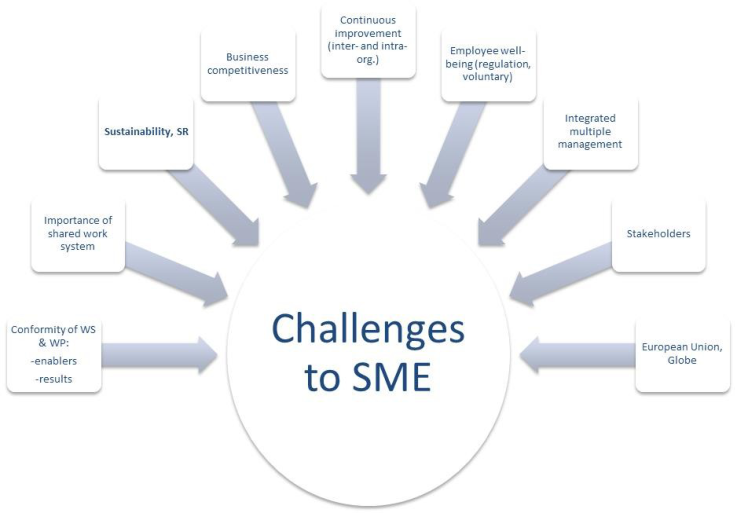
Networking is a typical solution for companies of different sizes to combine and manage their contributions in a competitive way in contemporary business environment. It is typical that employees from several supplying companies or contractors, work simultaneously for same production e.g., in process industry (purchasing organization, customer of suppliers). The amount of the above-style way of producing, utilizing so-called shared workplaces, has increased. The situation mentioned has set up new requirements for managing health, safety, environment and quality, HSEQ, enabling issues and achieving desired results within that framework. Those requirements are partly regulation-based. On the other hand, they are voluntary, business-driven, promotional ones. Large-scale process and other manufacturing industry companies in Finland have developed and started to apply HSEQ Assessment Procedure (HSEQ AP) for measuring and evaluating their suppliers (Väyrynen et al., 2012). The main objective of HSEQ AP is to ensure that outside employees in shared workplaces have knowledge and skills good enough of HSEQ to operate in the principal customer companies’ premises. The puzzle of managing business and human resources has nowadays a big number of pieces. Figure 3 shows some issues of the key challenges especially as far as micro or small and medium sized enterprises servicing high-level purchasing industrial companies.
Figure 3. HSEQ approach helps in managing all contemporary criteria for success in SMEs., e.g. the above.
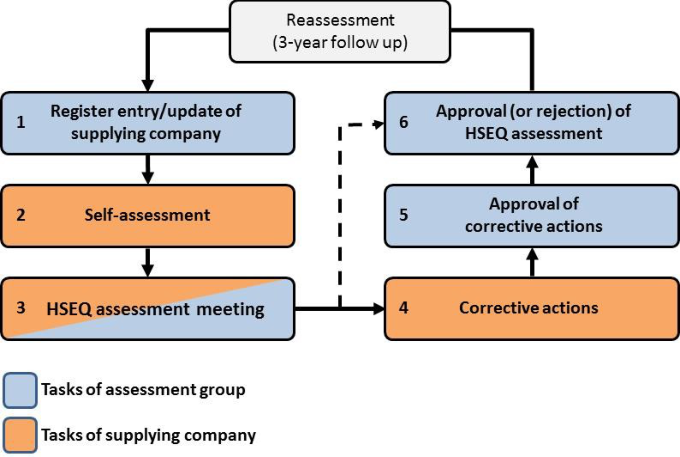
The HSEQ procedure is an assessment system that was developed by the major purchasers in the area, the northern Finnish process industry companies, the R&D organization (University of Oulu) and the training organization (POHTO). The supplying companies (e.g., contractors) are evaluated by basic requirements set ("questions on criteria"). The HSEQ AP is meant for evaluating companies at shared workplaces (Figure 4). Supplying companies as key stakeholders were also involved in developing the HSEQ AP. Each supplier needs only one auditing for all purchasing companies. So, both the purchasing and supplying companies benefit in saving resources, money and time. It can as well utilize its own results when selling services to other purchasers. Ideal assessment group includes persons from at least two different purchasing companies and head assessor who is a representative of the auditing service provider (the system operator). The assessment focuses on organization’s functioning at shared workplaces. During an assessment session, HSEQ capability will be scored based on the evidence presented by the supplying company. All the assessments are valid in all participating purchasing companies. The HSEQ AP is controlled by a steering board that includes representatives from each purchasing company, training organization and the R&D organization and is chaired by the auditing service provider. POHTO is responsible for providing HSEQ AP web- based information system (see http://www.HSEQ.fi; Inspecta, 2013).
Figure 4. HSEQ assessment procedure.
The criteria and principles of the HSEQ AP have been agreed between the purchasing companies. The HSEQ cluster acts as an initiator of the each assessment. The head assessors are always representing system operator and assessors are appointed by the purchasing companies and who have been well-trained in HSEQ AP. The registers are maintained by impartial administrators (currently training organization). The purchasing companies decide in which all ways they utilize the results of assessments. The competition legislation is taken into account in the HSEQ AP. As such, the system is voluntary; based on general aim at achieving better both regulation-based and business-based goals.
The assessment questions on criteria as far as the criteria have some roots in the EFQM (2013) excellence model. Every question is assessed in a four-step scale. Total scores of HSEQ capabilities and performance profile by categories comprise an approach useful for measuring, benchmarking, managing, negotiating, purchasing, controlling, accepting, sharing, agreeing, communicating, etc. Total scores and HSEQ capabilities and performance profile are presented anonymously via internet, and with identification data in intranet. Mainly by R&D organization, general comparisons have been produced (e.g., trend of average accident frequency rate (Figure 6)). The first aim was to evaluate the needs for assessment procedure. The HSEQ AP was built on the basis of the literature and case company –specific data. Each of the cases had some of their own very specific procedures for service provider assessment and contracting. So benchmarking and benchlearning (Freytag and Hollensen, 2001) played an important role. Both qualitative and quantitative data were collected inside the cases. The path towards the goal was mainly based on so-called design science (Väyrynen et al., 2012). A constructive design science research approach (Järvinen, 2004) was utilized in the cases to formulate proposals for common and specific guidelines. The design-science paradigm has its roots in engineering and the sciences of the artificial (Simon, 1996). Design science consists of two basic activities, building and evaluation (March and Smith, 1995). The design science research approach was combined in this study with the general model of planned change (Cummings and Worley, 2004).
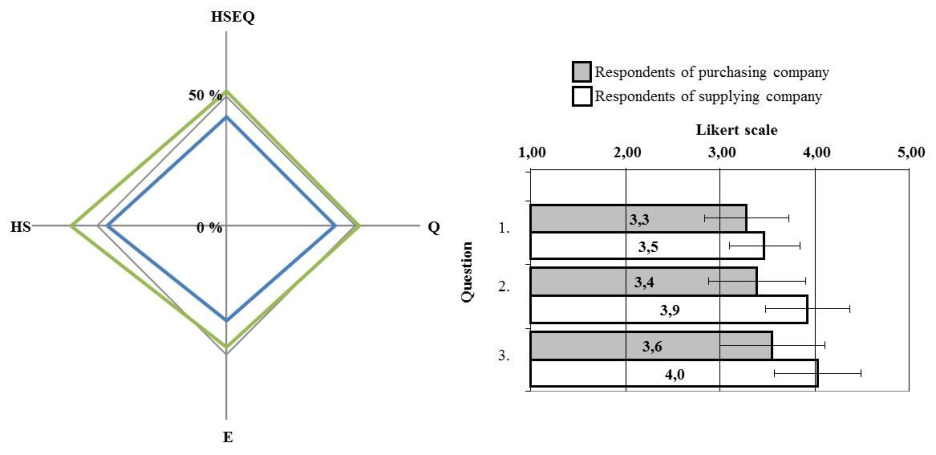
EMPIRICAL PART HSEQ AP “walks through” enablers within work system and work processes, management system, desired and undesired results within work system (Figure 1), as far as each assessed potential contributing company or company unit. Figure 5(left) shows separately scoring concerning HS, E, Q, and finally total of HSEQ, according to this sample of data of two specific years. Though, the trend based on new assessments has been positive, capability improvements are needed. Figure 5(right) demonstrates quite positive attitudes towards the HSEQ AP in enterprises actively involved. All in all, the representatives of the assessed supplying companies rated the HSEQ AP higher than so-called assessors coming from the purchasing companies. Assessors are educated for being specialists especially while taking part in assessment sessions. Lost Time Injury (LTI) rate was used as a loss-based safety performance indicator (the LTI rate is defined as the number of lost-time injuries per one million hours of work. A lost-time injury is an injury that causes at least one whole day to be lost from work). Regression curves describing the linearized trend of LTI from year 2005 to 2012 are presented in Figure 6(left). The decreasing trend of accident frequency rates has been significant, especially in the supplying companies contributing their customers I and II, i.e. purchasing companies, at two big shared work place (Figure 6(right)).
Figure 5. A profile of HSEQ outcomes shows that HS scoring was at highest level of single factors, and all the separate scorings were increasing during a 3-year-long period, from 2008 (blue) to 2011 (green)(left). Both purchasing and supplying companies of the consortium express quite high satisfaction as far as the HSEQ AP (question 1, “has increased co-operation between purchasing company and supplying company”) (q2, “has been useful”) (q3, “is suitable for my branch”) (right).
50
45
45
Supplying company
40
40
35
35
Customer I
30
30
Finland (industry)
25
25
20
20
Customer II
15
15
Principal company
Accident Frequency Rate
10
10
5
5
0
0
2005 2006 2007 2008 2009 2010 2011 2012
2007 2008 2009 2010 2011 2012 2013 Year
Figure 6. Accident frequency rates (LTI) converted to a linear regression trend (Supplying and principal (purchasing) companies are representing the HSEQ AP consortium results of which are compared to national situation(left). Service suppliers (N=dozens) at the sites of two big customers within process industry (Average (per customer) accident frequency rate ≥ 1 day injuries per million work hours))(right).
Figure available in the original PDF paper.
CONCLUSIONS
The paper describes how customers of manufacturing industry are now able to evaluate the entire supplying network working in one place, and that is equipped with equal requirements for quality and management. Moreover, the same applies to other key stakeholders – the regulating society, shareholders, employees, unions of employees and confederations of employers, in other words, social partners. Diverse driving forces have been present and active in developing HSEQ AP, i.e. the situation towards an equal level of quality and shared requirements of management for all companies operating at the sites and within a network of each business-leader manufacturing industry company. HSEQ AP features key indicators describing both resulting outcomes and enablers of holistic excellence as far as a total of social, economic and ecological sustainability. HSEQ AP is scaling the 3-dimension-whole to fit SMEs, facilitating them to be more updated and contemporarily competitive. HSEQ AP offers SMEs time-scale continuity for their excellence and sustainability efforts: e.g., trends of single criterion results, of bundles of criteria like HS or E and of course the total HSEQ AP scoring for the specific company or company unit.
The review part of the paper comprises updated backgrounds from literature, too. Emphasis is laid on links between sustainability and HSEQ criteria within work systems with outcomes of various companies contributing at shared workplaces and other premises. Money or time etc. needs are not an obstacle. The experiences and results of HSEQ AP have been very promising for many years. Though, new openings and developments are needed – and especially new members. There exists a well-grounded opinion that with strengthening economy since 2014 the number of participating companies will increase. New companies, both in role of supplier or purchaser, are waited for starting members in the consortium of HSEQ AP. As far as suppliers business and employment role of microenterprises and SMEs is big, and increasing, and so their importance as far as optimal work systems with outcomes is decisive. Embedded solutions are necessary, and at same time they need to be utilizable for fulfilling many synergic goals. HSEQ AP has its features linked clearly with the time, and so it in that sense as well provides a tool with many key common features of work systems and sustainability listed by Zink (2014).
REFERENCES
Averill, D. (2011), Lean Sustainability: Creating Safe, Enduring, and Profitable Operations. CRC Press, Taylor & Francis Group. Baldrige. (2013), Criteria. Retrieved March 3, 2014 from http://www.nist.gov/baldrige/publications/criteria.cfm Carayon, P., Smith, M. (2000), Work organization and ergonomics. Applied Ergonomics 31. pp. 649-662. Carayon, P., Wetterneck, T.B., Rivera-Rodriguez, A.J., Schoofs Hundt, A., Hoonakker, P., Holden, R., Gurses, A.P. (2014), Human factors systems approach to healthcare quality and patient safety. Applied Ergonomics 45, pp. 14-25. Cecich, T., Hembarsky, M. (1999), ‘Relating principles to quality management’, in Christensen, W. and Manuele, F. (Eds.):
Safety Through Design: Best Practices. pp.67–72, National Safety Council, Itasca, Illinois. Cummings, T. G., Worley, C. G. (2004), Organizational development and change. Mason, OH: Thomson South Western. Dul, J., Bruder, R., Buckle, P., Carayon, P., Falzon, P., Marras, WS., Wilson, JR., van der Doelen, B. (2012), A strategy for human factors/ergonomics: developing the discipline and profession. Ergonomics 55(4): pp. 377-395. Dzissah, J.S., Karwowski, W., Yang, Y.N. (2000), Integration of Quality, Ergonomics, and Safety Management Systems. In:
Karwowski, W. (eds.). International Encyclopedia of Ergonomics and Human Factors. London, Taylor & Francis. Vol. 2. pp. 1129-1135. Eason, K. (2005), Ergonomics interventions in the implementation of new technological systems . In Wilson, J. R., Corlett, N.
(Eds.), Evaluation of Human Work (3rd ed., pp. 919–932). London: Taylor & Francis. Eason, K. (2009), Socio-Technical Theory and Work Systems in the Information Age . In Whitworth, B., & de Moor, A. (Eds.), Handbook of Research on Socio-Technical Design and Social Networking Systems. pp. 65–77. Hershey, PA: IGI Global. EFQM. (2003), The excellence model 2003. Helsinki, Finland: Excellence Finland. EFQM. (2013), EFQM Excellence Model. Retrieved March 3, 2014 from http://www.efqm.org/the-efqm-excellence-model European Committee for Standardization. (2000), Quality management systems. Guidelines for performance improvements (EN
ISO 9004). Brussels, Belgium. Federation of Finnish Enterprises, (2013). The small and medium-sized enterprises. Retrieved February 27, 2014 from http://www.yrittajat.fi/en-GB/federation_of_finnish_enterprises/entrepeneurship_in_finland/ Freytag, P.V., Hollensen, S. (2001), The process of benchmarking, benchlearning and benchaction. The TQM Magazine, 13(1),
pp. 25–33. doi:10.1108/09544780110360624 Hafey, R. B. (2009), Lean Safety: Transforming Your Safety Culture With Lean Management. Taylor and Francis. Hatch, M.J., Cunliffe, A.L. (2006). OrganizationTheory. Modern, Symbolic and Postmodern Perspectives (2nd ed.). Oxford, UK: Oxford University Press. Hignett, S., Carayon, P., Buckle, P., Catchpole, K. (2013) State of science: human factors and ergonomics in healthcare,
Ergonomics, 56:10, pp. 1491-1503, DOI: 10.1080/00140139.2013.822932 Hutchison, D. (1997), Safety, Health and Environmental Quality Systems Management: Strategies for Cost-Effective Regulatory Compliance. Lanchester Press Inc. Inspecta. (2013), HSEQ assessment. Retrieved September 11, 2013 from http://www.inspecta.com/en/Our-Services/Certification/Management-Systems/HSEQ-assessment/#.UiBXgpzqpIQ International and European Standard. (2004), EN ISO 6385: Ergonomic principles in the design of work systems. Geneva,
Switzerland. International Organization for Standardization (ISO). (2010), ISO 26000: Guidance on Social Responsibility. Geneva, Switzerland. International Organization for Standardization (ISO). (2011), ISO 19011: Guidelines for auditing management systems. Geneva,
Switzerland. International Organization for Standardization (ISO). (2012), ISO 22301: Societal security – Business continuity management systems – Requirements. Geneva, Switzerland. Järvenpää, E., Eloranta, E. (2000), Organisational Culture and Development . In Karwowski, W. (Ed.), International
Encyclopedia of Ergonomics and Human Factors, Vol. 2, pp. 1267–1270. London: Taylor & Francis. Järvinen, P. (2004), On research methods. Tampere, Finland: Opinpajan kirja. Kleiner, B.M., Hendrick, H.W. (2008), Human Factors in Organizational Design and Management of Industrial Plants.
International Journal of Technology and Human Interaction, 4(1). pp. 114–128. Levä, K. (1998), Pk-yrityksen laatu-, turvallisuus- ja ympäristöjohtaminen: integroidun laatujärjestelmämallin kehittäminen.
Licentiate’s thesis, Tampere University of Technology, Department of Industrial Engineering and Management [Integrated management of quality, safety and environment issues within SMEs] March, S.T., Smith, G.F. (1995), Design and natural science research on information technology. Decision Support Systems, 15 (4). pp. 251–266. Porter, M.E. (1985), Competitive Advantage: Creating and Sustaining Superior Performance. The Free Press. New York. Raja, M.I. (2011), Lean manufacturing - an integrated socio-technical systems approach to work design. Doctoral thesis.
Glemson University. Rajala, H-K., Väyrynen, S. (2011a), Participative design science approach on the optimum work system: an argumentative review-based model with a case. Theoretical Issues in Ergonomics Science 12(6). pp. 533–543. Rajala, H-K., Väyrynen, S. (2011b), Participative Approach to Strategy Communication: A Case of Small- and Medium-Sized
Metal Enterprises with a Review after Seven Years. Human Factors and Ergonomics in Manufacturing & Service Industries. DOI:10.1002/hfm.20322. Reiman, A., Pekkala, J., Väyrynen, S., Putkonen, A., Abeysekera, J. Forsman, M. (2013), Delivery Truck Drivers’ and Stakeholders’ Video-assisted Analyses of Work Outside the Truck Cabs. International Journal of Sustainable Transportation. DOI:10.1080/15568318.2013.765933. Reiman, A., Väyrynen, S. (2011), Review of Regional Workplace Development Cases: A Holistic Approach and Proposals for
Evaluation and Management. International Journal of Sociotechnology and Knowledge Development, Vol. 3, No. 1, pp. 55- 70. SBA Fact Sheet (2012), – Finland. The Small Business Act (SBA). Enterprise and Industry, European Commission Simon, H.A. (1996), The sciences of the artificial. 3rd ed. Cambridge MA, MIT Press. Smith, M., Carayon, P. (1995), New technology, automation, and work organisation: Stress problems and improved technology implementation strategies. The International Journal of Human Factors in Manufacturing, 5(1). pp. 99–116. doi:10.1002/hfm.4530050107 Smith, M., Carayon, P. (2000), Balance theory of Job Design . In Karwowski, W. (Ed.), International Encyclopedia of
Ergonomics and Human Factors. Vol. 2. pp. 1181–1184. London: Taylor & Francis. TEM. (2013), Contractor’s obligations and liability. Retrieved March 3, 2014 from http://www.tem.fi/en/work/labour_legislation/contractor_s_obligations_and_liability Väyrynen, S. (2003), Vahinkoriskien hallinta, turvallisuuskulttuuri ja johtaminen: katsaus lähtökohtiin. [Accident risk control, safety culture and management: Basic Review] In Sulasalmi, M., & Latva-Ranta, J. (Eds.), Turvallisuusjohtaminen teollisuuden toimittajayrityksissä [Safety management in industrial supplying companies]. pp. 5–21. Helsinki, Finland: Ministry of Labour. Väyrynen, S. (2005), Review of Machinery Risk Prevention Through Efforts Expended on Design, Management, Quality,
Ergonomics and Usability. Project Reports of the Work Science No 20. Oulu: Oulu University Press. ISBN 951-42-7822-4 Väyrynen, S., Hoikkala, S., Ketola, L., Latva-Ranta, J. (2008), Finnish occupational safety card system: special training intervention and its preliminary effects. International Journal of Technology and Human Interaction, 4(1). pp. 15–34. Väyrynen, S., Koivupalo, M., Latva-Ranta, J. (2012), A 15-year development path of actions towards an integrated management
system: description, evaluation and safety effects within the process industry network in Finland. International Journal of Strategic Engineering Asset Management, 1(1). pp. 3-32. Väyrynen, S., Koutonen, M., Hietala, J., Kisko, K. (1997). Teräsvalssaamon puhtaanapitopalvelun kehittäminen –hanke: Esittely ja yhteenveto [Development of cleaning services at a steel rolling mill]. Project Reports of Work Science Division No. 2. pp. 5-10. Oulu: University of Oulu. Väyrynen, S., Nevala, N. (2010), VIDAR as a tool in ergonomic development: Double utilisation model and work system cases.
Proceedings of the 8th International Conference on Occupational Risk Prevention ORP2010, Valencia, Spain, on May 5th- 7th. An interactive CD-ROM edited by R. Mondelo, P., Karwowski, W., Saarela, K., Hale, A.& Occipinti, E. ISBN 978- 84-934256-8-5. 10 p Väyrynen, S., Röning, J., Alakärppä, I. (2006), User-Centered Development of Video Telephony for Servicing Mainly Older Users: Review and Evaluation of an Approach Applied for 10 Years. Human Technology, 2 (1). pp. 8-37. Wilkinson, G., Dale, B.G. (2007), Integrated management systems. In Dale, B.G., van der Wiele, T., Iwaarden, V.V. (Eds.),
Managing quality, 5th ed. pp. 310-350. Chichester, UK: Wiley-Blackwell World Steel Association. (2013), Sustainable Steel Policy and Indicators. Brussels, Belgium. 12 p. ISBN 978-2-930069-75-3 Zink, K. (2000) ‘Quality management, continuous improvement and total quality management’, in Karwowski, W. (Ed.):
International Encyclopedia of Ergonomics and Human Factors, Vol. 2. pp. 1312–1316, Taylor & Francis, London. Zink, K. (2014), Designing sustainable work systems: The need for a systems approach. Applied Ergonomics 45, pp. 126-132. Zink, K. J., Fischer, K. (2013), Do we need sustainability as a new approach in human factors and ergonomics?. Ergonomics, 56(3). pp. 348-356. Zink, K.J. (2011), Stakeholder-oriented management concepts as challenge for macro-ergonomics - how can macro-ergonomics
successfully contribute to quality and sustainability? In: Lindfors J., Savolainen, M., Väyrynen S. (Eds): Proceedings of NES2011 (Wellbeing and Innovations Through Ergonomics) Oulu, Finland 18-21 September 2011. ISBN 978-951-42- 9541-6. pp. 7-14. Zülch, G., Keller, V., Rinn, A. (1998), Arbeitsschutz-Managementesysteme – Betriebliche Aufgabe der Zukünft. Zeitschrift fur Arbeitswissenschaft, 2. pp. 66–72.
LISTED IN THE AHFE DIGITAL BOOKSTORE CATALOGUE
Explore the complete digital volume
Advances in Safety Management and Human Factors
Read this individual research paper free through the original publisher, or explore the full digital proceedings book.
ISBN 978-1-4951-2100-5
Explore this ISBN in the AHFE Bookstore ↗Listed in the July 2026 bookstore catalogue; search by ISBN to confirm current availability · Digital book purchase optional