Wiktoria Wilkowska, Reyhaneh Farrokhikhiavi, Martina Ziefle, Dirk Vallée (2018). Mobility requirements for the use of carpooling among different user groups. In: Advances in Human Factors, Software, and Systems Engineering. AHFE Open Access, vol. 4. https://doi.org/10.54941/ahfe100134
Facing today’s growing urbanization, increasing environmental pollution, and changing socio-economical factors, efficient mobility concepts are needed that allow counteracting the resulting challenges. The concept of carpooling might represent one such solution for sustaining mobility and reducing traffic problems of congested cities. To exploit the potential of carpooling in general, and to improve the interaction with existing web-based carpooling platforms, user-centered research was applied. Empirical data were acquired by an online survey (N=1261), in which requirements and key motivators for the use of carpooling were explored in different user groups. Overall, a positive attitude toward the use of carpooling emerged, whereby costs saving, protection of environment, and stress-free driving were revealed to be the key drivers of usage behavior. The results showed though that user diversity is crucial: There are differing requirements on ridesharing systems between older and younger, male and female carpooling users as well as depending on peoples’ status of employment. As the concept of carpooling is a valuable solution for cost and fuel effective traveling, it is relevant to enhance its success and to spread the idea in growing urban areas. Thus, considering users’ diverse demands and wishes, and a diligent implementing of carpooling system refinements is promising.
Carpooling is a very popular element of mobility management (MM) plans or concepts. It is seen as an effective means to reduce both traffic volumes and thereby CO2 emissions. On an individual level it can reduce travelling or commuting costs for those employees who cannot reach their workplaces with public transport or by bike. Hence, several public online carpooling platforms (CPP) have been introduced by public institutions as well as by private entrepreneurs in Germany since year 2000. But the evaluation of user numbers and successfully matched carpools showed that the current performance does not at all meet the expectations, and thus, raised the question of causes and possible solutions focusing on possibilities of enhancing the concept of CPP under existing conditions out of a transport planning perspective. These considerations were the starting point for the research project “Potentials and options of cross linking Internet-based carpooling platforms (for commuters)” commissioned by the German Federal Ministry of Transport, Building and Urban Development (BMVBS). The project scheme was set up in close cooperation with the “working group CPP” in which experts from several German authorities dealing with CPP are organised1. To facilitate the participation of CPP stakeholders as well as reflecting the project findings, the ivm GmbH (Integrated transport and mobility management Frankfurt RhineMain) who chairs the “CPP working group” supported the project (Bruns and Farrokhikhiavi, 2011).
The first empirical data from a research project regarding carpooling were acquired by Reinke (1985). This study determined cost reduction as the main reason for individuals to share a ride. Flexible working hours seem to be no obstacle for the formation of a carpool, since in the survey of CP-participants the share of employees working flexible hours was slightly higher than the share of employees working in fixed hours. However, the participants with flexible working hours also preferred a „relatively constant working hour schedule“ (Reinke, 1985: 59). Public transport (PT)-commuters reported to be interested in carpools and could not identify specific disadvantages regarding the proposed carpooling possibilities, but they usually preferred PT (Reinke, 1985).
The research project „Carpooling System Management“ in the context of the EU-program DRIVE analyzed the overall conditions for the formation of carpools and the possibilities of coordinating these services with the help of a mobility center for all transport modes. Empirical data on travel behavior and acceptance of and interest in carpools was acquired by written surveys. When asked why they decided to carpool, the majority (43%) of those questioned gave lack of public transport options as an answer. It is conspicuous that cost reduction was „only“ on third place in a residential survey, which did not only include carpool users. The predominant arguments against sharing a ride were the lack of information on the carpooling services and potential fellow passengers. In addition, these negative aspects were mentioned: lack of flexibility, trips with detours, reliability and safety issues. The interest in carpooling increased in correlation to travel time. Public transport users, which already have access to a suitable form of public transport have almost no interest in carpooling, whilst an insufficient supply of public transport increases the interest in it. The survey participants described flexible working hours as advantageous for carpooling, since the beginning of the workday can be variably chosen, resulting in a larger time window for the trip. But the employees with flexible working hours also have a very constant daily routine, which is conducive for the continuation of a carpool. The majority (78%) of the participants, which were single car drivers before the agency and then took part in a carpool, stated that cost reduction was the major reason for their participation. Over 70% gave protection of the environment as a reason for using carpooling, but statements from the group discussions have supported the assumption that this was more the reflection of the public (and not the individual) opinion. Other reasons mentioned were car availability for third parties (e.g. family members), parking space problems and bad supply of public transport (Reinkober, 1994).
In the context of the research project „Strategies for increasing car occupancy“ the differences between CP-users and non-users were analyzed with the help of a case study, which focused on transport mode use, the participants‘ opinions on carpooling and their reactions to supporting measures for carpools. In Stuttgart (city in southwest Germany) and its surrounding area, individuals were selected with the help a written survey and classified in four different target groups. This survey also made use of another project, which took place simultaneously; the European research project „CARPLUS“. One of the resulting statements of the survey was that flexible working hours do not make carpooling less appealing. Only 79% of the non-CP-users, but 90% of the CP-users had flexible working hours. On the other hand, being able to plan the workday in advance was of great importance for the formation of carpools. 93% of the CP-users could plan their workday at least one day in advance, whereas only 60% of the non-CP-users were able to do so. The main reasons for CP-participation were cost reduction (97%), reduction of car traffic (94%), advantages in comparison to PT (92%) and protection of the environment (90%). The main negative aspect stated by non-CP-users was the lack of flexibility, which led to dependence on others, irregular working hours, no shopping possibilities and unnecessary detours. A gender- and age-specific analysis showed that the lack of shopping possibilities, detours, unreliability of passengers and fear of assaults are more important for women than for men. Not knowing the other passengers or their driving style was less of an obstacle for young people, i.e. under 40 years old (Dürholt et al., 1998).
The potential and the main influences on the formation of carpools were determined in the context of a dissertation, using the dynamical CP agency „M21 FahrPLUS“ for the employees of DaimlerChrysler AG in the Mercedes-Benz Technology Center in Sindelfingen as an example (Funke, 2006). The following conducive aspects were identified:
Pick-up from home or from a meeting point, which could be reached by foot (relative importance of the aspect for CP-usage in commuter traffic: 40%), 1 Research was carried out by the Institute for Urban and Transport Planning at RWTH Aachen University together with the
momatec GmbH, Aachen.
Supply of vehicles for carpools by the employer (25%),
Return trip guaranteed by liable to cost use of a company vehicle and free PT-usage (14%),
Search possibility with personal agreement and online service (13%), and
Trip with familiar colleagues (8%). Flexibility and the availability of parking spaces, in contrast, had no effects (Funke, 2006).
In order to determine requirements and guidelines for a user-friendly design of the commuter service system (CSS) „Pendlernetz RheinMain“, an analysis of requirements was carried out and weak points were identified in 2006. To understand the underlying argumentation patterns and to explore using motives, workshops were initialized for the requirement analysis pursuing a mixed-method approach, in which questionnaires, interviews, brainstorming sessions and group discussions were combined. It was found, that the main reason for use of carpools was the reduction of fuel costs and the main reason against CP-usage was the displeasure of temporally depending on others. A closer evaluation showed that gender effects did influence attitudes: The feeling of being dependent on others, being unable to travel self-paced was predominantly stated by men. The aspect of safety (possible assaults or the misuse of personal data on the Internet) was mostly an obstacle for elderly women. The users’ expectations for a CSS reflect the given reasons and obstacles: They expect information on trip costs and tax deductibility, trip-cost- calculation and the possibility of a private billing as well as a central billing service. The users would also prefer clearly set, predefined rules or a usage etiquette regarding the rights and duties of CP-participants, information on the purpose and handling of personal data and especially the data backup (Arning et al., 2013). In addition, the „Pendlernetz RheinMain“ carried out an online user survey in 2006. The main reasons for CP-participation were the reduction of costs (90%), the protection of the environment (almost 60%) and the bad public transport accessibility (over 30%). The last aspect makes it clear that carpools are no competition for public transport (ivm, 2006).
From the mentioned empirical and conceptual studies it could be concluded that cost reduction was the main reason for carpool participation, at least in Germany. Protection of the environment was also a key driver, but it was not perceived as an aspect with individual influence. The stated obstacles regarding the use of carpools were lack of flexibility, doubts about the reliability of fellow passengers, and safety aspects. Flexible working hours were generally not seen as an obstacle, but relatively constant daily routines were perceived as an advantage for the formation of carpools. Individuals preferred carpools instead of public transport only when there was insufficient supply of public transport. Specific demands of the carpool users, e.g. proximity of meeting point and home or a guaranteed return trip, were only occasionally subject of the analysis (Farrokhikhiavi et al., 2011).
Questions addressed and logic of empircial approach Surveys of the past few years on the topic of carpooling have concentrated mostly on individuals, e.g. employees of a certain company, and their opinion on carpooling. There are only a few surveys directed especially at CPP users and these surveys only cover specific aspects of the topic carpooling (e.g. usability).
However, there is an urgent need to get a broader insight into users’ motives and barriers to use public transport systems in general, and carpooling specifically. Aspects of user diversity (e.g., Wilkowska et al., 2010; Ziefle, 2010; Wilkowska and Ziefle, 2011), influence of users’ abilities to use such systems (Ziefle and Schaar, 2011; Beul- Leusmann et al., 2013, 2014) as well as general attitudes for and against the usage of technical systems (Wilkowska and Ziefle, 2012) are essential in technology usage and should be explored in order to individually tailor information and communication concepts. Therefore, the main goal of this research was to gather more data. An empirical study was carried out, questioning the users of seven CPP about their requirements in this regard. In this context it is important to contrast the pro-using arguments against the contra-using arguments.
The goal of the survey was to gain empirical data on users’ demands on carpools and carpooling networks and also data on characteristics of different user groups. That way, when determining the main requirements of CPP, not only transport planning aspects, but also users’ demands can be taken into account. The classification of users is a very good basis, especially for recommendations for the integration of CPP in mobility concepts with focus on demand and in order to optimize the realization of these concepts (Bruns et al., 2011; Farrokhikhiavi et al., 2011). Since previous studies focused only, and the presented project focused mainly on carpooling for commuters there is little analysis of carpooling for other trip purposes. The present paper deals with the latter.
METHODOLOGY
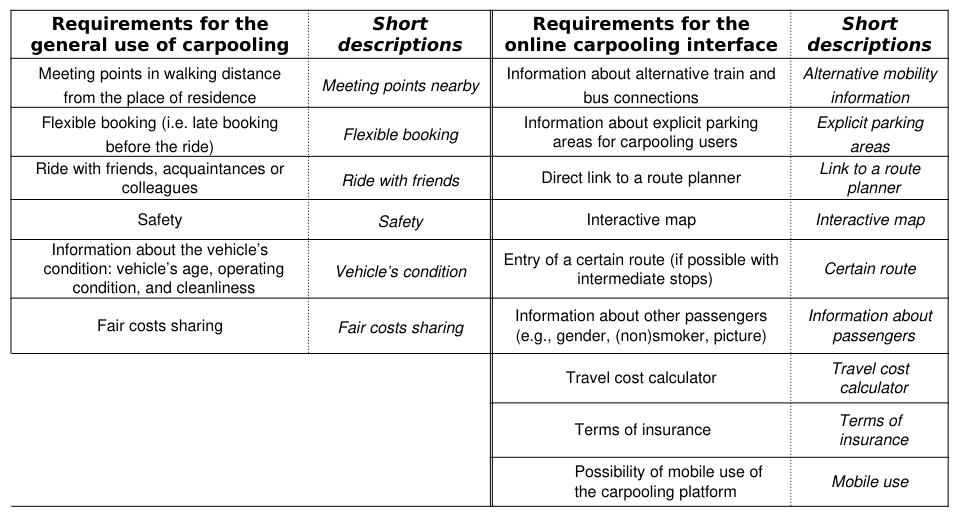
Research Approach The main objective of this study was to examine mobility requirements for the use of carpooling among different user groups. For the research purposes following variables were defined: As independent variables user diversity in terms of age (young vs. middle-aged vs. older users), gender (males vs. females), and status of employment (regularly employed vs. persons in educational process vs. not employed) was included. The dependent variables were, firstly, requirements for the general use of carpooling (e.g., meeting points in walking distance from the place of residence, fair costs sharing), and secondly, requirements for the online carpooling interface (e.g., information about alternative train and bus connections, travel cost calculator, terms of insurance); the particular items are given in Table 1. All items with respect to the requirements had to be answered on a 5-point Likert scale ranging from 1 (=strongly agree) to 5 points (=strongly disagree).
Table 1: Dependent variables of the research
The selection and formulation of the requirement items was carried out as a result of literature review and a subsequent consultation with experts in the project team. The internal consistency of the requirements for Web pages measured by Chronbach’s Alpha reached satisfactory value of α=0.75 (9 items, n=932). In contrast, the item analysis of the general requirements for carpooling could not be considered reliable (α=0.54; 6 items; n=1007).
Data Collection The empirical data was collected by means of an online survey that was carried out between May and September 2010. The questionnaire was arranged in five thematic sections.
1) The first section focused on questions regarding the used online-CPP and the purpose of the carpool (regularly vs. one-time basis).
2) The second part of the survey addressed reasons, requirements and obstacles with respect to carpooling (e.g., “What are the reasons you want to carpool?”).
3) The third section gathered information about the general attitudes and values in life, as well as information about preferences with respect to the means of transport. In the second and the third part of the questionnaire participants had to agree or reject different statements (e.g., “In my leisure time I travel a lot.”) on a 5-point Likert scales.
4) The fourth part of the survey acquired data about mobility behavior (e.g., “How frequently do you use public transportation in a week?”) and individual mobility opportunities/patterns (e.g., “How easy can you reach your place of work from your place of residence by means of public transport?”; answers on 5-point Likert scale from 1=’very easy’ to 5=’not easy at all’).
5) Finally, the fifth section elicited socio-demographic data (e.g., age, gender, education) as well as the type and extent of employment.
Participants took on average 15-20 minutes to complete the questionnaire.
In the present study we report a part of these data focusing primarily on requirements and key motivators for the general use of carpooling among different user groups, and their demands and wishes regarding the online interface in order to optimize the carpooling-websites (part two of the survey). Particular interest is directed to the characteristics of carpooling on an irregular and/or one-time basis mainly for leisure or other private activities (=carpoolers). Therefore, in this paper only results from the latest part of the sample will be subject of interest in opposite to those who carpool on a regular basis, e.g., for professional purposes (=commuters).
Participants Overall, data from 1261 participants was collected and after correction data from N=1024 were analyzed in the study. The recruitment was intended to reach different carpooling users (from younger to older) of both sexes, and representing different stages of professional background (employment vs. education) in order to compare, and – as the case may be – to present differences regarding the described requirements among diverse mobility groups in the society.
Participants’ age in this sample ranged from 18 to 75 years [M=34.2 (M=mean value); SD=12.9 (SD=standard deviation)]. For the statistical analyses the sample was divided into three age groups: young (M=24.5, SD=2.8; aged between 18 and 29 years; n=519), middle-aged (M=37.7, SD=6.3; with the age range from 30 to 49 years; n=341), and senior mobility group (M=57.7, SD=7.5; 50 years and above; n=164). The proportion of females was 37% (n=379) and the males (n=653) made 63% of the survey. Regarding status of employment, 58% of the persons participating in the study were regularly employed (n=589), 34% of the persons were involved in an educational process (n=352), and 8% stated to be not employed (n=80).
The majority of participants were recruited through diverse web-based carpooling platforms. In order to cover a representative sample, different educational levels were represented. For participation different prizes were raffled among the participants.
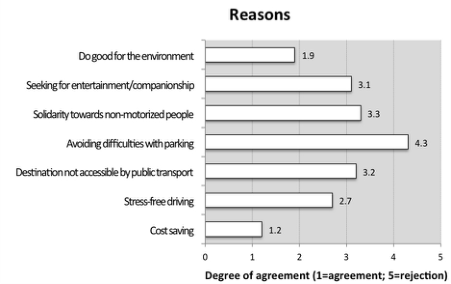
To explore the motivation for the use of carpooling, participants were asked about perceived reasons (pros) and barriers (cons) for this kind of traveling. The pros concerned pragmatic reasons (i.e. ‘cost saving’, ‘stress-free driving’, ‘destination not accessible/difficult to reach by public transport’, ‘avoiding difficulties with parking’), social reasons (i.e. ‘seeking for entertainment/companionship’, showing ‘solidarity towards non-motorized people’), and environmental reasons (i.e. ‘to do good for the environment’). The perceived cons related to aspects of security [i.e. ‘uncertainty by strangers’, ‘meeting points far away’, ‘uncertainty of driver’ (=driving to fast and impetuous)] and aspects of inconvenience associated to the use of carpooling [i.e. ‘additional breakpoints’ to collect other carpoolers, ‘need to adjust desired departure time’ to the other passengers, ‘possible delays’ (insufficient reliability of other passengers), necessity to ‘coordinate other daily errands’, ‘detours’]. The resulting means for the perceived reasons (left) and barriers (right) are presented in Figure 1.
Figure 1. Mean values resulting for perceived reasons (left) and barriers (right) for the use of carpooling (N=1024)
The average values with respect to the pro-using motives (=reasons) in Figure 1 (left) clearly show that the two top reasons to carpool are cost saving and the desire to travel environmentally sound. Almost all (96%) participants (strongly) agreed that cost savings is one of the most important motivators for carpooling, and 76% of the respondents believe that doing so contributes to environmentally friendly mobility behavior. To carpool in order to avoid difficulties with parking, in contrast, was the weakest perceived reason; less than 9% of the persons participating in the survey indicated (strongly) agreement on this aspect.
The perceived barriers achieve at the most weak agreement. As presented in Figure 1 (right) four of the contra- arguments lie even behind the middle of the scale showing that the respondents rather reject them: additional breakpoints on the way (45%), security apprehension because of strangers (38%), the necessity to coordinate other daily errands (29%) as well as to adjust the departure time (30%) in dependence of the carpooling arrangements seem not to be relevant barriers to use this kind of traveling [in parentheses percentage of persons (strongly) rejecting the given aspect as an obstacle to use carpooling]. Meeting points in far distance and possible delays are more likely to hinder people to share a ride with others (agreement on these aspects lied in the sample between 35 and 38 percent). One has to keep in mind that the participants were registered users of CPP, and hence, despite all possible barriers they had already decided to share a ride with others in a private car.
Overall, the data show that there is a positive attitude toward the willingness to use carpooling when irregularly traveling for private purposes. People appreciate the possibility to save costs, to protect the environment and to enjoy the stress-free driving, and they accept in this regard some disadvantageous circumstances such like possible delays, detours and distant meeting points. Considering the perception of reasons and barriers among all participants in the next step it is of interest to learn, what people require making use of carpooling, and if there are relevant differences in diverse groups of carpoolers. In the next chapter general requirements for the use, as well as the demands with respect to web-based platforms for arrangement of carpooling are examined.
RESULTS
The data were analyzed by various inference-statistical methods. In order to explore differences between the research groups (multivariate) analysis of variance [(M)ANOVA], f-tests (Pillai trace) and t-tests were performed depending on the properties of the data and according to the achievement of statistical assumptions. For effect sizes partial eta squared (η2) was chosen, the values of which were interpreted according to Cohen (Cohen, 1988): .01=small effect, .06=moderate effect, and .14=large effect. The level of significance was set at 5% unless the assumption of homogeneity of variance (Levene test) was violated; in this case more conservative alpha level of 2.5% was used, minimizing the possibility of type I error. Outcomes within less restrictive significance level of 10% are referred as marginally significant.
General Requirements for the Use of Carpooling
In this study it is of interest what people require making use of carpooling. We report effects with respect to the requirements for the general use of carpooling under consideration of user diversity in terms of age, gender and status of employment. As the internal consistence of this scale did not reach satisfactory value (Cronbach’s α=0.54) and the correlations between items did not attained moderate values (all coefficients less than r ≤ .45), the group differences were examined separately using one-way analyses of variance and t-tests (categorical variables) for the dependent variables in this context. In order to minimize the possibility of type I error, the significance level was set at a more conservative level of 2.5%.
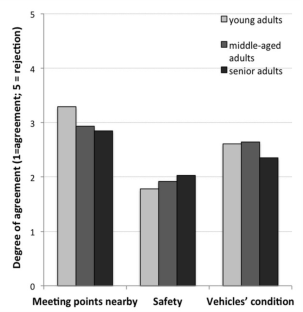
In the first step, analysis of variance was conducted to disclose differences between the different age groups. The procedure revealed a main effect of participants’ age on meeting points nearby (F(2,995)=12.8; p≤0.001; η2=.02), safety (F(2,995)=4.5; p=0.012; η2=.01) and vehicle’s condition (F(2,989)=3.8; p=0.023; η2=.01) showing that persons in different ages vary significantly regarding these aspects of carpooling use. Figure 2 (left) illustrates mean values for the age groups in the described dependent variables. Differences between the age groups regarding meeting points in walking distance from the place of residence show that middle aged adults (M=2.9, SD=1.2) and those aged 50 years and over (M=2.8, SD=1.3) request more than young carpooling users (M=3.3, SD=1.2) that the meeting points are nearby. With respect to the safety the young adults (M=1.8, SD=1) place significantly more value than middle aged (M=1.9, SD=1) and senior adults (M=2, SD=1.1) on safe carpooling. In addition, the effect of age is evident in relation to vehicle’s condition: senior adults (M=2.3, SD=1.2) compared to young (M=2.6, SD=1.1) and middle aged car-poolers (M=2.6, SD=1.1) attach significantly more importance to know in advance about vehicle’s age, operating condition and the cleanliness inside. Despite reaching statistical significance, according to the effect sizes the actual difference in mean scores between the groups was quite small.
Figure 2. Effects of age (left), gender (middle) and status of employment (right) on the general requirements for the use of carpooling
For testing gender differences in context of carpoolers’ general requirements an independent samples’ t-test was conducted. The analysis revealed that making decisions to choose this form of mobility males and females differ significantly with respect to safety (t(1000)=6.5; p≤0.001; η2=.04) and fair cost sharing for carpooling (t(963,219)=6.8; p≤0.001; η2=.04). This means in detail that female carpoolers pay significantly more attention to safe travels (MF=1.6, SD=0.9; MM=2; SD=1) and they insist more on fair cost sharing than males (MF=1.3; SD=0.6; MM=1.6; SD=0.8). The magnitude of the differences in the means (see Figure 2 in the middle) was greater than between the age groups but still reminded relatively small.
Examining requirements for carpooling in general, one-way analysis of variance showed in addition a significant effect of peoples’ status of employment. Firstly, carpoolers differ regarding meeting points nearby (F(2,992)=6.5; p=0.002; η2=.01): not employed persons (M=2.7, SD=1.3) require significantly stronger than employed adults (M=3.1, SD=1.2) and those being in education (M=3.3, SD=1.2) that meeting points are in walking distance from the place of their residence. Secondly, the aspect of safety differentiate the carpoolers in this context (F(2,992)=5.7; p=0.003; η2=.01): employed (M=1.8, SD=1) and persons being in education (M=1.8, SD=0.9) show higher agreement on the importance of safety in carpooling usage than unemployed people (M=2.2, SD=1.2). And thirdly, in connection to fair cost sharing (F(2,1008)=9.2; p≤0.001; η2=.02) persons in education (M=1.4, SD=0.6) demand it – as can be expected – the most, and are followed in this regard by not employed (M=1.5, SD=0.8) and then by employed carpoolers (M=1.6, SD=0.8). All average values of employed, unemployed and persons being in education are given in Figure 2 (right).
Requirements for the Use of Web-based Carpooling Platforms The most efficient way to get information as well as to plan and organize ridesharing is to visit a web page with an appropriate carpooling provider. In order to optimize such websites and to make them easier for the user, the participants of this study were asked to assess different aspects necessary for customizing and facilitating the Internet use for carpooling.
To minimize the possibility of type I error, multiple analysis of variance was calculated for the presented research variables (see Table 1, right). As MANOVA has the power to detect whether groups differ along a combination of dimensions (in this case, all dependent variables regarding requirements for the web-based carpooling use) and the item-scale met the necessary assumptions, this method has been preferred over conducting several ANOVAs. The procedure showed main effects of age (F(18,1626)=2.6; p≤0.001; η2=0.03) and gender (F(9,812)=3.6; p≤0.001; η2=0.04). In the Figure 3 (right) all mean values are summarized.
Significant age differences were revealed in particular with respect to requirements towards interactive map (F(2,820)=5.8; p=0.003) and information about certain route (F(2,820)=9.5; p≤0.001). This means that young users (M=2.3, SD=1.2) more than middle-aged (M=2.5, SD=1.2) and senior travelers (M=2.8, SD=1.4) wish an interactive map, and also, that the youngest (M=1.8, SD=1) and the middle-aged users (M=1.9, SD=1.1) demand more detailed information about a certain route and intermediate stops planning the travel by means of an Internet portal than senior adults (M=2.4, SD=1.3). Between the age groups there was moreover a tendency in relation to additional information about passengers (F(2,820)=2.6; p=0.07) showing marginally that participants of the oldest group demonstrated the greatest interest in this regard.
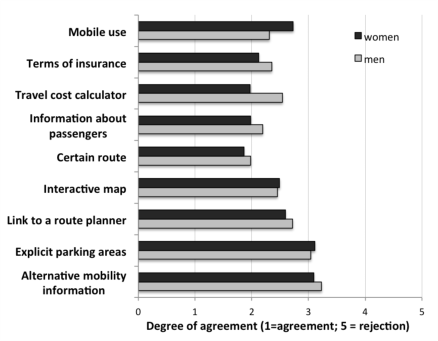
Figure 3. Effects of gender (left) and age (right) on the requirements for the use of web-based carpooling platforms
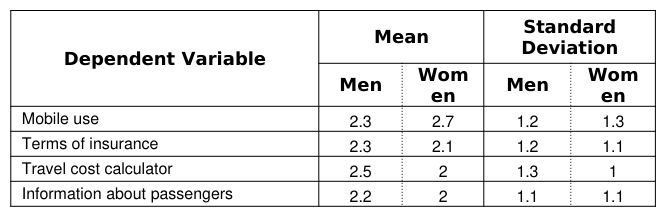
Looking at the average values for the both sexes (see Figure 3, left), it is visible that people using web platforms for carpooling wish above all to know, who they are traveling with (requesting details about other passengers), and they demand to have the possibility to entry a certain route with intermediate stops when planning a trip. In contrast, according to the means aspects such as information about alternative bus and train connections, or information about explicit parking areas for carpooling users seem to be less important in this context. Considering tests of between- subject effects, gender differences appear in connection to 1) the possibility of mobile use of the carpooling platform (F(1,820)=7; p=0.008), 2) the terms of insurance (F(1,820)=6.2; p=0.013), 3) the travel cost calculator (F(1,820)=14.5; p≤0.001), and 4) the information about other passengers (F(1,820)=5.5; p=0.019). This means in particular that women insist more than men on additional information about other passengers (such as for instance their gender, smoking habits etc.), about costs calculation and information on terms of insurance. In contrast, male carpoolers attach more importance than female users to the possibility of a mobile use of such web-based platforms. The detailed data are summarized in Table 2.
Table 2: Means and standard deviations for significant gender differences with regard to web-based carpooling (1= agreement; 5=rejection)
The status of employment did not influence users’ judgments regarding web-based carpooling platforms and no further interacting effects between the independent variables were found in this respect.
DISCUSSION
In times when cities grow, pollution continuously increases, and peoples’ mobility is faced with new challenges according to fast paced life styles, high expectancies and technical development, understanding of actual requirements and preferences is essential for successful solutions. In this study we considered the use of carpooling, as it is one smart option for cost and fuel effective traveling that has the potential to prevent traffic congestion and to reduce exhaust emissions. Thereby, it was examined whether mobility requirements in this regard – both, in general and with respect to web-based carpooling platforms – significantly differ in diverse societal groups.
An initial analysis of possible reasons and barriers to use carpooling clearly showed that participants had overall a positive attitude in this regard. Characteristically, humans weigh perceived benefits of using a technical system against possible barriers (Wilkowska and Ziefle, 2011). Therefore, it is a promising finding that participants rated the benefits higher than possible obstacles when considering irregularly traveling for private purposes. The main motivators for ridesharing were the possibility to save costs, environmentally friendly transportation, and the advantage of stress-free driving. The barriers, in contrast, achieved hardly any approval among the respondents: in this context possible delays, detours, and distant meeting points seemed to disturb them most. These findings indicate that a high awareness of the need for alternative measures for mobility prevails in society and that there is a fundamental willingness to shared use of cars. The advantages of carpooling such like choosing who to travel with, how much comfort is needed, what people are willing to pay as well as meeting new people, and reducing carbon emission seem promising and this solution harvests overall consent in today’s population.
The key results of the present study, however, were related to what the (potential) carpoolers demand, and if these requirements differ in view of user diversity. Statistical testing showed that there are diverging requirements on ridesharing between different user groups: older and younger, male and female carpooling users as well as in dependence of participants’ employment relationship, individuals emphasized different needs for carpool. Thus, the consideration of user diversity is an important contribution in the conceptualization of (novel) mobility concepts in urban systems. In the following it is summarized why age, gender and individual economic situation of citizens (status of employment) are crucial for the formation and use of carpools.
Considering first the age differences, it resulted that in general the oldest carpoolers significantly more than younger participants request nearby situated meeting points and attach significantly more attention to detailed information about the condition of the vehicle (i.e. car’s age, operating status, state of cleanliness). Apparently, for the senior carpoolers some principles have upper hand over the cost-effective traveling, and the circumstances around must also meet certain expectations. With respect to the Internet platform this part of the sample wished more than the younger age groups explicit information about the other passengers (e.g., age, gender) as well as information regarding terms of insurance, and alternative bus and train connections. These aspects clearly show that people aged 50 years and above always keep their independence in mind: they possibly want to protect themselves against the case that at the end ‘something goes wrong’. In exchange, the youngest age group was found to focus primarily on the safety in the general sense; with regard to the carpool websites they wished significantly stronger than senior participants an interactive map, and they required more detailed information about a certain route and intermediate stops to arrange their travel. As can be expected, the tech- and media-savvy attitude of the younger carpoolers becomes apparent here: while older people focus more on pragmatic requirements, in this age group rather the technical aspects of travel come more to the fore. Moreover, the statements of the middle-aged group were usually placed between the mean values of the other marginal age groups (i.e. between young and senior age group) underlining thus the actual age differences with respect to the use of carpooling.
In the next step we take a closer look on the gender differences that were revealed in our analyses. Regarding the general requirements for use of carpooling relevant differences between men and women appeared in context of safety and fair cost sharing, whereby according to the results females paid significantly more attention to both aspects than males. These findings are widely consistent with the outcomes to requirements of carpooling websites: Women insisted more than men on detailed information of actual costs incurred, they required more details about other passengers involved, and they wished significantly more frequent than men to know about the conditions of insurance. In contrast, male in comparison to female carpoolers attached considerably more importance to the possibility of a mobile use of web-based carpooling platforms. Looking superficially at the results one could think that the division of gender roles in this context is ‘quite typical’, this means the women worry too much and the men make life easy. While male carpoolers think application-oriented, pertinent and on a pragmatic level, the aspects in which females place a greater emphasis on, reflect rather the emotional side of the intention to carpool, i.e. aspects of fairness, safety and a great deal of associated information ‘just in case’. These higher mean values of the presented requirements in women may result from the need of self-protection and/or anticipation of possible risks when using this kind of mobility (e.g., violation of privacy, physical vulnerability etc.). Thus, taking these aspects into account it is possible that women (at least) try to get and to stay informed to protect themselves on another level.
In addition, in the analyses status of employment was explicitly considered in order to examine, whether the requirements among carpooling users differ in dependence of this characteristic. In this context differences between the research groups (employed vs. not employed vs. persons being in education) were found regarding some aspects of general carpooling use. Firstly, there are different perceptions of the relevance of nearby situated meeting points for ridesharing, thereby not employed participants reached the highest average agreement on this requirement. This finding is perhaps somewhat surprising at first sight, because especially in this user group it could be supposed that individuals who are not tied to professional or educational obligations in the everyday life might have most free time and calmness to reach even more distant meeting points. On the other side, this idea may be deceptive: considering possible reasons for absent employment, such like for instance chronically illness, parental leave, or physical disability, the difficulty to reach distant meeting points would be far more understandable. Furthermore, carpoolers with different status of employment significantly differed with respect to safety. Employed and participants who indicated to be in education required higher degree of safety in carpooling usage than unemployed people. A further aspect that differentiated carpooling user in dependence of the status of employment was the fairness of cost sharing. In this regard, following sequence of mean values resulted: persons in education insisted the most upon equitable distribution of costs and were followed by not employed and then employed participants. The reasoning for this state of affairs is entirely unambiguous. It is absolutely understandable that those who do not earn money on a regular basis have to very precisely control their spending. Thus, according to students and pupils average financial situation, which is often approaching a subsistence level, it is not surprising that they are forced to pay attention to their financial affairs differently than the working population.
CONCLUSION
Sustainable transportation options are receiving increasing attention in times of global urbanization and associated problems such as roadway congestion, land use conflict, access to energy resources, and climate change. Carpooling that is aimed at encouraging people to share cars in order to increase the occupancy and reduce the number of vehicles traveled represents such an alternative to single-occupancy vehicle use (Buliung et al., 2009).
This study was designed to examine requirements for use of carpooling among different user groups. The idea was to explore travel demand in this context and to enhance transport planning, sharing of mobility resources (such as carpooling) as well as the effective use of information technology for this purpose. The outcomes show that there is a fundamental willingness to use this option for traveling, whereby costs saving, protection of the environment and stress-free driving are overall the key motivators to do so. In addition, this study contributes insights with respect to user diversity in connection to specific carpooling requirements in general sense as well as regarding the optimization of the web-based carpooling interfaces. It is evident that younger and older carpool users place different emphases when it comes to planning and arrangement of the optimal carpool. Moreover, the different sexes perceive carpooling through varying prism: the men are quite sober and practically oriented, while the women’ backdrop of the idea is more emotional and focused on security and fairness. And also, the examination of the requirements depending on the status of employment allows further insights into users’ diverse demands in regard to carpooling.
As the concept of carpooling is still a good solution for cost and fuel effective traveling and it has a positive ‘side effect’ for the environment, it is relevant to strengthen its success spreading the idea in growing urban areas including Internet-based applications that facilitate the planning and organizing, as well as enable connections between potential users of carpool. The exploration and considering users’ diverse needs and wishes, as well as a diligent implementing of carpooling system refinements is thus very promising. Not least, increasing shared knowledge about carpooling patterns and CP-user profiles could yield an enlargement in the use and formation of carpooling and thus help to counter the challenges of today.
LIMITATIONS AND FUTURE RESEARCH Even though the study was based on a sound empirical basis and delivered useful insights regarding user diversity, there are still many more factors, which reasonably may impact the users’ adoption behavior. Therefore, there are some limitations that should be taken up in further research.
A first limitation refers to the fact that the factor ‘age’ and ‘gender’ are – at least in the used coarse categorization – quite fuzzy. Considering that ageing and gender are carriers of underlying differences in developmental processes, biographical influences, as well as social and economic values, further research should specifically elucidate the nature of the gender- and age-related attitudes, which drive the willingness to adopt novel mobility patterns. In this context, individual risk behaviors (Jessor, 1992; Zuckerman et al., 2000), technology anxiety, trustfulness, and trust in others (Miller et al., 1988) are crucial personality factors that could strengthen or hinder the use of carpooling. In addition, social values, individual responsibility for the society (Kreie and Cronau, 1998), and quality of life might be overarching motives that should be taken into account. According to WHO (1994), the quality of life generally refers to the individual perception of one's physical health, psychological state, level of independence, as well as social relationships, personal beliefs, and relationship to salient features in the environment.
Another limitation regards to the culture-specificity of the findings presented in this study, especially in combination with the impact of culture and economics on quality of life-perceptions, on social and societal values, and ethics. The results reported here are based on users, which live in an economic wealthy country with a high industrial standard. Though, the motive to use carpooling might not only be a matter of individual economic behavior, ecological ethics, and awareness of natural vulnerability, but also a product out of the wealth of a society and the access to public mobility. Future studies will therefore have to undertake cross-cultural comparisons regarding the societal acceptance of carpooling.
ACKNOWLEDGEMENTS
This work was funded by the Excellence initiative of German states and federal government (Project: Urban Future
Outline, UFO). We would like to acknowledge the scientific support from all UFO research assistants and thank all participants for the insightful input.
Note: The project “Potentials and options of cross linking Internet-based carpooling platforms (for commuters)” is commissioned by the German Federal Ministry of Transport, Building and Urban Development (BMVBS). The authors are solely responsible for the content of this paper.
REFERENCES
Arning, K., Ziefle, M., Mühlhans, H. (2013), “Join the ride! User requirements and interface design guidelines for a commuter carpooling platform“, in: Design, User Experience, and Usability. User Experience in Novel Technological Environments, Aaron Marcus (Ed.), Heidelberg: Springer. pp.10–19 Beul-Leusmann, S., Samsel, C., Wiederhold, M., Krempels, K.H., Jakobs, E.M., Ziefle, M. (2014), “Usability evaluation of
mobile passenger information systems“. In: Design, User Experience, and Usability. HCI 2014. New York: Springer. Beul-Leusmann, S., Jakobs, E.M., Ziefle, M. (2013), “User-centered design of passenger information systems“. Full paper at the IEEE International Professional Communication Conference (IPCC 2013). pp.1–8 Buliung, R.N., Soltys, K., Habel, C., Lanyon, R. (2009), “Driving factors behind successful carpool formation and use”,
TRANSPORTATION, Volume 2118 No. 1. pp. 31–38 Bruns, A., Farrokhikhiavi, R., Schmidt, R., von der Ruhren, S., Heckert, D. (2011), “Potenziale und Möglichkeiten zur Vernetzung internetgestützter Fahrgemeinschaftenvermittlungen für regelmäßige Fahrten (Berufspendler)“, Stadt Region Land, issue 88, Institut für Stadtbauwesen und Stadtverkehr (Ed.), Aachen. pp. 73–83 Bruns, A., Farrokhikhiavi, R. (2011), “Car Pooling – increasing effectiveness through integrated planning and cross linking”, in:
Proceedings European Transport Conference. Association for European Transport and contributors (Ed.), Henley-in-Arden. Cohen, J.W. (1988), „Statistical power analysis for the behavioral sciences“, 2nd ed., Hillsdale, NJ: Lawrence Erlbaum Associates. Dürholt, H., Hamacher, R., Hautzinger, H., Krämer, B., Neumann, L., Pischner, T., Schaaf, B. (1998), “Strategien zur Erhöhung
des Besetzungsgrades im Pkw-Verkehr“, Institut für Angewandte Verkehrs- und Tourismusforschung (Ed.), Heilbronn. Funke, T. (2006), “Entwicklung von Verkehrsmittelwahlmodellen für komplexere Mitfahrverkehre“, Dissertation, Institut für Straßen- und Verkehrswesen der Universität Stuttgart (Ed.), Stuttgart. Farrokhikhiavi, R., Schmidt, R., Burns, A., von der Ruhren, S., Heckert, D. (2011), “Potenziale und Möglichkeiten zur
Vernetzung internetgestützter Fahrgemeinschaftenvermittlungen für regelmäßige Fahrten (Berufspendler) – Schlussbericht“, Institut für Stadtbauwesen und Stadtverkehr (Ed.), Aachen. ivm - Integriertes Verkehrs- und Mobilitätsmanagement Region Frankfurt RheinMain (2006), “Pendlernetz RheinMain – Potenziale der Fahrgemeinschaftenvermittlung in der Region Frankfurt RheinMain. Ergebnisdokumentation zur Nutzerbefragung“, Frankfurt. Jessor, R. (1992), “Risk behavior in adolescence: A psychosocial framework for understanding and action“. Developmental
Review, Volume 12 No. 4. pp. 374–390 Kreie, J., Cronau, T.P. (1998), “How men and women view ethics“. Communications of the ACM, Volume 41 No. 9. pp. 70–76 Miller, S.M., Brody, D.S., Summerton, J. (1988), “Styles of coping with threat: Implications for health“. Journal of Personality and Social Psychology, Volume 54 No. 1. pp. 142–148 Morency, C. (2007), “The ambivalence of ridesharing”, TRANSPORTATION, Volume 34 No. 2. pp. 239–253 Reinke, V. (1985), “Fahrgemeinschaften im Berufsverkehr. Möglichkeiten und Grenzen der Förderung“, in: Dortmunder
Beiträge zur Raumplanung, Volume 39, Dortmund. Reinkober, N. (1994), “Fahrgemeinschaften und Mobilitätszentrale. Bestandteile eines zukunftsorientierten öffentlichen Personenverkehrs“, in: Schriftenreihe für Verkehr und Technik, Volume 81, Bielefeld. Schaar, A.K., Ziefle, M. (2010), “Potential of eTravel assistants to increase older adults’ mobility“, in: HCI in Work & Learning,
Life & Leisure, Leitner, G. Hitz, M. and Holzinger, A. (eds). Berlin, Heidelberg: Springer. pp. 138–155 WHO - World Health Organization (1994), Statement Developed by WHO Quality of Life Working Group, WHO Health Promotion Glossary WHO, HPR, HEP, 98.1. Geneva, Switzerland: World Health Organization Wilkowska, W., Gaul, S., Ziefle, M. (2010), “A Small but Significant Difference – The Role of Gender on The Acceptance of
Medical Assistive Technologies“, in: HCI in Work & Learning, Life & Leisure, Leitner, G. Hitz, M. and Holzinger, A. (eds). Berlin, Heidelberg: Springer. pp. 82–100 Wilkowska, W., Ziefle, M. (2011), “User diversity as a challenge for the integration of medical technology into future home environments“, in: Human-Centred Design of eHealth Technologies. Concepts, Methods and Applications, Ziefle, M. and Röcker, C. (eds). Hersehy, P.A. IGI Global. pp. 95–126 Wilkowska, W., Ziefle, M. (2012), “Privacy and Data Security in E-health: Requirements from Users’ Perspective“. Health
Informatics Journal, Volume 18 No. 3. pp. 191–201 Ziefle, M., Schaar, A.K. (2010), “Technical Expertise and its Influence on the Acceptance of Future Technologies. What is influencing what to which extent?“, in: HCI in Work & Learning, Life & Leisure, Leitner, G. Hitz, M. and Holzinger, A. (eds). Berlin, Heidelberg: Springer. pp. 513–529
Ziefle, M. (2010), “Modelling mobile devices for the elderly“, in: Advances in Ergonomics Modeling and Usability Evaluation, Khalid, H., Hedge, A. and Ahram, T.Z. (eds.). Boca Raton: CRC Press. pp. 280–290 Zuckerman M, Kuhlman D.M. (2000), “Personality and risk-taking: Common biosocial factors“. Journal of Personality, Volume
68. pp. 999–1029
LISTED IN THE AHFE DIGITAL BOOKSTORE CATALOGUE
Explore the complete digital volume
Advances in Human Factors, Software, and Systems Engineering
Read this individual research paper free through the original publisher, or explore the full digital proceedings book.
ISBN 978-1-4951-2096-1
Explore this ISBN in the AHFE Bookstore ↗Listed in the July 2026 bookstore catalogue; search by ISBN to confirm current availability · Digital book purchase optional