Ahmed Kotb, Saad Alharbi, Mahdy Othman, Abdullah Silawi (2026). Financial Reporting Quality and Firm Value: Evidence from Saudi Arabia. In: Human Systems Engineering and Design (IHSED2026): Future Trends and Applications. AHFE Open Access, vol. 237, pp. 112–124. https://doi.org/10.54941/ahfe1008151
AbstractResearch Objective Grounded in agency, signaling, and stakeholder theories, this study investigates the impact of perceived financial reporting quality (FRQ) on firm value and investment decision-making within the reforming institutional landscape of Saudi Arabia's capital market under the Vision 2030 initiative. Specifically, it examines whether audit quality and corporate governance (AQCG), IFRS adoption, and narrative/ESG disclosures function as mediating or moderating variables in this relationship.Methodology The study employs a quantitative, cross-sectional survey design utilizing data gathered from 180 financial market professionals (including analysts, auditors, managers, regulators, and academics). Hypotheses were tested using structural equation modeling (SEM) and moderated multiple regression analysis. The measurement model demonstrated robust psychometric properties, featuring strong construct reliability (Cronbach 's alpha = 0.744 - 0.898), convergent validity (AVE > 0.50), and highly satisfactory model fit indices (RMSEA = 0.028; CFI = 0.904).Key Findings The empirical results demonstrate that perceived FRQ has a significant positive effect on firm value and investment decision-making; however, this relationship is fully mediated by AQCG, with no statistically significant direct path observed. Conversely, neither IFRS adoption nor narrative and ESG disclosures act as significant mediators or moderators. This lack of significance is attributed to the voluntary nature of current ESG reporting and uneven IFRS compliance across listed firms. Additionally, AQCG was found to exert a strong, independent direct effect on investment decisions.Contributions & Policy Implications This research contributes to the accounting literature by offering empirical insights from an emerging Gulf Cooperation Council (GCC) market. It demonstrates that internal corporate governance and external audit mechanisms—rather than mere accounting standards compliance—serve as the primary channels through which financial information translates into market value. To strengthen this quality-value transmission mechanism, the study advises regulators to implement mandatory ESG reporting frameworks, auditor rotation mandates, and AI-driven auditing technologies.
Financial reporting quality (FRQ) occupies a central position in accounting and finance research due to its role in reducing information asymmetry, lowering agency costs, and supporting efficient capital allocation. High- quality reports are reliable, relevant, timely, and comparable; poor-quality
Financial Reporting Quality and Firm Value: Evidence From Saudi Arabia 113 reports distort valuations and erode investor trust. High-profile failures — Enron, WorldCom, and Wirecard — have reinforced the global consensus that transparent, independently assured reporting is a necessary condition for market integrity.
Saudi Arabia provides a compelling and institutionally distinctive research setting. Under Vision 2030, the Kingdom has undertaken substantive corporate governance reforms, strengthened the Capital Market Authority’s (CMA) oversight framework, and mandated IFRS adoption for all Tadawul- listed non-financial companies in 2017. Simultaneously, ESG disclosure has emerged as a growing but still predominantly voluntary dimension of corporate reporting. Despite these reforms, empirical evidence on how FRQ translates into firm value in Saudi Arabia remains scarce, particularly from the perspectives of market practitioners.
This study addresses four research questions:
RQ1: How does perceived FRQ affect firm value and investment decision- making in Saudi Arabia?
RQ2: Do AQCG mechanisms mediate/moderate the FRQ–value relationship?
RQ3: Has IFRS adoption improved the perceived value relevance of financial reporting?
RQ4: Do narrative and ESG disclosures strengthen the FRQ–value association?
The study makes three contributions: (i) it provides rare empirical perception-based evidence from a GCC market; (ii) it demonstrates that governance mechanisms — not accounting standards per se — are the primary channel through which reporting quality translates into value; and (iii) it documents that voluntary ESG and IFRS frameworks do not yet function as effective value-amplifiers in the Saudi institutional context.
THEORETICAL FRAMEWORK AND LITERATURE REVIEW Theoretical Foundations
Three theories ground the study’s conceptual model: Agency Theory (Jensen & Meckling, 1976) predicts that managers may exploit reporting discretion to serve self-interest; high-quality reporting constrains opportunism and reduces agency costs.
Signaling Theory (Spence, 1973) posits that firms with superior performance invest in credible disclosure to distinguish themselves from lower-quality counterparts.
Stakeholder Theory (Freeman, 1984) frames high-quality reporting as a broader social obligation — not merely an investor-protection mechanism — encompassing employees, creditors, regulators, and communities.
Determinants of FRQ Prior research identifies five systematic drivers of FRQ variation:
Audit quality: Big Four engagement and auditor specialization reduce earnings management (DeFond & Lennox, 2017; Francis et al., 2005).
Technology: AI and NLP tools are reshaping both preparation and analysis of disclosures (Li, 2008; Huang et al., 2014).
FRQ and Firm Value High FRQ reduces information risk, lowers the cost of capital, and improves equity price informativeness (Francis et al., 2005; Barth et al., 2001; Lambert et al., 2007). Restatements and financial fraud — most dramatically illustrated by Wirecard AG’s €1.9 billion cash fabrication — produce severe market reactions: Wirecard’s share price fell over 90% within days of disclosure (Hennes et al., 2008). ESG and integrated reporting are emerging complements that improve decision-usefulness beyond traditional financial statements (Dhaliwal et al., 2011; Eccles & Krzus, 2010).
Saudi and GCC Context GCC FRQ research remains limited. Alfraih (2016) documented moderate value relevance in Kuwait; Alzoubi (2018) found persistent earnings management in Jordan despite reform; Almujamed (2019) noted post-IFRS improvements across GCC but persistent institutional weaknesses. In Saudi Arabia specifically, Al-Mana et al. (2020) confirmed improved earnings quality after IFRS adoption, with effects concentrated in better-governed firms, and Hashed and Shaique (2020) confirmed that Big 4 engagement reduces discretionary accruals. Buallay et al. (2020) provided preliminary GCC evidence that ESG governance-dimension scores positively predict market-based performance.
Research Gaps Four gaps motivate this study: (1) developed-market dominance in FRQ research; (2) limited post-IFRS practitioner-perspective evidence in Saudi Arabia; (3) absence of simultaneous mediation/moderation testing of AQCG, IFRS, and ESG in a unified Saudi model; and (4) neglect of technology and narrative disclosure dimensions in regional accounting research.
HYPOTHESES Hypothesis Predicted Direction Theoretical Grounding
H1: Perceived FRQ → Firm Value Positive Agency Theory; Signaling Theory; Barth et al. (2001) H2: AQCG mediates/ moderates FRQ–Value Positive DeAngelo (1981); Klein (2002); Hashed & Shaique (2020)
H3: Governance enhances FRQ–Value Positive Beasley (1996); La Porta et al. (1999); Fan & Wong (2002) H4: IFRS adoption improves value relevance Positive Daske et al. (2008); Al-Mana et al. (2020)
Positive Dhaliwal et al. (2011); Li (2008); Buallay et al. (2020)
H5: Narrative/ESG disclosures strengthen FRQ– Value
METHODOLOGY
Research Design This is a quantitative, cross-sectional survey study measuring perceived FRQ — how sophisticated market participants evaluate and respond to reporting quality signals — which is a legitimately distinct and independently valuable research question from archival FRQ measurement. Perceptual data are appropriate here because Saudi archival data quality limitations are well- documented and because professional perceptions constitute primary evidence on how reporting quality shapes investment behavior in evolving institutional settings.
Sample and Data Collection Target population: Professionals with direct involvement in financial reporting, auditing, investment analysis, or regulatory oversight in Saudi Arabia.
Sample: 180 respondents collected via purposive sampling using an electronic questionnaire distributed across the Saudi capital market and corporate sectors. The sample spans six industries (chemicals/petrochemicals 25.0%, real estate 13.3%, food/beverage 8.3%, retail 8.3%, healthcare 6.7%, industrials 6.7%, other 31.7%) and five professional roles.
Table 1: Demographic profile (n = 180).
Table available in the original PDF paper.
Characteristic Category n % Gender Male 135 75.0
Female 45 25.0 Education Bachelor’s 78 43.3
Master’s 45 25.0 PhD 32 17.8
Professional cert. 16 8.9 (Continued)
Table 1: Continued.
Table available in the original PDF paper.
Characteristic Category n % Professional role Academic/ Researcher 41 22.8
Auditor 36 20.0 Investor/Analyst 23 12.8
CFO/Finance Mgr. 14 7.8 Regulator 6 3.3
Other (diverse roles) 60 33.3 Experience < 5 years 37 20.6
5–10 years 18 10.0 > 15 years 125 69.4
Instrument The questionnaire comprises five substantive constructs, all measured on a five-point Likert scale (1 = Strongly Disagree; 5 = Strongly Agree):
FRQ (8 items): Perceived accuracy, completeness, comparability, sustainability of earnings, and overall quality improvement.
FVID (5 items): Perceived effect of FRQ on investment risk, investor confidence, market valuation, and cost of capital.
NESGD 0.524** 0.469** 0.693** 0.475** 0.719 Diagonal = √AVE; discriminant validity confirmed for all constructs; **p < 0.01
Descriptive Statistics — Key Item Findings
Highest-rated FRQ item: “Overall quality of financial reporting in Saudi Arabia has improved over the last 5 years” (Mean = 4.14) — reflecting perceived Vision 2030 progress.
Lowest-rated FRQ item: “Earnings are sustainable and reflect long-term performance” (Mean = 3.63) — residual concern about earnings quality.
Lowest-rated NESGD item: “Saudi firms are sufficiently transparent about CSR activities” (Mean = 3.57) — indicating recognized ESG disclosure gaps.
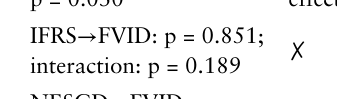
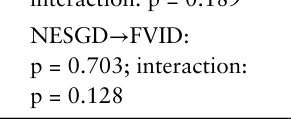
Mediation Analysis — SEM Results Using Structural Equation Modeling (SEM), this study examines how financial reporting quality (FRQ) influences firm value and investment decision-making (FVID) through three mediating variables: audit quality and corporate governance (AQCG), IFRS adoption, and narrative and ESG disclosures (NESGD). The empirical results indicate that while FRQ has a
strong and statistically significant positive effect on all three mediators, only AQCG exerts a significant positive impact on the final outcome of FVID. Because the direct effect of FRQ on FVID is statistically insignificant, whereas the indirect path through AQCG remains highly significant ($$\beta = 0.811, p = 0.000$$), the analysis provides clear evidence of a full mediating effect, demonstrating that corporate governance and audit quality serve as the essential transmission mechanism through which financial reporting quality drives firm value and investment decisions.
The model achieves excellent to acceptable fit across all indices. The absolute χ² is significant (p < 0.001), consistent with known sensitivity to sample size above 100; all relative fit indices confirm adequacy.
FRQ × NESGD 0.275 0.180 0.991 1.530 0.128 R² = 0.990; Adjusted R² = 0.990; F(7,173) = 2449.703, p < 0.001. Note: R² = 0.990 likely reflects multicollinearity between main effects and interaction terms constructed from correlated predictors. VIF statistics should be inspected; specific coefficient magnitudes should be interpreted with appropriate caution. The pattern of significance — FRQ and AQCG significant, interaction terms non-significant — is robust to this concern.
All predictors were mean-centered prior to computing interaction terms following Aiken and West (1991). Residual scatter plot confirms linearity and absence of heteroscedasticity.
Hypothesis Results Summary
Table 7: Hypothesis testing outcomes.
Table available in the original PDF paper.
H Predicted Effect Test Key Statistic Supported?
Equation reproduced from the original PDF.
FVID SEM
✓ (Full Mediation)
Equation reproduced from the original PDF.Table 7: Continued.
Table available in the original PDF paper.
H Predicted Effect Test Key Statistic Supported?
H3 Governance enhances
Equation reproduced from the original PDF.
✓ (direct effect only)
H4 IFRS improves value relevance SEM + Regression
Equation reproduced from the original PDF.
H5 ESG/Narrative strengthens FRQ–FVID
SEM + Regression
Equation reproduced from the original PDF.
DISCUSSION
Full Mediation by Audit Quality and Corporate Governance (H2 Supported) The most significant finding is that perceived FRQ influences investment decision-making exclusively through AQCG as a full mediator (β = 0.811, p < 0.001), with no significant direct path. This result is theoretically coherent: in Saudi Arabia — where ownership is concentrated, regulatory enforcement is still maturing, and audit independence has historically been questioned — the credibility of governance mechanisms, rather than the accounting standards themselves, determines whether reported quality signals are trusted by market participants.
This finding aligns with Jensen and Meckling’s (1976) agency framework and confirms Hashed and Shaique’s (2020) Saudi-specific evidence that governance quality is the primary conduit for reporting credibility. It extends the international literature by demonstrating that in emerging market settings, the AQCG transmission pathway is not merely complementary to direct FRQ effects — it fully substitutes for them. Governance infrastructure, therefore, constitutes the critical prerequisite for unlocking the market value of high-quality financial reporting.
Governance Quality as an Independent Value Driver (H3 Partially Supported) AQCG exerts a significant positive direct effect on FVID independently of FRQ (β = 1.329, p = 0.030). Market professionals in Saudi Arabia value governance quality as a standalone investment quality signal — not merely as a conduit for reporting credibility. This finding reinforces La Porta et al.’s (1999) foundational evidence on investor protection and aligns with Vision 2030’s emphasis on governance reforms as a prerequisite for capital market deepening.
Financial Reporting Quality and Firm Value: Evidence From Saudi Arabia 121 Null Results for IFRS and ESG — A Theoretically Important Finding (H4, H5 Not Supported)
The absence of significant IFRS and ESG mediation or moderation effects is the study’s most practically consequential — and theoretically informative — result. Two institutional explanations account for these null findings: IFRS implementation quality: While Saudi companies adopted IFRS in 2017, practitioners perceive implementation as variable and enforcement as inconsistent — a pattern documented internationally in weak-enforcement contexts (Jeanjean & Stolowy, 2008; Christensen et al., 2015). If IFRS compliance is perceived as partly cosmetic, the standard’s adoption would not be expected to amplify the FRQ–value relationship in perception-based models.
Voluntary ESG framework limitations: Saudi ESG disclosure remains predominantly voluntary and non-comparable across firms — confirmed by the lowest mean score in our sample (“Saudi firms are sufficiently transparent about CSR”, Mean = 3.57). Voluntary, unassured disclosures in a market with limited institutional ESG demand cannot credibly signal governance quality beyond what AQCG already communicates. As signaling theory predicts, disclosure signals lose value when mimicry is cheap and verification absent (Spence, 1973).
Critically, these null results are not evidence of theoretical failure — they are evidence of institutional immaturity. They precisely identify the regulatory interventions needed to unlock the ESG and IFRS value-enhancing potential in Saudi Arabia.
Theoretical Contribution: A Governance-Mediated Model The findings collectively support a governance-mediated model of FRQ value relevance for emerging markets that departs from the direct-effect model dominant in developed-market research. In this model, accounting standards and disclosure requirements are necessary but insufficient conditions for translating reporting quality into market value. The governance ecosystem — board independence, audit credibility, regulatory oversight — functions as the certification mechanism through which reporting quality signals are validated and valued by market participants.
This model bridges agency theory, institutional theory, and signaling theory: governance mechanisms reduce agency problems (Jensen & Meckling, 1976), certify the credibility of reporting signals (Spence, 1973), and compensate for institutional voids that characterize emerging markets (La Porta et al., 1999).
CONCLUSION AND RECOMMENDATION
Conclusion
This study demonstrates that perceived FRQ is positively associated with firm value in Saudi Arabia, but exclusively through audit quality and corporate governance as a full mediating channel — not through a direct path, nor through IFRS adoption or ESG/narrative disclosures. These findings establish three principal conclusions for theory and practice:
1. Governance is the primary transmission mechanism for FRQ value relevance in Saudi Arabia — a finding that challenges the assumption of direct reporting quality effects common in developed-market research. 2. IFRS adoption and voluntary ESG disclosure do not yet amplify the FRQ– value relationship in the current Saudi institutional context, attributable to perceived uneven implementation and the absence of mandatory, assured ESG reporting standards. 3. The quality–value connection in Saudi Arabia depends fundamentally on governance infrastructure investment rather than on accounting standard reform alone.
Recommendations For regulators (CMA/SOCPA):
Mandate ESG reporting aligned with ISSB (IFRS S1/S2) standards with required third-party assurance for listed firms above a defined market capitalization threshold.
Strengthen IFRS enforcement mechanisms — inspection, sanction, and public reporting of non-compliance.
For auditors:
Implement mandatory audit firm rotation at 8–12-year intervals, phased progressively for Saudi listed companies.
Broaden audit scope to include consistency, readability, and balance of narrative disclosure sections.
For corporate management:
Prioritize audit committee independence, financial expertise, and meeting frequency as strategic governance investments.
Adopt AI-driven tools for narrative consistency checking and anomaly detection to improve both quality and credibility.
Apply critical scrutiny to voluntary ESG disclosures pending mandatory standards.
For researchers:
Triangulate perceptual and archival FRQ measures in future Saudi studies.
Conduct longitudinal designs tracking perception changes around specific regulatory events (CMA governance code updates; CMA ESG mandate if enacted).
Financial Reporting Quality and Firm Value: Evidence From Saudi Arabia 123 Limitations
Perceptual FRQ measurement may diverge from archival accrual-based measures; future research should triangulate both approaches.
Cross-sectional design limits causal inference; longitudinal designs are needed.
The 10–15 year experience band was inadvertently omitted from the survey instrument.
R² = 0.990 in regression likely reflects multicollinearity between main effects and interaction terms; VIF statistics should be verified.
Generalizability is limited to the Saudi context; comparable GCC/MENA settings with differing governance regimes may produce different results.
REFERENCES
Aiken, L. S., & West, S. G. (1991). Multiple regression: Testing and interpreting interactions. Sage. Alfraih, M. M. (2016). The value relevance of mandatory corporate disclosures:
Evidence from Kuwait. International Journal of Business and Finance Research, 9(3), 1–18. Al-Mana, A., Kasim, N., & Handley-Schachler, M. (2020). The impact of IFRS adoption on earnings quality: Evidence from Saudi Arabia. Journal of Financial Reporting and Accounting, 18(4), 717–741. Almujamed, H. I. (2019). Predictable returns in an emerging stock market: Evidence
from Qatar. Cogent Economics & Finance, 7(1), 1580263. Alzoubi, E. S. S. (2018). Audit quality, debt financing, and earnings management: Evidence from Jordan. Journal of International Accounting, Auditing and Taxation, 30, 69–84. Barth, M. E., Beaver, W. H., & Landsman, W. R. (2001). The relevance of the
value relevance literature for financial accounting standard setting. Journal of Accounting and Economics, 31(1–3), 77–104. Barth, M. E., Landsman, W. R., & Lang, M. H. (2008). International accounting standards and accounting quality. Journal of Accounting Research, 46(3), 467–498. Buallay, A., Hamdan, A., Reyad, S., Badawi, S., & Allam, R. (2020). The efficiency of
GCC banks. European Business Review, 32(3), 383–408. Byrne, B. M. (2010). Structural equation modeling with AMOS (2nd ed.). Routledge. Caramanis, C., & Spathis, C. (2006). Auditee and audit firm characteristics as determinants of audit qualifications. Managerial Auditing Journal, 21(9), 905–920. Christensen, H. B., Lee, E., Walker, M., & Zeng, C. (2015). Incentives or standards:
What determines accounting quality changes around IFRS adoption? European Accounting Review, 24(1), 31–61. Cohen, J. (1992). A power primer. Psychological Bulletin, 112(1), 155–159. Cronbach, L. J. (1951). Coefficient alpha and the internal structure of tests.
Psychometrika, 16(3), 297–334. Daske, H., Hail, L., Leuz, C., & Verdi, R. (2008). Mandatory IFRS reporting around the world. Journal of Accounting Research, 46(5), 1085–1142.
DeFond, M. L., & Lennox, C. S. (2017). Do PCAOB inspections improve the quality of internal control audits? Journal of Accounting Research, 55(3), 591–627. Dhaliwal, D. S., Li, O. Z., Tsang, A., & Yang, Y. G. (2011). Voluntary nonfinancial
disclosure and the cost of equity capital. The Accounting Review, 86(1), 59–100. Eccles, R. G., & Krzus, M. P. (2010). One report: Integrated reporting for a sustainable strategy. Wiley. Fan, J. P. H., & Wong, T. J. (2002). Corporate ownership structure and the
informativeness of accounting earnings in East Asia. Journal of Accounting and Economics, 33(3), 401–425. Fornell, C., & Larcker, D. F. (1981). Evaluating structural equation models with unobservable variables and measurement error. Journal of Marketing Research, 18(1), 39–50. Francis, J., LaFond, R., Olsson, P. M., & Schipper, K. (2005). The market pricing of
accruals quality. Journal of Accounting and Economics, 39(2), 295–327. Freeman, R. E. (1984). Strategic management: A stakeholder approach. Pitman. Green, S. B., & Salkind, N. J. (2005). Using SPSS for Windows and Macintosh (4th ed.). Prentice Hall. Hashed, A. A., & Shaique, M. (2020). Does audit quality affect earnings management?
Evidence from Saudi Arabia. Journal of Critical Reviews, 7(10), 1178–1186. Healy, P. M., & Wahlen, J. M. (1999). A review of the earnings management literature and its implications for standard setting. Accounting Horizons, 13(4), 365–383. Hennes, K. M., Leone, A. J., & Miller, B. P. (2008). The importance of distinguishing
errors from irregularities in restatement research. The Accounting Review, 83(6), 1487–1519. Huang, X., Teoh, S. H., & Zhang, Y. (2014). Tone management. The Accounting Review, 89(3), 1083–1113. Jensen, M. C., & Meckling, W. H. (1976). Theory of the firm: Managerial behavior,
agency costs and ownership structure. Journal of Financial Economics, 3(4), 305–360. Jeanjean, T., & Stolowy, H. (2008). Do accounting standards matter? Journal of Accounting and Public Policy, 27(6), 480–494. Klein, A. (2002). Audit committee, board of director characteristics, and earnings
management. Journal of Accounting and Economics, 33(3), 375–400. La Porta, R., Lopez-de-Silanes, F., Shleifer, A., & Vishny, R. W. (1999). Corporate ownership around the world. The Journal of Finance, 54(2), 471–517. Lambert, R., Leuz, C., & Verrecchia, R. E. (2007). Accounting information, disclosure,
and the cost of capital. Journal of Accounting Research, 45(2), 385–420. Li, F. (2008). Annual report readability, current earnings, and earnings persistence.
Journal of Accounting and Economics, 45(2–3), 221–247. Netemeyer, R. G., Bearden, W. O., & Sharma, S. (2003). Scaling procedures: Issues and applications. Sage. Nunnally, J. C. (1978). Psychometric theory (2nd ed.). McGraw-Hill. Sekaran, U. (2003). Research methods for business (4th ed.). John Wiley & Sons. Spence, M. (1973). Job market signaling. Quarterly Journal of Economics, 87(3),
355–374.
FIND THE COMPLETE VOLUME IN THE AHFE DIGITAL BOOKSTORE
Explore the complete digital volume
Human Systems Engineering and Design (IHSED2026): Future Trends and Applications
Read this individual research paper free through the original publisher, or explore the full digital proceedings book.