The success of AI services is predicated on the availability of relevant data and their acceptance by users. However, AI service design often faces a dual challenge: the opacity of the past, where critical historical data remains inaccessible, and the opacity of the future, where the value and risks of new technologies are difficult to envision before adoption. These challenges are particularly evident in services that aim to utilize personal histories and life experiences that have not been digitized, as well as in emerging AI applications whose practical benefits and limitations are not yet fully understood by prospective users. To address these issues, we propose an analytical framework derived from Virtual Reality (VR) design—spatiality, interactivity, and self-projection—and apply it to the design and evaluation of a narrative-based care ecosystem.We exemplify this approach through two grounded case studies within the care sector. First, we conducted a narrative collection experiment involving an elderly individual with dementia. The participant walked through familiar locations while engaging in conversations with a care worker. The results demonstrated that aligning environmental contexts with empathetic interaction can elicit latent personal histories that are otherwise difficult to access. Familiar surroundings acted as memory triggers, while confirmation-based communication and positive feedback encouraged spontaneous narrative disclosure. Analysis using the proposed framework revealed that effective narrative collection depends on the construction of a cognitive space where past and present coexist, supportive interaction that connects fragmented memories, and opportunities for individuals to project their authentic selves through storytelling. These findings suggest practical approaches for overcoming the opacity of the past and improving the collectability of personal data required for AI services.Second, we evaluated a Proof of Concept (PoC) for an AI-based care advice tool with experienced care staff. The tool referenced narrative profiles of care recipients and generated individualized communication advice. While participants appreciated the tool’s ability to organize information, provide objective perspectives, and support personalized care, the evaluation also highlighted a critical dissonance between designer-focused technical accuracy and the operational reality of frontline care. Staff emphasized concerns related to mobility, workflow integration, timing of interaction, privacy, emotional labor, and the need for multiple alternative suggestions rather than a single optimal answer. Analysis through the VR framework revealed differences between how designers and practitioners envisioned the service environment, expected interactions, and the role of AI in care decision-making.These cases provide universal insights applicable to broader AI service design. To overcome the opacity of the past, designers must create interfaces that ensure psychological safety, establish trust regarding data use, and employ contextual cues that facilitate spontaneous data disclosure. To mitigate the opacity of the future, AI should be positioned not as a replacement for human expertise but as a co-creation partner that offers objective insights while preserving the user’s decision-making sovereignty. Furthermore, successful AI adoption requires attention to physical work environments, temporal continuity, and the contextual realities of everyday practice. By shifting from feature-centric design to an approach that respects the continuity of user context, personal narratives, and professional expertise, designers can successfully address both forms of opacity and foster sustainable AI integration across diverse industries.
Although services leveraging generative AI are becoming increasingly widespread, their success is predicated on the availability of relevant data. However, historical information from the pre-Internet era often lacks online representation. Furthermore, individual-specific information, such as the past life backgrounds of elderly individuals, is rarely digitized or accessible to AI systems. Additionally, because AI services are relatively new, anticipating their practical use cases and value prior to implementation remains difficult. Frontline care staff, who often have limited exposure to cutting-edge technologies, may struggle to appreciate a service’s value while accurately balancing its potential risks and benefits. Consequently, during the design stage, AI services face a dual opacity: one regarding the past concerning data reference, and another regarding the future concerning service value and risk. This opacity presents a common challenge not only for elderly care but also for any future service design that requires AI to process historical information. To address this, we aim to develop a system that collects narratives—life stories—of elderly individuals with dementia. By enabling AI to reference these narratives, the tool can provide care staff with tailored advice aligned with the care recipients’ backgrounds and values. This paper introduces the service design of a narrative-utilization ecosystem centered on this AI tool. We analyze the opacity of the past through a narrative collection experiment with elderly individuals and care staff, and the opacity of the future through staff evaluations of a Proof of Concept (PoC) for the AI care advice tool, examining both components from virtual and real perspectives.
PROBLEM RECOGNITION AI Utilization of Past Episodes
Since the widespread adoption of the Internet, vast amounts of data have been generated online, and user behaviors are routinely recorded as logs. Large Language Models (LLMs), the core of AI, leverage this data as knowledge. However, historical information prior to the Internet era is largely absent from online spaces. Similarly, individual episodes remain inaccessible to AI unless digitized and uploaded by the individuals or their acquaintances. This lack of data is particularly pronounced for the past life backgrounds of elderly individuals.
Acceptance of AI Services Given the brief history of AI services and the scarcity of referenceable case studies, envisioning their specific use cases and value prior to adoption is challenging. Care staff with limited exposure to advanced technologies may focus heavily on potential risks rather than benefits. While frontline workers might broadly assume that revolutionary innovations like generative AI will significantly impact their work, grasping specific efficacy is difficult. Even when benefits are understood, accurately assessing the service’s value by balancing risks and benefits is rare. A typical manifestation of overestimating risk is the misconception that AI introduction will displace human jobs.
Virtuality and Reality in Design A Proof of Concept (PoC) is essential in the early stages of service design to validate basic concepts and guide implementation strategies. However, target users and providers often struggle to visualize future usage scenarios. Compounded by field-specific constraints, a significant gap frequently emerges between the designer’s assumptions during the PoC and the reality of the field. Prototypes of new technologies serve as tools for dialogue with the future, but their interpretation depends heavily on user experience (Zimmerman et al., 2007). Because technological design must consider user context (Hassenzahl, 2003), determining whether a technology fits a specific environment requires careful verification through co-creation with frontline users.
Service design literature offers various verification frameworks, including customer journey maps (Zomerdijk et al., 2010), service prototyping (Blomkvist et al., 2010), service blueprints (Shostack, 1984), and service- dominant logic (Vargo et al., 2004). For PoC evaluation, frameworks extend beyond technical feasibility to assess multi-faceted dimensions like service acceptability and organizational readiness. For instance, the CIPP model (Stufflebeam, 2003) evaluates PoCs across four stages: Context, Input, Process, and Product. In healthcare, frameworks like RE-AIM (Glasgow et al., 1999) and NASSS (Greenhalgh et al., 2017) are widely applied; RE-AIM utilizes five elements—Reach, Efficacy/Effectiveness, Adoption, Implementation, and Maintenance—while NASSS focuses on Non-Adoption, Abandonment, Scale-Up, Spread, and Sustainability. Zaitsava et al. (2024) further emphasize that design failures stem from a misalignment between ideas and markets, making the early detection of conceptual failure vital.
Three Elements of VR as an Analytical Framework Generally, developers focus on technological possibilities, whereas users often emphasize negative outcomes, such as disruptions to daily operations. To address this discrepancy, we look to virtual reality (VR) design principles. VR immerses users in a virtual environment; similarly, we argue that VR design guidelines can help evaluate whether users can appreciate the value of a non- existent service by immersing themselves in a virtual scenario. Although the proposed AI care advice tool does not employ head-mounted displays, it shares a VR-like experiential structure because staff project themselves into virtual response scenarios generated by the AI. Regarding VR design, Tachi (2013) proposed three essential elements: three-dimensional spatiality, which allows users to feel spatial expansion through sensory stimuli; real-time interactivity, where the virtual space dynamically responds to user actions; and self-projection, which provides the sensation that one’s own body exists within the virtual space. While Mütterlein (2018) highlighted presence, interactivity, and immersion, immersion is a resulting effect, leading this study to adopt Tachi’s framework.
Virtuality and Reality in Designing Future Services That Utilize Past Episodes 229 Drawing from these principles, this study analyzes how frontline staff perceive the value and risks of future services through three adapted dimensions. Spatiality examines what providers and users care about regarding the environment where the service operates. Interactivity focuses on how they wish to engage with the service and what outcomes they expect. Finally, self-projection addresses how providers and users envision their own presence and role during service delivery.
NARRATIVE-BASED CARE ECOSYSTEM We aim to implement a narrative-based care ecosystem in frontline care settings to deliver personalized care aligned with individual backgrounds and values (Ihara et al., 2025). Within this ecosystem, care recipients’ narratives are collected, and an AI references them to generate advice for care staff. For this ecosystem to function effectively, narratives must be successfully collected from individuals with dementia, and the AI tool must be accepted by care staff. However, as previously noted, both requirements face distinct challenges: the opacity of collecting past episodes and the opacity regarding the acceptance of future AI services.
NARRATIVE COLLECTION Narrative Collection Experiment From Individuals With Dementia
This section presents a case study analyzing utterances from an experiment where a care recipient with dementia walked through a familiar town. By examining the staff’s inquiries and the recipient’s responses, we demonstrate the potential to resolve the opacity surrounding past data collection.
For individuals with dementia who struggle with recollection, conducting conversations while walking through familiar locations serves as an effective narrative collection method, leveraging sensory stimuli and environmental atmosphere to trigger memories (Odzakovic et al., 2020). We aimed for recipients to find memory triggers in familiar settings to share stories about cherished people, objects, and events. To maximize recall, we conducted an experiment where a participant walked with care staff in areas she had previously lived in or visited.
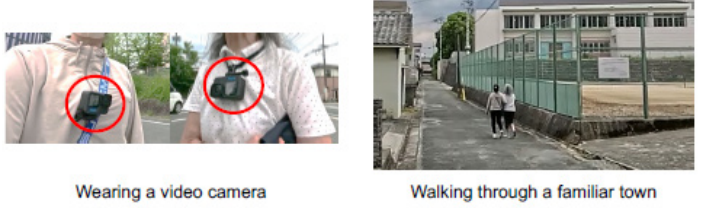
The subject was a 77-year-old female at “Living Ael,” a care facility in Omuta City, Japan, diagnosed with Alzheimer’s disease and certified at Long- Term Care Level 1 under the Japanese five-level scale (where 5 indicates the highest care need). During the walk, narrative fragments were collected as she described past episodes prompted by the surrounding scenery and staff questions. The accompanying care worker and the subject wore a video camera to record the environment and conversation along a predetermined route (Figure 1). To ensure safety, the experiment was preceded by rigorous risk management, including hazard mapping, risk identification, and countermeasure development.
Figure 1: Narrative collection experiment.
RESULTS
However, while elderly individuals possess extensive personal histories, those with dementia may struggle to disclose them. This experiment was conducted with ethical approval and proxy informed consent from the family, who supported the objective of using the narratives to enhance personalized care. Without a clear understanding of the balance between privacy risks and care value, obtaining such consent remains difficult, representing another layer of opacity in data collection.
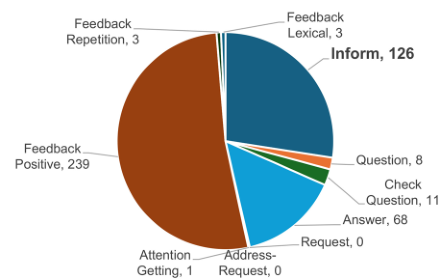
Figure 2: Results of recorded utterances of the participant.
In healthcare, personal histories are typically documented in electronic records, and care facilities manage daily preferences through baseline assessments in care plans. While referencing these data allows AI to personalize care partially, initial assessments rarely capture the deep self, true feelings, or underlying thoughts, often yielding only superficial data. In our experiment, the participant and staff visited a childhood tennis court, a frequently visited department store, and her former school. Despite numerous moments of difficulty in recall, the staff’s repeated confirmation requests— simple questions easily answered with an affirmative “Yes”—led to multiple positive responses. This repetition frequently culminated in the participant spontaneously narrating past episodes. This flow from confirmation requests to affirmation appears to trigger and connect memory fragments in the mind, eventually enabling full episode disclosure.
Virtuality and Reality in Designing Future Services That Utilize Past Episodes 231 Furthermore, closing the conversation into simple affirmative replies spares individuals from exposing their cognitive difficulties. The ability to smooth over gaps in memory provides psychological security, fosters a positive impression of the staff, and builds trust more effectively than demanding answers to unanswerable questions.
ANALYSIS For care recipients, the world reconciling the past and present is inherently virtual. Analyzing this virtual space through the three VR dimensions helps optimize the design of narrative collection.
Spatiality in this context shifts from physical geography to a cognitive space reconstructed in the subject’s brain. Walking through familiar areas leverages present scenery as visual and auditory triggers, creating a cognitive space where past and present overlay. The participant perceived the environment as a continuous space where past memories and current landscapes merged, providing a stable foundation for narrative elicitation.
Interactivity occurs not through solitary recollection, but through staff communication that helps assemble the scattered pieces of this cognitive space. The repetition of affirmative responses represents a collaborative process of verifying and connecting memory fragments. This meticulous staff intervention preserves the structural consistency of the recipient’s cognitive space, preventing them from feeling lost. Protecting the participant’s dignity with accommodating questions reinforces trust and forms a virtuous cycle that sustains the conversation.
Finally, self-projection is achieved when the aligned cognitive space and consistent interaction allow the participant to project her deep self into the virtual world, reviving past experiences and emotions. The moment consistency is established, memory fragments connect, enabling spontaneous narration. Rather than the superficial data gathered in routine assessments, the individual’s identity and authentic thoughts are projected into the space, leading to genuine self-disclosure.
POC VERIFICATION OF AI CARE ADVICE TOOL This chapter introduces a case study verifying the concept of an AI care advice tool using narratives. By analyzing the PoC evaluation results by care staff, we specifically point out the problem of opacity regarding future services.
Care Refusal and Narrative AI In frontline care, recipients occasionally refuse assistance with tasks like bathing or meals, posing a significant challenge. While staff-generated solutions are often limited, AI can offer diverse perspectives to resolve these issues. However, standard AI advice relies primarily on common sense derived from LLMs, which fails to account for individual backgrounds. To
address this limitation, we developed an advice tool that actively references care recipients’ narratives.
PoC of AI Care Advice Tool To validate the narrative-utilizing AI care advice tool, narratives were structured into a profile sheet for the AI to reference. The first author of this study acted as a care recipient; initial intake assessments and casual daily conversations were recorded, transcribed automatically, and organized by ChatGPT to generate the profile sheet. This profile encompassed daily routines, health status, outdoor mobility, hobbies, lifestyle choices, values, and care expectations or concerns.
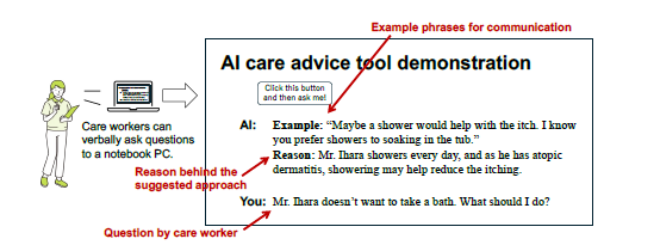
The prototype interface is shown in Figure 3. A care staff member consults the tool verbally via a laptop, and the AI displays tailored advice consisting of suggested verbal phrasing and the rationale behind it. For instance, in the example shown, when a worker consults about bathing refusal, the AI considers the recipient’s atopic dermatitis to explain the therapeutic benefits of bathing, while respecting his preference for brief routines.
Figure 3: Prototype interface of AI care advice tool.
PoC Evaluation by Care Staff To evaluate the field acceptability of the tool, six care staff members—three from a group home and three from a long-term care facility—participated individually. Half held leadership positions, and the remainder possessed over ten years of experience. After reviewing the profile sheet and its generation process, participants viewed demonstrations involving bathing and medication refusal, followed by a 15-minute semi-structured interview. The interview data were qualitatively analyzed using the Grounded Theory Approach (GTA), and the resulting open coding is summarized in Table 1.
Table 1: Results of GTA open coding.
Table available in the original PDF paper.
No Excerpt From Comment Code (Meaning Label) 1 Summarizing and organizing a large amount of conversation is impressive.
Expectation for information summarization and organization Provision of new viewpoints and ideas
2 It’s good to receive advice from diverse perspectives when staff can’t think of solutions.
Value of emotionally neutral advice
3 It’s helpful that AI provides advice without emotional involvement.
4 It’s not good to rely too much on AI. Concern about overdependence on AI Lack of depth and diversity in advice 5 The advice is too shallow / only one suggestion is given.
Interest in situation-specific advice
6 I wonder how advice changes for people with dementia.
7 It could help unify care among staff. Promoting consistency in team care 8 The tool lacks a sense of tempo; care should match the user’s pace.
Mismatch between tool tempo and real-world interaction Use as a pre-care preparation tool
9 It’s good to consult AI beforehand to prepare communication patterns.
Desire for flexible and portable use
10 Every user is unique; I’d like to use it on a smartphone.
11 It would be helpful when working night shifts alone.
Need for support in isolated situations 12 I’d like to turn it on easily only when needed. Desire for simple operability
Consideration for user privacy
13 The voice output should be heard only by the caregiver.
14 I’m not sure AI can handle angry residents. Skepticism about AI’s practical effectiveness 15 It would be nice if it could tell me about the resident’s generation and favorite songs.
Expectation for personalized background information
16 It would be great if AI could suggest countermeasures in care conferences.
Expectation for support in team discussions Expectation for preventive data- based advice
17 I want preventive suggestions for subcutaneous bleeding based on behavioral data.
Need for predictive care advice
18 I’d prefer advance advice for residents who often refuse bathing.
19 Records should work via a wearable device. Consideration of practical device form 20 Recorded data might be used in court; that’s a concern.
Awareness of privacy and ethical risks
21 Recording might be acceptable during reminiscence activities.
Context-dependent tolerance for recording Desire for multiple-choice advice
22 It would be nice to have multiple advice options to choose from.
Value of individualized advice
23 It’s helpful that advice is based on the person’s background and conditions.
24 Online searches don’t reflect individual situations, so this kind of tool is better.
Recognition of AI’s advantage in personalization
Results of Staff Evaluation Frontline staff evaluated the AI tool from multiple dimensions. Regarding spatiality, they emphasized mobility and immediacy tailored to their work environments, such as smartphone integration, utility during isolated night shifts, and overall portability, alongside legal and ethical considerations like privacy. In terms of interactivity, staff focused on the synchronization between the AI’s response timing and the actual rhythm of patient interaction. They expected deep, narrative-rooted advice and viewed the tool through a lens of prediction and prevention—simulating or anticipating issues rather than merely reacting to care refusal. For self-projection, staff valued the emotional neutrality of the AI, reflecting the heavy burden of emotional labor. While they noted risks such as superficial advice, limited options, and over-dependence, they expressed optimism about utilizing AI to enhance teamwork.
Gap Between Designer Assumptions and Staff Evaluations Regarding spatiality, a distinct gap emerged: while the designer focused on information accuracy and advice efficacy, frontline staff prioritized shared physical spaces, physical constraints, and risks to workplace safety. For interactivity, the designer envisioned reactive, troubleshooting support for isolated incidents, whereas staff sought contextual continuity, expecting the AI to bridge the recipient’s past narratives and future preventative care. Because care work rarely has a single correct answer, AI should not merely impose high-probability solutions but must offer multiple options that align with the dynamic flow of care. Finally, regarding self-projection, the designer assumed that AI’s cognitive diversity would substitute for human skill limitations. Conversely, staff sought the alleviation of emotional labor and the augmentation of professional judgment, viewing the AI not as an instructor but as a co-creative partner that provides consideration materials while preserving human expertise.
DISCUSSION
Collectability of Past Data The narrative collection experiment offers broader implications beyond elderly care, addressing the universal challenge of extracting latent, unverbalized past data for AI services, including personal assistants, recommendation platforms, etc. Successful past data collection requires three core elements. First, establishing trust through a clear understanding of the balance between privacy risks and derived value is essential. Users experience psychological resistance when sharing private data; thus, system designers must clearly articulate the positive outcomes of data submission. Rather than demanding extensive inputs initially, interfaces should incorporate a staged approach that delivers small, beneficial user experiences early on. Second, data provision must ensure low cognitive load and psychological safety. This can be integrated into dialogue UIs by utilizing closed-ended, confirmation-based questions that eliminate the frustration of failed recall. A forgiving interface
Virtuality and Reality in Designing Future Services That Utilize Past Episodes 235 that tolerates ambiguous or contradictory answers prevents embarrassment, establishes trust, and encourages further data disclosure. Third, context setting is crucial for accessing deep, identity-related information. Because memories are inherently contextual, systems must provide structural cues that stimulate memory fragments. As seen in the experiment, facilitating connections between these data fragments drives meaning-making and encourages users to spontaneously share deeper personal narratives.
Understanding and Accepting the Value of Future Services The evaluation of the AI care advice tool highlights the discrepancy between feature-centric, accuracy-focused design and the environment-adaptive, context-heavy needs of frontline operations. Bridging this gap to ensure successful service adoption involves three key requirements. First, designers must respect physical workflows and prioritize process transparency. AI tools must accommodate physical mobility and resource-scarce environments, such as single-person shifts, without disrupting operational immediacy. Because AI reasoning is inherently opaque, explicitly visualizing the generation process and the underlying rationale behind advice is vital to reducing user skepticism. Second, systems must incorporate dynamic predictability and non-deterministic flexibility. Moving beyond reactive troubleshooting, tools should visualize temporal dynamics by predicting future risks and simulating customer or environmental reactions to proposed actions. Furthermore, in complex professional environments lacking absolute answers, AI must avoid imposing single optimal solutions. Leaving a flexible margin that allows professionals to choose options based on situational nuance is critical for user acceptance. Third, context visualization must empower, rather than displace, human professionals. Staff must be able to verify the specific data sources and causal relationships driving the AI’s suggestions. A rigid system that issues directives undermines professional expertise, causing resistance or over-dependence. Conversely, positioning AI as an objective, non-emotional third party can alleviate the psychological burdens of emotional labor. Leaving final decision-making sovereignty to humans preserves professional pride and secures authentic technology integration.
CONCLUSION
At the core of AI services lies data reference. While future data can be continuously logged, collecting historical data remains difficult, making field acceptance a critical bottleneck for future AI implementations. This paper examined past data collectability and field acceptance through the dual lenses of virtuality and reality, utilizing a narrative collection experiment with elderly individuals with dementia and a care staff evaluation of an AI care advice tool. By applying Tachi’s three elements of VR as analytical parameters, we obtained several insights for designing AI services that reference historical data, demonstrating that value is generated when individuals can perceive their existence through interaction within virtual and real environments. Qualitative analysis of the PoC evaluations confirmed the basic efficacy of
the tool while highlighting numerous challenges for sustained deployment. The tool’s intended utility remained a virtual concept for developers, contrasting sharply with the operational reality shaped by field constraints and staff psychology. This study provides two primary contributions. First, it exemplifies the challenges of past data collectability and field acceptance by targeting a narrative-utilizing AI advice tool designed to mitigate care refusal in dementia care. Second, it utilizes the VR dimensions of spatiality, interactivity, and self-projection to derive architectural insights for designing AI services that leverage historical data. The primary limitation of this research is that both dimensions were illustrated through single case studies. While we generalized these findings to maximize their utility for broader AI service design, future research requires validation across a wider array of use cases. Moving forward, we intend to translate these insights into concrete service design methods and tools, ultimately establishing a comprehensive service design methodology.
ACKNOWLEDGMENT
We express our sincere gratitude to the care staff who participated in the narrative collection experiment and the evaluation of the AI care advice tool.
REFERENCES
Blomkvist, J., Holmlid, S. (2010). Service Prototyping According to Service Design Practitioners; In: Holmlid, S., Nisula, J.-V., & Clatworthy, S. (eds), ServDes 2010: Exchanging Knowledge, Linköping, Sweden. doi:10.21606/servdes2010.16 Bunt, H., Alexandersson, J., Choe, J. W., Fang, A. C., Hasida, K., Petukhova, V.,
Popescu-Belis, A. and Traum, D. (2012). ISO 24617-2: A semantically-based standard for dialogue annotation. Proc. of Int. Conf. on Language Resources and Evaluation (LREC’12), pp.430–437, Istanbul, Turkey. European Language Resources Association. Glasgow, R. E., Vogt, T. M., Boles, S. M. (1999). Evaluating the public health impact of health promotion interventions: the RE-AIM framework; American journal of public health, 89(9), pp.1322–1327. doi:10.2105/ajph.89.9.1322 Greenhalgh, T., Wherton, J., Papoutsi, C., Lynch, J., Hughes, G., A’Court, C., Hinder,
S., Fahy, N., Procter, R., Shaw, S. (2017). Beyond Adoption: A New Framework for Theorizing and Evaluating Nonadoption, Abandonment, and Challenges to the Scale-Up, Spread, and Sustainability of Health and Care Technologies; Journal of medical Internet research, 19(11), e367. doi:10.2196/jmir.8775 Hassenzahl, M. (2003). The thing and I: understanding the relationship between user and product; In: M. Blythe, C. Overbeeke, A. Monk, & P. Wright (eds), Funology: from usability to Enjoyment, pp.31–49, Dordecht, NL: Kluwer Academic Publishers. Ihara, M., Tokunaga, H., Nakashima, T., Goto, H., Umezaki, Y., Minato, T.,
Nakamura, Y., Saruwatari, S. (2025). Narrative Utilization Ecosystem for Person- Centered Care, Intelligent Human Systems Integration (IHSI 2025), Vol. 160, pp.1–11. Mütterlein, J. (2018). The Three Pillars of Virtual Reality? Investigating the Roles of Immersion, Presence, and Interactivity; Proc. of Hawaii Int. Conf. on System Sciences.
Virtuality and Reality in Designing Future Services That Utilize Past Episodes 237 Odzakovic, E., Hellström, I., Ward, R., Kullberg, A. ‘Overjoyed that I can go outside’:
Using walking interviews to learn about the lived experience and meaning of neighbourhood for people living with dementia. Dementia. 2020;19(7): 2199–2219. doi:10.1177/1471301218817453 Shostack, L. G. (1984). Designing Services That Deliver; Harvard Business Review. Stufflebeam, D. L. (2003). The CIPP Model for Evaluation; In: Kellaghan, T., Stufflebeam, D. L. (eds) International Handbook of Educational Evaluation. Kluwer International Handbooks of Education, 9. Springer, Dordrecht. doi:10.1007/978-94-010-0309-4_4 Tachi, S. (2013) From 3D to VR and further to Telexistence; Proc. of the 23rd
International Conference on Artificial Reality and Telexistence (ICAT), Tokyo, Japan, pp.1–10. Vargo, S. L., Lusch, R. F. (2004). Evolving to a New Dominant Logic for Marketing; Journal of Marketing, 68(1), pp.1–17. Zaitsava, M., Marku, E., Di Guardo, M. C.: Bridging ideas and market success: A
framework for managing proof-of-concept projects. Organizational Dynamics; 53(3), 101053 (2024). doi:10.1016/j.orgdyn.2024.101053 Zimmerman, J., Forlizzi, J., Evenson, S. (2007). Research through design as a method for interaction design research in HCI; Proc. of the SIGCHI Conference on Human Factors in Computing Systems (CHI ‘07), ACM, New York, NY, USA, pp.493–502. Zomerdijk, L. G., Voss, C. A. (2010). Service design for experience-centric services;
Journal of Service Research, 13(1), pp.67–82. doi:10.1177/1094670509351960
SEARCH THE AHFE DIGITAL BOOKSTORE BY ISBN
Explore the complete digital volume
Human Interaction and Emerging Technologies (IHIET 2026)
Read this individual research paper free through the original publisher, or explore the full digital proceedings book.