Olatoyese Oni, Clinton Aigbavboa (2026). Economic Reforms and Their Impact on Sustainable Health and Safety Practices in Nigeria Construction Industry. In: Safety Management and Human Factors. AHFE Open Access, vol. 227, pp. 150–159. https://doi.org/10.54941/ahfe1007927
In order to stabilize the economy, draw in foreign investment, and boost industrial productivity, Nigeria has recently enacted a number of economic reforms, such as the elimination of fuel subsidies, the liberalization of the foreign exchange market, modifications to the Finance Act, the restructuring of the petroleum sector, and the tightening of monetary policy. Although these reforms have accelerated the development of infrastructure, little is known about how they will affect sustainable health and safety (H&S) practices in the building industry. In order to evaluate the impact of these reforms on H&S sustainability, this study polled 202 construction industry professionals. Descriptive and inferential statistical analysis of the data showed high internal reliability (Cronbach's Alpha = 0.942) and strong relationships between the reforms and cost-related issues, such as higher accident rates (M = 4.00), lower funding for safety training (M = 4.02), and higher operational costs (M = 4.03). Better access to green incentives and chances for regional safety innovations were two beneficial but less noticeable effects. The findings show that although reforms have boosted growth, they have also increased workplace risks by straining safety budgets and weakening regulatory oversight. To ensure that economic advancement does not jeopardize worker welfare or long-term safety performance in Nigeria's construction industry, the study concludes that it is imperative to integrate macroeconomic policies with targeted safety funding, robust enforcement mechanisms, and sustainability incentives.
Nigeria’s development trajectory has been significantly impacted by economic shifts, which have implications for all industries, including construction. Nigeria has undertaken various economic reform initiatives, such as deregulation, privatization, fiscal restructuring, and institutional realignment, since the implementation of Structural Adjustment Programs (SAPs) in the 1980s and the Economic Recovery and Growth Plan (ERGP) more recently (World Bank, 2020). Increasing private sector participation, attracting foreign investment, and improving economic performance were
Economic Reforms and Their Impact on Sustainable Health and Safety Practices 151 the objectives of these reforms. However, little is known about how they affect workplace health and safety, especially in the construction industry.
Nigeria’s construction industry is essential to the nation’s economic growth and job creation, despite being widely recognized as one of the most hazardous sectors for worker safety and environmental sustainability (Okolie & Okoye, 2012; Oni et al., 2024a). Among its distinguishing features are intricate project dynamics, informal labor arrangements, inadequate safety adherence, and a dearth of regulatory enforcement. In light of this, the impact of economic reforms on long-term health and safety protocols should be carefully examined.
Sustainable health and safety practices go beyond simply following the law; they also involve long-term strategies to safeguard employees’ health, lower workplace hazards, and promote environmentally friendly construction techniques. These include implementing green building technology, providing regular training, adhering to site safety regulations, and enhancing stakeholder participation, according to Akinwale and Olusanya (2016). However, economic reforms may have both enabling and restricting effects on these behaviors. For example, reforms that attract foreign direct investment may result in improved safety standards and technological advancements, while austerity measures and regulatory reductions may lead to the neglect of worker protection systems (Nguyen and Watanabe, 2017; Oni et al., 2022). Studies like those by Okoye et al. (2016) have highlighted the lack of robust institutional frameworks for health and safety in Nigerian construction. Reform-induced changes that prioritize financial efficiency over social responsibility often exacerbate this deficiency. Additionally, while increasing efficiency, competitive tendering and privatization have sometimes led to cost-cutting measures that compromise safety investments. This study aims to explore the effects of Nigeria’s economic reforms on the integration of health and safety practices and sustainability in the building sector. It seeks to ascertain the kind and extent of reform impacts, including whether they have made occupational safety regulations easier or harder to apply, and to offer solutions for aligning economic policy with green building practices.
This study contributes to an important but understudied area in public policy and construction project management by focusing on the micro- level relationship between worker safety and macroeconomic change. The findings are intended to educate regulatory bodies, construction companies, and policymakers on how to successfully combine the objectives of economic reform with those of sustainable development and occupational health.
LITERATURE REVIEW
The construction industry in Nigeria has experienced both positive and negative effects from economic reforms, especially with regard to sustainable health and safety (H&S) practices. Reforms over the last few decades have sought to modernize the economy, draw in foreign investment, and boost private sector involvement. These have ranged from the Structural Adjustment Program (SAP) of the 1980s to more recent liberalization and privatization policies. The construction sector, which is vital to Nigeria’s GDP and job creation, has expanded as a result of these policies (Isa et al., 2013).
152 Zaccheus and Ohio The advantages for H&S procedures, however, have been much less obvious. Reforms have increased competition and brought in new players, but they have also increased project volumes, which has forced contractors to put cost effectiveness ahead of thorough safety measures. Nigeria’s construction safety regulatory framework has long-standing enforcement issues, which are made worse by economic reforms that frequently support deregulation. Existing H&S regulations are often not enforced because of a lack of funding, institutional capacity, and political will, according to research by Umeokafor (2017). Adeyemo and Smallwood (2017) contend that laws that are not strictly enforced have little effect on lowering accident rates or enhancing worker safety. Economic growth has not resulted in commensurate safety improvements because this regulatory gap has remained even as the industry has grown under reform policies.
According to Onubi et al. (2021), green construction techniques can improve H&S performance, underscoring the connection between economic performance, sustainability, and safety. However, such practices are not widely adopted in Nigeria due to a lack of incentives and financial constraints. By incorporating sustainability requirements into market liberalization policies, economic reforms could have been crucial in ensuring that growth was in line with the delivery of safer, more sustainable projects. As a result of reforms, safety performance is now mostly dependent on firms’ voluntary adoption, which is uncommon considering the associated costs. There are several obstacles to enhancing H&S in Nigeria’s construction sector. According to a systematic review by Adebowale and Agumba (2024), the main problems are fragmented regulatory structures, antiquated policies, corruption, and a lack of political will. There is a gap between policy and practice because many safety protocols have not been updated to take into account changes in the economy, culture, and technology. Cultural factors also influence safety attitudes, as demonstrated by Umeokafor and Windapo (2019), who show that religious consciousness can shape both the perception of risk and compliance with safety procedures, sometimes reinforcing unsafe behaviors.
There are notable differences when compared to global best practices. Akinlade (2024), in a comparative study between Nigeria and Norway, finds that robust institutional frameworks, steady economic performance, and an ingrained safety culture in developed economies produce far better safety outcomes. On the other hand, specific measures to improve safety culture and regulatory capability have not been incorporated into Nigeria’s economic reforms. In order to close this gap and establish a more sustainable safety environment, Umeokafor and Evangelinos (2022) suggest a variety of approaches that include financial incentives, thorough employee training, and enhanced oversight.
RESEARCH METHODOLOGY This study uses a quantitative research approach to examine how economic reforms affect sustainable health and safety practices in Nigeria’s construction industry. This method works well for gathering quantifiable information and identifying statistical correlations between important factors like reform
Economic Reforms and Their Impact on Sustainable Health and Safety Practices 153 laws and the actual application of health and safety (H&S) regulations (Oni et al., 2024b). Because they actively participate in the operational facets of health and safety management and are most likely to be impacted by macroeconomic changes, the study focuses on construction professionals, such as engineers, safety officers, project managers, site supervisors, and quantity surveyors. Respondents were chosen using a purposive sampling technique in accordance with their experience and participation in building projects that have been impacted by economic reforms. This guarantees that the information acquired represents well-informed viewpoints and real-world experience. The main tool for gathering data was a structured questionnaire. Demographic information and opinions regarding the effects of these reforms made up its two main sections. A 5-point Likert scale from “Strongly Disagree” to “Strongly Agree” was used to frame the questionnaire’s items. The questions were taken from the body of existing literature and modified accordingly.
The questionnaire was examined by academic researchers and business experts with knowledge of occupational safety and economic policy in order to guarantee content validity. To find any ambiguities or inconsistencies in the instrument, a pilot study with 15 participants was also carried out. The required modifications were made to improve clarity in light of the pilot’s findings. Cronbach’s Alpha was used to evaluate the instrument’s reliability; an internal consistency threshold of 0.7 was deemed acceptable. To increase response rates, data was gathered both electronically and in person. To enable sufficient statistical analysis, a total of 200 to 250 responses were sought. After two months, 202 responses in all were collected. Both descriptive and inferential statistical analyses were performed on the gathered data. Descriptive statistics such as frequencies, means, and percentages were used to summarize the data, while inferential statistics, including Pearson’s correlation were used to explore the relationships between economic reforms and its impact on health and safety practices. The statistical analyses were performed using the Statistical Package for the Social Sciences (SPSS).
Strict adherence to ethical standards was maintained during the entire data collection and analysis process. All participants were made aware of their right to withdraw at any time, and participation was completely voluntary. All respondents gave their informed consent, and confidentiality was guaranteed. Neither the analysis nor the final results reporting contained any personal identifiers. In Nigeria’s high-risk construction environment, this methodological approach offers a systematic way to assess how changes in macroeconomic policy affect on-site safety procedures and sustainability initiatives. The study seeks to offer evidence-based insights that can support industry-level and policy-level improvements in health and safety standards by utilizing the expertise of experts and applying rigorous statistical analysis.
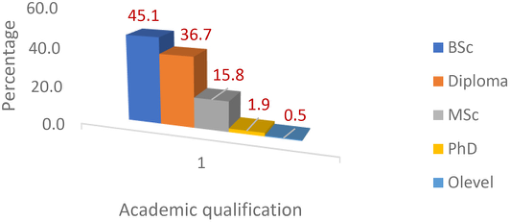
FINDINGS AND DISCUSSION As shown in Figure 1, 99.5% of the respondent’s possess a diploma qualification and above, while more than 60% have bachelor’s degree and
154 Zaccheus and Ohio above. This is an indication that the respondents are academically qualified to fill the question correctly, and this increases confidence in their responses
Figure 1: Academic qualification.
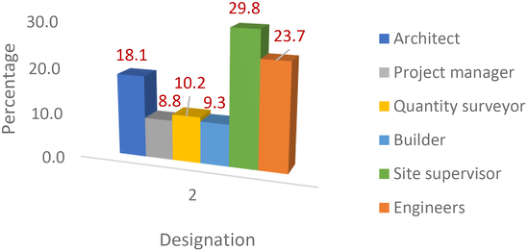
Figure 2 shows that the respondents appear to reflect a variety of roles within the organization, particularly key executives who are familiar with economic reforms and sustainable construction, this further increase the confidence in that the responses is a representative of different key designation in construction industry.
Figure 2: Designation of respondents.
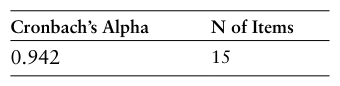
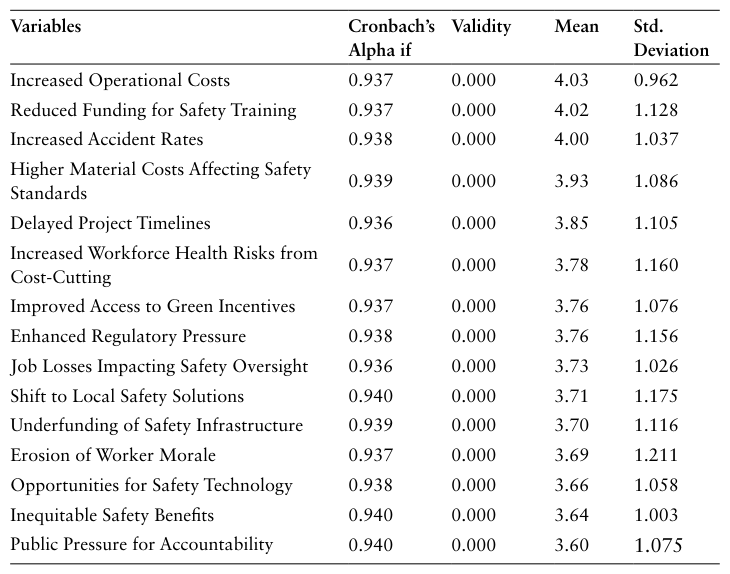
As contained in Table 1, the 15 impact variables have a Cronbach’s Alpha of 0.942, which is above the 0.7 threshold and indicates excellent internal consistency. Similarly, strong construct validity is indicated by validity values (Sig. = 0.000) for each variable, indicating that the items measure the intended concepts in a significant way (Table 2).
Table 1: Reliability statistics.
Examining the mean scores, we can see that increased operational costs (M = 4.03, SD = 0.962), reduced funding for safety training (M = 4.02, SD = 1.128), increased accident rates (M = 4.00, SD = 1.037) are the most strongly perceived effects of recent economic reforms. While public pressure for
Economic Reforms and Their Impact on Sustainable Health and Safety Practices 155 accountability (M = 3.60, SD = 1.075) inequitable safety benefit (M = 3.64, SD = 1.003) opportunities for safety technology (M = 3.66, SD = 1.058) has the lowest perceived impacts. This implies that while positive or equity- related changes are perceived less strongly, the workforce and industry stakeholders are most affected by cost-related consequences (Table 2).
Table 2: Descriptive statistics.
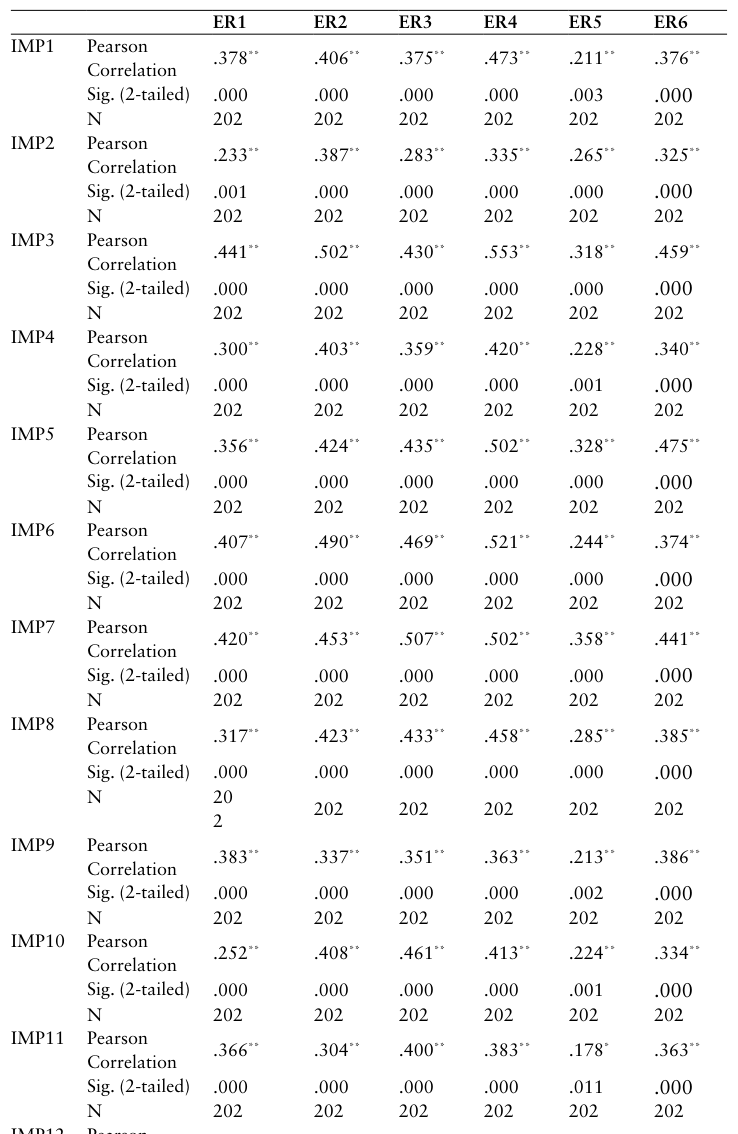
As contained in table 3 ER4 (Finance Act Reforms) consistently demonstrates strong correlations across impacts, particularly with Delayed Project Timelines (r = 0.502, p < 0.01) and Increased Accident Rates (r = 0.553, p < 0.01). Significant positive correlations between ER2 (foreign exchange market liberalization) and improved access to green incentives (r = 0.453) and increased accident rates (r = 0.502) indicate that it affects both potentially positive and negative outcomes. Showing a mixed pattern of impact, ER1 (Fuel Subsidy Removal) correlates most with Improved Access to Green Incentives (r = 0.420) and Increased Accident Rates (r = 0.441). Although it generally has weaker correlations than other reforms, ER5 (Central Bank Monetary Policy Tightening) still has a moderate relationship with Public Pressure for Accountability (r = 0.386). There is evidence of reform-driven innovation as ER3 (Petroleum Industry Act Implementation) has a strong correlation with Opportunities for Safety Technology (r = 0.387) and Shift to Local Safety Solutions (r = 0.461).
Table 3: Correlations.
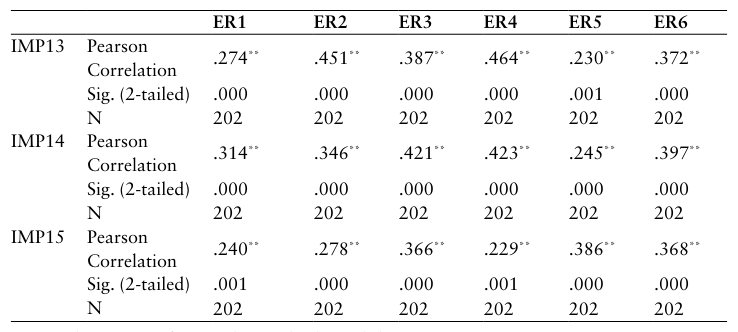
(Continued)
Table 3: Continued.
**. Correlation is significant at the 0.01 level (2-tailed).
ER1 = Fuel Subsidy Removal; ER2 = Foreign Exchange Market Liberalization; ER3 = Petroleum Industry Act (PIA) Implementation; ER4 = Finance Act Reforms; ER5 = Central Bank Monetary Policy Tightening; ER6 = Economic Recovery and Growth Plan (ERGP); IMP1 = Increased Operational Costs; IMP2 = Reduced Funding for Safety Training; IMP3 = Increased Accident Rates; IMP4 = Higher Material Costs Affecting Safety Standards; IMP5 = Delayed Project Timelines; IMP6 = Increased Workforce Health Risks from Cost-Cutting; IMP7 = Improved Access to Green Incentives; IMP8 = Enhanced Regulatory Pressure; IMP9 = Job Losses Impacting Safety Oversight; IMP10 = Shift to Local Safety Solutions; IMP11 = Underfunding of Safety Infrastructure; IMP12 = Erosion of Worker Morale; IMP13 = Opportunities for Safety Technology; IMP14 = Inequitable Safety Benefits; IMP15 = Public Pressure for Accountability.
The statistical findings provide a clear picture of how sustainable health and safety (H&S) practices in the construction industry have been impacted by recent economic reforms in Nigeria. The 15 impact indicators’ high Cronbach’s Alpha (0.942) attests to their exceptional reliability, and their significant validity scores (p < 0.001) demonstrate how well they capture the concept of “reform impacts.” According to the mean values, which all have scores above 4.0, the effects that are most strongly perceived are higher accident rates, lower funding for safety training, and higher operating costs. These results are in line with earlier research that demonstrated that Nigerian economic liberalization and deregulation frequently put contractors under financial strain, causing them to put safety investments last (Umeokafor, 2017; Adeyemo & Smallwood, 2017). According to the correlation analysis, among the 15 impacts, the Finance Act reforms (ER4) have the strongest and most extensive associations, particularly with delayed project timelines (r = 0.502, p < 0.01) and higher accident rates (r = 0.553, p < 0.01). These trends lend credence to the claim made by Adebowale & Agumba (2024) that tax and fiscal reforms may inadvertently increase safety risks by reducing funding for safety training and infrastructure.
Likewise, the elimination of fuel subsidies (ER1) is significantly associated with higher accident rates (r = 0.441) and easier access to green incentives
158 Zaccheus and Ohio (r = 0.420). According to Isa et al. (2013), who point out that economic shocks frequently result in cost-cutting in site safety budgets, the former may represent increased transportation and material costs translating into safety compromises. In line with Onubi et al. (2021), who discovered that environmental compliance measures can have secondary benefits for worker safety performance, the latter correlation implies that subsidy savings may be partially redirected into sustainability-related incentives. Additionally, there is a strong correlation between the foreign exchange market liberalization (ER2) reform and both positive and negative effects, including higher accident rates (r = 0.502) and easier access to green incentives (r = 0.453). This mixed effect is in line with Akinlade’s (2024) comparison of Nigeria and Norway, which argued that economic openness can lead to volatility that negatively impacts safety outcomes while simultaneously creating new opportunities for innovation if institutional resilience is lacking. It’s interesting to note that the Petroleum Industry Act (ER3) has the strongest correlation with opportunities for safety technology (r = 0.387) and the move to local safety solutions (r = 0.461). This is consistent with the findings of Umeokafor & Evangelinos (2022), who highlighted that regulatory restructuring, particularly when linked to local content policies, can encourage local innovation in safety management.
More indirect influence is suggested by the generally weaker but still significant correlations between the Economic Recovery and Growth Plan (ER6) and the Central Bank’s monetary tightening (ER5). Although macroeconomic stabilization policies do not specifically address construction safety, they can influence the regulatory environment and public expectations for corporate responsibility, as evidenced by their moderate relationships with variables such as public pressure for accountability (r = 0.386) (Adebowale & Agumba, 2024). The results support the literature’s consensus that Nigeria’s economic reforms have a variety of effects on the H&S practices of the construction industry, with cost-related pressures continuously compromising safety standards and underutilization of sustainability-related opportunities as a result of poor policy integration.
CONCLUSION
This study offers solid empirical proof that recent economic reforms in Nigeria, particularly the elimination of fuel subsidies, the liberalization of the foreign exchange market, and modifications to the Finance Act, have had a major and complex influence on sustainable health and safety (H&S) practices in the construction industry. Although the goals of these reforms were to boost efficiency, draw in investment, and stabilize the economy, they have also increased accident rates, put pressure on costs, and cut back on funding for safety training. The notable positive effects like easier access to green incentives and chances for regional safety innovations were overshadowed by the main cost-related issues. To ensure that economic advancement does not jeopardize worker welfare or long-term safety performance in Nigeria’s construction industry, the study concludes that it is imperative to integrate macroeconomic policies with targeted safety funding, robust enforcement mechanisms, and sustainability incentives.
REFERENCES
Adebowale, O. J. and Agumba, J. N. (2024). A systematic review of challenges undermining the efficacy of construction health and safety regulations in major African countries. Construction Economics and Building, 24(4/5), 1–24. Adeyemo, O., & Smallwood, J. (2017). Impact of occupational health and safety
legislation on performance improvement in the Nigerian construction industry. Procedia engineering, 196, 785–791. Akinlade, S. (2024). How to improve the safety practices in Nigeria construction industry in relation to Europe (Norway) [Master’s thesis, Norwegian University of Science and Technology]. NTNU Open. https://ntnuopen.ntnu.no/ntnu-xmlui/ handle/11250/3134379 Akinwale, O.A and Olusanya, O.A (2016), Implications of Occupational Health and
Safety Intelligence in Nigeria. The Journal of Global Health Care Sytsems, 6(1). Isa R. B., Jimoh, R. A. and Achuenu, E. (2013). An Overview of the Contribution of Construction Sector to the Sustainable Development in Nigeria. Net Journal of Business Management (NJBM), 1(1), 1–6. Nguyen, L. H., & Watanabe, T. (2017). The impact of project organizational culture
on the performance of construction projects. Sustainability, 9(5), 781. Okolie, K. C., & Okoye, P. U. (2012). Assessment of national culture dimensions and construction health and safety climate in Nigeria. Science Journal of Environmental Engineering Research, 12(1), 1–6. Okoye, P. U., Ezeokonkwo, J. U., & Ezeokoli, F. O. (2016). Building construction
workers’ health and safety knowledge and compliance on site. Journal of Safety Engineering, 5(1), 17–26. Oni, O. Z., Olanrewaju, A., & Khor, S. C. (2024a) Sustainable Model for Improving Construction Industry Health and Safety Practices. Journal of Construction Engineering and Management, 150(10), 04024137 Oni, O.Z., Olanrewaju, A and Khor, S.C (2022) Review of critical success factors
affecting Malaysia’s construction industry’s sustainable health and safety practices. Frontiers in Engineering and Built Environment, 3(1), 48–62. Oni, O.Z., Olanrewaju, A and Khor, S.C (2024b) Identifying key accident causation factors in the Malaysian construction industry. International journal of occupational safety and ergonomics. 30(2), pp. 366–377 DOI: 10.1080/10803548.2024.2308376 Onubi, H. O., Yusof, N. A., Hassan, A. S. and Bahdad, A. A. S. (2021). Analyzing
the mediating effect of economic performance on the relationship between green construction practices and health and safety performance in Nigeria. Environmental Science and Pollution Research, 28(27), 36598–36610. Umeokafor, N. I. (2017). Realities of construction health and safety regulation in Nigeria [Doctoral dissertation, University of Greenwich]. Greenwich Academic Literature Archive. http://gala.gre.ac.uk/id/eprint/23437/ Umeokafor, N., & Windapo, A. (2019). The influence of religious consciousness on
construction health and safety practices and performance. Journal of construction in Developing countries, 24(1), 23–47. Umeokafor, N., Evangelinos, K., & Windapo, A. (2022). Strategies for improving complex construction health and safety regulatory environments. International Journal of Construction Management, 22(7), 1333–1344. World Bank. (2020). Nigeria Economic Update: Jumpstarting Inclusive Growth
– Unlocking the Productive Potential of Nigeria’s People. Washington, DC: World Bank Group. https://documents1.worldbank.org/curated/ en/394091575477674137/pdf/Jumpstarting-Inclusive-Growth-Unlocking-the- Productive-Potential-of-Nigeria-s-People-and-Resource-Endowments.pdf
LISTED IN THE AHFE DIGITAL BOOKSTORE CATALOGUE
Explore the complete digital volume
Safety Management and Human Factors
Read this individual research paper free through the original publisher, or explore the full digital proceedings book.
ISBN 979-8-950676-03-1
Explore this ISBN in the AHFE Bookstore ↗Listed in the July 2026 bookstore catalogue; search by ISBN to confirm current availability · Digital book purchase optional