Tom Tredway (2026). Place Make the Vote: Designing for Voter Participation and Civic Engagement. In: The Human Side of Service Engineering. AHFE Open Access, vol. 221, pp. 255–264. https://doi.org/10.54941/ahfe1007730
Place Make the Vote, a project spearheaded by design studio City Fabrick for the 2016 elections in Long Beach, CA, used placemaking, tactical urbanism, art, music, food, and furnishings to create a fun, festival environment and build a sense of community at underserved polling places by encouraging people to interact with their neighbors and participate in civic life. This innovative project provides a model for successful civic engagement and encouragement of participatory democracy to create stronger, more resilient, and interconnected communities. The Place Make the Vote Toolkit extends the project’s reach beyond Long Beach by creating a scalable, adaptable, and customizable model for increasing civic engagement and voter participation in a variety of communities. It offers several strategies for improving the urban and civic environment, providing new opportunities for community to flourish through the deployment of decentralized, low-cost, low-tech, quick, and scalable urban interventions. These tactics aim to transform civic spaces by utilizing input from community members, local political leaders, and educational and cultural institutions to increase voter turnout, build community, activate public space, and promote civic engagement more broadly.
Long Beach, CA, is one of the most ethnically and economically diverse cities in the Unites States, with affluent areas well-served by public and private amenities and areas with notable concentrations of poverty, crime, and poor health outcomes. This diversity can also be found in voter participation rates, with voter turnout higher in wealthy areas and lower in areas with fewer economic resources. This significantly impacts representation and policy development on a range of issue of public concern. Communities looking to increase civic engagement, improve services, and foster empowerment and agency are increasingly turning to design firms like City Fabrick, a non-profit design studio based in Long Beach that addresses urban design challenges through collaborative, participatory, and co-design methodologies. City Fabrick worked with various groups to Place Make the Vote for the 2016 elections, using placemaking, tactical urbanism, art, music, food, and furnishings to create a sense of community at underserved polling places by encouraging people to interact with their neighbors and participate in civic life. Envisioned by City Fabrick as “a movement & toolkit to expand civic engagement and encourage voting using pop-up social spaces around polling Received February 7, 2026; Revised April 15, 2026; Accepted May 4, 2026; Available online July 20, 2026
256 Tredway booth locations in historically low voting precincts,” this innovative project provides a model for successful civic engagement and encouragement of participatory democracy to create stronger, more resilient, and interconnected communities (City Fabrick, 2016). The Place Make the Vote Toolkit extends the project’s reach beyond Long Beach by creating a scalable, adaptable, and customizable model for increasing civic engagement and voter participation in a variety of communities. It offers several strategies for improving the urban and civic environment, providing new opportunities for community to flourish through the deployment of decentralized, low-cost, low-tech, quick, and scalable urban interventions. These tactics aim to transform civic spaces by utilizing input from community members, local political leaders, and educational and cultural institutions to increase voter turnout, build community, activate public space, and promote civic engagement more broadly. By using these types of placemaking and participatory design strategies Place Make the Vote encourages structures that include all aspects of the community in the design of civic engagement and urban environments, providing a model of successful community involvement and design processes to promote democratic participation.
PARTNERS Place Make the Vote was conceived by City Fabrick, a nonprofit design studio in Long Beach with an emphasis on public interest design and civic engagement using an interdisciplinary approach combining design, planning, and advocacy, often using participatory and co-design methodologies. City Fabrick brought their deep experience with place making, tactical urbanism, and civic engagement in Long Beach to this project, where it informed their goals, process, and design outcomes. This project was made possible by a $153,600 grant from the Knight Cities Challenge initiative of the John S. and James L. Knight Foundation, which provided the crucial funding to deploy a civic engagement intervention of this size and scope (Morris, 2016). City Fabrick also worked closely with Long Beach Rising!, a coalition of community organizations advocating for civic participation, voter engagement, and community organizing in historically underrepresented communities, activating their networks in the community to support engagement activities around Place Make the Vote. Local elections officials, including the Long Beach City Clerk and Los Angeles County Registrar’s Office, also participated in the project by providing access to relevant data, advising on effective voter turnout strategies, and supporting voter registration and education efforts.
GOALS As City Fabrick executive director Brian Ulaszewski explained, “The idea that we had for Place Make the Vote was to use people, use placemaking as a way to expand voter engagement and hopefully get voters to linger with their fellow residents and hopefully spark the synapses in the community to continue being civically engaged” (Ruiz, 2016a). Place Make the Vote
Place Make the Vote: Designing for Voter Participation and Civic Engagement 257 pursued several reinforcing goals: increasing voter participation through the creation of engaging polling stations, expanding civic engagement in local communities by providing opportunities for voters to meet and socialize with their neighbors, rebuilding civility in political discourse by encouraging face to face interactions, and finally determining what contributes to a positive voting experience by testing new ideas, programs, strategies, and design elements to promote civic engagement and voter turnout. “By creating these spaces, we want to facilitate voter registration and educate people about the importance of voting,” Ulaszewski explained (CNN Wires, 2016).
PROCESS City Fabrick, together with various community partners, developed and deployed a process to identify target neighborhoods and communities with historically low voter participation rates and design ways to increase engagement. This involved analyzing voter data and neighborhood demographics to locate potential polling sites, identifying local partners with deep networks in the target communities, prototyping and refining concepts, and creating a comprehensive, adaptable, and scalable design system to achieve their goals. After the grant was awarded based on an initial proposal, City Fabric worked closely with various stakeholders to develop, refine, and launch Place Make the Vote. Working together with elections officials, the team identified potential sites for Place Make the Vote installations and interventions, which were selected due to their historically low voter participation and turnout rates. City Fabrick toured these polling sites and evaluated accessibility and visibility from transit networks, streets and sidewalks, and other populated public spaces. The venue’s capacity to host a community festival with elements of placemaking and tactical urbanism, preferably with existing cultural assets that could be successfully leveraged to contribute to the desired celebratory community atmosphere, was also a factor. Two precincts were selected for the primary election in June and acted as a laboratory to prototype design ideas, branding, and other materials to promote voter turnout and civic engagement through placemaking. These experiences informed further iterations and refinements of design strategies and artifacts to support the project and influenced the selection of the six Place Make the Vote sites for the November general election. The prototyping experience provided numerous insights into the importance of access and visibility, including wayfinding for various groups, particularly people walking, biking, driving, or taking public transport. It also illustrated the role of giveaway items in attracting participants, illuminated successful strategies to target programs and activities to the location and groups served, and indicated the importance of appropriate lighting for the busy evening hours (City Fabrick, 2017; B. Ulaszewski, interview, 25 January, 2026). After prototyping the primaries, City Fabrick also initiated larger planning and community education processes, developed a beta version of their online toolkit and organized webinars to introduce it before the general election, and programmed voting sites for voter education in advance of the election.
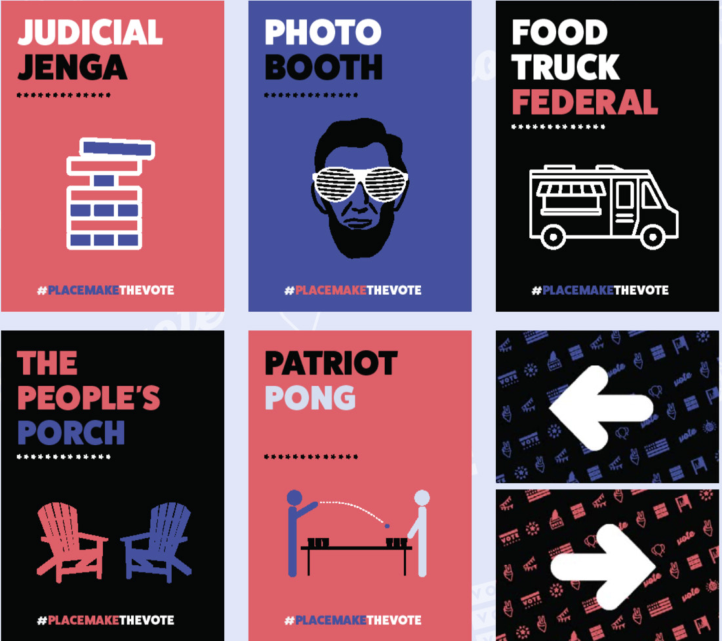
The Place Make the Vote brand was a central element of the project and provided a consistent and cohesive identity to the various iterations and instances of the experience, which was particularly important given the number of collaborators, polling places, and components involved. The brand included a bold, colorful graphic logo combining elements of a hand making a peace sign and digital maps to indicate the friendly, laid-back community vibe often associated with Southern California and the emphasis on place. The outstretched fingers on the hand also formed a “V” in a reference to voting. Graphics were often rendered in red and blue, the colors commonly used to represent US political parties and politics more broadly, as well as patriotism and civic mindedness. Secondary graphics reinforced this brand identity of public-spirited, community-oriented, playful, and fun. This is evident in a poster featuring a portrait of Abraham Lincoln wearing fun and funky sunglasses to advertise photo booths at Place Make the Vote polling sites, drawing a connection between a respected and admired historical figure and the act of voting while emphasizing fun and playfulness. The brand was further reinforced through a range of Place Make the Vote branded designs for collateral, including flyers, signs, buttons, and mini flags, that could be downloaded and printed at home or used by fabricators to create a range of different objects.
Figure 1: Place Make the Vote posters and wayfinding.
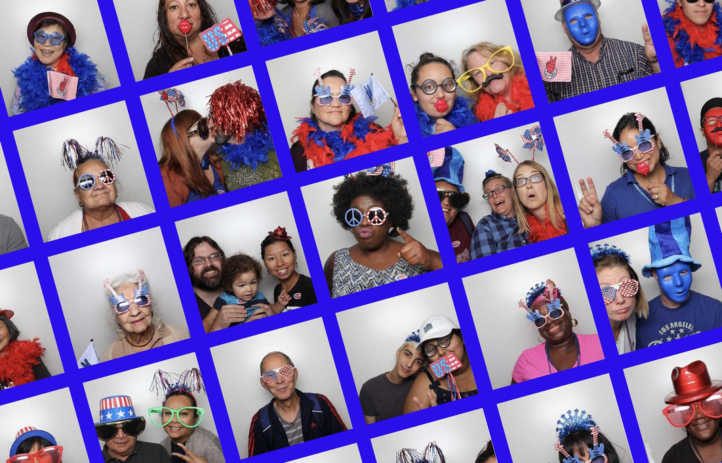
Place Make the Vote: Designing for Voter Participation and Civic Engagement 259 From the outset, placemaking was central to Place Make the Vote’s strategy to increase civic engagement. Placemaking was used to create pop-up social spaces near polling sites where people would gather and linger, encouraging them to spend more time among community in addition to casting a vote, using both design elements and programming to achieve this outcome. The basic formula was derived from urban spaces successfully designed to entice people to congregate and hang out and included branded signage, decals, and wayfinding, photo backdrops and photo booths to create “Instagrammable moments” and generate excitement, flexible outdoor seating, string lights for ambiance, food trucks, and entertainment. Offerings changed throughout the day, with coffee and donuts in the morning, and tacos, empanadas, pizza, and DJs in the evening. As Ulaszewski noted, “Many of these residents might be registered to vote, but might not participate because they might forget or they might be busy, but if we can provide some additional sort of visual enticement, then they might actually participate in voting” (Galentine, 2016). In addition to a focus on increasing voter turnout, Place Make the Vote also used placemaking to encourage discussion and civic collaboration, using a festival atmosphere to celebrate democracy, encourage residents to talk to each other about issues of local and national concern, and to inspire thoughtful exchange across the political spectrum. This was particularly important in order to provide physical space for civic discourse at a time when alternative ways of voting like mail-in ballots were growing. Ulaszewski made this connection clear, telling Smithsonian Magazine, “There’s a lot of emerging efforts around trying to get residents to vote through digital technologies, like Rock the Vote … We thought of this idea of creating place around voting stations and events as a way to draw people in and to also celebrate democracy” (Hansman, 2016).
Figure 2: Photo booth pictures from the Place Make the Vote primary prototype.
260 Tredway City Fabrick used established placemaking approaches tailored to the specific characteristics, cultural assets, and needs of each polling site to create fun, interesting spaces that emphasized local culture, community, and identities (Madden, 2000). Programs were tailored to each site based on the community and audience, and typically included some combination of family activities, food trucks, DJs and live music performances, photo booths, games, artmaking experiences, outdoor lounges, and festival entertainments including large inflatable slides in the form of local landmarks. This diverse programming with multiple events provided a variety of activities for all ages as well as spaces to sit, relax, talk, and unwind, encouraging attendees to linger and socialize for longer periods of time. Organizers worked together with local businesses, groups, and individuals to organize, advertise, fund, and staff the events. Flyers, pop-up events before the election, social media, word of mouth, blogs, and traditional news media all raised awareness about the event, aided by a strong and consistent brand that contributed to community awareness. These activities, events, and related community infrastructure elements all cultivated a sense of fun, connection, engagement, and community.
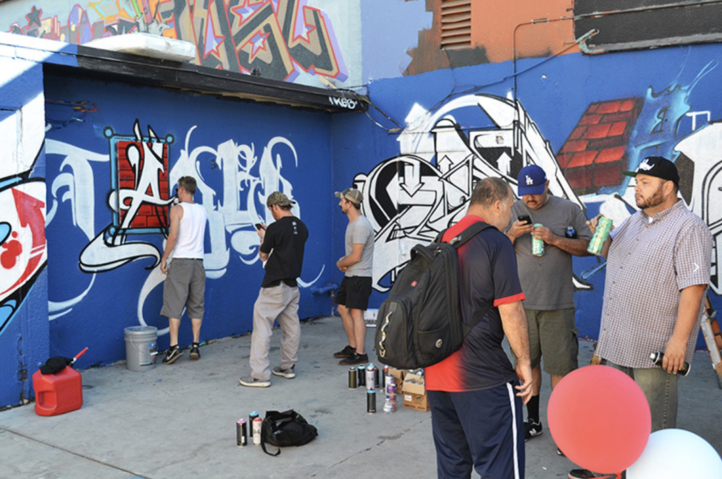
Figure 3: Graffiti murals centered on voting and democracy created by artist and curator Jose Martinez for Place Make the Vote at the Homeland Center.
The Place Make the Vote pop-up in Houghton Park, for example, took on the atmosphere of a carnival with rides and games, including a dunk tank, while the Homeland Center polling place emphasized art with a curated art show as well as crafting and artmaking activities throughout the day (Ruiz, 2016b). The polling site set up at Century Villages at Cabrillo, a community offering permanent and transitional housing supported by a network of services and amenities with over 1,500 residents, primarily veterans, families,
Place Make the Vote: Designing for Voter Participation and Civic Engagement 261 and individuals with special needs, was particularly lively given the existing community infrastructure onsite. This was the first year the community was allowed to host their own polling site after years of lobbying, so they were especially enthusiastic and engaged (Centuryvilliages.org, 2016). Music and carnival games together with coffee and donuts in the morning and pizza and empanadas in the afternoon encouraged residents to not only vote but to spend time in community with one another and celebrate their civic achievements. In a nod to the large number of veterans in the community, the placemaking for this site included elements of a bootcamp theme. The existing community infrastructure also played a central role in the success of this remarkably vibrant event, with activities and giveaways for children and local cover bands providing musical entertainment, indicating the importance of inviting the community to be an active partner in the planning process. The Century Villages at Cabrillo is also located in an area with a number of formerly incarcerated individuals who have lost their right to vote, and the Place Make the Vote event there intentionally included these community members in the programming by creating opportunities for those not voting to share their views on the community and participate in other forms of civic engagement (B. Ulaszewski, interview, 25 January, 2026).
While the placemaking deployed at each polling place contained unique components, a certain continuity was achieved through utilization of shared elements, particularly branding and an emphasis on placemaking and tactical urbanism to provide low cost, high impact urban interventions to promote participation and engagement (The Street Plans Collaborative and NextGen, 2012). Many of the placemaking strategies using approaches from tactical urbanism emphasized do-it-yourself community-based activities, for example building low-cost street furniture to create “people’s porches” to encourage discussion and community building. These events further spread the word about the project, encouraged community buy-in, and generated increased opportunities for engagement and networking even before election day.
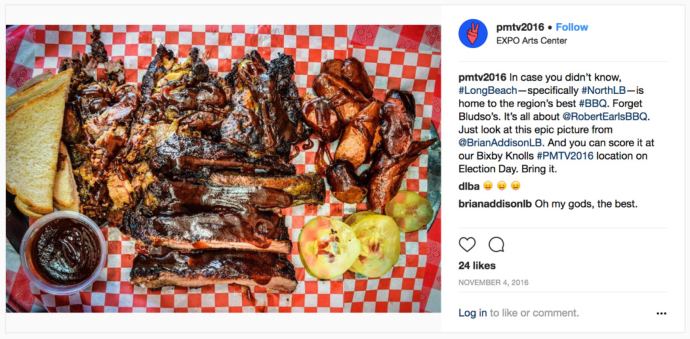
Figure 4: Social media post spreading the word about the local food purveyors featured at Place Make the Vote in Bixby Knolls.
TOOLKIT In addition to coordinating and organizing the Place Make the Vote events for the 2016 election, City Fabrick also created the Place Make the Vote Toolkit as a durable online community resource conceived as a “Do-It- Together guide for unleashing community activism and increasing civic engagement” in neighborhoods across the country (City Fabrick, 2017; Placemakethevote.com, 2016). The online toolkit provides a scalable, decentralized, customizable, DIY set of resources for other civic engagement events. Throughout the process, City Fabrick took inspiration from small voting sites run by local community members, sometimes out of their own garages, that successfully used music, graphics, food, and a community atmosphere to encourage civic engagement (B. Ulaszewski, interview, 25 January, 2026). As a result, the toolkit is very scalable, allowing individuals or small groups to create localized election events while also supporting large-scale festivities. Each intervention includes important information about cost, project supervision requirements, and size, as well as detailed descriptions and instructions, downloadable guides, and printable branded graphics. The toolkit provides resources for small, inexpensive materials including collateral like buttons, mini-flags, door hangers, and stickers that can have an outsized impact on marketing and rudimentary placemaking. The section on placemaking features several impactful projects from the inaugural Place Make the Vote experience, from photo booth resources to bounce house tips, including plans for low cost furniture that can be assembled by the community at an event in advance of voting day. Free food is a sure way to generate interest and attract people to an event, and the toolkit also includes suggestions for programming free food trucks to create a sense of place through local cuisine, provide amenities while voters wait to cast their ballots, and encourage socializing in a fun and inviting atmosphere. Long Beach Fifth District Councilwoman Stacy Mungo noted the impact of the toolkit, stating, “What you’re doing is meaningful and powerful, and the fact that you’re providing the tools for it to be carried on past a single person is remarkable” (Ruiz, 2016a).
IMPACTS AND OUTCOMES The Place Make the Vote events successfully achieved the goals outlined by City Fabrick and its partners. The events generated significant community engagement, with a total of 1,000 photo booth snaps, 24 sheets of plywood laser cut into furniture, 500 miniature flags distributed, and hundreds of bags of popcorn, tacos, donuts, cups of coffee, and pizza slices consumed across the Place Make the Vote sites (City Fabrick, 2017). The placemaking and marketing around these polling sites also led to increased voter turnout in historically underrepresented neighborhoods, a major goal of the project. The first indication of this outcome emerged during the primary prototype phase of the project. In this instance, citywide voter turnout rates increased from 11.6% in 2012 to 39.6% in 2016, a 28% increase with 3.41 times the participation as compared to 2012. One prototype precinct increased voter turnout from 7.5% to 27.5%, a 20% increase with 3.67 times the
Place Make the Vote: Designing for Voter Participation and Civic Engagement 263 participation as compared to 2012. The second prototype precinct increased voter turnout from 7.1% to 38.1%, an impressive 31% increase with 5.37 times the participation rate as compared to 2012 (City Fabrick, 2017). Both precincts also returned more provisional ballots than the city average of 56, with the first Place Make the Vote primary precinct returning 58 and the second returning 154, the highest of all precincts in the city (City Fabrick, 2017). “That was something that we could really point to as a success,” Ulaszewski said of the provisional ballots. “We had people walking up and asking ‘Hey, can I vote here? I live in North Long Beach or I live in Santa Monica.’ We saw that voters saw it and just wanted to participate” (Ruiz, 2016a). In addition to the impressive gains in these precincts, the project may have contributed to increased turnout overall, with City Fabrick designer Baktaash Sorkhabi noting, “While it’s hard to draw hard correlations between things, there was an increase in voter turnout at all polling locations in Long Beach … So we really feel strongly about the fact that we created this fun and very visible and visually engaging event right outside the polling location that helped draw more people to the site” (Ruiz, 2016b). This success carried over into the general election as well. Of the eleven Place Make the Vote precincts across six polling sites, eight surpassed the city average voter turnout rates, an impressive showing for historically underrepresented voting groups (City Fabrick, 2017). Community members also remarked on the success of the program, with one local teacher stating, “What a great idea to not only get adults to come by to vote but it also engages kids to be a part of voting day” and one neighbor noting, “Pretty cool idea to make this a celebratory day. Makes voting day a much more enjoyable idea” (City Fabrick, 2017).
These positive outcomes and community responses indicate the success of the Place Make the Vote events and the potential to expand these approaches within and outside of Long Beach. In fact, City Fabrick proved to be a pioneer in developing and deploying placemaking for civic engagement around voting at this scale, and other groups have continued to expand on these ideas. Food trucks are now a regular occurrence around polling sites in many US cities, particularly those known for long wait times (Alvord, 2022; Schultz, 2020). When We All Vote, an organization founded in 2018 that advocates for increased voter participation to close persistent race and age gaps, promotes Party at the Polls approaches, using fun, celebratory events similar to Place Make the Vote to successfully increase voter turnout (When We All Vote, n.d.; Cearúil et al., 2023). The expansion of these events also indicates the continued interest in and need for these types of activities to strengthen our neighborhoods, give voice to marginalized communities, and grow our democracy.
REFERENCES
Alvord, K. (2022) “Free Food Trucks Will Roll Up to Busy Polling Locations in These 4 Swing States on Election Day”, People, 4 November. Available at: https://people. com/politics/free-food-trucks-surprising-voters-2022-election-day/ (Accessed 4 February 2026).
Conducted During the 2022 Election in Michigan, North Carolina, & Pennsylvania. Available at: https://whenweallvote.org/wp-content/uploads/2023/08/party-at- the-polls-2022.pdf (Accessed 4 February 2026). Centuryvillages.org. (2016) CVC Polling Place Makes the Vote. Available at: https:// centuryvillages.org/cvc-polling-place-makes-the-vote/ (Accessed 2 February 2026). City Fabrick. (2017) Placemake the Vote: 2016 Election Cycle Summary. Presentation,
June 2017. City Fabrick. (2016) Place Make the Vote Media Kit. Available at: https://cdn.prod.
website-files.com/64bdd5657424858fa67fbae4/65baf2eee970eb3a70368065_ Placemake%20the%20Vote.pdf (Accessed 2 February 2026). CNN Wires. (2016) “How 19 U.S. Cities are Reimagining Their Communities”, CNN, April 25. Available at: https://fox2now.com/news/how-19-u-s-cities-are- reimagining-their-communities/ (Accessed 1 February 2026). Galentine, K. (2016) “Could Food Trucks Bring More Voters to the Polls in Long
Beach?”, LAist, 12 April. Available at: https://laist.com/news/kpcc-archive/ making-polling-stations-more-exciting-in-long-beac (Accessed 26 January 2026). Hansman, H. (2016) “Could Pop-Up Social Spaces at Polls Increase Voter Turnout?”, Smithsonian Magazine, 13 January. Available at: https://www. smithsonianmag.com/innovation/could-pop-up-social-spaces-polls-increase- voter-turnout-180957799/ (Accessed 2 February 2026). Madden, Kathleen, and Project for Public Spaces. (2000) How to Turn a Place
Around: A Handbook for Creating Successful Public Spaces. New York, NY: Project for Public Spaces, Inc. Morris, A. (2016) “Long Beach Civic Innovators Awarded Thousands for Big Ideas from Knight Cities Challenge”, Long Beach Post, 12 April. Available at: https:// lbpost.com/news/knight-cities-long-beach-winners/ (Accessed 2 February 2026). Placemakethevote.com. (2016) Placemakethevote.com: A Toolkit to Expand
Civic Engagement at Polling Booths. Available at: https://placemakethevote. com/ (Accessed 24 January, 2026) Ruiz, J. (2016a) “Grant Money Increases City Clerk’s Capacity in Effort to Increase Voter Enagement”, Long Beach Post, 10 August. Available at: https://lbpost.com/ news/politics/grant-money-increases-city-clerk-s-capacity-in-effort-to-increase- voter-enagement/ (Accessed 2 February 2026). Ruiz, J. (2016b) “Long Beach Polling Stations to Serve as Non-Partisan Party Places
on Election Day”, Long Beach Post, 27 October. Available at: https://lbpost. com/news/long-beach-polling-stations-to-serve-as-non-partisan-party-places-on- election-day/ (Accessed 2 February 2026). Schultz, A. (2020) “Five Ways the Food and Beverage Industry is Packing the Polls”, The Counter, 20 October. Available at: https://thecounter.org/five-ways-the-food- and-beverage-industry-is-packing-the-polls/ (Accessed 2 February 2026). The Street Plans Collaborative and NextGen. (2012) Tactical Urbanism: Volume
2. Available at https://issuu.com/streetplanscollaborative/docs/tactical_urbanism_ vol_2_final (Accessed 26 January 2026). When We All Vote. (n.d.) About Us. Available at: https://whenweallvote.org/about/ (Accessed 4 February 2026). Wick, J. (2016) “Long Beach Hopes Food Trucks Will Bring Voters to the Polls”,
LAist, 13 April. Available at: https://laist.com/news/entertainment/food-truck- polls (Accessed 26 January 2026).
LISTED IN THE AHFE DIGITAL BOOKSTORE CATALOGUE
Explore the complete digital volume
The Human Side of Service Engineering
Read this individual research paper free through the original publisher, or explore the full digital proceedings book.
ISBN 978-1-964867-97-7
Explore this ISBN in the AHFE Bookstore ↗Listed in the July 2026 bookstore catalogue; search by ISBN to confirm current availability · Digital book purchase optional