Zongyang Cui, Ying Nie, Xiaoqi Wang (2026). A Multi-level Elderly Care System: Exploring Spatial Planning and Digital Integration in China’s Cities. In: Human Factors in Aging and Special Needs. AHFE Open Access, vol. 214, pp. 107–121. https://doi.org/10.54941/ahfe1007578
While the design of elderly care architecture and campuses is burgeoning in China, comprehensive research on a unified planning layout spanning from urban master planning to interior design is rarely encountered. This study begins by analyzing spatial usage and medical support levels within China’s diverse elderly care models, highlighting their current limitations. Against the backdrop of emerging technology, it contrasts digital elderly care paradigms with traditional ones. Combining the authors’ practical experience as architects in the design of three ‘Taikang Community’ campus projects, the study proposes a novel, digitally-enabled elderly care system. The system interconnects four spatial and social layers: Home life, Neighborhood Circle, Intermediate Circle, and Urban Circle. The spatial configurations and operational dynamics within this multi-level system are articulated and analyzed. The findings aim to provide a foundation for the architectural planning and interior design of elderly care environments and offer insights for structuring related internet-based service systems.
To facilitate the publishing process, follow these instructions to prepare your manuscript. If you are creating your paper directly with this file, you can skip the next section. If your manuscript has already been created, follow the instructions in the next section to import the styles into your working document.
Spatial Conditions and Limitations of Three Elderly Care Models in China In the social life of China, the prevailing elderly care models primarily consist of three types: home-based care, community-based care, and institutional care (Zhou, 2018, p.12). Home-based care involves seniors receiving support in their own or their children’s homes. Community-based care provides services at designated facilities within residential communities, while institutional care entails residence in dedicated professional facilities.
The spatial limitations of elderly care models are multifaceted. Firstly, homes lack suitable spaces for aging in place: ‘elderly rooms’ are rarely master bedrooms with ensuite bathrooms, bathrooms miss grab bars, nonslip flooring, and shower seats, and no room exists for nursing beds or oxygen concentrators. Secondly, community care spaces, typically converted from commercial premises, suffer from inherent spatial deficiencies, leading to inadequate service provision and a widespread desire for expansion. Finally, among institutional providers, smalltomedium ones face similar spatial issues, whereas large new institutions (e.g., Taikang Community) operate as selfcontained complexes with full hospitals. In summary, home, community, and small-to-medium institutional care all suffer from spatial deficiencies due to poor initial planning, while large institutions may operate inefficiently.
Healthcare Standards and Limitations of Three Elderly Care Models Healthcare standards are a decisive metric for evaluating elderly care services and a foundation for integrated medical-elderly care. Medical support directly impacts seniors’ sense of security and quality of life. At present, the medical service levels across the three models are uneven and each has limitations.
Home-based care lacks professional health monitoring. Community facilities face shortages of medical staff and incomplete clinical departments, often requiring referrals. While large institutions offer the highest medical capabilities via affiliated hospitals, their high investment and non-profit models hinder widespread adoption. Neither the elderly care nor the medical system in China has completed digital transformation. Data collection and utilization remain developmental; resource sharing and interoperability are minimal or absent. Urban and rural “elderly care resources” and “medical resources” operate as separate systems. Integration and optimization of these two systems are urgently needed, and their degree of combination must be improved.
Traditional Elderly Care Models Based on Physical Space Traditional elderly care services center on physical space, with design focusing on architectural details such as ramp gradients, wheelchair turning radius, and handrail dimensions.
Most Chinese homes offer limited space for aging-appropriate modifications, preventing proactive risk prevention-seniors can only call for help after incidents. Community services, though richer in spatial and medical resources, remain passive, activating only when seniors physically enter facilities. Large institutions face oversight challenges, including difficult service evaluation, problematic data monitoring, and limited family contact options. In essence, traditional services focus solely on physical space design, lacking scientific health supervision and risk control. This results in two critical deficiencies: the inability to provide 24/7 monitoring and the absence of digital channels for systematic data collection, hindering efficient resource allocation and optimization.
A Multi-Level Elderly Care System 109 DESIGN PROJECT CASES & RELATED WORK
Taikang Community Projects The ‘Taikang Community’ elderly care campus has been established in multiple locations across China and has evolved into a leading product in the senior care industry. This product line leverages ‘Taikang Life Insurance’ as its primary customer acquisition channel, highlighting the unique value proposition of integrating insurance with elderly care. Meanwhile, it has gained widespread market recognition through large-scale campus development and professional, comprehensive high-end community elderly care services.
The authors of this paper, having participated intensively in the architectural design of three Taikang Community projects in the capacity of architects, will analyze the planning and architectural design features of these projects and summarize practical insights derived from this experience.
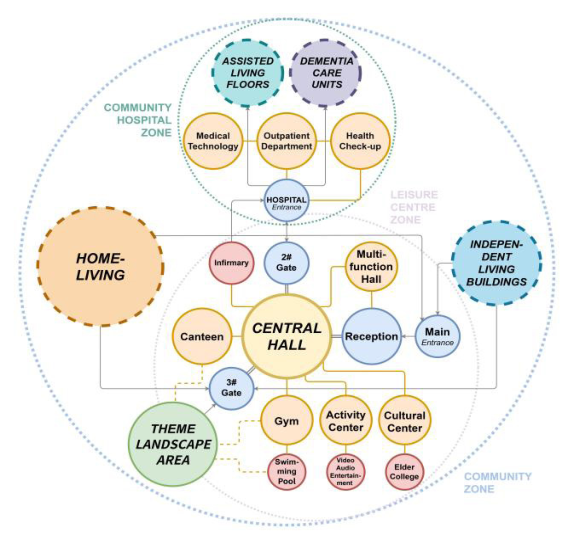
Figure 1. Standard spatial layout of a Taikang campus (Source: made by authors).
Each Taikang campus is designed around community life, with planning and architectural design consistently centered on the daily living and medical needs of older adults. As illustrated in the following campus planning bubble diagram (Figure 1), the three types of residential products, health and wellness hospital, and landscape gardens within the campus are all arranged around the key space for the seniors’ daily life: dubbed the ‘活力中心(Leisure Centre).’
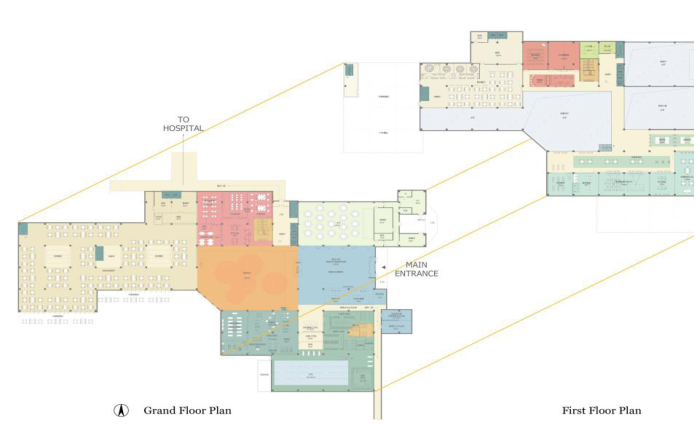
Figure 2. Design drawings of Ru Garden: Grand floor and first floor plans of the leisure centre (Source: drawn by authors).
Functionally and spatially positioned at the heart of the campus, the Leisure Centre exhibits spatial characteristics comparable to those of a modern large-scale indoor shopping mall, as shown in the ground and first-floor plans of ‘Ru Garden’ (Figure 2). Within this central space, canteen, fitness centre, activity centre, and cultural facilities act as ‘anchor stores,’ around which most daily activities of residents take place, both inside and outside the volume. This organizational principle demonstrates broad applicability across cities with diverse climatic conditions.
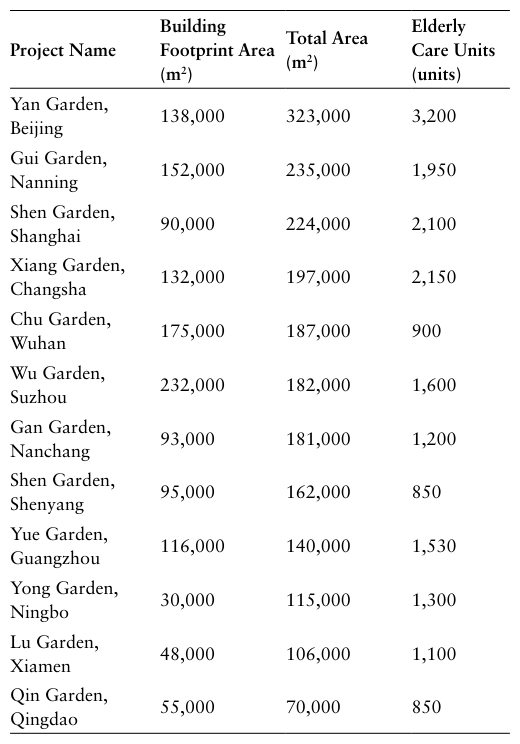
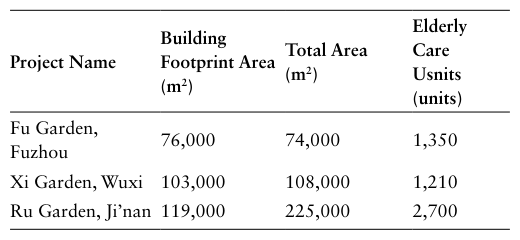
Furthermore, the statistical data presented in Tables 1 and 2 reveal that each ‘Taikang Community’ campus operates at a considerable scale, with site areas ranging from 30,000 to 232,000 square meters and total floor areas ranging from 70,000 to 323,000 square meters. An analysis of these figures reveals underlying objective constraints and operational necessities.
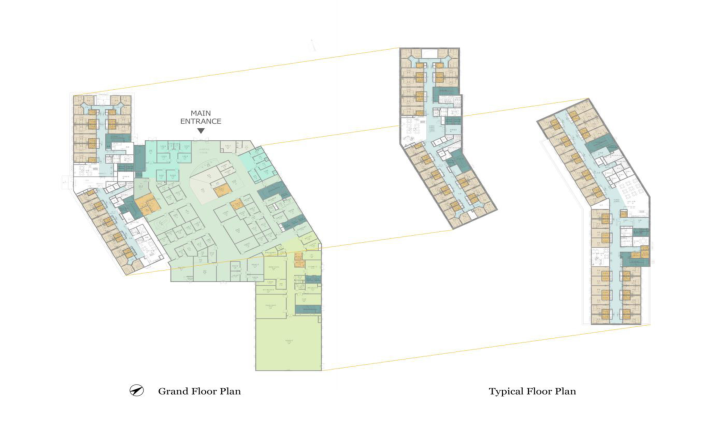
Among the standard physical supporting facilities of the campuses (such as the ‘Grade II Rehabilitation Hospital’ and ‘Leisure Centre’) are functional configurations with fixed scales. As indicated in the red box in Figure 3 (left), which shows the ground floor plan of one community hospital from Fu Garden, non-inpatient departments like examination, outpatient, and medical technology zones (designed to meet Grand II Hospital Standards) occupy relatively fixed areas. This necessitates a certain scale in both served population and number of beds to ensure efficient and sustainable operation. Therefore, to ensure the efficient value realization of these supporting facilities without waste, the matching elderly care community must exceed a specific scale threshold.
Table 1: List of relevant data on the construction scale of the ‘Taikang Community’ series products.Table 2: List of the construction scale of the ‘Taikang Community’ projects, which the authors participated in designing.Figure 3: Design drawings of Fu Garden: Grand floor and typical floor plans of the community hospital (Source: drawn by authors).
In summary, the spatial layout and architectural design of Taikang’s projects offer numerous insights. First, the approach of spatial arrangement centered on the seniors’ daily living needs is worthy of reference. Second, the Leisure Centre exemplifies a compact, multi-functional spatial model with strong universality across diverse contexts. Third, the rehabilitation hospital requires a minimum scale in both building area and user population to operate efficiently: a challenge that warrants further investigation into potential solutions.
The Impact of Digital Technology on Elderly Care Services Digital Elderly Care Systems: Unbounded by Physical Space
As evidenced by the above analysis, the comprehensive, professional institutional elderly care services, exemplified by ‘Taikang Community,’ is only viable for large-scale senior communities and cannot effectively reach the broader, geographically dispersed elderly population.
In contrast, digital elderly care systems can migrate some supporting facilities for medical and daily living services online, delivering elderly care services of equivalent quality through systematic digital technologies. Thereby, it transcends the spatial and scalar constraints inherent in traditional models, extending service coverage to a much wider elderly demographic.
Digital Care Devices: Data Collection and Real-Time Monitoring Qicai Future Community in Guali Town, Xiaoshan District, Hangzhou, is one of Zhejiang Province’s first batch of future community pilots and a representative typical case (Wang, 2021). It has achieved notable success in
A Multi-Level Elderly Care System 113 smart elderly care: older residents are connected to a health service center via smart wearables and in-home devices, which upload real-time health data such as heart rate, blood pressure, and blood oxygen levels to a central display. Smart watches are equipped with myocardial infarction early warning algorithms to identify onset risks in advance; if elderly with dementia exceed the preset ‘electronic fencing,’ the system automatically triggers an alert to facilitate timely response from family members and medical staff.
Telemedicine Technology: Resource Sharing and Distance Elimination As early as March 2019, the team led by Academician Dong Jiahong from Tsinghua University Changgung Hospital relied on 5G technology to remotely guide Shenzhen People’s Hospital in completing China’s first 5G-assisted surgery. The procedure utilized augmented reality (AR) and mixed reality (MR) to simulate the surgical field and display remote expert annotations, with 5G maintaining a latency of less than 0.2 seconds.
On July 4, 2025, CCTV (China Central Television) News reported that the team led by Academician Liu Rong from the PLA General Hospital successfully performed a remote surgical operation in an operating room in Beijing from a mobile operating vehicle in Xiong’an New Area, Hebei, using low-Earth orbit (LEO) satellite communication technology (Tencent News, 2025). In addition to low latency and high speed, this satellite-based telesurgery technology operates independently of ground infrastructure, remains unaffected by geological disasters, and offers comprehensive coverage beyond geographical constraints.
Data Network Integration: Potential for Linking Elderly Care and Medical Data Various industries in contemporary China are promoting ‘digital transformation,’ with its core principles as follows: first, upgrade professional instruments and office equipment from mechanization to digitization; second, connecting the control systems and data generated by these devices to the internet; and finally, establishing an integrated digital system for unified equipment monitoring and data analysis. Observations indicate that both the elderly care and medical sectors are undergoing this digital transition, though progress remains limited. Given the similarity in their transformation pathways, we argue that significant potential exists for data interoperability and systemic integration between these two fields during their ongoing upgrades.
Spatial Organization Logic in the Digital Context Industrial Age vs. Digital Age
In the Industrial Age, physical space was designed to directly serve human activity, with classic theories placing human behavior at the center of spatial planning and design. To this day, adhering to the mental inertia of the industrial age, urban planning and architectural design continue to
prioritize spatial function and attributes as core elements, while energy and information systems are often relegated to secondary, inconspicuous roles as supplementary components. In the Digital Age, however, spatial organization has shifted from a human-centered approach to one that is increasingly structured around energy and data systems. Space now humans indirectly, meeting both people’s contemporary lifestyle needs and the demands of technological advancement.
Sociologist Manuel Castells (2010) argues that compared to the ‘space of places’ characteristic of the Industrial Age, the ‘space of flows’ (the material infrastructure that enables the circulation of capital, information, and technology across society) is now emerging as the dominant spatial logic of the Digital Age.
Digital Systems and ‘Data Packets’ In digital systems, human behaviors and daily activities are represented as ‘data packets’(Nie, 2024, p.42). Data generated from people’s life and production activities forms the foundation for the establishment, popularization, optimization, and iteration of digital systems, which in turn better serve and assist humans.
In elderly care contexts, older adults generate corresponding data through daily living, exercise, medical visits, and care-giving activities. The ability and efficiency of the ‘digital elderly care system’ to read, process, and reflect these ‘data packages’ into services are key indicators for measuring the quality of elderly care.
Flattening and Decentralization The flattening characteristic of the Internet enables free pairwise connections between all connected nodes. When all nodes achieve equal interoperability, each node becomes a point worthy of attention. The elderly expect their daily living and activity needs to be met; their children wish to stay informed about their health and mental state; community managers and social workers need real-time awareness of the living conditions and needs of the elderly population in their jurisdiction; community doctors seek to reference seniors’ health records to provide timely and appropriate advice; and attending physicians require up-to-date health status and medical history to make accurate diagnoses.
At the same time, decentralization represents a subtle feature of the transformation in network society (Castells, 2004). Changes in the needs of various nodes in society rarely stem from the core drive of a single center, but rather from multi-level information exchange and interaction among nodes.
On one hand, the existing elderly care and medical industries still follow traditional development paths, with service efficiency and informatization level urgently needing improvement. On the other hand, the rapid advancement of digital technology has created new possibilities in information transmission and data processing. It is therefore conceivable that a new, digital organizational framework integrating elderly care and medical resources could emerge.
A Multi-Level Elderly Care System 115 Framework and Spatial Configuration of the Multi-level Elderly Care System
Basic Framework Guided by the diverse living and medical needs of the elderly, and building on the design experience from the Taikang projects, this section theoretically derives the functional configuration for a multi-tiered urban framework, progressing from the micro to the macro scale.
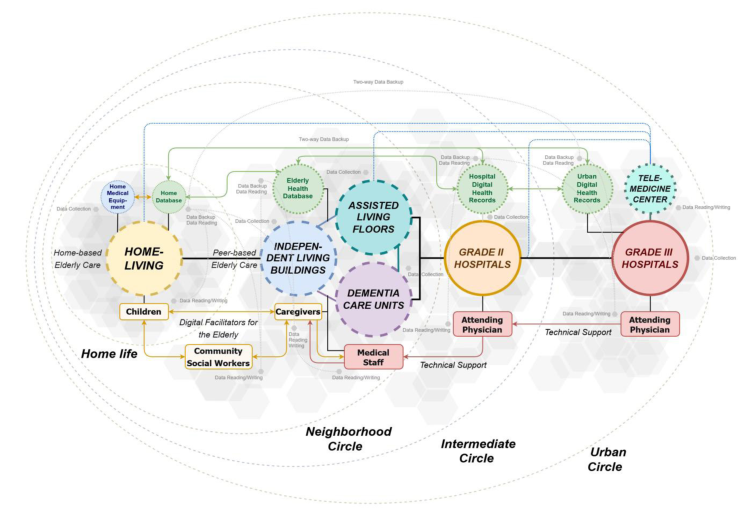
The Multi-Level Elderly Care System is a social system at the urban scale that integrates ‘elderly care resources’ and ‘medical resources’ through deep connection and high integration, covering all elderly care-related services and content across four spatial circles ranging from households to the city. The four spatial circles are defined as follows: Home Life: Refers to older adults aging in place (either independently, with spouses, or with children) in private homes or residential complexes. This model prioritizes familiarity and comfort, aligning with the Chinese cultural expectation of ‘support in old age,’ and serves the majority of seniors. Neighborhood Circle: Comprises care facilities within local communities, including Independent Living Buildings, Assisted Living Floors, and Dementia Care Units. As the primary service front, this tier channels medical resources directly into communities. Intermediate Circle: Forms the core of integrated care, where medical resources are fully embedded into elderly services. Its broad distribution and accessibility enable direct technical support to neighborhood-level facilities. Urban Circle: Acts as the medical core of this system, providing top-level clinical expertise, handling complex cases, and leading system-wide telemedicine and online consultation initiatives.
Spatial Configuration Home-Based Elderly Care Space
Elderly health status falls into three types: healthy, semi-disabled, and fully disabled. Living arrangements include living with children, with a spouse, or independently. For those living with children, the senior’s room should match the master bedroom in size (15–20 m²), preferably south-facing, accommodating two nursing single beds and medical equipment (e.g., medicine cabinets, oxygen concentrators, monitors) plus an aging-friendly bathroom. Two beds ensure comfort for a couple or allow a caregiver to stay. Ample storage and display space is also needed. Key dimensions: clear door width ≥1.2m (double-leaf preferred); corridor width ≥1.5m for wheelchair turning; bathroom door width ≥0.8m (sliding, no threshold); internal bathroom ≥1.5×1.5m with flat floor. The master bedroom’s bathroom should allow future aging-appropriate adaptations.
Neighborhood Circle Elderly Care Space Based on the proportion of elderly residents, neighborhood spaces are divided into Independent Living Buildings, Assisted Living Floors, and Dementia Care Units. Healthy or semi-disabled seniors can be monitored via home sensors. Those requiring assistance move to Assisted Living Floors, while
fully disabled seniors receive 24-hour care in Dementia Care Units. Medical facilities must meet Grade I Hospital standards with sufficient staffing and equipment.
Intermediate Circle Elderly Care Space These medical facilities serve as regional technical centers for disease prevention and treatment, delivering comprehensive diagnosis, treatment, preventive care, and rehabilitation. They should be spatially adjacent to or have convenient transport links with neighborhood-level facilities, located near neighborhood peripheries and shareable by multiple communities. In scale, they must comply with Grade II Hospital requirements for personnel, space, facilities, and administration. Primary responsibilities include: participating in or guiding health monitoring for the elderly; tracking community health trends; enabling data interoperability, mutual recognition of lab results, patient record sharing, and seamless two-way referrals; providing technical guidance (including online medical services); organizing health education activities; and conducting professional training for neighborhood medical personnel.
Urban Circle Elderly Care Space Urban circle facilities are mainly Grade III Hospitals and specialized hospitals, serving as national technical centers integrating medical treatment, research, and teaching. They provide expert services for severe illnesses, accept referrals from intermediate facilities, and offer telemedicine support. Affiliated institutions are responsible for professional education and medical research to support the entire multi-level elderly care system.
Building on the design experience from the Taikang projects and guided by the diverse needs of elderly life, we proceed to a theoretical derivation of the functional configuration at the broader urban tier.Within the Neighborhood Circle, older adults may either live at home with their children or reside in adjacent Independent Living Buildings, enjoying both convenience and autonomy. Those requiring more specialized care and supervision need not relocate to traditional elderly care institutions or general hospital wards. Within their familiar communities, they can access professional medical and elderly care services via standardized equipment, on-site support, and cloud-based medical and technical backing. This progression-from household living to neighborhood care spaces and onward to Intermediate Circle medical facilities-reflects an organizational logic that transitions from ‘independent living’ to ‘assisted living’ and finally to ‘full nursing care.’
Medical institutions in the Intermediate Circle provide direct medical technical support to elderly care facilities in the Neighborhood Circle, with an extremely close physical spatial connection between the two. Older
A Multi-Level Elderly Care System 117 adults residing in ‘Assisted Living’ and ‘Dementia Care Units’ within the neighborhood can receive direct medical services from the Intermediate Circle healthcare staff. In many cases, the inpatient areas of Grade II Hospitals are even spatially integrated with Dementia Care Units.
Figure 4. Structural diagram of the elderly care system prototype (Made by authors).
Direct linkages between medical institutions at the Urban and Intermediate Circles are essential across multiple domains, including technical exchange, equipment support, professional training, and academic collaboration. Beyond these medically oriented functions, city-tier medical and research institutions also perform two key urban roles: First, they manage the ‘Urban Digital Health Records,’ ensuring the security of both infrastructure and data. Storage equipment, server rooms, and related hardware are located within or adjacent to these institutions. Second, the Urban Circle ‘Telemedicine Center,’ equipped with comprehensive software and hardware systems, is situated within these institutions, enabling them to organize and deliver telemedicine and online consultation services that cover the entire city and beyond.
Logic Chain B: Personnel Connectivity Owing to cognitive constraints and physical function deterioration, the elderly typically exhibit resistance to new things, particularly digital products. Product designers also frequently overlook the acceptance thresholds and learning curves for elderly users, hindering the effective integration of smart devices into elderly care. The digital elderly care system thus advocates a ‘separation between direct users and ultimate beneficiaries,’ wherein older
adults (the ultimate beneficiaries) are not necessarily the direct users of the system. To bridge this gap, children, caregivers, and community social workers act as ‘digital facilitators’ facilitating the connection between seniors and the digital system. This approach effectively realizes the ideal service model of ‘system + service + older adults + terminals’ (Qian et al., 2021, p.121) pursued by many contemporary care platforms.
Medical staffs in the Neighborhood Circle serve as the most immediate and widespread providers of integrated care. Their technical competency should meet or exceed that of Grade I medical institutions. The team shall include general practitioners, Western and traditional Chinese medicine physicians, geriatric specialists, psychologists, rehabilitation therapists, nutritionists, health management professionals, nursing staff, and social work counselors. These personnel receive direct technical guidance in medical practice and education from attending physicians of Grade II hospitals in the Intermediate Circle, and in some administrative matters, report directly to these hospitals. Similarly, medical staff in Grade II hospitals receive technical support from Urban Circle institutions and are administratively supervised by them. A seamless channel for professional exchange should be maintained across all tiers, enabling experienced front-line clinicians to advance professionally while allowing advanced medical research and innovative care concepts from top-tier institutions to be implemented effectively at the community level.
In addition, the technical team for the city’s Telemedicine Center is assembled and managed by Urban Circle medical institutions. Its talent pool comprises researchers from leading medical institutions and seasoned front- line clinicians, who provide online diagnosis and treatment support to all telemedicine interfaces across various circles of the city through the Internet.
Logic Chain C: Data Network
1. Home-Level Data Integration
Smart home devices operate collaboratively via the internet to provide comprehensive living assistance for older adults. Smart mattresses can electrically adjust angles and monitor sleep quality, recording data such as bedtime and sleep duration to support health assessments. An intelligent call system (including wearable devices, bedside call buttons, and bathroom emergency callers) works with smart cameras to enable emergency contact and remote observation of physical condition. Human motion sensors are linked with night lights and bathroom lighting, automatically illuminating night- time paths and recording toileting data. Smart water meters, coordinated with access control systems, trigger alerts to family or caregivers if no water usage or exit is recorded over an extended period. Medical devices such as oxygen concentrators, blood pressure monitors, and glucose meters connect via Wi-Fi/5G. Some functional components are cloud-based, allowing device miniaturization and expanding the scope of in-home monitoring and telemedicine.
A Multi-Level Elderly Care System 119 The data collected by the aforementioned devices is real-time accessed into the Home Medical Equipment system and periodically stored in the Home Database. Information recorded by family members or caregivers is also synchronized to this database, enabling access by community staff and medical institutions.
2. Neighborhood-Level Data System
Elderly care services in neighborhood communities consist of two core dimensions: hardware and software. On the hardware side, smart wearable devices connect in real time to a community data center, enabling continuous health monitoring during daily activities. In assisted living and dementia care units, smart mattresses are configured to monitor indicators such as heart rate, respiration, bed-exit events, and sleep patterns, sending alerts when abnormalities are detected. ‘Smart electronic fencing’ sets a safe activity area for elderly with dementia, notifying caregivers immediately upon boundary crossing. All device data and service records are uploaded to the Urban Digital Health Records, with two-way backup maintained with the Home Database, Elderly Health Database, and Hospital Digital Health Records to ensure real-time data synchronization across the four circles.
Software-based services are reflected in three aspects: Streamlined and age-adapted property service processes; Centralized data collection and cloud-based processing by large elderly care groups, which conduct R&D and feed back outcomes (such as personalized meal plans delivered by central kitchens) to each community; Community digital systems designed with consideration for spatial efficiency and environmental impact, ensuring all facilities and installations comply with aging-friendly principles.
In summary, neighborhood-level care combines technical hardware with human-centered software services.
3. Cross-Tier Medical Data Coordination
Medical institutions at the Intermediate Circle work in close geographical and informational connection with Neighborhood Circle care facilities. Elderly health records and digital medical records are integrated and interoperable, with mutual recognition of inspection results, ensuring seamless connection in triage and referral. During treatment, attending physicians at any tier can access and retrieve data from the Urban Digital Health Records, improving diagnostic accuracy and efficiency.
The urban Telemedicine Center is responsible for connecting high-end medical resources (e.g., advanced equipment and experts) in the Urban Circle to the cloud, providing remote support for all circles. Through an intelligent command hub, it connects Grade II hospitals, key community clinics, operating rooms, and home-based telemedicine platforms, coordinating data flow and organizing citywide telemedicine services.
CONCLUSION
Drawing on practical experience from Taikang Community design projects and integrating digital concepts with emerging technologies, we have developed a theoretical prototype for an multi-level elderly care system.
First, spaces across households, communities and medical institutions must accommodate elderly residents and caregivers while supporting energy systems and digital connectivity. Second, the system introduces intermediary roles through ‘separation between direct users and ultimate beneficiaries,’ where family or caregivers assist with data entry, overcoming digital barriers. Ultimately, online-offline integration establishes a multi-level system achieving full digitalization of elderly care.
In addition, integrated services form a unified virtual-physical system where care and medical resources across four tiers interconnect synergistically, avoiding redundancy. Post digital transformation, data convergence enables seamless service transitions while effectively integrating urban-rural resources: representing a critical pathway to ‘integrated medical and elderly care.’
Systematic integration enhances medical service predictability and enables demand categorization to prevent resource overcrowding. Meanwhile, the entire city-level ‘Elderly Care + Medical’ system can undergo holistic upgrades, adapting quickly to technological advancements.
This research provides urban planners and architects with theoretical foundations for age-friendly spatial design, while offering network architects and system designers references for digital device interconnection and data management. The values and methodologies developed can extend to ‘all-age health system’ planning, continuously supplementing urban functions within the elderly care system’s spatial-network framework.
REFERENCES
Castells, M. (2010). The Rise of the Network Society (2nd ed., Vol. 1). Wiley- Blackwell. Castells, M. (2004). The Power of Identity (2nd ed., Vol. 2). Wiley-Blackwell. National Health Commission of the People’s Republic of China. (1994). [Basic
Standards for Medical Institutions (Trial)]. Retrieved from https://www.nhc.gov. cn/wjw/c100175/199409/9f68472d198243c59a2525c66c92d251.shtml National Health Commission of the People’s Republic of China. (2021). [General Hospital Construction Standard (110-2021)]. Retrieved fromhttp://www.nhc.gov. cn/wjw/c100175/202106/db5584e137bb47feb9315ab78477533d.shtml National Health Commission of the People’s Republic of China. (2025). [Grade III
Hospital Review Standard (2025 Edition)]. Retrieved from http://www.nhc.gov. cn/yzygj/c100068/202506/25229edc80d34694b7debf54ddef9f9f.shtml Nie, Y.(2024). [Future Urban: Digital Reproduction of Communities & Smart Construction]. [China Development Press]. Qian, X., Huoge Jile, Zhang, T., Shao, Y. W., Yu, M. H., & Gong, W. L. (2021).
[Analysis of the Application and Development of Intelligent Home-based Elderly Care Platforms]. Times Economic & Trade, 18 (08), 119–124. Taikang Community. (n.d.). 燕园 [Yan Garden Community]. [Taikangzhijia]. Retrieved from https://www.taikangzhijia.com/web/community_choice.thtml?name=燕园 & siteFlag=shequxuanze
A Multi-Level Elderly Care System 121 Tencent News. (2025, July 5). Successful completion of the world’s first LEO satellite
remote surgery with “air-space-ground coordination” [in Chinese]. Tencent News. Retrieved from https://news.qq.com/rain/a/20250705A075XP00 Wang, Y. X. (2021). [Research on the Problems and Optimization Strategies of Comprehensive Operation of Future Communities: A Case Study of Hangzhou Qicai Community]. [Modern Urban Research], (10), 15–20. Zhou, Y. M., et al. (2018). [Detailed Explanation of Architectural Design for Elderly
Care Facilities 1]. [China Architecture & Building Press].
LISTED IN THE AHFE DIGITAL BOOKSTORE CATALOGUE
Explore the complete digital volume
Human Factors in Aging and Special Needs
Read this individual research paper free through the original publisher, or explore the full digital proceedings book.
ISBN 978-1-964867-90-8
Explore this ISBN in the AHFE Bookstore ↗Listed in the July 2026 bookstore catalogue; search by ISBN to confirm current availability · Digital book purchase optional