Li Yishan, Lei Zhong (2026). Traditional Brand Image Activation Design Strategies Based on Narrative Theory. In: Affective and Pleasurable Design. AHFE Open Access, vol. 204, pp. 197–205. https://doi.org/10.54941/ahfe1007345
China's brand image design has gradually moved beyond traditional retro and homogenized approaches, focusing instead on exploring cultural depth and innovative expression. Narrative design as a key methodology for brand image upgrading, provides a theoretical framework for cultural translation and emotional connection to facilitate brand rejuvenation. This study aims to explore the application pathways and methods of narrative design theory in brand image development. Through literature review, we systematically analyzed the theoretical framework of narrative design and current trends in brand image evolution. A comprehensive review of research papers published over the past decade with keywords "narrative design" and "brand image" yielded 4,045 articles, from which twenty articles were selected for detailed analysis via correlation analysis. We propose an innovative narrative-based brand image revitalization framework comprising a three-dimensional narrative system of theme-structure-expression. Four core strategies-cultural anchoring, visual symbolization, omnichannel narrative communication, and narrative structure visualization-are introduced, supported by three design principles: cultural authenticity, consistency, and emotional resonance. The essence of narrative design lies in transforming brand assets into perceptible cultural narratives that seamlessly integrate traditional elements with contemporary aesthetics. This framework not only opens new perspectives for brand image design but also provides methodological support for revitalizing traditional brands beyond functionalism. The proposed strategies activate cultural memory through narratives rooted in brand DNA, establish emotional connections with consumer groups, and offer theoretical references and practical insights for brands to achieve image renewal and cultural heritage preservation through narrative design.
Brands embody profound commercial civilization, regional culture, and collective memory, serving as vital cultural landmarks for their host cities. With the advent of the new media era, the infiltration of international brands and evolving consumer demands have significantly impacted the development of domestic brands in China (Shi Chunsheng, 2023). In today’s rapidly changing market landscape, revitalizing brands while preserving their cultural roots presents a critical challenge. This study proposes a three-dimensional narrative framework to reinvigorate brands through innovative aesthetic presentations, offering fresh perspectives for brand revitalization strategies.
OVERVIEW OF NARRATIVE DESIGN AND BRAND IMAGE DEVELOPMENT Theoretical Framework
Narrative theory originates from narratology, focusing on elements such as narrative subjects, objects, structure, and symbols to explore the organizational logic and expressive patterns of stories. By transforming narrative elements into perceptible experiential carriers, it establishes cohesive storytelling frameworks that convey specific values, emotional dimensions, and cultural essence, fostering emotional resonance and shared meaning between communicators and audiences. Narrative design applies this theoretical framework to practical design practices, using stories as central threads to integrate visual symbols, emotional expressions, and contextual experiences. This approach ensures that design works not only possess functional attributes but also carry narrative content that can be perceived, disseminated, and evoke emotional responses.
Traditional brand image serves as a visual embodiment of a brand’s history, culture, craftsmanship, and values, acting as the core medium for consumer brand perception. Compared to emerging brands, traditional brands possess unique historical depth, heritage craftsmanship, and cultural DNA, yet often struggle with stereotypical perceptions, outdated imagery, and disconnection from younger demographics. Narrative design aligns seamlessly with traditional brand revitalization strategies, transforming brand history, artisanal spirit, and regional culture into cohesive storytelling that enhances brand memorability, affinity, and loyalty. Research indicates that narrative-driven messages are more memorable and shareable than purely functional information, providing crucial evidence for the application of narrative design.
Current Application Status Currently, narrative design has been increasingly applied to traditional brand image upgrades. Several brands have achieved successful revitalization through story-driven approaches and visual innovation. For instance, Dabaitu leveraged childhood memory narratives to create a youthful brand image, launched co-branded products, and regained popularity among young consumers; Liushen utilized traditional herbal narratives combined with differentiated cross-border marketing strategies to break away from conventional brand perceptions and enhance brand visibility. These cases demonstrate that narrative design effectively activates cultural value and facilitates brand rejuvenation. Observing the current industry landscape, narrative design for brand images exhibits two distinct characteristics: first, the narrative content centers on history and craftsmanship, focusing on brand origins, skill inheritance, and regional culture; second, narrative platforms have diversified, extending from logos and packaging to comprehensive storytelling across short videos, cultural products, and offline spaces (Shen He, 2021).
Traditional Brand Image Activation Design Strategies Based on Narrative Theory 199 However, narrative-driven brand image design faces several challenges. First, narrative content remains highly homogeneous; most designs overemphasize century-old histories and traditional craftsmanship while neglecting to explore brand personality and contemporary significance, resulting in cookie-cutter brand narratives (Li Bohao, 2023). Second, narrative structures are incomplete - some merely extract historical elements superficially, failing to evoke emotional resonance among consumers. Third, narrative expressions remain disconnected from modern aesthetics; many brand images remain overly retro, lacking alignment with the aesthetic preferences of younger consumers. Fourth, communication methods are limited, hindering effective brand outreach. These issues constrain the revitalization effectiveness of traditional brands and underscore the importance of systematic narrative design strategies.
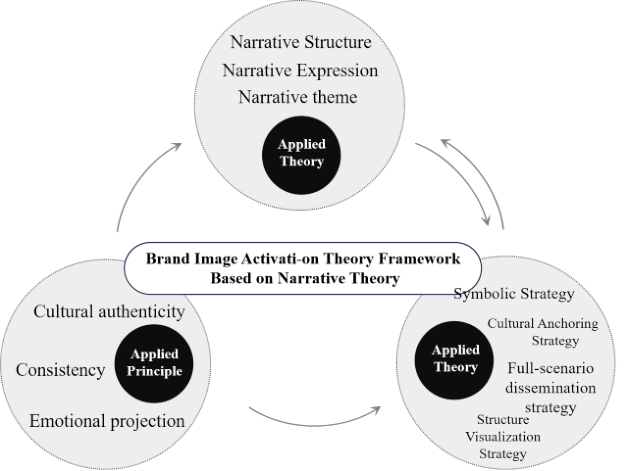
Theoretical Framework, Application Strategies, and Design Principles of Narrative Design in Brand Image Upgrade Grounded in narrative theory, this chapter focuses on the core objectives of brand image upgrading. It establishes a theoretical framework for narrative design across three dimensions - narrative theme, narrative structure, and narrative expression - derives corresponding application strategies such as cultural anchoring and visual symbolization, and identifies three fundamental design principles: cultural authenticity, consistency, and emotional projection. These principles mutually reinforce and interact with each other, forming a comprehensive theoretical system for revitalizing traditional brand images.
Figure 1: A narrative theory-based framework for brand image revitalization design (by authors).
First,the narrative theme serves as the cornerstone of brand image storytelling and the essence of brand revitalization. Establishing precise and distinctive narrative themes is fundamental for narrative design to effectively drive brand image upgrades and revitalization. The cultural core encompasses three dimensions: First, the historical dimension, encompassing the brand’s founding background, developmental journey, and era-specific characteristics; second, the craftsmanship dimension, highlighting core techniques, heritage philosophies, and artisanal spirit; third, the regional dimension, reflecting the cultural uniqueness and humanistic ambiance of the host region.
In practical implementation, designers must thoroughly understand the structure and themes of a story, selecting appropriate visual elements to convey narrative plots and characters. They should choose suitable storytelling styles based on different themes and target audiences while emphasizing narrative coherence and visual impact to effectively communicate the story’s atmosphere and emotions, enabling viewers to deeply comprehend its core messages (Ma Ting, 2017). The principle of balancing tradition and innovation must be adhered to. On one hand, brands should delve into their core DNA-including historical heritage, craftsmanship characteristics, cultural significance, and business philosophie that constitute their competitive edge. Additionally, integrating regional features is crucial, as narrative themes aim to establish emotional connections with consumers. Local characteristics embody collective memories and emotional attachments among regional communities, allowing brands to rapidly bridge the gap with audiences through thematic integration and enhance narrative appeal and resonance. On the other hand, designers should adapt narrative themes to contemporary demands by aligning them with modern consumption trends and cultural currents. Optimizing narrative themes to meet consumer needs while avoiding outdated or stereotypical approaches ensures relevance and engagement.
Second, Narrative structure serves as a crucial foundation for brand image storytelling and brand activation, while also constituting a key element of narrative design. By integrating cultural attributes with narrative design, a three-dimensional narrative framework can be establishe progressing from surface-level perception to emotional engagement and ultimately value alignmen thus forming a cohesive and well-structured brand narrative system.
The surface structure represents the most direct manifestation of a brand narrative. As the tangible form perceived through sensory channels, it serves as the foundation for conveying brand messages and establishing brand identity. This encompasses the brand’s visual identity system, product packaging, store environments, employee attire, and physical products - all ements that are visually, tactilely, and auditorily perceptible. Functioning as the primary narrative medium, these elements capture attention, communicate information, and create immersive atmospheres. The middle structure embodies the narrative’s storytelling dimension, conveying information and emotions through specific storyline - including the brand’s founding story, growth journey, craftsmanship heritage, product development narratives, and consumer experiences. These stories endow the physical brand elements
Traditional Brand Image Activation Design Strategies Based on Narrative Theory 201 with temporal depth and meaning, transforming the brand from a static symbol into a dynamic entity that allows consumers to understand both the product and its stories, fostering emotional connections. The deepest structure constitutes the core narrative layer, embodying the brand’s cultural values and regional characteristics. It includes abstract principles like craftsmanship ethos, integrity, life philosophies, and cultural identity, along with distinctive local cultural elements. These values and cultural elements represent the ultimate goal of brand storytelling, determining the brand’s position and significance in consumers’ minds, elevating it beyond mere commercial attributes to become a cultural landmark and spiritual symbol.
In brand image design, three hierarchical layers construct a systematic narrative framework. The surface-level material form serves as the vessel for the middle-layer storyline, which in turn manifests deeper values. These core values subsequently imbue surface-level symbols with profound meaning. Together, these three components form an organic symbolic system where the absence of any layer would compromise the narrative integrity and communicative impact of brand identity.
Third, effective narrative expression is crucial for revitalizing traditional brand image. It requires breaking free from conventional communication models to establish a diversified and interactive narrative dissemination system. In terms of distribution channels, while maintaining advantages of traditional offline platforms like physical store displays and exhibitions, brands should proactively leverage new media platforms such as Douyin(Chinese new media platforms),Xiaohogshu (Chinese new media platforms)and WeChatOfficial (Chinese new media platforms).Accounts to align with young consumers’ information consumption habits and expand brand storytelling reach. Regarding communication formats, adopting diverse formats including short videos, infographics, live streaming, and interactive topics helps create immersive narrative scenarios that allow users to intuitively experience brand stories. In terms of engagement strategies, promoting participatory storytelling through brand-related challenge campaigns and story collection initiatives encourages user-generated content sharing. This UGC content matrix not only enhances user participation and sense of belonging but also amplifies brand narrative impact, achieving youthful brand rejuvenation.
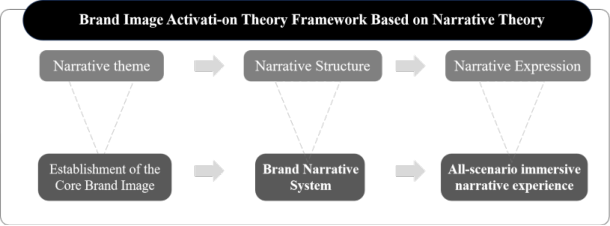
Figure 2: Theoretical framework for brand image activation based on narrative theory (by authors).
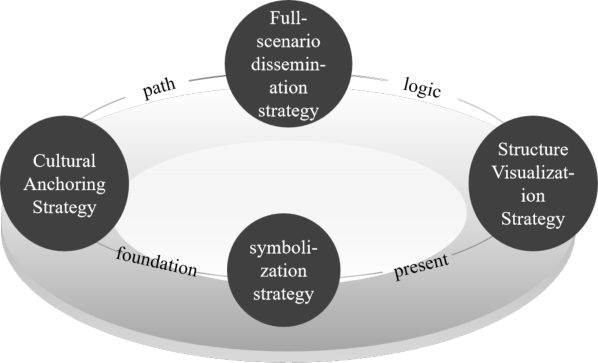
The core value of narrative design in brand image upgrading lies in transforming cultural connotations into the essence of brand identity through systematic storytelling and visual expression, thereby creating cultural carriers, narrative-driven imagery, and emotionally resonant communication. By integrating cultural attributes, market demands, and industry pain points within this theoretical framework, five actionable narrative design strategies have been developed. This strategy system combines universal applicability with practical implementation, serving as a reference paradigm for similar brand narrative design initiatives (Niu Yun, 2024).
Firstly, cultural anchoring serves as the foundation for traditional brand storytelling, focusing on identifying the brand’s unique cultural DNA that cannot be replicated to address narrative homogeneity at its root. This strategy requires brands to systematically analyze three key cultural resources: historical heritage, craftsmanship traditions, and regional characteristics. By establishing a cultural tag matrix and selecting the most representative symbols that resonate with audiences as the narrative core, brands ensure all design and communication efforts align with a unified cultural identity, thereby creating distinctive and enduring brand profiles (Qinyu Dong, 2024).
Secondly,the visual narrative symbolization strategy is grounded in the classical narratology framework of “narrative-narrator” transformation, addressing the challenge of cultural narrative abstraction (Chaomin Yu, 2025). Its core principle involves decomposing brand stories and cultural connotations into a visual, perceptible symbolic system. Symbol design utilizes text, graphics, color, and patterns to establish a hierarchy of core and auxiliary symbols, ensuring each visual element serves a narrative function. This enables consumers to quickly associate brand characteristics through visual symbols while creating a dual-layer symbolic system: core symbols convey the brand’s core culture, while auxiliary symbols reinforce brand category attributes and regional characteristics, thereby empowering every visual element to fulfill its narrative role.
Thirdly, the structural visualization strategy is grounded in the brand narrative arc model, addressing the pain point of fragmented historical narratives through three progressive tiers: surface-level symbol mapping, mid- level emotional resonance, and deep-level scenario immersion. Using brand image as the visual anchor, it transforms brand development trajectories into perceptible and emotionally resonant narrative frameworks. This three-tiered approach not only resolves narrative recognition challenges but also fosters emotional engagement, effectively overcoming the issues of abstraction and fragmentation in historical storytelling.
At least, the full-scenario narrative communication strategy is guided by the emotional axis of the dual-axis narrative model, suitable for scenarios with singular communication formats and unidirectional output. Its core lies in constructing an integrated online-offline narrative system to transform one-way cultural dissemination into immersive narrative experiences. Online communication adopts the brand as the primary perspective, creating lightweight content such as brand journeys and cultural immersion experiences, which are published on platforms frequented by young
Traditional Brand Image Activation Design Strategies Based on Narrative Theory 203 audiences like TikTok, Xiaohongshu, and WeChat Video Channel (Evangelos Sakkopoulos, ed, 2015) Offline communication involves setting up brand display zones and narrative illustration walls in stores, combining brand culture with regional traditions to create immersive experience environments that allow consumers to engage with brand stories during their purchasing journeys (Liu Jun, 2024).
Figure 3: Framework of brand image activation strategies based on narrative theory (by authors).
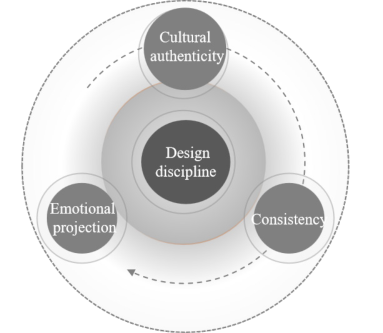
Narrative Design Principles The narrative design principles serve as the fundamental guidelines for brand image storytelling, ensuring alignment with brand cultural essence and market consumer demands. Grounded in theoretical frameworks, these principles establish three core design tenets that function as universal standards for narrative-driven brand design, providing clear direction for practical implementation.
First, the persuasiveness of a brand image stems from its authenticity. This principle emphasizes that narratives must be firmly grounded in the brand’s history, founding vision, core values, and concrete actions, rather than relying on fiction or exaggeration. Authentic stories often emerge from the brand’s founding legends, the founder’s beliefs, challenges encountered during product development, or the brand’s sustained engagement with social issues. These authentic elements enrich the narrative with detailed context and emotional depth, enabling it to withstand consumer scrutiny and the test of time. The authenticity principle requires designers to act as brand archaeologists—unearthing and refining the genuine elements that resonate with audiences while ensuring the narrative remains aligned with the brand’s actual practices.
Second, the consistency principle ensures brand image design maintains high coherence and synergy across all touchpoints, thereby establishing a unified and powerful meaning field. This requires developing a clear core narrative framework that encompasses key themes, character archetypes,
204 Li and Zhong emotional tones, and core visual symbols. Whether through product packaging, official websites, social media content, physical spaces, or customer service interactions, all elements should adaptively interpret this framework to ensure users receive consistent and mutually reinforcing brand messages across different scenarios. Such cross-media consistent storytelling functions like multiple vocal parts performing the same main melody in a symphony, effectively building brand awareness while preventing image ambiguity caused by fragmented narratives.
Finally, exceptional brand image design transcends mere brand monologues by inviting users to co-create narratives as active participants and protagonists. The emotional projection principle emphasizes crafting immersive characters and scenarios that resonate emotionally, fostering user identification. The participatory principle further empowers users through open narrative nodes, customizable products, or user-generated content (UGC) mechanisms, transferring narrative control(Ying Liang ,Lina Zhu,2023). This approach shifts design philosophy from dissemination-oriented to interactive thinking, establishing flexible narrative frameworks that enable user engagement.
Figure 4: The framework of principles for brand image revitalization based on narrative theory (by authors).
CONCLUSION
Narrative design offers a systematic approach to revitalizing traditional brand identities that transcends functionalism. By weaving stories as the connecting thread, it transforms historical contexts, craftsmanship traditions, and regional cultures into design language that resonates with contemporary consumers—making cultural elements perceptible, brand images memorable, and communication emotionally engaging. For traditional brands, anchoring cultural DNA through narrative themes, constructing emotional logic via narrative structures, and achieving omnichannel presentation through narrative expression are crucial strategies to overcome obsolescence and embrace youthfulness and globalization. As cultural consumption continues to evolve, narrative-based brand image design will further drive innovation
Traditional Brand Image Activation Design Strategies Based on Narrative Theory 205 while preserving core values, enabling time-honored brands to maintain their relevance in the new era.This study aligns with the track of the AHFE 2026 14th International Conference on Affective and Pleasurable Design.
ACKNOWLEDGMENT
I would like to express my sincere gratitude to the Organizing Committee of the AHFE International Conference for providing a valuable academic platform to present this research on Traditional Brand Image Activation Design Strategies Based on Narrative Theory, as well as to the experts and reviewers for their insightful comments. I also appreciate my supervisor Zhong Lei for her guidance, my colleagues for their support, and my family and friends for their encouragement throughout the research and writing process.
REFERENCES
Chaomin Yu. (2025). Cultural and Creative Brand Narrative and Visual Image Construction Based on Design Aesthetics:Taking Shanghai Disneyland as an Example.Journal of Innovation and Development, 12(1), 1–7. Evangelos Sakkopoulos, ed. (2015) e-souvenir appification: QoS web based media
delivery for museum apps. Electronic Commerce Research. Li Bohao, Wei Liang & Zuo Zhen. (2023). Research on Narrative Design Strategies of Domestic Brands. Journal of Tianjin Academy of Fine Arts, (02), 74–77. Liu Jun. (2024). Narrative Visual Regeneration Design of Cultural Memory in Time-
honored Brand Brands. Journal of Wenzhou University (Social Sciences Edition), 37(04), 56–69. Ma Ting. Narrative and Discourse Beijing: China Social Sciences Press, 2017:29. Niu Yun, Chen Feng. (2024). Design Strategies for Time-Honored Brand IP Images Based on Symbolic Interaction Theory. Beauty and Era (Vol. 1), (05), pp. 40–44. Qinyu Dong. (2024). The Design Narrative and Communication Strategy of Nanjing
Cultural Symbols in Brand Building. Evaluation of Educational Research, 2(6). Shen He. (2021). Research on Narrative Design Strategies for Brand IP Images in the Context of Media Convergence. Art and Design (Theoretical), 2(05), 26–28. Shi Chunsheng & Liu Pingyun. (2023). Narrative Design Philosophy and
Application: A Study on Packaging Design Strategies for Time-honored Brands. Art Observation, (02), 74–75. Ying Liang, Lina Zhu. (2023). Research on the promotion of Shanxi tourism brand image based on narrative design. Tourism Management and Technology Economy, 6(7).
LISTED IN THE AHFE DIGITAL BOOKSTORE CATALOGUE
Explore the complete digital volume
Affective and Pleasurable Design
Read this individual research paper free through the original publisher, or explore the full digital proceedings book.
ISBN 978-1-964867-80-9
Explore this ISBN in the AHFE Bookstore ↗Listed in the July 2026 bookstore catalogue; search by ISBN to confirm current availability · Digital book purchase optional