Mark Turner, Heather Balding (2026). A social media site for social well-being? The curious case of BeReal. In: Artificial Intelligence and Social Computing. AHFE Open Access, vol. 203, pp. 91–102. https://doi.org/10.54941/ahfe1007321
Authentic self-presentation on social media has been identified as a potential protective factor for users’ wellbeing, yet empirical research has largely focused on highly curated platforms such as Instagram and TikTok. The present study is among the first to systematically investigate BeReal, a platform explicitly designed to promote authenticity through the daily posting of spontaneous and unedited images. The study examines how BeReal use and posting behaviours are associated with emotional intelligence (EI) and psychological wellbeing. Twenty-eight BeReal users aged 18 to 25 completed validated measures of online self-presentation, wellbeing, and EI, and provided app usage data. Participants’ daily BeReal posts were also collected over a 30-day period and categorised using an objective coding scheme capturing image type, location, user activity and appearance, posting lateness, and image retakes. BeReal use was substantially lower than use of other social media platforms. Although participants posted on most days, the majority of posts were late and image retakes were common, suggesting continued selective self-presentation. Posting behaviour showed no association with wellbeing or EI in relation to lateness, retakes or image content. Overall, findings suggest that even on authenticity-focused platforms, selective self-presentation persists, and that platform design alone may be insufficient to support psychological wellbeing.
Social media was originally developed to enhance human connection by enabling new forms of communication and interaction. Over time, however, social media platforms have increasingly evolved into commercial enterprises driven by the algorithmic optimisation of content, advertising, and use of metrics to sustain user engagement. Rather than prioritising connection, many contemporary platforms encourage users to curate idealised versions of themselves that align with prevailing social and appearance norms. One example of this is the widespread use of image filters on some platforms which alter facial features to enhance attractiveness (Vendemia & DeAndrea, 2018). Such features have been linked to increased appearance-based comparison, self-objectification, and pressure to conform to unrealistic standards of self- presentation (Varman et al., 2021).
A consequence of the path social media has taken, is the often-inauthentic portrayal of everyday life, and normalisation of a competitive culture of “perfect” self-presentation. Users are encouraged to highlight selectively Received February 6, 2026; Revised April 1, 2026; Accepted April 16, 2026; Available online July 20, 2026
92 Turner and Balding positive experiences, which can draw attention away from genuine interaction and mutual understanding. This shift has prompted concern regarding the implications of social media use for individuals’ quality of life, particularly with respect to wellbeing (e.g. Aryal et al., 2025) and development of emotional intelligence (e.g. Piccerillo & Digennaro, 2025). When engagement becomes excessive or maladaptive, difficulties can arise across multiple aspects of life including relationships, emotional regulation, and communication (Jarrar et al., 2022).
The relationship between social media and psychological wellbeing is complex. On the one hand, platforms can help to facilitate peer support and social connection. On the other, substantial evidence links the use of image- focussed platforms such as Instagram to increased anxiety and depression, particularly among young adults (Keles et al., 2020). These concerns have grown as the use of social media amongst young adults has continued to grow. Importantly, the relationship between social media use and mental health appears bi-directional whereby individuals experiencing poorer mental health may also turn to social media more frequently, particularly during periods of social isolation such as the COVID-19 pandemic (Thygesen et al., 2022; Turner & Ordonia, 2023). However, not all research supports a direct causal link between time spent on social media and poorer wellbeing. It has been argued that how individuals use social media may be more important than how much they use it, with the distinction between active and passive engagement being increasingly popular within the field (Valkenburg et al., 2022). Active use, characterised by posting and meaningful interaction, has been associated with greater social support and more stable wellbeing. In contrast, passive use, involving scrolling and observation without interaction, has been experimentally linked to poorer wellbeing (Verduyn et al., 2010). Given that passive consumption may be the dominant mode of engagement for many users (Escobar-Veira et al., 2018), it is perhaps unsurprising that social media is frequently associated with negative psychological outcomes.
In addition to wellbeing, emotional intelligence (EI) has emerged as an important construct for understanding individual differences in social media engagement. EI refers to the ability to control and understand one’s own emotions, and those of others, to support emotional development and interpersonal relationships. Research suggests that increased reliance on online communication may reduce opportunities for emotionally rich, face- to-face interaction (Lieberman & Schroeder, 2020), potentially undermining components of EI such as emotional awareness and empathy. Consistent with this, problematic social media use has been associated with difficulties in emotional regulation (Arrivillaga et al., 2022) and experiential avoidance (e.g. Chen et al., 2025). Individuals with lower EI appear more likely to engage in impression management and idealised self-presentation online (Süral et al., 2019), and tend to spend more time on social media, favouring less emotionally demanding forms of communication (Casale et al., 2013).
Social media platforms that enable extensive content manipulation allow users to curate an online persona that reflects an ‘idealised’ or ‘false’ self, with such self-presentation often being rewarded with positive feedback.
A Social Media Site for Social Well-Being? The Curious 93 While this may temporarily enhance self-esteem, evidence suggests that idealised self-presentation is often associated with poorer wellbeing, whereas authentic self-presentation predicts better psychological outcomes (e.g. de Vaate et al., 2020). Despite the relevance of EI to these processes, research directly examining the relationship between EI and online self-presentation remains limited.
In response to growing concerns about the negative effects of traditional social media, some alternative platforms have begun to emerge. One such platform is BeReal, a relatively recent application that explicitly discourages editing, filters, and staged content. Marketed as “the anti-Instagram” (Duffy & Gerrard, 2022), BeReal requires users to post a simultaneous front- and back-facing photo within a two-minute window following a random daily notification. Users must post before viewing others’ content, and late posts are visibly labelled. These design features aim to promote spontaneity, ordinariness, and authenticity by reducing opportunities for impression management (Maddox, 2023).
Despite its growth in popularity, BeReal remains largely underexplored in the academic literature. Its emphasis on authentic self-presentation presents a unique opportunity to examine how social media environments structured around realism rather than idealisation are associated with psychological wellbeing and EI. The present study addresses this gap by investigating how individuals use BeReal, examining behavioural indicators such as posting timeliness, image retakes, and contextual content, alongside measures of online self-presentation, wellbeing, and EI. By focusing on design features and user behaviours rather than overall screen time alone, this study seeks to clarify whether authenticity-oriented social media use represents a healthier mode of digital interaction.
METHOD
Participants Thirty young adults were purposively recruited as being active users of the social media application, BeReal. Participants were informed that the study aimed to examine user engagement with BeReal and the nature of content posted on the platform. Participation was voluntary and uncompensated. To take part in the study, participants were required to (i) post regularly on BeReal and respond to daily posting prompts; (ii) agree to keep BeReal push notifications enabled throughout the study period, and (iii) provide consent for their posted images to be temporarily accessed by the researchers during the 30-day study period.
Two participants withdrew during data collection, resulting in a final sample of 28 participants (7 male, 21 female). Participants ranged in age from 18 to 25 years (M = 21.0, SD = 1.2) and reported no prior history of mental health difficulties. The sample was predominantly White British (93%), with smaller representations of Black British (3.4%) and Southeast Asian (6.9%) participants.
Psychological wellbeing was assessed using the 14-item Warwick–Edinburgh Mental Well-being Scale (WEMWBS; Tennant et al., 2007), which evaluates wellbeing through a series of positive statements (e.g. “I’ve been dealing with problems well”) answered using a 5-point frequency scale (0, none of the time to 5, all of the time) measuring the extent to which each statement had been true over the preceding two weeks. The WEMWBS showed high internal consistency within the study sample (Cronbach’s α = .89).
Emotional intelligence was measured using the 16-item Wong and Law Emotional Intelligence Scale (WLEIS; Wong & Law, 2002). The scale assesses four domains: self-emotional appraisal, others’ emotional appraisal, regulation of emotion, and use of emotion. Items on the scale (e.g. “I am sensitive to the feelings and emotions of others”) are answered using a 5-point Likert scale (1, strongly disagree to 5, strongly agree). The WLEIS demonstrated good internal consistency, with Cronbach’s α values within the sample ranging from .75 to .88.
Online self-presentation was measured using an adapted version of the 17-item Self-Presentation-on-Facebook-Questionnaire (SPFBQ) developed by Michikyan et al. (2015), with items modified to reference BeReal rather than Facebook (e.g. “The way I present myself on Be Real is how I am in real life”). The scale assesses three dimensions of self-presentation: real self (presenting oneself online in a way that is consistent with one’s actual traits), ideal self (presenting an enhanced or aspirational version of oneself), and false self (presenting oneself in a deliberately inaccurate or deceptive way).
In addition, some behaviours specific to BeReal usage were assessed using a 10-item scale developed by the researchers. Specifically, items measured posting habits and strategies related to impression management (e.g., “I sometimes choose to avoid showing my face when taking a BeReal”) and were answered using a 5-point Likert scale. This scale provided an overall indication of how participants engaged in strategies to control their appearance on the platform and showed acceptable internal consistency (Cronbach’s α = .72).
Procedure Participants who consented to take part in the study first completed the four different psychological questionnaires and were asked to continue posting on BeReal, as they would do normally, when receiving daily push notifications at random times from the app. Participants granted temporary access to their posted content to the researchers by accepting a friend request from a temporary BeReal account set up for the purposes of the study. Daily BeReal posts were collected for each participant over a 30-day period yielding a total of 632 images for analysis. These were coded using a predefined coding scheme, which focused on contextual features of each image (e.g., location, activity, social context), posting latency following the BeReal notification, and the number of retakes prior to posting). Participants also reported weekly screen-time data from their smartphones for five common social media platforms, including BeReal. The study was conducted in accordance with
A Social Media Site for Social Well-Being? The Curious 95 the British Psychological Society’s Code of Human Research Ethics and was approved according to the relevant ethical review process of our institution. At the conclusion of the 30-day period, participants received debriefing information confirming the end of data collection and were provided with further information about the study and appropriate wellbeing support resources.
RESULTS
Posting Behaviours on BeReal With respect to participants’ use of BeReal during the testing period, images were posted by participants in response to daily notifications on average, for 22.8 days (range 16 to 28) out of the 30-day period. However, participants typically posted images ‘late’ on an average of 19.6 days (range 11 to 26) during this period, where a late post is defined by BeReal as one that was made over two minutes after the push notification was received. The average number of minutes late that posts were made was 172 minutes (range 24 to 441 minutes). Information was also provided by the app on the number of times each image had been retaken before a participant decided to post, with the average number of images retaken per participant being 5.18 (range 0 to 12 images). Taken together, these data suggest a degree of selectivity in the images that participants chose to post, and when they chose to post, with only 14% (91 out of 657) of the images evaluated being posted within the two-minute window counted by the app as being on-time.
1. I retake my photos on BeReal before posting them. 85.7% 71.9% 99.5%
67.9% 49.4% 86.3%
2. I wait to take my BeReal if I know I’m doing something ‘more interesting’ later in the day.
60.7% 41.4% 80.0%
3. I think about how I will appear to others on BeReal.
60.7% 41.4% 80.0%
4. It makes me feel good when others comment / react to my BeReal posts.
57.1% 37.6% 76.7%
5. I sometimes choose to avoid showing my face when taking a BeReal.
35.7% 16.8% 54.6%
6. I have a ‘fear of missing out’ when I see what others are doing on BeReal.
28.6% 10.7% 46.4%
7. I find myself waiting for my BeReal notification to go off.
25.0% 7.9% 42.1%
8. I will not post my BeReal if I’m not feeling my best that day.
21.4% 5.2% 37.6%
9. I wish I could edit my photos before posting them on BeReal.
21.4% 5.2% 37.6%
10. I dislike that I can’t delete my BeReal post after I have posted it.
96 Turner and Balding Participants were also asked to provide details of the time spent each week on each of the main social media platforms they used, using their smartphone’s own app monitoring software (e.g. Screen Time, Digital Wellbeing). This indicated that BeReal users also tended to be regular users of other social media platforms. On average, the number of minutes per week spent using BeReal was much lower (M = 20.82; SD = 21.62) than the time spent on the three most commonly used social media platforms TikTok (M = 283.18; SD = 292.63); Instagram (M = 136.14; SD = 211.32); or Snapchat (M = 141.14; SD = 118.41). Relatively little time was also spent using Facebook (M = 26.32; SD = 54.87). Table 1 summarises participants’ self-reported posting habits when using BeReal. Overall, a large majority of participants admitted retaking photographs before posting them (85.7%) and delaying taking their daily BeReal image (67.9%) if they had the opportunity to post a potentially more interesting image later. Most participants (60.7%) reported being conscious of their appearance in BeReal images or would avoid showing their face in images (57.1%). These data suggest that participants were generally aware of engaging in some form of impression management when using the app. Despite this, the responses of participants also exhibited tacit acceptance of the posting constraints of the app, with less than a quarter of the sample indicating a desire to be able to edit or delete photographs, or to avoid daily posting entirely.
Content of BeReal Images A unique feature of BeReal is the simultaneous capture of both front- and back-facing smartphone camera images within uploaded posts, to spontaneously portray the situation users find themselves in when receiving push notifications. The most common types of front-facing and back-facing images, locations and activities posted by participants within the study are summarised in Table 2.
A significant difference was found in the frequency with which different front-facing image types were used (F(3,81) = 105.23, p<.001, ηp
2 =.80) with selfies of the participant on their own (M = 16.50; 95% CI [14.38, 18.63]) being the most frequently posted image type, compared to selfies with others or only part of the participants body being shown. A significant difference was also found with respect to the frequency of different rear-facing image types (F(5,135) = 17.43, p<.001, ηp
2 = .39) with photos of other people (M = 6.50; 95% CI [4.73, 8.27]) or a wide-shot of the participants location, containing no people (M = 6.57; 95% CI [5.20, 7.95]) being the two most frequently occurring image types, compared to detailed-shots of specific objects, food and drink, or the participants own reflection in a mirror which were posted less frequently. Interestingly, a small number of blank rear-facing images were also posted by participants in the 30-day period (M = 2.64 per participant; 95% CI [1.76, 3.53]).
With respect to the locations where participants took BeReal photographs, images taken within the home (M = 11.04; 95% CI [9.51, 12.56]) were found to be most common, accounting for approximately 48% (309 out
A Social Media Site for Social Well-Being? The Curious 97 of 639) of the images taken. These occurred significantly more (F(3,81) = 37.41, p<.001, ηp 2 =.58) than images taken at external locations such as shops, gyms, and during transport (M = 5.57; 95% CI [4.49, 6.66]), or at work/college (M = 2.96; 95% CI [1.96, 3.97]). A relatively small proportion of images were taken at external entertainment venues (M = 3.00; 95% CI [2.16, 3.84]) such as bars, clubs, restaurants or concerts, accounting for approximately 13% (84 out of 639) of the images taken.
A significant difference was also apparent with respect to the frequency of different activities participants engaged in when taking BeReal photographs (F(6,162) = 6.09, p<.001, ηp
2 = .18). Socialising with friends or family was found to be the most common form of activity (M = 6.29; 95% CI [4.71, 7.87]) captured in the photographs, accounting for approximately 28% (176 out of 639) of the images taken. In comparison, other more mundane activities such as working or studying, eating, watching TV or travelling also occurred but were less frequent (Table 2).
Relationship Between Emotional Intelligence, Wellbeing and Self- Presentation With Participants’ Posting Behaviours on BeReal.
To examine the degree of association between how participants’’ psychological characteristics and how they engaged with BeReal, Pearson’s correlation coefficients were calculated between posting behaviours with EI, wellbeing and online self-presentation strategies.
When examining the raw, zero-order correlations between variables, 15 significant relationships were observed (Table 2). For example, wellbeing appeared to be associated with posting more frequently at home (r = .36) and less frequently at external venues (r = −.36), whereas higher EI appe ared to be associated with fewer work-related posts (r = −.51).
Table 2: Relationship between BeReal posting behaviours with emotional intelligence, wellbeing and self-presentation (n = 28).
Table available in the original PDF paper.
Equation reproduced from the original PDF.
Real Ideal False
Emotional Intelligence Wellbeing
Posting Behaviour Average Frequency Per Participant M (SD) Front (self-facing) camera image Selfie (Alone) 16.50 (5.48) -.13 .26 .11 -.07 .02
Selfie (With Others) 4.50 (3.46) -.07 -.20 .07 .19 .08 Body Part 0.46 (0.88) -.05 .12 -.36* -.13 -.01 Person not shown 1.07 (1.96) .06 -.10 -.10 -.10 -.23
Rear (environment-facing) camera image Food / Drink 1.04 (1.35) .21 -.46** .18 .09 .20 Other People 6.50 (4.56) -.16 -.07 .34* .27 .33
Number of Late Posts 19.6 (3.65) -.22 .01 .41* .21 .40 Average Minutes Late 171.89 (103.17) .06 -.08 .22 .35* .12
Number Of Retakes 5.18 (2.72) .17 .25 -.25 -.03 -.11 Note: *p < .05; **p < .01; † significant after adjustment for false discovery.
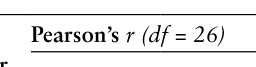
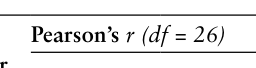
Since conducting multiple significance tests increases the risk of false positives, we controlled for false discovery rate (FDR) using the Benjamini– Hochberg (1995) procedure, with statistical significance evaluated at p<.05 following correction. After adjustment, only two significant relationships remained between the variables examined. These indicated that participants who reported their online persona on social media as being an accurate representation of their real self were more likely to post images of themselves in external entertainment locations and were more likely to post images of themselves engaged in the activity of eating and drinking. Since the location and activity variables, ‘external entertainment’ and ‘eating-and-drinking’ were themselves strongly correlated (r(26) = .56, p < .001) this finding may reflect the tendency for those who were more frequently captured dining-out by BeReal during the 30-day testing period, to feel social media provides a true reflection of their personality.
Importantly, no robust correlations were identified between either emotional intelligence or psychological well-being and participants’ posting behaviours or overall level of engagement with BeReal, after adjustment for
A Social Media Site for Social Well-Being? The Curious 99 false discovery rate. Similarly, no evidence was found for false online self- representation to be connected to either increased (or decreased) engagement with the BeReal, or the nature of the content participants posted on the app.
CONCLUSION
The present study considered whether BeReal may offer a suitable, healthier alternative to other social media platforms for supporting users’ social belonging and wellbeing. Time spent on BeReal was substantially lower than other social media platforms. Users responded to approximately two-thirds of the notifications received from the app, but in most cases, images were posted after the two-minute window prescribed, with an average posting latency of nearly three hours, and image retakes being common. Posting on time depends on participants having instant access to their phones and seeing push notifications when they arrive. However, two-thirds of participants also admitted to delaying posting on BeReal when they were aware that more appealing photo opportunities were likely to arise later during their day. Despite BeReal’s emphasis on spontaneity, the present data suggest that even on a platform designed to minimise impression management, users may continue to engage in selective self-presentation. However, no evidence was observed linking these behavioural indicators of selective-self presentation using the app and participants’ psychological well-being.
Participants most frequently posted individual front-camera instant selfies and back-camera snapshots taken at home. Although not always co-occurring, when combined together these categories accounted for 100% of all images. This is perhaps unsurprising, since push notifications could be received at any time. As a result, participants were often prompted while at home and with only their immediate surroundings available, making selfies or home- based photos the most practical and accessible options. By contrast, images of BeReal users socialising accounted for only around a quarter of all images posted with other more mundane and non-social activities also being posted. This differs from the imagery typically seen on other forms of social media which is heavily oriented towards lifestyle and more aspirational activities and experiences (e.g. Glasner et al., 2024).
The absence of strong associations between BeReal posting behaviours, wellbeing, and EI may challenge the assumption that authenticity-focused platforms inherently support psychological well-being. But the absence of a relationship is also likely to reflect the platform’s design. Since daily posting is largely reactive to notifications, use of the app is focussed more around routine and participant responsiveness, meaning a participants’ decision to post or the content posted, may not involve much emotional deliberation. Since users tended to post similar types of content, the behavioural variation across users may be too small to capture meaningful relationships with EI or well-being.
BeReal doesn’t rank posts algorithmically and users don’t see likes or follower counts. Rather, feeds are chronological showing friends’ posts in the order they were shared. The sporadic nature of push notifications received also increases the difficultly for users of obtaining feedback (such reactions
100 Turner and Balding and comments) on their posts since these only remain publicly visible until the next push notification is received. This in turn, may rationalise why users were less inclined to post consistently to the app as the opportunity to receive positive feedback is limited. Previous research has identified the negative impact of social comparison on algorithm-driven platforms has wellbeing (e.g. Aryal et al., 2025) and the importance of receiving positive feedback on posts for wellbeing (e.g. Marengo et al., 2021). Since BeReal minimizes these cues, posting behaviour may be less tied to emotional or psychological traits, which could further explain why posting patterns didn’t correlate with measures of EI or wellbeing.
Taken together, these features suggest that BeReal functions primarily as a social participation tool rather than as a medium for self-reflection or emotional regulation tool where posting habits might more reliably reflect users’ emotional or psychological state. For users, this implies that engaging with BeReal is unlikely to exacerbate negative social comparison or one’s own mental health, which may make it a lighter, less psychologically loaded social media experience.
The current findings should also be considered in the context of several limitations. Firstly, most participants still engaged with other social media platforms to a greater extent, alongside using BeReal, which may mitigate any observed effects of the app on broader psychological characteristics. Additionally, it is difficult to decipher the degree to which posting behaviours were genuinely linked to participants emotional state, since no discrete measures of wellbeing or EI were gathered in relation to when each post was made. Instead, psychological measures were only taken once at the start of the 30-day testing period. This is important since users may choose to post different image types for different reasons, such as a lack of pressure to post idealised content, or a lack of opportunity. Future research could therefore seek to provide a deeper analysis of participants’ motivations for when they choose to use BeReal over other social media platforms, and their reasons for posting individual images at a particular point, to better understand the psychological impact and benefits of posting. Although questions remain, this study serves as a building block for future research into alternative social media platforms. BeReal may represent a step in the right direction for the evolution of social media as it retains the networking aspect of social media whilst requiring people to spend less time on the app and removes some features which are known to encourage comparison between users.
REFERENCES
Arrivillaga, C., Rey, L., & Extremera, N. (2022). A mediated path from emotional intelligence to problematic social media use in adolescents: The serial mediation of perceived stress and depressive symptoms. Addictive Behaviors, 124, 107095. https://doi.org/10.1016/j.addbeh.2021.107095 Aryal R, Hjetland GJ, Haug E, Samdal O and Skogen JC (2025) Online Personas:
Associations Between Focus on Self-Presentation and Social Comparison on Social Media and Mental Well-Being in Early Adolescence. International Journal of Public Health, 70:1608425. https://doi.org/10.3389/ijph.2025.1608425
A Social Media Site for Social Well-Being? The Curious 101 Benjamini, Y., & Hochberg, Y. (1995). Controlling the false discovery rate: a
practical and powerful approach to multiple testing. Journal of The Royal Statistical Society: Series B (Methodological), 57(1), 289–300. https://doi. org/10.1111/j.2517-6161.1995.tb02031.x Casale, S., Tella, L., & Fioravanti, G. (2013). Preference for online social interactions among young people: Direct and indirect effects of emotional intelligence. Personality and Individual differences, 54(4), 524–529. https://doi.org/10.1016/j. paid.2012.10.023 Chen, X., Peng, S., Guan, H., Sun, H., Wu, H., Yao, X., ... & Yang, X. (2025). Effect
of emotional intelligence on problematic mobile social media use: mediating role of peer relationships and experiential avoidance. Frontiers in Psychology, 16, 1558733. https://doi.org/10.3389/fpsyg.2025.1558733 de Vaate, N. A. B., Veldhuis, J., & Konijn, E. A. (2020). How online self-presentation affects well-being and body image: A systematic review. Telematics and Informatics, 47, 101316. https://doi.org/10.1016/j.tele.2019.101316 Duffy, B. E. & Gerrard, Y. (2022, August 5). BeReal and the Doomed Quest for
Online Authenticity. Wired. https://www.wired.com/story/bereal-doomed-online- authenticity Escobar-Viera, C. G., Shensa, A., Bowman, N. D., Sidani, J. E., Knight, J., James, A.
E., & Primack, B. A. (2018). Passive and active social media use and depressive symptoms among United States adults. Cyberpsychology, Behavior, and Social Networking, 21(7), 437–443. https://doi.org/10.1089/cyber.2017.0668 Glaser, H.C., Jansma, S.R. & Scholten, H (2024). A diary study investigating the differential impacts of Instagram content on youths’ body image. Humanities and Social Sciences Communications, 11, 458. https://doi.org/10.1057/s41599-024- 02960-3 Jarrar, Y., Awobamise, A., Nweke, G. E., & Tamim, K. (2022). Motivations for Social
Media Use as Mediators in the Relationship Between Emotional Intelligence and Social Media Addiction. Online Journal of Communication and Media Technologies, 12(4), e202243. https://doi.org/10.30935/ojcmt/12580 Keles, B., McCrae, N., & Grealish, A. (2020). A systematic review: the influence of social media on depression, anxiety and psychological distress in adolescents. International Journal of Adolescence and Youth, 25(1), 79–93. https://doi.org/10 .1080/02673843.2019.1590851 Lieberman, A., & Schroeder, J. (2020). Two social lives: How differences between
online and offline interaction influence social outcomes. Current opinion in psychology, 31, 16–21. https://doi.org/10.1016/j.copsyc.2019.06.022 Maddox, J. (2023). More real, or just more surveillance? Panopticism and shifting authenticity paradigms in BeReal. Convergence: The International Journal of Research into New Media Technologies, 29(5), 1183–1198. https://doi. org/10.1177/13548565231199987 Marengo, D., Montag, C., Sindermann, C., Elhai, J. D., & Settanni, M. (2021).
Examining the links between active Facebook use, received likes, self-esteem and happiness: A study using objective social media data. Telematics and Informatics, 58:101523. https://doi.org/10.1016/j.tele.2020.101523 Michikyan, M., Dennis, J., & Subrahmanyam, K. (2015). Can you guess who I am?
Real, ideal, and false self-presentation on Facebook among emerging adults. Emerging Adulthood, 3(1), 55-64. http://doi.org/10.1177/2167696814532442 Piccerillo, L., & Digennaro, S. (2025). Adolescent social media use and emotional intelligence: A systematic review. Adolescent Research Review, 10(2), 201–218. https://doi.org/10.1007/s40894-024-00245-z
102 Turner and Balding Süral, I., Griffiths, M. D., Kircaburun, K., & Emirtekin, E. (2019). Trait emotional
intelligence and problematic social media use among adults: The mediating role of social media use motives. International Journal of Mental Health and Addiction, 17(2), 336–345. https://doi.org/10.1007/s11469-018-0022-6 Tennant, R., Hiller, L., Fishwick, R., Platt, S., Joseph, S., Weich, S., ... & Stewart- Brown, S. (2007). The Warwick-Edinburgh mental well-being scale (WEMWBS): development and UK validation. Health and Quality of life Outcomes, 5(1), 1–13. https://doi.org/10.1186/1477-7525-5-63 Thygesen, H., Bonsaksen, T., Schoultz, M., Ruffolo, M., Leung, J., Price, D., &
Geirdal, A. Ø. (2022). Social media use and its associations with mental health 9 months after the COVID-19 outbreak: A cross-national study. Frontiers in Public Health, 2316. https://doi.org/10.3389/fpubh.2021.752004 Turner, M., & Ordonia, D. (2023). How COVID-19 changed self-presentation on instagram and its relation to user well-being. Interacting with Computers, 35(5), 590–603. https://doi.org/10.1093/iwc/iwad013 Valkenburg, P. M., Meier, A., & Beyens, I. (2022). Social media use and its impact on
adolescent mental health: An umbrella review of the evidence. Current Opinion In Psychology, 44, 58–68. https://doi.org/10.1016/j.copsyc.2021.08.017 Varman, R. M., Van Spronsen, N., Ivos, M., & Demke, J. (2021). Social media filter use and interest to pursue cosmetic facial plastic procedures. The American Journal of Cosmetic Surgery, 38(3), 181–186. https://doi.org/10.1177/0748806820985751 Vendemia, M. A., & DeAndrea, D. C. (2018). The effects of viewing thin, sexualized
selfies on Instagram: Investigating the role of image source and awareness of photo editing practices. Body image, 27, 118–127. https://doi.org/10.1016/j. bodyim.2018.08.013 Verduyn, P., Lee, D. S., Park, J., Shablack, H., Orvell, A., Bayer, J., Ybarra, O., Jonides, J., & Kross, E. (2015). Passive Facebook usage undermines affective well-being: Experimental and longitudinal evidence. Journal of Experimental Psychology: General, 144(2), 480–488. https://doi.org/10.1037/xge0000057 Wong, C. S., & Law, K. S. (2002). Wong and law emotional intelligence scale. The
Read this individual research paper free through the original publisher, or explore the full digital proceedings book.
ISBN 978-1-964867-79-3
Explore this ISBN in the AHFE Bookstore ↗Listed in the July 2026 bookstore catalogue; search by ISBN to confirm current availability · Digital book purchase optional