Enqi Ni, Hui Xie, Keqi Wang, Jiamin Fang, Ruochen Hu (2025). Out of the Mud: A user-centered AHP-based approach. In: Human Factors in Design, Engineering, and Computing. AHFE Open Access, vol. 199, pp. 2223–2231. https://doi.org/10.54941/ahfe1007034
Intertidal fishermen, primarily older workers, perform physically intensive tasks in highly variable environments characterized by tidal fluctuations and unstable mudflats (Hwang et al., 2023). The tools they rely on are often rudimentary and lack ergonomic considerations, offering little relief from physical strain. Furthermore, limited adaptability and learning capacity among these users make the development of specialized tools particularly challenging. This study identifies intertidal fishermen as the target user group, applies the Analytic Hierarchy Process (AHP) to systematically assess their needs, and develops user-centered design interventions aimed at reducing work-related fatigue and improving tool usability in real-world conditions. Recent ergonomic studies have shown that modular exoskeletons have significant stress reduction effects in industrial environments, effectively reducing back loads and improving operational efficiency (Qu et al., 2025; Xiang et al., 2024). However, research on intertidal fishermen as a labor group is still insufficient. As their labor force structure is aging, the physical challenges faced by this group in a highly dynamic and difficult-to-control natural environment require urgent attention (Wang et al., 2023; Park et al., 2022). In this context, the development of strongly adaptive, human-centered operational aids is becoming an urgent need to cope with the stress of physically intensive fishing work (Hwang et al., 2023).To support design decisions for the wearable support system, we used a hierarchical analysis (AHP, Saaty, 2008) to assess the importance of the elements in the product composition. The assessment was done by a focus group consisting of 12 fishermen (median age 58.4 years, standard deviation 6.7), 3 product designers and 3 fisheries experts, and a judgment matrix was constructed by two-by-two comparison, and the final weighting results obtained provided a scientific basis for prioritizing the functions of the system.Based on the outcomes of the AHP evaluation, the following prioritization of user needs was identified:AHP analysis revealed that physiological needs were most critical (weight = 0.5571), with lumbar support ranked highest. Operational needs (0.3202) followed, including lightweight construction, task assistance, and tool storage. Durability(0.1226)was identified as the most important psychological factor. These findings informed the prioritization of design features in the prototype.To balance performance and cost-efficiency, the final design prioritizes lumbar protection and integrates key features such as tool support and structural durability. Given the aging user population, the prototype maintains familiarity with existing products while emphasizing ease of use and adaptability. It features adjustable modular straps and pivot joints to accommodate long-handled tool operations. Field tests indicate notable improvements in back comfort, task efficiency, and tool handling compared to conventional equipment. This study presents a human-centered ergonomic solution tailored to the overlooked needs of intertidal fishermen. Grounded in AHP-based needs analysis and real-world testing, the design process resulted in a wearable system that improves physical comfort without disrupting traditional workflows. The findings contribute to a broader shift toward context-sensitive, user-informed design in labor-intensive sectors.
Manual labor is commonly associated with ergonomic risks, where workers are frequently exposed to repetitive motions, awkward postures, and high- intensity environments. These factors elevate the risk of musculoskeletal disorders, reduce work efficiency, and threaten occupational health sustainability (Smith et al., 2020; Li & Zhang, 2021). In industries such as construction, manufacturing, and healthcare, numerous studies have implemented ergonomic interventions and wearable assistive systems to mitigate these risks. For example, exoskeletons and back-support devices have been proven effective in reducing musculoskeletal injuries, enhancing comfort, and improving productivity (Jones et al., 2019; Kim et al., 2022).
stress on the lumbar spine and upper limbs, thereby increasing risks of chronic musculoskeletal injuries and intervertebral disc herniation (Chen et al., 2018; FAO, 2020). Thus, ergonomic interventions are urgently needed. Unfortunately, existing protective equipment and assistive devices often fail to simultaneously address comfort, adaptability, and durability. To address this gap, structured approaches are required to systematically capture and quantify fishermen’s complex needs.
This study introduces the Analytic Hierarchy Process (AHP) (Saaty, 1980) as a methodological tool to identify and prioritize ergonomic requirements. By employing pairwise comparisons and priority ranking, AHP enables the systematic integration of multiple stakeholder perspectives, thereby guiding the design of an intertidal fishermen’s wearable lumbar support system. Based on the AHP-derived priority results, a functional prototype was subsequently developed and refined through iterative testing. The physical prototype allowed for the validation of key ergonomic parameters, including functional configurations and anthropometric dimensions, ensuring that the final design aligns with both user needs and operational constraints.
RELATED WORK
Ergonomic research in recent years has increasingly emphasized the integration of wearable technologies and human-centered evaluation methods to address physical challenges in labor-intensive environments. Among various approaches—such as biomechanical analysis, motion capture assessment, pressure mapping, and electromyography (EMG) monitoring— wearable assistive systems have demonstrated great potential in reducing physical strain and improving work efficiency, while the AHP provides a structured means to evaluate and prioritize ergonomic needs based on user and expert input. This section reviews existing studies in these two domains to establish the theoretical foundation for the design and evaluation of the intertidal fishers’ wearable lumbar support system.
Wearable Support Systems for Labor-Intensive Work Wearable assistive devices are widely studied to improve workers’ comfort, stability, and endurance in demanding tasks. Early studies on industrial and agricultural exoskeletons revealed that such systems can effectively reduce lumbar load and muscle fatigue, thus preventing long-term musculoskeletal disorders (Kazerooni, 2010; Toxiri et al., 2017).
Recent developments have moved toward lightweight, flexible, and modular wearable systems tailored for dynamic outdoor environments. For instance, Kim et al. (2021) proposed a soft exosuit integrating elastic fabrics and pneumatic actuators, which maintained natural movement while providing targeted lumbar assistance. Similarly, Lee et al. (2020) emphasized that ergonomic support in unstable, wet environments—such as intertidal zones—requires adaptive materials and structures to accommodate posture variability and resist water-induced degradation.
Out of the Mud: A User-Centered AHP-Based Approach 2225
However, challenges remain in achieving fine-grained cleanability, sufficient lightweight balance, and durability in humid conditions. Addressing these gaps is essential for extending wearable ergonomic systems into marine or muddy workplaces, where long-term exposure and repetitive bending motions significantly increase fatigue risk.
Application of AHP in Ergonomic Design Research The AHP has become a fundamental decision-support tool in ergonomic and
product design research. By decomposing complex ergonomic problems into hierarchical structures—covering physiological, psychological, and operational dimensions—AHP enables systematic weighting and comparison of human factors (Vaidya & Kumar, 2006).
In practical applications, AHP has been used to evaluate design criteria such as comfort, usability, safety, and task efficiency (Liu et al., 2019; Wu et al., 2022). It facilitates the integration of quantitative analysis and expert judgment, supporting evidence-based optimization in wearable product design. For example, García (2010) and Zhang et al. (2021) demonstrated that AHP can effectively guide prioritization of ergonomic requirements in exoskeleton and support system development, ensuring user-centered functionality and adaptability.
In this study, AHP serves as the methodological core for assessing and ranking ergonomic needs among intertidal fishers, directly informing the structural configuration and usability refinement of the proposed wearable lumbar support system.
METHODOLOGY
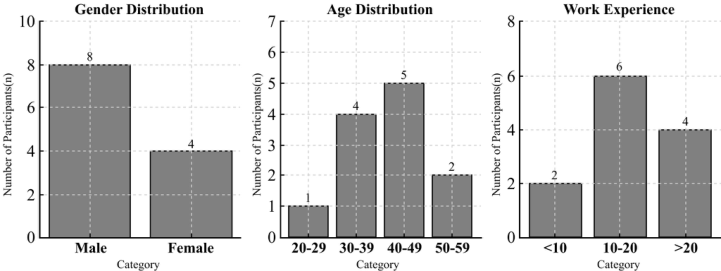
From May to July 2024, field studies were carried out in two coastal fishing villages in Jiangsu Province, China. A total of 12 fishermen (8 males and 4 females, M = 41.2 years, SD = 7.9; range = 28–55 years) participated in semi-structured interviews addressing workload perception, tool interaction, and ergonomic constraints. Participants averaged 18 years of fishing experience, representing typical mid-career intertidal practitioners (Figure 1).
Figure 1: Demographic characteristics of participants.
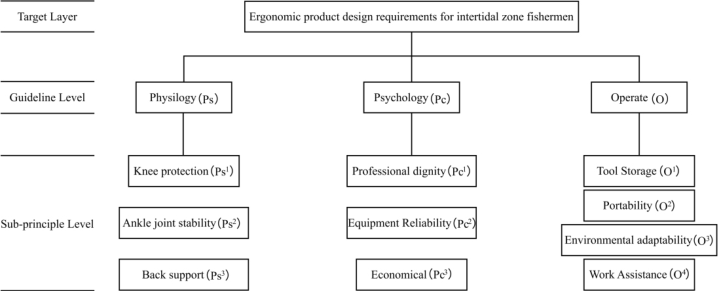
From the integrated data analysis, fishermen’s ergonomic needs were categorized into three domains: physiological (knee protection, ankle stability, lumbar support), psychological (occupational dignity, equipment reliability, affordability), and operational (tool storage, portability, environmental adaptability, task assistance). These needs were refined through multiple rounds of expert and industrial designer discussions (Figure 2).
Figure 2: Ergonomic product design requirements for intertidal zone fishermen.
To determine the relative importance of each requirement, AHP was employed. Ten fishermen, two industrial designers, and two fisheries experts participated in constructing pairwise comparison matrices using a 1–9 scale. Consistency ratio (CR < 0.1) was used to validate logical coherence. The final AHP weights provided a structured framework for prototype development, ensuring the prioritization of critical ergonomic requirements.
Table 1: Primary indicator judgment matrix and weight.
Table available in the original PDF paper.
Physilogy Psychology Operate Weight Ps 1 4 2 0.5571 Pc 1/4 1 1/3 0.1226 O 1/2 3 1 0.3202
Table 2: Secondary indicator Ps judgment matrix and weight.
PROTOTYPE DEVELOPMENT Based on AHP findings, the prototype emphasized high-priority needs such as lumbar support and task assistance. The system incorporated:
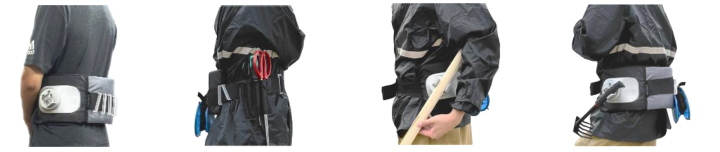
Adjustable lumbar support with flexible steel plates for effective spinal protection.
Human Systems Integration (HSI) is becoming a critical piece of complex Modular storage system with buckle-fastened compartments for tool accessibility.
Lateral support points compatible with both long- and short-handled tools to reduce operational strain.
Waterproof lightweight composite materials ensuring durability in wet, saline, and muddy environments.
Figure 3: Physical prototype demonstration.
Prototyping was completed using Rhino software and manufactured via 3D printing and sewing techniques. The prototyping process involved multiple iterative refinements based on feedback from ergonomics experts and target users. printing and sewing techniques.
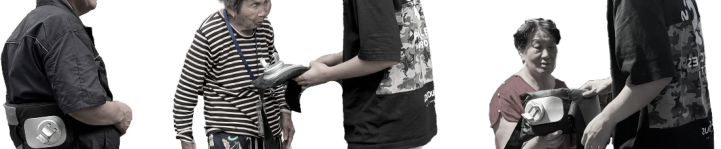
Figure 4: User experience record (part).
TEST&RESULTS Prior to field testing, eight intertidal fishermen were recruited from two coastal villages in Jiangsu Province, China. Participants were divided equally into an experimental group (n = 4) and a control group (n = 4). The average age of participants was 42.6 years (range: 31–54), with a mean work experience of 16.8 years. All participants were experienced in clam harvesting and had no reported musculoskeletal disorders at the time of the study. Each participant received RMB 200 (≈USD 28) as compensation.
The experiment was designed to compare ergonomic performance between the developed wearable lumbar support system and conventional fishing equipment. Both groups performed clam collection tasks in similar tidal and environmental conditions. The testing lasted for two consecutive days. On the first day, the control group used conventional tools, while the experimental group used the prototype device. On the second day, the groups switched equipment to minimize individual performance bias. Each task session lasted approximately three hours, during which four categories of data were collected: task efficiency, subjective exertion, safety performance, and user feedback.
Immediately following the field trials, semi-structured interviews were conducted with all participants to gather qualitative feedback regarding comfort, functionality, and perceived fatigue. Interviews lasted 20—30 minutes each and were audio-recorded with participants’ consent.
Task efficiency: The prototype improved work efficiency by 16%, reflected in an 8.2% increase in clam yield and a 12% reduction in task completion time. Yield differences were statistically significant (p < 0.05).
Subjective exertion: Average Borg RPE scores were 11.8 (light to moderate load) with the prototype versus 14.1 (moderate to high load) with baseline equipment, a statistically significant difference of 2.3 points (p < 0.01) (Borg, 1998).
Safety: Slip and fall incidents decreased by 27% with the prototype, equating to 0.5 fewer incidents per trial. Although the difference did not reach statistical significance (p = 0.07), the trend suggests enhanced safety. Task errors were reduced by 21%, particularly during long- handled tool operations.
User feedback: 83% of participants reported improved comfort and praised the lumbar support and tool storage features. However, three participants highlighted cleaning difficulties due to mud adhesion and recommended more washable materials or detachable components.
Out of the Mud: A User-Centered AHP-Based Approach 2229
Additionally, two participants (P3, P6) noted insufficient lightweight design. P3 remarked, “The device still feels heavy during prolonged bending tasks,” while P6 commented, “The uneven weight distribution increases fatigue during load-bearing walking.”
Table 6: Summary of field test results.
Table available in the original PDF paper.
Improvement(%)
Evaluation Metric Baseline Equipment
Prototype System 25.0 22.0 −12.0% Clam Yield (kg/h) 5.60 6.06 +8.2% Task Completion Time (min/task)
Field test results largely confirmed the AHP-derived ergonomic priorities. Among the three AHP dimensions—physiological, psychological, and operational—the physiological domain received the highest weighting, particularly the need for lumbar support and postural assistance. This alignment was reflected in the significant reductions in subjective exertion and improved task efficiency observed in the field. The adjustable lumbar module, developed as a direct response to the AHP-derived priorities, effectively minimized spinal strain and fatigue during prolonged bending tasks, validating the design framework.
The operational dimension, which ranked second in the AHP hierarchy, emphasized accessibility and tool management. Positive user feedback on the modular storage system and lateral support points confirmed its practical contribution to workflow continuity and task fluency. Similarly, the psychological dimension—focused on comfort, trust, and occupational dignity—was reflected in participants’ high satisfaction rate (83%), suggesting that ergonomic enhancement can positively affect workers’ sense of professionalism and confidence in challenging environments.
However, post-testing feedback also revealed user concerns that were not fully captured during the AHP evaluation phase. Specifically, participants highlighted difficulties in cleaning mud residues from the surface and perceived the device as insufficiently lightweight for long-duration use. These issues suggest that cleanability, material texture, and weight distribution were underestimated in the original AHP structure, likely because they were not prioritized in the expert-based weighting process. Future AHP iterations could therefore incorporate these usability and maintenance attributes as distinct evaluation criteria to achieve a more holistic ergonomic assessment.
Based on these findings, several directions for prototype refinement are proposed. First, material substitution with hydrophobic or detachable textile
components could enhance cleanability in muddy, saline environments. Second, further weight optimization through lightweight composites or modular balancing could reduce cumulative fatigue during load-bearing movement. Finally, integrating feedback from extended user trials and motion-capture analysis may allow quantitative validation of long-term biomechanical benefits.
Overall, this study demonstrates that combining AHP-driven ergonomic prioritization with iterative prototype testing provides an effective pathway for developing user-centered assistive systems. While the prototype achieved measurable improvements in efficiency and fatigue reduction, iterative refinement informed by field experience remains essential to fully address the dynamic and demanding conditions of intertidal labor.
CONCLUSION
This study shows that the lumbar support system improves work efficiency and reduces subjective fatigue among intertidal fishermen. The prototype received positive evaluations in both comfort and functionality, and user feedback revealed further potential for optimization. These findings underscore the importance of ergonomic design in promoting labor sustainability and worker well-being, with potential for broader application in other high-intensity labor sectors.
Nevertheless, limitations include the small sample size (8 participants) and short testing duration, which restrict generalizability. Future research should involve larger samples and incorporate biomechanical measurements (e.g., electromyography, motion capture) to comprehensively validate and optimize design performance.
ACKNOWLEDGMENT
We extend our sincere gratitude to the fishermen who participated in interviews and user observations. Their contributions were essential to advancing our design, allowing us to experience the beauty inherent in creating solutions that address real-world challenges.
REFERENCES
Borg, G. (1998). Borg’s Perceived Exertion and Pain Scales. Human Kinetics. https:// doi.org/10.5040/9781718224120. Chen, Y., Liu, X., & Zhao, H. (2018). Postural load and musculoskeletal risk among
intertidal fishermen: An ergonomic assessment. Applied Ergonomics, 70, 1–9. https://doi.org/10.1016/j.apergo.2018.02.007. Food and Agriculture Organization of the United Nations. (2020). The State of World Fisheries and Aquaculture 2020: Sustainability in action. https://doi.org/ 10.4060/ca9229en. Jones, T., Liew, M., & Lee, D. (2019). Evaluation of back-support exoskeletons for
manual material handling. Journal of Occupational and Environmental Hygiene, 16(5), 327–337. https://doi.org/10.1080/15459624.2019.1589595.
Out of the Mud: A User-Centered AHP-Based Approach 2231
Kazerooni, H. (2010). Exoskeletons for human performance augmentation. In Springer Handbook of Robotics (pp. 773–793). Springer. https://doi.org/10.1007/ 978–3-540–30301-5_34. Kim, J., Park, H., & Lee, J. (2022). Soft wearable exosuits for reducing
lower back fatigue in industrial work. IEEE Transactions on Neural Systems and Rehabilitation Engineering, 30, 101–112. https://doi.org/10.1109/ TNSRE.2022.3144915. Lee, S., Kim, D., & Park, Y. (2020). Design optimization of ergonomic wearable systems for humid outdoor environments. International Journal of Industrial Ergonomics, 77, 102956. https://doi.org/10.1016/j.ergon.2020.102956. Li, S., & Zhang, Q. (2021). Sustainable ergonomics for high-risk occupations: A
review of interventions and implications. Human Factors and Ergonomics in Manufacturing & Service Industries, 31(2), 142–159. https://doi.org/10.1002/ hfm.20869. Liu, J., Chen, Z., & Zhao, L. (2019). Application of the analytic hierarchy process in ergonomic product design evaluation. Design Studies, 63, 23–35. https://doi.org/ 10.1016/j.destud.2019.02.003. Saaty, T. L. (1980). The Analytic Hierarchy Process: Planning, Priority Setting,
Resource Allocation. McGraw-Hill. https://doi.org/10.21236/ADA214804. Smith, R., Brown, T., & Li, W. (2020). Ergonomic risk factors in manual occupations: A systematic review. Safety Science, 127, 104–113. https://doi.org/10.1016/ j.ssci.2020.104713. Toxiri, S., Ortiz, J., & Caldwell, D. (2017). A wearable exoskeleton for reducing
lower back fatigue: Evaluation in industrial tasks. Applied Ergonomics, 65, 556–566. https://doi.org/10.1016/j.apergo.2017.02.005. Vaidya, O. S., & Kumar, S. (2006). Analytic hierarchy process: An overview of applications. European Journal of Operational Research, 169(1), 1–29. https:// doi.org/10.1016/j.ejor.2004.04.028. Wang, X., Zhang, H., & Luo, J. (2021). Ergonomic design challenges in coastal and
marine labor environments. Ocean Engineering, 237, 109–126. https://doi.org/ 10.1016/j.oceaneng.2021.109126. Wu, K., Jiang, Y., & Sun, L. (2022). Integration of AHP and ergonomic simulation for wearable device evaluation. Human Factors and Ergonomics in Manufacturing & Service Industries, 32(4), 221–232. https://doi.org/10.1002/hfm.20945. Zhang, Y., Li, Z., & Gao, P. (2021). AHP-based evaluation of ergonomic priorities in
wearable support system design. International Journal of Industrial Ergonomics, 84, 103–118. https://doi.org/10.1016/j.ergon.2021.103118.
LISTED IN THE AHFE DIGITAL BOOKSTORE CATALOGUE
Explore the complete digital volume
Human Factors in Design, Engineering, and Computing
Read this individual research paper free through the original publisher, or explore the full digital proceedings book.
ISBN 978-1-964867-75-5
Explore this ISBN in the AHFE Bookstore ↗Listed in the July 2026 bookstore catalogue; search by ISBN to confirm current availability · Digital book purchase optional