Adel Alhejaili, James Blustein (2025). Bridging the Gap of Communicating Health Information to Users: Ethically-Informed Design of App Store Description of Health Apps. In: Human Factors in Design, Engineering, and Computing. AHFE Open Access, vol. 199, pp. 1596–1606. https://doi.org/10.54941/ahfe1006970
Mental health has become a daunting global health challenge in both everyday situations and times of crisis. The Covid-19 pandemic has contributed to an increase in downloads and the use of these apps. Many health apps are available free of charge. As apps are used by people seeking ways to manage or augment the management of their own health conditions, app descriptions should provide clear and thorough information, ensuring that users are not compelled to seek additional sources or infer missing content. Prior research has addressed the lack of necessary information provided to users when choosing health apps in app stores, including evidence-based content on efficacy or feasibility studies, claims, target audience, privacy concerns, and hidden costs.Based on a comprehensive literature review of prior work on health apps and treatment delivery models, in the first phase of our research objectives, we introduced an app store description design to effectively bridge the communication gap in conveying health information to users. This design maximizes the impact and benefits of specific information cues (e.g., evidence-based content) to educate and support people’s decisions when selecting health apps, which can be utilized across various health app genres. Improvements in app description design could have a large impact on its use and benefits. In the second phase, we plan to conduct a usability study using a mixed-method design to evaluate the design in terms of its effectiveness, user satisfaction, clarity of information, learnability, feedback, and perceived usefulness.Our proposed design has both simple and detailed versions when needed to mitigate users’ burden, hesitancy, skepticism, and to manage their expectations when assessing what the app has to offer upfront in terms of the following aspects: free versus paid features, evidence of benefits and effectiveness, detailed cost of the in-app purchase list, subscriptions and plans, privacy information, clinical and user reviews, and pros and cons of the app. This information structure provides potential users with important details and could reduce the time and effort needed to evaluate the information provided by the app.The knowledge gained from this research could lay the foundation, contribute and shape app store description design moving forward and will help policymakers, health organizations, researchers, healthcare providers, and app developers find suitable solutions to assist users in choosing health apps.
Bridging the Gap of Communicating Health Information to Users 1597
INTRODUCTION
Mental health issues have emerged as a major global public health concern, with approximately one in six individuals experiencing common mental health issues every week (Mental Health Foundation, 2016; Darko et al., 2024). The World Health Organization (WHO) predicts that by 2030, mental illness will become the leading global disease burden (Garcia et al., no date). The number of health-related apps currently available for consumers has surpassed 350,000 (IQVIA, 2021) and of these apps, more than 10,000 apps are related to mental health (Torous et al., 2018). Globally, health apps are among the top ten categories in terms of consumer spending on apps (Marshall, Dunstan and Bartik, 2020). The COVID-19 pandemic has greatly accelerated the adoption of health apps, resulting in a significant increase in both downloads and usage (Hudson et al., 2022; George, George and Jenkins, 2024; Kang and Reynolds, 2024). Mental health apps offer a cost-effective way for individuals to manage their mental well-being and enhance access to care (Neary and Schueller, 2018; Lagan et al., 2021; Fan, Jain and Kankanhalli, 2024; George, George and Jenkins, 2024). It could help alleviate some of the barriers associated with traditional services, such as “financial barriers, scheduling and transportation challenges, and stigmas” (Wasil, Patel, et al., 2021, p. 691). Previous research has identified oversaturation in app stores, which complicates navigation and poses challenges to users in finding helpful apps (Song et al., 2014; Peng et al., 2016; Schueller et al., 2018; Lipschitz et al., 2019; Porras-Segovia et al., 2020; Szinay et al., 2021; Kabaci´nska et al., 2022; Reger et al., 2022). The app stores provide limited information in their app descriptions, often leaving crucial information that users need before downloading, either buried within the text, not immediately visible, or entirely absent or insufficient (Larsen, Nicholas and Christensen, 2016; Kanthawala et al., 2019; Marshall, Dunstan and Bartik, 2020; Jilka et al., 2021; Stafford et al., 2021; Su et al., 2021; Alhejaili and Blustein, 2023a). Although efforts have been made to address this gap, there is still an urgent need to redesign app store descriptions to effectively convey health information to users (Larsen et al., 2019; Szinay et al., 2021; Alhejaili and Blustein, 2023a).
This research aims to address some challenges found in the description of health apps in app stores. Then, it discusses and introduces a new ethically informed design of app store description that would effectively bridge the gap of conveying health information to users.
Background and Related Work The information presented in this section provides an overview of the issues found in the app stores regarding inadequate or missing information on the app description of health apps. It also describes the design of the app store and the importance of the description of apps. Lastly, it shed some light on design considerations and some theoretical aspects through multiple domains.
Overview of the App Store Design App stores are the primary site for “accessing, downloading and distributing apps. “They are considered to be the gatekeepers that set up the rules of “app
1598 Alhejaili and Blustein
creation, sorting, and distribution” (Dieter et al., 2019, p. 2). App providers have a considerable influence on users with respect to the way their apps are presented (Helf and Hlavacs, 2016). In terms of delivery models, previous research has shown that some users found the information in app stores to be disorganized and confusing, creating a barrier to using health applications (Fairburn and Patel, 2017; Szinay et al., 2020, 2021; Alhejaili and Blustein, 2023a). These stores are fundamentally poorly designed, hindering users from effectively identifying and utilizing these apps without using external resources (Aungst et al., 2022). Consequently, there is a need to enhance the app store environment. Helf and Hlavacs emphasized the need to explore and evaluate a new format in the app store (Helf and Hlavacs, 2016).
The Importance of App Descriptions App descriptions serve as essential channels for developers to convey app information to users (Feng et al., 2019; Larsen et al., 2019; Alhejaili and Blustein, 2022). The description of the functionalities of apps is crucial as users rely on that to understand what the app has to offer, and based on that they make their install decision (Lin and Chen, 2019). Kowalczyk et al. report that “developers are inconsistent in where and how they provide descriptions” (Kowalczyk, Memon and Cohen, 2015, p. 438). The lack of information on the description page of apps could potentially affect the expectations of users (Kowalczyk, Memon and Cohen, 2015). When reliable information on health apps is lacking, people often turn to app stores to find them. However, even experienced professionals are more likely to encounter misinformation, which can lead to decisions based on misleading indicators (de Chantal et al., 2022). Wang et al. state that app developers are considered “the cornerstone of the mobile app ecosystem” (Wang and Li, 2017, p. 163). More importantly, previous work reported several transparency issues found in the app description, such as evidence- based content on efficacy or feasibility studies, benefits and effectiveness claims, hidden costs, privacy concerns, and clinical and user reviews (Wykes, Schueller and others, 2019; Kanthawala et al., 2019; Gordon et al., 2020; Porras-Segovia et al., 2020; Marshall, Dunstan and Bartik, 2020; Nurgalieva, O’Callaghan and Doherty, 2020; Szinay et al., 2021; Wasil, Palermo, et al., 2021; Jiang, 2021; Hendriks et al., 2022; Hudson et al., 2022; New Zealand Ministry of Health, 2022; One Mind PsyberGuide, 2022; Alhejaili and Blustein, 2023a; Power, Boivin and Perreault, 2024).
Design Considerations and Theoretical Aspects The information of most products on the on-line platforms is displayed through a combination of visual and textual content (Kim et al., 2021). Previous research showed that visual representation improves the decision- making process by providing “contextual and/or detailed information (i.e., the depth of field and the context of information)” (Lurie and Mason, 2007, p. 161). Earlier studies showed that the depth of available information influences the time and cognitive effort spent searching for information (Lurie and Mason, 2007; Alhejaili and Blustein, 2023b). The “amount
Bridging the Gap of Communicating Health Information to Users 1599
of information”, “time pressure”, “information attributes”, “completeness of information” and “information format” may affect consumer decision- making (Haugtvedt, Herr and Kardes, 2007, pp. 595–597). “Decisions become more difficult as the amount of information increases, time pressure increases, conflict among attributes increases, missing information increases, and the information display format becomes less organized or more complex” (Haugtvedt, Herr and Kardes, 2007, p. 595). In terms of the amount of information, the number of attributes added is important. Regarding the format of information, several researchers debated that the displayed information can influence consumers’ choices if it is easy to process. With respect to the completeness of the information, in the case of missing information, the consumer’s responses vary in many ways, including inferring what is missing based on other attributes available in the set of options (Haugtvedt, Herr and Kardes, 2007). On the other hand, information overload occurs when the information received becomes a hindrance rather than a help, even though the information is potentially useful (Bawden and Robinson, 2009, p. 4). We can reduce information overload and improve the quality of decision making by balancing how information is presented (Varshney, 2014).
The Current Design of App Description Under the heading “About this App” in the Google Play Store, the app description is lengthy, and users have to scroll down, four full pages, in order to see what the app has to offer. More importantly, it is difficult to find information about evidence-based content, and whether the app does what it claims to do is difficult, and a direct mention of that information is absent. Furthermore, finding the hidden costs in advance does not exist. In terms of privacy concerns, Cory et al. analyzed 152 leading Android mHealth apps and found significant disparities between declared and actual data practices, with many apps failing to accurately declare their collection and sharing of personal and health information (Cory, Rieder and Huynh, 2024). According to a recent new study, researchers found that data brokers resell mental health data collected through health apps. They found that 11 companies were willing to sell a huge amount of data that included critical information about the type of medication users take and the kind of struggle they are dealing with, such as insomnia and attention issues. Surprisingly, the offered data may show a rough estimate of how many people struggle with depression in a particular area (e.g., zip code). Also, some data brokers even offered personally identifiable information such as names, addresses, and income. Even worse, one data broker labelled the collected data as “anxiety sufferers” (Drew Harwell, 2023).
Research Gap and Objectives Consumers must be able to easily access and view complete information about an app (Chakraborty et al., 2022; Power, Boivin and Perreault, 2024). We briefly addressed some design considerations and theoretical aspects in multiple domains to create our proposed design to bridge the
1600 Alhejaili and Blustein
gap in the communication of health information of apps to users at the point of download. In addition, we considered the transparency aspect found in the transparency framework of app description and adopted the design guidelines created by Alhejaili and Blustein (Alhejaili and Blustein, 2023a) in terms of the following aspects: being upfront with important information, providing clear content, layout, and presentation, balancing between the length and details of information, salient information attributes, completeness of information, simplified and detailed versions when needed.
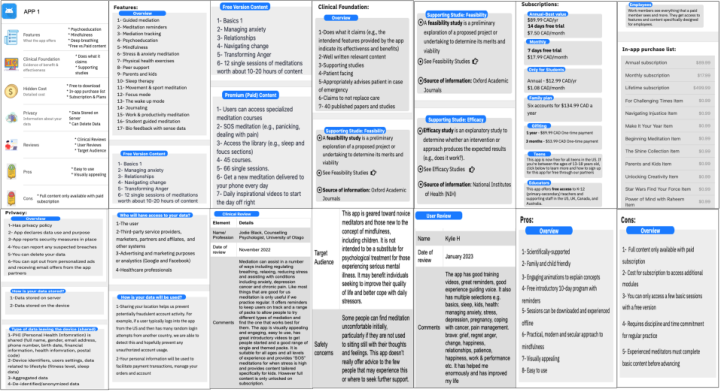
Figure 1: A detailed description of the proposed design.
The Proposed Design Clearly describing an app is crucial, especially in rapidly evolving fields where even minor changes or improvements can significantly impact its usage and benefits (Ribaut et al., 2024).
Our design aims to maximize the impact and benefits of specific information cues found in previous studies and curated health tools to support people’s decisions when searching for health apps (Haugtvedt, Herr and Kardes, 2007; Schueller et al., 2018; Lagan et al., 2020; Alhejaili and Blustein, 2022, 2023a, 2023b; New Zealand Ministry of Health, 2022; One Mind PsyberGuide, 2022).
As seen in Figure 1, the proposed design is illustrated in a block of information that displays a combination of visual and textual information. The first part is a simplified version that lists information on the following elements: app features, clinical foundation, hidden costs, privacy, reviews, pros, and cons. Users can view more content using the detailed version. The feature element shows an overview of the available features and lists the content available in the free and paid versions. Under the clinical foundation element, users can see an overview of the app in terms of evidence of benefits and effectiveness (e.g., does what it claims, well-written relevant content). More importantly, it shows that the app supports studies in terms
Bridging the Gap of Communicating Health Information to Users 1601
of feasibility and efficacy. In addition, it shows the source of information and links to the designated study itself. The hidden cost element shows the detailed plan, subscription, and associated fees. Moreover, it shows a list of in-app purchase items, such as unlocking creativity items. The privacy element provides an overview of some privacy aspects, such as privacy policy, and whether the app declares its data use and purpose. In addition, it shows the location of data storage, the type of data that leaves the device, who will access the data, and how the data will be used. The review element shows a detailed clinical review written by a Counselling Psychologist with comments regarding the benefit of using such an app, as well as the target audience of the app, and if the app has some safety concerns. Furthermore, it shows a user review of their experiences using the app. Finally, under the pros and cons element, it provides an overview of the advantages and disadvantages of using such an app. Overall, our proposed design provides a new means to display an app’s information on app stores where we ethically, accurately, and explicitly explain every aspect of the app in advance, which will assist many users who look for appropriate apps to cope with their health condition.
DISCUSSION
It is imperative for app stores to provide users with an effective informational environment that encompasses what the app has to offer (Lin, 2021). As a result, users will not only have accurate information on hand but can also find accurate information regardless of what app store they use (Aungst et al., 2022, p. 4). Regrading our proposed design, we did not consider user ratings because they were found to be a poor indication by clinical reviewers(Singh et al., 2016). Many apps are removed from the app store due to ranking fraud, fake descriptions, and in-app purchase fraud (Lin, 2021). In addition, some of the ways in which app developers use leave ratings on their apps or pay others to do so make it harder for users to distinguish real ratings from fraudulent ones (Neary et al., 2021). Previous work shows that online user app ratings and the number of app downloads are inadequate predictors of the quality of health apps in terms of user experience, professional/clinical assurance, and data privacy (Hyzy et al., 2024). More importantly, we did not include app images because we wanted users to be able to judge app content itself and since “some developers opt to use alternative assets such as images, videos, or What’s New field to reveal additional behaviour, which was not presented in the app description (Kowalczyk, Memon and Cohen, 2015, p. 443). In terms of hidden costs, the Google Play Store does not provide a list of in-app purchase items. They only show a range of expected costs (e.g. $8.49-$159.99 per item). However, Apple has a slight advantage in that it lists the type of subscription, such as yearly or monthly plans. However, it is only a few clicks away and is buried in the app description. Another important aspect is that, for example, the Headspace website (Headspace, 2025) stated that their app is the “most science-backed meditation app” and that, over 70 published papers and studies on product-specific outcomes. However, the current app description does not mention that information.
1602 Alhejaili and Blustein
Power et al. found that information on the evidence base for most highly visible applications is not available (Power, Boivin and Perreault, 2024). Lastly, in addition to our proposed design, the app stores should provide a mechanism to the app developers in which they would be able to add all of the previous details in the app description or make a newly designated section, which will eventually help users deal upfront with the uncertainties of the app contents. App stores should facilitate a standardized reporting format for app information that developers can use (Bowie-DaBreo et al., 2020).
CONCLUSION AND FUTURE WORK Although some would say that we are to some extent addressing many aspects, our work is needed, and starting somewhere is very important. The health app stores have a duty, and health app developers must adopt these changes to help users (Wykes, Schueller and others, 2019). In terms of the proposed design, we believe that it would fill this gap and act as a gateway to effectively communicate the information of health apps, which could help educate consumers (Hwang, Ha and Kim, 2021). In the second phase, we will conduct a usability study using a mixed-method approach to assess the effectiveness, user satisfaction, clarity of information, ease of learning, feedback, and perceived usefulness of the proposed design. In conclusion, the insights derived from this study could establish a basis, contribute to, and influence the design of app store descriptions, helping policymakers, health organizations, researchers, healthcare providers, and app developers identify effective solutions to help users select health apps, which can be generalized and expanded to other domains.
REFERENCES
Alhejaili, A. and Blustein, J. (2022) ‘A Study on How Users Choose Apps’, in Human- Computer Interaction: User Experience and Behavior. In Proceedings. Alhejaili, A. and Blustein, J. (2023a) ‘A Transparency Framework for App Store
Descriptions’, in HCI International 2023 Posters. Cham: Springer Nature Switzerland, pp. 439–446. Alhejaili, A. and Blustein, J. (2023b) ‘Users’ Sophisticated Information Search Behaviour’, in Salvendy, G. and Wei, J. (eds) Design, Operation and Evaluation of Mobile Communications. Cham: Springer Nature Switzerland, pp. 3–17. Aungst, T. et al. (2022) ‘The good, the bad, and the poorly designed: The
mobile app stores are not a user-friendly experience for health and medical purposes’, DIGITAL HEALTH, 8, p. 20552076221090040. doi: 10.1177/ 20552076221090038. Bawden, D. and Robinson, L. (2009) ‘The dark side of information: overload, anxiety and other paradoxes and pathologies’, Journal of information science. Sage Publications Sage UK: London, England, 35(2), pp. 180–191. Bowie-DaBreo, D. et al. (2020) ‘Evaluation of treatment descriptions and alignment
with clinical guidance of apps for depression on app stores: systematic search and content analysis’, JMIR formative research. JMIR Publications Inc., Toronto, Canada, 4(11), p. e14988.
Bridging the Gap of Communicating Health Information to Users 1603
Chakraborty, D. et al. (2022) ‘Consumers’ usage of food delivery app: a theory of consumption values’, Journal of Hospitality Marketing & Management. Routledge, 31(5), pp. 601–619. doi: 10.1080/19368623.2022.2024476. Cory, T., Rieder, W. and Huynh, T.-M. (2024) ‘ A Qualitative Analysis Framework
for mHealth Privacy Practices ‘, in 2024 IEEE European Symposium on Security and Privacy Workshops (EuroS&PW). Los Alamitos, CA, USA: IEEE Computer Society, pp. 24–31. Darko, A. P. et al. (2024) ‘Predicting determinants influencing user satisfaction with mental health app: An explainable machine learning approach based on unstructured data’, Expert Systems with Applications, 249, p. 123647. de Chantal, P.-L. et al. (2022) ‘Evidence of User-Expert Gaps in Health App Ratings
and Implications for Practice’, Frontiers in Digital Health, Volume 4. Dieter, M. et al. (2019) ‘Multi-Situated App Studies: Methods and Propositions’, Social Media + Society, 5(2), p. 2056305119846486. doi: 10.1177/ 2056305119846486. Drew Harwell (2023) Now for sale: Data on your mental health, The Washington
Post. Fairburn, C. G. and Patel, V. (2017) ‘The impact of digital technology on psychological treatments and their dissemination’, Behaviour Research and Therapy, 88, pp. 19–25. doi: https://doi.org/10.1016/j.brat.2016.08.012. Fan, S., Jain, R. C. and Kankanhalli, M. S. (2024) ‘A Comprehensive Picture of
Factors Affecting User Willingness to Use Mobile Health Applications’, ACM Trans. Comput. Healthcare, 5(1). Feng, Y. et al. (2019) ‘AC-Net: Assessing the Consistency of Description and Permission in Android Apps’, IEEE Access. Garcia, A. R. et al. (no date) Comprehensive Mental Health Action Plan 2013–2030.
World Health Organization. Available at: https://www.who.int/publications/i/ item/9789240031029. George, A. S., George, J. and Jenkins, J. (2024) ‘A Literature Review: Potential Effects That Health Apps on Mobile Devices May Have on Patient Privacy and Confidentiality’, E-Health Telecommunication Systems and Networks. Available at: https://api.semanticscholar.org/CorpusID:271838115. Gordon, W. J. et al. (2020) ‘Beyond validation: getting health apps into clinical
practice’, NPJ Digital Medicine, 3(1), p. 14. doi: 10.1038/s41746–019-0212-z. Haugtvedt, C. P., Herr, P. M. and Kardes, F. R. (2007) Handbook of Consumer Psychology. Psychology Press, New York. Headspace (2025) Science at Headspace. Available at: https://www.headspace.com/
science (Accessed: 20 September 2025). Helf, C. and Hlavacs, H. (2016) ‘Apps for life change: Critical review and solution directions’, Entertainment Computing, 14, pp. 17–22. doi: https:// doi.org/10.1016/j.entcom.2015.07.001. Hendriks, Y. et al. (2022) ‘Process and Information Needs When Searching for
and Selecting Apps for Smoking Cessation: Qualitative Study Using Contextual Inquiry’, JMIR human factors. JMIR Publications Inc., Toronto, Canada, 9(2), p. e32628. Hudson, G. et al. (2022) ‘Comparing Professional and Consumer Ratings of Mental Health Apps: Mixed Methods Study’, JMIR Formative Research. JMIR Publications Inc., Toronto, Canada, 6(9), p. e39813. Hwang, W. J., Ha, J. S. and Kim, M. J. (2021) ‘Research trends on mobile
mental health application for general population: A scoping review’, International Journal of Environmental Research and Public Health. MDPI, 18(5), p. 2459.
1604 Alhejaili and Blustein
Hyzy, M. et al. (2024) ‘Don’t judge a book or health app by its cover: User ratings and downloads are not linked to quality’, PLOS ONE, 19(3), pp. 1–11. IQVIA (2021) Consumer Health Apps and Digital Health Tools Proliferate,
Improving Quality and Health Outcomes for Patients, Says New Report from IQVIA Institute. Available at: https://www.iqvia.com/ newsroom/2021/07/consumer-health-apps-and-digital-health-tools-proliferate- improving-quality-and-health-outcomes-for (Accessed: 1 September 2022). Jiang, K. (2021) ‘Mental Health Mobile Apps and the Need to Update Federal Regulations to Protect Users’, Mich. Tech. L. Rev. HeinOnline, 28, p. 421. Jilka, S. et al. (2021) ‘Terms and conditions apply: Critical issues for readability and
jargon in mental health depression apps’, Internet Interventions, 25, p. 100433. Kabaci´nska, K. et al. (2022) ‘What criteria are young people using to select mobile mental health applications? A nominal group study’, Digital health. SAGE Publications Sage UK: London, England, 8, p. 20552076221102776. Kang, R. M. and Reynolds, T. L. (2024) “‘This app said I had severe depression,
and now I don’t know what to do”: the unintentional harms of mental health applications’, in Proceedings of the 2024 CHI Conference on Human Factors in Computing Systems. New York, NY, USA: Association for Computing Machinery (CHI ‘24). Kanthawala, S. et al. (2019) ‘Folk theorizing the quality and credibility of health apps’, Mobile Media & Communication. SAGE Publications Sage UK: London, England, 7(2), pp. 175–194. Kim, M. et al. (2021) ‘Impact of visual information on online consumer review
behavior: Evidence from a hotel booking website’, Journal of Retailing and Consumer Services, 60, p. 102494. Kowalczyk, E., Memon, A. M. and Cohen, M. B. (2015) ‘Piecing together app behavior from multiple artifacts: A case study’, in. Lagan, S. et al. (2020) ‘Actionable health app evaluation: translating expert
frameworks into objective metrics’, NPJ Digital Medicine, 3(1), p. 100. Lagan, S. et al. (2021) ‘Assessing mental health apps marketplaces with objective metrics from 29, 190 data points from 278 apps’, Acta Psychiatrica Scandinavica, 144(2), pp. 201–210. doi: https://doi.org/10.1111/acps.13306. Larsen, M. E. et al. (2019) ‘Using science to sell apps: Evaluation of mental health app
store quality claims’, npj Digital Medicine, 2(1), p. 18. doi: 10.1038/s41746–019- 0093–1. Larsen, M. E., Nicholas, J. and Christensen, H. (2016) ‘Quantifying app store dynamics: longitudinal tracking of mental health apps’, JMIR mHealth and uHealth. JMIR Publications Inc., Toronto, Canada, 4(3), p. e6020. Lin, C. H. and Chen, M. (2019) ‘The icon matters: how design instability affects
download intention of mobile apps under prevention and promotion motivations’, Electronic Commerce Research. doi: 10.1007/s10660–018-9297–8. Lin, F. (2021) ‘Demystifying Removed Apps in iOS App Store’, arXiv preprint arXiv:2101.05100. Lipschitz, J. et al. (2019) ‘Adoption of mobile apps for depression and anxiety:
cross-sectional survey study on patient interest and barriers to engagement’, JMIR mental health. JMIR Publications Inc., Toronto, Canada, 6(1), p. e11334. Lurie, N. H. and Mason, C. H. (2007) ‘Visual Representation: Implications for Decision Making’, Journal of Marketing, 71(1), pp. 160–177. doi: 10.1509/ jmkg.71.1.160.
Bridging the Gap of Communicating Health Information to Users 1605
Marshall, J. M., Dunstan, D. A. and Bartik, W. (2020) ‘Apps with maps—anxiety and depression Mobile apps with evidence-based frameworks: systematic search of major app stores’, JMIR mental health. JMIR Publications Inc., Toronto, Canada, 7(6), p. e16525. Mental Health Foundation (2016) ‘Fundamental Facts About Mental Health’. Neary, M. and Schueller, S. M. (2018) ‘State of the Field of Mental Health Apps’,
Cognitive and Behavioral Practice. Neary, M. et al. (2021) ‘A process for reviewing mental health apps: Using the One Mind PsyberGuide Credibility Rating System’, DIGITAL HEALTH, 7, p. 20552076211053690. doi: 10.1177/20552076211053690. New Zealand Ministry of Health (2022) Health Navigator app library. Available at:
www.healthnavigator.org.nz/app-library/ (Accessed: 22 September 2025). Nurgalieva, L., O’Callaghan, D. and Doherty, G. (2020) ‘Security and Privacy of mHealth Applications: A Scoping Review’, IEEE Access, 8, pp. 104247–104268. One Mind PsyberGuide (2022) About One Mind PsyberGuide. Available at: https://
onemindpsyberguide.org/about-psyberguide/ (Accessed: 26 September 2025). Peng, W. et al. (2016) ‘A qualitative study of user perceptions of mobile health apps’, BMC public health. BioMed Central, 16(1), pp. 1–11. Porras-Segovia, A. et al. (2020) ‘Apps for depression: are they ready to work?’,
Current psychiatry reports. Springer, 22(3), pp. 1–9. Power, N., Boivin, D. B. and Perreault, M. (2024) ‘A shot in the dark: the impact of online visibility on the search for an effective sleep app’, Journal of Clinical Sleep Medicine, 20(8), pp. 1379–1386. Reger, G. M. et al. (2022) ‘Mobile applications may be the future of veteran mental
health support but do veterans know yet? A survey of app knowledge and use’, Psychological Services. Educational Publishing Foundation, 19(3), p. 480. Ribaut, J. et al. (2024) ‘Developing a Comprehensive List of Criteria to Evaluate the Characteristics and Quality of eHealth Smartphone Apps: Systematic Review’, JMIR Mhealth Uhealth, 12, p. e48625. Schueller, S. M. et al. (2018) ‘Discovery of and Interest in Health Apps Among Those
With Mental Health Needs: Survey and Focus Group Study’, J Med Internet Res, 20(6), p. e10141. doi: 10.2196/10141. Singh, K. et al. (2016) ‘Many Mobile Health Apps Target High-Need, High-Cost Populations, But Gaps Remain’, Health Affairs, 35(12), pp. 2310–2318. doi: 10.1377/hlthaff.2016.0578. Song, J. et al. (2014) ‘Application discoverability and user satisfaction in mobile
application stores: An environmental psychology perspective’, Decision Support Systems, 59, pp. 37–51. doi: https://doi.org/10.1016/j.dss.2013.10.004. Stafford, E. et al. (2021) ‘Needs and experiences of users of digital navigation tools for mental health treatment and supportive services: survey study’, JMIR mental health. JMIR Publications Inc., Toronto, Canada, 8(6), p. e27022. Store, G. G. D. A. (2022) ‘The Best Apps for Your Health’. Su, W.-C. et al. (2021) ‘Assessing the Readability of App Descriptions and
Investigating its Role in the Choice of mHealth Apps: Retrospective and Prospective Analyses’, in AMIA Annual Symposium Proceedings, p. 1139. Szinay, D. et al. (2020) ‘Influences on the uptake of and engagement with health and well-being smartphone apps: systematic review’, Journal of medical Internet research. JMIR Publications Inc., Toronto, Canada, 22(5), p. e17572. Szinay, D. et al. (2021) ‘Influences on the uptake of health and well-being apps
and curated app portals: think-aloud and interview study’, JMIR mHealth and uHealth. JMIR Publications Inc., Toronto, Canada, 9(4), p. e27173.
1606 Alhejaili and Blustein
Torous, J. et al. (2018) ‘The Emerging Imperative for a Consensus Approach Toward the Rating and Clinical Recommendation of Mental Health Apps’, The Journal of Nervous and Mental Disease, 206(8). Varshney, U. (2014) ‘A model for improving quality of decisions in mobile health’,
Decision Support Systems. Wang, M. and Li, X. (2017) ‘Effects of the aesthetic design of icons on app downloads: evidence from an android market’, Electronic Commerce Research. doi: 10.1007/s10660–016-9245–4. Wasil, A. R., Palermo, E. H., et al. (2021) ‘Is There an App for That? A Review of
Popular Apps for Depression, Anxiety, and Well-Being’, Cognitive and Behavioral Practice. doi: https://doi.org/10.1016/j.cbpra.2021.07.001. Wasil, A. R., Patel, R., et al. (2021) ‘Smartphone apps for eating disorders: A systematic review of evidence-based content and application of user-adjusted analyses’, International Journal of Eating Disorders. Wiley Online Library. Wykes, T., Schueller, S. and others (2019) ‘Why reviewing apps is not enough:
transparency for trust (T4T) principles of responsible health app marketplaces’, Journal of Medical Internet Research. JMIR Publications Inc., Toronto, Canada.
LISTED IN THE AHFE DIGITAL BOOKSTORE CATALOGUE
Explore the complete digital volume
Human Factors in Design, Engineering, and Computing
Read this individual research paper free through the original publisher, or explore the full digital proceedings book.
ISBN 978-1-964867-75-5
Explore this ISBN in the AHFE Bookstore ↗Listed in the July 2026 bookstore catalogue; search by ISBN to confirm current availability · Digital book purchase optional