Nanna Dahlem, Jan Spilski, Franca Rupprecht, Daniela Podevin, Tobias Greff, Thomas Lachmann (2025). Bridging Expertise and Technology: A No-Code Platform for Developing Digital Psychometric Assessments. In: Human Factors in Design, Engineering, and Computing. AHFE Open Access, vol. 199, pp. 1585–1595. https://doi.org/10.54941/ahfe1006969
1 August-Wilhelm Scheer Institute, Saarbücken, 66271, Germany ↗
2 Center for Cognitive Science, University of Kaiserslautern-Landau (RPTU) Kaiserslautern, Germany ↗
3 Insight.out GmbH, Neustadt an der Weinstraße, 67433, Germany ↗
4 Center for Cognitive Science, University of Kaiserslautern-Landau (RPTU) Kaiserslautern, Germany; Centro de Investigación Nebrija en Cognición (CINC), Universidad Nebrija, Madrid Spain ↗
Psychometric assessments are central to diagnostics, treatment planning and progress monitoring. They provide standardised, reliable measures of mental health, cognitive performance and patient-reported outcomes, making them essential for evidence-based healthcare. Despite their importance, developing digital psychometric diagnostics is highly resource-intensive. This process requires technical expertise and access to validation infrastructures, yet many domain experts lack adequate digital tools. Consequently, development processes are slowed, economic and intellectual value is often absorbed by external parties, and many assessments never reach the market, which hinders innovation and broader accessibility. This paper introduces a digital validation platform designed to enable non-technical experts to independently design, validate and deploy psychometric assessments. Developed through a co-design approach, the platform is based on qualitative insights gained from interviews with domain experts and an in-depth analysis of seven assessment development processes. The findings highlight current challenges and inform the platform's conceptual foundation and functional design. Emphasis is placed on usability, perceived value, and integrating established psychometric methods with novel digital innovations. By reducing technical barriers, the platform enables the more autonomous, timely and diverse development of assessments, thereby fostering innovation and strengthening knowledge ownership.
The healthcare sector is subject to constant pressure due to a shortage of staff and an increase in demand for medical care resulting from demographic change. Digital technologies have the capacity to ease the workload of healthcare professionals and facilitate essential medical processes (EY DHS 2024). Consequently, they are becoming increasingly prevalent in
diagnostics, interventions, and patient monitoring (Alhuwaydi, 2024; Bucci et al., 2019). In comparison to other industries, however, the process of digitalisation is progressing at a comparatively slower rate. It is evident that novel diagnostic procedures continue to require a significant investment of time and effort. The validation of novel methodologies frequently necessitates considerable lead times, thereby impeding the responsiveness of clinical practice. Psychometric assessments exemplify this issue. These instruments facilitate critical healthcare processes, including diagnosis, treatment planning, therapeutic interventions, and progress monitoring (Smith et al., 2023; Tng et al., 2024). They are utilised by physicians, psychologists, and therapists across various disciplines. However, it should be recognised that these assessments have historically been established within an outdated technological context.
Psychometric Assessments Psychometric assessments are standardized instruments designed to measure latent psychological constructs, such as cognitive abilities, personality, or behavioural tendencies. This methodical approach provides objective, evidence-based diagnoses and subsequent interventions (Jones & Thissen, 2006). For instance, neuropsychological assessments can capture a patient’s cognitive performance or behavioural abnormalities, creating an accurate health profile used in clinical practice (Schaefer et al., 2025). However, abilities and attitudes are changing in the population (e.g., the Flynn effect in IQ diagnostics (Wongupparaj et al., 2017)). Consequently, psychometric assessments must be updated and revalidated periodically to maintain validity, reliability, and objectivity (ITC Guidelines, 2018). However, updates require time and resources, often two to three years or more. Moreover, the majority of these assessments are still paper-based, valid only in this analogical format (Spilski et al., 2021). Consequently, the validity of these assessments as digital assessments remains to be demonstrated (ITC Guidelines, 2018). Additionally, the validation and licensing processes are time-consuming, which can result in substantial delays in new or updated tests (Benrimoh et al., 2023). Concurrently, emerging data sources, including intelligent sensors, wearables, and smartphone- based environmental monitoring systems, are underutilized despite their value (Markowetz et al., 2014). The combination of lengthy validation processes, limited use of digital technologies, missing digitalization guidelines and untapped potential of new data sources restricts innovation and reduces the flexibility of domain experts in the development of new psychometric assessments. Furthermore, there is a lack of technical expertise in implementing and developing digital assessments (Benrimoh et al., 2023). The aforementioned factors result in restricted access to novel procedures. This is frequently constrained by the dominance of large publishing companies in the market, thereby limiting opportunities for individual expert-driven development.
Bridging Expertise and Technology: A No-Code Platform 1587
Related Work
Recent advancements have demonstrated the considerable potential of digital psychometric assessments. Wang et al. (2023) used eye tracking data for diagnostics using artificial intelligence (AI) for data analysis and emotional intelligence prediction. Contemporary tools such as ChatGPT are currently being employed in the development of novel assessments, as evidenced by Erdemir and Atik (2025). This highlights modern technologies’ potential. A variety of single applications and mobile apps have been developed to diagnose or assist with various diseases. Wolitzky-Taylor et al. (2023) present a digital medical care concept for students suffering from depression or anxiety, which collects symptoms and assigns intervention stages. Another example is the EuLe App, which was developed by Yumus et al. (2025). The tool is web-based and designed to facilitates early detection of dyslexia in preschool-aged children. Nevertheless, a uniform framework remains absent, thus hindering domain experts from effortlessly developing, validating, and distributing digital psychometric assessments. The exemplary listed applications require not only domain knowledge and technical expertise, but also a significant investment of time in their respective development and validation. This situation highlights the necessity for accelerated digitalization and validation procedures. The implementation of digital psychometric assessments has the potential to result in substantial time savings for medical personnel, while enhancing quality of patient care (Ricciardi, 2019). Intelligent sensors have the capacity to provide rich, continuous data streams, but they are underutilized in psychometric assessments (Markowetz et al., 2014).
In light of the challenges, the present work proposes a digital no- code platform for the development of psychometric assessments. The platform prioritises domain expertise over technical skills to accelerate test development and enhance accessibility. The central research question guiding the development is: How can a no-code platform empower non- technical domain experts to design, validate, and deploy digital psychometric assessments, thereby accelerating development and improving accessibility?
The ensuring sections delineate the co-design approach utilised, in conjunction with the qualitative piloting findings and their implications for practice. The subsequent sections present the No-Code platform application design. The conclusion covers essential aspects of the platform and a discussion and a short outlook on future steps.
METHODOLOGY
In contrast to standardized B2C market platforms, which are designed for maximum scalability, many platforms in the healthcare sector must be context-specific and respond to the situational needs of their user communities (Kilfoy et al., 2024). Consequently, co-design was selected as design method, as it is particularly well suited to this domain (e.g., Bird et al., 2021). Co-design is a collaborative and democratic design method in which relevant stakeholders and future users are actively involved in the design process at an early stage (Steen, 2013). Consequently, they play
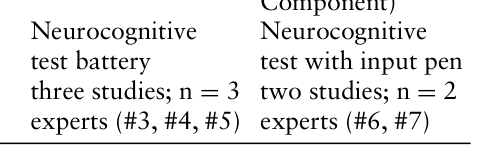
an important role in the developmental phases of conception, prototype development, and decision-making (e.g., Kilfoy et al., 2024) to identify needs and ideation, carry out prototyping, or conduct pilot evaluations (Sumner et al., 2024). The present study focuses on the pilot evaluations of three development scenarios that have been identified as being of most significance for the target group (see Table 1). In the first scenario, existing standardized and validated questionnaires were digitized. The second scenario centered on the optimization and adaptation of existing assessments for children. These assessments encompassed a series of cognitive tasks, including visual and auditory instructions. In this sense, the present assessment category can be characterized as more technically demanding. Scenario three involved expanding a graphemic motor assessment to include a wearable device (sensor pen).
Table 1: Overview of development scenarios and corresponding studies.
Table available in the original PDF paper.
Development Scenarios
2. Optimizing of and Existing Digital Assessment
1. Digitalization of an Existing Paper-Pencil Assessments
3. Expansion of a Digital Assessment (wearable Component) Assessment type Standardized questionnaire
Equation reproduced from the original PDF.
Neurocognitive test with input pen Number of studies and experts A total of seven pilot studies were conducted across all development scenarios. Each pilot study was conducted in collaboration with a domain expert without IT background. The domain experts were physicians, psychologists, and occupational therapists. In line with the literature (e.g., for an overview see Sumner et al., 2024), we used the Think-Aloud technique, observations during application, and qualitative interviews as evaluation methods (e.g., (Lundgrén-Laine and Salanterä, 2010; Fix et al., 2022; Woudstra et al., 2024). Mayering’s (2000) qualitative content analysis was used to structure and evaluate the findings. It is likely that a high level of ecological validity was achieved during the development process that was piloted. The domain experts confronted a series of exigent real- world requirements, including time constraints and rigorous scientific quality standards, which they underscored during the interviews. This was due to the fact that the assessments created were necessary for further empirical studies with adults or children.
RESULTS
The key findings (recommendations) are presented in Table 2. The pilot studies have exposed a range of challenges and requirements that vary across the three distinct development scenarios. In addition to the identified discrepancies, there were commonalities across the scenarios with regard to “data management & export“ and “regulatory & ethical support” in the areas of licensing, pre-registration, ethics approvals, and data protection. While the digitization of standardized questionnaires
Bridging Expertise and Technology: A No-Code Platform 1589
(Scenario 1) was perceived as comparatively straightforward, the adaptation of neurocognitive assessments (Scenario 2) and the integration of novel sensor-based approaches (Scenario 3) introduced higher technical and conceptual demands.
Table 2: Key findings concerning the scenarios.
Table available in the original PDF paper.
Key Areas Scenario 1 Scenario 2 Scenario 3
Digitization straightforward once templates were created
Starting point: technical development (without IT background)
Disorientation due to the scope of the required preliminary technical definition
Surprised: tech possibilities and requirements; hard to convert established values into digital values (e.g., pixel) Automation Needs Photo-upload of forms, automated data structures
Checklists and conceptual guidelines needed
Chat-based guidance, visualization examples, support efficient assessment design Data Management & Export
Export in statistics- compatible format
Direct integration into analysis statistic software requested
AI-driven feature selection, consolidated dataset export Regulatory & ethical support
Templates for Licensing and ethics approval
Service for regulatory concerns (ethics+ data protection)
AI-based screening of large datasets
AI integration for evaluation guidance and visualization
Desire for auto pre-registration and licensing templates Future Potential Streamlined workflows for experts, integrated psychometric testing(validation)
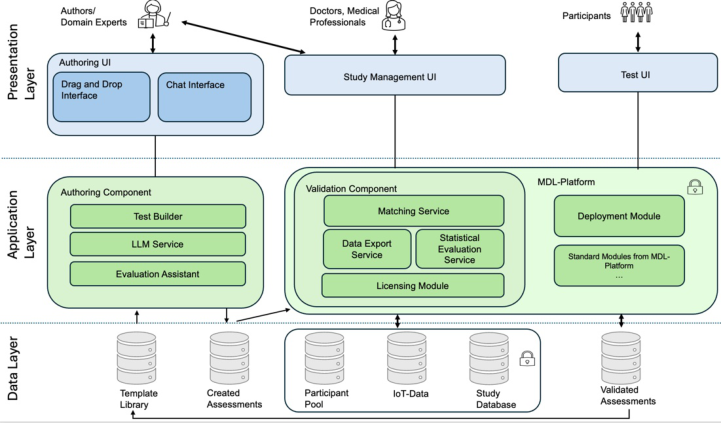
APPLICATION DESIGN The platform is developed iteratively based on the findings of the co-design methods. The architecture is of a modular nature, and consists of two primary components (see Figure 1). Firstly, there is a No-Code authoring tool for the creation and adaptation of assessments. As showed by Shlomov et al. (2024), No-Code in combination with human-centered design yield a promising approach to support users with non-technical background. Secondly, there is a validation component for the validation of new assessments, which includes a dedicated licensing module. These separated responsibilities realize the principle of separation of concerns (Daga et al., 2006), enabling a clear distinction between test design on the one hand, and validation and certification processes on the other. Combined with a modular architecture, which is known to provide flexibility for extending systems and to effectively
manage complexity (Micheli et al., 2019), this design establishes a solid foundation for sustainable development and future scalability.
Figure 1: Application design as three-tier architecture.
Low-Code Authoring Tool The authoring tool facilitates the development of new test procedures by domain experts, also called authors, as well as the digitalization, modification or extension of existing ones. In order to facilitate this process, the tool provides a library of templates based on well-known psychometric instruments, which can serve as starting points and thereby reduce the effort required for test construction. This functionality combines innovation with familiarity, offering both the freedom to create novel assessments and the stability of established test designs. The interaction with the authoring tool is designed to be highly intuitive. The composition of tests is facilitated through a drag-and-drop interface, enabling the arrangement of predefined elements and test components according to the user’s requirements. Furthermore, the system provides a conversational, no-code interface that guides authors through the creation process in a step-by-step manner. This dialogue-based approach enables test construction to occur in a natural, language-driven manner, with the potential to be further accelerated through the insertion of entire question blocks or assessments from other data sources simultaneously. Thereby, the tool is capable of accommodating a variety of authoring styles and levels of expertise. These range from structured graphical composition to conversational and incremental design. These address the specific needs of experts by providing them with guidance throughout the process and accelerating the digitalisation of existing materials.
Angular was chosen as frontend framework for the authoring tool, as it supports the development of highly interactive and modular user interfaces (Manda, 2024), such as drag-and-drop editors, templates, and chat-based
Bridging Expertise and Technology: A No-Code Platform 1591
interactions. In combination with cross-platform frameworks like Ionic, Angular enables a scalable and responsive implementation that can be deployed as both a web and mobile application. The planned integration of smart IoT services, will facilitate the embedding of sensor-based data into psychometric assessments. The provision of these services is intended to be as preconfigured components, thus enabling authors to incorporate additional data streams, such as information from wearable devices, into their test procedures. The extension of the methodological scope of digital psychometrics would be a significant development, opening new avenues for multimodal test validation.
Validation Component Following the creation of an assessment, the authors are able to initiate a structured validation workflow. The central aim of this process is that newly developed or adapted assessments meet established psychometric quality criteria. The recruitment of participants plays a critical role. Therefore, the validation component assembles participant pools from two primary sources: paid control groups and patient cohorts provided through recommendations of university hospitals and clinical partners. To achieve robust comparability between groups, the platform applies propensity score matching (PSM) (Austin, 2011). For each patient enrolled in a study, at least one control participant with closely aligned characteristics but without the respective diagnosis is identified. This methodological approach ensures balanced distributions of relevant covariates, thereby reducing bias and increasing the stability of statistical results. Subsequent to participant recruitment and matching, validation studies are conducted under controlled conditions. The resulting data can be downloaded by the authors in common formats (e.g. csv, xls, json, rds) for statistical analysis. The validation component undertakes a separate statistical evaluation, which is aligned with defined psychometric quality criteria (ITC Guidelines, 2018) ensuring that the validity of the test procedures is assessed in a standardised and transparent manner.
The licensing component provides predefined building blocks that ensure compliance with legal, ethical, and regulatory requirements in the deployment of psychometric assessments. These blocks include standardized elements for license agreements, data protection, and ethical guidelines, as well as mechanisms for obtaining and documenting patient consent. By integrating these requirements directly into the authoring process, the component reduces the complexity for non-technical experts and ensures that newly developed or adapted assessments meet the necessary standards for responsible use in clinical and research contexts. Assessments that fulfil the validation criteria and licensing requirements may be certified at the discretion of the authors. These certified assessments are then integrated into existing platforms that comply with medical device regulations (MDL). This ensures secure data transfer and accessibility for registered therapists, diagnosticians and researchers. This final step completes the process from test development and validation to deployment in professional practice, ensuring that newly developed assessments are both innovative and scientifically sound.
CONCLUSION
The present study highlighted the need for support during psychometric assessment development in several areas: guidance throughout the process, support in ethical and regulatory issues, AI-supported data analysis, and the efficient management and export of data sets. Overall, intuitive usability, templates, clear guidelines, and intelligent services are crucial. These findings served as basis for the development of the platform, accompanied by several key design principles. The system’s modular architecture is designed to separate the processes of authoring, validation, and licensing, thereby increasing scalability and transparency. The authoring tool places particular emphasis on accessibility and usability, thus enabling non-technical experts to construct digital assessments intuitively. This is complemented by a template library of established instruments, combining innovation and methodological continuity. Furthermore, the system has been designed with extensibility in mind, allowing for future integration of IoT-based data sources to enrich the scope of digital psychometric testing. The validation process is grounded in scientific methodology, employing propensity score matching and standardized psychometric quality criteria to produce robust and certifiable outcomes. The synergy of these principles enables the platform to serve as a bridge between innovative test design for non-technical domain experts and scientifically validated psychometric practice.
In line with recent findings regarding effective AI for healthcare (Theilmann et al.), the study demonstrated how co-design processes help to identify the specific requirements of the multifaceted healthcare sector. Besides, it shows that even non-technical experts recognise the new possibilities offered by intelligent sensors and AI. This aligns with Jiao (2025) and Wurtz et al. (2025), who argue that integrating such technologies into psychometric assessments will create new opportunities and improve diagnostics in the future. While Petzhold and Steidle (2023) claim that stakeholders in Germanys healthcare sector need additional competencies to enable innovations, the present work shows how co-design and no-code can solve this barrier. Another frequently discussed topic is interoperability with existing systems in healthcare, as well as concerns about data protection (Gerber, 2025). As the presented platform is developed in collaboration with a digital diagnostics provider whose platform is already MDL-certified, standardised interfaces and secure data storage directly address these issues. However, connecting IoT devices and integrating them with other systems or patient records still needs to be resolved and examined more closely in future.
It should be noted that the findings are based on a limited sample of experts, which may affect their generalisability. Future work could include pilot evaluations for additional use cases, as well as usability studies to assess the interaction design and workflow guidance within the authoring tool and validation component. This will yield more comprehensive results and broader applicability.
Nevertheless, this work demonstrate how a no-code platform can empower non-technical domain experts to design, validate, and deploy digital psychometric assessments. Lowering technical barriers allows for
Bridging Expertise and Technology: A No-Code Platform 1593
more autonomous, diverse, and timely development of psychometric assessments, driven by those who best understand the target populations and research questions. By demonstrating how digital tools can democratize a traditionally centralized and analogue process, this work contributes to the field of human factors in computing. It advocates for an open as possible, accessible ecosystem where psychometric assessments can be rapidly developed, iteratively improved, and responsibly validated with a positive impact on knowledge ownership and accessibility. These innovations and the digitalization in the field of psychometric assessments will serve as the basis for integrating more intelligent digital solutions into the healthcare system in the future, such as digital twins and personalized medicine.
ACKNOWLEDGMENT
This study is part of the VuLCAN Project (funded by the German Federal Ministery of Research, Technology and Space, grant number 01|S23043), a cooperation between August-Wilhelm Scheer Institute Saarbruecken and insight.out GmbH Neustadt an der Weinstrasse. The studies are scientifically supported by RPTU Kaiserslautern-Landau.
REFERENCES
Alhuwaydi, A. M., 2024. Exploring the Role of Artificial Intelligence in Mental Healthcare: Current Trends and Future Directions – A Narrative Review for a Comprehensive Insight. RMHP 17, 1339–1348. https://doi.org/10.2147/ RMHP. S461562. Austin, P. C., 2011. An Introduction to Propensity Score Methods for Reducing
the Effects of Confounding in Observational Studies. Multivariate Behav Res 46, 399–424. https://doi.org/10.1080/00273171.2011.568786. Benrimoh, D., Fisher, V., Mourgues, C., Sheldon, A. D., Smith, R., Powers, A. R., 2023. Barriers and solutions to the adoption of translational tools for computational psychiatry. Mol Psychiatry 28, 2189–2196. https://doi.org/ 10.1038/s41380–023-02114-y. Bird, M., McGillion, M., Chambers, E. M., Dix, J., Fajardo, C. J., Gilmour, M.,
Levesque, K., Lim, A., Mierdel, S., Ouellette, C., Polanski, A. N., Reaume, S. V., Whitmore, C., Carter, N., 2021. A generative co-design framework for healthcare innovation: development and application of an end-user engagement framework. Research Involvement and Engagement 7, 12. https://doi.org/ 10.1186/s40900–021-00252–7. Bucci, S., Schwannauer, M., Berry, N., 2019. The digital revolution and its impact on mental health care. Psychology and Psychotherapy: Theory, Research and Practice 92, 277–297. https://doi.org/10.1111/papt.12222. Daga, A., de Cesare, S., Lycett, M., 2006. Separation of Concerns: Techniques,
Issues and Implications. Journal of Intelligent Systems 15. https://doi.org/10.1515/ JISYS.2006.15.1–4.153. Erdemir, N., Atik, S., 2025. Validity and Reliability Analysis of the Artificial Intelligence–Digital Life Balance Scale. Psychiatr Q. https://doi.org/10.1007/ s11126–025-10167–1. EY Digital Health Studie 2024 [WWW Document], n.d. URL https://www.ey.com/
Fix, G. M., Kim, B., Ruben, M. A., McCullough, M. B., 2022. Direct observation methods: A practical guide for health researchers. PEC Innovation 1, 100036. https://doi.org/10.1016/j.pecinn.2022.100036. Gerber, C., 2025. Digitalisierung im Gesundheitswesen: Status quo, Herausforderungen, und Folgen für die Arbeitsbedingungen. Discussion Papers / Wissenschaftszentrum Berlin für Sozialforschung, Foschungsschwerpunkt Digitalisierung und gesellschaftlicher Wandel, Projektgruppe Globalisierung, Arbeit und Produktion, 45. ITC Guidelines for Translating and Adapting Tests (Second Edition), 2018..
International Journal of Testing 18, 101–134. https://doi.org/10.1080/ 15305058.2017.1398166. Jiao, D., 2025. AI-enhanced digital therapeutics for cognitive impairment: integrating mobile applications, virtual reality, and wearable devices. Discov Artif Intell 5, 69. https://doi.org/10.1007/s44163–025-00325–6. Jones, L. V., Thissen, D., 2006. 1 A History and Overview of Psychometrics, in:
Rao, C. R., Sinharay, S. (Eds.), Handbook of Statistics, Psychometrics. Elsevier, pp. 1–27. https://doi.org/10.1016/S0169–7161(06)26001–2. Kilfoy, A., Hsu, T.-C. C., Stockton-Powdrell, C., Whelan, P., Chu, C. H., Jibb, L., 2024. An umbrella review on how digital health intervention co-design is conducted and described. npj Digit. Med. 7, 374. https://doi.org/10.1038/ s41746–024-01385–1. Lundgrén-Laine, H., Salanterä, S., 2010. Think-Aloud Technique and Protocol
Analysis in Clinical Decision-Making Research. Qual Health Res 20, 565–575. https://doi.org/10.1177/1049732309354278. Manda, A., 2024. Enhancing User Interfaces with Angular and Typescript in Large-Scale Applications. International Journal of Computer Engineering and Technology (IJCET) 15, 921–927. Markowetz, A., Błaszkiewicz, K., Montag, C., Switala, C., Schlaepfer, T. E.,
2014. Psycho-Informatics: Big Data shaping modern psychometrics. Medical Hypotheses 82, 405–411. https://doi.org/10.1016/j.mehy.2013.11.030. Mayring, P., 2000. Qualitative Content Analysis. Forum Qualitative Sozialforschung / Forum: Qualitative Social Research 1. https://doi.org/10.17169/fqs-1.2.1089. Micheli, G. J., Trucco, P., Sabri, Y., Mancini, M., 2019. Modularization as a system life cycle management strategy: Drivers, barriers, mechanisms and impacts. International Journal of Engineering Business Management 11, 1847979018825041. https://doi.org/10.1177/1847979018825041. Petzold, T., Steidle, O., 2023. Digitale Transformation deutscher Gesundheitsein-
richtungen. Bundesgesundheitsblatt Gesundheitsforschung Gesundheitsschutz 66, 972–981. https://doi.org/10.1007/s00103–023-03743-y. Ricciardi, W., 2019. Assessing the impact of digital transformation of health services: Opinion by the Expert Panel on Effective Ways of Investing in Health (EXPH). European Journal of Public Health 29, ckz185.769. https://doi.org/10.1093/ eurpub/ckz185.769. Schaefer, L. A., Thakur, T., Meager, M. R., 2025. Neuropsychological Assessment,
in: StatPearls. StatPearls Publishing, Treasure Island (FL). Shlomov, S., Yaeli, A., Marreed, S., Schwartz, S., Eder, N., Akrabi, O., Zeltyn, S., 2024. IDA: Breaking Barriers in No-code UI Automation Through Large Language Models and Human-Centric Design. https://doi.org/10.48550/ arXiv.2407.15673.
Bridging Expertise and Technology: A No-Code Platform 1595
Smith, K. A., Blease, C., Faurholt-Jepsen, M., Firth, J., Daele, T. V., Moreno, C., Carlbring, P., Ebner-Priemer, U. W., Koutsouleris, N., Riper, H., Mouchabac, S., Torous, J., Cipriani, A., 2023. Digital mental health: challenges and next steps. BMJ Ment Health 26. https://doi.org/10.1136/bmjment-2023–300670. Spilski, J., Scheid, W., Schneider, A., Rupprecht, F., 2021. Potenzial stärker
ausschöpfbar - Digitale Diagnostik für die Ergotherapie. Ergotherapie und Rehabilitation 60, 24–29. https://doi.org/10.2443/skv-s-2021–51020210203. Steen, M., 2013. Co-Design as a Process of Joint Inquiry and Imagination. Design Issues 29, 16–28. https://doi.org/10.1162/DESI_a_00207. Sumner, J., Tan, S. Y., Wang, Y., Keck, C. H. S., Lee, E. W. X., Chew, E. H. H.,
Yip, A. W., 2024. Co-Designing Remote Patient Monitoring Technologies for Inpatients: Systematic Review. Journal of Medical Internet Research 26, e58144. https://doi.org/10.2196/58144. Tng, G. Y. Q., Koh, J., Soh, X. C., Majeed, N. M., Hartanto, A., 2024. Efficacy of digital mental health interventions for PTSD symptoms: A systematic review of meta-analyses. Journal of Affective Disorders 357, 23–36. https://doi.org/ 10.1016/j.jad.2024.04.074. Wang, W., Kofler, L., Lindgren, C., Lobel, M., Murphy, A., Tong, Q., Pickering, K.,
2023. AI for Psychometrics: Validating Machine Learning Models in Measuring Emotional Intelligence with Eye-Tracking Techniques. J Intell 11, 170. https:// doi.org/10.3390/jintelligence11090170. Wolitzky-Taylor, K., LeBeau, R., Arnaudova, I., Barnes-Horowitz, N., Gong-Guy, E., Fears, S., Congdon, E., Freimer, N., Craske, M., 2023. A Novel and Integrated Digitally Supported System of Care for Depression and Anxiety: Findings From an Open Trial. JMIR Mental Health 10, e46200. https://doi.org/10.2196/46200. Wongupparaj, P., Wongupparaj, R., Kumari, V., Morris, R. G., 2017. The
Flynn effect for verbal and visuospatial short-term and working memory: A cross-temporal meta-analysis. Intelligence 64, 71–80. https://doi.org/10.1016/ j.intell.2017.07.006. Woudstra, K., Tummers, M., Klijn, C. J. M., Sondag, L., Schreuder, F., Reuzel, R., Rovers, M., 2024. Participatory methods used in the evaluation of medical devices: a comparison of focus groups, interviews, and a survey. BMC Health Services Research 24, 462. https://doi.org/10.1186/s12913–024-10887–3. Wurtz, H. M., Manchester, M., Valteau, T., Hanson, H., Scipion, C., Federman,
Human Factors in Design, Engineering, and Computing
Read this individual research paper free through the original publisher, or explore the full digital proceedings book.
ISBN 978-1-964867-75-5
Explore this ISBN in the AHFE Bookstore ↗Listed in the July 2026 bookstore catalogue; search by ISBN to confirm current availability · Digital book purchase optional