Mariana Anjos De Almeida, Milene De Almeida Ribeiro Checoni, Ana Beatriz Ferreira Cardim, Erica Pereira Das Neves, Carla Da Silva Santana Castro, Fausto Medola (2025). Transfer and Lifting Technologies in Long-Term Care Facilities: A Scoping Review of Assistive Solutions for Older Adults Care. In: Human Systems Engineering and Design (IHSED2025): Future Trends and Applications. AHFE Open Access, vol. 198, pp. 466–476. https://doi.org/10.54941/ahfe1006800
The practice of caring in long-term care institutions for older adults often involves the lifting and transferring of residents, tasks that, when performed manually, expose professionals to biomechanical overload and musculoskeletal injury risks. To minimise these risks, the use of assistive devices has been recommended as an ergonomic strategy. Despite the relevance of such technologies, their adoption in long-term care facilities (LTCFs) faces significant challenges, including financial constraints, the need for continuous staff training, and the adaptation of existing infrastructure. Additionally, there is a limited number of studies exploring the use of these devices in institutional settings. In this context, the present scoping review aimed to map the scientific literature on the use of lifting and transfer devices used in LTCFs, considering aspects such as the geographical and temporal distribution of publications, methodological designs, technologies analysed, sample characteristics, and main findings reported. The search was conducted in the Scopus and PubMed databases using combinations of terms related to patient transfer, long-term care institutions, and assistive devices. Following the application of inclusion criteria (language, full-text availability, and focus on LTCFs), 16 articles published between 2004 and 2025 were selected, originating from different countries, notably the United States, Sweden, and Denmark. The studies employed various methodological approaches, including observational, cross-sectional, longitudinal, and quasi-experimental designs, contributing to a comprehensive understanding of the factors involved in the use of these technologies. The most frequently investigated devices were ceiling lifts, floor lifts, mobile lifts, sliding sheets, and transfer belts, often investigated in combination. Most articles focused on healthcare professionals, emphasising the prevention of musculoskeletal disorders, while only one study directly addressed the perspective of older adult users. Evaluation methods predominantly included questionnaires, field observations, and interviews. In terms of outcomes, key ergonomic benefits were highlighted, such as the reduction of physical symptoms and improvements in carers' posture, as well as increased perceptions of safety and comfort among older adult users in some contexts. However, significant limitations were also identified, including low adherence among staff, improper use of equipment, increased task execution time, and structural barriers such as lack of maintenance and institutional support. The current findings indicate that successful implementation of these technologies depends on the interplay of technical, organisational, and human factors. As a contribution, this review organises and systematises the available knowledge on the topic, highlighting ergonomics as a fundamental axis of occupational health in LTCFs and pointing to the need for integrated public policies and management strategies that encourage the safe and effective use of these technologies in the care of institutionalised older adults.
The global growth of the older population has intensified the demand for long-term care, placing increasing pressure on institutions such as nursing homes and senior residences, which often face problems of limited resources and infrastructure (Varoto et al., 2021; Camargos, 2014). This demographic shift highlights the need for systemic responses in care policy and practice.
One of the recurrent challenges in this context is mobility limitation, which affects approximately 35% of individuals aged 70 and the majority of those aged 85 and older (Freiberger, Sieber, and Kob, 2020). Within LTCFs, mobility impairments lead to significant dependence on carers for the performance of activities of daily living, often necessitating frequent repositioning and postural transfer manoeuvres (Silva, 2012). These physical
Transfer and Lifting Technologies in Long-Term Care Facilities 467
demands are closely linked to a high prevalence of musculoskeletal disorders among caregiving professionals (Cargnin et al., 2019; Ji et al., 2023). Additionally, older adults are exposed to increased risks, including pain, reduced autonomy, and falls (Rice et al., 2019; Ferreira and Yoshitome, 2010; Shao et al., 2023).
Health and ergonomics organisations recommend the use of transfer and lifting devices as a strategy to enhance safety, prevent injuries, and improve the quality of care in long-term care facilities (LTCFs) (Morandi et al., 2015; Júnior, 2021; Silverwood and Haddock, 2006). These technologies contribute to the well-being of residents and support improved working conditions for carers (Nelson et al., 2006; Bersch, 2013). Despite these benefits, their adoption remains limited in many Brazilian LTCFs, hindered by barriers such as high costs, the need for staff training, and the requirement for structural adaptations (Checoni et al., 2024).
In this context, the present study undertakes a scoping review of the scientific literature on transfer and lifting devices in LTCFs. The review aims to map the geographical and temporal distribution of publications, research designs, technologies evaluated, sample characteristics, assessment methods, and key findings reported in the literature.
METHODS
This review was conducted in the Scopus and PubMed databases, with the objective of examining the existing literature on use of transfer and lifting devices in long-term care facilities (LTCFs). The search strategy involved combinations of the following terms: “patient transfer(s/transferring/handling),” “transfer of older people,” “housing for older people,” “nursing homes,” “long-term care facilities,” “LTCFs,” “nursing home care,” “equipment,” “device,” “assistive devices,” “lifting devices” and “welfare equipment”. Inclusion criteria comprised: articles published in English, Spanish, or Portuguese; full-text availability; and a specific focus on the use of these devices within LTCFs. Studies reporting the design or development of technologies, without practical evaluation, were excluded.
The selected articles were analysed to map trends, challenges, and gaps in the use of ergonomic transfer tools and lifting devices in LTCFs, focusing on publication patterns, methodologies, device types, user perspectives, and key findings.
RESULTS
The initial search identified a total of 166 articles (53in Scopus and 113 in PubMed). After applying the language and open access filters, the number of articles was reduced to 16 in Scopus and 109 in PubMed. Title and abstract screening identified 9 eligible articles from Scopus and 11 from PubMed. Following the removal of duplicates, 16 articles were included in the final review, as presented in Table 1. Of these, one was published in conference proceedings and the remaining 15 in peer-reviewed scientific journals.
Table 1: Selected articles (author’s own, 2025).
Table available in the original PDF paper.
Title Publication Countries Year
2025
South Korea and United States
1 Use of patient-handling devices and coworker assistance in long-term care settings: A cross-sectional study
International Journal of Nursing Studies Advances Sweden 2024 BMC Musculoskeletal Disorders
2 Risk assessment of healthcare workers’ exposure to physical load in relation to patient handling and movement: a feasibility study of the instrument TilThermometer
2023
Sweden and Denmark
3 Ward-level leadership quality and prospective low-back pain of eldercare workers: do resident handlings mediate the association?
International Archives of Occupational and Environmental Health Denmark 2022 Applied Ergonomics 4 The influence of organizational factors, eldercare worker characteristics and care situation on the use of assistive devices during resident handling in eldercare work
United States 2021
American Journal of Safe Patient Handling & Movement
5 Use of Resident Handling Equipment by Nursing Aides in Long-Term Care: Associations with Work Organization and Individual Level Characteristics
2018
Sweden and United States
Occupational and Environmental Medicine
6 Predictors of low back pain in nursing home workers after implementation of a safe resident handling programme
Japan 2018
Industrial Health
7 Effectiveness of re-education based on appropriate care methods using welfare equipment on the prevention of low back pain among care workers: a 1.5 year follow-up study
IEEE ROBIO 2014 Germany 2014
8 Evaluation of patient transfer assistance systems for nursing personnel at a residential home for the elderly
2012
United States and Japan
Journal of Advanced Nursing
9 Do assistive devices, training, and workload affect injury incidence? Prevention efforts by nursing homes and back injuries among nursing assistants
Continued
Transfer and Lifting Technologies in Long-Term Care Facilities 469
Table 1: Continued Title Publication Countries Year
Table available in the original PDF paper.
Netherlands 2012
The Annals of Occupational Hygiene
10 The Influence of Ergonomic Devices on Mechanical Load during Patient Handling Activities in Nursing Homes
Netherlands 2010
11 Individual and organisational determinants of use of ergonomic devices in healthcare
Occupational and Environmental Medicine Germany 2009 12 Back disorders and lumbar load in nursing staff in geriatric care: a comparison of home-based care and nursing homes Journal of Occupational Medicine and Toxicology
2009
Journal of Occupational Health
United States and South Korea
13 Participatory Action Oriented Training for Hospital Nurses (PAOTHN) Program to Prevent Musculoskeletal Disorders
Canada 2009
Workplace Health & Safety AAOHN
14 Evaluation of Ceiling Lifts in Health Care Settings: Patient Outcome and Perceptions
Denmark 2005
Occupational and Environmental Medicine
15 Intensive education combined with low tech ergonomic intervention does not prevent low back pain in nurses
United States 2004
BMJ Injury Prevention
16 An evaluation of a “best practices” musculoskeletal injury prevention program in nursing homes
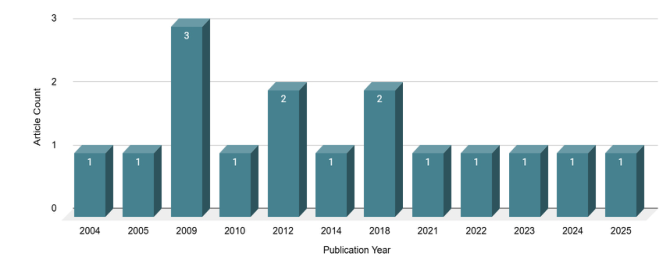
The temporal distribution of the reviewed studies, published between 2004 and 2025, shows a balanced distribution over the past two decades, with a greater concentration in the years 2009 (n = 3), 2012 (n = 2) and 2018 (n = 2), as shown in Figure 1.
Figure 1: Temporal distribution of publications (author’s own, 2025).
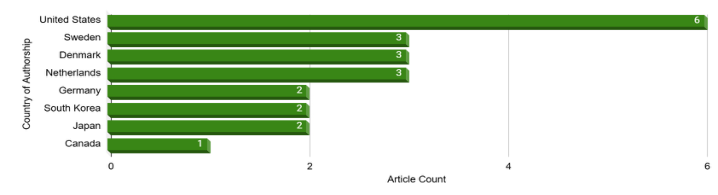
The articles showed broad geographical distribution (Figure 2), with international co-authorship in six studies. The United States led in publications, followed by European and Asian countries.
Figure 2: Temporal distribution of publications (author’s own, 2025).
Most of the studies used quantitative and observational methods, primarily cross-sectional and observational designs (n = 3 each), with some longitudinal, quasi-experimental, exploratory, and pilot studies, providing a comprehensive understanding through diverse methodological approaches.
The reviewed studies primarily addressed the prevention of musculoskeletal disorders in LTCF healthcare workers, focusing on risk factor identification and work context analysis (50%), evaluation of transfer devices and techniques (31.3%), and development of intervention and educational programmes (18.8%). Many studies highlighted organisational factors, such as leadership, task duration, and training access, as key to effective equipment use, emphasising the complexity of the issue and the need for multidimensional strategies to improve occupational health in institutional care.
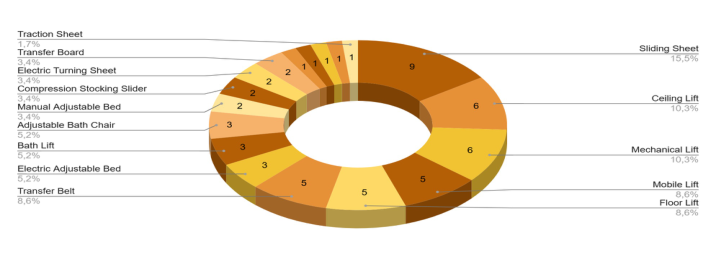
The analysis of the devices (Figure 3) shows a diverse range, highlighting the complexity of safe patient handling. The 16 articles evaluated multiple devices, totalling 58 occurrences, more than the number of studies. Lifts were most common (25 occurrences; 43%), followed by sliding sheets (9; 15.5%), ceiling lifts (6; 10.6%), and mechanical lifts (6; 10.6%). Floor lifts, mobile lifts, and transfer belts were reported 5 times each (8.6%). Less frequent devices included adjustable beds, bathing chairs, transfer boards, and electric turning sheets, suggesting that complementary equipment may provide additional contribution in reducing the risks in patient handling and transferring.
When it comes to the studies’ participants, most studies targeted healthcare professionals (nurses, technicians, carers), with only one focusing on patients’ perceptions. The sample sizes varied: 25% had small (12–54), 18.8% medium-small (101–247), 25% medium (345–549), 18.8% large (1,154– 1,390), while two studies had very large samples (1,728 and 2,692). This variation reflects diverse methods and study scopes, from local to broader generalisability.
Questionnaires were the most used evaluation method (n = 10), followed by field observations (n = 5), interviews (n = 3), and time-motion studies and administrative record analyses (n = 1 each). Four studies used mixed methods, therefore the total number of occurrences exceeded the number of articles.
Transfer and Lifting Technologies in Long-Term Care Facilities 471
Figure 3: Types of devices addressed in the studies (author’s own, 2025).
Table 2 summarises key findings, highlighting benefits such as reduced musculoskeletal symptoms, proper posture, increased patient comfort and safety, and economic gains. Limitations identified included: low availability and adherence to equipment, institutional resistance, unproper device use, inadequate staff training, and increased time required for some tasks. Additionally, structural constraints and maintenance issues were also reported as factors that may reduce the effectiveness of these interventions.
Table 2: Key positive and negative findings from the studies (author’s own, 2025).
Table available in the original PDF paper.
Key Positive Findings Key Negative Findings 1 Reduction of musculoskeletal symptoms through combined methods.
Insufficient adoption and availability of devices in long-term care settings. 2 Device use in LTCFs tied to motivation, pain, and support.
Suboptimal hospital uses due to limited access, low support, and poor adherence. 3 Increased LTCF device use is linked to motivation, prior pain, and support.
Leadership-pain link was shaped by organisational, not care-related, factors. 4 LTCFs are well equipped with lifting devices.
LTCFs: higher strain, poor guidance; home care: lower strain, less support. 5 Patients reported safety, comfort, and high satisfaction with ceiling lifts.
Ceiling lifts: no fall reduction; staff experience and adaptation affected results. 6 Use grows with task difficulty, carer readiness, and supportive settings.
Underuse raises ergonomic risk, especially in overloaded teams. 7 Adjustable devices like sliding sheets are widely used in LTCFs.
Greater risk in care tasks with limited device use, mainly in LTCFs. 8 Sliding sheets slightly increase transfer time but improve safety and comfort.
Floor lifts increase total transfer time, hindering nursing staff acceptance. 9 High device use reduces strain and improves posture.
More staff in LTCFs reduces poor posture and handling strain. 10 Widespread ergonomic device use improves posture and movement.
No evidence that lifts use reduces early low back pain; lifts alone insufficient. 11 Lifting devices reduced injuries; costs providing quick financial benefits.
High costs and resistance limit equipment adoption.
Continued
Table 2: Continued Key Positive Findings Key Negative Findings
Table available in the original PDF paper.
Intervention stabilised low back pain; lack of intervention led to increase.
12 Lifts, training, and time cut injuries by 41%; devices common in institutions. Training had no injury effect; unequal device access raises risks. 13 Intervention sites showed stable low back pain; training and equipment aided.
14 Programmes boosted device use, driven by support and self-efficacy.
Equipment availability requires attention to ensure programme effectiveness. 15 Over 90% adhered to transfer techniques with high satisfaction.
Intensive programmes were no more effective than minimal education for pain. 16 Programmes reduced musculoskeletal risks and highlighted improvements.
Implementation limited by budgetary and structural constraints.
DISCUSSION
Despite the observed technological diversity, in this review, no study evaluated newly developed devices. Many investigations focused on non- powered equipment, such as sliding sheets and transfer boards (Kiung et al., 2025; Januário et al., 2023; Karstad et al., 2022; Iwakiri et al., 2018; Reimer et al., 2014; Koppelaar et al., 2011; D’Arcy, Sasai and Stearns, 2012; Kromark et al., 2009; Hartvigsen et al., 2005). Although a range of solutions has been assessed, several barriers, including low adherence, staff resistance, time constraints, maintenance challenges, insufficient training, and unequal access, continue to limit their widespread implementation (Kurowski et al., 2016; Collins et al., 2004). Methodologically, observational, cross-sectional, and quantitative designs predominated, primarily addressing risk assessment, technology evaluation, and intervention efficacy. Only four studies (Januário et al., 2023; Kurowski et al., 2016; Iwakiri et al., 2018; Collins et al., 2004) utilised longitudinal designs, thereby limiting the knowledge on the long-term impact of these devices on occupational health outcomes.
A significant gap remains in the literature regarding the perspectives of healthcare professionals, particularly concerning their motivations, resistance, and experiences with the use of transfer and lifting devices. Furthermore, only one study (Alamgir et al., 2009) directly examined patient perceptions. Yet, comfort, safety, and dignity are essential dimensions in evaluating the quality of care. As emphasised by Baxter (2000) and Pichler and Merino (2017), the effectiveness of assistive technologies is strongly dependent on their alignment with the real-world experiences of end users, both carers and patients.
Beyond technical considerations, organisational barriers seem to play a critical role in device utilisation, even in settings where such equipment is available. Factors such as institutional culture, leadership practices, and workload pressures significantly influence adherence (Wåhlin et al., 2024; Karstad et al., 2022; Kurowski et al., 2016; Koppelaar et al., 2011;
Transfer and Lifting Technologies in Long-Term Care Facilities 473
Kromark et al., 2009; Collins et al., 2004). In this context, isolated interventions lacking continuous institutional support or environmental restructuring tend to be ineffective in preventing lower back injuries in professionals (Nelson et al., 2003).
Although limited in scope, existing evidence suggests that transfer and lifting devices offer favourable cost-benefit ratios, with economic returns observed through the reduction of injuries and absenteeism (Richardz et al., 2023; Li, Wolf and Evanoff, 2004). However, high initial costs and logistical constraints continue to limit large-scale implementation, underscoring the need for policies that promote both access and cost-effectiveness.
Based on these findings, expanding qualitative research on professionals’ and patients’ experiences and conducting longitudinal studies on long-term device impact are recommended. Additionally, developing technologies suited to the specific conditions of long-term care facilities is crucial for improving safe and effective care.
CONCLUSION
This review highlights the important role of transfer and lifting devices in the care of older adults in long-term care facilities, with research mainly from countries with established policies on ageing, while revealing significant gaps in Latin America and Africa.
Most research employed quantitative, observational methods focusing on the prevention of musculoskeletal disorders among staff, with limited approach to patient comfort, safety, and autonomy.
The variety of devices reported in the evaluated studies, especially lifts and sliding sheets, highlights the complexity of safe patient handling. Although these technologies offer benefits such as reduced physical strain and improved working conditions, their adoption is challenged by financial limitations, staff resistance, insufficient technical support, and poor integration with training and management.
This review underscores the need to integrate ergonomic technologies into policies prioritising staff well-being and care quality in LTCF. Ultimately, it contributes with knowledge on trends, gaps, and challenges, supporting future research and policy in prolonged care.
REFERENCES
Alamgir, Hasanat; Li, Olivia Wei; Gorman, Erin; Fast, Catherine; Yu, Shicheng; Kidd, Catherine. (2009). Evaluation of ceiling lifts in health care settings: Patient outcome and perceptions, AAOHN Journal, Volume 57, No. 9, pp. 374–380. Baxter, Mike. (2000). Projeto de produto: guia prático para o design de novos
produtos. São Paulo: Edgard Blücher. Bersch, Rita. (2013). Introdução à tecnologia assistiva, Assistiva, Tecnologia E educação, Porto Alegre, RS. Camargos, Mirela Castro Santos. (2014). Instituições de longa permanência para
idosos: um estudo sobre a necessidade de vagas, Revista Brasileira DE Estudos DE População, Rio de Janeiro, Volume 31, No. 1.
Cargnin, Zulamar Aguiar; Schneider, Dulcinéia Ghizoni; Vargas, Mara Ambrosina de Oliveira; Machado, Rosani Ramos. (2019). Dor lombar inespecífica e sua relação com o processo de trabalho de enfermagem, Revista Latino-Americana DE Enfermagem, São Paulo, Volume 27, No. e3181, p. e3172. Checoni, Milene de Almeida Ribeiro; Tílio, Lívia Maria de; Offerni, Ediana
Paula Marcelino; Medola, Fausto Orsi. (2024). Uso de dispositivos de transferência em instituições de longa permanência: um estudo de mapeamento, Estudos Interdisciplinares Sobre O Envelhecimento, Porto Alegre, Volume 29, No. 1. Collins, J. W.; Wolf, L.; Bell, J.; Evanoff, B. (2004). An evaluation of a “best practices” musculoskeletal injury prevention program in nursing homes, BMJ Injury Prevention, United Kingdom, Volume 10, No. 4, pp. 206–211. D’Arcy, Laura P.; Sasai, Yasuko; Stearns, Sally C. (2012). Do assistive devices,
training, and workload affect injury incidence? Prevention efforts by nursing homes and back injuries among nursing assistants, Journal of Advanced Nursing, Oxford, Volume 68, No. 4, pp. 836–845. Ferreira, Denise Cristina de Oliveira; Yoshitome, Aparecida Yoshie. (2010). Prevalência e características das quedas de idosos institucionalizados, Revista Brasileira DE Enfermagem, Brasília, DF, Volume 63, No. 6, pp. 991–997. Freiberger, Ellen; Sieber, Cornel Christian; Kob, Robert. (2020). Mobility in older community-dwelling persons: A narrative review, Frontiers in Physiology, Switzerland, Volume 11, p. 881. Gold, Judith E.; Punnett, Laura; Gore, Rebecca J.; Procare Research Team. (2017).
Predictors of low back pain in nursing home workers after implementation of a safe resident handling programme, Occupational and Environmental Medicine, United Kingdom, Volume 74, No. 6, pp. 389–395. Hartvigsen, J.; Lauritzen, S.; Lings, S.; Lauritzen, T. (2005). Intensive education combined with low tech ergonomic intervention does not prevent low back pain in nurses, Occupational and Environmental Medicine, United Kingdom, Volume 62, No. 1, pp. 13–17. Iwakiri, Kazuyuki; Sotoyama, Midori; Takahashi, Masaya; Liu, Xinxin; Koda,
Shigeki; Ichikawa, Kiyoshi. (2018). Effectiveness of re-education based on appropriate care methods using welfare equipment on the prevention of low back pain among care workers: A 1.5 year follow-up study, Industrial Health, Volume 56, No. 5, pp. 419–426. Januário, Leticia Bergamin; Mathiassen, Svend Erik; Holtermann, Andreas; Bergström, Gunnar; Stevens, Matthew Leigh; Rugulies, Reiner; Hallman, David. (2023). Ward-level leadership quality and prospective low-back pain of eldercare workers: do resident handlings mediate the association?, International Archives of Occupational and Environmental Health, Germany, Volume 96, pp. 1049–1059. Ji, Xiaoxu; Hettiarachchige, Ranuki O.; Littman, Alexa L. E.; Piovesan, Davide.
(2023). Using digital human modelling to evaluate the risk of musculoskeletal injury for workers in the healthcare industry, SENSORS (BASEL), Switzerland, Volume 23, No. 5, p. 2781. Júnior, Ladislau Maia; Sá, Selma Petra Chaves; Christovam, Bárbara Pompeu; Domingos, Ana Maria; Correia, Dayse Mary da Silva; Maia, Helena Maria Silveira Fraga. (2021). Distúrbios osteomusculares em cuidadores de pessoas idosas domiciliados: Prevalência e seus fatores associados, Research Society and Development, Brazil, Volume 10, No. 10.
Transfer and Lifting Technologies in Long-Term Care Facilities 475
Karstad, Kristina; Rasmussen, Charlotte D. N.; Rasmussen, Charlotte Lund; Rugulies, Reiner; Sogaard, Karen; Burdorf, Alex; Holtermann, Andreas. (2022). The influence of organizational factors, eldercare worker characteristics and care situation on the use of assistive devices during resident handling in eldercare work, Applied Ergonomics, United Kingdom, Volume 98, No. 103533. Koppelaar, E.; Knibbe, J. J.; Miedema, H. S.; Burdorf, A. (2011). Individual
and organisational determinants of use of ergonomic devices in healthcare, Occupational and Environmental Medicine, Volume 68, No. 9, pp. 659–665. Kromark, Kathrin; Dulon, Madeleine; Beck, Barbara-Beate; Nienhaus, Albert. (2009). Back disorders and lumbar load in nursing staff in geriatric care: A comparison of home-based care and nursing homes, Journal of Occupational Medicine and Toxicology, United Kingdom, Volume 4, p. 33. Kurowski, Alicia; Gore, Rebecca; Mpolla, Nadine; Punnett, Laura. (2016).
Use of resident handling equipment by nursing aides in long-term care: Associations with work organization and individual level characteristics, American Journal of Safe Patient Handling & Movement, United States, Volume 6, No. 1, pp. 16–24. Kyung, Minjung; Lee, Soo-Jeong; Wagner, Laura M.; Hong, OiSaeng. (2025). Use of patient-handling devices and coworker assistance in long-term care settings: a cross-sectional study, International Journal of Nursing Studies Advances, Netherlands, Volume 8, p. 100317. Lee, Jong-Eun; Kim, Soon-Lae; Jung, Hye-Sun; Koo, Jung-Wan; Woo, Kuck-Hyeun;
Kim, Miyong T. (2009). Participatory Action Oriented Training for Hospital Nurses (PAOTHN) Program to Prevent Musculoskeletal Disorders, Journal of Occupational Health, Japan, Volume 51, No. 4, pp. 370–376. Li, J.; Wolf, L.; Evanoff, B. (2004). Use of mechanical patient lifts decreased musculoskeletal symptoms and injuries among health care workers, Injury Prevention, United Kingdom, Volume 10, pp. 212–216. Morandi, Thiago Silva; Ferreira, Ana Cristina Maurício; Barela, Jefferson; Paschoarelli, Luis Carlos. (2015). Implications of the absence of patient transfer equipment on nursing professionals’ health, Ergotrip Design, Portugal, No. 1, pp. 117–123. Nelson, Audrey; Owen, Bernice; Lloyd, John D.; Fragala, Guy; Matz, Mary
W.; Amato, Margaret; Bowers, Judith; Moss-Cureton, S.; Ramsey, G.; Lentz, K. (2003). Safe patient handling and movement: A guide for nurses and other health care providers, American Journal of Nursing, United States, Volume 103, No. 3, pp. 32–43. Nelson, Audrey; Matz, Mary; Chen, Fangfei; Siddharthan, Kris; Lloyd, John; Fragala, Guy. (2006). Development and evaluation of a multifaceted ergonomics program to prevent injuries associated with patient handling tasks, International Journal of Nursing Studies, United Kingdom, Volume 43, No. 6, pp. 717–733. Pichler, Rosimeri Franck; Merino, Giselle Schmidt A. D. (2017). Projeto de
tecnologias assistivas com abordagem centrada no usuário: diagramas da interação produto-usuário-contexto, Educação Gráfica, Bauru, Volume 21, pp. 1–20. Reimer, Samuel M. F.; Pfeiffer, Wiebke L.; Kreutzer, Joachim F.; Lueth, Tim C.; D’Angelo, Lorenzo T. (2014) “Evaluation of Patient Transfer Assistance Systems for Nursing Personnel at a Residential Home for the Elderly,” proceedings of the IEEE International Conference on Robotics and Biomimetics (ROBIO 2014), Bali, Indonésia, pp. 2098–2103. doi: 10.1109/ROBIO.2014.7090646.
Rice, Laura A.; Peters, Joseph; Sung, JongHun; Bartlo, Wendy D.; Sosnoff, Jacob J.
(2019). Perceptions of Fall Circumstances, Recovery Methods, and Community Participation in Manual Wheelchair Users, American Journal of Physical Medicine & Rehabilitation, United States, Volume 98, No. 8, pp. 649–656. Richardz, Hans-Udo; Tamayo, Arturo; Rahmig, Jan; Siepmann, Timo; Barlinn, Jessica. (2023). The impact of mechanical devices for lifting and transferring of patients on low back pain and musculoskeletal injuries in health care personnel – A systematic review and meta-analysis, Journal of Occupational Health, Oxford, Volume 65, No. 1. Shao, Lu; Shi, Ying; Xie, Xi-Yan; Wang, Zhong; Wang, Zhang-An; Zhang, Jun-
E. (2023). Incidence and Risk Factors of Falls Among Older People in Nursing Homes: Systematic Review and Meta-Analysis, Journal of the American Medical Directors Association, United States, Volume 24, No. 11, pp. 1708–1717. Silva, Regina Célia Aragão da. (2012). Avaliação da força aplicada à articulação do ombro em cadeirantes durante a manobra de transferência. (Master’s thesis, School of Mechanical Engineering, UNESP, Guaratinguetá, Brazil). Silverwood, Shirley; Haddock, Maureen. (2006). Reduction of musculoskeletal
injuries in intensive care nurses using ceiling-mounted patient lifts, Dynamics, Switzerland, Volume 17, No. 3, pp. 19–21. Varoto, Vania Aparecida Gurian; Mouta, Carolina; Matiola, Ana Carolina; Corsini, Tatiana de Vasconcellos Melo (2021) “Moradia na velhice: a busca por instituição de longa permanência,” proceedings of the Congresso Luso-Brasileiro para o Planejamento Urbano, Regional, Integrado e Sustentável – PLURIS, Bauru, vol. 9, p. 35. Wåhlin, Charlotte; Buck, Sebastian; Enthoven, Paul; Andreassen, Maria; Sandqvist,
Jan; Haraldsson, Patrik; Fock, Jenni; Nilsing Strid, Emma. (2024). Risk assessment of healthcare workers’ exposure to physical load in relation to patient handling and movement: A feasibility study of the instrument TilThermometer, BMC Musculoskeletal Disorders, United Kingdom, Volume 25, No. 1, p. 399.
LISTED IN THE AHFE DIGITAL BOOKSTORE CATALOGUE
Explore the complete digital volume
Human Systems Engineering and Design (IHSED2025): Future Trends and Applications
Read this individual research paper free through the original publisher, or explore the full digital proceedings book.
ISBN 978-1-964867-74-8
Explore this ISBN in the AHFE Bookstore ↗Listed in the July 2026 bookstore catalogue; search by ISBN to confirm current availability · Digital book purchase optional