Laura Pagani, Paolo Gemelli, Mario Ivan Zignego, Alessandro Bertirotti (2025). Human-Centered AI integration in nautical architecture: enhancing design processes through emotion recognition and intelligent systems. In: Advances in Human Factors of Transportation. AHFE Open Access, vol. 186, pp. 555–564. https://doi.org/10.54941/ahfe1006545
TThe landscape of naval design is undergoing a transformative revolution through the strategic integration of artificial intelligence, fundamentally reshaping the design process whilst preserving the central role of human creativity. This research, conducted at the University of Genoa, introduces an innovative "Emotional-Enhanced Design" paradigm that leverages advanced AI technologies to amplify designers' natural capabilities rather than replace them. The proposed methodology represents a significant departure from traditional design approaches, introducing a four-phase process that fundamentally reimagines how nautical design is conceived and executed. The first phase employs sophisticated emotion recognition technologies, integrating facial expression analysis, vocal tone evaluation through the Geneva Minimalistic Acoustic Parameter Set, and semantic sentiment analysis, enabling designers to gain unprecedented insights into client preferences and emotional responses. The second phase utilises an intelligent agent for comprehensive competitor analysis, automating the collection and organisation of market data through advanced web scraping techniques. The third phase integrates generative AI tools, such as MeshyAI, to rapidly transform initial sketches into 3D models, whilst the fourth phase implements virtual reality combined with biometric sensing for immersive design validation. Preliminary findings demonstrate remarkable advantages, including a 50% reduction in concept development time through automated competitor analysis and enhanced emotional understanding, and a 30% reduction in 3D modelling time through AI-assisted generation. The research demonstrates that the future of nautical design lies not in technological replacement, but in a harmonious collaboration between human creativity and artificial intelligence, where technology serves as an amplification tool for human expertise, particularly in understanding and responding to client needs. Future developments will focus on refining the virtual reality experience with advanced haptic technologies, implementing predictive user behaviour analysis, and developing a comprehensive knowledge base derived from accumulated project data. This approach represents a paradigmatic shift in understanding design as a deeply empathetic, technology-enhanced creative process that maintains the designer's central role whilst significantly improving efficiency and client satisfaction.
Naval design is undergoing a profound transformation through the integration of artificial intelligence, a change that aims not to replace the designer’s role but rather to enhance their natural capabilities. Our research at the University of Genoa has developed an innovative approach that maintains the designer at the centre of the creative process, providing advanced tools that amplify their capacity for understanding and creation (Pagani, 2024).
The historical evolution of naval design can be traced through several significant phases, beginning with Evans’ Design Spiral in 1959, which represented the first attempt to systematise the naval design process. This approach, whilst revolutionary for its time, showed limitations in its sequential nature and the lengthy time required for each iteration, as it schematised the design process as a series of iterative steps that systematically addressed every aspect of naval design, from the definition of primary dimensions through to final project validation.
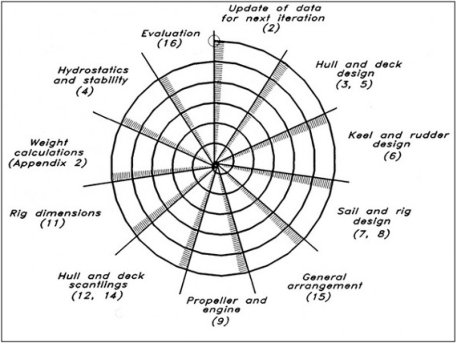
Over subsequent decades, Evans’ spiral underwent numerous revisions by various naval designers, each contributing to enriching and perfecting its structure. Among these evolutions, the version that had the greatest impact and diffusion was developed by Larsson and Eliasson, presented in their influential text “Principles of Yacht Design” (1995). This refined version of the design spiral introduced eleven well-defined phases: project specifications analysis, hull geometry, appendage configuration, sail arrangement, stability and weight, hydrodynamic analysis, aerodynamic analysis, structural design, onboard systems, costs and production, and finally, verification and iteration. This systematisation became a de facto standard in the sector and has the merit of having made the naval design process more structured and comprehensible whilst maintaining the flexibility necessary to adapt to various design requirements (Figure 1).
Figure 1: Larsson and Eliasson nautical design spiral (adapted from “Principles of Yacht Design”, 1995).
Human-Centred AI Integration in Nautical Architecture: Enhancing Design Processes 557
With the increasing complexity of vessels and evolving regulatory requirements, the sector progressively adopted the V-Model, a methodology originally developed in software engineering and subsequently adapted to naval design (Bottero & Gualeni, 2024).
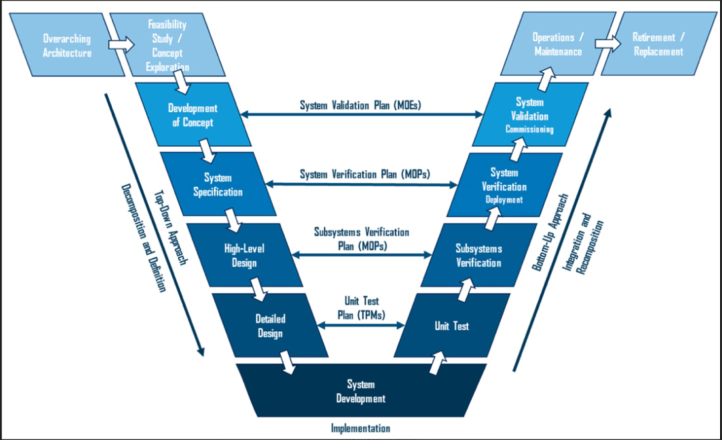
The V-Model (Figure 2) has a hierarchical structure that divides the process into two main phases: a descending phase during which general system requirements are progressively decomposed into detailed technical specifications for each subsystem, and an ascending phase that focuses on verifying and validating each component through testing and simulations, ensuring that every element meets the initial requirements. This approach has enabled more effective management of complex projects, introducing greater traceability of design decisions and more systematic verification of adopted solutions.
Figure 2: The nautical V-model.
In parallel with this methodological evolution, the advent of Virtual Prototyping has marked another qualitative leap in the naval design process. It represents a detailed digital replica of the vessel, created to explore and optimise the design before physical construction (Dodero et al., 2022). The process begins with collecting geometric and structural data through detailed CAD models, which are then processed with advanced modelling software to create a complete three-dimensional model.
The utilisation of rendering tools and virtual reality enables the enrichment of the model with realistic textures and materials, allowing for immersive visualisation of spaces and preliminary validation of design choices. This methodology has significantly reduced development time and costs, enabling the identification and resolution of potential problems in the initial phases of the project.
Despite these significant methodological and technological advances, both the V-Model and Virtual Prototyping still present limitations in their ability to capture and interpret the more subjective and emotional aspects of the design process. There is a lack of a systematic approach to understanding and incorporating emotional reactions and unexpressed preferences of clients into the design process. Our research introduces a new paradigm called “Emotional-Enhanced Design”, which seeks to integrate AI to reduce the time required for developing a shared concept design between designer and potential client.
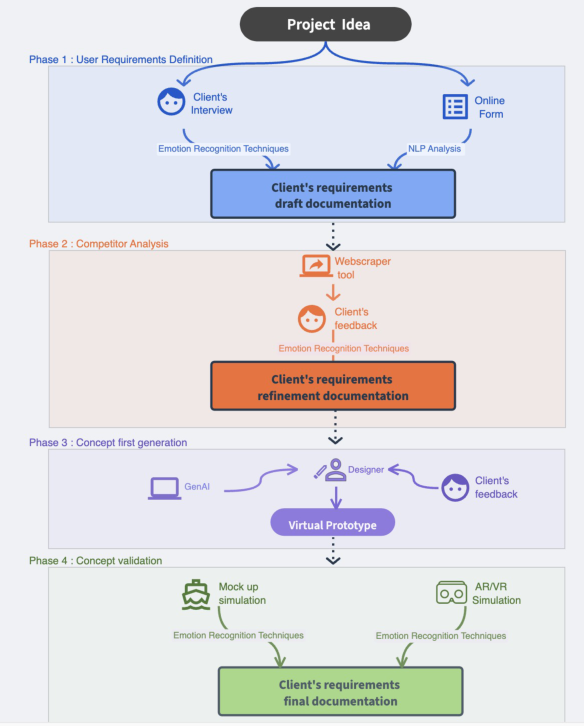
EMOTIONAL-ENHANCED DESIGN METHODOLOGY The “Emotional-Enhanced Design” is articulated in four distinct and interconnected phases (Figure 3).
Phase 1: User Requirements Definition The first phase represents a revolution in how client needs are collected and interpreted. The process unfolds through an application that integrates three parallel analysis systems:
Figure 3: Emotional enhanced design methodology.
Human-Centred AI Integration in Nautical Architecture: Enhancing Design Processes 559
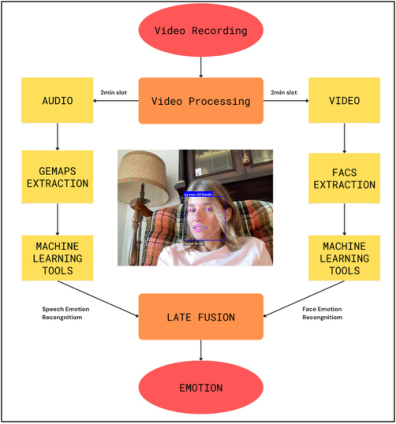
1. A system based on the Facial Action Coding System, initially introduced by Ekman and Friesen (Ekman, 2005) and extensively refined through the introduction of AI (Khan, 2022), which analyses the client’s facial micro-expressions during the initial interview. This system can detect subtle emotional reactions that might escape direct observation, such as moments of hesitation or manifestations of particular interest. 2. A system based on the Geneva Minimalistic Acoustic Parameter Set (Eyben, 2016) that analyses the client’s vocal tone and inflections. This analysis enables the identification of emotional patterns in verbal communication that may reveal preferences or concerns not directly expressed. The system is calibrated to recognise subtle variations in intonation and speech rhythm that may indicate different emotional states (Figure 4). 3. A system that works on the interview transcription and therefore necessarily in post-processing, utilising advanced natural language processing (NLP) algorithms to identify emotional patterns in the language used by the client, creating a detailed map of preferences and expectations expressed verbally (sentiment analysis).
Figure 4: Audio and facial emotion recognition System.
This triple analysis provides the designer with what we might define as an “emotional superpower”, namely the ability to perceive and interpret client reactions at a level of depth and precision previously impossible to achieve.
At the conclusion of this phase, a document is produced that represents the input for the subsequent step.
Figure 5: Competitors analysis.
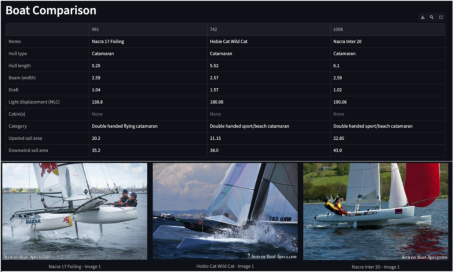
Phase 2: Competitors Analysis The second phase aims to conduct a thorough analysis of the nautical market based on the user requirements defined previously. An intelligent agent (Lisowski, 2024) (Qian 2023) performs web scraping and collects technical data and specifications of vessels present in the market that could meet the needs that emerged during the first phase. For each vessel, visual elements such as images, renderings, and videos are included, and the information is organised in a manner accessible to the designer. The designer uses this documentation to conduct a new interview with the client, during which the analysis system remains active, recording and analysing the client’s reactions to specific design elements, materials, spatial configurations, and technical solutions. The purpose of this step is to enable the client to actively identify elements they wish to incorporate into their vessel and those they prefer to avoid (Figure 5).
This selection process is not limited to a simple binary choice but allows for understanding the deep motivations behind the client’s preferences. The designer can thus construct a detailed map not only of the client’s explicit preferences but also of their unconscious emotional reactions to various design elements.
At this point, the designer has access to a rich and structured set of information that combines the initial user requirements with detailed feedback on existing market solutions. This multidimensional knowledge base constitutes the foundation for transitioning to the next phase of the design process, where they will begin to develop the first conceptual sketches born from a conscious synthesis between the client’s expressed needs, their documented emotional reactions, and design solutions validated by the market, ensuring a design approach that is informed and user centred.
Phase 3: Concept First Generation The third phase represents the crucial moment in the design process, where the designer’s creativity merges with artificial intelligence support to generate innovative design solutions. Based on the rich knowledge base built in the previous phases, the designer begins the creative process through the realisation of conceptual sketches.
Human-Centred AI Integration in Nautical Architecture: Enhancing Design Processes 561
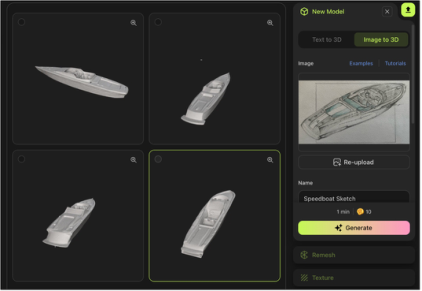
Figure 6: 3D reconstruction from sketch with MeshyAI.
In this phase, methodological innovation manifests through the integration of generative artificial intelligence tools, such as MeshyAI, which enable rapid translation of the designer’s two-dimensional sketches into preliminary three-dimensional models (Figure 6).
This automated conversion capability represents a significant step forward in the design process, as it dramatically reduces the time traditionally required for creating initial 3D models. It is important to emphasise that these AI tools, whilst rapidly evolving, are still in an initial development phase and may produce results requiring refinements and corrections. However, thanks to their professional experience and expertise, designers can quickly identify any imprecisions and make necessary corrections efficiently, significantly optimising the concept development process.
In this phase as well, the process of presenting and validating concepts with the client is enhanced through a multimodal emotional analysis system operating on three parallel channels: facial expression analysis, vocal tone analysis, and semantic analysis of conversation text.
Whilst the client examines a particular detail of the 3D model, the system can simultaneously detect micro-expressions of appreciation or perplexity, subtle variations in voice tone indicating enthusiasm or concern, and linguistic patterns that reveal implicit preferences.
This deep, multi-level understanding of client reactions enables the designer to establish a particularly effective rapport with the end user’s expectations and desires. The process becomes highly iterative, with the designer able to rapidly modify and refine concepts in response to received emotional feedback, creating a richer and more productive design dialogue.
The ability to quickly visualise modifications through AI-generated 3D models, combined with real-time emotional feedback, significantly accelerates the convergence process towards design solutions that fully meet client expectations.
The generative design algorithms utilised in this phase are not limited to proposing random variations but operate within parameters defined by the client’s documented preferences and nautical sector best practices. This guided approach ensures that generated proposals always maintain a high
level of technical feasibility and coherence with project requirements whilst exploring innovative and potentially unexpected solutions.
Phase 4: Concept Final Generation The fourth phase of our methodological approach represents a further evolution of the process through the integration of advanced virtual reality technologies and sophisticated biometric monitoring systems. In this phase, the client can virtually explore their vessel through a completely immersive experience, which enables them to perceive spaces and design solutions at real scale before their physical realisation (Dodero et al., 2022).
The use of virtual reality headsets guarantees an unprecedented immersive experience but introduces a significant challenge for the emotional analysis system: the impossibility of using facial expression recognition, as the client’s face is partially covered by the VR device.
To overcome this limitation, we have conceived an innovative multimodal monitoring system that integrates various types of biometric sensors, including heart rate monitoring (ECG), brain activity (EEG), gestural analysis, and respiratory pattern tracking.
The physiological parameters are monitored in real-time whilst the client virtually explores the vessel’s spaces, providing objective indicators of their emotional state and level of engagement. For example, variations in heart rate may indicate moments of particular interest or emotion, whilst respiratory patterns can reveal states of comfort or discomfort in relation to specific spatial configurations.
The electroencephalogram provides additional information about the client’s cognitive and emotional state, enabling the identification of moments of particular attention or stress. These biometric data can always be integrated with continuous analysis of the client’s voice and verbal content of interactions.
The integration of haptic technologies in the virtual reality system will add a further level of realism to the experience, enabling the client to “feel” materials and textures during exploration. This can also be monitored, providing valuable information about the client’s instinctive reactions to various proposed materials and finishes.
CONCLUSION AND FUTURE DEVELOPMENTS Preliminary analysis of data collected during the initial applications of this methodology reveals a substantial reduction in the time required to reach a shared concept between designer and potential client.
Specifically, we observed a 50% reduction in the overall time required for initial concept definition. This significant improvement in efficiency can be attributed primarily to the following factors:
1. The automation of the competitor analysis process, which not only accelerates the research phase but also increases its completeness and accuracy. Unlike the traditional approach, where designers typically focus on the most well-known shipyards and vessels in the sector, the
Human-Centred AI Integration in Nautical Architecture: Enhancing Design Processes 563
automated system can perform a comprehensive web scan, identifying innovative and interesting solutions even from lesser-known sources or emerging markets. This extended analysis capability provides the designer with a significantly broader and more diversified knowledge base upon which to base their design decisions. 2. The introduction of the multimodal emotional analysis system, which confers upon the designer what we might define as a “superpower” in client understanding. This tool enables analysis not only of the explicit content of interactions with the client but also of the implicit and non- verbal aspects of communication. The ability to simultaneously interpret emotional reactions through different channels (facial expressions, voice tone, semantic content) allows the designer to more quickly and accurately understand the client’s true preferences and expectations, significantly reducing the number of iterations necessary to reach a shared project vision. 3. The use of generative AI tools in the 3D modelling phase indicates a 30% reduction in the time required for creating initial three-dimensional models.
It is important to note that this result, whilst already significant, represents only a first phase of optimisation. Indeed, the generative AI technologies used are still in a relatively early stage of their development and are not yet completely optimised for the specificities of naval and nautical design. Despite current imperfections and the need for corrective interventions by the designer, the time savings are already considerable, and it is anticipated that these could increase further with the refinement of these tools.
Future developments of our research will focus on further refinement of the virtual immersion phase, with particular attention to the integration of more sophisticated haptic technologies and the implementation of predictive user behaviour analysis systems. We are also working on developing a knowledge base that, through analysis of data collected from previous projects, will be able to suggest design solutions based on preference patterns identified over time.
While the proposed methodology offers a significant improvement in design efficiency and client engagement, several limitations must be acknowledged. In particular, the collection of physiological data—such as EEG, ECG, and respiratory patterns—poses practical challenges in real- world design environments. These include the need for specialised equipment, user compliance, and potential variability in data quality depending on user familiarity and comfort with the technology. Furthermore, interpreting this data accurately requires interdisciplinary expertise and robust algorithms, which may not yet be fully standardised in design workflows. Addressing these challenges will be critical for scaling and generalising the methodology beyond controlled experimental settings.
Our “designer in the loop”approach represents not merely a technological evolution, but a genuine paradigm shift in how we think about nautical design. By maintaining the designer at the centre of the creative process whilst equipping them with increasingly sophisticated tools, we are paving the way
for a new era of design where technology and human creativity collaborate in perfect harmony to create extraordinary nautical experiences.
REFERENCES
Bottero, M. & Gualeni, P. (2024). Systems engineering for naval ship design evolution. Journal of Marine Science and Engineering, 12(2), p. 210. Available at: https://doi.org/10.3390/jmse12020210. Building smarter vessels with digital twin technology. (n.d.). Siemens Digital Industries Software. Retrieved 18 January 2025, from https:// resources.sw.siemens.com/en-US/analyst-report-marine-industry-in-2030-digital- twin-ship/ Dodero, M. Bertagna, S., Braidotti, L., Marinò, A. & Bucci, V. (2022). Ship
design assessment through virtual prototypes. Procedia Computer Science, 200, pp. 1227–1236. Available at: https://doi.org/10.1016/j.procs.2022.01.323. Ekman, P. & Rosenberg, E. L. (2005). What the face reveals: Basic and applied studies of spontaneous expression using the facial action coding system (FACS). 2nd ed. Oxford University Press. Emami, M., Bayat, A., Tafazolli, R. & Quddus, A. (2024). A survey on haptics:
Communication, sensing and feedback. IEEE Communications Surveys & Tutorials, p. 1. Available at: https://doi.org/10.1109/COMST.2024.3444051. Eyben, F., Scherer, K. R., Schuller, B. W., Sundberg, J., André, E., Busso, C., Devillers, L. Y., Epps, J., Laukka, P., Narayanan, S. S. & Truong, K. P. (2016). The Geneva Minimalistic Acoustic Parameter Set (GeMAPS) for voice research and affective computing. IEEE Transactions on Affective Computing, 7(2), pp. 190–202. Available at: https://doi.org/10.1109/TAFFC.2015.2457417. Khan, A. R. (2022). Facial emotion recognition using conventional machine learning
and deep learning methods: Current achievements, analysis and remaining challenges. Information, 13(6), p. 268. Available at: https://doi.org/10.3390/ info13060268. Larsson, L. & Eliasson, R. E. (1995). Principles of yacht design. International Marine. Lisowski, E. (2024, 18 December). AI agents vs agentic AI: What’s the difference and why does it matter? Medium. Available at: https://medium.com/ @elisowski/ai-agents-vs-agentic-ai-whats-the-difference-and-why-does-it-matter- 03159ee8c2b4. Meshy AI - The #1 AI 3D model generator for creators. (n.d.). Meshy AI - The #1 AI 3D Model Generator for Creators. Retrieved 12 January 2025, from https:// www.meshy.ai. Pagani, L. (2024). Navigating emotions: A multimodal approach to redefining
nautical naval design. Genoa University Press. Available at: https://gup.unige.it/ sites/gup.unige.it/files/pagine/idea_ebook.pdf. Qian, C., Liu, W., Liu, H., Chen, N., Dang, Y., Li, J., Yang, C., Chen, W., Su, Y., Cong, X., Xu, J., Li, D., Liu, Z. & Sun, M. (2023). ChatDev: Communicative agents for software development (Version 5). arXiv. Available at: https://doi.org/ 10.48550/ARXIV.2307.07924. Zignego, M. I., Gemelli, P. A. & Bertirotti, A. (2022). A smart mockup for an
innovative interior yacht design approach. In Rizzuto, E. & Ruggiero, V. (eds.) Progress in marine science and technology. IOS Press. Available at: https://doi.org/ 10.3233/PMST220055.
LISTED IN THE AHFE DIGITAL BOOKSTORE CATALOGUE
Explore the complete digital volume
Advances in Human Factors of Transportation
Read this individual research paper free through the original publisher, or explore the full digital proceedings book.
ISBN 978-1-964867-62-5
Explore this ISBN in the AHFE Bookstore ↗Listed in the July 2026 bookstore catalogue; search by ISBN to confirm current availability · Digital book purchase optional