Israel Nyarubeli, Bente Moen, Anette Harris, Ståle Pallesen, Erlend Sunde, Øystein Vedaa, Elise Victoria Tørdal, Bjørn Bjorvatn, Siri Waage (2025). Non-standard work hours, accidents and injuries among seafarers. A systematic Review. In: Advances in Human Factors of Transportation. AHFE Open Access, vol. 186, pp. 521–534. https://doi.org/10.54941/ahfe1006542
Studies have shown that non-standard work hours are associated with an increased risk of accidents and injuries in healthcare, transportation and manufacturing sectors. Nevertheless, findings in Maritime work environment related to seafarers remain limited and inconsistent. To date, no meta-analytic synthesis has been published on this topic. We conducted a systematic review to examine whether exposure to non-standard work hours/shift work such as night shifts, extended work hours, rotation shifts is associated with an increased risk of accidents and injuries among seafarers. The study was registered in PROSPERO 2024 CRD42024543444.Methods: The review included 941 relevant original empirical studies from peer-reviewed electronic databases such as Ovid MEDLINE, PsycINFO, EMBASE and the Web of Science core collection using a predefined search strategy following the PRISMA (Preferred Reporting Items for Systematic Reviews and Meta-Analysis) guidelines. Inclusion criteria yielded only three (03) studies in the final review, which did not specifically study the relationship between non-standard work hours and the occurrence of injuries and accidents in seafarers.Results: Studies were largely registry based, cross-sectional studies and reported accidents and injury rates as key outcomes. The studies were from multiple counties, including the UK, Norway, Sweden, Canada, Poland, Philippine, Croatia, Indonesia, Spain, South Africa, German, Hongkong, Russia, Poland, China, Italy and Denmark. In the Great Britain, 36% of the deaths at sea were caused by accidents (95% CI: 19.8-34.7, N=1405) between 1979/80 and 1982/3, with a fatal accident rate in seafaring of 51.6 per 100,000 seafarer-years. Higher accident frequency occurred during night shifts (00:00-04:00) than during normal day hours and were related to work schedules and sleep deprivation. Injury rate varied from 6.31 per 1,000 (95%CI: 4.98-7.85) seafarers-years (4-year period) in Italy, 43.7 per 100,000 seafarer-years in the UK, to 40 per 1,000,000 work hours in a multi country study (11- countries). Conclusion: This review shows a high rate of accidents and injury among seafarers documented in various studies across the globe and suggests that these incidents are more frequent during non-standard work hours. However, studies directly associating non-standard work shifts with the occurrence of accidents and injuries among seafarers are scarce, warranting further research in this area.
Maritime industry is an important part of the supply chain for transportation of raw materials and finished products globally. Around 80 percent of volume of goods are transported internationally and it is estimated to be higher in
most of developing countries (United Nations Trade and development, 2024). The volume of seaborne trade has more than doubled from 1990 to 2021 from four to eleven billion tons of goods respectively (United Nations Trade and development, 2024). Figures related to number of people employed in the shipping industry are scarce, but the European Union stated that their shipping industry employed 555 000 people in 2018 (Statista, 2024).
Maritime work includes some of the most hazardous occupations in the world. The International Labor Organization (ILO) and the International Maritime Organization (IMO) have characterized fishing and seafaring as the most dangerous and hazardous occupations (Jensen et al., 2006; McGuinness et al., 2013; Shan, 2020; Zhang et al., 2019). Work at sea comprises multiple and complex tasks that demands presence of 24/7 operations, thus non- standard work hours are common (Kim, 2021). Non-standard work hours (i.e., shift work) include all types of working hours that take place outside normal daytime hours (evenings, nights, and early mornings), Monday and Friday and outside normal working days (weekends), which refers to work during conventional daytime hours on weekdays. However, the definition of non-standard working hours varies and changes over time (George & Chattopadhyay, 2015). Typically, non-standard work hours includes extended work hours/long shifts, night shifts, irregular and unpredictable hours, and rotating two or three watch systems (Hesselink & Goudswaard, 2024). Non-standard work hours are generally associated with increased risk of accidents and personal injuries among onshore workers (Kecklund & Axelsson, 2016; Fischer et al., 2017). However, the knowledge in this area in terms of seafarers is limited. A comprehensive understanding of how non- standard work hours relate to the occurrence of incidents and injuries at sea is of major importance for seafarers’ health and safety, as well as for decision makers, regulators and society at large.
In this review, the term maritime work encompasses work on vessels in the sea or ocean, including merchant transport and fishing. Likewise, the term seafarers in this study refers to individuals employed onboard any type of marine vessel, regardless of their specific roles and responsibilities, and includes a wide range of professions such as Captain, Chief mate, Deck Officers, Engineers, electro-technical officers, Chief Steward (Seafarers, 2024). Seafarers work tasks are diverse and vary depending on the type of vessel, such as oil and gas tankers, bulk carriers, chemical tankers, fishing vessels, car carriers, cruise ships, and military vessels as well as on the specific role allocated to the seafarer. Maritime work bears inherent risks from changing weather conditions, the volatile nature of the sea to complexity of logistics involving navigation across international waters (Shahbakhsh et al., 2022; & Wu, et al., 2022). These facts indicate an increased likelihood for adverse health and safety outcomes of workers at sea, including accidents and injuries (Zhang & Zhao, 2017). By prioritizing health and safety of seafarers, governments and companies can potentially reduce costs associated with accidents and injuries meanwhile improving overall well-being and productivity.
Work during non-standard work hours is common in our society. A survey based on the European Working Conditions Survey (EWCS) conducted in
Non-Standard Work Hours, Accidents and Injuries Among Seafarers. A Systematic Review 523
29 European countries found that approximately 39 percent were employed in non-standard work schedules (Gracia et al., 2021). Several non-standard work schedules exist in maritime industry including various watch keeping systems. Common categories are two-watch systems (2- teams share the 24-h period) and three-watch systems (3- teams share the 24-h period). Examples of these work schedules are 6h on – 6h off, 12h on – 12h off, 8h on – 8h off, and 4h on – 8h off (van Leeuwen et al., 2021).
Despite the existence of published primary studies, there exists to date no synthesized information or overviews on the association between non- standard work hours and accidents and injuries in the maritime sector. Therefore, this systematic review aimed to examine whether there is a relationship between non-standard work hours, accidents and injuries among seafarers.
METHODS
A systematic review was carried out to investigate the relationship between non-standard work hours and the occurrence of accidents and injuries among seafarers. This review adhered to the updated PRISMA-2020 (The preferred Reporting Items for Systematic Reviews and Meta-Analyses) statement 2020 (Page et al., 2021) and was pre-registered in PROSPERO (2024 CRD42024543444).
Eligibility Criteria This review included primary full-text empirical studies concerning seafarers available up to April 2025, that reported on the relationships or the associations between non-standard work schedules and accidents or injuries at sea among adult seafarers. Peer reviewed articles were screened based on the following inclusion criteria: (i) primary research articles published in peer-reviewed journals, (ii) full text available in English language; (iii) quantitative studies employing prospective or retrospective designs, such as observational studies (cohort, cross sectional, case- control) or experimental or interventional studies, (iv) studies reporting workers exposed to non-standard work schedules, and (v) studies reporting accidents and or injuries among seafarers as the outcome. In addition, studies that determine how different types of non-standard work schedules used at sea vessels relate to accidents and injuries in seafarers were included. Qualitative studies, conference proceedings, case reports, editorials, unpublished literature, grey literature, dissertations/theses, case reports and book chapters were excluded. Taken together, this review included original studies adhering to the PICO framework for systematic reviews, i.e., Participant (maritime workers, seafarers, seamen), Intervention/Exposure (non-standard work hours, shift work, night shift, rotating shift), Comparator (day work, standard work hours) and Outcome (accidents, injuries) (Amir-Behghadami & Janati, 2020; Eriksen & Frandsen, 2018).
Information Sources and Search Strategy A comprehensive literature search was carried out to include all available studies up to July 2024 and supplementary search was done in April 2025
in four electronic databases: Ovid MEDLINE, PsycINFO, EMBASE and Web of Science core collection. Additional searches were conducted using Google Scholar and through backward citation tracking from the reference lists of key articles. Relevant synonyms and subject headings for non- standard work hours in seafarers were combined using Boolean operators. The search strategy was designed and conducted in collaboration with an academic librarian and peer-reviewed by another researcher. An example of the search terms and strings used in the Ovid MEDLINE electronic database are presented in Table 1. Seach strings used (((Work Schedule Tolerance/ or Shift Work Schedule/) OR ((work schedule* or work table or non-standard work* or non-standard work* or nonstandard work* or night work* or night shift* or evening shift* or shift work* or shiftwork* or work shift* or rotat* shift* or work rest cycle* or work load or work stress).ti,ab,kf.)) AND ((Naval Medicine/ or Ships/) OR (Seafarer* or seafarer* or seaman or seamen or sailor* or deck officer* or crew or marine* or maritime or sea or ocean or nautical or naval or navy or ship* or boat* or submarine* or yacht*).ti,ab,kf.))).
Table 1: Search strategy in Ovid MEDLINE with supplementary upgrade April 2025.
Table available in the original PDF paper.
Database(s): Ovid MEDLINE(R) and Epub Ahead of Print, in-Process, in-Data-Review & Other Non-Indexed Citations, Daily and Versions <1946 to April 20, 2025>.
# Searches Results
22230
1 Work Schedule Tolerance/ or Shift Work Schedule/ 8675 2 (work schedul* or work table or non-standard work* or non-standard work* or nonstandard work* or night work* or night shift* or evening shift* or shift work* or shiftwork* or work shift* or rotat* shift* or work rest cycle* or workload or work stress).ti,ab,kf.
289552
3 1 or 2 26405 4 Naval Medicine/ or Ships/ 15476 5 (Seafarer* or seafarer* or seaman or seamen or sailor* or deck officer* or crew or marine* or maritime or sea or ocean or nautical or naval or navy or ship* or boat* or submarine* or yacht*).ti,ab,kf.
6 4 or 5 293052 7 3 and 6 384 8 limit 7 to (case reports or meta-analysis or “review” or “systematic
36
review”)
9 7 not 8 348
Study Selection and Data Collection Process Duplicates were removed using the bibliographic software EndNote. The principal investigator oversaw the searches until it was complete. The resulting records were imported into the web-based Covidence platform for screening (Covidence)-https://app.covidence.org/reviews/452404. Two independent authors screened all articles against the pre-defined inclusion
Non-Standard Work Hours, Accidents and Injuries Among Seafarers. A Systematic Review 525
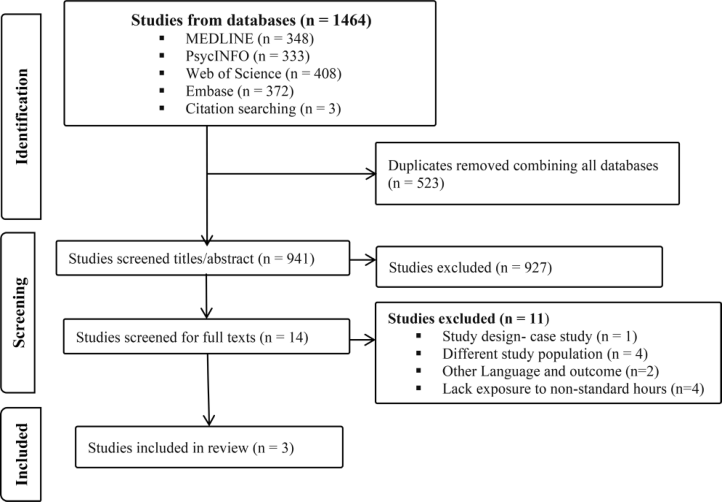
criteria, starting with title and abstract screening, then performed full-text screening to assess whether the study contained required information. Both authors independently assessed the full texts of potentially eligible studies. Any disagreements were resolved by consensus through discussions. Briefly, the electronic search in all four databases yielded a total of 1464 studies. A total of 523 duplicates were then removed. Following removal of duplicates, 941 studies were retained and screened for title and abstract. Of these, 14 studies were selected for full-text review. Since only a few studies exists and most seafarers work outside normal workday, all studies on seafarers and the specified outcomes i.e., non-standard work hours vs. occurrence of accidents and injuries were included. Finally, a total of three studies were included in the final review (Figure 1). The screening and selection process was documented in accordance with the PRISMA–2020 guideline for reporting systematic reviews (Page et al., 2021).
Figure 1: PRISMA–Flowchart of included and excluded primary studies.
Data Extraction A pre-determined and piloted data extraction form embedded in the Covidence web-based software was used for data extraction. Inter-rater reliability was assessed using percentage agreement and Cohen’s Kappa to ensure consistency and transparency of the review process (Belur et al., 2021). For the title and abstract screening, the reviewers showed a proportionate agreement of 0.98, and a Cohen’s Kappa of 0.53 indicating moderate agreement beyond chance. Likewise, the Cohen’s Kappa for risk of bias evaluation was 0.50.
Data extraction was conducted independently by two authors [I.P.N and E.V.T]. To promote consistency in data extraction, the two authors participated in training and discussion sessions to harmonize their understanding of the data extraction tool. Information to be extracted from primary studies included: author(s), year of publication, study design, sample size, characteristics of the study population, types of non-standard working hours including watch systems, definition and measurement of accidents and injuries, statistical methods used, and effect estimates with corresponding measures of uncertainty (e.g., incidence ratio [IR]), quantification of the association between non-standard working hours and accidents or injuries (Table 2). Any difference in extracted information between the two authors were resolved by discussions to reach consensus.
Methodological Quality Assessment of Primary Studies The methodological quality of the included studies was assessed independently by two authors using an adapted and customized 14-items checklist (Table 3). This tool was originally developed and used for assessing risk of bias in systematic review and meta-analysis of workplace bullying and sickness absence as well as an ongoing meta-analysis on the association between shift work and sickness absence (Nielsen et al., 2016; Sunde et al., 2022). The risk of bias instrument evaluates each article on 14-items, with a total score ranging from 0 (highest risk of bias) to 14 (lowest risk of bias). These scores were then categorized as follows: high risk (0–5), moderate risk (6–10) and low risk (11–14), respectively (Nielsen et al., 2016). The methodological quality assessment was conducted with the three studies reporting both exposure (non-standard work hours) and outcomes (incidence of accidents and injuries) (Table 3).
Data Synthesis A narrative synthesis of information from the final studies was conducted. This included description of basic study characteristics (author, year of publication, country), study design, data source, population description, sample size and outcome measures. Three studies that reported a relationship between non-standard work hours and occurrence of accidents and injuries among seafarers were analysed summarised in Table 2.
RESULTS
Characteristics of Included Studies A total of three primary studies involving seafarers were finally included in this review (Table 2). All studies were observational (two cross-sectional, and one retrospective) studies. The studies included data from more than one country, so the studies covered a wide range of countries, including the UK, Norway, Denmark, Poland, Philippines, Indonesia, Croatia, Spain, South Africa, Ukraine, Russia, China (including Hong Kong), Germany, Sweden, and Ireland. Of the three studies, two were registry-based and one utilized
Non-Standard Work Hours, Accidents and Injuries Among Seafarers. A Systematic Review 527
survey data. The key outcome measure reported was the injury incidence rate.
A multicounty study analysed registry data of 1163 vessel accidents involving seafarers regarding 4h-on-8h-off watch system and frequency of accidents (Vinagre-Ríos et al., 2021). Another study analysed registry data from six countries that compared incidence of accident between day and night shifts (Akhtar & Utne, 2015) whereas, one study analysed long working hours (one of non-standard work hours) and injury rates among seafarers (Table 2).
Methodological Quality Assessment Results The three studies varied considerably in term of methodological quality. Two studies had moderate methodological quality (Akhtar & Utne, 2015; Jensen et al., 2004); whereas one study had high risk of bias (Vinagre-Ríos et al., 2021) as shown in Table 3. Studies were mainly cross sectional in design, making them vulnerable to biases. All studies, except one, lacked detailed information on the type of non-standard work hours which, was among the key attribute of the current review.
Outcomes The studies in Table 2 provides valuable information on non-standard work hours and the occurrence of injury and accident rates among seafarers. A survey conducted among seafarers in eleven countries (the UK, Denmark, Poland, Philippines, Indonesia, Croatia, Spain, South Africa, Ukraine, Russia, China) reported an overall injury rate of 9.1% injury rate during the most recent tour of duty, suggesting that seafaring is a high-risk occupation; however, detailed information on work schedules, including shift patterns, was not captured or analysed.
A multicounty study examined the 4h-on-8h-off watch system in relation to occurrence of accidents across several vessels (collisions and groundings). This study found that accidents were more frequent during night shifts, particularly between 00:00h and 04:00h - shifts (Vinagre-Ríos et al., 2021). Similar findings were documented in a study that analysed occurrence of accidents in several countries such as Norway, the UK, China, Germany, Sweden, and Ireland. The authors pointed out that accidents were more frequent during non-standard work hours, particularly between 22:00 and 07:00, than during day shifts (Akhtar & Utne, 2015).
DISCUSSION
The purpose of this systematic review was to investigate the association between exposure to non-standard work hours and the risk of accidents and injuries among seafarers. Overall, a high incidence rate of accidents, fatal accidents and injuries was observed among seafarers. Furthermore, accidents were reported to occur more frequently during night shifts compared to during day shifts. This suggests a likely association between non-standard work schedules and the occurrence of accidents and injuries among seafarers. However, the lack of detailed non-standard work exposure data in most
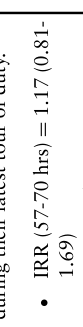
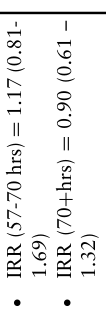
1.32)
Equation reproduced from the original PDF.Equation reproduced from the original PDF.
and serious during night shifts
(00.00 hrs – 04.00 hrs)
Fatigue factors contribute to
accidents (***collision and
groundings)- circadian effects i.e.,
most groundings happened
between 22:00 – 07:00 hours.
Frequency
/Numbers Accidents occur more frequent
*IR **Overall injury rate was 9.1% during their latest tour of duty.
Metrics Estimates
vs. accident
(4-on/8-off, 6/6
system)
Time of incidents
(night vs. day
shifts)
of working hours
per week (<57,
57-70, 71+)
Work Hours Outcome
accidents
merchant vessels 1163 vessel accidents Watch systems
Seafarers 33 fatigue-related
11 countries 6461 Three category
Description Sample Size Non-Standard
investigation registry Seafarers
investigation reports
from MAIB
study Registry- IMO accident
study Registry - Accident
Retrospective
Cross sectional
study Survey Seafarers from
***Collision is defined as two vessels unintentionally being in physical contact with each other; Grounding is defined as the vessels impact on the seabed causing damage to the hull.
*IR = incidence Ratio, IRR = Incidence rate ratio. MAIB = Marine Accident Investigation Bureau (British); IMO = International Maritime Organization; HSE = Health and Safety Executive (United Kingdom - UK).
Table 2. Characteristics of included studies and reported exposure to non-standard hours and occurrence of accidents and or injuries among
Table available in the original PDF paper.
seafarers.
Author, Year, Country Study Design Data Source Population
Vinagre-Rios J. et al.
(2021)- Multicounty Cross sectional
Akhtar, MJ. et al. (2015) -
(Norway; UK; China,
German, Hongkong,
Sweden, Ireland)
Jensen O.C et al. (2004) -
(UK; Denmark; Poland;
Philippines; Indonesia;
Croatia; Spain; South
Africa; Ukraine; Russia;
China)
Non-Standard Work Hours, Accidents and Injuries Among Seafarers. A Systematic Review 529
al., 2004
al., 2015 Jensen O.C et
al., 2021 Akhtar, MJ. et
Vinagre-Rios, J. et
sample/all workers) 1 1 1 1
Sampling and representativeness Criterion
1 Sampling method:
Nonprobability sampling (including purposive, quota, convenience and snowball sampling) 0
Probability sampling (including simple random, systematic, stratified g, cluster, two-stage and multi-stage sampling) or registry (i.e., full
2 Was the response rate reported?
Not reported, response rate below 44% 0 0 0
Response rate at 44% or above 1 1 3 Are the individuals selected to participate in the study likely to be representative of the target population?
No 0
Yes 1 0 1 1
6 How was non-standard work hours/shift work assessed?
Self-report 0 0
Objective data (including registries and payroll records) 1 1 1 7 How were accidents and or injury assessed?
Self-report 0 0
Objective data (including registries and payroll records) 1 1 1 8 Performance bias: Is there a risk of bias caused by the inadequate measurement of exposure?
High risk 0 0 0
Low risk 1 1 9 Are the statistical methods appropriate for the study design?
No/ I cannot tell 0 0
Yes 1 1 1 10 Were meaningful demographic covariates included?
No 0 0 0
Yes 1 1 11 Were other work factors adjusted for?
No 0 0 0
Yes 1 1 12 Is the study design cross-sectional or observational/experimental/interventional (with time-lag)?
Cross sectional 0 0 0 0
Case control, Cohort, Experimental/interventional 1 13 Was accident and or injury adjusted for in analyses?
No 0 0 0
Yes 1 1 14 Confounder bias: Is there a risk of bias caused by the inadequate confirmation and consideration of confounding variable?
4 Selection bias: Is there a risk of selection bias caused by the inadequate selection of participants?
High risk 0
Low risk 1 0 1 1 5 Is the sample size adequate for establishing relationships (assumption of statistical power)?
No 0
Yes 1 0 1 1 Measurement and confounders
Table 3. Evaluation of methodological quality of primary studies.
Table available in the original PDF paper.
studies limits the ability to establish definitive conclusions on associations between work hours and the occurrence of incidents among seafarers. Seafaring comprises a significant population in maritime operations that demands 24-hour continuous work. Our synthesis of three observational studies shows that seafaring remains a high-risk occupation, with injury rates and fatal accident rates that far exceed those reported for many land-based industries (Roberts & Hansen, 2002; Wagstaff & Sigstad Lie, 2011). The persistently elevated rates likely reflect the combined hazards of a physically demanding environment, long periods at sea, and organizational factors such as small crew sizes and the tight turnaround schedules, as well as other factors specifically relevant for seafarers (Wagstaff & Sigstad Lie, 2011; Wu et al., 2022).
The review noted that, accidents were more frequent during night shifts than standard day shifts. These results are biologically and operationally plausible. Humans follow a natural 24-hour cycle of physiological and behavioral changes aligned with the daily light-dark cycle (Blume et al., 2019; Vitaterna et al., 2001). This suggests that seafarers working between 22:00hrs and 07:00hrs operate at the circadian low, when alertness, reaction time and executive function are naturally impaired, and these deficits are likely to be amplified by cumulative sleep restriction, motion exposure and monotony on the bridge or in the engine room. (Schwartz & Klerman, 2019). Furthermore, this natural sleep-wake cycle is highly disrupted when individuals work at non-standard work hours such as shift work (Boivin et al., 2022; Schwartz & Klerman, 2019). In continuous and demanding operations, such as those of seafarers, this disruption can limit human capabilities which in turn can increase the risk of accidents and personal injuries. Furthermore, night shifts are typically staffed by relatively few crews, reducing opportunities for cross-checking and error recovery, while the simultaneous performance of safety-critical manoeuvres, e.g. entering ports in the early morning, may add task complexity. However, studies included in the current review lacked detailed information on specific shift schedules, and methodological quality varied considerably, thus limiting the strength of conclusions regarding a direct association between non-standard work schedules and accidents or injuries among seafarers.
With the limited number of studies identified in the present review, there might be unique research challenges in the maritime sector. Future studies are clearly needed, and it is possible to design and conduct empirical studies in sea vessels without jeopardizing their routine operations (Yan et al., 2021). Research among seafarers in the maritime sector presents unique challenges for obtaining information that can have major importance for prevention of injuries at work. The continuous work at sea exacerbates the risks of injuries, together with other risk factors, such as the isolated and demanding nature of seafaring work. The non-standard work hours can intensify fatigue and mental stress already inherent in the work at sea, demanding further knowledge on how to effectively manage such work situation (Brooks & Greenberg, 2022; Suleiman et al., 2021).
One of the primary strengths of this review is its systematic and comprehensive synthesis of studies that met eligibility criteria following a
Non-Standard Work Hours, Accidents and Injuries Among Seafarers. A Systematic Review 531
predefined registered protocol. This approach provided the current and robust understanding of what is available in literature regarding the non- standard work hours and accidents and injuries among seafarers minimizing bias and ensuring transparency and reproducibility. However, this review had several limitations that should be noted: The main weakness concerns the lack of detailed exposure to non-standard work hours. The diversity in study attributes (exposure to non-standard hours vs. outcome- occurrence of accidents, and injuries) made the material and studies identified unsuitable for inclusion in a meta-analysis. Most studies included in the current review were registry-based and thus less prone to recall bias, their mainly cross- sectional design limits causal inference, and few provided granular exposure data on specific tasks or vessel types. Nevertheless, the consistency of high absolute rates across diverse national settings underlines the need for preventive measures. This might include fatigue-risk management systems that account for maritime operational realities (Wadsworth et al., 2008). There is also a need for longitudinal research that links precise work- hour metrics, vessel characteristics and safety culture indicators to injury outcomes.
CONCLUSION
This systematic review highlights the existence of a high rate of accidents and injuries among seafarers across several countries globally. Accidents and injuries were more frequent during non-standard work hours, particularly during night shifts. However, our results were based on a scarce number of studies which puts limits on the empirical evidence on the association between non-standard work hours and the occurrence of accidents and injuries among seafarers. Further research in this area is thus clearly warranted.
ACKNOWLEDGMENT
We thank the SEAS (Shaping European Research Leaders for Marine Sustainability) programme that received funding from the European Union’s Horizon 2020 research and innovation programme under the Marie Sklodowska-Curie grant No. 101034309 for funding, and members of the Bergen Sleep and Chronobiology Network (BSCN) for their inputs during development of this work.
FUNDING This project has received funding from Shaping European Research Leadership for Marine Sustainability (SEAS), which is part of the European Union’s Horizon 2020 research and innovation programme under the Marie Sklodowska-Curie grant agreement No. 101034309. In addition, the work was partly funded by the Research Council of Norway (project number 335746).
REFERENCES
Akhtar, M. J., & Utne, I. B. (2015). Common patterns in aggregated accident analysis charts from human fatigue-related groundings and collisions at sea. Maritime Policy & Management, 42(2), 186–206. https://doi.org/10.1080/ 03088839.2014.926032 Amir-Behghadami, M., & Janati, A. (2020). Population, Intervention, Comparison,
Outcomes and Study (PICOS) design as a framework to formulate eligibility criteria in systematic reviews. Emergency Medicine Journal, 37(6), 387–387. https://doi.org/10.1136/emermed-2020-209567 Belur, J., Tompson, L., Thornton, A., & Simon, M. (2021). Interrater Reliability in Systematic Review Methodology: Exploring Variation in Coder Decision- Making. Sociological Methods & Research, 50(2), 837–865. https://doi.org/ 10.1177/0049124118799372 Blume, C., Garbazza, C., & Spitschan, M. (2019). Effects of light on human circadian
rhythms, sleep and mood. Somnologie (Berl), 23(3), 147–156. https://doi.org/ 10.1007/s11818-019-00215-x Boivin, D. B., Boudreau, P., & Kosmadopoulos, A. (2022). Disturbance of the Circadian System in Shift Work and its Health Impact. J Biol Rhythms, 37(1), 3–28. https://doi.org/10.1177/07487304211064218 Brooks, S., & Greenberg, N. (2022). Mental health and psychological wellbeing of
maritime personnel: A systematic review. BMC psychology, 10. https://doi.org/ 10.1186/s40359-022-00850-4 Covidence. Covidence systematic Review web based software. Available from: https://app.covidence.org. Eriksen, M. B., & Frandsen, T. F. (2018). The impact of patient, intervention,
comparison, outcome (PICO) as a search strategy tool on literature search quality: A systematic review. J Med Libr Assoc, 106(4), 420–431. https://doi.org/10.5195/ jmla.2018.345 Hesselink JK & Goudswaard A., (2024). European Agency for Safety and Health at Work, OSH Management and Organisation. Work Organisation. Working time. https://oshwiki.osha.europa.eu/en/themes/working-time Gracia, P., Han, W.-J., & Li, J. (2021). Nonstandard work schedules in 29
European countries, 2005–15: Differences by education, gender, and parental status. Monthly Labor Review. https://doi.org/10.21916/mlr.2021.17 Elizabeth George, E& Chattopadhyay, P. (2015). Conditions of Work and Employment: Non-standard work and workers: Organizational implications. International Labour Organization, Geneva, Switzerland. Conditions of work and employment series; no. 61. Available from: https://www.uc.pt/feuc/citcoimbra/ george2016. Fischer, D., A., L. D., Simon, F., Joanna, W., & and Christiani, D. C. (2017). Updating the “Risk Index”: A systematic review and meta-analysis of occupational injuries and work schedule characteristics. Chronobiology International, 34(10), 1423–1438. https://doi.org/10.1080/07420528.2017.1367305 Jensen, O. C., Sørensen, J. F., Kaerlev, L., Canals, M. L., Nikolic, N., & Saarni, H.
(2004). Self-reported injuries among seafarers. Questionnaire validity and results from an international study. Accid Anal Prev, 36(3), 405–413. https://doi.org/ 10.1016/s0001-4575(03)00034-4 Jensen, O. C., Sørensen, J. F., Thomas, M., Canals, M. L., Nikolic, N., & Hu, Y.
(2006). Working conditions in international seafaring. Occup Med (Lond), 56(6), 393–397. https://doi.org/10.1093/occmed/kql038
Non-Standard Work Hours, Accidents and Injuries Among Seafarers. A Systematic Review 533
Kecklund, G., & Axelsson, J. (2016). Health consequences of shift work and insufficient sleep. Bmj, 355, i5210. https://doi.org/10.1136/bmj.i5210 Kim, T. (2021). Malcolm MacLachlan (ed.): Maritime psychology: Research in
organizational & health behavior at sea. WMU Journal of Maritime Affairs, 20(2), 269–272. https://doi.org/10.1007/s13437-021-00244-0 McGuinness, E., Aasjord, H. L., Utne, I. B., & Holmen, I. M. (2013). Fatalities in the Norwegian fishing fleet 1990–2011. Safety Science, 57, 335–351. https://doi.org/ https://doi.org/10.1016/j.ssci.2013.03.009 Nielsen, M. B., Indregard, A.-M. R., & Øverland, S. (2016). Workplace bullying
and sickness absence: A systematic review and meta-analysis of the research literature. Scandinavian Journal of Work, Environment & Health(5), 359–370. https://doi.org/10.5271/sjweh.3579 Page, M. J., McKenzie, J. E., Bossuyt, P. M., Boutron, I., Hoffmann, T. C., Mulrow, C. D., Shamseer, L., Tetzlaff, J. M., Akl, E. A., Brennan, S. E., Chou, R., Glanville, J., Grimshaw, J. M., Hróbjartsson, A., Lalu, M. M., Li, T., Loder, E. W., Mayo-Wilson, E., McDonald, S., …Moher, D. (2021). The PRISMA 2020 statement: An updated guideline for reporting systematic reviews. Bmj, 372, n71. https://doi.org/10.1136/bmj.n71 Roberts, S. E., & Hansen, H. L. (2002). An analysis of the causes of mortality among
seafarers in the British merchant fleet (1986–1995) and recommendations for their reduction. Occup Med (Lond), 52(4), 195–202. https://doi.org/10.1093/occmed/ 52.4.195 Schwartz, W. J., & Klerman, E. B. (2019). Circadian Neurobiology and the Physiologic Regulation of Sleep and Wakefulness. Neurol Clin, 37(3), 475–486. https://doi.org/10.1016/j.ncl.2019.03.001 The Mission to Seafarers, Seafarers meaning (2024). What is a Seafarer? Available
from; https://www.missiontoseafarers.org/about/seafarer-meaning Shahbakhsh, M., Emad, G. R., & Cahoon, S. (2022). Industrial revolutions and transition of the maritime industry: The case of Seafarer’s role in autonomous shipping. The Asian Journal of Shipping and Logistics, 38(1), 10–18. https:// doi.org/https://doi.org/10.1016/j.ajsl.2021.11.004 Shan, D. (2020). Mapping the Maritime Occupational Health and Safety Challenges
Faced by Canadian Seafarers. In A. Chircop, F. Goerlandt, C. Aporta, & R. Pelot (Eds.), Governance of Arctic Shipping: Rethinking Risk, Human Impacts and Regulation (pp. 191–205). Springer International Publishing. https://doi.org/ 10.1007/978-3-030-44975-9_10 Statista. (2024). Transportation & Logistics: Water Transport: Number of employees at sea in the European Union’s (EU-28) shipping industry in 2018, by rank. Retrieved 30 June from https://www.statista.com/statistics/1313341/ direct-employment-eu-shipping-industry-at-sea-by-rank/#statisticContainer. Suleiman, A. O., Decker, R. E., Garza, J. L., Laguerre, R. A., Dugan, A. G., & Cavallari, J. M. (2021). Worker perspectives on the impact of non-standard workdays on worker and family well-being: A qualitative study. BMC Public Health, 21(1), 2230. https://doi.org/10.1186/s12889-021-12265-8 Sunde, E., Harris, A., Nielsen, M. B., Bjorvatn, B., Lie, S. A., Holmelid, Ø., Vedaa,
Ø., Waage, S., & Pallesen, S. (2022). Protocol for a systematic review and meta- analysis on the associations between shift work and sickness absence. Systematic reviews, 11(1), 143. https://doi.org/10.1186/s13643-022-02020-4 United Nations Trade and development, (2024). Review of Maritime Transport 2023.
Retrieved June from https://unctad.org/publication/review-maritime-transport- 2023.
van Leeuwen, W. M. A., Pekcan, C., Barnett, M., & Kecklund, G. (2021).
Mathematical modelling of sleep and sleepiness under various watch keeping schedules in the maritime industry. Marine Policy, 130, 104277. https://doi.org/ https://doi.org/10.1016/j.marpol.2020.104277 Vinagre-Ríos, J., Pérez-Canosa, J. M., & Iglesias-Baniela, S. (2021). The effect of circadian rhythms on shipping accidents. Journal of Navigation, 74(5), 1189–1199. https://doi.org/10.1017/s0373463321000333 Vitaterna, M. H., Takahashi, J. S., & Turek, F. W. (2001). Overview of circadian
rhythms. Alcohol Res Health, 25(2), 85–93. https://pmc.ncbi.nlm.nih.gov/articles/ PMC6707128/pdf/arcr-25-2-85.pdf Wadsworth, E. J., Allen, P. H., McNamara, R. L., & Smith, A. P. (2008). Fatigue and health in a seafaring population. Occup Med (Lond), 58(3), 198–204. https:// doi.org/10.1093/occmed/kqn008 Wagstaff, A. S., & Sigstad Lie, J. A. (2011). Shift and night work and long working
hours—a systematic review of safety implications. Scand J Work Environ Health, 37(3), 173–185. https://doi.org/10.5271/sjweh.3146 Wu, M.-J., Zhao, K., & Fils-Aime, F. (2022). Response rates of online surveys in published research: A meta-analysis. Computers in Human Behavior Reports, 7, 100206. https://doi.org/https://doi.org/10.1016/j.chbr.2022.100206 Wu, Q. J., Sun, H., Wen, Z. Y., Zhang, M., Wang, H. Y., He, X. H., Jiang, Y. T.,
& Zhao, Y. H. (2022). Shift work and health outcomes: An umbrella review of systematic reviews and meta-analyses of epidemiological studies. J Clin Sleep Med, 18(2), 653–662. https://doi.org/10.5664/jcsm.9642 Yan, R., Wang, S., Zhen, L., & Laporte, G. (2021). Emerging approaches applied to maritime transport research: Past and future. Communications in Transportation Research, 1, 100011. https://doi.org/https://doi.org/10.1016/ j.commtr.2021.100011 Zhang, P., Shan, D., Zhao, M., & Pryce-Roberts, N. (2019). Navigating seafarer’s
right to life across the shipping industry. Marine Policy, 99, 80–86. https://doi.org/ https://doi.org/10.1016/j.marpol.2018.10.002 Zhang, P., & Zhao, M. (2017). Maritime health of Chinese seafarers. Marine Policy, 83, 259–267. https://doi.org/https://doi.org/10.1016/j.marpol.2017.06.028
LISTED IN THE AHFE DIGITAL BOOKSTORE CATALOGUE
Explore the complete digital volume
Advances in Human Factors of Transportation
Read this individual research paper free through the original publisher, or explore the full digital proceedings book.
ISBN 978-1-964867-62-5
Explore this ISBN in the AHFE Bookstore ↗Listed in the July 2026 bookstore catalogue; search by ISBN to confirm current availability · Digital book purchase optional