Yue Zhang (2025). The Digital Reconstruction of Traditional Chinese Opera: Interactive Innovative Design of Quanzhou String Puppetry. In: Human Factors and Wearable Technologies. AHFE Open Access, vol. 175, pp. 148–157. https://doi.org/10.54941/ahfe1006368
To enhance the ability of task issuers in crowdsourced design to accurately identify and describe design requirements, this study analyzes a large number of online reviews to extract market demands and utilizes large language models to generate more accurate and comprehensive design requirements. Online review texts from e-commerce platforms were collected, and the evaluation subjects within the reviews were identified and analyzed. These subjects were then categorized using spectral clustering, user satisfaction was calculated, and design requirements were generated through dialogue with large language models. This method systematically analyzes user feedback from online reviews, identifies and clusters evaluation subjects, and further understands and generates user requirements. Experiments demonstrate that this method effectively generates crowdsourced design requirements. This research effectively integrates the extraction of design requirements from online review texts with the recognition and generation of these requirements using large models. It achieves precise localization and efficient generation of design needs, providing a new implementation approach for crowdsourced design.
“Chinese puppetry has a long history, with diverse forms, profound artistic heritage, and unique styles. It is a masterpiece of China’s outstanding traditional culture (Yan, 2014).” As an important part of Minnan culture, Quanzhou string puppetry boasts a rich history and deep artistic heritage. However, with the rapid development of modern technology and the diversification of entertainment options, traditional puppetry faces challenges such as declining audiences and artistic recession. To revitalize this traditional art, digital technology and interactive design offer new opportunities. The introduction of digital technology has already been applied to various traditional art forms. The digital transformation of Quanzhou string puppetry is not only about preserving and developing traditional techniques but also about exploring its future innovations. This paper aims to explore how to reshape Quanzhou string puppetry through digital reconstruction and interactive innovative design. By digitally transforming traditional performance methods and integrating modern
The Digital Reconstruction of Traditional Chinese Opera: Interactive Innovative Design 149
technological tools, it seeks to enhance the expressiveness and interactivity of Quanzhou string puppetry, further promoting its cultural dissemination and artistic development.
THE APPLICATION OF DIGITAL TECHNOLOGY IN TRADITIONAL CHINESE OPERA Digital Reconstruction
Digital reconstruction refers to the use of modern information technology to transform traditional art forms, encompassing various applications of digital technology in artistic creation. In traditional opera, digital reconstruction is not limited to restoring operatic conventions but also involves innovating and redesigning the content, forms, and modes of expression of artistic works through digital technology. This process allows traditional art forms, performance methods, stage designs, and other elements to be updated and transformed with the help of digital tools. It enhances their expressiveness, communicability, and interactivity with modern audiences. By enriching the forms of traditional opera, it enables the art to overcome geographical limitations, reach broader audiences, and create entirely new operatic experiences.
For Quanzhou string puppetry, digital reconstruction not only introduces new artistic expression methods but also uses virtual scenes and character reproductions to transcend physical space constraints. This approach expands the dimensions of performance and enhances the artistic appeal of the puppetry, creating a stronger emotional connection with audiences.
Digital Opera Design Practice Digital opera design practice refers to the process of applying modern digital technology to the creation and performance of traditional opera, aiming to enhance its artistic expressiveness, heritage value, and communicability. By integrating digital tools such as 3D modeling, motion capture, and digital stage design with traditional opera forms, traditional opera is revitalized within a modern technological environment, broadening its expressive space and interactivity.
Through interactive screens, the sense of audience participation and interactivity in traditional opera is significantly enhanced. In some modernized opera performances, audiences can interact with virtual characters or props on stage via touchscreens or gesture recognition. The application of interactive screens deepens audience immersion through interactivity. For example, in the Kunqu opera The Peony Pavilion, touchscreen technology allows the audience to choose different plot developments and interact with virtual characters, making traditional opera performances more dynamic, engaging, and personalized (see Figure 1).
150 Yue
Figure 1: Interactive screen display of Kunqu opera created (created by Qi and Zhang, 2022).
DIGITAL RECONSTRUCTION OF QUANZHOU STRING PUPPETRY In her article A Study on the Visual Communication of Quanzhou String Puppets from the Perspective of Dramatic Semiotics, Ye Huiling points out that Quanzhou String Puppet Opera was historically known as “Suspended String Puppets” and is commonly referred to as “Jiali” in Minnan. The puppeteers are also called “Mr. Jiali.” As with most traditional folk arts in China, the quantity and quality of related research are far from sufficient to match the long history and social status of Quanzhou String Puppet Opera (Ye, 2019). Professor Chen from Xiamen University mentioned in his work An Outline of Puppet Art that the study of puppet theatre has always been a weak point in China’s drama research (Chen, 2013). The digital reconstruction of Quanzhou String Puppet Opera brings traditional puppetry into a new exhibition space, allowing traditional puppet elements to be digitally presented and enhancing the interactivity of the puppet performance. This digital reconstruction injects modern elements into Quanzhou String Puppet Opera, opening up new pathways for its inheritance and development.
The Traditional Performance Style of Quanzhou String Puppet Opera The most distinctive feature of the performance style of Quanzhou String Puppet Opera is its puppetry control techniques. The puppets are controlled by fine strings, and with the accompaniment of the unique “puppet tune,” they vividly portray the character’s image. These strings are connected to various parts of the puppet, and through flexible string manipulation techniques, the puppeteer brings the puppet to life with dynamic movements. The stage design of Quanzhou String Puppet Opera is relatively simple but full of symbolism and expressiveness. Traditional string puppet opera stages are usually small, and the performer operates the puppet on stage, using the limited space and props to complete the entire performance.
In her article Visual Image Design of Quanzhou String Puppet Opera Folk Art, Li Xiaoling points out that “puppet tune” is the traditional musical style of Quanzhou puppet theatre, belonging to the Nanguan music system. It is a remnant of Southern Opera music, an important aspect of theatrical culture.
The Digital Reconstruction of Traditional Chinese Opera: Interactive Innovative Design 151
Among all types of puppet theatre, Quanzhou String Puppet Opera is the only one with its own “puppet tune” music (Li, 2023). The music of Quanzhou String Puppet Opera has a very strong local flavor, with its rhythm and emotional tone closely integrated with the puppet performance, enhancing the emotional expression of the drama.
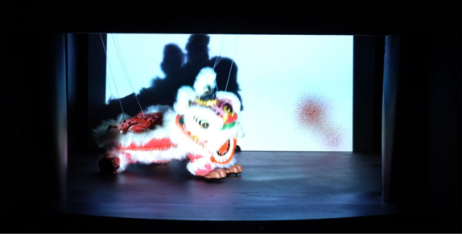
Virtual Puppet Theatre Visual Design The virtual image design of Quanzhou String Puppet Opera is based on the classic play The Auspicious Lion Dance and extracts the intangible cultural heritage elements from the performance to create (see Table 1). The lion dance and the embroidered ball are two important artistic elements. The lion dance is not only a symbol of traditional festivals but also a cultural symbol of celebration and harmony, while the embroidered ball often symbolizes prosperity and good fortune. The image design is inspired by the embroidered ball in the opera. After creating the first version using AI, it was optimized and redesigned based on its performative structure and tone. The overall image of the embroidered ball and its tassels were extracted as the main design elements, combined with traditional opera dragon and cloud patterns, to showcase the folk vision of auspiciousness and good fortune (see Figure 2). Adobe After Effects was used to design the dynamic movements of the embroidered ball, and the traditional curtain opening was presented in virtual form within the image. The details of the embroidered ball were enhanced with lighting and shadow effects, making its form richer and more three-dimensional, further improving the immersive experience for the audience.
Table 1: Extraction of intangible cultural heritage elements from Quanzhou String Puppet Opera (Zhang, 2024).
Table available in the original PDF paper.
Number Type Image Name Main Content and Purpose
A1 Props Lion Dance
It symbolizes a festive atmosphere and serves as an important symbol of celebration and harmony. In the performance, the stylized movements of the lion dance convey feelings of auspiciousness and joy.
A2 Props Embroidered Ball
It symbolizes good fortune and prosperity. Combined with traditional opera patterns (such as dragon and cloud motifs), it is often used to depict auspicious scenes.
Continued
152 Yue
Table 1: Continued Number Type Image Name Main Content and Purpose
Table available in the original PDF paper.
A3 Props Puppet String
The core technique of Quanzhou String Puppet Opera enables the flexibility and vividness of the puppet’s movements, bringing the puppet to life.
A4 Stage Puppet String
A small traditional stage, with a simple design but symbolic significance. In traditional opera, the stage is the central space for performance.
Figure 2: Virtual image of lion dance and embroidered ball (created by Zhang, 2024).
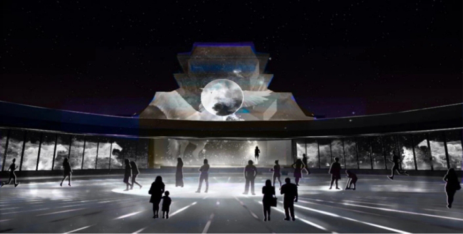
The Integration of Digital Methods and Projection The integration of projection technology allows the virtual embroidered ball to extend beyond the confines of fixed media displays. Using projection mapping technology, the embroidered ball image is accurately projected onto the stage, with its shape and position continuously changing in sync with the rhythm of the performance. It can even extend into the virtual background of the stage. This enables the audience to not only witness the interaction between the puppet and the virtual embroidered ball but also to experience the deep integration of the embroidered ball with the entire stage environment, creating a multidimensional artistic experience (see Figure 3). The fusion of digital methods and projection technology transforms the embroidered ball in The Auspicious Lion Dance from a simple prop into a vibrant virtual element, enriching the performance layers of the entire puppet opera and enhancing the audience’s sense of immersion and interactivity. This provides new possibilities for the inheritance and development of Quanzhou String Puppet Opera in the context of modern technology.
The Digital Reconstruction of Traditional Chinese Opera: Interactive Innovative Design 153
Figure 3: Innovation space for string puppet opera (created by Zhang, 2024).
INTERACTIVE INNOVATIVE DESIGN OF QUANZHOU STRING PUPPET OPERA Interactivity in Traditional Puppet Theatre
In traditional puppet theatre, the interaction between the puppet and the puppeteer is the most fundamental form of interactivity. The puppet is controlled by the puppeteer through strings, rods, or hand movements, with each action of the actor directly influencing the puppet’s performance. Props in puppet theatre are often closely related to the puppet’s movements and the storyline. The puppet not only interacts with the puppeteer but also needs to collaborate with various stage props to complete the performance. Through meticulous control, the puppeteer creates interactions between the puppet and these props, making the props not just static objects but important components of the story’s development. In these performances, the puppet, through its coordination with props, expresses specific emotions and actions, making the story more vivid and expressive. In certain folk puppet plays, actors may interact with the audience to enhance the performance and evoke emotions. The interactivity in traditional puppet theatre is not only reflected in the precise manipulation between the actor and the puppet and the coordination with props, but also in the emotional communication and interaction between the actor and the audience, which deepens the performance’s depth and expressiveness. With the development of modern technology, the interactive methods of traditional puppet theatre are being further expanded and innovated. The interaction between the puppet and the puppeteer, the puppet and
154 Yue
the props, and the actor and the audience remain its main forms of interactivity.
Innovative Space for Interactive Display The miniature puppet stage, integrated as an innovative space into Quanzhou String Puppet Opera, works in conjunction with modern projection technology to dynamically alter the stage background in real- time. This allows the audience to experience the transformation of the puppet stage scenes, enhancing the stage performance and achieving a seamless fusion of traditional and modern design in Quanzhou String Puppet Opera (see Figure 4). The movements of the puppets, virtual imagery, projection effects, and lighting intertwine to create a more immersive visual effect.
Based on audience experience and survey data (see Table 2), the interactive design of the innovative space includes both passive and active behaviors. In passive behavior, the audience watches videos or performances to gain an initial perception. In active behavior, the audience actively engages by asking questions, reaching out to touch, learning the basic operations of string puppetry, and interacting with the design and performance content. This allows them to transition from “outsiders” to “insiders,” immersing themselves more deeply in the charm of the opera. This approach brings a richer range of display media and spaces to Quanzhou String Puppet Opera, with the interactive design enabling the audience to manipulate puppets and interact with virtual videos. They can even collaborate with other viewers to perform, creating a highly interactive cultural perception and communication experience.
This not only enhances the visual effects and audience experience, giving the puppet opera new vitality but also preserves its cultural roots and traditional spirit. “True art transcends technology; the strings that give life to the puppet also tell the legendary tales of humanity (Liu, 2013).”
Table 2: Interactive perception experience table for innovative design of Quanzhou String Puppet Opera (Zhang, 2025).
Manipulating Puppets to Interact with Virtual Videos, Performing, and Interacting with Other Audience Members Continued
The Digital Reconstruction of Traditional Chinese Opera: Interactive Innovative Design 155
Table 2: Continued
Table available in the original PDF paper.
Observable Indicators
Dimension Data Source Form of Expression
Curiosity, Focus, Joy
Positive Emotion
Perceived Emotion
Audience Feedback (Questionnaires and Experience)
Frowning, Sighing
Negative Emotion Boredom Detached Emotion
Basic Language Description, Understanding
Perceived Language
Audience Feedback (Questionnaires and Experience) Advanced Language
Irrelevant, Disengaged
Completing Interactive Creation that Matches the Video Detached Language
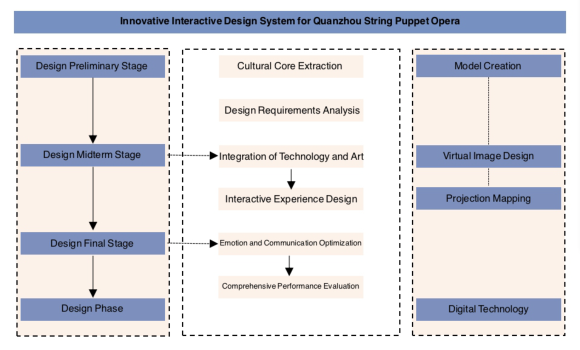
Figure 4: Innovative interactive design system for Quanzhou string puppet opera (created by Zhang, 2024).
Perception of Emotion and Language Through innovative design, the audience’s perception of emotions and language expression abilities were stimulated. Based on the “Perceived Emotion” and “Perceived Language” dimensions (see Table 2), the following performance aspects can be derived from the experience: Perceived Emotion:
Positive Emotion: Feedback shows that most audience members exhibit emotions of curiosity, focus, and enjoyment, indicating that the interactive design successfully sparked their interest in Quanzhou String Puppet Opera. Negative Emotion: Some audience members displayed frowning, sighing, or even boredom, possibly due to a lack of interest or challenges in interaction.
156 Yue
Detached Emotion: This group of audience members was unable to establish an emotional connection with the performance, showing clear signs of disengagement. Perceived emotions are diverse, providing directions for future optimization.
Perceived Language: Basic Language: Some audience members only engaged in simple descriptions and understanding, with low interaction alignment with the video, or were even unable to participate in the creative process. Advanced Language: Actively engaged participants completed interactions that matched the video and expressed a deeper sense of participation through interactive creation. Detached Language: Some audience members completely lacked linguistic engagement, limiting themselves to superficial experiences.
Language expression is hierarchical, ranging from basic language (simple description and understanding) to advanced language (in-depth creative participation). The interactive experience has effectively stimulated the audience’s linguistic perception and expression abilities regarding opera culture. At the same time, it highlights the potential of guiding audiences in a detached language state. Feedback on audience experience effects has been summarized (see Table 3).
By integrating data and analysis from these dimensions, the expressive power and interactivity of Quanzhou String Puppet Opera in a digital context have been enhanced, while also providing new pathways for its inheritance and development. This innovation-based design, grounded in perception behavior, emotions, and language, further expands the dissemination space of traditional opera and lays the foundation for its revival in modern society.
CONCLUSION
Through digital reconstruction and interactive innovative design, Quanzhou string puppetry integrates traditional art forms with modern technology, enhancing its artistic expressiveness, expanding dissemination channels, and strengthening audience interaction. This practice provides new ideas and possibilities for the inheritance and development of traditional opera, playing a significant role in promoting the prosperity of traditional arts in modern society. It also offers valuable insights for the future direction of the digital development of Quanzhou string puppetry.
The Digital Reconstruction of Traditional Chinese Opera: Interactive Innovative Design 157
ACKNOWLEDGMENT
This work has been supported by Art Youth Project of National Social Science Foundation: Creative Transformation of Chinese Xiqu Arts Resources Enabled by Digital Intelligence (24CH218), Research Project of Digital Media Art, Key Laboratory of Sichuan Province, Sichuan Conservatory of Music (Grant Number 22DMAKL10).
REFERENCES
Chen Shixiong. (2013). People, Puppets, and Drama: A Comparative Study of Eastern and Western Puppet Theater (Part II). Cultural Heritage, (04), 41–50. Li Xiaoling. (2023). Visual Image Design of Quanzhou String Puppet Folk Art
(Master’s Thesis, Qingdao University of Science and Technology). Master’s Thesis. Liu Shujuan. (2013). Flying Silk, Interpreting Legends: A Study on the Craftsmanship of Quanzhou String Puppets. Decoration, (01), 79–80. Luo Yan. (2014). A Preliminary Exploration of the Past and Present of Puppet
Theater. Art Studies, (S1), 359–360. Ye Huiling. (2019). A Study on the Visual Communication of Quanzhou String Puppets from the Perspective of Dramatic Semiotics (Master’s Thesis, Shenzhen University). Master’s Thesis.
LISTED IN THE AHFE DIGITAL BOOKSTORE CATALOGUE
Explore the complete digital volume
Human Factors and Wearable Technologies
Read this individual research paper free through the original publisher, or explore the full digital proceedings book.
ISBN 978-1-964867-51-9
Explore this ISBN in the AHFE Bookstore ↗Listed in the July 2026 bookstore catalogue; search by ISBN to confirm current availability · Digital book purchase optional