Yuying Jiang (2025). Healing Exhibition Design for Highly Sensitive Individuals: A Design Project of Immersive Therapeutic Experiences. In: Human Factors in Aging and Special Needs. AHFE Open Access, vol. 174, pp. 91–101. https://doi.org/10.54941/ahfe1006297
In recent years, healing exhibitions have gained significant popularity as individuals seek solace from the increasing pressures of modern life. Among these audiences, highly sensitive individuals (HSIs) stand out for their heightened perception of negative stimuli, making them particularly in need of therapeutic interventions. This study explores a novel approach to exhibition design tailored to the needs of HSIs, employing both qualitative and quantitative methods. The research utilized a “Negative Energy Exchange Box” placed in high-stress environments, such as office buildings and mental health clinics, to collect real-life stress cases from HSIs. These cases informed the development of an exhibition designed with a flowing narrative structure (“introduction, development, climax, and conclusion”). Healing elements included inflatable installations, vibrant colors, and secluded spaces to create an immersive and therapeutic environment.Focus group evaluations conducted before and after visiting the exhibition revealed significant improvements in participants’ emotional states, demonstrating the efficacy of this approach. The findings highlight the importance of targeted research and design interventions to support HSIs through holistic, experiential environments.
Mental health has long been a major public concern. Approximately 1 billion people worldwide currently suffer from mental disorders, which means that 1 in 8 people are affected by mental health problems (Cuijpers et al., 2023). The two most common mental health problems are depression and anxiety, affecting 3.6% and 4.4% of the world’s population respectively, and contributing significantly to global disability (World Health Organisation, 2017). After the end of COVID-19, the overall mental health of society has become even worse, with the global prevalence of depression and anxiety having risen to 28% and 26.9% respectively (Nochaiwong et al., 2021).
Among them, highly sensitive people are more in need of society’s attention. Sensory Processing Sensitivity (SPS) is a heritable personality- related trait. (Trå et al., 2023) HSP (Highly Sensitive Person) Highly Sensitive Person is caused by excessive Sensory Processing Sensitivity (SPS), and is
more responsive to stimuli, emotions, cognitions, and behaviours, and perceives stimuli in a more profound way. Aron and Aron (1997) developed the Highly Sensitive People Scale (HSPS) to measure individual differences in Sensory Processing Sensitivity (SPS). The HSP scale has been shown to have adequate reliability and content, convergent and discriminant validity (Benham, 2006). Based on the data from the results of such tests, it is evident that highly sensitive people are not rare, comprising approximately 15-20% of the overall population (Highly Sensitive Person | Psychology Today, n.d.). HSIs tend to have more in-depth cognitive processing of stimuli, emotional reactions, tend to be easily overstimulated, and have a greater awareness of environmental subtleties (including the emotional states of others) and are more susceptible to being negatively affected by the same things (Aron & Aron, 1997). As a result, they are more likely than others to develop mental sub-health problems, which in turn lead to mental and physical illnesses, and are more in need of social attention and solutions.
Research has shown that HSIs are more likely to feel happy and joyful in peaceful, soothing and relaxed environments, and that creative environments stimulate their potential to a greater extent (Bridges & Schendan, 2019). At the same time, thinking positively about themselves can help to alleviate their psychological stress, for example through the Mindfulness Based Stress Reduction (MBSR) programme, which enables highly sensitive people to reduce social stress and transform stress in their lives in a positive way (Soons et al., 2010). Therefore, one of the important research directions is how to help highly sensitive people from both external environment and internal psychology.
Currently, many HSIs seek psychotherapy and intervention because they believe they have a ‘illness’, but in reality it is not a ‘illness’, it is a lack of understanding of themselves (Aron, 2011). However, many parts of the world are faced with some well-known health workforce challenges, which include shortage of counsellors, unequal distribution of counselling rooms, inadequate mental health education, etc. (World Health Organization, 2018). For HSIs, this lack of introduction and popularisation of their own state can lead to a misunderstanding of their own state, which can lead to a cycle of negativity that can have a deeper negative impact. Therefore, it is essential to increase the attention to this group of people in their daily lives.
In recent years, healing exhibitions, as an innovative way of combining art and psychology to provide new healing paths for specific groups of people, have been widely used in the fields of psychological interventions, community services, cultural exchanges, and design practices.
In the existing research, the results for different target groups are also relatively rich. For general audiences, healing exhibitions help them find psychological solace and relaxation in their busy lives by providing immersive experiences. For example, MONET INSIDE Monet’s healing light and shadow exhibition in Singapore provides a visual and auditory feast through a 360
immersive theatre and dynamic light and sound effects, helping the audience to relax both physically and mentally (MONET INSIDE Monet’s Healing Light and Shadow Exhibition, Singapore, 2024). For children, healing exhibitions promote their psychological development and emotional
Healing Exhibition Design for Highly Sensitive Individuals 93
regulation through interactive and fun designs. For example, the ‘Beauty Heals the Heart - “The Beauty of Life” Art Creation Exhibition’ held in 2024 attracted the participation of many students, with works focusing on the rhythm of life, the beauty of the heart, and other themes, conveying the message that life is equal and all are beautiful. The works focus on the rhythm of life and the beauty of the heart, conveying the humanistic concern that all lives are equal and should be cherished (Opening of the Third ‘Beauty for the Heart - “Beauty of Life” Art Healing Exhibition’ - Exhibition - China Academy of Art Official Website, n.d. Official website of China Academy of Art, n.d.).
However, despite the widespread use of healing exhibitions in a variety of fields and populations, there is currently a gap in research on the appropriateness of these exhibitions for highly sensitive individuals (HSIs). This study attempts to fill this gap by identifying the innovation of ‘depth and specificity of design for HSIs’ in order to provide a more precise and effective pathway to healing for this special group.
LITERATURE REVIEW
Healing exhibitions have emerged as an interdisciplinary exhibition model in recent years, integrating art, psychology, and spatial design to alleviate visitors’ emotional stress and improve mental well-being (Armen et al., n.d.). With the increasing public awareness of mental health following the COVID-19 pandemic, the role of healing exhibitions has garnered significant attention, becoming a key focus in contemporary curatorial practices.
Healing exhibitions are not only an artistic presentation but also possess a spatial dimension, allowing visitors to experience psychological healing through external environmental stimuli. Research has demonstrated that the exhibition environment itself can positively impact visitors’ emotional well-being. For example, Binnie (2010) conducted a study at Leicester’s New Walk Museum, revealing that viewing artworks in a museum setting can reduce self-reported anxiety levels, with varying effects across different participant groups. Green (2019) conducted a qualitative case study confirming that integrating interactive verbal expression in museum-based art therapy programs can enhance visitors’ emotional well-being. Arthurina Fear (2011) suggested using pre- and post-program measurements such as the State Anxiety Inventory (SAI) to assess the effectiveness of healing exhibitions. However, while these studies validate the positive impact of healing exhibitions on emotional well-being, they primarily focus on individual exhibits or specific interactive methods. There remains a lack of in-depth exploration of how curatorial strategies can systematically create a coherent emotional healing pathway within the exhibition as a whole.
In recent years, scholars have increasingly investigated how curatorial strategies can enhance the therapeutic effectiveness of healing exhibitions. Zhang and Guan (2023) explored immersive art exhibitions in urban spaces and proposed a design concept based on the theory of the healing environment, aligning with the mental health needs of urban residents. Huang (2024) examined museum-based art therapy frameworks through
94 Yuying
embodied cognition and incorporated Donald Norman’s (2004) three levels of emotional design, suggesting that healing exhibitions should be systematically designed across the visceral (body perception), behavioral (interactive engagement), and reflective (emotional processing) layers. While these studies propose immersive experiences and multi-sensory interaction techniques, they lack a structured approach to systematically guide visitors’ emotional progression throughout the exhibition. Therefore, the introduction of narrative curation may serve as a crucial solution to this problem.
Narrative curation provides a structured experiential guidance approach, enabling exhibitions to better regulate emotional engagement, control visitor experience pacing, and enhance audience resonance (Wolff et al., 2012). Compared to fragmented curatorial approaches, a well-structured narrative logic can ensure that the emotional guidance in an exhibition is more systematic and coherent. Within exhibition planning, China’s ancient “Qi-Cheng-Zhuan-He” structure serves as an inspiration for narrative curation. This framework was first introduced by Yang Zai and Fan Peng during the Yuan Dynasty, emphasizing a four-stage narrative logic: Qi (Introduction), setting the stage and introducing the exhibition theme; Cheng (Development), gradually unfolding the content to deepen audience engagement; Zhuan (Climax), creating an emotional peak or transformation in the visitor experience; and He (Conclusion), concluding the exhibition and guiding audience reflection. In recent years, this method has been widely applied to immersive exhibitions, helping visitors gradually transition into deep emotional experiences (Zhao & Guo, 2022).
Despite the increasing application of narrative curation, existing healing exhibitions still lack a coherent, structured narrative framework. Their storytelling approach often remains loosely connected, relying on individual exhibits rather than an overarching emotional guidance strategy. This study aims to develop a systematic emotional guidance framework for healing exhibitions based on the Qi-Cheng-Zhuan-He structure. By integrating narrative curation and Donald Norman’s emotional design model, the study seeks to optimize the curatorial logic of healing exhibitions, making them more effective in supporting visitors’ emotional well-being, particularly for highly sensitive individuals.
PROJECT APPROACH Theoretical Framework
This study proposes a healing exhibition design framework tailored for highly sensitive individuals (HSIs), integrating the exhibition design narrative structure of “introduction, development, climax, and conclusion”. This framework enhances the narrative coherence of the exhibition, making it more accessible and immersive. By structuring the exhibition environment and installations according to this approach, the design aims to create a deeply engaging and therapeutic experience (see Table 1).
Healing Exhibition Design for Highly Sensitive Individuals 95
Table 1: Narrative structure of healing exhibition design for highly sensitive individuals.
Table available in the original PDF paper.
Structure Content Introduction Establishing a connection with highly sensitive audiences, allowing them to recognise and accept their sensitive traits, and gaining an initial understanding of the uniqueness of highly sensitive groups Development Helping the audience to gain a deeper understanding of the manifestation of highly sensitive traits and their effects, and to progress to a state of empathy and self-acceptance Climax Triggering emotional resonance, helping the audience to realise the value and power of high sensitivity, stimulating positive emotions and self-identity, and adopting the most healing content in the entire exhibition for curation, to achieve an immersive and healing effect Conclusion Evoke emotional resonance, help the audience realise the value and power of high sensitivity, stimulate positive emotions and self-identity, and provide feedback and reflection
This structured approach ensures that the exhibition is not merely an artistic experience but a complete emotional journey, allowing HSIs to gradually attain self-affirmation and emotional healing throughout their visit.
Qualitative Research In the early design phase, interviews were conducted with a curator and an art therapy scholar. Both experts emphasized that HSIs require gentler intervention methods compared to the general population. They highlighted the importance of fostering emotional connections and conveying sincerity in curatorial storytelling to deeply engage visitors.
Internal research also revealed that interventions promoting positive thinking have already been employed to enhance HSIs’ cognitive approaches and overall well-being. Additionally, an interview with a psychologist indicated that while sensory sensitivity is an inherent trait that cannot be altered, and external environments are often difficult to change, individuals can modify their cognitive processing and response strategies. By consistently engaging in positive reframing, HSIs can experience more joy rather than distress. Based on this insight, the exhibition’s therapeutic process must utilize diverse external media to help HSIs recognize their unique traits and ultimately facilitate positive change.
Quantitative Research In order to collect the real distress of HSIs, two places where HSIs are more likely to be found, the entrance of an office building and the entrance of a mental health clinic, were chosen to place a ‘Negative Energy Exchange Box’ (see Figure 1a). HSIs can write down their situations in their daily life that are more likely to be disturbing and receive negative information, put them in the box, and place a situation in the box that they feel is very healing. In return, the author and the counsellor will reply to their negative situations in the form of emails and ‘recycle’ their positive situations.
96 Yuying
Figure 1: a) Negative energy exchange box. b) Results of the box.
Figure available in the original PDF paper.
The action received a total of 34 valid negative scenes and 22 healing scenes (see Figure 1b), which were further extracted and analysed as a relevant basis for the healing exhibition display, so as to make the scenes targeting the highly sensitive more contagious and to impress this type of people.
In order to further optimise the visual design of the exhibition, this study designed an online questionnaire to investigate the visual image of the healing exhibition and the audience’s emotional experience, and a total of 103 valid data were collected from 27 provinces in China. The questionnaire starts from different parts of the visual image of the ‘healing’ exhibition, and combines the four parts of the ‘beginning, middle and end’ during the visit to set up questions to understand the audience’s psychological needs for the healing exhibition’s colours, spatial layout, and changes in light and shadow, etc., to ensure that the exhibition design is visually gentle and consistent with the audience’s emotional experience. The exhibition design is visually gentle and meets the experience needs of highly sensitive people.
DESIGN PROJECT
Introduction
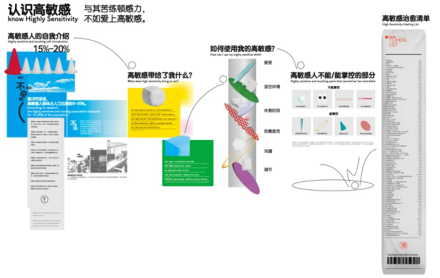
At the beginning of the exhibition, introductory text is used to attract potential visitors to the interior (see Figure 2). An interactive question module based on the Highly Sensitive Person Scale (HSP*) is set up at the beginning to encourage the audience to understand whether they belong to the HSIs through self-tests, and to get a preliminary understanding of the characteristics and needs of this group, and to begin the gradual transformation into the process of being healed.
Figure 2: The introduction of HSIs with a questionnaire.
Healing Exhibition Design for Highly Sensitive Individuals 97
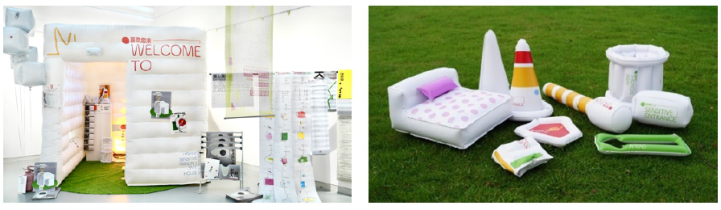
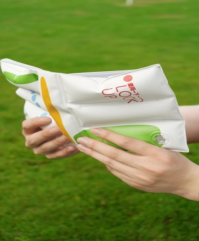
Development The development part of the exhibition requires the use of different media in the exhibition to create a comfortable and healing environment for HSIs, including the overall layout of the exhibition and the creation of the details of the exhibition (see Figure 3). Designing HSI healing props, including inflatable devices, emotional props, screens for playing films, soft carpets and walls, soft and warm lighting, lively and light music, etc., to create a safe immersive environment for HSIs from the dimensions of vision, hearing and touch, and to achieve the effect of gradual healing from the outside to the inside.
Figure 3: a) The outside view of the exhibition. b) Inflatable devices.
Climax The climax of the exhibition needs to use a gradual progression from the behavioural layer to the reflective layer, focusing on getting HSIs to change from the inside and know how they should face similar situations in the future. Producing a ‘Highly Sensitive Translation Dictionary’ (see Figure 4) to ‘translate’ scenes in daily life that HSIs tend to find disturbing and interpret them in a more positive light, so that HSIs can gradually learn how to interpret the same content in a positive light as they go through it.
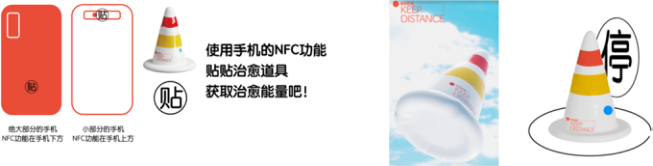
Adding NFC to the props for emotional catharsis, and using mobile phones to watch a short ‘healing film’ when they are close to the props (see Figure 5), will further enable highly sensitive people to become positive in
98 Yuying
their psychological state, and generate curiosity rather than resistance to the environment around them.
Figure 5: NFC healing part and the healing film.
Conclusion
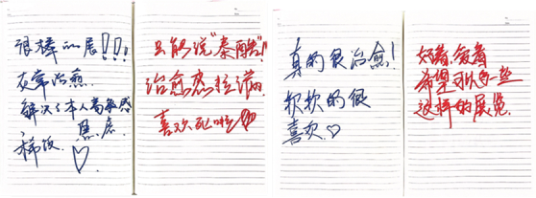
A guestbook is placed at the end of the exhibition, where visitors can leave a message at the end of the exhibition, recalling the entire healing process and writing their own thoughts about it (see Figure 6), further deepening the overall effect of healing. At the same time, other viewers will be empowered by the words of others after reading their messages.
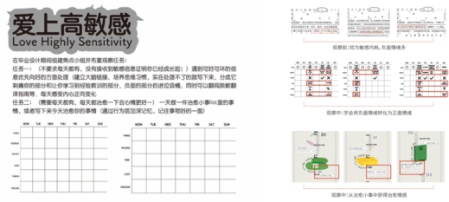
Figure 6: Some messages after the exhibition.Figure 7: a) The task table for the focus group. b) Focus group results.
Among the numerous viewers, three visitors from different regions and at different ages were invited to form a focus group, who were asked to keep a record of their state of being before visiting the healing exhibition, and to
Healing Exhibition Design for Highly Sensitive Individuals 99
make a one-week mindset shift in their daily lives and write a diary after viewing the healing exhibition (see Figure 7a). Through the comparison of the effects of the focus group members before and after the healing, it can be seen that through the kernel conveyed by this exhibition, they obviously began to feel the power of positivity rather than negativity more often in their lives, and could obtain more positive energy from the small things in their lives (see Figure 7b).
CONCLUSION AND DISCUSSION By creating healing exhibitions for specific groups of people (e.g. HISs), the role of the exhibition can be more effectively brought into play, not only to help specific groups of people to solve the problems they face, but also to enable other groups of people to have a more in-depth understanding of the characteristics of this group of people, so as to provide care and assistance at a broader social level. However, this model still has some limitations and issues that need to be explored in depth.
Firstly, there are some imitations of the self-assessment results, nowadays most of the methods of defining highly sensitive people are still done by self-assessment, Sensory-Processing-Sensitivity (SPS) personality profile definition, however, another limitation of HSPS is that it is a ‘self-assessment’ method, which affects the objectivity of data collection. However, another limitation of the HSPS is that it is a ‘self-assessment’ method, which affects the objectivity of the data collected; sensitivity can be mixed with other psychological symptoms and ‘social desirability effects’ can occur, e.g., sensitivity has a negative connotation for Russian males (Ershova et al. (2018). Future research could explore more objective measurement tools or methods, such as neuroscience or behavioural analysis, to more scientifically define and validate high sensitivity traits.
Additionally, although healing exhibitions can achieve better results in specific venues, their time and space constraints are still important factors affecting wider dissemination. In the context of the prevalence of meta- universe technology, we can consider utilizing Extended Reality (XR) technology (including Virtual Reality VR, Augmented Reality AR, etc.) to create more immersive healing exhibitions (Sylaiou et al., 2024). This can not only break through the limitations of time and geography to enable more highly sensitive people to participate, but also further alleviate the psychological pressure of highly sensitive people in the real world through virtual interaction and digital content design.
The future design of healing exhibitions should combine multidisciplinary perspectives, starting from the intersection of psychology, cultural research and technological innovation, to further explore the balance between personalization and universality. At the same time, the goal of the exhibition is not only to provide care and support for specific groups of people, but also to enable more people to have a correct and deep understanding of these groups through extensive social communication, so as to promote social inclusion and diversified development.
100 Yuying
ACKNOWLEDGMENT
The authors would like to thank all the Interviewees, the focus group members and all the participants in the exhibition.
REFERENCES
Armen, T., Aviel, N., Liao, E., Mitjans, B., & Schuster, M. (n.d.). Integrating Collective Art Healing Practices into Contemporary Art Therapy. Aron, E.N.(2011). Psychotherapy and the Highly Sensitive Person (0 ed.). Routledge.
https://doi.org/10.4324/9780203879085 Aron, E. N., & Aron, A. (1997). Sensory-processing sensitivity and its relation to introversion and emotionality. Journal of Personality and Social Psychology, 73(2), 345–368. https://doi.org/10.1037/0022-3514.73.2.345 Benham, G. (2006). The Highly Sensitive Person: Stress and physical symptom
reports. Personality and Individual Differences, 40(7), 1433–1440. https://doi.org/ 10.1016/j.paid.2005.11.021 Binnie, J. (2010). Does Viewing Art in the Museum Reduce Anxiety and Improve Wellbeing? Museums & Social Issues, 5(2), 191–201. https://doi.org/10.1179/ msi.2010.5.2.191 Bridges, D., & Schendan, H. E. (2019). Sensitive individuals are more creative.
Personality and Individual Differences, 142, 186–195. https://doi.org/10.1016/ j.paid.2018.09.015 Cuijpers, P., Javed, A., & Bhui, K. (2023). The WHO World Mental Health Report: A call for action. The British Journal of Psychiatry, 222(6), 227–229. https://doi.org/ 10.1192/bjp.2023.9 Ershova, R. V., Yarmotz, E. V., Koryagina, T. M., Semeniak, I. V., Shlyakhta, D. A., &
Tarnow, E. (2018). A psychometric evaluation of the highly sensitive person scale: The components of sensory-processing sensitivity. Electronic Journal of General Medicine, 15(6). https://doi.org/10.29333/ejgm/100634 Green, J. (n.d.). Cultivating Emotional Wellbeing: Art Therapy. Highly Sensitive Person | Psychology Today. (n.d.). Retrieved 14 January 2025, from https://www.psychologytoday.com/intl/basics/highly-sensitive-person. Huang, X. (2024). Research on the Design of Art Healing Applications in Museums
Under the Theory of Embodied Cognition. In C. Stephanidis, M. Antona, S. Ntoa, & G. Salvendy (Eds.), HCI International 2024 Posters (pp. 195–203). Springer Nature Switzerland. https://doi.org/10.1007/978-3-031-61966-3_22 Mulholland, P., Wolff, A., Collins, T., & Zdrahal, Z. (n.d.). An Event-Based Approach to Describing and Understanding Museum Narratives. Norman, D. (2004). Emotional Design: Why We Love (or Hate) Everyday Things. In
The Journal of American Culture (Vol. 27). Soons, I., Brouwers, A., & Tomic, W. (2010). An experimental study of the psychological impact of a Mindfulness-Based Stress Reduction Program on highly sensitive persons. Europe’s Journal of Psychology, 6(4). https://doi.org/10.5964/ ejop.v6i4.228 Trå, H. V., Volden, F., & Watten, R. G. (2023). High Sensitivity: Factor structure of
the highly sensitive person scale and personality traits in a high and low sensitivity group. Two gender—matched studies. Nordic Psychology, 75(4), 328–350. https://doi.org/10.1080/19012276.2022.2093778 Wolff, A., Mulholland, P., & Collins, T. (2012). Storyspace: A story-driven approach for creating museum narratives. Proceedings of the 23rd ACM Conference on Hypertext and Social Media, 89–98. https://doi.org/10.1145/2309996.2310012
Healing Exhibition Design for Highly Sensitive Individuals 101
World Health Organization (Ed.). (2018). Decade for health workforce strengthening in the South-East Asia Region 2015-2024: Second review of progress, 2018. World Health Organization, Regional Office for South-East Asia. Zhang, R., & Guan, X. (2023). Research on the Spiritual Healing Function
of Immersive Art Exhibition. Culture and Computing: 11th International Conference, C&C 2023, Held as Part of the 25th HCI International Conference, HCII 2023, Copenhagen, Denmark, July 23–28, 2023, Proceedings, 206–214. https://doi.org/10.1007/978-3-031-34732-0_15 赵隽伯& 郭晶. (2022). 叙事性设计在博物馆展示空间中的应用. 中国 建筑装饰装修(15), 143–145. doi: CNKI: SUN: ZJIA.0.2022–15-030. 新加 坡⟨MONET INSIDE⟩莫奈治愈系光影艺术展. (2024, December 8). https:// www.shicheng.news/v/pYp2v 李欣晔. (2023). 沉浸式空间设计中艺术疗愈的应用研究(硕 士学位论文, 鲁迅美术学院). https://kns.cnki.net/KCMS/detail/ detail.aspx?dbname=CMFD202401&filename=1023911284.nh 第三届”美愈益心——’生命之美’艺术疗愈主题创作展”开幕—展览- 中国美术学院
官网. (n.d.). Retrieved 12 February 2025, from https://www.caa.edu.cn/zhzx/zl/ 202412/82970.html. 张晓伟. (2015).”起承转合”之说的源流. 文艺理论研究(04), 209-214. doi: CNKI: SUN: WYLL.0.2015–04-024.
LISTED IN THE AHFE DIGITAL BOOKSTORE CATALOGUE
Explore the complete digital volume
Human Factors in Aging and Special Needs
Read this individual research paper free through the original publisher, or explore the full digital proceedings book.
ISBN 978-1-964867-50-2
Explore this ISBN in the AHFE Bookstore ↗Listed in the July 2026 bookstore catalogue; search by ISBN to confirm current availability · Digital book purchase optional