Masakazu Furuichi, Yui Sasaki, Megumi Aibara, Takako Sinzi, Aiko Takazawa (2023). Development of "EYES": A Simulator to Experience Cataract and ICL Surgery. In: Emerging Technologies in Healthcare and Medicine. AHFE Open Access, vol. 116, pp. 327–333. https://doi.org/10.54941/ahfe1004386
In Japan, more than 1 million cataract surgeries were performed in 2009, mainly for elderly persons. Moreover, ICL (Implantable Contact Lens) surgery is getting popular among the young. One of the authors’ mother had cataract surgery in 2015. When the author asked her about the experience during the surgery, the author was told that it was painless because of the anesthesia and that the surgery was completed in about 15 minutes.However, in the summer of 2022, the author underwent surgery on both eyes. The author's experience as a patient was different from what he had get from his mother. During the surgery, visual information continued to enter the brain through the optic nerve, and at the same time, auditory information entered the brain through the ears, such as the doctor's instructions to change the patient's posture and the progress of the surgery, filling the patient's consciousness with this combined information. Although this was the same as the explanation given by the doctor during the preoperative informed consent, the author could not imagine in advance what kind of visual and auditory information the patient would receive and how he would feel during the approximately 15 minutes of the surgery.As a result, although there was no pain during the surgery, the visual information was uninterrupted, and the patient felt very scared and overloaded. After the patch over my eye was removed the day after the surgery, everything seemed brighter than before, so the author felt very happy to take that surgery. However, the author would like to inform the visual and auditory information experienced during the surgery to patients who are ready for operation using simulator. Therefore, we started to develop “EYES” which generate visual and audio information using VR goggles and headphones. In the paper, we will describe the system overview of EYES, and we will demonstrate the system at poster and demonstration session.
In Japan, more than 1 million cataract surgeries were performed in 2019, mainly for elderlies (Ministry of Health, Labour and Welfare, 2018). More- over, Implantable Contact Lens (ICL) surgery is getting popular among young people. When one of the authors’ mother underwent cataract surgery in 2015, the author asked her about the experience. The mother told that it was pain- less because of the anaesthesia, and that the surgery was completed in roughly fifteen minutes.
However, in the summer of 2022, the author also underwent the same surgery. The author’s experience as a patient was different from the one described by the mother. During the surgery, visual information continued to enter the brain through the optic nerve, and at the same time, auditory infor- mation was processed through the ears, such as the doctor’s instructions to change the patient’s posture and the nurse’s spoken words about the progress
of the surgery, filling the patient’s consciousness with those combined infor- mation. Albeit the surgery itself underwent as exactly as the explanation given by the doctor during the preoperative informed consent, in retrospect the sensations that were experienced and felt during the 15-minute surgery were unpredictable and unimaginable. Although there was no pain during the surgery, the visual information was uninterrupted, and the patient felt very scared and overloaded.
Prior study reports similar findings to the author’s experience: the younger patients are more likely to perceive the visual and audio sensations of fear and pain during surgery especially when the duration of surgery are longer (Zhu et al., 2013). Also, regardless of anaesthesia levels, patients can recall the conversations between the surgical stuff without feeling pain (Standen et al., 1987). The fact that the intraoperative perception and sensation can fill the patient’s consciousness during the surgery leads us to question how to manifest the patient’s mental and emotional preparation better informed prior to the surgery and mitigate the emotional pain and fear.
As the author recalls the brightness of light after the eyepatch was removed and remembers how appreciative it was to see everything with their eyes, the patient should be protected from unnecessary and unfortunate intraoperative information. Initiated from all the author’s cataract surgery remembrance, we started to develop a simulator system called the “EYES.” Using VR gog- gles and headphones, with preoperative multimodal interactive information, the EYES simulator aims to ease potentially horrifying experiences of the surgery.
In this paper, we introduce the system overview of “EYES,”which provides educational guidance and assistance by generating visual and audio infor- mation. We will demonstrate the VR at both the poster and demonstration sessions at the conference.
RELATED STUDIES
Table 1 shows an example of a study on a system aimed at reducing anxiety of patients undergoing cataract surgery, and summarizes the features of the prototype system used in this study for comparison.
Anshin Hospital’s “simulated surgery experience” (Anshin Hospital 2016) is a method that uses live-action videos of actual nurses and other person- nel from the patient’s first-person viewpoint for preoperative patients. The video shows a series of preoperative procedures, followed by transfer to the operating room and the start of surgery. In the video, a nurse’s voice and background music are always played, and it is considered effective as a simu- lation of the actual surgical experience. Although the video is not for cataract surgery, it is an easy-to-understand summary of the general surgical process in a hospital, and is available on YouTube for reference.
The light source video of the operating microscope (Aimi 2022) shows how the light source of the operating microscope placed in front of the patient’s eye looks from the patient’s first-person viewpoint during cataract surgery. The video of the light source of the operating microscope is viewed after the conventional preoperative explanation. The video was recorded using
Development of “EYES”, a Simulator to Experience Cataract and ICL Surgery 329
Table 1. A system designed to reduce anxiety for preoperative patients.
(Anshin Hospital 2016) ⃝ ⃝ × ⃝ Media/Method Movie Movie VR VR First-person perspective
× × ⃝ ×
Third-person perspective
⃝ × - ⃝
Before operation
⃝ ⃝ ⃝ ⃝
During operation
⃝ × ⃝ ⃝
Voice guidance ⃝ × - × BGM ⃝ × - ⃝ Space movement
the light source of an actual operating microscope, but it is positioned as a supplement to the explanation at the time of informed consent because it is viewed through a monitor.
Radiotherapy simulation (Yamada 2022) is a third-person VR experience for patients undergoing radiotherapy to deepen their understanding of the treatment. The experience of the treatment room, equipment, and the treat- ment flow can deepen understanding, and is effective as an explanatory aid during informed consent.
OVERVIEW OF THE SYSTEM “EYES” As mentioned above, there are existing systems that aim to reduce anxiety of preoperative patients, and all of them have been effective. However, we believe that it is important to simulate the entire surgical process from the preparation to the surgery and after the surgery, i.e., to rehearse the mission, and we developed a prototype. Below, we introduce the key visual informa- tion video during surgery, and then outline the prototype system. In addition, we also developed a cartoon explanation for preoperative patients who will actually use “EYES”in order to deepen their understanding of the positioning of this simulator.
Since cataract or ICL surgery is performed while the patient’s vision is awake, the surgical microscope, light source, and scalpel in front of the patient’s eyes are visible as intraoperative visual information. The actual visual information was obtained from an interview with one of the authors who experienced the surgery, and based on the interview, a 3D computer graphics modelling tool and video editing software were used to create the video. According to the interview, the information that can be seen as visual
information after the patient is seated on the operating table consists of the following five steps.
(1) After the patient is seated with both eyes open, an eye patch is applied to both eyes. (2) The eye patch of one eye to be operated on is removed, and the visual information input of one eye starts, and the patient can see the light source of the operating microscope with his/her naked eye vision. (3) The patient can see the approaching scalpel (the scalpel was not visible during the right eye surgery), and after the scalpel touches the eyeball, the lens begins to break down, the light source of the operating microscope gradually begins to appear blurred, and about 7 minutes after the surgery begins, the entire visual information becomes completely white. (4) The doctor then announces the start of IOL placement, and after a certain period of time, the placement is completed and the light source of the operating microscope becomes clear as visual information. (5) After the announcement of the completion of the surgery, the patient stands up and leaves the operating room after putting on the eye patch.
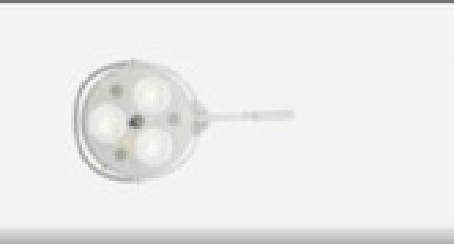
Figure 1 shows what the patient see through VR google when he/she is seated on the operating table in Step 1, with the operating microscope and light source in view.
Figure 1: Patient seated on the operating table (step 1).
Figure 2 shows how the eye patch is applied to both eyes. Figure 3 shows the state in which the eye patch of the eye to be operated on is removed and the scalpel is visible in Step 2. Figure 4 shows the state in which the blur becomes the strongest after about 5 minutes in Step 3. Figure 5 shows how the vision becomes clearer in Step 4.
Many patients who undergo cataract surgery are elderly, and most hos- pitals that perform cataract surgery do not generally use VR devices for informed consent. On the other hand, patients who take ICL surgery is young. Therefore, we prepared also a cartoon explanation of the “EYES” to help patients better understand the purpose and the general understandings of the simulator “EYES”. The reason for using cartoons is that they are more intuitive than textual explanations.
Development of “EYES”, a Simulator to Experience Cataract and ICL Surgery 331
Figure 2: Attachment of both eye patches (step 1).Figure 3: One eye patch is removed and surgery begins (step 2).Figure 4: When the crystal breaks down (step 3).Figure 5: After intraocular lens placement (step 4).Figure 6: “EYES” cartoon to explain this system to patient at the informed consent (currently available for Japanese patients).
CONCLUSION
This paper describes a prototype eye surgery simulator, “EYES,” which aims to reduce anxiety during cataract surgery by simulating the pre- and intra- operative experience of the surgery. For the patient, cataract surgery is a once-in-a-lifetime experience for each eye. However, the actual experience could become heavily intraoperative psychological burden or a postsurgical trauma. This prototype was developed with the belief in that the burden should be alleviated if the patient had given not only textual and visual information but also exposed to contextually and textually rich information beforehand.
In the future, we plan to improve the system by qualitatively evaluating the differences between diverse patients groups and their experiences. We will then advance the system in conjunction with verbal and written explanations provided for the patients during informed consent sessions. Our testing will be in cooperation with hospitals and doctors, and verify the effectiveness of
Development of “EYES”, a Simulator to Experience Cataract and ICL Surgery 333
the system in alleviating the burden on patients’ perceptions and experiences in different stages. In the interactive session of the annual meeting, the partici- pants will actually wear the VR goggles and experience the shortened surgery time to 2 minutes.
ACKNOWLEDGMENT
The authors would like to acknowledge Mr. Akira Kinai for cartoon drawings.
REFERENCES
Aimi, M., Nakama, S., Tanabe, H. and Noguchi, S. (2022) Evaluation of the Effect of Preoperative Explanation Using a Light Source Video of an Operation Microscope on Intraoperative Fear and Pain, Journal of the Japanese Society of Optometric Nursing, Vol. 6, pp. 7–9, (in Japanese). Anshin Hospital (2016) Simulated Surgery. Retrieved from https://www.youtube.com/watch?v=xwNLJwtNeKs. Ministry of Health, Labour and Welfare (2018) 4th NDB Open Data Japan.
Retrieved from https://www.mhlw.go.jp/stf/seisakunitsuite/bunya/0000177221_ 00003.html. Standen, P. J., Hain, W. R., & Hosker, K. J. (1987). Retention of auditory information presented during anaesthesia. A study of children who received light general anaesthesia. Anaesthesia, 42(6), 604–608. https://doi.org/10.1111/j.1365-2044. 1987.tb03083.x Yamada, K., (2022) VR Virtual Experience of Radiation Therapy Reduces Cancer
Patients’ Anxiety Before Treatment. Retrieved from https://robotstart.info/2022/ 07/05/radiation-therapy-room-vr.html. Zhu, J., Yu, J., Du, G., Ge, M., Huang, Y., & Pi, Y. (2013). Sensations of Chinese Ametropia Patients under Laser-Assisted Keratomileusis Surgical Techniques. Iranian Journal of Ophthalmology, 25(1), 37–44.
LISTED IN THE AHFE DIGITAL BOOKSTORE CATALOGUE
Explore the complete digital volume
Emerging Technologies in Healthcare and Medicine
Read this individual research paper free through the original publisher, or explore the full digital proceedings book.
ISBN 978-1-958651-92-6
Explore this ISBN in the AHFE Bookstore ↗Listed in the July 2026 bookstore catalogue; search by ISBN to confirm current availability · Digital book purchase optional