Mengxiu Wang, Jingwen Xie, Qianfei Chen (2023). The effect of operation steps on the efficiency of human-computer interaction. In: Human Systems Engineering and Design (IHSED 2023): Future Trends and Applications. AHFE Open Access, vol. 112, pp. 119–126. https://doi.org/10.54941/ahfe1004121
In the field of human-computer interaction design, the efficiency of interaction operations has become an increasing concern, and how to complete tasks quickly and accurately has become the focus of our research. Therefore, this study took the two tasks of "information addition" and "information deletion" as typical cases, and carried out ergonomic experiments. By analyzing the physiological indicators and performance indicators of operators in the process of completing tasks, the completion of tasks under different operating steps was analyzed. The results show that the performance of the task is significantly improved after the reduction of interaction steps. This conclusion can be applied to the human-machine interface interaction design to improve the efficiency of user interaction operations.
With the rapid development of computer, network and communication tech- nologies, human-computer interaction interface has become an important medium. Scientific and reasonable interface design is of great significance for users to accurately access information and improve operation performance (Diego-Mas, J. A., 2019; Reddy, G. R. et al., 2019; Ketong et al., 2020).
In order to allow users to complete tasks with a minimum number of steps, it is necessary to reduce the number of interaction steps and shorten the user information access time so that the user’s usage efficiency can be improved (Lizhen X, 2015). Bowen S. studied automotive human-computer interac- tion interface and found that efficiency improvement means shortening the user’s time in a single interaction task, and improving the user operation pro- cess by combining user operation habits can improve the performance of eye and hand interaction with the system (Bowen S., Jianming Y. and Yuanbo S., 2008). Giang P. Nguyen used the interactive effort as an evaluation index in his study, and the interactive effort is the total number of operations that
people interact with the system in order to achieve the goal, and the experi- mental results found that fewer operations can reduce the search time in the system (Nguyen, G. P., and Worring, M., 2008).
In this paper, we take two tasks of “information addition” and “infor- mation deletion” as typical cases, and analyze the situation of operators completing the tasks with different operation steps to further explore the influence of operation steps on HCI efficiency. The experiment provides a reference for human-computer interface interaction design.
EXPERIMENTAL DESIGN Experimental Participant
There were 8 male participants with an average age of 23.38, ranging from 21 to 27. The average height was 173.5 cm, with the smallest being 170cm and the largest being 185cm. All of them had no color blindness or color weakness, and their visual acuity or corrected visual acuity was over 5.0. All of them were right-handed.
Experimental Device The experiment was carried out on liquid crystal display (size: 20.1 inch, res- olution: 1600*1200, refresh frequency: 60Hz). ETG eyeglasses eye tracking system produced by German SMI company was used to record the track data of the operator’s eye movement during the operation. The sampling frequency of the eye tracker is 120Hz, and the tracking resolution is 0.03 degrees.
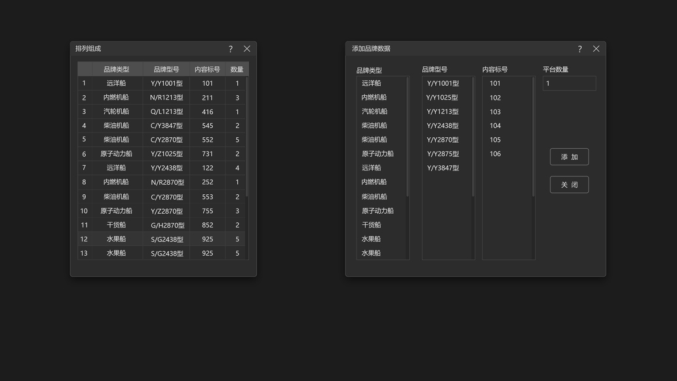
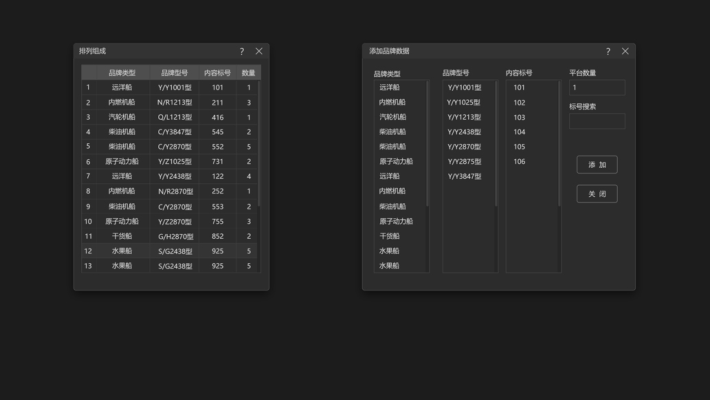
Experimental Variables and Design Two different interface schemes were used in the test (see Figure 1). The main differences between the two schemes are shown in the following table (see Table 1).
Figure 1: Scheme 1.
The Effect of Operation Steps on the Efficiency of Human-Computer Interaction 121
Figure 2: Scheme 2.Table 1. Description of the main differences of the scheme.
Table available in the original PDF paper.
Operation 1 2
You can either select the form layer by layer or directly enter the content label to search for selected items to add
Information addition You can only select items to be added by brand type, brand model and content label. There is no label search function Information deletion You can only delete multiple nodes one by one
You can delete them one by one or press Ctrl to select multiple simultaneous deletions
The test indicators included physiological and performance indica- tors. The physiological indicators included the number of gaze points, gaze time (in ms), and the length of eye trajectory (in px) during the save phase when the operator completed the two character phases of adding items and saving changes. Performance includes task completion rate and time to complete the task (in ms) for the operator’s two task operations.
The number of gaze points and gaze time in the physiological indexes both reflect the visual load of the operator during the task completion process. Generally speaking, more gaze points and longer gaze time indicate higher visual load of the operator.
The number of blinks and pupil diameter can reflect the operator’s eye fatigue level after completing the operation, in general, the more blinks, the smaller the pupil diameter, indicating that the operator’s eye fatigue level is higher.
Test Materials and Tasks The system operation task consists of two main operations.
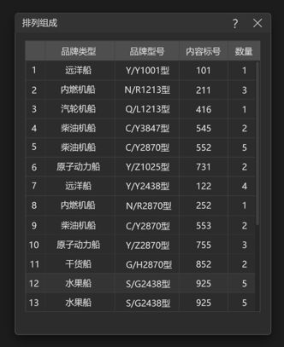
The first one is the operation of deleting items from information. During the test, on the left side of the screen is the “Arrange Composition” win- dow (see Figure 3), in which 16 items are presented. The operator is required to delete the specified 6 items as quickly as possible while maintaining the correct rate.
Figure 3: “Arrange composition” window.
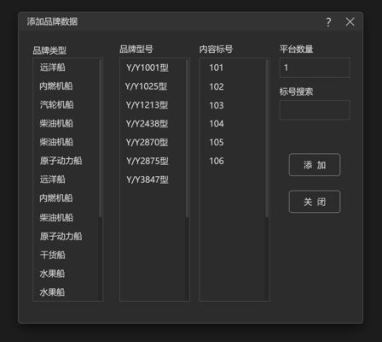
The second item is the Add Item to Information operation. Click the right mouse button in the “Arrange Composition” window and select “Add”, and the “Add Brand Data” window will appear on the right side of the screen (see Figure 4). The operator is required to add the specified two items as quickly as possible while ensuring the correctness.
The items specified in the Delete and Add operations will be displayed in the upper right corner of the screen. The specified items are selected randomly.
Figure 4: “Add brand data” window.
The Effect of Operation Steps on the Efficiency of Human-Computer Interaction 123
Experimental Process The operator puts on the eye-tracking device and performs the calibration. The specified item is presented in the upper right corner of the interface. After the operator is prompted by the tester to begin, the operator completes the tasks in order. The operator first deletes the specified item, then adds the specified item, and finally clicks to close the “Add Brand Data” window. After completing the task under one test condition, the operator takes off the eye tester and rests for at least 5 minutes until fully rested and then completes the task under another test condition until all tests are completed.
DATA ANALYSIS Performance of Task Completion
The results showed that in terms of task completion rate, the completion rate of scheme 2 was higher than 90%, and there was no significant difference after statistical test (P > 0.05).
Table 2. Task completion time comparison.
Table available in the original PDF paper.
Task completion time Time reduction of scheme
The percentage of time reduction of scheme 2
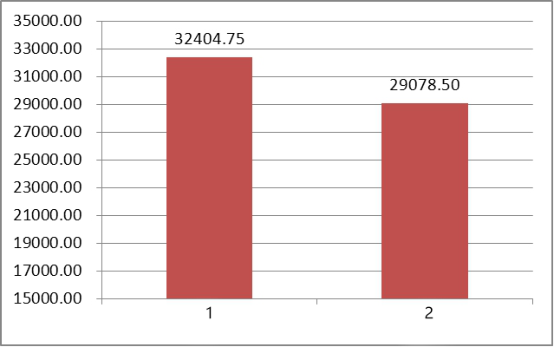
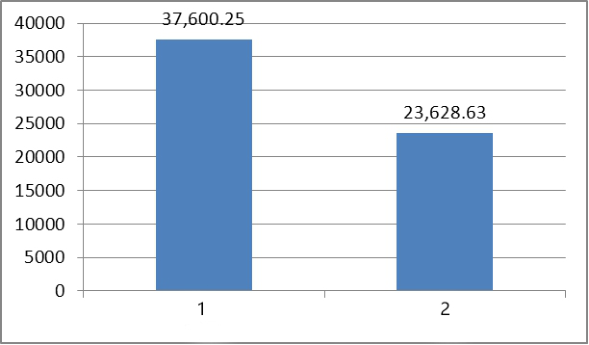
Task type 1 2 Information addition 32405(12232) 29079(16059) 3326 10.26% Information deletion 37600(11358) 23629(4406) 13972 37.16%
Non-parametric test showed that there was no significant difference between scheme 2 and Scheme 1 in total task completion time (Z = 0.7, P = 0484 > 0.05) (see Figure 5). In addition, the number of scheme 2 was significantly lower than that of scheme 1 (Z = 2.1, P = 0.036 < 0.05) (see Figure 6).
Figure 5: The task completion time of the deletion phase.Figure 6: The task completion time of the addition phase.
Comparative Analysis of Eye-Movement Load Indexes The comparison between the number of viewpoints and eye movement load indicators of the two schemes is shown in the table below.
Table 3. Comparison of the number of viewpoints for added items.
Table available in the original PDF paper.
1 2
Table 4. Comparison of eye movement load indicators.
Table available in the original PDF paper.
Average gaze time Number of fixations Task type 1 2 1 2
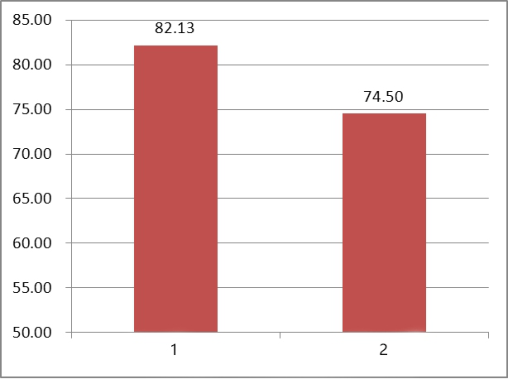
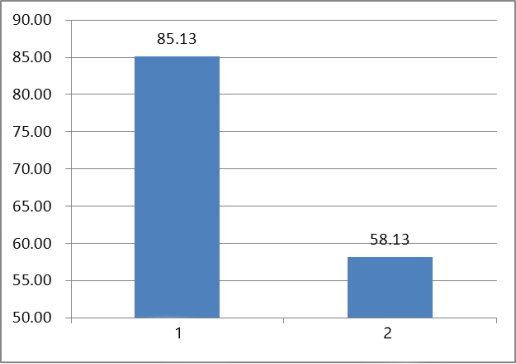
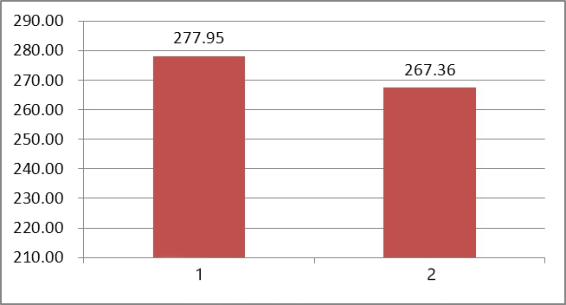
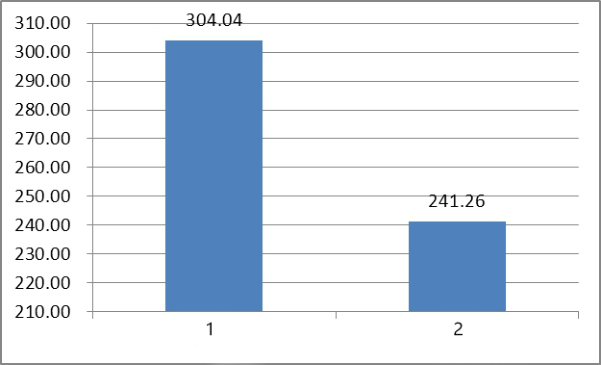
Information addition 278(33) 267(57) 82(32) 75(42) Information deletion 304(49.6) 241.3(46.5) 85.1(21.6) 58.1(15.8)
Non-parametric test showed that the average fixation time of scheme 2 was not significantly different from that of scheme 1 (Z = 0.28, P = 0.779 > 0.05) (see Figure 7), and the number of fixation points of scheme 2 was not signif- icantly different from that of scheme 1 (Z = 0.491, P = 0.624 > 0.05) (see Figure 8). In addition, the average fixation time of scheme 2 was significantly lower than scheme 1 (Z = 2.521, P = 0.012 < 0.05) (see Figure 9), and the number of fixation points of scheme 2 was significantly lower than scheme 1 (Z = 2.1, P = 0.036 < 0.05) (see Figure 10).
The Effect of Operation Steps on the Efficiency of Human-Computer Interaction 125
Figure 7: The fixation points of the interface deletion phase.Figure 8: The fixation points of the interface addition phase.Figure 9: Average gaze time during the deletion phase.Figure 10: Average gaze time during the addition phase.
CONCLUSION
From the results of data analysis, the performance of scheme 2 was better than that of scheme 1. There was no significant improvement in each index on scheme 2 in terms of the deletion operation stage, but the task completion time improved by about 10.26%. In terms of the add task operation, subjects’ average gaze time, total task completion time, and number of gaze points on scheme 2 were significantly smaller than those on scheme 1. The results indicate that reducing the operation steps can shorten the task operation path, reduce recognition, and help users complete the task quickly.
ACKNOWLEDGMENT
This study was supported by the projects with the Grant No. 50912020105.
REFERENCES
Bowen S., Jianming Y.and Yuanbo S. (2019). Research on interface hierarchy design for human vehicle interaction, Journal of Machine Design (2), 5. Diego-Mas, J. A., Garzon-Leal, D., Poveda-Bautista, R., & Alcaide-Marzal, J..
(2019). User-interfaces layout optimization using eye-tracking, mouse movements and genetic algorithms. Applied Ergonomics, 78, 197–209. Ketong Y et al., (2020). Research on cognitive load of digitalized human-computer interface, Development&innovation of Machinery & Electrical Products, 33(1), 4. Lizhen X. (2015). Research on flat design of mobile interface, Fujian Computer (4), 3. Nguyen, G. P., and Worring, M.. (2005). Scenario optimization for interactive
category search. Proceedings of the 7th ACM SIGMM International Work- shop on Multimedia Information Retrieval, MIR 2005, November 10-11, 2005, Singapore. ACM. Reddy, G. R., Blackler, A., Popovic, V., Thompson, M. H., & Mahar, D.. (2019). The effects of redundancy in user-interface design on older users. International Journal of Human-Computer Studies, 137, 102385.
LISTED IN THE AHFE DIGITAL BOOKSTORE CATALOGUE
Explore the complete digital volume
Human Systems Engineering and Design (IHSED 2023): Future Trends and Applications
Read this individual research paper free through the original publisher, or explore the full digital proceedings book.
ISBN 978-1-958651-88-9
Explore this ISBN in the AHFE Bookstore ↗Listed in the July 2026 bookstore catalogue; search by ISBN to confirm current availability · Digital book purchase optional