Shuo-Fang Liu, Mingkai Hong (2023). A Comprehensive Evaluation of Gift Packaging. In: Usability and User Experience. AHFE Open Access, vol. 110, pp. 591–597. https://doi.org/10.54941/ahfe1003235
Due to the rapid development of the global economy, the production of domestic waste has increased rapidly, causing increased damage to the global environment. Among them, packaging waste accounts for the largest proportion of household waste, and product packaging can lead to an excess of emissions, resource waste and environmental pollution, which are key areas that have received increased attention by society. In particular, the phenomenon of over-packaging has been on the rise, with gift packaging being the "hardest hit area". The gift-giving behavior is a manifestation of people's communication style, and these types of gifts which carry such emotional communication have gradually become the material carrier of etiquette culture. The packaging can show the value of the gift and enhance the quality of the gift. In addition, the emotional and social values contained therein are more easily realized. Therefore, consumers tend to pay close attention to the packaging when choosing gifts and are willing to pay extra for excessive packaging. Compared to ordinary commodities, gifts have special product positioning and their packaging is an important component of their value, therefore businesses understand that there is extra profit in gift packaging and are willing to make unnecessary designs for gift packaging. Nowadays, the phenomenon of over-packing in gifts is getting more and more attention from all walks of life, the problem of over-packing has triggering factors in the whole life cycle. To crack the problem of over-packing in gifts, we need to start from the roles of these triggering factors, which come from the production side, the consumption side and the third party. These entities are the manufacturers of the gifts, the designers who design gift packaging, the gift-givers who buy the gifts, those who receive the gift and the organizations that evaluate the packaging impartially. However, in the existing research, the comprehensive evaluation of gift packaging is still unclear, and there is a lack of theoretical guidance on how to reduce the triggering factors of excessive gift packaging from different perspectives. Therefore, this study focuses on this phenomenon to investigate the views of various roles on overwrapping in the life cycle of gift packaging, using existing gift packaging as a reference, extracting elements of gift packaging through literature survey, using questionnaires to obtain the evaluation of various roles on packaging elements, quantifying the obtained results, constructing a set of comprehensive evaluation scale for evaluating gift packaging, and presenting the results in the form of radar diagrams. The results of this study can optimize the design and development of gift packaging at the production end, correctly guide the selection and use of gift packaging at the consumer end, and provide a common evaluation standard for third-party organizations to judge the excellence of gift packaging. This study will reduce the triggering factors of over-packaging in the whole life cycle of gift packaging, alleviate the environmental pressure brought by over-packaging, and create a more sustainable gift packaging concept.
With the rapid development of global economy and urbanization, the produ- ction of domestic waste is increasing rapidly and the environmental problems are becoming more and more serious. China, other regions in East Asia and parts of Eastern Europe and the Middle East have the fastest growth rates of municipal waste, with China surpassing the United States as the world’s lar- gest waste generator in 2004 (Hoornweg & Bhada-Tata, 2012). In Europe, each European citizen generates about 160 kg of packaging waste per year, which is the first of all waste types (Eurostat, 2022). Packaging is not just a cardboard or box, but a secure, economical and efficient storage system for handling, shipping and selling (Dixon-Hardy & Curran, 2009). Howe- ver, it has a serious drawback that the product is usually discarded directly after use, which inevitably increases the damage to the environment(Magnier & Schoormans, 2015). A survey conducted by China Youth Daily in 2021 among 1,521 respondents revealed that 92% of consumers believe that over- packaging is a serious problem in China, and more than 65% of consumers are worried that over-packaging will bring pollution and massive material waste(Jieyin Li, 2021b, 2021a). Moon cakes, for example, many packaging more than four layers, and even some are equipped with lights and sound (XU HUA, 2021).
In this paper, we will investigate the relationship between gift packaging and various roles in the whole life cycle of gift packaging and find ways to reduce over-packaging. It is expected that the results of this study will serve as a reference for subsequent scholarly research.
PACKAGING The history of human use of packaging dates back to the caveman period, when people used nature’s packaging materials, such as leaves and bark as packaging containers, and as time progressed, woven bags, leather bags, cera- mics and other packaging containers gradually appeared. After the invention of paper-making by Cai Lun in the Eastern Han Dynasty in 105 A.D., the use of paper as packaging for goods gradually emerged. After the Industrial Revo- lution in the eighteenth century, production technology developed rapidly, output increased dramatically, and finished products were lowered to form a large consumer market, so that “packaging” was used for market storage and transportation to convey information from producers to consumers. In 1856, the British invented corrugated paper, and in 1894, corrugated card- board was made into corrugated boxes for the first time in the United States. After the twentieth century, the consumer market became dominant and pro- duct packaging became a sales tool in the market competition (Zhu Chen Chun Tian, 1991). Modern packaging has long since ceased to be satisfied with the function of protecting goods and facilitating transportation, packa- ging has become a powerful marketing tool, and excellent packaging design can create more value for consumers, enhance brand value and promote sales value for products (Lijuan Wang, 2016).
“Packaging” is a corporate practice that links production and consum- ption and integrates “scientific technology” and “artistic thought” to protect
A Comprehensive Evaluation of Gift Packaging 593
products, expedite storage and transportation, and facilitate consumption. The most typical classification of packaging is based on its use, which can be divided into “commercial packaging” and “industrial packaging”. The main function of “commercial packaging” is to promote the convenience of sales and use, and the improvement of operational efficiency. “Industrial packa- ging” is packaging for the purpose of transportation or storage, and is used for a variety of raw materials, parts, semi-finished products, and finished pro- ducts that are not intended for consumers, and the packaging method varies with the nature of the goods and the storage environment (Zhu Chen Chun Tian, 1991).
The gift packaging in this study falls under the category of commercial packaging.
Sometimes, packaging materials affect the quality of the product and influ- ence the consumer’s perception of the brand (Gagula et al., 2020). One of the keys to successful packaging design is to select materials that best meet product characteristics, marketing needs, environmental concerns, and regu- latory and total cost requirements(Brozovic, Kovacevic, & Bota, 2021). The shape of a package can be broadly divided into two functions: one is to “pro- tect the contents”and the other is to “convey the image of the product inside”. The moment consumers see the packaging, the shape is what catches their eyes. The more unique the shape of the package, the more attractive it will be to consumers in the store, and the more it can be used as an indicator to find the product. In short, a special shape can be a symbol of a product and a brand(Masahiro Fukui & Miko Sugaki, 2016).
To explore the classification of existing gift packaging, this paper will introduce both the materials and the basic forms of commercial packaging (see Table 1).
OVERPACKAGING The term “overpackaging” describes products that are wrapped in more material than required(Elgaaïed-Gambier, 2016). In general, two types of packaging can be distinguished: primary packaging and secondary packa- ging. Primary packaging is the material that surrounds the product and is usually in direct contact with the product. Secondary packaging is used in addition to primary packaging to collect a certain amount of primary packa- ging. Overpack is the third category and must be clearly distinguished from the previous two types. It does not contain the product and does not have a grouping purpose (Monnot & Reniou, 2012). In some cases, the term “over- packing” is also used to describe primary or secondary packaging that is too large for the amount of product it contains (Elgaaïed-Gambier, 2016).
FUZZY COMPREHENSION EVALUATION METHOD Fuzzy Comprehension Evaluation Method is a comprehensive evaluation method based on fuzzy mathematics. This comprehensive evaluation method converts qualitative evaluation into quantitative evaluation based on the affiliation theory of fuzzy mathematics, i.e., it uses fuzzy mathematics to
594 Liu and Hong
Table 1. Packaging material, type and main contents.
Table available in the original PDF paper.
Material Container shape The main contents timber Wooden box Food, snacks, groceries cask wine Paper Carton groceries Paper bags Food, snacks, groceries Cardboard Carton Food, snacks, cosmetics, body care products, household products, cigarettes, medicines, electrical appliances Paper cups Food, snacks, drinks Paper bags Soft drinks, alcoholic beverages, body care products Paper trays Food, refreshments Paper cans Food, snacks, household items Liner paper Cosmetics, body care products, household products corrugated paper carton Food, snacks, electrical appliances Transport box Shipping all kinds of packaging glass bottle Soft drinks, alcoholic beverages, body care products, medicines, food metal pot Soft drinks, alcoholic beverages, body care products, cosmetics, food hose Medicines, groceries Fiber, cloth bag Food, household goods ,l plastics (Injection molding)
container Food, snacks, cosmetics, body care products, household goods lid Food, soft drinks, alcoholic beverages, cosmetics, body care products, household goods plastics (Hollow molding)
PET bottle Food, soft drinks, alcoholic beverages, cosmetics, body care products, household goods, medicines hose Food, cosmetics, body care products, medicines plastics (Vacuum forming)
Snacks, medicines
Blister packs Cosmetics, body care products, household goods and electrical appliances tray Food, snacks, cosmetics, body care products, household goods, electrical appliances TP packaging (Press-extrusion blister packaging).
hose Food, cosmetics, body care products, medicines
Deep-drawn vessels foodstuff plastics (Extruded molding) plastics (Folding Bay Processing)
Food, beverages, body care products
Transparent box Food, snacks, cosmetics, body care products, household goods, electrical appliances Plastic film Soft packaging Food, snacks, cosmetics, body care products, household goods, medicines, electrical appliances Plastic film + plastic (Injection molding)
Suction nozzle attached Flexible packaging Styrofoam cup Food & Beverage
make an overall evaluation of things or objects that are subject to multiple factors. It has the characteristics of clear and systematic results, can better solve fuzzy and difficult to quantify problems, and is suitable for various non-deterministic problems.
Step1: Five gift packages with high sales volume were selected as the rese- arch samples, and their elements were extracted and organized through the focus interview method.
A Comprehensive Evaluation of Gift Packaging 595
Step2: According to the fuzzy integrated evaluation method and the ele- ments of the survey design, a five-step Likert scale was used to collect the respondents’ perceptions of the excesses of each element. The question- naire will be distributed to different target groups, namely, manufacturers, designers, gift-givers, gift-receivers, and third parties. To obtain a more comprehensive attitude and awareness.
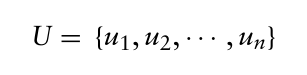
Step3: Collection of factors: The excess of gift packaging needs to be evalu- ated from its component elements, such as the number of layers of packaging, additional embossed decoration in the packaging, transparent plastic mate- rial in the packaging, etc. All these factors constitute a collection of evaluation indicators, recorded as:
Equation reproduced from the original PDF.
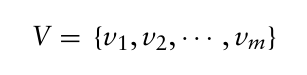
Step4: Review set: Due to the different evaluation value of each indicator, different levels are often formed, such as the evaluation of the current case gift packaging level: completely excessive, seriously excessive, excessive, slightly excessive, but not excessive. A collection of various determinations is called a comment set, and is recorded as:
Equation reproduced from the original PDF.
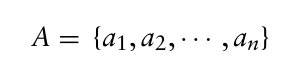
Step5: The weight of each factor: In general, the role played by each factor in the comprehensive evaluation of the factor set is different, and the com- prehensive evaluation results are not only related to the evaluation of each factor, but also depend to a large extent on the role played by each factor on the comprehensive evaluation, which requires the determination of the weight distribution among the factors, which is a fuzzy vector on U, recorded as:
Equation reproduced from the original PDF.
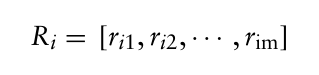
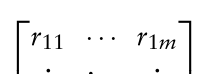
Step6: Fuzzy integrated judgment matrix: For the indicator Ui, the affilia- tion of each criterion is a fuzzy subset on V. The evaluation discipline of the indicator Ui is:
Equation reproduced from the original PDF.
[Equation or mathematical symbol available in the original paper PDF]
[Equation or mathematical symbol available in the original paper PDF]
Equation reproduced from the original PDF.
Step7: The results were synthesized and quantified to compile the fee- lings of various types of respondents on the excessive degree of different gift packaging elements.
Step8: Compare and contrast the similarities and differences of diffe- rent groups of respondents’ views on gift overwrapping, and explore the relationship between the various roles.
Step9: Based on the results of the analysis, we organized and summarized the results to create a gift overpacking scale.
596 Liu and Hong
CONCLUSION
Existing research and theoretical evidence suggests that the fuzzy compo- site evaluation method can be used in the comprehensive evaluation of gift packaging to produce a gift overwrapping scale, which provides manufactu- rers with information on consumer demand for gift packaging, aids them in making marketing decisions, ranks the weighting of elements in gift packa- ging by the giver and receiver, and helps designers understand what elements to include in a popular gift package. The scale also helps the gift giver to select the right gift packaging to reduce waste.
Later experiments are conducted to verify the efficiency of the application, add details and improve the paper.
REFERENCES
Brozovic, M., Kovacevic, D., & Bota, J. (2021). Consumer Satisfaction With Packaging Materials: Kano Model Analysis Approach. Tehnicki Vjesnik - Technical Gazette, 28(4). https://doi.org/10.17559/TV-20200831093518 Dixon-Hardy, D. W., & Curran, B. A. (2009). Types of packaging waste from secon-
dary sources (supermarkets) – The situation in the UK. Waste Management, 29(3), 1198–1207. https://doi.org/10.1016/j.wasman.2008.06.045 Elgaaïed-Gambier, L. (2016). Who Buys Overpackaged Grocery Products and Why?
Understanding Consumers’ Reactions to Overpackaging in the Food Sector. Jour- nal of Business Ethics, 135(4), 683–698. https://doi.org/10.1007/s10551-014- 2491-2 Eurostat. (2022). Packaging waste by waste management operations. Retri- eved October 19, 2022, from http://appsso.eurostat.ec.europa.eu/nui/ show.do?lang=en&dataset=env_waspac Gagula, G., Mastanjevi´c, K., Mastanjevi´c, K., Krstanovi´c, V., Horvat, D., & Magdi´c, D. (2020). The influence of packaging material on volatile compounds of pale lager beer. Food Packaging and Shelf Life, 24, 100496. https://doi.org/10.1016/j. fpsl.2020.100496 Hoornweg, D., & Bhada-Tata, P. (2012). What a Waste : A Global Review of Solid
Waste Management. Urban Development Series. Retrieved from https://hdl.hand le.net/10986/17388 LI Jieyan. (2021a, September 30). 70.1% of respondents bluntly said that excessive packaging of goods has increased consumer spending. Retrieved October 19, 2022, from China Youth Daily website: https://zqb.cyol.com/html/2021- 09/30/nw. D110000zgqnb_20210930_4-10.htm LI Jieyan. (2021b, September 30). More than ninety percent of respondents
said they would try to avoid buying over-packaged goods. Retrieved October 19, 2022, from China Youth Daily website: http://zqb.cyol.com/html/2021- 09/30/nw. D110000zgqnb_20210930_3-10.htm Magnier, L., & Schoormans, J. (2015). Consumer reactions to sustainable packaging: The interplay of visual appearance, verbal claim and environmental concern. Journal of Environmental Psychology, 44, 53–62. https://doi.org/10.1016/j.jenvp. 2015.09.005 Masahiro Fukui, & Mianko Sugagi. (2016). Designers must understand the know-
ledge of product packaging design Taipei City : Flag Monnot, E., & Reniou, F. (2012). Les suremballages : des emballages superflus pour les consommateurs ? Décisions Marketing, 65, 31–43. https://doi.org/10.7193/ DM.065.31.43
A Comprehensive Evaluation of Gift Packaging 597
Wang Lijuan. (2016). The history of packaging design and today Screen Printing Industry, 07, 41–44. Xu Hua. (2021, September 21). Mid-Autumn Festival: China wants to cut down on
excessive mooncake packaging. Retrieved October 19, 2022, from China Global Television Network website: https://news.cgtn.com/news/2021-09-21/VHJhbnNj cmlwdDU4Nzg1/index.html Zhu Chen Chuntian. (1991). Packaging Design Taipei City : Jinguan Publishing
LISTED IN THE AHFE DIGITAL BOOKSTORE CATALOGUE
Explore the complete digital volume
Usability and User Experience
Read this individual research paper free through the original publisher, or explore the full digital proceedings book.
ISBN 978-1-958651-86-5
Explore this ISBN in the AHFE Bookstore ↗Listed in the July 2026 bookstore catalogue; search by ISBN to confirm current availability · Digital book purchase optional