Sidra Azmat Butt, Marina Weck, Ingrid Pappel, Dirk Draheim (2023). Multi-Faceted Evaluation of the Digital Silver Hub to Validate its Platform Requirements. In: Human Factors, Business Management and Society. AHFE Open Access, vol. 97, pp. 164–177. https://doi.org/10.54941/ahfe1003893
The silver economy is heavily reliant on technical advancements and Information and Communication Technology (ICT) due to the changing demographics and increases in the older population. There have been quite a lot of initiatives by several public and private bodies to tackle the challenges of the silver economy by involving technological innovations and digital frameworks. One such initiative is the Digital Silver Hub (DSH) by the Interreg Baltic Sea Region (BSR) OSIRIS Project, which serves as an ecosystem to develop and accelerate the adoption of innovative solutions to the challenges encountered by the ageing population so they may lead an active and independent life. It involves transnational functionalities that enable collaboration, co-creation and knowledge diffusion amongst the BSR. The DSH connects companies and research institutes to develop new innovative solutions to the challenges of ageing while promoting end-user engagement. However, it is imperative to ensure that the DSH functionalities are effective and useful and also sufficient for the users to develop innovative solutions. In this paper, the DSH is evaluated based on its usability and the effectiveness of its functionalities as well as ease of use and user perception to validate that the platform requirements match with the derived results. We use dimensions of the Technology Acceptance Model (TAM2); “Perceived Usefulness”, “Perceived Ease of Use”, and “Attitude Towards Using” the technology along with dimensions of generic Collective Intelligence (CI) framework; staffing, processes, goals and motivation to evaluate the DSH. The outcomes of the research are aimed to help develop and evaluate similar platforms meant for the silver economy.
The demographic makeup of the European Union (EU) is becoming predomi- nantly grey in the coming decades (European Commission, 2021). The 65+ age group is considered by Euromonitor (2018) to be the fastest-growing age cohort with an expected 3.7% per annum growth (Euromonitor, 2018). Hence, this silver generation of older adults is healthier, more informed,
Multi-Faceted Evaluation of the Digital Silver Hub to Validate Its Platform Requirements 165
and financially independent. They are interested in innovative solutions to improve their quality of life and are willing to spend on them. (Pauho- fova & Dovalova, 2015). With the rapid evolution of technology, developed economies such as the EU and Baltic Sea Region (BSR) must capitalize on opportunities to address the challenges faced by ageing citizens (Anderberg, 2020). The “Supporting the Smart Specialization Approach in the Silver Economy to Increase Regional Innovation Capacity and Sustainable Growth” – Inter- reg BSR OSIRIS project1 was an initiative in the BSR countries to address the needs of ageing citizens by applying smart specialization approaches. The Digital Silver Hub (DSH)2, a digital collaborative platform was created to develop and accelerate the uptake of innovative solutions to the challenges faced by the elderly population, promoting end-user engagement (Butt, et al., 2021). The DSH connects innovation actors representing the Quadruple Helix model (government, academia, industry, and civil society) to develop new innovative solutions (Arnkil, et al., 2010). The platform can also be used to issue invitations and arrange end-user participation at various stages of product development. It facilitates knowledge transfer and serves as an important tool for reaching out to other Baltics (Butt, et al., 2022). Howe- ver, the evaluation of the DSH and its functionalities is imperative to ensure that the platform meets the expectations of its users and delivers effective and useful solutions.
Therefore, this study incorporates the evaluation of the DSH and how users respond to it using dimensions of the Technology Acceptance Model (TAM2): “Perceived Usefulness”, “Perceived Ease of Use” and “Attitude towards using the technology” along with dimensions of generic Collective Intelligence (CI) framework: staffing, process, goals, and motivation. The remaining paper is organized as follows: section 2 describes the literature review, and section 3 outlines the research methodology used for the evalu- ation of the DSH. Results are elaborated in section 4 and discussion and recommendations are provided in section 5 and finish the paper with a conclusion in section 6.
LITERATURE REVIEW
Silver Economy and ICT According to the United Nations (2020), the number of persons aged 65 and above was 727 million in 2020, which is expected to reach 1.5 billion by the mid-century (United Nations, 2020). This implies that by 2050, 1 out of 6 people in the world will be aged 65 or above. Grundy and Murphy (2017) posit that the percentage of older people in the population had already dra- stically increased between the years 1950 and 2000, especially in European countries (Grundy & Murphy, 2017). This demographic transition amongst the EU countries is also evident through their increasing median age; from 2000 to 2013, it has increased by a value of 3.9 years to 41.9 years. In 2021,
the median age was 44.1 years which meant that half of the EU population was below 44 years and the other half was above 44 years of age. This median age is expected to rise to 48.8 years in 2100 (European Commission, 2021). Amongst the EU, the Baltic Sea Region (BSR) countries are termed among the “most ageing areas of the world” (Zvidri¸nš & Berzi¸nš, 2012).
As the population ages and the percentage of older people in the total population increases, there is a dire need to address their needs. Pauhofova & Dovalova (2015) have identified two approaches towards this demographic shift. The first approach focuses on the negative impact of the ageing popu- lation on public finances and work dependency ratios. The second approach underscores the economic and social opportunities that accompany this lon- gevity revolution. This approach has led to the emergence of the concept of a “silver economy” (Pauhofova & Dovalova, 2015). For this research, we use the definition by the European Commission as cited by Bran et al. (2016), “silver economy is the amount of the economic opportunities arising from the public and consumer expenditure related to population ageing and the specific needs of the population over 50” (Bran, et al., 2016).
The term ICT is multifaceted and has many implications in various discipli- nes. It stands for Information and Communication Technologies. According to Zhang et al. (2008), ICTs are “technologies used by people and orga- nizations for their information processing and communication purposes” (Zuppo, 2012). ICT is a broad term that encompasses technologies that facilitate access to information via telecommunications. It includes a wide array of communication capabilities in the form of IoT (Internet of Things), wireless networks, cell phones/smartphones, and other similar information transmission media (Zuppo, 2012).
Eatock (2015) has identified the following sectors where ICT can help nurture the silver economy:
healthcare sector (especially medical devices, pharmaceuticals and eHe- alth);
construction of smart homes which provide independent living solutions
personal and autonomous transport (incorporating ICT innovations to facilitate access of aged/disabled people to public transport services)
personal banking and e-banking services
tourism sector (entertainment and leisure activities for retired age citizens) (Eatock, 2015) Collective Intelligence
Collective intelligence is referred to as the ability of a group of individuals to solve problems, make decisions, and achieve goals in a way that is grea- ter than the sum of their abilities (Lazer, et al., 2009). According to Malone (1997), it is gaining popularity because of the ever-decreasing costs of com- munication that lead to new forms of decentralization as well as collaboration in organizations (Malone, 1997). CI has been studied through various per- spectives including decision-making in organizations (Bodenhausen, et al., 1998), problem-solving in groups (Woolley, et al., 2010), and collective action in social movements (Friedkin & McLain, 2015).
Multi-Faceted Evaluation of the Digital Silver Hub to Validate Its Platform Requirements 167
Diversity is one of the key factors of CI as it brings new ideas and opinions on a subject matter (Surowiecki, 2004) (Bonabeau, 2009). Diverse groups as compared to homogenous groups outperform on tasks requiring colle- ctive intelligence (Page, 2007). Homogenous groups are at a higher risk of group-level biases but diversity helps as it adds perspectives and constructs an enabling environment to raise opinions. Moreover, communication patterns within a group play a critical role within CI as they are directly proportio- nate. The more the level of communication amongst the group, the more the collective intelligence (Kittur, et al., 2007).
According to Vaccaro et al (2016), online platforms like social media networks and collaboration tools have enhanced CI’s functionality through real-time information sharing and collaboration on tasks (Vaccaro, et al., 2016). Early examples of CI platforms include WikiWikiWeb (Malone & Bernstein, 2015) (the first wiki) and GoldCorp (Bonabeau, 2009) (which utilized the collective knowledge of web users to identify new gold mining locations). Since then, progression in ICT technologies like the social web has enabled mass collaboration (Segaran, 2007) and led to the development of novel CI platforms like Wikipedia (Malone & Bernstein, 2015) (use the wisdom of the crowd to develop an online encyclopedia), Climate CoLab (Malone & Bernstein, 2015) (harness the collective knowledge of people to solve global climate issues), Tippanee (Pattanaik, et al., 2019) (harness the collaborative knowledge of web users to annotate the new content on the web), InnoCentive (Malone & Bernstein, 2015) (use the collective knowledge of the individuals to tackle societal issues) and Reddit (Weninger, 2014) (ena- ble sharing of hobbies, ideas, passions and interests). To build these platforms, researchers have proposed many CI models or frameworks. CI frameworks help in understanding and explaining the concept of CI and its functionali- ties. Several frameworks have been introduced and some of them are listed in Table 1.
While there are several frameworks and models for CI, unfortunately, these models are domain-specific or use case-specific (Suran, et al., 2020), and also explained using different metaphors such as “genes, system-specific ele- ments, principles, attributes, requirements, or their combinations” (Suran, et al., 2020). To overcome this problem (i.e, lack of a generic CI framework), Suran et al. proposed a ‘generic’ CI framework that allows researchers and stakeholders to simply combine different components of the model to deve- lop the new CI platforms (irrespective of their domains) more effectively and efficiently.
The proposed DSH uses the dimensions from the generic CI framework proposed by Suran et al to evaluate and validate the platform. The CI model is based on four components: Staffing i.e., Who is Performing the Task?, Goals i.e., What is Being Accomplished?, Processes i.e., How is It Being Done?, and Motivation i.e., Why They are Doing It?; and these are again divided into types, properties, and interactions (Suran, et al., 2020).
Technology Acceptance Model Davis, Bagozzi and Warshaw first introduced TAM in 1989 and since then it has been widely used to explain user acceptance behaviour (Davis, et al.,
Table 1. Summary of CI frameworks.
Table available in the original PDF paper.
Framework/Model Author(s) Description Wisdom of the Crowd (Galton, 1906)
Francis Galton
A concept that suggests that large groups of people are often better at making decisions and solving problems than individuals or small groups Delphi method (Dalkey & Helmer, 1963)
Olaf Helmer and Norman Dalkey
Leon Festinger
A structured method for eliciting and synthesizing opinions from a panel of experts Groupthink (Janis, 1991) Irving Janis A phenomenon that occurs when a group of people makes faulty decisions because group pressures lead to a lack of dissent Social Comparison Theory (Festinger, 1954)
A theory that suggests that people evaluate their abilities and opinions by comparing themselves to others Information Pooling (Lazer, et al., 2014)
Jean-François Rouet and others
Various A type of collective intelligence that refers to the process of combining and integrating information from multiple sources to make more accurate decisions or solve problems Collective Intelligence Quotient (CIQ) (Rouet, et al., 2006)
A measure of the collective intelligence of a group or system often used to evaluate the effectiveness of collaborative efforts Genome Model (Malone, et al., 2010)
Thomas W. Malone and others
Dimitrios J. Vergados and others
A model for understanding and predicting the behaviour of complex systems, inspired by the structure and function of genetic material in biology Resource Allocation Framework for CI System Engineering (Vergados, et al., 2010)
A framework for designing and evaluating collective intelligence systems that focuses on the allocation of resources such as time, money, and human capital to achieve specific goals or outcomes.
1989). According to this model, two factors that determine an individual’s intention to use technology are; Perceived usefulness (PU) which is an indi- vidual’s belief that using technology will help them to perform a task more efficiently and effectively. Perceived ease of use (PEOU) is an individual’s belief that using the technology will be simple and convenient to use.
These factors contribute to the individual’s intention to use and accept a technology which eventually translates to their actual use of the technology. However, TAM has also been widely criticized as it does not take into account the impact of external factors such as the availability of technical support or
Multi-Faceted Evaluation of the Digital Silver Hub to Validate Its Platform Requirements 169
Table 2. Key constructs of TAM extensions.
Table available in the original PDF paper.
Variant Key Constructs Additional Constructs Key Features Perceived usefulness (PU) Developed to predict the acceptance and use of computer-based systems TAM (Original) (Davis, et al., 1989)
PU Attitude towards using the technology (AT)
Perceived ease of use (PEOU) TAM2 (Venkatesh & Davis, 2000)
PU Facilitating conditions (FC)
Extends the original model by adding the AT construct, which represents an individual’s overall evaluation of a technology PEOU Subjective norm (SN) SN represents the perceived social pressure to use the technology TAM3 (Venkatesh, et al., 2003)
PU Performance expectancy (PE)
Integrates several other theories of technology adoption into a single model
Extends the original model by adding the FC construct, which represents the external factors that facilitate or hinder the use of a technology PEOU Unified Theory of Acceptance and Use of Technology (UTAUT) (Venkatesh, et al., 2012) PEOU Effort expectancy (EE) PE represents the belief that using technology will lead to improved performance Social influence (SI) EE represents the belief that using technology will be relatively easy Facilitating conditions (FC)
SI represents the influence of others on an individual’s adoption decision FC represents the external factors that facilitate or hinder the use of a technology
the presence of social influence, on an individual’s intention to use techno- logy. Therefore, further extensions to TAM have been introduced to fit the characteristics of different technologies and contexts (See Table 2).
METHODOLOGY
For this research, we use dimensions of PU, PEOU and AT along with a generic CI framework to evaluate the DSH. The generic CI framework is a consolidated framework that is specifically designed to evaluate collective intelligence in groups and organizations, which is a key consideration for any
platform that aims to facilitate collaboration and group decision-making. Moreover, the four components of the framework; staffing, process, goals and motivation along with additional requisites provide a comprehensive view of the factors that influence CI and further identify specific areas for improvement. While on the other hand, TAM is a well-established and widely used model for understanding how individuals adopt and use new technolo- gies. By assessing perceived usefulness, perceived ease of use and attitude towards use, TAM2 can provide insight into how well the platform is mee- ting the needs and expectations of individual users. Both frameworks are grounded in solid theoretical foundations and have been tested and validated in numerous research studies. This provides confidence in the reliability and validity of the results obtained using these frameworks.
Four focus group sessions have been conducted in January 2023 with a total of 25 participants. In each focus group session, our team started with a comprehensive introduction to the core concept of the DSH and its various functionalities. This introduction consisted of:
A presentation of the system’s documented user dialogues (Butt & Drah- eim, 2022) in terms of a form-oriented dialogue model (Draheim & Weber, 2005), (Auer, et al., 2009), (Atkinson, et al., 2010).
A demonstration of the recent web-based implementation of the Silverhub collaborative platform3.
They were then given a questionnaire with close-ended questions that were developed based on the dimensions of the generic CI model and TAM2. After that, focus group interviews were conducted where structured questions, as well as open-ended questions, were asked of each participant. Focus group interviews are a qualitative research method to gather insights, opinions and attitudes of participants on a specific topic (Krueger & Morgan, 1997). Par- ticipants were from quadruple helix sectors; industry, government, academia and society (e,g., senior citizens) from the regions involved in the Interreg BSR OSIRIS project – Finland, Estonia, Denmark, Latvia, Lithuania and St. Petersburg. The interview responses were then analyzed using thematic analysis.
RESULTS
Interview Results Participants evaluated the DSH keeping in mind their personal as well as organizational objectives. Responses from the interviews are analyzed through a thematic analysis and results are presented in Table 3.
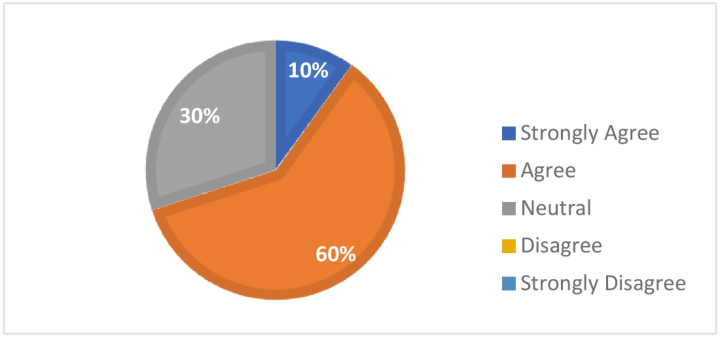
Questionnaire Results From the responses collected, it appears that the main purpose of the DSH is to share information, collaborate on projects, access resources or tools, and discuss ideas. 60% of the respondents agree that the platform supports
3https://silverhub.eu/
Multi-Faceted Evaluation of the Digital Silver Hub to Validate Its Platform Requirements 171
Table 3. Thematic analysis of interview results.
Table available in the original PDF paper.
Themes Description Platform goals Participants recognized the following goals that they can achieve through the DSH:
Research and innovation activities
Collaboration with other organizations and professionals
Encourage senior entrepreneurs to get involved
Find partners and markets for silver solutions
Attend cross-country projects
Functionalities and Services
The following functionalities and services were considered the most helpful and useful on the DSH:
Interconnected databases for financing
Feedback from different experts on innovative ideas
Possibility to search for partners and communicate with them
Collaboration tool for product development
Availability of discussion forum and chat functionality
Financial possibilities, and consultations
Information about open EU projects
Links to relevant social media channels, and events calen- dar
Diversity among platform members
Participants believed that DSH supports diversity in the follo- wing ways:
Fosters collaboration among all quadruple helix actors for mutual support
“Members from different backgrounds and professional experiences provide feedback on different ideas”
“Open culture to hear the perspectives of different stakeh- olders”
Possibility to view profiles of different actors for partner searching Networking and collaboration opportunities are provided on the DSH but can be enhanced in the following ways:
Collaboration and Networking opportunities
Sharing knowledge and best practices
Facilitating business partnerships and deals
Providing access to funding and investment opportunities
Enhancing the visibility of members and their products/se- rvices
Boosting the competitiveness of the silver economy in the global market.
Clear common goals and strategy
Offering treats or benefits, using gamification
“Including new, useful features based on user feedback”
Information about cross-country projects and events Continued
Table 3. Continued.
Table available in the original PDF paper.
Themes Description Support for leadership and decision-making
The majority of the participants believed that decision-making on such an open innovation platform could be challenging. They, however, suggested:
“Platform should stay neutral and not be influenced by political actions”
Democratic, principle of volunteering
Delegating tasks and voting can be useful
“Different functionalities will need different ways”
Support for a positive and supportive culture
DSH is an open platform which means that actors from vari- ous actors from different backgrounds will participate which can also lead to inappropriate conversations as well as abusive comments. Therefore, participants believed that a positive and supportive culture should be established in the DSH through the following ways:
Constructive comments for everyone
Creating a culture of communication, excluding inactive members
“Through ease of use, understandable and straightforw- ard interface, possibility to discuss problems and ideas together.”
Digital coach-bot that could detect unacceptable language and report automatically to the admin.
Participants shared different factors that affect their attitude positively when using different platforms and how these can be translated to their attitude towards DSH:
Factors influencing attitude towards platforms
The added value of the platform
Supportive platform
Trust towards actors in the platform
The latest information in one place
Ease of use and variety of functions
Possibility of growing ideas into sustainable market pro- ducts
Additional functionalities
Participants pointed to the following additional functionali- ties that they’d wish to add to the DSH:
Opportunity to subscribe to a newsletter
“Information on new business options and e.g., public bidding competitions by using e.g., APIs.”
Project enhancement and development
diversity among its members in terms of their backgrounds, experiences, and perspectives. The majority of respondents also agree that the platform provides effective communication tools and features (See Figure 1).
Multi-Faceted Evaluation of the Digital Silver Hub to Validate Its Platform Requirements 173
Figure 1: Does the Digital Silver Hub provide tools and features for effective commu- nication among platform members?
In terms of the platform’s decision-making structure, some respondents believe it should be democratic in nature, while others are neutral or have not formed an opinion yet. Respondents identified several reasons for participa- ting in the platform, including gaining new knowledge or skills, connecting with others who have similar interests, contributing to a common goal, and earning money.
Regarding the platform’s ability to facilitate collective intelligence, the respondents believe that the platform allows members to share their kno- wledge and expertise, collaborate and work together on tasks, and provides tools for brainstorming and idea generation. The overall satisfaction with the platform’s performance and user experience varies among respondents, with some being very satisfied (20%) and others being neutral (40%) or somew- hat satisfied (30%). The existing Silverhub collaborative platform’s interface was also evaluated, with some respondents finding it easy to use and under- stand, while others found it somewhat easy. The interface’s overall appeal was described as somewhat attractive. The majority of respondents found the platform useful in helping them achieve their goals, and many expect it to enhance the quality of their work. The user-friendliness of the platform was generally perceived positively, with the majority of respondents agreeing that they find the platform straightforward and intuitive to use and that they feel confident using it. The overall attitude towards the platform was positive, and the majority of respondents were likely to continue using the platform in the future.
DISCUSSION AND RECOMMENDATIONS The results from the interviews identified several key themes that are impera- tive to the users of the DSH which include the objective and goals of the DSH, functionalities and services it offers, diversity of the platform members, pro- vision of collaboration and networking opportunities, democratic leadership and decision making as well as a supportive and positive culture of the DSH.
Diversity and collaboration are two important factors in innovation ecosy- stems (Leigh, 2011) that further fuel the generation of new ideas and help decipher complex problems. The DSH gives immense importance to the col- laboration factor as it enables individuals to share knowledge, expertise and resources to achieve a common goal (Chesbrough, 2010), which in this case is to come up with innovative ideas to tackle the challenges faced by the elderly in their everyday lives to help them become independent and active. This factor is further enhanced by the platform’s ability to facilitate colle- ctive intelligence which enables a group of individuals and organizations to achieve goals and make decisions that surpass their individual ability and to collaborate and work together on tasks. Communication patterns also play a critical role in CI, with a higher level of communication leading to a higher level of collective intelligence (Kittur, et al., 2007). However, when there is diversity, there are conflicts also which means that this relationship has to be further explored. The DSH should strive to create a diverse and inclu- sive work environment that promotes harmony and understanding among its members.
Moreover, effective communication and decision-making have been high- lighted where some respondents believed that the DSH should have a demo- cratic leadership, everyone makes their own decisions but others were either neutral or have not decided yet. This leads to the importance of finding a balance between collaboration and decision-making that is both democratic and effective.
The user interface of the existing Silverhub collaborative platform had a mixed response where some respondents found it easy to use while others did not. This means that when DSH is fully established, the importance of usability in design should be considered (Barker & Rosen, 2013). According to Barker and Rosen (2013), platforms that are user-friendly and intuitive to use are more likely to be adopted and used by users (Barker & Rosen, 2013).
CONCLUSION
The DSH is a collaborative platform that supports innovation and knowledge diffusion among its users. The participants of evaluation sessions expressed that the DSH has clear goals and offers different functionalities and services that are beneficial for its users to enhance their innovative ideas and form col- laborations. The DSH is also considered an ecosystem that promotes diversity among its users, providing effective communication and collaboration tools, and supporting decision-making through democratic principles. Moreover, the DSH was deemed user-friendly, provides a somewhat positive user expe- rience, and is useful in achieving the goals and objectives of various users. Some of the areas that require improvement included enhancing collabora- tion and networking opportunities, maintaining a positive and supportive culture, and adding additional functionalities such as newsletter subscripti- ons and access to new business opportunities. In addition to this, it can also be concluded that CI is an essential component in online platforms and diversity and collaboration among platform members are crucial factors to enhance problem-solving and decision-making capabilities on the platform. Overall,
Multi-Faceted Evaluation of the Digital Silver Hub to Validate Its Platform Requirements 175
the results suggest that the DSH has the potential to enhance the competiti- veness of the silver economy and support its users in achieving their goals, to enhance the quality of their work. Further research is needed to understand the long-term impact of the DSH on its users and the silver economy.
ACKNOWLEDGMENT
This work has been partially conducted in the project “ICT programme” which was supported by the European Union through the European Social Fund.
REFERENCES
Anderberg, P., 2020. Gerontechnology, digitalization, and the silver economy. XRDS: Crossroads, the ACM Magazine for Students, 26(3), pp. 46–49. Arnkil, R., Järvensivu, A., Koski, P. & Piirainen, T., 2010. Exploring quadruple helix.
Outlining user-oriented innovation models. Working paper no 85, Tampere: Work Research Center. Atkinson, C., Draheim, D. & Geist, V., 2010. Typed business process specifications. Ulm, 14th IEEE International Enterprise Distributed Object Computing Conference, p. 69–78. Auer, D., Geist, V. & Draheim, D., 2009. Extending BPMN with Submit/Response-
Style User Interaction Modeling. Vienna, IEEE Conference on Commerce and Enterprise Computing, p. 368–374. Barker, T. & Rosen, J., 2013. From design thinking to designing the innovation ecosystem. Design Management Review, 24(4), pp. 54–62. Bodenhausen, G. V., Kramer, G. P. & Süsser, K., 1998. Pleasure principles in attitudes
toward advertisements: The role of affective information processing. Journal of Consumer Psychology, 7(1), pp. 1–36. Bonabeau, E., 2009. Introduction. In: E. Bonabeau & G. Theraulaz, eds. Swarm Intelligence: From Natural to Artificial Systems. New York: Oxford University Press, p. 1–26. Bran, F., Popescu, M. L. & Stanciu, P., 2016. Perspectives of silver economy in
European Union. Revista de Management Comparat International, 17(2), p. 130. Butt, S. A. & Draheim, D., 2022. Digital Silver Hub: User Dialogue Model Technical Document. TechRxiv, Preprint. Butt, S. A. et al., 2021. Designing A Digital Collaborative Platform for the Silver Eco-
nomy: Inception and Conceptualization. Quito, Eighth International Conference on eDemocracy & eGovernment (ICEDEG), pp. 47–54. Butt, S. A. et al., 2022. A Digital Collaborative Platform for the Silver Economy: Functionalities Required by Stakeholders in a Multinational Baltic Sea Region Project. TechRxiv. Preprint. Chesbrough, H., 2010. Open innovation: the new imperative for creating and
profiting from technology. Harvard Business Press. Dalkey, N. & Helmer, O., 1963. An experimental application of the Delphi method to the use of experts. Management Science, Volume 9, pp. 458–467. Davis, F. D., Bagozzi, R. P. & Warshaw, P. R., 1989. User acceptance of computer
technology: a comparison of two theoretical models. Management Science, 35(8), pp. 982–1003. Draheim, D. & Weber, G., 2005. Modeling Form-Based Interfaces with Bipartite State Machines. Journal Interacting with Computers, 17(2), pp. 207–228.
Eatock, D., 2015. The silver economy: Opportunities from ageing. [Online] Available at: https://policycommons.net/artifacts/1336067/the-silver-economy/1942959/ [Accessed 27 December 2022]. Erlenheim, R. & Pappel, I., 2022. The Role of Service Design in Increasing Regional
Innovation in the Silver Economy. Cham, Springer, pp. 11–20. Euromonitor, 2018. Consumers in 2018: Key Insights. [Online] Available at: https://blog.euromonitor.com/consumers-in-2018-key-insights/ [Accessed 15 December 2022]. European Commission, 2021. The 2021 Ageing Report. Economic & Budgetary Projections for the EU Member States (2019-2070), Brussels: European Commission. Festinger, L., 1954. A theory of social comparison processes. Human Relations,
Volume 7, pp. 117–140. Friedkin, N. E. & McLain, D., 2015. A structural theory of collective action. Annual Review of Sociology, Volume 41, pp. 375–397. Galton, F., 1906. Wisdom of the Crowd. 75 ed. London: Nature. Gordon, C., 2017. A Silver Economy: The value of living longer, New Zealand:
SUPA-NZ. Grundy, E. M. & Murphy, M., 2017. Population ageing in Europe. In: M. Jean-Pierre, B. L. Beattie, M. C. Finbarr & W. D. Jeremy, eds. Oxford Textbook of Geriatric Medicine. UK: Oxford University Press, pp. 11–18. Janis, I. L., 1991. Victims of Groupthink. International Society of Political Psycho-
logy, 12(2), pp. 247–278. Kittur, A., Chi, E. H. & Suh, B., 2007. Crowdsourcing user studies with Mechanical Turk. New York, Association for Computing Machinery (ACM), pp. 453–456. Kittur, A., Chi, E. H. & Suh, B., 2007. He Says, She Says: Conflict and Coordination
in Wikipedia. s.l., ACM, pp. 61–70. Klimczuk, A., 2016. Comparative Analysis of National and Regional Models of the Silver Economy in the European Union. International Journal of Ageing and Later Life, 10(2), pp. 31–59. Krueger, R. A. & Morgan, D. L., 1997. The focus group kit. 2 ed. California: Sage
publications. Lazer, D., Kennedy, R., King, G. & Vespignani, A., 2014. The Parable of Google Flu: Traps in Big Data Analysis. Science, 343(6176). Lazer, D. et al., 2009. Computational social science. Science, 323(5915), pp. 721–
723. Leigh, B., 2011. The role of diversity in innovation ecosystems. Journal of Business Venturing, 26(3), pp. 331–343. Malone, T. W., 1997. The dawn of the e-Lance economy. Harvard Business Review,
75(3), pp. 144–150. Malone, T. W. & Bernstein, M. S., 2015. Models and tools for harnessing the collective intelligence of online communities. In: J. J. Clippinger & B. J. Batya, eds. The Biology of Business: Decoding the Natural Laws of Enterprise. Santa Fe: Santa Fe Institute Press, pp. 107–124. Malone, T. W., Laubacher, R. & Dellarocas, C., 2010. The Collective Intelligence
Genome. MITSloan Management Review, 51(3). Page, S. E., 2007. The Difference: How the Power of Diversity Creates Better Groups, Firms, Schools, and Societies. Illustrated ed. Princeton: Princeton University Press. Pattanaik, P., Narasimhan, S. & Srinivasan, A., 2019. Tippanee: A Web-Scale Colla-
borative Annotation Platform. Shanghai, 29th ACM International Conference on Information and Knowledge Management, pp. 1–10.
Multi-Faceted Evaluation of the Digital Silver Hub to Validate Its Platform Requirements 177
Pauhofova, I. & Dovalova, G., 2015. Potential of Silver Economy in the European Union (SELECTED VIEWS). European Scientific Journal, 11(10). Rouet, J.-F., Rose, F. & levonen, J., 2006. Developing a Collective Intelligence
Quotient (CIQ) for Group Decision Support. Journal of Educational Technology Development and Exchange, Volume 1, pp. 1–15. Segaran, T., 2007. Programming Collective Intelligence: Building Smart Web 2.0 Applications. 1 ed. Beijing: O’Reilly Media, Inc. Suran, S., Pattanaik, V. & Draheim, D., 2020. Frameworks for Collective Intelligence:
A Systematic Literature Review. ACM Computing Surveys (CSUR), Volume 53, pp. 1–36. Surowiecki, J., 2004. The Wisdom of Crowds. 1 ed. New York: Anchor. United Nations, 2020. World Population Ageing 2020 Highlights. Department of Economic and Social Affairs. [Online] Available at: https://www.un.org/development/desa/pd/ [Accessed 22 December 2022]. Vaccaro, A., Dimitri, N. & Viale, G., 2016. Enabling collective intelligence: The role of social media and collaboration tools. Technological Forecasting and Social Change, Volume 111, p. 1–10. Venkatesh, V. & Davis, F., 2000. A Theoretical Extension of the Technology Acce-
ptance Model: Four Longitudinal Field Studies. Management Science, Volume 46, pp. 186–204. Venkatesh, V., Morris, M. G., Davis, G. B. & Davis, F. D., 2003. User acceptance of information technology: toward a unified view. MIS quarterly, pp. 425–478. Venkatesh, V., Thong, J. & Xu, X., 2012. Consumer Acceptance and Use of Infor-
mation Technology: Extending the Unified Theory of Acceptance and Use of Technology. MIS Quarterly, Volume 36, pp. 157–178. Vergados, D. J., Lykourentzou, I. & Kapetanios, E., 2010. A resource allocation framework for collective intelligence system engineering. New York, Proceedings of the International Conference on Management of Emergent Digital EcoSystems. Weninger, F., 2014. Reddit. [Online] Available at: https://www.reddit.com [Accessed
22 December 2022]. Woolley, A. W. et al., 2010. Evidence for a collective intelligence factor in the performance of human groups. Science, 330(6004), pp. 686–688. Zuppo, C. M., 2012. Defining ICT in a boundaryless world: The development of
a working hierarchy. International journal of managing information technology, 4(3), p. 13. Zvidri¸nš, P. & Berzi¸nš, A., 2012. Demographic development in the Baltic Sea Region.
Latvijas Zin¯at¸nu Akad¯emijas V¯estis–A, 66(5), p. 6.
LISTED IN THE AHFE DIGITAL BOOKSTORE CATALOGUE
Explore the complete digital volume
Human Factors, Business Management and Society
Read this individual research paper free through the original publisher, or explore the full digital proceedings book.
ISBN 978-1-958651-73-5
Explore this ISBN in the AHFE Bookstore ↗Listed in the July 2026 bookstore catalogue; search by ISBN to confirm current availability · Digital book purchase optional