Sunday Adewale Olaleye, Esther Olubunmi Olaleye (2023). The human quest for wearable technologies for stable healthy lifestyle through self-measurement. In: Human Factors and Wearable Technologies. AHFE Open Access, vol. 85, pp. 1–11. https://doi.org/10.54941/ahfe1003621
One of the contenders of health care systems globally is hospital congestion since the emergence of the ravaging COVID-19. Hospital congestion is caused by a prolonged hospital stay and delayed discharge due to complicated health issues. The research domain of wearable technologies and well-being is growing, and many authors have contributed to the literature on wearable devices and well-being. However, there still needs to be more knowledge on how human factors affect a stable, healthy lifestyle while using wearable through self-measurement. This study utilized a 1000 sample size from Finland for descriptive and correlation analysis with SPSS version 28. The study results show wearable technology as a motivation for a stable human healthy lifestyle and offer managerial implications.
One of the contenders of health care systems globally is hospital congestion since the emergence of ravaging COVID-19. Hospital congestion could be traced to complicated health issues leading to a prolonged hospital stay and delayed discharge. This healthcare challenge needs the urgent attention of medical and managerial skills. One of the suggested solutions to the problem of hospital congestion is the use of integrative care. Wearable technology for patients is part of the strategies to relieve hospital congestion. Some of the ethical issues around wearable technology is human resistance or acceptance of a new lifestyle. The human quest for these wearable technologies depends on designs (compatibility, lifestyle), features like (battery life), tracking capa- bilities, and price. A recent study classified three types of wearables devices as tactile, head-mounted and smartwatches used by anaesthesiologists, nurses, and surgeons in critical care medicine (Poncette et al., 2022). Healthcare pro- fessionals use wearable technologies as a handy tool of self-measurement for healthy lifestyle. Ergonomics with rich user experience is essential when cho- osing wearables. As wearables technologies are growing, the human aspects
still need to be optimal in research, and this gap can affect the sustained enga- gement of wearables. Motti & Caine (2014) listed twenty human factors that can disrupt the use of wearables as aesthetics, affordance, and comfort. Addi- tionally, the authors mentioned contextual awareness, customization, ease of use, and ergonomics. Fashion, intuitiveness, obtrusiveness, overload, privacy, reliability, and resistance must be considered. Responsiveness, satisfaction, simplicity, subtlety, user friendliness and wearability are also crucial factors. The research domain of wearable technologies and well-being is growing, and many authors have contributed to the literature on wearable and well-being. However, there still needs to be more knowledge on how human factors affect a stable, healthy lifestyle while using wearable through self-measurement. This study intends to answer the following research questions: (a) Why is wearable technology a motivation for a stable human, healthy lifestyle? (b) What is the impact of human daily self-measurement through wearable? (c) What are the standard devices or applications human uses for self- measurement, and how are they willing to share their data?
The results show that the human quest for stable, healthy living motivates using wearable for self-measurement. In contrast, the daily self-measurement helps humans to count their steps, receive prompts for excessive sitting and monitor their sleeping habits. This study has important managerial impli- cations for wearable stakeholders targeting the Finnish market. The author explains the study’s limitations and make projections for future studies.
INSIGHTS FROM THE INDUSTRIES AND EXISTING LITERATURE ON WEARABLES Wearable technology often referred to as wearables, is a term used to describe electronic devices intended to be worn on the body as an accessory. These gadgets are frequently created to carry out a specific task, such as recording one’s level of physical activity, keeping tabs on one’s health and wellness, or delivering notifications and many other forms of information. Wearable tech- nology is becoming increasingly popular, and some examples of this category include smartwatches like Polar fitness and well-being watch that is suitable for heart rate measurement, fitness trackers like Suunto, and smart eyewear, smart rings such as Oura ring that is tracking sleep and monitoring blood oxygen levels. Smartphone and portable Awario Gem necklace, or Care mea- suring device are capable of monitoring and detecting arrhythmia on-the-go. Also, sensor like GlucoModicum that is monitoring glucose with magnto- hydrodynamic technology that is needle-free and tiny sensor of Veri that combines Continuous Glucose Monitor (CGM) with an app to figure out the right foods and eating habits needed for the body system. It can also, measure the blood sugar twenty-four hours without pain.
Wearable technology may be broken down into a few distinct areas, the most common of which are fashion and style, communication, entertainment and media, fitness and health. Many wearable devices, such as smartwatches and fitness trackers, are intended to be worn on the wrist, whilst other weara- bles, such as smart glasses, are intended to be worn on the head. An example
The Human Quest for Wearable Technologies for Stable Healthy Lifestyle 3
is Nukute sleep apnoea diagnostics. These two sensors can be worn on the body to create awareness for Obstructive Sleep Apnoea (OSA).
In recent years, wearable technology has become increasingly popular, and many people now use these devices to monitor their progress toward their fitness objectives, stay connected with friends and family, and gain access to a wide range of information and services. The ability to make mobile payments, GPS tracking, and voice assistants are a few of the additional features that some wearables offer. The wearables are facilitating and enhancing self-care at an alarming rate. Globe Newswire, (May 19, 2020) statistics forecasted that the wearable devices market will hit USD 46.6billion by 2025 diffe- rent from USD 18.4 billion of 2020 accounting for the Compound Annual Growth Rate (CAGR) difference of 20.5% from 2020 to 2025.
The use of wearable technology may result in numerous potential advanta- ges, such as the ability to monitor and enhance one’s level of physical activity, obtain feedback and assistance in real time, and access a diverse assortment of information and services. However, it is essential to note the potential hazards to one’s privacy and security linked with these wearables.
Apart from the wearables development reported by the industries, the existing literature juxtapose between wearables and the weight scale that serves similar purpose based on framing of self-measurement and human subjectivity and the author argued that there is lack of user control due to the involvement of the multiple agents and institutions that manages the wearables data (Crawford, Lingel & Karppi, 2015). This proposition poses challenge to trust, privacy, and security issues. Another study examined how stress-induced Blood Pressure (BP) elevation can be self-measure by a wearable watch and found that elevated ambulatory BP levels could be trig- gered either by location or emotional stress and wearable watch facilitates continuous self-measurement and paved the way for self-care through self- hypertension management (Tomitani, Kanegae, Suzuki, Kuwabara, & Kario, 2021; Tomitani, Kanegae & Kario, 2022). The use of wearables is sought- after and its use on the increase (Klebbe, Steinert & Müller-Werdan, 2019). Cui, Yeh & Lee, (2019) studied the integration of virtual reality into wearable sensors and how the self-guided sensors can be used to measure the shoulder joint mobility for frozen shoulder challenge. The study found a high cor- relation between the integrated wearable and the traditional measurement methods. The study confirmed the accuracy of the wearable to alleviate fro- zen shoulder. Also, Behne, Arlinghaus, Kotte & Teuteberg, (2020) focussed on the effects of self-tracking wearables on humans health affairs and discove- red that feedback have effects on humans increased physical activities, change in sleep behaviour, ignorance, resignation, increased health literacy and fee- lings of happiness while socializing only have potential effects on increased physical activity, ignorance, resignation, feelings of happiness. Similarly, goal setting have effects on increased physical activities, change in sleep behavior, resignation and feelings of happiness. Self-monitoring has effects on increa- sed physical activities, change in sleep behavior, resignation, increased health literacy and feelings of happiness while gamification have effects on increa- sed physical activities, ignorance, resignation and feelings of happiness. All the indicators have effects on increasing physical activities, resignation, and
4 Adewale Olaleye and Olubunmi Olaleye
feelings of happiness. Despite the challenge of wearables cost, short battery life span, lack of compatibility with human lifestyle, health concerns, pri- vacy, and security risks, all the literature reviewed emphasised the benefits of wearables real-time tracking and feedback, access to health and lifestyle information and increasing adoption of wearables.
Several theories concerning wearable technology can assist in understan- ding how these devices are utilized as well as the potential consequences that may result. Some of the essential theories that apply to wearables are sum- marised below. The Technology Acceptance Model (TAM) is a theory that helps explain how individuals evaluate new technology and decide whether or not to adopt it. According to TAM (Davis, 1989), two essential elements influencing whether humans will accept wearables are their perceived useful- ness and ease of use. On the other hand, the diffusion of innovations theory (Rogers, Singhal & Quinlan, 2014) helps to explain how wearables are ado- pted and diffused within a population. According to the postulation, the adoption of wearables, use and continual use is impacted by various factors, including the characteristics of the user, the social and cultural context in which the technology is used, and the perceived benefits of the technology itself. Humans want to know the relative advantages of wearables over other devices and their degrees of compatibility with them. Also, humans want to know how difficult or complex it is to use the wearables, which motivates them to try them in advance. These earlier processes will facilitate the visibility of the wearables to humans.
Further, the social shaping of technology, known as SST (MacKenzie & Wajcman, 1999), helps humans to comprehend how social, cultural, and eco- nomic variables impact the creation and usage of technology. According to the SST theory, technology is not an objective tool but takes on the cha- racteristics of the social and cultural environment in which it is employed. The psychological contract is a theory that helps comprehend the recipro- cal expectations and obligations between an employee and an organization. Psychologists developed the psychological contract in the 1960s (Rousseau, 1989). This theory proposes that wearable technology can assist in fulfilling the psychological contract between an employer and an employee by provi- ding workers with the resources and support they require to succeed in their positions. In contrast, the philosophy of psychological health and well-being theory provides insight into the factors contributing to an individual’s overall positive mental health and well-being. These theories proposes that wearable technology can boost psychological well-being by giving individuals access to tools and resources that can assist them in better managing stress and enhancing their mental health.
METHODOLOGY AND DATA COLLECTION This study utilized the data commissioned by Sitra through Kantar TNS Oy, a data consultant in Finland. The data was collected from a business decision- maker panel between June and July 2020. Four countries across Europe (Finland, France, Germany, and the Netherlands) participated in the study.
The Human Quest for Wearable Technologies for Stable Healthy Lifestyle 5
The study’s total sample size was n=4000 responses. The dataset constitu- tes 1000 sample sizes for each country. Due to the interesting insights from the Finland data, this study used quantitative methodology and concentra- ted on the Finnish human quest for the wearable. The questionnaire dwells on demographics. Human attitudes towards data sharing and its use is part of the questionnaire. Other questions also revolve around wearable appli- cations and devices of activity trackers, smart rings, and smartphones. This study utilized a 1000 sample size from Finland for descriptive, and correla- tion analysis with SPSS version 28. Additionally, Microsoft Excel App was used to plot different charts.
RESULTS
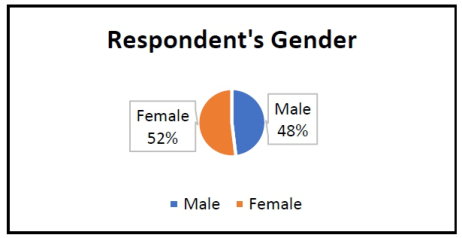
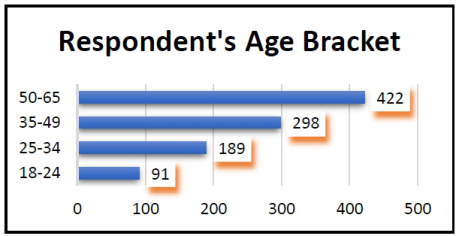
This study utilized SPSS to conduct descriptive analysis with customized tables. The results show that out of 1000 participants in the study, female participants account for 52% and male 48% (see Figure 1). There was 8% difference between the female and male participants. The study categorised the participants into four distinct age brackets. Ages 50–65 records 42% and had the highest percentage. 35–49 had 30%, 25–34 accounts for 19% while 18–24 shows 9% (Figure 2). Middle age and seniors dominate the study. Table 1 presents correlation among selected variables. The correla- tion between the variables were significant while some are insignificant with variation. For example, there is a strong positive correlation between ages and gender (r = 0.803). There is positive correlation between ages and occupation (r = 0.154) and negative correlation between ages and education (r = −0.120). Also, gender correlates with occupation (r = 0.118) and negatively correlates with education (r = −0.075). Edu- cation negatively correlates with occupation (r = −0.311). Also, occu- pation negatively correlate with “monitoring my recovery from exercise” (r = −0.387).
This study found out the effect the self-measurement had on humans’ daily life with thirteen optional questions in (Appendix 1). The results shows that the self-measurement had greater effect on exercise and have less effect on the ability to enjoy exercise. The results indicate that the seniors are motiva- ted to do the exercise but they are not enjoying it due to their age brackets. In Appendix 2, the results show why wearable technology is a motivation
Figure 1: Gender descriptive statistics.
6 Adewale Olaleye and Olubunmi Olaleye
Figure 2: Age brackets descriptive statistics.
for a stable human healthy lifestyle. Ease of use, functionality, interfaces, pri- vacy, and accessibility are the motivations derived from the wearables for a stable human healthy lifestyle. In this context, gamification, design, integra- tion, sharing data on social networks and sharing data with organisations are not wearable motivation for a stable human healthy lifestyle. Regarding sharing of wearables data, the results show that respondents have shared wea- rable data with their spouse (346, 34.60%) while others are willing to share their data in the future (393, 39.30%). Majority are not willing to share their data with their friends (468, 46.80%) while minority have shared their data with their medical practitioners (177, 17.70%), greater percentage are wil- ling to share their data with their medical practitioners in the future (668, 66.80%). For Pharmacist (488, 48.80%), Nutritionist (577, 57.70%), perso- nal trainer (494, 49.40%) greater numbers are willing to share their data in the future but for the pharmaceutical companies (653, 65.30%), insurance companies (629, 62.90%), health services companies (508, 50.80%), grocery stores (820, 82.00%), and public authorities (492, 49.20%), the respondents are not willing to share their data. The results shows (Appendices 4-7) that smartwatch, smart ring, smartphone, and other wearables are the standard devices that human uses for self-measurement. Among all the wearables,
Table 1. Correlation matrix of variables.
Table available in the original PDF paper.
The Human Quest for Wearable Technologies for Stable Healthy Lifestyle 7
smartphone is the most often used, followed by smartwatch while smart ring is still at the infant stage. Concerning the impact of human daily self- measurement through wearables, “monitoring my recovery from exercise” top the lists while “monitoring my well-being out of my own interest” had the least impact. Impact on exercise was predominant (Appendix 3).
CONCLUSION
Wearables help humans track their physical activity and create fitness goals, leading to excellent physical fitness and overall health. Wearables could also improve people’s physical fitness. In addition to this, it can be used to help people manage their stress and enhance their mental health. For instance, wearable gadgets that keep track of a person’s sleeping patterns or moni- tor the variability of their heart rate offer users valuable insights into their stress levels and assist them in determining strategies to deal with stress more efficiently. Wearable technology can boost social connectivity and assist indi- viduals in maintaining their connections with family and friends, which can positively impact social well-being. In addition to this, it has the potential to boost productivity and grant access to a wide variety of information and services, both of which are beneficial in achieving higher levels of producti- vity and efficiency. Wearables have the potential to improve safety. In the event of a fall or some other type of emergency, these gadgets can transmit an alert to the appropriate authorities.
This study provides answers to some unanswered questions in the lite- rature regarding wearables. First, it showcases the motivators of using the wearables as ease of use, functionality, interfaces, privacy, and accessibility. The earlier study mentioned that privacy, security, and convenience are the antecedents of the mobile money user experience (Olaleye, Sanusi & Oyelere, 2017). Second, daily self-measurement impacts human exercise, better sleep, and healthier eating habits. Third, the users of wearables are using smartwa- tch, smartphone, smart ring, and other devices, but smartphone dominates in this study. Lastly, wearable users are only willing to share their data with their spouses. However, they are willing to share it with friends, medical practitio- ners, pharmacists, nutritionists, and personal trainers in the future. There are mixed feelings about these results. The adoption of wearables, use, and con- tinual use is increasing with interest, but some users are yet to be convinced of the solution that wearables proffer to human health issues. Also, there still needs to be more trust in data sharing. Now, the trust level is very high for the spouse but for other stakeholders low. In the Finnish context, wearables are used more for exercise than other purposes. This study differs from the recent study of Olaleye & Olaleye (2022), which used a bibliometric approach for the well-being phenomenon rather than empirical data.
Wearables managers can be required to give training and onboarding for new employees to assist employees in comprehending how to use weara- ble technology effectively and efficiently. These steps may include training on hardware or software and general instruction on the most effective ways to utilize wearable technology in their daily lives. Wearable technology has the potential to capture a significant amount of personally identifiable infor- mation, which may give rise to privacy and security problems. Wearables
8 Adewale Olaleye and Olubunmi Olaleye
managers must establish transparent policies to safeguard their customer’s privacy and guarantee that data is utilized ethically. Also, wearables mana- gers can devise a means to integrate wearables with pre-existing systems. Managers may need to explore how wearable technology might relate to pre-existing systems and processes to maximize their efficacy and efficiency.
For this reason, modifying existing systems or constructing brand-new ones may be necessary to facilitate wearable technology utilization. Weara- bles managers should have definite policies and guidelines before allowing users to utilize wearable technology. This endeavour may include policies concerning data privacy and security and recommendations for the correct platform usage. Wearables managers might also explore how wearable tech- nology can engage and encourage users by offering real-time feedback and support to help them achieve their goals. This feedback could be one example of how users can use wearable technology.
This study contributes to the literature on human factors and wearable technologies by deepening the understanding of the factors that motivate the users of wearables, their impact, and the willingness to share their wearable data. Despite the contribution of this study, it has limitations. The study only employed single-country data. The future study should expand this study and use multiple countries’ data.
APPENDICES
Appendix 1: Effects of wearable self-measurement on human’s daily life.
Appendix 2: Motivation for using wearable for self-measurement.
The Human Quest for Wearable Technologies for Stable Healthy Lifestyle 9
Appendix 3: Impact of wearable on human’s lifestyle.
Appendix 4: Wearable used for self-measurement (a).
Appendix 5: Wearable used for self-measurement (b).
10 Adewale Olaleye and Olubunmi Olaleye
Appendix 6: Wearable used for self-measurement (c).
Appendix 7: Wearable used for self-measurement (d).
ACKNOWLEDGMENT
Thanks to the Finnish Innovation Fund, Sitra, which provides this open data for this study and Jyväskylä University of Applied Sciences, which provided funding for the conference.
REFERENCES
Behne, A., Arlinghaus, T., Kotte, N., & Teuteberg, F. (2020). Towards functionalities of self-tracking wearables, their effects on humans and their application areas: Where can we improve?. AMCIS 2020 Proceedings. 14. Crawford, K., Lingel, J., & Karppi, T. (2015). Our metrics, ourselves: A hundred
years of self-tracking from the weight scale to the wrist wearable device. European Journal of Cultural Studies, Volume 18 No. 4–5, pp. 479–496. Cui, J., Yeh, S. C., & Lee, S. H. (2019). Wearable sensors integrated with virtual reality: a self-guided healthcare system measuring shoulder joint mobility for frozen shoulder. Journal of Healthcare Engineering. Davis, F. D. (1989). Perceived usefulness, perceived ease of use, and user acceptance
of information technology. MIS quarterly, pp. 319–340.
The Human Quest for Wearable Technologies for Stable Healthy Lifestyle 11
Globe Newswire. (May 19, 2020) The global wearable healthcare devices. The ReportLinker Website: https://www.globenewswire.com/news-release/2020/05/ 19/2035838/0/en/The-global-wearable-healthcare-devices-market-is-projected- to-reach-USD-46-6-billion-by-2025-from-USD-18-4-billion-in-2020-at-a-CAG R-of-20-5-from-2020-to-2025.html. Klebbe, R., Steinert, A., & Müller-Werdan, U. (2019). Wearables for older adults:
requirements, design, and user experience. Perspectives on Wearable Enhanced Learning (WELL) Current Trends, Research, and Practice, pp. 313–332. MacKenzie & Wajcman, (1999). The social shaping of technology. Open university press. Motti, V. G., & Caine, K. (2014, September). Human factors considerations in the
design of wearable devices. In Proceedings of the human factors and ergonomics society annual meeting Volume 58 No. 1, pp. 1820–1824. Sage CA: Los Angeles, CA: SAGE Publications. Olaleye, S. A., Sanusi, I. T., & Oyelere, S. S. (2017). Users experience of mobile money in Nigeria. In 2017 IEEE AFRICON pp. 929–934. IEEE. Olaleye, S., & Olaleye, E. (2022). The Imperative of Students and Teachers’
Well-Being in Finnish University: A Bibliometric Approach. In ICERI2022 Pro- ceedings pp. 953–962. IATED. Poncette, A. S., Mosch, L. K., Stablo, L., Spies, C., Schieler, M., Weber-Carstens, S. & Balzer, F. (2022). A Remote Patient-Monitoring System for Intensive Care Medi- cine: Mixed Methods Human-Centered Design and Usability Evaluation. JMIR Human Factors, Volume 9 No. 2. Rogers, E. M., Singhal, A., & Quinlan, M. M. (2014). Diffusion of innovations.
In An integrated approach to communication theory and research, pp. 432–448. Routledge. Rousseau, D. M. (1989). Psychological and implied contracts in organizations.
Employee Responsibilities and Rights Journal, Volume 2 pp. 121–139. Tomitani, N., Kanegae, H., & Kario, K. (2022). Self-monitoring of psychological stress-induced blood pressure in daily life using a wearable watch-type oscillometric device in working individuals with hypertension. Hypertension Research, Volume 45 No. 10, 1531–1537. Tomitani, N., Kanegae, H., Suzuki, Y., Kuwabara, M., & Kario, K. (2021).
Stress-induced blood pressure elevation self-measured by a wearable watch-type device. American journal of hypertension, Volume 34 No. 4, pp. 377–382.
LISTED IN THE AHFE DIGITAL BOOKSTORE CATALOGUE
Explore the complete digital volume
Human Factors and Wearable Technologies
Read this individual research paper free through the original publisher, or explore the full digital proceedings book.
ISBN 978-1-958651-61-2
Explore this ISBN in the AHFE Bookstore ↗Listed in the July 2026 bookstore catalogue; search by ISBN to confirm current availability · Digital book purchase optional