Jinchao Lin, Gerald Matthews, Jacquelyn Schreck, Kelly Dickerson, Niav Hughes (2023). Evolution of Workload Demands of the Control Room with Plant Technology. In: Human Factors and Simulation. AHFE Open Access, vol. 83, pp. 57–66. https://doi.org/10.54941/ahfe1003562
The management and assessment of operator workload is a critical element of nuclear power plant (NPP) safety. Operators in the NPP main control room (MCR) often face workload that varies both quantitatively and qualitatively as immediate task demands change. Although workload is an intuitive construct, it is not easy to define and measure in practice. This paper reviews the conceptual and empirical challenges in workload assessment, discusses the evolution of workload in MCRs, and presents subjective workload data from recent U.S. Nuclear Regulatory Commission (NRC)’s Human Performance Test Facility (HPTF) studies. Designs for NPP control rooms will increasingly utilize new technology, ranging from digitization of I&C through automation of operator functions to eventual use of AI. Workload assessment can contribute to determining whether the technology reduces cognitive demands on operators or has detrimental effects, such as increasing the vulnerability to human errors. We advocate for a multidimensional workload assessment approach based on Multiple Resource Theory and workload assessment should be combined with measurements of other constructs such as situation awareness, teamwork, and trust to identify vulnerabilities to error in NPPs.
The management and assessment of operator workload is a critical element of nuclear power plant (NPP) safety. The main control room (MCR), the com- mand and control center of the NPP, has over 8000 displays and controls, including over 1000 annunciator tiles, 700 analogue and digital indicators and trend recorders, and over 2000 switches (rotary and toggle; Anokhin, Lourie, Dzhumaev, Golovanev, & Kompanietz, 2010). Operators in the NPP MCR often face workload that varies both quantitatively and quali- tatively as immediate task demands change. Workload varies with different task types, such as maintaining vigilance to monitor specific instrumentati- ons, locating and checking status of other instrumentations using multiple attention resources (e.g., visual, spatial, verbal), or physically manipulating controls. Therefore, profiling operators’ workload is one basis for evaluating
NPP designs in compliance with human engineering principles in the NRC’s NUREG-0711 (O’Hara, Higgins, Fleger, & Pieringer, 2012).
Workload is an intuitive construct that is hard to define and measure (Mat- thews & Reinerman-Jones, 2017). Broadly, workload can be defined as the allocation of processing resources to meet task demands (Wickens, 2008). In Human Reliability Analysis (HRA) for the nuclear industry, workload is seen as a Performance Influencing Factor (PIF) or Performance Shaping Factor (PSF) that influences operator error likelihood (e.g., Kolaczkowski, Forester, Lois and Cooper, 2005). However, workload assessment raises several conce- ptual and empirical challenges. First, although workload was traditionally a unitary construct (Moray, 1967) contemporary cognitive models, such as the Multiple Resource Theory (MRT; Wickens, 2008), and findings from recent empirical studies (Lin et al., 2021; Reinerman-Jones et al., 2019) tend to reject the unitary construct assumption and support that workload is mul- tidimensional. In the unitary model, performance degradation results from an insufficiency of resources to meet task demands, regardless of the specific information-processing required. In contrast, the MRT asserts that workload does not impact performance until the specific pool of resources required for the task is depleted. Therefore, tasks that demand resources from pools on different dimensions, such as verbal and spatial processing pools, may not interfere with each other (Wickens, 2002). In other words, although the ove- rall workload may be high, performance can be maintained as long as the workload on each dimension is not over-taxed. MRT can potentially be used as a guide to designing I&C so as not to overload any specific resource pool (e.g., Hugo, 2012).
Second, MRT predicts that operators can adjust to high workload stra- tegically, especially in complex task environments, for example, by shifting resources to high priority tasks (Matthews & Reinerman-Jones, 2017). Thus, workload increases are not necessarily reflected in performance deficits. Strategic management is also influenced by stress and fatigue (Matthews, Wohleber & Lin, 2019). Operators may neglect the task or task compo- nents when performance goals decline in salience, but increase effort when workload is perceived as motivating and challenging (Lin et al., 2000).
Third, dissociations between alternate workload assessments are common (Hancock & Matthews, 2019). The NASA-TLX (Hart & Staveland, 1998) is commonly used as a simple unitary assessment, but scores are not necessarily informative about neural responses to task demands, assessed psychophysi- ologically (Matthews & Reinerman-Jones, 2017). In general, multivariate workload assessment is desirable to build up a full picture of operator response to task demands in a given context (Matthews & Reinerman-Jones, 2017). For example, our recent work has addressed the sensitivity of different subjective and objective workload metrics for different tasking configurations of an MCR simulation (Lin, Matthews, Barber & Hughes, 2021).
WORKLOAD IN DIGITIZED MAIN CONTROL ROOMS Workload assessment is especially important in the NPP context because rea- ctors in the United States utilize a variety of plant designs, interfaces, and
Evolution of Workload Demands of the Control Room With Plant Technology 59
safety systems. For example, the MCR must be designed differently depen- ding on whether the plant is a boiling water reactor (BWR) or a pressurized water reactor (PWR), and the workload factors in the two types of plant may thus differ. In addition, as digital technology develops, new designs and information technology become available to the nuclear power com- munity and MCR designs are evolving to reflect plant modernization. A field study interviewed operators from a modern plant with more automa- tion and computer-based displays in the MCR as well as conventional plants with analog, hard-wired control rooms and found that the modern MCR requires operators to have more knowledge about the interface and induces additional workload (Vicente, Mumaw, & Roth, 1998). Updates to NRC gui- delines for reviewing interface designs in NUREG-0700, Rev. 3, highlight the impact of computer input devices and displays, as well as the potential risks of degradation of digital I&C systems (Fleger, O’Hara & Higgins, 2017).
Emerging technology brings new concepts, such as digital instrumenta- tion, computerized interfaces, and automated systems, to MCRs which are designed to enhance plant safety, improve operation efficiency, and alleviate operator workload, but it also introduces new human factors issues, inclu- ding an increase in monitoring workload, reduction in situation awareness of the system, and degradation in manual operating skills. Yang et al. (2012) found that compared to conventional paper-based procedures and compu- ter display of documents, participants using modern computerized operating procedures reported the lowest workload and highest situation awareness in a study using a feed water system simulator with digital instrumentation and controls. Another study (Zou et al., 2017) found that introduction of a digital control room design reduced cognitive load associated with collecting and integrating information but added cognitive load because of the need to perform interface management tasks. Certain errors appeared to become more probable, including erroneous mouse clicks, data entry errors, errors in target identification, and errors in information gathering. Operators had less awareness of the behaviors of other operators, relative to conventional control rooms. A study investigating the impact of automation on performa- nce and workload revealed that automated systems help to alleviate operator workload and enhance performance in terms of reducing human errors in a MCR reactor shutdown task (Jou, Yenn, Lin, Yang, & Lin, 2009). Ano- ther recent simulator study investigating the impact of new MCR technology showed that touch screen interface with digitalized representation of analog instrumentation and controls could alleviate operators’ workload in terms of lowering several mental processes, including multiple spatial and visual related process (Reinerman-Jones, Lin, Barber, Matthews & Hughes, 2019).
Emerging technology can potentially bring performance-enhancing bene- fits, but the beneficial effect may depend on other factors, including human- system interface (HSI), plant operating conditions (i.e., general, abnormal, or emergent), task property, staffing, etc. Technology may also introduce new workload challenges and unwanted side effects (Porthin, Liinasuo & Kling, 2020). Novel demand factors cited by Kim and Park (2018) include added complexity of automated systems and novel tasking, keeping track of the operational mode of the automation, and correctly diagnosing errors
made by the automation. Workload management in digitized control rooms may also interact with the teamworking style of the crew. Reviewing this issue, Bye (2023) discusses how the introduction of computerized procedure systems (CPS) can influence communication between operators and lead to imbalances in the distribution of workload across operators.
Such issues are likely to loom larger as technology advances further. There is increasing interest in the use of Artificial Intelligence (AI) to support plants that can operate autonomously, including small modular reactors (Kim & Alameri, 2020). AI may also provide operator assistance in conventional reactors, such as decision support, sensor fault detection and diagnosis, and predictive maintenance (Sethu et al., 2022). Well-designed systems of this kind assist safer plant operations, but human-AI interaction also rai- ses a variety of human factors challenges including incomprehensibility of AI decision-making, threats to situation awareness, failures in trust opti- mization, and uncertainty over decision authority (Matthews et al., 2021; Sethu et al., 2022).
Some empirical work has highlighted the potential downsides of new technology. A study conducted using an advanced power reactor simula- tor discovered that computerized operating procedures may affect operator performance and exacerbate operator workload, especially for shift supervi- sors (Kim, Jung, & Kim, 2014). The utilization of computerized operating procedures requires more operative activities, such as selecting and confir- ming steps and substeps, and in turn, demands more cognitive and physical resources. The impact of automation on workload may be moderated by task properties. Evidence from a simulation study indicated that automa- tion was only helpful in reducing workload in relatively low-workload but prolonged task (e.g., reactor shutdown task) whereas automation did not necessarily affect the workload during the reset alarm task (Jou, Yenn, Lin, Yang, & Chiang, 2009). Although the touch screen interface was found to produce lower overall workload and lower demands on short-term memory, it induced more brain activities and was related to more navigation errors and higher frequency of missed events (Matthews, Lin, Coole, Hughes, & D’Agostino, 2020). Nystad, Kaarstad and McDonald (2019) highlighted the challenges of decision-making with degraded instrumentation in automatic systems. Simulator studies showed that operators were sometimes effective in handling incidents in which indications were anomalous. However, they made errors in cases where they failed to evaluate alternative hypotheses for faulty indications due to a conjunction of an inappropriate “frame” or men- tal model for plant status and high concurrent workload. Operator adoption of a faulty mental model is a known issue for human-machine interaction and is likely to become more salient as machines become more complex and intelligent (Matthews et al., 2021).
HUMAN PERFORMANCE TEST FACILITY The Human Performance Test Facility (HPTF) at the University of Cen- tral Florida (UCF) Institute for Simulation and Training (IST) has aimed to support the Nuclear Regulatory Commission’s mission by advancing,
Evolution of Workload Demands of the Control Room With Plant Technology 61
validating, and documenting workload assessment methodology for NPP MCR operations using a generic plant simulator (Hughes, D’Agostino, & Reinerman-Jones, 2017). Controlled experimental studies of workload response conducted at UCF have utilized the HPTF methodology constru- cted with support from NRC, including inputs from Subject Matter Experts (SMEs). The HPTF provides a facility for assessment of the impact of novel designs, technologies, and concept of operations on operator workload and performance using human-in-the-loop experiments. It relies on a GSE Generic PWR (GSE GPWR) simulator that can be configured to provide experi- mental control over the task elements performed by operators. The GSE GPWR simulator has the capability to be full-scope, and is adaptable for simulating specific experimental scenarios as a part-task simulator. HPTF experiments use a modified generic Emergency Operating Procedure (EOP) that requires participants to perform predetermined tasks to respond to a loss of all alternating current power to the plant’s safety buses (EOP-EPP- 001 GSE Power Systems, 2011). Three key features of the methodology are: (1) the use of novice participants, (2) the definition of task components (i.e., checking task, detection task, and response implementation task), and (3) multivariate workload assessment using both subjective and objective mea- sures. In the following sections, we review some illustrative workload-related findings discovered from recent studies of the HPTF project conducted in our laboratory. For reasons of space, we only describe subjective workload data although multiple psychophysiological measures were also taken (see Lin et al., 2021).
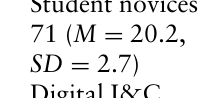
HPTF studies have focused on investigating the impact of HSI design (e.g., touchscreen interface with digitized representations of instrumentation and controls) and levels of automation. Descriptive statistics of selected subjective workload measures from three studies featuring different MCR technology are summarized to profile the evolution of workload demand of the con- trol room with plant technology. The study designs of the three studies are summarized in Table 1. In Study C, participant performed with automation configured for one of two Levels of Automation (LOA). The lower LOA (management by consent) required explicit endorsement or over-ride of the automation, whereas the higher LOA (management by exception) implemen- ted the automation unless the operator chose to over-ride within a set time window.
Table 1. Summary of study designs.
Table available in the original PDF paper.
Study A Study B Study C Participant Expert operators Student novices Student novices Sample Size 30 (M = 55.5, SD = 7.8)
Equation reproduced from the original PDF.
44 (M = 20.9, SD = 5.8) Technology Conventional Digital I&C Digital I&C Interface Analog Touchscreen Touchscreen Automation NA NA Two LOAs Crew Crew of three Crew of three Individual Procedure Paper Paper Computerized
The NASA - Task Load Index (NASA-TLX; Hart & Staveland, 1988) is a widely used measurement of subjective workload. It provides an overall workload score along with ratings from its six subscales. It is a quick tool to profile task-induced workload in terms of the quantity of workload. The mean and standard deviation of NASA-TLX ratings from the three studies are summarized in Table 2. According to the global workload ratings, com- puterized procedures with automation, regardless of level, tend to reduce the overall operator workload.
The Multiple Resource Questionnaire (MRQ) was used to characterize the nature of the mental processes used during a task (Boles & Adair, 2001). The following 14 of 17 scales were included for the HPTF studies: auditory emoti- onal process, auditory linguistic process, manual process, short-term memory process, spatial attentive process, spatial categorical process, spatial concen- trative process, spatial emergent process, spatial positional process, spatial quantitative process, visual lexical process, visual phonetic process, visual temporal process, and vocal process. MRQ can help to understand the sou- rce of the workload. The mean and standard deviation of MRQ ratings from the three studies are summarized in Table 3. The high ratings from spatial
Evolution of Workload Demands of the Control Room With Plant Technology 63
related processes in both conventional and modern MCR settings suggests that MCR operations demand high spatial resources. Thus, the generally low workload ratings indicated by the NASA-TLX are not fully capturing task demands, consistent with Multiple Resource Theory (Wickens, 2008). Com- puterized procedure system with automation may enable operators to work to individually and reduce the workload associated with communications among crew members, such as auditory related processes.
These tables indicate three key features of similarities and differences in multidimensional workload response across studies. First, the profile of subjective workload response is generally similar for the expert and novice samples (Studies A and B), despite the difference in interface. The two groups do not differ in overall NASA-TLX workload. As we have discussed elsewh- ere (Lin et al., 2022), the impact of defined task demands is sufficiently strong to produce consistent results across different levels of expertise. Second, in Study C, we anticipated lower workload at the higher LOA, but, in fact, LOA had minimal impacts on workload. As in other operational contexts (Lin et al., 2020), higher LOAs do not necessarily mitigate workload, perh- aps because the level of automation affects operator’s strategies for allocating attention to different task components. Third, the workload profile in Study C is in most respects similar to profiles in the studies without automation (A and B). Thus, automation is not a panacea for elements of workload such as spatial attentive and visual lexical demands which remain high in all stu- dies. Elements of workload associated with human-human teaming such as auditory and vocal process demands were much lower with automation, as expected given that the operator performed alone. Surprisingly, visual tem- poral demands were substantially higher in automated conditions, indicating an unexpected consequence of automation. (The means for visual temporal rating in Study B and Study C, lower LOA, differ significantly, t(113) = 4.32, p <.001, d = .83).
IMPLICATION AND CONCLUSION Designs for NPP control rooms will increasingly utilize new technology, ran- ging from digitization of I&C through automation of operator functions to eventual use of AI. These developments raise novel safety challenges requi- ring new methods for HRA in safety regulation (Boring, 2014; Porthin et al., 2020). Workload assessment can contribute to determining when digital tech- nology intended to assist the operator is succeeding in reducing cognitive demands, when managing technology is actually burdening the operator, and when technology is having unanticipated impacts. Workload assessment should be an element of initial design of interfaces and systems, of evaluating operating procedures, and of operator training. Simple subjective scales such as the NASA-TLX are adequate for detecting substantial cognitive overload but have limitations for evaluating complex operational systems (Matthews & Reinerman-Jones, 2017). We have advocated for a multidimensional asses- sment approach based on Multiple Resource Theory (Wickens, 2008) that is capable of identifying specific task elements that may tax the operator excessively. Additionally, as the role of digitized systems expands, workload
assessment should be combined with measurements of other key constructs such as situation awareness, teamwork, and trust to identify vulnerabilities to error (e.g., Reinerman-Jones et al., 2019). It is critical that advancements in technology do not outpace methodologies for assessing their safety impacts.
ACKNOWLEDGMENT
This paper was prepared as an account of work sponsored in part by an agency of the U.S. Government. Neither the U.S. Government nor any age- ncy thereof, nor any of their employees, makes any warranty, expressed or implied, or assumes any legal liability or responsibility for any third party’s use, or the results of such use, of any information, apparatus, product, or process disclosed in this report, or represents that its use by such third party would not infringe privately owned rights. The views expressed in this paper are not necessarily those of the U.S. Nuclear Regulatory Commission.
REFERENCES
Anokhin, A., Lourie, V., Dzhumaev, S., Golovanev, V. and Kompanietz, N., 2010.
Upgrade of the Kursk NPP main control room (case study). In Proc. Int. Control Room Design Conf.: ICOCO 2010 (pp. 207-214). Boles, D. B. and Adair, L. P., 2001, October. The multiple resources questionnaire (MRQ). In Proceedings of the human factors and ergonomics society annual meeting (Vol. 45, No. 25, pp. 1790–1794). Sage CA: Los Angeles, CA: SAGE Publications. Boring, R. L., 2014, June. Human reliability analysis for digital human-machine
interfaces: a wish list for future research. In PSAM12, Probabilistic Safety Assessment and Management Conference (pp. 22–27). Honolulu Hawaii, USA. Bye, A., 2023. Future needs of human reliability analysis: The interaction between new technology, crew roles and performance. Safety Science, 158, p. 105962. Fleger, S., O’Hara, J. and Higgins, J., 2017. Development of NUREG-0700,
rev 3-229. American Nuclear Society-ANS, 555 North Kensington Avenue, La Grange Park, IL 60526 (United States). Hancock, P. A. and Matthews, G., 2019. Workload and performance: Associations, insensitivities, and dissociations. Human factors, 61(3), pp. 374–392. Hart, S. G. and Staveland, L. E., 1988. Development of NASA-TLX (Task Load
Index): Results of empirical and theoretical research. In Advances in psycho- logy (Vol. 52, pp. 139–183). North-Holland. Hughes, N., D’Agostino, A., and Reinerman-Jones, L., 2017, September. The NRC’s Human Performance Test Facility: Methodological considerations for develo- ping a research program for systematic data collection using an NPP simulator. In Proceedings of the Enlarged Halden Programme Group (EHPG) meeting. Lillehammer, Norway. Hugo, J., 2012. Computational human performance modeling for alarm system
design (No. INL/CON-12-25123). Idaho National Lab. (INL), Idaho Falls, ID (United States). Jou, Y. T., Yenn, T. C., Lin, C. J., Yang, C. W. and Chiang, C. C., 2009. Evaluation of operators’ mental workload of human–system interface automation in the advanced nuclear power plants. Nuclear Engineering and Design, 239(11), pp. 2537–2542.
Evolution of Workload Demands of the Control Room With Plant Technology 65
Jou, Y. T., Yenn, T. C., Lin, C. J., Yang, C. W. and Lin, S. F., 2009, March. Evaluation of mental workload in automation design for a main control room task. In 2009 International Conference on Networking, Sensing and Control (pp. 313–317). IEEE. Kim, J. H. and Alameri, S. A., 2020. Harmonizing nuclear and renewable energy:
Case studies. International Journal of Energy Research, 44(10), pp. 8053–8061. Kim, Y., Jung, W. and Kim, S., 2014. Empirical investigation of workloads of operators in advanced control rooms. Journal of Nuclear Science and Technology, 51(6), pp. 744–751. Kima, Y. and Park, J., 2018, October. Envisioning Human-Automation Interacti-
ons for Responding Emergency Situations of NPPs: a Viewpoint from Human- Computer Interaction. In Proc. Trans. Korean Nucl. Soc. Autumn Meeting. Kolaczkowski, A. M., Forester, J., Lois, E., & Cooper, S., 2015. Good practices for implementing Human Reliability Analysis (HRA) (NUREG-1792). U. S. NRC, Washington, DC. Lin, J., Matthews, G., Barber, D. and Hughes, N., 2021, June. Comparing the Sensi-
tivity of Workload Measures for Different Task Types Using Nuclear Power Plant Main Control Room Simulators. In Advances in Simulation and Digital Human Modeling: Proceedings of the AHFE 2021 Virtual Conferences on Human Factors and Simulation, and Digital Human Modeling and Applied Optimization, July 25-29, 2021, USA (pp. 161–170). Cham: Springer International Publishing. Lin, J., Matthews, G., Hughes, N., and Dickerson, K., 2022, July. Novices as models of expert operators: Evidence from the NRC Human Performance Test Facility. In: J. Wright and D. Barber (eds.), Human Factors and Simulation, vol. 30. AHFE International, USA, pp. 1–10. Lin, J., Matthews, G., Wohleber, R. W., Funke, G. J., Calhoun, G. L., Ruff,
H. A., Szalma, J. and Chiu, P., 2020. Overload and automation-dependence in a multi-UAS simulation: Task demand and individual difference factors. Journal of Experimental Psychology: Applied, 26(2), p. 218. Matthews, G., Lin, J., Coole, J., Hughes, N., and D’Agostino, A., 2020. U. S.
Nuclear Regulatory Commission – Human Performance Test Facility. U. S. NRC, Washington, DC. Matthews, G., Panganiban, A. R., Lin, J., Long, M. and Schwing, M., 2021. Supermachines or sub-humans: What are the unique features of trust in intelligent autonomous systems?, in C. S. Nam and J. Lyons (eds.), Trust in human-robot interaction: Research and applications. Elsevier, Amsterdam, pp. 59–82. Matthews, G. and Reinerman-Jones, L., 2017. Workload assessment: How to dia-
gnose workload issues and enhance performance. Human Factors and Ergonomics Society. Matthews, G., Wohleber, R. W. and Lin, J., 2020. Stress, skilled performance, and expertise: Overload and beyond, in P. Ward, J. M. Schraagen, J. Gore, & E. Roth (eds.), Oxford Handbook of Expertise. Oxford, New York. Moray, N., 1967. Where is capacity limited? A survey and a model. Acta psycholo-
gica, 27, pp. 84–92. Nystad, E., Kaarstad, M. and McDonald, R., 2019. Crew decision-making in situations with degraded information. In Paper submitted to ESREL 2019 conference. O’hara, J. M., Higgins, J. C., Fleger, S. and Pieringer, P., 2004. Human factors engi-
neering program review model (NUREG-0711, Rev.3). U. S. NRC, Washington, DC.
Porthin, M., Liinasuo, M. and Kling, T., 2020. Effects of digitalization of nuclear power plant control rooms on human reliability analysis–A review. Reliability Engineering & System Safety, 194, p. 106415. Reinerman-Jones, L. E., Hughes, N., D’Agostino, A. and Matthews, G., 2019.
Human performance metrics for the nuclear domain: A tool for evaluating mea- sures of workload, situation awareness and teamwork. International journal of industrial ergonomics, 69, pp. 217–227. Reinerman-Jones, L., Lin, J., Barber, D., Matthews, G. and Hughes, N., 2019, November. Multi-dimensional workload in two types of nuclear power plant simulators. In Proceedings of the Human Factors and Ergonomics Society Annual Meeting (Vol. 63, No. 1, pp. 1777–1781). Sage CA: Los Angeles, CA: SAGE Publications. Sethu, M., Kotla, B., Russell, D., Madadi, M., Titu, N. A., Coble, J. B., Boring,
R. L., Blache, K., Agarwal, V., Yadav, V. and Khojandi, A., 2023. Application of Artificial Intelligence in Detection and Mitigation of Human Factor Errors in Nuclear Power Plants: A Review. Nuclear Technology, 209(3), pp. 276–294. Vicente, K. J., Mumaw, R. J. and Roth, E. M., 1998, October. More about operator monitoring under normal operations: The role of workload regulation and the impact of control room technology. In Proceedings of the Human Factors and Ergonomics Society Annual Meeting (Vol. 42, No. 3, pp. 229–233). Sage CA: Los Angeles, CA: SAGE Publications. Wickens, C. D., 2002. Multiple resources and performance prediction. Theoretical
issues in ergonomics science, 3(2), pp. 159–177. Wickens, C. D., 2008. Multiple resources and mental workload. Human factors, 50(3), pp. 449–455. Yang, C. W., Yang, L. C., Cheng, T. C., Jou, Y. T. and Chiou, S. W., 2012. Assessing mental workload and situation awareness in the evaluation of computerized procedures in the main control room. Nuclear Engineering and Design, 250, pp. 713–719. Zou, Y., Zhang, L., Dai, L., Li, P. and Qing, T., 2017. Human reliability analysis
for digitized nuclear power plants: Case study on the LingAo II nuclear power plant. Nuclear Engineering and Technology, 49(2), pp. 335–341.
LISTED IN THE AHFE DIGITAL BOOKSTORE CATALOGUE
Explore the complete digital volume
Human Factors and Simulation
Read this individual research paper free through the original publisher, or explore the full digital proceedings book.
ISBN 978-1-958651-59-9
Explore this ISBN in the AHFE Bookstore ↗Listed in the July 2026 bookstore catalogue; search by ISBN to confirm current availability · Digital book purchase optional