Ana Margarida Ferreira, Ângela Ferreira (2023). Strategic Design, Regenerative Economy, and Resilient Rural Communities. The Creative Nature Hub. In: Human Dynamics and Design for the Development of Contemporary Societies. AHFE Open Access, vol. 81, pp. 49–56. https://doi.org/10.54941/ahfe1003532
OECD (2021) emphasizes rural places' critical role in driving sustainable, inclusive growth. It also reinforces the need to strengthen place-based and place-led opportunities and resilience to go against global challenges and ongoing societal transformations, such as digitalization, climate change, ageing, migration, and population decline. This reality presents significant challenges but also opportunities. According to some authors, rural communities have a critical role in tackling issues such as sustainable food supply chain development. The unique potential of rural areas to address these challenges and drive sustainable growth and people's well-being and happiness is also recognized.On the other hand, boosting community-based innovations and organizations is crucial to unlocking local opportunities, attracting investment, delivering improved essential products and services, and boosting growth and inclusive, sustainable development towards regenerative economies. In this line of thought and within the framework of the European Project Creation (Ferreira et al., 2020), this paper presents the main outputs of a research work that envisioned a new and sustainable creative hub business model. The regenerative economy understanding and the social innovation and sustainability background in Portugal's forest and rural setting are underlined. The design of the Creative Nature Hub's (CNH) business model, a cultural and creative non-profit association, was supported by the analysis of three case studies of European organizations in the cultural and creative industries acting in rich cultural and human environments with similar sustainable goals. These hubs focus on social innovation, exploring collaborative processes, social learning, networking, and partnerships as strategic drivers for sustainable development. Applied research practices and people and nature-centric approaches allow new social interactions, respecting old cultural practices and ecosystems' dynamic balances. Technology democratization and literacy facilitated generational knowledge transfer and value co-creation in the contemporary digital paradigm. In line with the stress by (British Council, 2015), creative hubs have numerous advantages for those who participate in their functioning and the community. These hubs provide short- and long-term support in the form of products and services, facilitating communication within the community, creating a network and a wider audience, promoting the emergence of talent and creative thinking, or nurturing inclusive development. As the output of the design-driven research activity, a modular and evolutive CNH business model emerged. It allows the transformation and adaptation of the organization over time, highlighting circular design, green technologies, and sustainability to respect natural environment patterns of change and promote territory restoration while nurturing community well-being.
At the end of the 20th century, the industry underwent a phase of decline and restructuring that negatively affected the industrial city centres. With this, some industries got lost, and unemployment increased, weakening these cities’ social and economic foundations. In response to these new challenges, several urban regeneration programs were activated: “It was notable that some innovative city authorities, mindful of youth unemployment and the need to restructure economies and support communities radically, turned to consider the possibilities of the creative economy - or cultural industries as they were then termed” (British Council, 2016, p. 11). In 2000, the development of cultural and creative industries began to be noticeable; there was even a set of empty buildings - old factories, i.e., industrial buildings - that were renovated as studios for the creative industry businesses, resuming spaces that had been abandoned, thus re- populating the interior of cities. Today, we know some of these spaces as Hubs.
Despite the difficulty of defining a creative hub, the British Council (2016, p. 8) suggests: “a creative hub is a place, either physical or virtual, which brings creative people together. It convenes, providing space and support for networking, business development, and community engagement within the creative, cultural, and tech sectors”. These spaces have numerous advantages for those participating in their operation and the community they are a part of. These are organizations that offer short and long-term support, in the form of services or facilities, to the ideas, projects, organizations, and businesses they host; they also facilitate communication within the community, creating a network and a broad audience; promote and celebrate emerging talent; and pay attention to developments in the creative and non-creative industry, exploring the barriers of
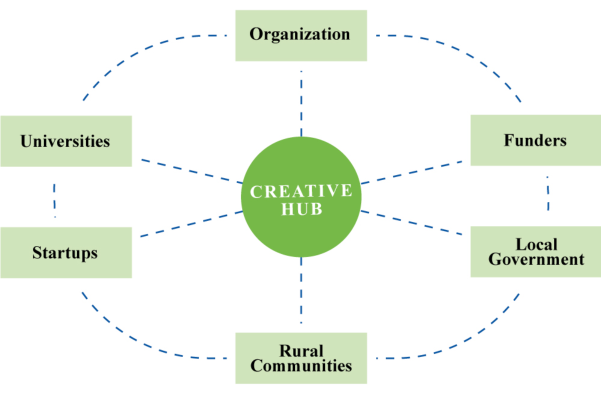
Figure 1: Interaction ecosystem. (Adapted by the authors from the British Council, 2015).
Strategic Design, Regenerative Economy, and Resilient Rural Communities 51
Table 1. Network effects. (Adapted from (Plastrik & Taylor, 2006, p. 18)).
Table available in the original PDF paper.
contemporary practices, in a constant search for innovation (British Council, 2015). We also highlight the importance of a network within a Hub, which is fundamental to enabling innovative processes since it allows a greater exchange of information, theoretical and practical, that is necessary for companies, especially for start-ups that need guidance making decisions regarding administrative, financial, and innovation measures (Hogeschool vor de Kunsten Utrecht, 2010). “An empowered network creates a collective and cohesive voice, increases capacity and provokes innovation” (British Council, 2015, p. 16). Overall, the network has an immensely positive impact on the people and organizations that are part of it (Fig. 1) and that benefit from it - so much so that Plastrik and Taylor (2006) point to five beneficial and fundamental effects of a network: adaptive capacity, resilience, reach, and rapid growth and diffusion, as presented in Table 1.
THE CASE STUDIES For developing the Creative Nature Hub Business Model, three European Creative Hubs were selected as case studies - Culture Hub Croatia, Creative Hub Darwin, and Impact Hub - which share the values and direction proposed by the intended Hub. Guided by different concepts, each defends and progresses toward sustainability, inclusion, and social innovation.
52 Ferreira and Ferreira
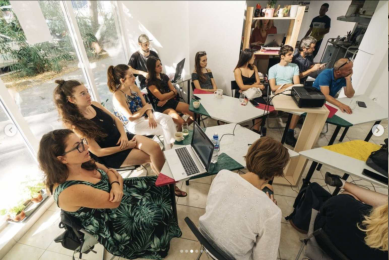
The first case study selected - Culture Hub Croatia - (Fig. 2) presents the most significant similarities from a conceptual and thematic point of view with the reference project in this investigation. Culture Hub Croatia, similar to the Creative Nature Hub, has strong ties with education and pays special attention to the cultural and artistic areas, promoting all people’s participation in its projects.
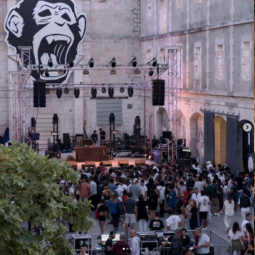
The Darwin creative hub (Fig. 3), with larger dimensions than Culture Hub Croatia, was selected for being considered an Urban Ecosystem, paying particular attention to ecological and sustainability issues, so much so that the businesses it integrates are - necessarily - sustainable. At the same time, creativity, culture, and physical activity promotion are prioritized with ecological thinking.
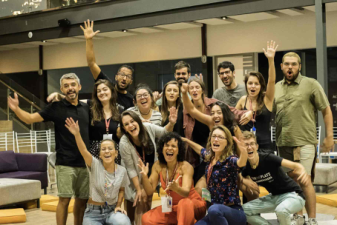
Finally, we have the case study of Impact Hub (Fig. 4). This project is about sustainability, inclusion, and innovation - just like the Creative Nature Hub concept. It stands out for having a global impact, characterized by a network of influential partners, allowing for large-scale action and intervention. Among its goals is creating collaborations between entrepreneurs and investors, which aim to build better businesses and design impactful solutions.
Figure 2: Culture Hub Croatia, the building. (Culture Hub Croatia, n.d.).Figure 3: The Darwin creative hub. (Darwin, n.d.).
Strategic Design, Regenerative Economy, and Resilient Rural Communities 53
Figure 4: Impact Hub, a team and the physical locations. (Impact Hub, n.d.).
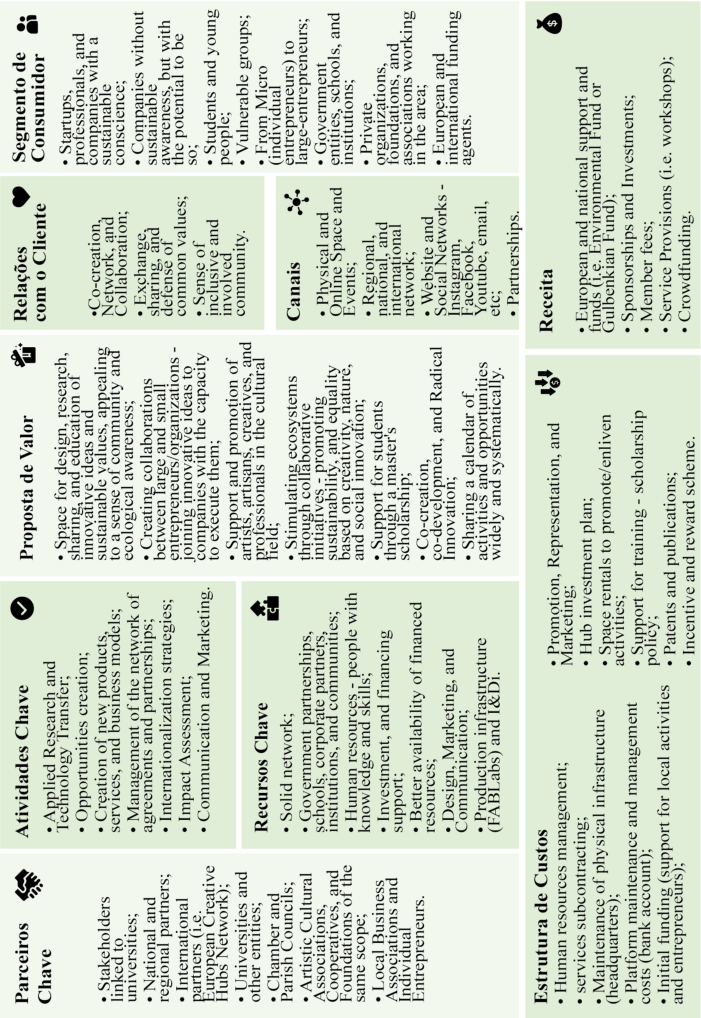
THE CREATIVE NATURE HUB BUSINESS MODEL The business model presented for the Creative Hub (Fig. 5) aims, primarily, to meet the sustainability values that guarantee good economic practices - such as the circular economy - facilitating access to new resources and tools that provide innovation and creativity, adding socio-cultural value, and enhancing the territory, namely, in the centre of Portugal and a forest and rural setting. For these goals’ achievement, the business model is developed under a modular system, making it possible to evolve and transform, adapting to Nature, people, and the territory.
The Creative Nature Hub proposes a crossing between artistic practices, research, and innovation, under the lens of social and creative entrepreneurship, with an ecological conscience and sustainable values. In this dynamic space, the intention is to create collaborations between large and small entrepreneurs with larger organizations to bring together innovative ideas to companies with the capacity to execute them. Involving the Hub’s initiatives within the region, it operates is a critical factor in expanding development and proximity to - and with - local communities.
Among the various consumer segments, we highlight those who develop and promote commercial exchanges, start-ups, or other well-established local companies and entrepreneurs. Also, schools and institutions - both public and private - and considering this Hub’s social and inclusive values, it is worth mentioning the segment that includes vulnerable groups and government entities. With these, the Hub shares common values, and through a network, it stimulates co-creation, learning, and collaboration.
The great pillar of the new Business Model is the incessant search for innovation through creativity and network cooperation, having the people and communities at the centre of the process. This practice depends on sharing fundamental knowledge and opportunities, instigating research and technology transfer, making it possible to ideate and implement new products, services, and business models, aggregating cultural value, and respecting regional and national identity and heritage.
54 Ferreira and Ferreira
Figure 5: Creative Nature Hub’s business model canvas.
CONCLUSION
The Strengths, Weaknesses, Opportunities, and Threats analysis (SWOT) is fundamental to understanding the business’s competitive position and establishing the Hub’s implementation and management strategies as ground pillars. Within these four areas, we highlight as one of the Creative Nature Hub’s strengths the differentiating proposal of the service it provides within its geographic context, where, beyond necessary, it is nonexistent. The
Strategic Design, Regenerative Economy, and Resilient Rural Communities 55
support given to the country’s creative industry is also of great value, and it stimulates entrepreneurship by implementing innovative practices developed and supported by knowledge and research.
There are also a set of Opportunities that enhance the use of the Creative Nature Hub’s strengths and validate the need to make them fundamental structures of the strategies to be implemented. The recognition of a decentralized economy’s importance, the support given to arts and culture (by the government), or the material and immaterial value intrinsic to Portugal’s interior regions are key factors when developing a project that will prove to be relevant and necessary, as Creative Nature Hub is.
As for any project, a set of threats - the external dimension of the analysis - can hinder the Hub’s implementation and development. Identifying them is as important as defining the structuring of the short, medium, and long-term strategies. These threats help to prioritize the Hub’s actions, ensuring that the issues developed therein also concern the surrounding community.
The proposed strategies aim to prevent threats using the Hub’s forces; adapt to its strengths by using the opportunities; use opportunities to minimize weaknesses; and help minimize the dangers between the intersection of weaknesses and threats.
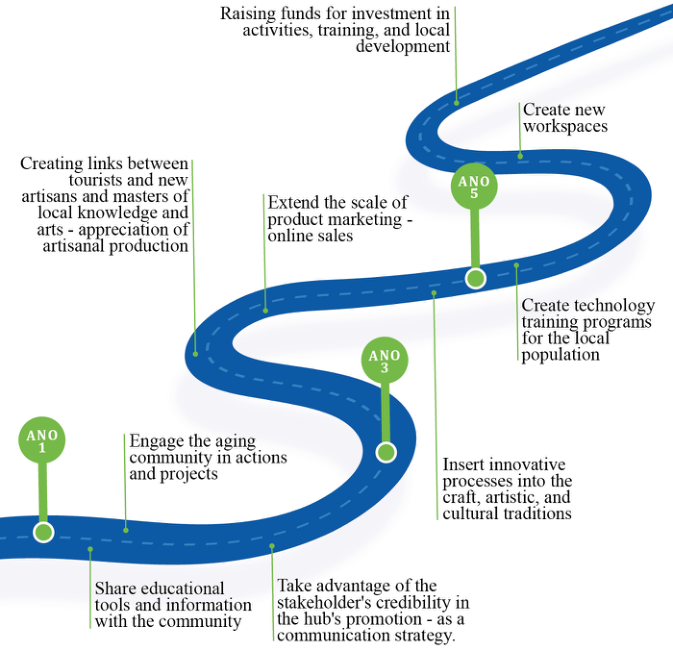
Considering the embryonic phase of the project, these strategies were placed in one, three, and five-year timeline (Fig. 6) marks as an exploratory exercise. As a flexible structure, it should be rethought and redesigned to
Figure 6: A roadmap synthesis. Short, medium and long-term strategies.
56 Ferreira and Ferreira
adapt to the emergent needs as an evolutionary system (Ferreira, 2009) and as presented in detail by Ferreira (2022).
ACKNOWLEDGMENT
The authors would like to acknowledge the Creative Nature Hub for funding this research dissemination. https://www.creative-nature-hub.pt/pt
REFERENCES
British Council (2015). Creative HubKit, (Accessed: 10 August 2022). https://www.
britishcouncil.ro/sites/default/files/creative_hubkit_en.pdf. British Council (2016). Creative Hubs: Understanding the New Economy. British Council. Culture Hub Croatia (no date) ‘Culture Hub Croatia’. Available at: https://cultureh
ubcroatia.hr/en/ (Accessed: 17 May 2022). Darwin (no date) ‘Darwin, le projet’, Darwin. Available at: https://darwin.camp/c/pr ojet-darwin/ (Accessed: 7 August 2022). Ferreira, Â. (2022). Inovação Social e Empreendedorismo Cultural e Artístico.
Proposta de Modelo de Negócio para um Creative Hub. IADE - Creative University. Ferreira A. M., Savva S., Souleles N. (2021) Future Trends in Education for More Sustainable Human Systems Design: The CREATION Project. In: Editors: Ahram, T., Karwowski, W., Pickl, S. and Taiar, R. (eds.) Human Systems Engineering and Design: Future Trends and Applications (IHSED 2020). Advances in Intelligent Systems and Computing, Springer ISBN: 978-3-030-02052-1. Ferreira, Ana M, Devezas, Tessaleno & Carvalho-Rodrigues, F. (2009) “Modelling
a Design Cycle using an Evolutionary Approach”, Proceedings da 5a Conferência Internacional da UNIDCOM/IADE – 40 IADE 40, 1–3 outubro, pp. 232–242. Lisboa: Edições UNIDCOM/IADE. Hogeschool vor de Kunsten Utrecht (2010). The Entrepreneurial Dimension of the Cultural and Creative Industries. Utrecht: Hogeschool vor de Kunsten Utrecht. Impact Hub (no date). Impact Hub, Impact Hub. Available at: https://impacthub.net/
(Accessed: 25 May 2022). OECE European Commission (2021). The Missing Entrepreneurs 2021: Policies for Inclusive Entrepreneurship and Self-Employment, OECD Publishing, Paris, https: //doi.org/10.1787/71b7a9bb-en. (Accessed: September 2022). Plastrik, P. and Taylor, M. (2006). ‘A Handbook for Network Builders Seeking Social
Change’, p. 117. ‘Programs – Impact Hub’ (n.d.). Available at: https://lisbon.impacthub.net/programs/ (Accessed: 7 August 2022).
LISTED IN THE AHFE DIGITAL BOOKSTORE CATALOGUE
Explore the complete digital volume
Human Dynamics and Design for the Development of Contemporary Societies
Read this individual research paper free through the original publisher, or explore the full digital proceedings book.
ISBN 978-1-958651-57-5
Explore this ISBN in the AHFE Bookstore ↗Listed in the July 2026 bookstore catalogue; search by ISBN to confirm current availability · Digital book purchase optional