Fei Wang, Cong Gu (2023). Research for Health System Design Under Digital Intelligent Era. In: Ergonomics In Design. AHFE Open Access, vol. 77, pp. 501–509. https://doi.org/10.54941/ahfe1003410
This With the advancement of technology and social development, health is becoming an increasingly important proposition for the development of human society. The new crown epidemic has made health-related issues such as crisis response, epidemic prevention and disease prevention, aging trends, and quality of medical services more acute and urgent.In the digital era, design, as a thinking method for problem solving and a mechanism for crisis prevention, is deeply involved in solving health problems in the relationship between people and society. Smart Health Design aims to explore design intervention in the field of great health, integrate humanistic care through intelligent technology, reconstruct the standards and methods of health design in the digital era from the perspective of design intelligence, achieve health and social harmony, construct a contemporary smart health living system, and establish a smart and healthy lifestyle.Through the design case of industry-university-research project cooperation, the article focuses on healthy lifestyle, explores the demand for digital products and services in the health field, and proposes the value proposition of smart health from passive medical treatment to active health with the concept of humanistic care and the integration of intelligent technology and digital intelligence design methods, and constructs a new scene of smart health life in a multi-dimensional way, so that smart health life can reflect the emotion and temperature of "computing" in the digital era.
SMART HEALTH IN THE ERA OF DIGITAL INTELLIGENCE The fourth industrial revolution has given a great impetus to the advancement of health care tools, and human beings have been able to use fully artificial organs, artificially intervene in the living environment, and even intervene in the writing of the code of life. Nowadays, health is increasingly becoming an important proposition for the development of human society. As society advances and technology develops, the means of maintaining health, inte- rventions for diseases, and deeper care for the soul are constantly changing. The post-epidemic era has further accelerated the transformation of people’s perception of health, and the use of digital information technology, combined with health care support products and services to achieve health management and assisted treatment of individuals’ daily lives.
Smart Health is an emerging interdisciplinary discipline, which includes information science and technology, management, engineering technology,
electronic science and technology, life science and technology, medical engi- neering, material science, health medicine, brain science and medical techno- logy, etc. The realization of its services involves the coordinated operation of integrated systems of medical institutions, government departments, enter- prises, communities, families and individuals. Smart Health is the use of intelligent means to treat diseases and maintain health, is the application of modern big data, information technology, network technology, intelligent technology and other advanced technology, improve the traditional model of health care methods, promote and promote self-health management, so as to achieve the purpose of solving health problems (Han and Jin, 2016). It is a complex and dynamic system supported by health concept, medical techno- logy, intelligent technology, network technology, etc., which provides service functions for human health.
At present, smart health mainly presents different concepts and appro- aches, including “Internet+medical”, “smart medical”, “mobile medical”, “mobile health”, “IOT health”, etc. The common point of these concepts is to use modern information technology, network technology, intelligent tech- nology and mobile devices, etc. to change the traditional medical model and promote self health management, so as to provide human health. Mobile health”, “IOT health”, etc. These concepts all have the common point of using modern information technology, network technology, intelligent technology and mobile devices to change the traditional medical model and promote self-health management, thus providing intelligent services for human health (Ma and Zhou, 2018). Smart Health The field of intelligent health concerns from the supply of technical means to expand to a deeper and more multi-faceted care for people’s hearts and emotions, and the obje- cts served gradually from the medical and elderly care fields to the leisure and entertainment of healthy elderly and even young people and their daily lives.
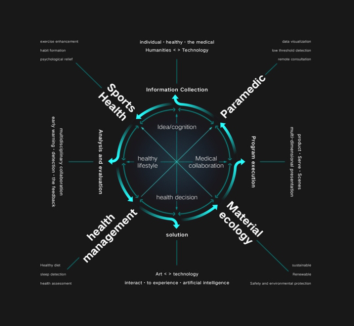
THE CONNOTATION OF INTELLIGENT HEALTH SYSTEM DESIGN In the digital age, design is deeply involved in solving health problems in human-social relationships as a method of thinking about problem solving and as a mechanism for crisis prevention. Smart Health System Design (Figure 1) is another dimension of thinking in the design discipline facing health and medical aspects. It is based on the big health industry, integra- ting humanities, arts and technology, with the goal of establishing a smart health lifestyle and constructing a smart health life system, with the con- tent of rebuilding the standards and methods of health design in the digital era, and with the medical field as the synergistic object, using the thinking method of design to change people’s awareness and concepts from passive medical treatment to actively establishing a healthy lifestyle, and through the innovation of products and service models, to propose more new ideas for health care Through product and service model innovation, we propose more new possibilities for health care products and services, and make up for the humanistic deficiencies and shortcomings brought about by techno- logical development. We will build a more humane and ethical demand for
Research for Health System Design Under Digital Intelligent Era 503
Figure 1: Intelligent health system design. (Self-drawn by the author, 2023).
new scenarios, reflecting the emotion and temperature of “computing”in the digital era.
Intelligent health system design mainly includes four aspects, such as exe- rcise health design, paramedical design, health management design, and material ecological design. They constitute the relationship between each other with the concept and thinking method of health design, from inner to outer, throughout the life individual, healthy life, intelligent management, as well as products, information systems and services.
Intelligent health system design emphasizes the long-term continuous dynamic insight and analysis of individual life-cycle behavior system, the identification and evaluation of their own state and health degree, the impro- vement of health behavior (lifestyle), the comprehensive use of design tools to control the physiological, psychological, behavioral and environmental active intervention, to promote adaptive changes, the initiative to obtain sustaina- ble health capacity, so as to The practice and knowledge system to improve functions, prevent diseases, and maintain the human body in a healthy state.
INTELLIGENT HEALTH SYSTEM DESIGN PRACTICE In recent years, the author has focused on the research field of intelligent health system design, solving complex problems through interdisciplinary and collaborative cooperation with enterprises, universities and institutions such as Panasonic Group Recreation and Wellness Division, Zhejiang Uni- versity and the First Hospital of Zhejiang University School of Medicine, and has carried out various design practices in sports health design, paramedical design, health management design and material ecological design.
Exercise Health Design Exercise Health Design is designed to intervene and reinforce individual exercise health behaviors in an intelligent way by implementing data dete- ction and feedback during exercise to promote the right approach and habit formation for exercise health.
504 Wang and Gu
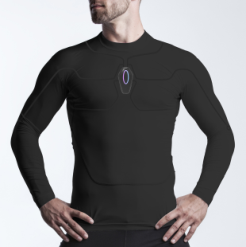
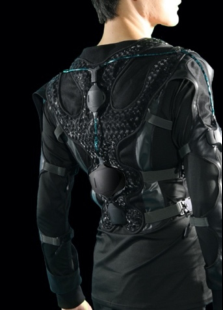
Figure 2: AI intelligent error correction fitness clothes. (Designed by Fei Wang; Hanyu Jiang; Tianhao Jia; Yanyu Zhan, 2019).
AI Intelligent Error Correction Fitness Clothes” (Figure 2) is a set of intel- ligent fitness clothes for fitness users to correct errors at any time and guide correct posture exercise. In order to let young people use fragment time more scientifically and effectively to work out at home, office and gym, so that fitness users have a personal on-the-go coach. The product is divided into smart fitness clothing and cell phone APP, through the cell phone APP to the scene and the selection of sports content, different fitness projects. The sensing module of the fitness suit can detect changes in the user’s body data during fitness, as well as whether the movement is standard, pulse vibration, with AI intelligent voice, voice correction. Data analysis after each end of exercise, so that fitness more scientific and effective.
According to the World Diving Accident Management Organization, from 2010 to 2013, a total of 561 divers died worldwide, an average of 16 divers per month, and the death rate of diving accidents is much higher than the death rate of other accidents, many diving accidents are related to the fai- lure to send information in a timely manner, so it is important to be able to transmit accurate and timely information underwater.
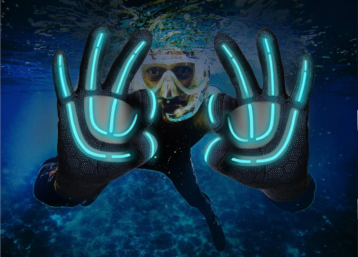
The “Information Light” diving gloves are designed for diving enthusia- sts to create underwater safety wearable devices, which have good warmth and cut resistance, through the central control equipment on the back of the gloves to achieve control of cold light and other sensor devices. The refle- ctive fabric on the surface of the glove can better present the luminous effect of cold light, and can also effectively increase the communication distance underwater. In its safety design is mainly in the active and passive survival devices and collision protection devices. When a diver taps through a distress gesture, the pressure sensor located on the side of the palm will send a distress signal by putting the light into strobe mode. When the diver is unable to call for help for his own or external reasons and his heart rate exceeds a preset value, the heart rate monitoring device located in the thumb will send out a red light alarm. The safety of divers in complex underwater situations is effectively guaranteed.
Paramedic Design Assisted medical design is based on big data system, iterating traditional medical examination and monitoring methods with digital technology,
Research for Health System Design Under Digital Intelligent Era 505
Figure 3: The light of information. (Designed by Fei Wang; Yang Yu, 2020).
combined with visual representation to realize users’ needs for low-threshold self-examination and testing in non-medical professional fields.
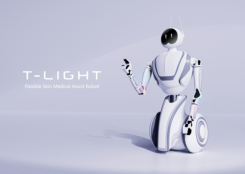
The global crisis caused by the new crown epidemic has also accelerated the process of robotic involvement in complementary medicine. T-light medi- cal assistant robot is a flexible skin medical assistant robot with more affinity and emotional care for health monitoring. In the post-epidemic era, in addi- tion to helping caregivers to complete basic functions such as medicine pickup and delivery, the robot can monitor human health data through humanized and natural interaction, for example, by touching the flexible skin surface unconsciously and touching the sensors under the robot’s skin to complete monitoring of body temperature, heart rate, blood oxygen and other indica- tors in a more natural and gentle way during the process of assistance, games and sports guidance,To solve the problems of patient resistance and fear. In addition, the flexible skin robot also comes with a breathing light and tem- perature module, so that patients feel affinity, no longer a cold machine, the robot head loaded with facial emotion recognition technology, the arm auto- matically lights up when receiving anxiety soft breathing light, rhythmically guide breathing to relieve tension and anxiety. At the same time, the robot arm and base will sense the risk of collision emergency braking, to enha- nce the safety of use. Let the intelligent health life in the digital age reflects the “computing” emotion and temperature. This product is jointly developed with the First Hospital of Zhejiang University School of Medicine and Zhe- jiang University, and won the silver medal of the 48th Geneva International Invention Award, and it was also selected as one of the “five new” excellent cases of digital economy and excellent cases of medical artificial intelligence in Zhejiang Province, and has been put into clinical testing.
According to the 7th National Census (2021), the population living in rural areas in China is 509.79 million, accounting for 36.11% of the total popula- tion, and health poverty alleviation has become an important initiative of the Chinese government. In the era of digital intelligence, rural areas need bet- ter medical equipment and treatment environment to enhance the efficiency of services. Smart health system design presents more diverse forms in the field of medical assistance, helping rural people to obtain more convenient treatment services through products and digital service systems.
506 Wang and Gu
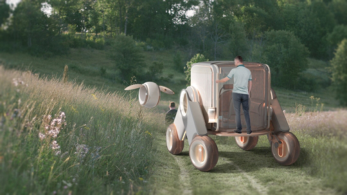
Figure 4: T-light medical assistant robot. (Designed by Fei Wang; Geng Yang; Zhjie Zhou; Jian Li, 2020).Figure 5: GuXiang - Rural Medical Service System. (Designed by FeiWang; Yicheng Wu; Yulian Liu; Jiani He; Junlin Shi, 2022) .
Gu Xiang - Rural Medical Treatment Service System is a cooperation pro- ject with Kia Motors of Korea, which explores the future rural form and medical development trend with technologies such as intelligent medical care, artificial intelligence and mobile medical tools, and splits and reorganizes the rural medical function system, and builds a medical treatment service and mobile system under the basis of not destroying the local human ecological structure. The system is characterized by integrated burden reduction, care and integration, aiming to protect the needs of rural medical care, improve the working experience of village doctors and villagers, care for every parti- cipant in rural medical care, and enhance the connection between villagers, village doctors, village clinics and urban and rural medical resources. We hope that in the future, rural medical care will no longer be a tedious and heavy repetitive task, but a warm and relaxing care and communication.
Health Management Design Health management design is to establish personal digital health records through health system design and product service innovation, implement all-round real-time monitoring, evaluation, feedback and early warning of people’s daily health, and make active treatment recommendations.
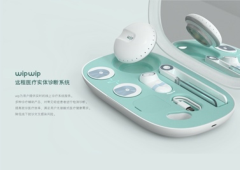
In the post-epidemic era, Internet healthcare has a higher acceptance and an opportunity for development. WIP Telemedicine Physical Diagno- sis System provides real-time online diagnosis and treatment system services to change the status quo of China’s domestic tertiary hospitals which are often overcrowded and where medical resources are in short supply. Under the telemedicine service system, people can use a variety of diagnostic aids
Research for Health System Design Under Digital Intelligent Era 507
Figure 6: WIP-telemedicine entity diagnosis system. (Design by FeiWang; Yuan Li; XunTang; XingPing Xie, 2021).Figure 7: In Touch. (Designed by Fei Wang; Jiawen Lin; Shuyuan Zhang; Chenghui Zhen, 2022).
and easily collect test data and test and diagnose common minor illnesses by simply plugging into the cell phone output port. The use of WIP telemedicine physical diagnosis system can improve the efficiency of medical consultation and reduce the risk of cross-infection in offline consultation. It undoubtedly provides great convenience to elderly people who are recuperating at home, and it is also suitable for disease consultation, follow-up consultation, post- visit recuperation and health monitoring to meet contactless medical health needs.
The development of digital technology and the Internet brings conveni- ence to life, but also makes the emotional communication between people present new problems. In Touch is a remote interaction tactile clothing. It uses digital twin, vibrating tactile, temperature sensitive color change and other technologies to transmit the tactile effect of hugging between people remotely as the starting point of the design, to improve interpersonal relati- onships in the networked era of interaction “generalization” and emotional “weakening” problem. It also enhances the distance between people in time and space and strengthens the transmission of emotions. Using intelligent wearable devices as a carrier, we can simulate real-time hugging tactile feed- back effect, so that the body language communication between people in different places can be converted into hugging tactile sensation and transmit- ted to each other. Remote haptic interaction technology can be an important way to break through the “space-time” barrier in interpersonal interaction and realize “hugging across space”.
508 Wang and Gu
Ecological Material Design Eco-material design is to explore the design and application of healthy living and healthy products in terms of raw materials with the concept of healthy design and digital technology methods.
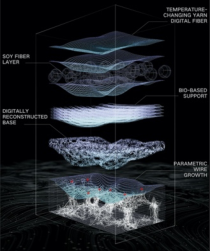
COSMOS is the industry’s first parametric growth mattress, using bio- suspension core technology and soy bio-based renewable biomass materials, which not only encompasses the advantages of a variety of materials, but also takes into account the renewable nature. Through the sensing system real-time collection of human pressure data, based on ergonomics and obje- ctive user data, using AI algorithms, analysis, calculation and reshaping of data, using the combination of parametric means and bio-based materials, calculate and “grow” in line with the best pressure distribution of the human body intelligent mattress, help sleep health management, let sleep Natural growth, to achieve deep sleep.
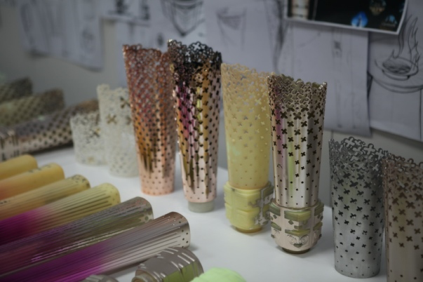
In 2023, Hangzhou will host the 19th Asian Games and the 4th Asian Para Games. The author participated in the design of the torch of the Asian Para Games, the “Laurel”, which is based on the idea of Liangzhu jade congrega- tion with a history of 5,000 years of Chinese civilization and the city flower
Figure 8: COSMOS. (Designed by Fei Wang; Cong Gu; Jian Li; ZhiJie Zhou; Suer Fei; Runhe Xu, 2022).Figure 9: “Laurel” of the torch of the 4th Asian Para Games in Hangzhou in 2022. (Designed byYun Wang; Junjie Zhang; Fei Wang; YichengWu; Jiqing Fu, 2021).
Research for Health System Design Under Digital Intelligent Era 509
of Hangzhou, the laurel. –The design of the torch is based on the jade con- gregation of Liangzhu and the city flower of Hangzhou. The “Laurel” torch grip is made of recyclable biomass material, which not only reduces the wei- ght of the torch, but also makes the overall green design of the material more natural.
REFLECTIONS ON THE DESIGN OF INTELLIGENT HEALTH SYSTEM The design of health system in the era of digital intelligence aims to meet the pursuit of active health life of people under the social change, to achieve positive and positive physiological and psychological state through design guidance, and to achieve higher life satisfaction and personal health state. How to think about the future scenarios and forms of smart health through the iteration of design concepts and methods, so as to promote future design research in the field of smart health and provide people with more comforta- ble and better health experience becomes an important proposition of smart health design.
First of all, smart health system design requires a shift in thinking from passive medical care to active health, focusing on the health of the whole life cycle of birth, aging, illness and death, which is the basis of smart health design. Starting from the philosophical nature of people, we study the needs of human life, and further move from a caring and friendly basic position to the thinking of empowering and creating value for health.
Secondly, the development of smart health based on digital technology will present newer contents. In a wide area society full of technology, both governments, enterprises and designers should realize more clearly the “double-sidedness” of technology, and should emphasize the necessity and importance of humanistic care in the health field. Based on the humani- stic needs, highlight the humanistic care in technology to create a better experience and service for health.
Finally, as the development of digital technology moves into the meta- universe era, intelligent human and digital human companionship will become the future assistant of health. In the face of intelligent and virtua- lized role companionship, the design needs to always stand on the position of human-based artificial intelligence as the core, and respond to the real needs of people in a more intelligent way.
REFERENCES
Deng Rong Health design thinking method and theoretical construction [D]. Nanjing Academy of Arts, 2017. Han Xiaodan, Jin Xinzheng. Analysis of hotspots of smart health research [J]. Smart
Health, 2016, 2(06):2–7+1. Ma Fei-Cheng, Zhou Li-Qin. Knowledge management and services for smart health[J]. Chinese Journal of Library Science, 2018, 44(05):419. DOI:10.13530/j.cnki.jlis.180013. Zhang Liyan, Shi Haoyue. Research on China’s smart health pension policy from the perspective of healthy aging - based on the analysis of policy text from 2015 to 2020 [J]. Science and Management, 2022, 42 (03): 27–33.
LISTED IN THE AHFE DIGITAL BOOKSTORE CATALOGUE
Explore the complete digital volume
Ergonomics In Design
Read this individual research paper free through the original publisher, or explore the full digital proceedings book.
ISBN 978-1-958651-53-7
Explore this ISBN in the AHFE Bookstore ↗Listed in the July 2026 bookstore catalogue; search by ISBN to confirm current availability · Digital book purchase optional