The advancement of cyber-physical behaviour detection and understanding in context of urban environment safety and security has been developed in the S4AllCities project (S4AllCities, 2020). Specifically, various concepts of fundamental artificial intelligence and reasoning have been successfully developed and will subsequently be tested in situ in S4AllCities pilot sites during the coming year 2022 (Sabeur et al, 2021). The detection of anomalies in TCP and UDP communication-based protocols taking place in context of urban spaces have been investigated. These were also complemented with the detection of unusualness in crowd physical behaviour in the same urban spaces. The aim is to combine both modes (cyber and physical) of detection and behaviour understanding, in order to advance our situation awareness in context of native knowledge and reasoning for efficiently maintaining safety and security across the urban space. Native knowledge concerns the evaluated risks and mitigation measures for response to potential cyber-physical attacks on the urban space. In this study, the deployed machine learning techniques achieved good performances for classifying cyber and physical behaviour under various scenarios of potential attacks. Our future work is to exercise the performance, evaluation and validation of our intelligent algorithms using in situ cyber and physical observation scenarios of the urban spaces of the three S4AllCities pilot sites in Europe.References:S4AllCities (2020). Safe and Secure Smart Spaces for all Cities H2020 project ID number 883522. https://www.s4allcities.eu/project. Sabeur Z., Angelopoulos C.M., Collick L., Chechina N., Cetinkaya D., Bruno A. (2021) Advanced Cyber and Physical Situation Awareness in Urban Smart Spaces. In: Ayaz H., Asgher U., Paletta L. (eds) Advances in Neuroergonomics and Cognitive Engineering. AHFE 2021. Lecture Notes in Networks and Systems, vol 259. pp. 428-441. Springer, Cham. https://doi.org/10.1007/978-3-030-80285-1_50
Urban spaces around the world are potentially exposed to serious attacks of cyber, physical, or both natures (Szczepaniuk, et al., 2022). With the ever- increasing number of digital communication networks around urban spaces, cities have become much more vulnerable to cyber-attacks on these networks as they could put cities infrastructure operations to a standstill. Furthermore, these spaces safety can also be compromised to physical attacks, as this has already been occurring in various cities during the last decades. Nevertheless, the interesting element of this is that smart spaces do offer valuable access to
real-time observation data and context information for scientists to develop state of the art concepts of intelligent agents and digital twins. These tech- nologies are enablers for virtualizing the urban spaces, while they augment situation awareness for us and deepen our understanding of crowd behavior in urban spaces. In the S4AllCities project, we have been able to experiment the development of a digital twin for monitoring crowd behavior in three major smart spaces, located in three cities in Europe. These include the City of Trikala, Greece; Pilsen, Czech Republic; and Bilbao, Spain.
S4AllCities Project S4AllCities focuses on the development of three major digital twins, which specialized in; 1- Distributed Edge Computing IoT (or DEC-IoT); 2) Malici- ous Actions Information Detection System (or MAIDS); and c) Augmented Context Management System (or ACMS). In this paper, we will discuss the MAIDS digital twin functions since we are focused on behavior detection and understanding for the advancement of situation awareness with safety and security in urban spaces.
MAIDS DIGITAL TWIN ARCHITECTURE The MAIDS digital twin is composed of three main core modules. These are listed below:
Module 1: Spatial data fusion
Module 2: Cyber behaviour detection
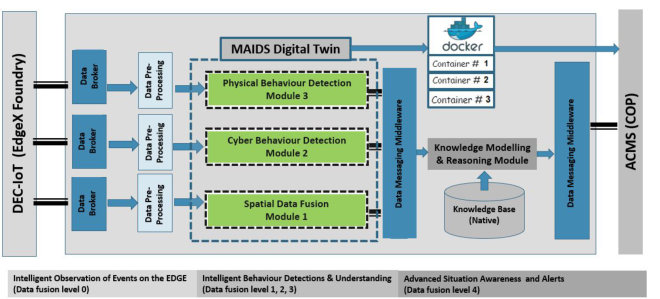
Module 3: Physical behaviour detection As shown, in Figure 1 below, the three core modules of the MAIDS have access to observation data and information through data brokers which respectively subscribe to the DEC-IoT digital twin. Through this mechanism, the core modules process observation data from heterogeneous sources intel- ligently under the JDL data fusion framework (lambert, 2009). They first module fuses data from multi-modal sensor platforms and provides spatial observation trends of the space under surveillance, such as background noise levels, meteorological conditions and more. The second module specializes in detecting behavior in cyber communication networks, while the third module detects behavior of crowds who adhere to the urban space using compu- ter vision and deep learning (Arbab-Zavar and Sabeur, 2020). These core modules specifically operate under the medium levels of fusion under the JDL framework while they extract important levels of situation awareness using machine intelligence (Sabeur, 2021).
Cyber-Physical Intelligence at High Level Fusion and Reasoning The combined output of the MAIDS core modules is further exploited downstream for higher level fusion and situation awareness, using native knowledge and context information of the urban cyber-physical space under surveillance (see Figure 1). This final step is then transmitted through via a message broker to which the ACMS subscribe, for presenting it as a rich Common Operational Picture (COP) of the urban space.
Cyber-Physical Behavior Detection and Understanding using Artificial Intelligence 139
Figure 1: MAIDS Digital Twin overall modular architecture.
MAIDS Dockerisation for Situation Awareness in the COP There is also another option for the COP to present advanced situation awa- reness to security practitioners. This is usually for the purpose of performing training sessions by setting “what if” scenarios of cyber-physical attacks in the urban space. This is done by accessing the MAIDS core modules directly through their respective dockerization into containers within the S4AllCities system. Dockerizing is the process of creating, deploying, and running appli- cations with all their necessary files dependencies in a container computer environment as their own image using Docker containers. Docker technology allows you to package any application (such as those coded in Python) with all the necessary code (e.g., libraries) as one container which can be uploa- ded, loaded and run on any other platform (such as cloud, remote VMwares servers, workstations, etc.), in our case ACMS and the COP. Docker is also an open-source tool, which assures interoperability with legacy city surveillance systems.
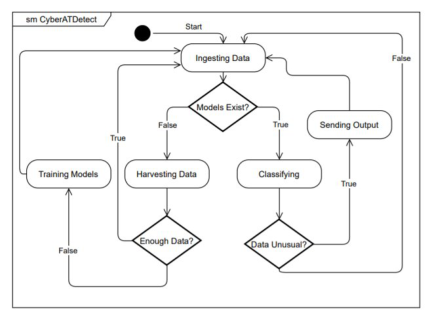
The threat landscape of computing and cybersecurity is everchanging and evolving, to aid in combating emerging and existing attacks on cities commu- nication networks. The cyber behavior detection module uses several machine learning algorithms to detect unusualness in the network flow of data. The module has two main functions which are Detection and Integration. Under the detection function, named as CyberATDetect, several processes are con- ducted which all lead to behavior detection, as shown in Figure 2. These processes are as follows:
Data ingestion and Harvesting: This stage refers to the collection and exploration of data used to design and test the network intrusion dete- ction.
Training: This stage uses datasets to train and test machine learning algorithms, and evaluates their performance under strictly defined metrics
Classification: Classifies an overall cyber behavior, as usual or unu- sual, while fusing the various classifiers, with associated weights for normalizing the resulting Correct Classification Rate (CCR)
Messaging Output: Sending the resulting classification with CCR via a messaging broker to the ACMS digital twin for visualization in the COP environment.
DISCUSSION
The cyber behavior module will be expanded to investigate the classification of various types of cyber behavior attacks, while it will be put under expe- rimental tests for its scalability. Simultaneous attacks, including those with larger floods of cyber traffic will be subsequently investigated using our com- puter clusters and Apache Spark technologies for distributed processing and machine learning in the S4AllCities project.
PHYSICAL BEHAVIOUR DETECTION
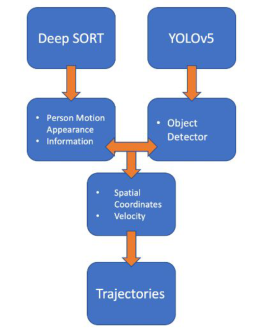
In light of Hou et al.’s (2019) work on vehicle tracking, the integration of state of the art deep learning approaches for object detection and tracking namely, YOLOv5 and DeepSort is realized (Jocher et al., 2022), (Wojke et al., 2017). YOLO’s latest version architecture which extends YOLOv4 is con- sidered as the most accurate since it is coupled with high inference speed (Bochkovskiy et al., 2020). Also, DeepSort tracks the movement of indivi- duals in crowds over video sequences while using Kalman filters and target association. For a given video frame, having M pedestrians, P
x, y
x, y
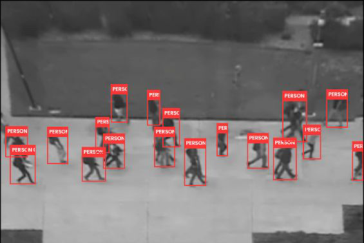
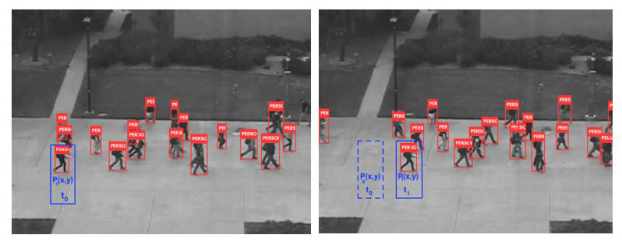
i = 1,...,M signifies the spatial coordinates for an ith pedestrian. As seen in Figure 3, YOLOv5 detects pedestrians although it lacks the ability to re-identify what was previously detected. DeepSort is therefore added to overcome this issue and achieve the tracking of detected pedestrians in a video sequence. This is done by associating reference numbers on them. That is, across different time slices (t0, t1, . . . , tN), DeepSort simply maintains records of P
i = 1,...,M. As illustrated in Figure 4, the tracking of a pedestrian (ID = 1) between
Cyber-Physical Behavior Detection and Understanding using Artificial Intelligence 141
Figure 3: Pedestrians’ detection using YOLOv5.Figure 4: Pedestrians detection and tracking in time.Figure 5: Flow chart of YOLO5 and DeepSort integration.
2 frames is highlighted. YOLOv5 yields a sequence of bounding boxes to depict the spatial coordinates of the detected pedestrians. As shown in Figure 5, a sequence of bounding boxes are depicted with the spatial coordi- nates of the detected pedestrians.Then, DeepSort determines the relationship between existing tracks and measurements under “measurement-to-track” associations using the Mahalanobis distance.
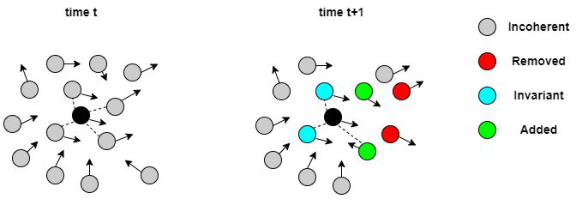
Figure 6: Exhibition of coherent neighbor invariance. Green dots are viewed as invariant neighbors of the centered black dot (for K = 4).
Trajectories Clustering The extraction of trajectories allows us understanding the detection of coh- erent physical behavior which represent crowd motions in urban spaces. For instance, with video surveillance, one captures coherent motions, which are exhibited by moving pedestrians. This leads us into acquiring high- level representations of crowd mechanics using computer vision (Dogbe, 2012). These representations combined with measurements of the environ- mental conditions using the MAIDS spatial fusion module can be utilized in completing crowd behavior, actions and situations understanding altogether.
Whilst coherent motions are regarded as macroscopic observations of pedestrian’s congregational activities, these motions are distinguished through interaction among individuals in local neighborhoods. Inspired from (Zhou et al., 2012), Coherent Neighbor Invariance technique is deployed to capture coherent motion of crowd clutters. The key characteristics that establish the difference between cohesive and arbitrary movements are listed below:
Neighborship Invariance: the spatial-temporal relationship among indivi- duals is inclined to prevail overtime.
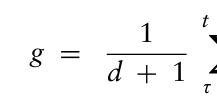
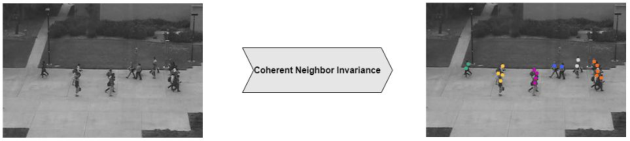
Conversely, incoherent individuals that showcase relative independence tend to lack the mentioned properties. To illustrate the Neighborship Inva- riance property, Figure 7 displays the use of K nearest neighbor to highlight the emergence of global coherence in local neighborships. Figure 7 shows the deployment of the coherent filter on the UCSD dataset. The equation below quantifies the velocity correlations between neighboring individuals, which allows discerning coherent motions.
vi
t + d X
2
Equation reproduced from the original PDF.
τ . vikτ viτ
2 .
vikτ
Where:
g : velocity correlation between i and ik
vi
τ : velocity of individual i at time τ
Cyber-Physical Behavior Detection and Understanding using Artificial Intelligence 143
Figure 7: Coherent motion detection in action.
vikτ : velocity of individual ik at time τ
d : duration of the experiment
CONCLUSION AND FUTURE WORK The advancement of our work in the S4AllCities project has been steadily progressing since 2020 and we have now reached a position to further our experimentation on much larger volume and heterogeneous cyber traffic data as well as multi-modal sensor observation data. This will be explored in the final phase of the S4AllCities project where multi-level fusion and reasoning takes place. With the deployment of multiple specialized sensors and the stre- aming of background noise and meteorological condition signals in the urban space, monitoring crowds with optical and infra-red cameras and keeping attention to cyber traffic, one will lead to enriching the MAIDS digital twin with more intelligence for ACMS and the COP. This will be tested un situ during the last pilot of the S4AlCities project in Bilbao, Spain.
ACKNOWLEDGMENT
The authors would like to thank the European Commission for partly funding our research work in the S4AllCities project, under the H2020 Programme, Grant Agreement No. 883522.
REFERENCES
Arbab-Zavar, B., Sabeur, Z. (2020). Multi-scale crowd feature detection using vision sensing and statistical mechanics principles. Machine Vision and Applications 31:26 https://doi.org/10.1007/s00138-020-01075-4 Bochkovskiy, A., Wang, C.-Y. & Liao, H.-Y. M. (2020), ‘Yolov4: Optimal speed and
accuracy of object detection’, arXiv preprint arXiv:2004.10934. Dogbe, C. (2012), ‘On the modelling of crowd dynamics by generalized kinetic models’, Journal of Mathematical Analysis and Applications 387(2), 512–532. Hou, X., Wang, Y. & Chau, L.-P. (2019), Vehicle tracking using deep sort with
low confidence track filtering, in ‘2019 16th IEEE International Conference on Advanced Video and Signal Based Surveillance (AVSS)’, IEEE, pp. 1–6. Jocher, G., Chaurasia, A., Stoken, A., Borovec, J., NanoCode012, Kwon, Y., TaoXie, Fang, J., imyhxy, Michael, K., Lorna, V, A., Montes, D., Nadar, J., Laughing, tkianai, yxNONG, Skalski, P., Wang, Z., Hogan, A., Fati, C., Mam- mana, L., AlexWang1900, Patel, D., Yiwei, D., You, F., Hajek, J., Diaconu, L. & Minh, M. T. (2022), ‘ultralytics/yolov5: v6.1 - TensorRT, TensorFlow Edge TPU and OpenVINO Export and Inference’. URL: https://doi.org/10.5281/zeno do.6222936
Kwon, D., Kim, H., Kim, J., Suh, S. C., Kim, I., Kim, K. J. (2019). A survey of deep learning-based network anomaly detection. Cluster Computing. https://doi.org/10.1007/s10586-017-1117-8 Lambert, D.A. (2009). A Blueprint for higher-level fusion systems. Information
Fusion, Vol. 10, Issue 1. pp. 6–24. S4AllCities: Smart Spaces Safety and Security in All Cities. (2020) Available from https://www.s4allcities.eu/project Sabeur, Z. (2021) AI3SD Video: Artificial Intelligence for Safer Urban Space. Frey,
J. G., Kanza, S. and Niranjan, M. (eds.) AI3SD Autumn Seminar Series 2021. 13 Oct - 15 Dec 2021. doi:10.5258/SOTON/AI3SD0173 Szczepaniuk, E.K. and Szczepaniuk, H., 2022. Analysis of cybersecurity competencies: Recommendations for telecommunications policy. Telecommunications Policy, 46(3), p.102282. Wojke, N., Bewley, A. & Paulus, D. (2017), Simple online and realtime tracking
with a deep association metric, in ‘2017 IEEE International Conference on Image Processing (ICIP)’, IEEE, pp. 3645–3649. Zhou, B., Tang, X. & Wang, X. (2012), Coherent filtering: Detecting coherent motions from crowd clutters, in A. Fitzgibbon, S. Lazebnik, P. Perona, Y. Sato & C. Schmid, eds, ‘Computer Vision – ECCV 2012’, Springer Berlin Heidelberg, Berlin, Heidelberg, pp. 857–871.
LISTED IN THE AHFE DIGITAL BOOKSTORE CATALOGUE
Explore the complete digital volume
Applied Human Factors Research
Read this individual research paper free through the original publisher, or explore the full digital proceedings book.
ISBN 978-1-958651-43-8
Explore this ISBN in the AHFE Bookstore ↗Listed in the July 2026 bookstore catalogue; search by ISBN to confirm current availability · Digital book purchase optional