Chantal Lidynia, Gian Luca Liehner, Martina Ziefle (2022). Paving the Way to Autonomy – Influencing Factors for the Acceptance of Autonomously Operating Transportation Services in Rural Germany. In: Human Factors in Transportation. AHFE Open Access, vol. 60, pp. 261–271. https://doi.org/10.54941/ahfe1002456
The use of shared autonomous vehicles for transportation of goods as well as people could provide manifold benefits, for individuals, the environment, but also economically. Including potential users in the early stages of development and roll-out could facilitate a better acceptance of this new mobility concept. We investigated which factors are of particular interest for rural German citizens to promote technology acceptance. In an online survey of N = 139 participants, we found that especially trust in this technology, the attitude towards technology in general, as well as the importance of owning a car are key factors in the intention to use autonomous busses and services in the future.
While urban settlements offer a wide variety of opportunities, e.g., educati- onal, occupational, leisurely, or commercial in nature, there are also many disadvantages or hurdles to living in cities. For one, there is a lack of afforda- ble living space (Wetzstein, 2017). Then there are environmental aspects such as air pollution or the lack of sufficient natural oases, e.g., parks and trees (Pansela et al., 2021). These aspects may entice people to live in or move to rural areas.
There, however, residents encounter other obstacles, such as long com- muting times and large distances to points of interests, concerning medical, shopping, or cultural venues (Schnorr-Baecker, 2021). To provide rural citi- zens with access to these sites, mobility plays a crucial role (Schwedes, 2014). But not everyone has access to a vehicle or even the public transport system. Therefore, alternatives are needed and necessary. The lack of sufficient public transport in rural areas is mainly due to costs or missing personnel (Pucher and Renne, 2005). Autonomously driving busses could be a possible solution. These busses could also include other services and features such as adapted
bus routes or individualized transportation services, thereby optimizing the cost-benefits ratio (Grunicke et al., 2021).
This is a new technology, still in its infancy, and therefore also offers the opportunity to include the people who are the possible and intended future users in early stages of the concept development. This can enrich the technology and facilitate a smooth roll-out by familiarizing people with the innovation early on, e.g., (Bongaerts et al., 2016).
Understanding which factors might influence the attitude towards and later acceptance of autonomous vehicles, in general, and autonomous busses and delivery vehicles, in rural Germany in particular, should not be over- looked. While there are a few studies that found a general interest in this technology development, it was also shown that doubts still prevail, e.g., (Lidynia et al., 2021). What is the source of these doubts? Are there factors or aspects that need to be especially addressed or communicated to the public? With the present study, another step in understanding potential future users is undertaken.
Our results can offer opportunities for stakeholders as well as insights into the main transportation issues in rural Germany and thereby help tailor rese- arch and infrastructure development with the valuable input from those who are directly involved and would benefit the most from the new technology. We will first give an overview of the current situation in rural Germany and a brief introduction to the autonomous technology meant to facilitate a better traffic connectivity. Then we will introduce our methodology, including the design, analysis standards, and sample. The results section will illustrate opi- nions and requirements of our participants as to autonomous vehicles in rural Germany. Finally, we will discuss results and offer future directions for rese- arch but also development and roll-out of autonomous busses and delivery vehicles in rural areas.
RELATED WORK
This section introduces relevant aspects concerning the research in question. We begin with a closer look at the current situation in rural settlements. Based on this, the possible solution of introducing autonomous vehicles is given some thought, based on current possibilities and future applications.
Mobility in Rural Regions While it is difficult to generalize a whole country or even just some aspects of it, a closer look at studies in rural settlements, especially in the Western world, show a rather consistent picture. Many studies have found a lack of available services in rural areas, e.g., (O’Shaughnessy et al., 2011; Sörensen et al., 2021). The main reasons are usually based on either monetary or per- sonnel issues, whereas the first can also facilitate the second. Nevertheless, from an economical point of view, there is a constant spiral of fewer public transportation services offered, a steadily declining use of those few servi- ces that then leads to even more downsizing of offerings, e.g., (Quarles et al., 2020; Sörensen et al., 2021). But with the larger distances between home and
Paving the Way to Autonomy – Influencing Factors for the Acceptance 263
other points of interest, both concerning work and life, mobility is an essen- tial part of rural living (Gross-Fengels and Fromhold-Eisebith, 2018). This combination of lack of services and larger distances results in a dependence on a privately owned vehicle (Velaga et al., 2012; Wang et al., 2015).
However, not only does not everyone have access or the means to maintain a car, or is allowed or willing to drive one, climate change has policy makers try to reduce the use of not only fossil-fueled cars (Linzenich et al., 2019) but also of single-fare rides (Soares Machado et al., 2018). Thus, alternatives are needed both for propulsion and also for shared mobility (Planing et al., 2020). Accordingly, public transportation needs improvement, especially in rural areas. One such alternative and/or improvement could be autonomous vehicles (Fagnant and Kockelman, 2015).
Autonomous Vehicles – Development and Possible Applications To comprehend the impact of autonomous vehicles, the definition and possi- bilities of such technologies must be understood. A comprehensive definition of different levels of autonomy are given in a regularly revised taxonomy (SAE International, 2021). The goal in the technological development is full autonomy, meaning there does not have to be a human agent present who could or has to step in to take control of the vehicle. Should that be achieved, then the possible uses are manifold (Pisarov and Mester, 2021). Apart from individual mobility, there is also the potential for fully autonomous public transit. On another level, the potential for deliveries of different goods is also enormous. Especially the potential for last-mile-delivery is promising concer- ning costs, both money and time, and also ecological savings (Anderson et al., 2016; Brown et al., 2018; Kapser and Abdelrahman, 2020).
Technology Acceptance Not every new technology finds instant or ready adoption. One possible explanation is a lack of technology acceptance (Turner et al., 2010). To better understand important factors of this, different technology acceptance models such as TAM (Davis, 1989) and UTAUT (Venkatesh et al., 2003, 2012) were developed and have found a strong correlation between the willingness to use a technology and the later actual use of said technology. As technologies are deployed in different contexts, the models need to be adapted accordin- gly. For autonomous vehicles, one such adaption is the inclusion of trust, see, e.g., (Jing et al., 2020; Nastjuk et al., 2020).
METHOD
The following section will present our methodological approach. This inclu- des a description of our research instrument with its different components and their origins. Our statistical analysis will be then explained, followed by the sample description.
After a detailed literature review as well as qualitative pre-studies, we have developed an online questionnaire to reach a larger group of people and pos- sible participants. The questionnaire consisted of four main blocks. Unless otherwise indicated and where not appropriate, we used 6-point Likert scales
ranging from 1 = disagreement/rejection to 6 = agreement/approval. The first part of the questionnaire surveyed demographic data, such as age, gender, and rural living experience. The next block polled personality traits. These inclu- ded risk readiness (Beierlein et al., 2015), technology commitment (Neyer and Felber, 2012), and affinity for technology interaction (ATI) (Franke et al., 2019). The third block surveyed mobility aspects. This included ownership of a driver’s license, of a monthly pass for public transit, and of a car. Further- more, we investigated the reasons for choice of transportation, such as costs, flexibility, or comfort. The last block introduced autonomous busses and surveyed the general knowledge about this technology, possible use of such a larger autonomous vehicle (transporting people as well as goods), concerns, and requirements. The latter also included trust in the technology, polled with four items based on (Jian et al., 2000). With a semantic differential, we surveyed the overall attitude towards larger autonomous vehicles. Last but not least, we included use intention, based largely on the extended UTAUT model (Venkatesh et al., 2012) and then adapted to the present context.
Statistical Analysis The collected data is analyzed with parametric and non-parametric tests. First, scales were tested for their reliability and only used when Cron- bach’s α ≥.07. Statistical significance was set to α = .05. If constructs consisted of more than one variable, the arithmetic mean of all variables is used as indicator for the construct. Arithmetic means are reported with standard deviations as M ± SD.
Sample Description In total, N = 139 participants from rural areas of Germany completed the online survey. The sample’s mean age was 40.6 ± 16.3 years, ranging from 18 to 72 years of age. Gender was almost equally distributed with 67 men and 72 women participating. The sample was rather well educated, with 59.7 % holding a university degree and another 25.9 % university entrance qualification.
As for mobility, only 3 participants did not have a driver’s license and 2 failed to answer. From the remaining 134, only 2 are not allowed to drive cars, holding only permissions for motorized two-wheelers. 55 participants (39.6 %) also owned a monthly pass for public transportation. Owning a car was highly rated, reaching M = 4.38 ± 1.62 on a scale from “not important” = 1 to “very important” = 6. The sample reported to need M = 21.98 ± 28.55 km to commute from home to work, which translated to an average travel time of M = 29.9 ± 26.5 minutes.
Furthermore, the sample was average in their affinity for technology intera- ction, reaching 3.72 ± 0.95. Concerning technology commitment, the sample reached a slightly higher than average M = 4.45 ± 0.63. Risk readiness rea- ched M = 3.72 ± 0.87. More user characteristics and correlations are shown in Table 1.
Paving the Way to Autonomy – Influencing Factors for the Acceptance 265
Table 1. Correlations between user characteristics. Gender was dummy-coded: 1 = male, 2 = female. N = 139. ** denotes p<.01; * denotes p < .05.
ATI — .262** .230** need for control — .239** importance own car — .199* frequency public transit use
risk readiness —
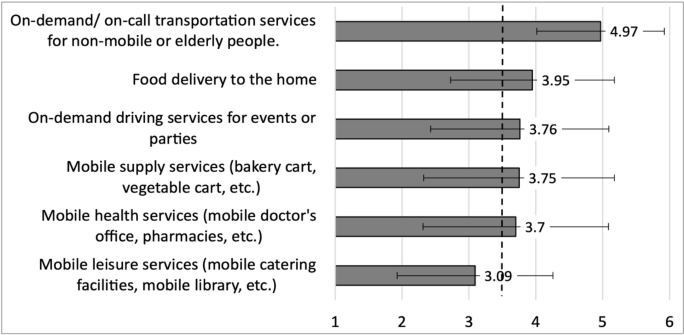
Figure 1: Average wanted innovations concerning mobile services. The dotted line indicates the arithmetic center, whiskers the standard deviation (n = 127).
RESULTS
This section presents the results of our survey. First, we detail the results concerning autonomous busses and services. This includes previous know- ledge, general attitude, and trust. Next, we report on the factors that influence a potential future use of autonomous busses and services provided by such vehicles.
Evaluation of Autonomous Busses and Services With provision or access to services as one of the important aspects of qua- lity of life, we first questioned what mobile services the participants would welcome in their area of residence. Figure 1 shows that flexible transporta- tion, especially for those without ready access to a vehicle, is the number one priority that needs improvement. Most transportation of goods or to special occasions rank in their importance around the medium of the scale.
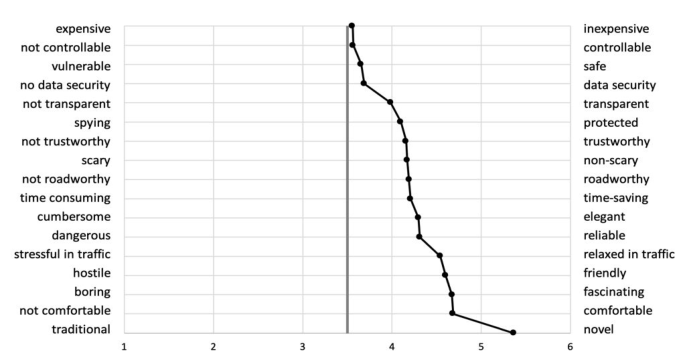
Figure 2: Semantic differential depicting participants’ word association with autono- mous busses (n = 126).
General Attitude Towards Autonomous Busses Considering the lack of readily available autonomous vehicles, especially for public use, it was considered relevant to get an idea of the general attitude towards such a technology. Therefore, the participants were tasked to decide between two opposing pairs of adjectives and consider their opinion on where an autonomous bus fell between these word pairs. The results are shown in Figure 2.
Even though the sample reported to be neither especially well nor especially badly knowledgeable about this technology (M = 3.37 ± 1.09), all average evaluations fall on the right side of the scale, meaning they lean towards the positive adjectives. Already, trust in such vehicles is reported slightly above average (M = 4.07 ± 0.87). This might indicate a general interest and posi- tive outlook at this new technology, which might also lead to a future use. Therefore, we also investigated participants’ use intention.
Use Intention Autonomous Busses In general, use intention within the sample was slightly above average, with M = 4.22 ± 0.82. For a general overview of potentially influencing factors, inspired by previous studies and technology acceptance models, correlati- ons between the user factors and knowledge, trust, as well as use intention concerning autonomous busses were calculated and listed in Table 2.
Men and women differed significantly in their willingness to use autono- mous busses (tUseInt(137) = 2.186, p = .03) with men slightly more open to a future use than women (MMen = 4.38 ± 0.78; MWomen = 4.08 ± 0.84). The same held true for knowledge (t(137) = 2.947, p = .002) and trust in auto- nomous busses (tTrust(137) = 2.367, p = .01), as well as general technology commitment (t(137) = 2.564, p = .012). In all cases, men reported a higher
Paving the Way to Autonomy – Influencing Factors for the Acceptance 267
Table 2. Correlations between user characteristics and aspects of autonomous busses.
Table available in the original PDF paper.
Gender was dummy-coded: 1 = male, 2 = female. N = 139. **denotes p<.01; *denotes p < .05.
use intention
[...] knowledge autonomous
trust in autonomous
autonomous
busses
busses
busses
— .341** .379**
age see Table 1 gender −.244** −.198* −.184* technology commitment .240** .257** .507** ATI .361** .241** .435** need for control importance own car −.189* −.261** −319** frequency public transit .216* .348** risk .276** .252** .315** knowledge autonomous busses
—
trust autonomous busses — .683** use intention autonomous busses
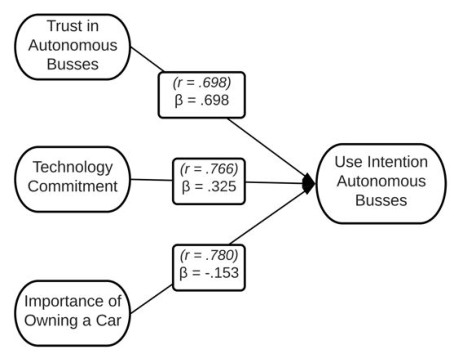
Figure 3: Determinants for the intention to use autonomous busses (r2=.608).
mean than the women. However, men and women did not significantly dif- fer in the importance they ascribed to owning a car (tCarImp(136) = −0.808, p = .21).
To explore the influencing factors for or against the use of autonomous busses, linear stepwise regressions were calculated. Despite so many correla- ting factors (see Table 2), the final model only included 3 variables that have significant impact on the intention to use autonomous busses. Figure 3 shows the final model which can account for almost 61 % of variance.
Trust in autonomous busses has the most influence, explaining 48.4% of variance (β = .698, T = 11.253, p < .001). An additional 10% of variance can
be explained with technology commitment (β = .615, T = 5.621, p < .001). Another 2 % of variance explanation are added with the importance ascribed to owning a car (β = −.153, T = −2.687, p < .001).
As for factors that might explain trust in autonomous busses, the resulting model barely explained 30 % of variance, with the largest portion (12.3 %) provided by knowledge (β = .35, T = 4.311, p < .001), 5 % each being explained by level of education (β = .227, T = 2.869, p = .005) and owner- ship of a monthly bus pass (β = −.23, T = −2.955, p = .004), and 3 % each being explained by age (β = .255, T = 2.522, p = .013) and technology commitment (β = .202, T = 2.543, p = .012).
DISCUSSION
The present study was meant to understand and explain factors that influ- ence the acceptance of autonomous busses and services provided by large, autonomously operating vehicles. Despite a reported lack of knowledge, the general attitude towards autonomous busses tended to the positive. The rea- son could be that, with the average age being 41, the participants are used to daily commute. With an average commuting time of half an hour, the potential of gaining an hour that could be spend doing something other than concentrating on traffic might play a role in this outlook.
With this being a scenario-based approach, it stands to reason that acce- ptance and therefore future use, might be increased once people will have the opportunity to interact with these vehicles in real life (Bernhard et al., 2020). A transparent documentation and communication of how, and espe- cially how safely these vehicles can operate will provide a further increase in trust and thus future acceptance.
Despite many potential factors interacting with use intention, only three factors had a significant influence and can explain almost 61 % of varia- nce. Foremost is trust in the technology. Trust has been established already as an important factor for the use of autonomous vehicles (Jing et al., 2020; Nastjuk et al., 2020). Another somewhat unsurprising factor is technology commitment. The twelve items from this validated scale include three sub- scales categorized as technology acceptance, technology competence, and technology control conviction (Neyer and Felber, 2012). Technology acce- ptance and intention to use are well linked and a foundation of technology acceptance models, e.g., (Davis, 1989; Venkatesh et al., 2003, 2012).
Rather interesting is the importance of owning a car and its impact on use intention. The more important one sees owning a car is, the less likely the future use of autonomous public transportation. While other studies have also examined attitudes and willingness to share rides, e.g., (Rahimi et al., 2020), convenience, quality of life, and independence are among the pre- vailing reasons to own and use a private vehicle. Therefore, either a change in attitude is needed to decrease the use and dependence on owning a car; or, and this might help facilitate said attitude, the necessity of owning a vehicle needs to be decreased. This could be facilitated by a better mobility connectivity, especially in rural countryside. To do so, it does not suffice to merely add more busses to an existing schedule. Rather, availability in form
Paving the Way to Autonomy – Influencing Factors for the Acceptance 269
of flexibility needs to change, which could very well be achieved by auto- nomous vehicles that are deployed by the “mobility on demand” principle (Von Mörner, 2019).
CONCLUSION
This research offers important insight into the use of autonomous vehicles in rural Germany. Trust was shown as very influential to the future roll- out of autonomous vehicles. The importance of owning a car needs more attention in research and the general public. A change could not only decrease traffic congestion and greenhouse gas emissions but also facilitate a smoother roll-out and introduction of autonomous busses, especially in rural Germany.
ACKNOWLEDGMENT
The authors would like to thank all participants for their openness in sha- ring their opinions concerning this novel technology. This work was funded by the Federal Ministry of Transport and Digital Infrastructure project LandLeuchten (19F2102E).
REFERENCES
Anderson J, Kalra N, Stanley K, et al. (2016) Autonomous Vehicle Technology: A Guide for Policymakers. Santa Monica: RAND Corporation. Beierlein C, Kovaleva A, Kemper CJ, et al. (2015) Kurzskala zur Erfassung der Risi-
kobereitschaft (R-1). In: Zusammenstellung Sozialwissenschaftlicher Items Und Skalen. Gesis. Leibniz-Institut für Sozialwissenschaften. Bernhard C, Oberfeld D, Hoffmann C, et al. (2020) User acceptance of automated public transport: Valence of an autonomous minibus experie- nce. Transportation Research Part F: Traffic Psychology and Behaviour 70: 109–123. Bongaerts R, Kwiatkowski M and König T (2016) Disruption Technology in Mobility: Customer Acceptace and Examples. In: Khare A, Stewart B, and Schatz R (eds) Phantom Ex Machina: Digital Disruption’s Role in Business Model Transformation. Cham: Springer International, pp. 119–135. Brown A, Gonder J and Repac B (2018) An Analysis of Possible Energy Impacts of
Automated Vehicles. In: Meyer G and Beiker S (eds) Road Vehicle Automation. Cham: Springer International Publishing, pp. 137–153. Davis FD (1989) Perceived Usefulness, Perceived Ease of Use, and User Acceptance of Information Technology. MIS Quarterly 13(3): 319–340. Fagnant DJ and Kockelman K (2015) Preparing a Nation for Autonomous Vehicles:
Opportunities, Barriers and Policy Recommendations. Transportation Research Part A: Policy and Practice 77: 167–181. Franke T, Attig C and Wessel D (2019) A Personal Resource for Technology Interaction: Development and Validation of the Affinity for Technology Intera- ction (ATI) Scale. International Journal of Human-Computer Interaction 35(6): 456–467.
Gross-Fengels S and Fromhold-Eisebith M (2018) Adapting Transport Related Innovations to Rural Needs: Smart Mobility and the Example of the Heinsberg Region, Germany. In: Franklin RS, van Leeuwen ES, and Paez A (eds) Advances in Transport Policy and Planning. Cambridge: Elsevier Inc., pp. 125–162. Grunicke C, Schlüter J and Jokinen J (2021) Evaluation Methods and Governance
Practices of New Flexible Passenger Transport Projects. Research in Transporta- tion Business & Management 38: 100575. Jian J, Bisantz AM and Drury CG (2000) Foundations for an Empirically Determined Scale of Trust in Automated Systems. International Journal of Cognitive Ergonomics 4(1): 53–71. Jing P, Xu G, Chen Y, et al. (2020) The Determinants behind the Acceptance of
Autonomous Vehicles: A Systematic Review. Sustainability 12(5): 1719. Kapser S and Abdelrahman M (2020) Acceptance of Autonomous Delivery Vehicles for Last-Mile Delivery in Germany – Extending UTAUT2 with Risk Perceptions. Transportation Research Part C: Emerging Technologies 111: 210–225. Lidynia C, Liehner GL and Ziefle M (2021) Put Some Drive in Your Country –
Need for and Acceptance of Autonomously Operating Services in Rural Areas of Germany. In: Stanton N (ed.) AHFE 2021, LNNS 2702. Cham: Springer Nature Switzerland AG, pp. 348–364. Linzenich A, Arning K, Bongartz D, et al. (2019) What fuels the adoption of alternative fuels? Examining preferences of German car drivers for fuel innovations. Applied Energy 249: 222–236. Nastjuk I, Herrenkind B, Marrone M, et al. (2020) What Drives the Acceptance of
Autonomous Driving? An Investigation of Acceptance Factors from an End-User’s Perspective. Technological Forecasting and Social Change 161: 120319. Neyer FJ and Felber J (2012) Entwicklung und Validierung einer Kurzskala zur Erfassung von Technikbereitschaft. Diagnostica 58(2): 87–99. O’Shaughnessy M, Casey E and Enright P (2011) Rural Transport in Peripheral Rural
Areas. The Role of Social Enterprises in Meeting the Needs of Rural Citizens. Social Enterprise Journal 7(2): 183–190. Pansela D, Sekarlangit N, Satwiko P, et al. (2021) Developing a Virtual Urban Oasis Design to Reduce Urban Stress in Warm-Humid Climate. IOP Conference Series: Earth and Environmental Science 738(1): 012073. Pisarov J and Mester G (2021) The use of autonomous vehicles in transportation.
Tehnika 70(2): 171–177. Planing P, Müller P, Dehdari P, et al. (eds) (2020) Innovations for Metropolitan Areas. Intelligent Solutions for Mobility, Logistics and Infrastructure Designed for Citizens. Berlin: Springer Gabler. Pucher J and Renne JL (2005) Rural Mobility and Mode Choice: Evidence from the
2001 National Household Travel Survey. Transportation 32(2): 165–186. Quarles N, Kockelman KM and Mohamed M (2020) Costs and Benefits of Electrifying and Automating Bus Transit Fleets. Sustainability 12(10): 3977. Rahimi A, Azimi G and Jin X (2020) Examining Human Attitudes toward Sha-
red Mobility Options and Autonomous Vehicles. Transportation Research Part F: Traffic Psychology and Behaviour 72: 133–154. SAE International (2021) Taxonomy and Definitions for Terms Related to Driving Automation Systems for On-Road Motor Vehicles. Surface Vehicle Recommended Practice. J3016. SAE International. Schnorr-Baecker S (2021) Well-being in urban and rural areas, challenges, general
policies, and their monitoring: Some evidence for Germany before and during the COVID-19 pandemic. Statistical Journal of the IAOS 37(2): 495–515.
Paving the Way to Autonomy – Influencing Factors for the Acceptance 271
Schwedes O (ed.) (2014) Öffentliche Mobilität. Perspektiven Für Eine Nachhaltige Verkehrsentwicklung. 2nd ed. Wiesbaden: Springer Fachmedien. Soares Machado CA, Hue NPM de S, Berssaneti FT, et al. (2018) An Overview of
Shared Mobility. Sustainability 10: 4342. Sörensen L, Bossert A, Jokinen JP, et al. (2021) How Much Flexibility Does Rural Public Transport Need? – Implications from a Fully Flexible DRT System. Transport Policy 100(August 2020): 5–20. Turner M, Kitchenham B, Brereton P, et al. (2010) Does the Technology Accepta-
nce Model Predict Actual Use? A Systematic Literature Review. Information and Software Technology 52(2): 463–479. Velaga NR, Beecroft M, Nelson JD, et al. (2012) Transport Poverty Meets the Digital Divide: Accessibility and Connectivity in Rural Communities. Journal of Transport Geography 21. Elsevier Ltd: 102–112. Venkatesh V, Morris MG, Davis GB, et al. (2003) User Acceptance of Information
Technology: Toward a Unified View. MIS Quarterly 27(3): 425–478. Venkatesh V, Thong JYL and Xu X (2012) Consumer Acceptance and Use of Information Technology: Extending the Unified Theory of Acceptance and Use of Technology. MIS Quarterly 36(1): 157–178. Von Mörner M (2019) Demand-Oriented Mobility Solutions for Rural Areas Using
Autonomous Vehicles. In: Coppola P and Esztergár-Kiss D (eds) Autonomous Vehicles and Future Mobility. Amsterdam: Elsevier Inc., pp. 43–56. Wang C, Quddus M, Enoch M, et al. (2015) Exploring the Propensity to Travel by Demand Responsive Transport in the Rural Area of Lincolnshire in England. Case Studies on Transport Policy 3(2): 129–136. Wetzstein S (2017) The Global Urban Housing Affordability Crisis. Urban Studies
54(14): 3159–3177.
LISTED IN THE AHFE DIGITAL BOOKSTORE CATALOGUE
Explore the complete digital volume
Human Factors in Transportation
Read this individual research paper free through the original publisher, or explore the full digital proceedings book.
ISBN 978-1-958651-36-0
Explore this ISBN in the AHFE Bookstore ↗Listed in the July 2026 bookstore catalogue; search by ISBN to confirm current availability · Digital book purchase optional