Siyi Huang, Jiawei Wang, Lei Mao, Juan Ren, Lei Zhang (2022). Exploring the New Space of Education in China in the 21st Century based on the Heuristic Penetration Teaching Method. In: Training, Education, and Learning Sciences. AHFE Open Access, vol. 59, pp. 227–235. https://doi.org/10.54941/ahfe1002405
With the rapid development of China in recent decades, people's life has undergone a qualitative change, facing a new way of life and a new way of thinking. In this context, this study will discuss what kind of buildings, Spaces and urban status have changed with these changes, which will change, what architects can do for these changes, and what attitude they should hold towards these changes.This study comes from the open architecture design course of the School of Architecture of Chang 'an University in 2021, which is taught by Lei Mao, an architect who graduated from Berlage Institute. The course trains students' comprehensive ability to find and solve problems in the design process through the classical heuristic and penetrative teaching method of Berlage Institute.Research contents and objectivesSince the 1970s, the resumption of National College Entrance Examination has restored order to the country's selection of talent, but the single and fixed selection method has led to the internal examination of learning competition, and thus the cram school system, which is independent of the education system. This paper will systematically study this new type of remedial education space.The author tries to through the method of design, research of urban living space in the phenomenon summarized, analysis, deconstruction, at the same time, compare with standardized format education space, summarized similarities and differences of the two, in the study based on the results of analysis of continuation education space in the form of architecture design of refactoring.Research pathResearch path :(1) Determination of research object (2) Construction of research framework (3) Investigation and information collection (4) Induction and analysis of spatial features (5) Expression of design drawings.Firstly, the architectural environment space of the cram school is determined as the research topic. Then, the research framework of the space history and type of cram school was set up. According to the framework, information was collected and the internal scale of space was studied. The research results were expressed with plan and axonometric map. At last, based on the preliminary research, the architectural design is carried out. In this stage, the connection between architecture and exterior is no longer emphasized, but the organization of the internal space of the building, and the reality is reflected through the design results, which causes social reflection.4. Conclusion(1) Architecture and space often develop with the changes of The Times. The cram school space evolved from the traditional education space, but its profit and commodity nature makes it different from the education space such as school.(2) Intensive cram school buildings are likely to emerge in the future. In the course, the relationship between architectural space scale, crowd and activity type is discussed, and the possibility of intensive design of cram school is proposed. Complement the existing educational space.(3)The architect in the design of new type of space, through combing the historical trace of the spatial analysis of the current existing strong correlation and weak correlation space types, explore the space variable and variable, on the basis of this system between ground-to-air refactoring, to get a new space pattern and space form.
Since the reform and opening up at the end of the century and the resumption of the college entrance examination system, China’s education system has been further developed and improved, and the positive correlation between education and employment has led people to devote themselves to the pursuit of better qualifications. Cram schools only formally appeared in the 21st century, and their emergence implies the demand for education beyond school education and the society’s demand for diversity of talents. This study focuses on the origins of educational spaces and classifies them according to the types of extracurricular educational spaces available today.
The scale of space, human activities and architectural design theories are changing with the development of society. Studying the current changes in
society and the new activities and spaces can help us to supplement the existing theoretical system and thus promote the development of social pro- ductivity. The author attempts to summarize, analyze and deconstruct the urban living space under this phenomenon through the method of “design- research”, while comparing the standardized educational space horizontally, summarizing the similarities and differences between the two, and based on the results of the research and analysis based on the results of the research and analysis, the reconstruction of the space for remedial education is realized by means of architectural design.
RESEARCH PATH Identifying the Study Population
First, the architectural environment space of cram school was identified as the research theme. The theme of the course is “New Life, New Space, New City: China in the 21st Century”, which requires a search for new architectural spaces that emerged in the second1 century, when cram schools emerged in the early second1 century and have grown rapidly in the last decade.
Framing the Study In this phase, the authors will conduct a research framework on the history and typology of cram school space, based on which information collection and spatial internal scale research will be conducted. In terms of historical tracing, a systematic summary and study of educational spaces in China is needed. Cram schools emphasize not only their educational nature but also their profitable nature, and there are more types, which need to be classified and compared in detail.
Research and Information Gathering After completing the construction of the framework, according to the classi- fication content in the existing framework, the author researched and studied the tutorial space through channels such as online collection of information and offline actual visits and research.
Spatial Feature Generalization and Analysis After completing the research, the author summarized the results of the rese- arch and used CAD to draw engineering drawings such as floor plans and axonometric drawings, thus expressing its spatial characteristics and scale. Based on the results of this phase, the tutorial space is summarized in terms of its scale and spatial characteristics.
Design and Drawing Representation The design of the building is based on the preliminary study, and at this stage the emphasis is no longer on the connection between the building and the outside, but on the organization of the internal space of the building, and the design may not consider the landing of the design. The design theme is highlighted through the emphasis on the space of the tutorials.
Exploring the New Space of Education in China in the 21st Century 229
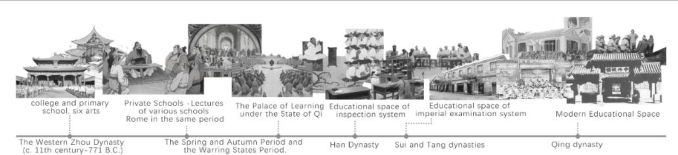
Figure 1: History of China’s education space development.
RESEARCH CONTENT History (Figure 1)
As one of the four ancient civilizations, China’s education system has evolved over thousands of years, and thus has developed its own unique form of space.
A system of talent training was established from the time of the Emperor of the Zhou Dynasty (B.C.1046 – B.C256). The early education system was biased toward noble education, and the official academies were mainly for the nobles to study. During the Spring and Autumn and Warring States Peri- ods (B.C770.-B.C221), ideas were further opened up and a hundred schools of thought emerged, with Confucius starting a style of private lectures and advocating benevolence, righteousness, propriety, wisdom and faith. He had 3,000 disciples, of whom 72 were sages. Confucius spread the Confucian idea of teaching without discrimination and promoted the popularization of education. During the first year of Emperor Wu’s reign (B.C134), the recommendatory system was established, and during the Sui and Tang dyna- sties (A.D581-A.D907), the imperial examination system emerged, making the education system more complete and the path to higher education clea- rer, while the selection of talents was related to the examination system. In modern times and after the founding of New China (A.D1900-present), the domestic educational environment has been influenced by the outside world and has taken on a richer form.
During the long evolution of China’s educational environment, the form of learning and communication has also changed, and the form of space has slowly evolved to form today’s educational space. Early education was more oriented to the collision of ideas between people, in the form of lectures and discussions, and the educational space had a certain centripetal nature, with the speaker as the starting point radiating the space of the listener as the main feature. As the path to higher education became clearer, the correlation between the level of education and one’s career increased, and the autho- rity of teachers increased. From the beginning of the imperial examination system of education, test-based education inevitably existed, and this form of education required students to skillfully use their test-taking skills to cope with an examination and needed to improve the efficiency of education, thus strengthening the authority of the teacher, and the educational space evolved into an authoritative teacher’s working lecture space to a submissive listening space for students.
Space Research Modern educational spaces include both on-campus educational spaces and off-campus tutorial spaces, and the authors focus on classifying and studying tutorial spaces. After the classification we will compare them horizontally and study the placement of their internal furniture and spatial scale, so as to discover the commonalities between them and discuss their possible future development.
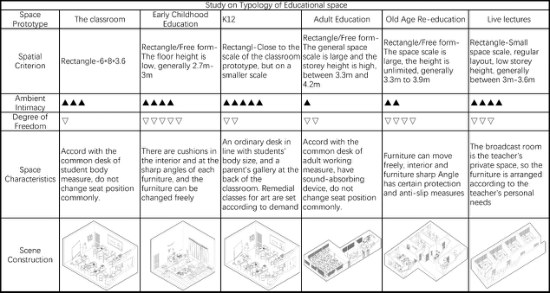
Education Space (Figure 2) Brief Description of the Type This part mainly refers to the teaching and learning space, and the scale and internal environment of the educational space varies in different stages.
In the early education stage, we need to provide targeted guidance and trai- ning according to the characteristics of children’s physical and psychological development and the developmental characteristics of sensitive periods, so as to lay a good foundation for the cultivation of children’s multiple intelligences and healthy personalities.
The Chinese education system is 9 years of compulsory education (ele- mentary and junior high school) and high school (in China, after the end of 9 years of compulsory education in junior high school, higher educational institutions, generally 3 years), the concept is close to K12, so K12 educa- tion is used as a proxy for the educational stage of the educational object from elementary school to the high school entrance examination. This stage is very important for the education target, and the educational space can be roughly summarized as test-taking educational space, literary (quality trai- ning) educational space, physical education educational space and scientific and creative educational space.
As people enter adulthood in college, they also attend remedial classes in order to keep up with the development of social knowledge. At this stage, people go for in-depth study more voluntarily, so most of the spaces in cram schools are more of study rooms with attached discussion rooms, lounges, and other spaces.
After retirement, some seniors choose to go to a university for seniors to learn to socialize because they are too lonely living apart from their children and need to socialize, or out of a desire to learn a certain skill. The educational space at this stage takes on a social function.
Fractal Study The classroom is the prototype for the development of K12 exam-oriented education space, K12 research-oriented education space, and part of the lecture space of the senior university. Due to the scarcity of excellent edu- cational resources and other reasons, exam-oriented education spaces often need to accommodate more students in the same scale space, so the furniture is relatively fixed and the space is highly private. Research-oriented education spaces, on the other hand, emphasize the mobilization of students’ hands-on skills and communication, and have a high degree of freedom in furniture and a larger scale. The lecture space of the senior university has both lecture
Exploring the New Space of Education in China in the 21st Century 231
Figure 2: Educational space typology study and comparison.
and social functions, and the education subjects can choose their own seats, which is more open. Taking the classroom as a prototype, the difference in educational content and approach will lead to different degrees of spatial freedom and openness.
The early education space, K12 physical education space and part of the senior college education space are developed from the activity place as the prototype. In these spaces, the safety and freedom of activities are more emphasized, and the space needs to be equipped with appropriate protection facilities.
Other educational spaces fit with its professional space, such as dance tui- tion classes in K12 education need larger open space, professional lighting and sound-absorbing recording environment; while the teaching activities in the studio, although relatively static, also need a wider space to place all kinds of painting tools, while the furniture should be easy to move and adapt to the changes in teaching forms. All these space requirements are determined by the professional nature of its activities.
Online lectures have grown rapidly in the context of the epidemic and have changed the traditional way of teaching. The teacher will teach in a separate room with a smaller scale, which needs to meet the needs of live streaming and have sound absorption.
From the above, it is clear that educational spaces can find prototypes in existing space types and develop from them. The traditional campus educational space still focuses on one-way lectures to meet the needs of exa- minations. In off-campus tutorials, the types and activities are richer, and the spatial forms and interiors become more colorful.
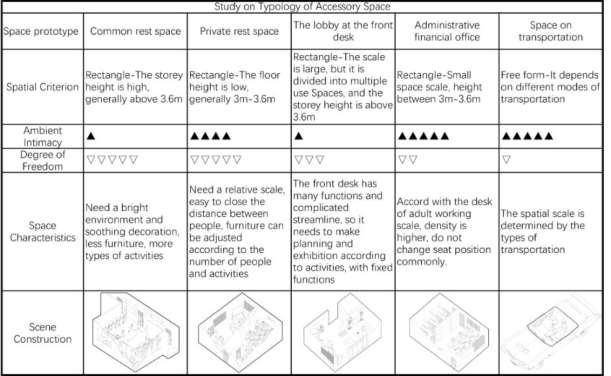
Other Ancillary Spaces (Figure 3) Brief Description of the Type Other auxiliary spaces are needed in a cram school facility. Common auxi- liary spaces include breakout spaces, front lobby, office space for admini- stration and finance, storage space, etc. As the tutorial time of the taught subjects increases, they need to move between tutorials, and some students
Figure 3: Subsidiary spatial typing study and comparison.
read and do practice problems on the transportation in order to catch up on their studies.
With the enrichment and development of the industry, the type of acces- sory space will become more and more abundant and the development of accessory space is worth considering.
Fractal Study Break spaces can be classified according to publicness and openness. The pro- totype of a highly public rest space comes from the gray space in the teaching space, such as the corridor outside the classroom, the corner of the stairs, the pantry, etc. The high intensity of tutorials makes students give up their gene- rous dining time to have a simple meal at the public space of the institution. As a public space, it has less privacy and more freedom. The private break space originates from the office communication space on campus. Teachers need to correct assignments, store lesson plans, communicate with teaching subjects and parents about teaching issues, and rest in a quiet space. Such spaces include teachers’ offices, lounges, and conversation rooms.
The front lobby space needs to carry out the reception of parents and stu- dents, parents need to understand the strength level of the institution, and the institution needs to have a simple mapping of the knowledge level of the students. The design should consider both the high openness as a display area and the privacy to be retained in the communication area.
The administrative and financial office section is more private and often adjacent to storage space, thus facilitating inventory and storage.
The conditions for learning are not present in the space of transporta- tion, so it is also worth exploring further whether certain improvements to transportation are needed in the future to enable it to meet learning needs.
Exploring the New Space of Education in China in the 21st Century 233
Summary It is known from the typological study that the cram school system is mostly developed from the space existing at the moment in the campus space and is a supplement to the existing system of educational spaces. The main rea- sons for the cram school to become a separate educational system are the contradiction between the needs of social development and the existing fixed educational system and the psychological reasons for a part of the taught sub- jects and parents to surpass their competitors by improving in extracurricular studies.
Solution Design In the preliminary research of this project, it was found that the system of tutorial classes is relatively complete, and people will always attend various training and tutorial classes in the process of growing up. Therefore, in the design conception, the author designed all types of tutorial classes in the same building in an orderly manner according to the different educational objects and spatial characteristics.
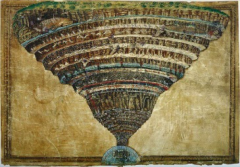
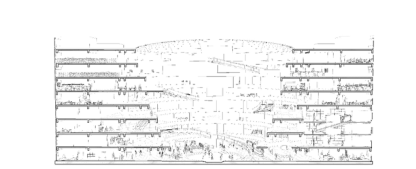
In the conception of the architectural space, the author was inspired by the archetype of Hell in Dante’s Divine Comedy (Figure 4) and designed an inverted conical atrium space, and set up a cyclic traffic space system in the organization of the traffic space to suggest that people’s life is constantly cycling in an endless learning environment, and in order to match the social expectations, people keep improving their knowledge through extracurricu- lar tuition, and keep spinning in the tuition class building, but In order to match the social expectations, people are constantly taking extracurricular courses to improve their knowledge, but they cannot break out of the cage of self-fulfillment. The cram school building is not so much an educational building as it is a hell that imprisons people’s minds (Figure 5).
CONCLUSION
(1) Architecture and space tend to evolve with the changing times. As a uni- que product of Chinese society and one of the relatively fair channels for ordinary people to obtain quality educational resources, the compe- tition on this track is fierce. Cram schools are the product of this social phenomenon. The cram school space evolved from traditional educati- onal spaces, and most of the prototypes come from the campus space, but the difference of its activities makes it different from the on-campus educational space. (2) Intensive cram school buildings are likely to emerge in the future. The relationship between the spatial scale of cram schools, the crowd and the type of activity is discussed in the course, and the possibility of intensive design for cram schools is proposed to complement the existing educa- tional space. It is also hoped that this social context and product will be presented through highly intensive design to draw social attention. (3) When designing emerging types of spaces, architects can fill and clas- sify the veins by sorting out the historical veins of related spaces, and then analyze the existing strongly related and weakly related space types according to the research needs, and explore the variable and immuta- ble items of such spaces, so as to systematically reconstruct the spaces on this basis to obtain new spatial patterns and spatial forms.
Funding This research has been supported by Graduate Education And Teaching Reform Fund of Chang’an University (Grant No. 300103114105).
REFERENCES
Chen Yalan, Li Zhimin. (2020) Development and Evolution of Architectural Space Environment in Primary and Secondary Schools at Home and Abroad After the Beginning of Modern Education [J]. Huazhong Architecture, 2020, 38(07): 11–16. DOI: 10.13942/j.cnki.hzjz.2020.07.003. Dong Li , Yang Wenying. (2005) Eclecticism to the Doctrine of “Back to the Ancients”—Formal Evolution of Chinese Christian Univer- sity Architecture [J]. Huazhong Architecture, 2005(04): 160–162. doi: 10.13942/j.cnki.hzjz.2005.04.049. Feng Jixuan.(2019) Western Learning spreading to the East: The Transformation and
development of Private education in Modern China during social Refo [J]. China Adult education, 2019(21): 83–86. Hertzberger H. (2000) Space and the architect: lessons in architecture 2[M]. 010 Publishers, Li Ruoxing. (2021) Educational Architecture Design From a Bodily Per- spective: Interpretation of Xiaoquan Elementary School and Huandao Experimental School [J]. World Architecture, 2021(02): 98–101+126. doi: 10.16414/j.wa.2021.02.021. Liu Daxin. (2003) Herman Hertzberger And Series of Lessons in Architecture [J].
World Architecture, 2003(12): 82-83. doi: 10.16414/j.wa.2003.12.014.
Exploring the New Space of Education in China in the 21st Century 235
Liu Zhengpeng, Li Jun, Liu Xiao. (2017) Reviewing Berlage Institute: The Once Cutting—edge Dutch Higher Architectural Education Agency [J] New Archite- cture, 2017(06): 116–120. Mao Lei. (2017) Contemporary urban life within architecture: a project for know-
ledge nomads [J]. Design, 2017(04): 88–91. Peng Jun , Liu Yongxing , Wei ChunYu .(2020) Space for “Teaching and Learning” from Restriction to Self-Independence—An Evolutionary Study on Preschool Architecture in China since 1903 [J]. Architectural Journal, 2020(02): 30–36. doi: 10.19819/j.cnki.ISSN0529-1399.202002005. Qian Xiaofei, Zhang Bingxian. The beginning of spatial organization of modern edu-
cation: Lancaster school Building Design [J]. Peking University Education Review, 2021, 19(02): 104-119+190-191. Wu Zun-min. (2006) Shen Jun-qiang. School Choice and Education Equity— Changes in School Choice Policies and New Direction in Public School Reform in China [J]. Research On Education Tsinghua University, 2006(06): 111–118. Wang Renmei. (2012) Research on the historical evolution of Chinese preschool chil-
dren’s art education since reform and opening up [D]. Journal of nanjing normal university, 2012. Xu Weiguo. (1986) Campus construction of Modern Universities in China (1840–
1949) [J]. New Architecture, 1986(04): 18–26. Zhang Wei. (2021) Development and Evolution of Postsecondeary Education During the Process of Learning Society [J]. China Higher Education Research, 2021(03): 1–6. doi: 10.16298/j.cnki. 1004–3667.2021.03.01. Zhu Pei.(1992) Typology and Aldo Rossi [J]. Architectural Journal, 1992(05): 32–38.
LISTED IN THE AHFE DIGITAL BOOKSTORE CATALOGUE
Explore the complete digital volume
Training, Education, and Learning Sciences
Read this individual research paper free through the original publisher, or explore the full digital proceedings book.
ISBN 978-1-958651-35-3
Explore this ISBN in the AHFE Bookstore ↗Listed in the July 2026 bookstore catalogue; search by ISBN to confirm current availability · Digital book purchase optional