Helen Ifedolapo Babalola, Clinton Aigbavboa (2022). Conceptual Description of the Key Attributes of Human Resource Management Practices in a Developing Economy. In: Human Factors, Business Management and Society. AHFE Open Access, vol. 56, pp. 263–274. https://doi.org/10.54941/ahfe1002277
Human resource management practices are implemented to build an organisation supportive of cooperation and interaction, promote human and social development, and encourage career growth. There is evidence that studies have been conducted in diverse fields to identify the elements that contribute to the success or failure of the application of human resource management practices (HRMPs). However, the key attributes of HRMPs as critical factors for successful human resources (HR) performance and productivity are unknown in the Nigerian construction industry. Based on this, the paper reviewed the literature on existing conceptual models of HRMPs frameworks. Through the detailed review of the journal, conference papers, and academic thesis, fifteen (15) HRMPs attributes were identified. However, the top elements were determined by assessing the level of influence of the attributes on a five-point Likert scale through mean ranking. The top six (6) factors were training and development, recruitment and selection, performance appraisal, rewards, communication, and emotional intelligence. The study recommended that HR should acquire more knowledge beyond their current job to optimize performance. Most suitable applicants should be allowed to fill existing vacancies. There should be an evaluation of employees' performance that brings about rewards. Finally, workers' state of mind that balances their responses brings about a sound communication system. The developed model indicates the practical implications of the HRM system for the construction industry. Therefore, combining these factors enhances effective HR performance and productivity in the industry.
Human resource management practices (HRMPs) are means through which workers’ skills, attitudes, and behaviour are influenced and shaped to ach- ieve success in an organisation (Hayton, 2005; Placide, Gwaya and Wan- yona, 2019). Over the years, scholars have researched different HRMPs by
investigating their influence on project, employee, and firm performances (Hassan, 2016; Jouda, Ahmad and Dahleez., 2016; Abuazoom, Hanafi and Ahmad., 2017; Naveed, Adnan, Ullah and Sohail, 2017). Investigations show a significant effect of HRM practices on performance (Chieng, Arokiasamy and Kassim., 2019). Though no study has revealed the best practice for a particular organisation, there are only indications of a positive link betw- een HRMPs and performance (Kokkaew and Koompai, 2012). This may be the reason for the application of varied HRMPs across organisation and countries. Similarly, Chieng et al. (2019) reveal that implementing bundles of HRM practices brings about a significant effect. Bundles of HRMPs are referred to as multiple practices against individual HRMPs utilized by orga- nisation to enhance workers’ performance both individually and collectively. Therefore, it could be concluded that there is a difference between HRM pra- ctices utilized by one organisation and another and one country to another. This implies that different practices have been used across the globe. Thus, it is paramount for the management team to holistically examine HRM practi- ces before deciding on the best practice for their organisation. Furthermore, previous studies in the field of HRMPs show differences across individual HRM practices utilized, and there has been an emphasis on the need to exa- mine and use HRMPs that influence performance. For instance, Kokkaew and Koompai (2012) study of HRMPs in the Thai construction industry highlights six independent activities in their model as HRMPs influencing the company’s performance. These include HRM strategy, team manage- ment, communication, leadership role, motivation, and ethical treatment of employees. Also, the study carried out by Placide et al. (2019) in the con- struction industry in Rwanda portrayed recruitment and selection, reward system, job design, training and development, and performance management as HRMPs utilized. Nevertheless, different practices have been identified as a research focus; still, there has been no holistic analysis of the best practi- ces driving HR in the Nigerian construction industry. Therefore, successful HRMPs implementation would influence the performance and productivity of HR by bringing together relevant stakeholders in the industry. Based on this, practitioners in the industry must rethink and understand the key attri- butes that are highly influential for the effective implementation of HRMPs in the Nigerian construction industry. Therefore, this is done by reviewing the literature on existing HRMPs conceptual models followed by admini- stration of questionnaire to determine and solicit experts’ views on HRMPs attributes, and at the same time ranking them to ascertain the perceived key attributes of HRMPs in the Nigerian construction industry.
METHODOLOGY
The study employed a two-stage research design approach: the literature review and questionnaire technique. The literature review was utilized to identify HRMPs determinants. The detailed review identified fifteen (15) factors, while the questionnaire approach helped determine the key attribu- tes of HRMPs by ranking. The study area is Lagos State, Nigeria. Lagos State is regarded as Nigeria’s commercial nerve center, where large volume
Conceptual Description of the Key Attributes of Human Resource Management Practices 265
of construction activities is carried out. Copies of the questionnaire were administered to the professionals such as engineers, builders, quantity surve- yors, architects, project managers, and HR in the built environment through an online google form. A total of 85 targeted professionals in contracting firms, consulting firms, government agencies, consortium, and academia were purposefully selected. The questionnaire comprises two parts. Part A is on respondents’ demographic information with respect to gender, cur- rent profession, educational level, years of work experience in the industry, and professional affiliation. Furthermore, the Kaiser-Meyer-Olkin measure of sample adequacy was carried out to test the adequacy of the sample size. This gave a value of 0.826. Respondents were required to express the level of influence of the fifteen (15) identified factors on a 5-point Likert scale: 1-very low influence, 2-low influence, 3-average influence, 4-high influence, and 5-very high influence. The respondents were asked to answer questions based on their experience in the industry and their involvement in HR sele- ction and management. International Business Machines Statistical Package for Social Sciences (IBM SPSS) version 27 was utilized to analyse the data collected.
DATA ANALYSIS AND DISCUSSION Respondents’ Background Information
Gender, level of education, current profession, years of work experience in the construction industry, and professional affiliation were the specific demogra- phic characteristics of respondents analysed in this section (Table 1). Gender analysis in this study showed that 76.47% of the respondents are males and 23.53% are females. The finding is in line with the work of Babalola and Ojo (2016) that revealed that the number of men in construction works is more than women. Also, analysis of respondents’ current profession revea- led that the majority (47.1%) of respondents are Engineers, while Quantity Surveyors followed, making up 16.5%, HR came next, followed by Project managers, Architect and Builders completing the list at 11.8%, 9.4%, 8.2%, and 7.1% respectively. Further, the analysis indicates that 35.29% of the respondents make up the respondents working in a government agency. At the same time, those in construction, consulting, contracting, academic, and consortium firms consist of 23.53%, 17.65%, 11.76%, 7.06%, and 4.71%, respectively. Moreover, respondents’ membership to their recognised pro- fessional bodies were captured. Respondents were mostly drawn from The Nigerian Society of Engineers (NSE), while The Nigerian Institute of Quantity Surveyors followed (NIQS), Society for Human Resource Management came next, followed by The Chartered Institute of Project Managers of Nigeria (CIPMN), The Nigerian Institute of Architects (NIA), and The Nigerian Insti- tute of Building (NIOB). Analysis of respondents’ level of education revealed that 41.2% of the respondents have bachelor’s degrees, followed by 29.4% of the respondents with a master’s degree, while HND holders followed, making up 12%. PGD came next, followed by Ph.D., and OND completed the list at 9.4%, 6.0%, and 2.4%. Thus, suggesting that the respondents are educated. The analysis further revealed that the number of respondents’ years of work
266 Babalola and Aigbavboa
Table 1. Respondents’ background information.
Table available in the original PDF paper.
Characteristics Features Frequency Percentage Gender Male 65 76.4 Female 20 23.53 N 85 100 Current profession Engineer 40 47.1 Quantity surveyor 14 16.5 Human resource 10 11.8 Project manager 8 9.4 Architect 7 8.2 Builder 6 7.1 N 85 100 Type of organisation Government 30 35.29 Construction 20 23.53 Consulting 15 17.65 Contracting 10 11.76 Academic 6 7.06 Consortium 4 4.71 N 85 100 Level of education Bachelor 35 41.2 Masters 25 29.4 HND 10 12.0 PGD 8 9.4 Doctoral 5 6.0 OND 2 2.4 N 85 100 Years of work experience Less than 5 years 12 14.1 6–10 years 20 23.5 11–15 years 30 35.3 16–20 years 16 18.8 Above 20 years 7 8.2 N 85 100
experience in the construction industry indicates that those above ten years made up 62.3%. In comparison, below ten years formed 37.7% of the total respondents.
RESULTS AND DISCUSSION
Key Attributes of Human Resource Management Practices The objective identifies the key elements of HRMPs by indicating the level of influence of the attributes to the implementation of HRMPs on a five- point Likert scale. Based on this objective, the experts recognized fifteen (15) determinants. However, six (6) were ranked out of these elements with a high mean score between 4.20 and 4.50. From Table 2, training and development was ranked first with a mean score of 4.50 and a standard deviation of 1.76. At the same time, recruitment and selection followed, making up a mean score of 4.37 and standard deviation of 1.35, performance appraisal came next,
Conceptual Description of the Key Attributes of Human Resource Management Practices 267
Table 2. Key elements of human resource management practices by ranking.
Table available in the original PDF paper.
Elements N (x) (σx) (R) Training and development 85 4.50 1.76 1 Recruitment and selection 85 4.37 1.35 2 Performance appraisal 85 4.36 1.40 3 Rewards 85 4.34 1.45 4 Communication 85 4.24 1.36 5 Emotional intelligence 85 4.20 1.30 6 Job security 85 4.17 1.35 7 Teamwork 85 4.14 1.11 8 Performance management 85 4.10 1.28 9 Information sharing 85 4.07 1.52 10 Promotion 85 4.00 1.76 11 Job design 85 3.80 1.84 12 Work flexibility 85 3.67 0.91 13 Equal opportunity and non-discrimination 85 3.57 1.29 14 Quality work 85 3.54 1.30 15
Equation reproduced from the original PDF.
followed by rewards, communication, and emotional intelligence completing the list at mean score and standard deviation of (4.36, 1.40), (4.34, 1.45), (4.24, 1.36), and (4.20, 1.30) respectively.
Training and Development Training and development are imperative for improved workers’ skills, know- ledge, and required capacity to develop human and perceived organisational performance. Training and development are subsystems within the broad spe- ctrum of the personnel function and are topical issues in the 21st century to gain competitive advantage (Naveed et al., 2017). Therefore, it is not surpri- sing that training and development were ranked the most significant among the listed attributes of effective HRMPs. Elnaga and Imran (2013) recognise training as a bridge between the current performance and the standard desi- red performance. Amin, Ismail, Rasid and Selemani (2014) and Kadiresan, Selamat, Selladurai, Ramendran and Mohamed (2015) perceived training as an orderly process that guides worker’s behaviour and attitudes in line with organisational objectives that brings about employees’ development and per- formance. On the other hand, Akpan (2009) established that development is the process whereby an employee grows on the job, through the acquisition of experiences that results from the exercise of varied and tested responsibilities. Therefore, implementation of training and development will ensure emplo- yees’ skills and competence development, enhance workers’ growth within the organisation for future human resource needs, reduce learning time on appointment, transfer, or promotion. Also, it will ensure competence and improved quality and meet the challenges of global competition and social change (Amin et al., 2014, Kadiresan et al., 2015).
268 Babalola and Aigbavboa
Recruitment and Selection In terms of decision making, recruitment and selection (RNS) are the best tools of HRM that help identify the best and right persons with innovative abilities for the right job (Aman, Noreen, Khan, Ali and Yasin, 2018). Ose- meke (2012) informs that RNS of HR in a firm is an important business because both the organisation success and service delivery efficiency depend on the quality of recruited workforce into the organisation. Accordingly, Shen and Edward (2004) posit that recruitment is the process of filling the offe- red work positions in sufficient numbers and qualities of the job applicants and meeting the expectations and requirements of the organisation. Likew- ise, Amin et al., 2014 added that it is the process of locating and attracting individuals with the primary aim of filling organisational job vacancies. Simi- larly, recruitment involves attracting enough individuals with the right profile such as qualifications, experiences, skills, and other attributes to indicate their interest in working for the organisation (Ameh and Daniel, 2017). On the other hand, selection is the process of collecting applicants’ information, pruning, and choosing the most suitable among them that fit with relevant qualifications to fill existing vacancies in an organisation (Hussaih and Reh- man, 2013; Amin et al., 2014). The purpose of selection is to identify humans who can fulfill an organization’s requirements from the chosen applicants. Therefore, managers need to understand the selection procedures. In this way, they can be highly involved in the process from the beginning since they have adequate information upon which to base their decisions because the process affects both the employees and organisational performance. Additionally, Amin et al. (2014) opined that to maximize competitive advantage and avoid problems such as high turnovers, low productivity, high rate of absenteeism, and employee stress, organisation should assess and recruit the workforce through recruitment methods that bring about efficient and effective can- didates. Such procedures include among others, newspaper advertisements, interviews, network bulletins, technical skills/practices, posters, personal con- nections, referrals, word-of-mouth recommendations, choosing from staff relations, physical ability, psychological and psychometric tests (Amin et al., 2014; Ling, Ning, Chang and Zhang., 2018). Furthermore, Jalil, Shaikh and Alam (2014) suggested recruitment procedures, employment and equal opportunities, justice and fair treatment for all applicants, and proper sele- ction devices to increase the chances of choosing the right person to fill the firm’s positions.
Performance Appraisal According to Jouda et al. (2016) performance appraisal is imperative in ensuring maximum utilization of employee’s skills, knowledge, and intere- sts. It is not a daily routine in an organisation, but a key determinant of organisational success and competitive advantage that increases employee motivation and self-esteem (Abuazoom et al., 2017). Similarly, studies had shown that the successful implementation of HRMPs is rooted in identifying employee performance level in terms of weakness and strength (DeNisi & Pri- tchard, 2006; Ebiasuode, Onuoha and Nwede., 2017). Therefore, it is vital
Conceptual Description of the Key Attributes of Human Resource Management Practices 269
that through the performance appraisal system, a committed and motivated employee is produced, communication challenges resolved, timely feedback to the employee that increases productivity is assured, employee’s growth, development, and promotion are considered (Hassan, 2016; Abuazoom et al., 2017). Kelly, Ang, Chong and Hu (2008) posit that fairness and charity of the system should be considered, resulting in employees’ satisfaction, improved performance, motivation, and positive perception of performance bonuses. Furthermore, employee skill, knowledge, and attitude should be developed to improve the organisation process both in the jobs and tasks (Tanveer, Shaukat, Alvi and Munir., 2011). Hassan (2016) advocates for transparent performance evaluation that motivates employees to achieve firms’ objecti- ves to ensure that employees work harder. Further, Mayer and Davis (1999) as cited in Abuazoom et al. (2017), added that the system should give room for reactions from HR to build trust and performance as issues beyond the control of employees should not be included as a criterion for appraisal.
Rewards Rewards (RWDS) is another factor identified to achieve effective HRMPs but presented differently by many scholars. Some scholars refer to it as rewards and benefits management, reward system, reward and recognition system, reward strategy, reward management, flexible reward as well as reward and compensation among others (Arulrajah, Opatha and Nawaratne, 2015; Aktar and Pangil, 2018; Alzyoud, 2018; Aman et al., 2018; Jashari & Kutl- lovci, 2020; Zainon, Ismail, Ahmad, Shafi, Misman, Nawi and Kadir, 2020). Thus, these terms were differently mentioned instead of rewards. The imple- mentation of reward systems (processes, practices, and procedures) in any organisation activities is crucial for its long-term survival (Boohene and Asui- nura, 2011), hence, its importance in HRM activities is necessary and cannot be overlooked. To corroborate this, Jashari and Kutllovci (2020) affirmed that the reward system helps pull talented workforces who are effective at work, thereby motivating and keeping those who are fitted with the firm. Hsieh and Chen (2011) and Aktar and Pangil (2018) opined that reward is an important resource offered by organisation and perceived by employees as valuable in terms of cash, non-cash, work experience, career opportunities, that motivate them to accomplish organisational goals. Furthermore, studies have acknowledged the influence of rewards, a HRMPs, on the workforce in an organisation. Boohene and Asuinura (2001) informed that rewarding worker fairly, equitably, and consistently based on their contribution to the organisation helps achieve organisational strategic goals. Ling and Nusur- din (2010) mentioned that favourable reward practice encourages workers to think out of the box, which initiates them to become creative and innovative. This argument aligns with Aman et al. (2018) study that rewards motivate employees to take risks that promote their innovative abilities. Thus, when workers are faced with complex tasks, they find a solution, thereby increasing their ability to think and increasing their innovation. Similarly, Hsieh and Chen (2011) informed that an excellent rewarding system attracts, retains, and motivates employees to perform their best and stay with the organisation.
270 Babalola and Aigbavboa
Accordingly, rewards affect employees’ behaviour that keeps them engaged at work (Aktar and Pangil, 2018).
Communication It is evident in existing human resource management practices literature that one of the essential attributes of HRMPs is communication (Chukwuka, 2015; Cesario and Magalhaes, 2016; Alzyoud, 2018). Communication is a tool that serves as every organization’s life wire and social glue involving information sharing, thereby increasing organizational behaviour (Chukw- uka, 2015). This is evident among workers; to express goals, policies, procedures, and mission of an organisation to its employees, to channel its resources (human and materials) appropriately to the best optimal manner for efficiency and effectiveness, to plan, organise, direct, supervise, con- trol, and appraise both human and materials in the organisation, to link employees together to achieve organisational goals and objectives, to commu- nicate fairly, openly, and transparently to promotion and demotion criteria employed by management on employees, and through appropriate commu- nication methods, training and development become easier. Therefore, an understanding of individual HR is crucial as the performance and strength of the workforce are associated with the level of communication that improves emotional relationships among a diverse workforce (Chen, Okumus, Hua & Nusair., 2011; Alzyoud, 2018). Studies by Chukwuka (2015), Cesario and Magalhaes (2016), and Alzyoud (2018) have recognised communication as a major medium through which information and events are adequately dis- seminated in an organisation to project workforce by the managers, which impacts the implementation of HRMPs.
Emotional Intelligence Emotional intelligence (EI) combines the concept of both “emotion” and “intelligence.” EI is referred to as the ability to boost oneself and conti- nue regardless of hindrances; dealing with compulsion and dissatisfaction; managing individual mindsets and keeping sufferings from influencing the capability of thinking, sympathizing, and being optimistic” (Suleman, Hus- sain, Syed, Parveen, Lodhi and Mahmoods., 2019:2). It plays the role of ensuring the success of human resource activities within the organisation, especially the construction industry, by examining human behaviour through their achievement, fulfillment, well-being, and modification (Ngwenya et al., 2019). Also, it has been found that EI necessitates project participation among professionals, stressing that organising various professionals: clients, architects, contractors, sub-contractors, quantity surveyors, engineers, sup- pliers together in a better way through good interaction brings about the achievement of organisational goals (Saini and Soni, 2016). Additionally, it predicts job attitudes and behaviour in employment contexts (Feyera- bend, Herd and Choi, 2018). EI facilitates communication in cross-border relationships by enhancing the clarity, frequency, and richness of the infor- mation exchanged (Leonidou, Aykol, Fotiadis, Zeriti and Christodoulides, 2019). Mischung, Smithwick, Sullwan & Perrenoud, (2015) emphasized
Conceptual Description of the Key Attributes of Human Resource Management Practices 271
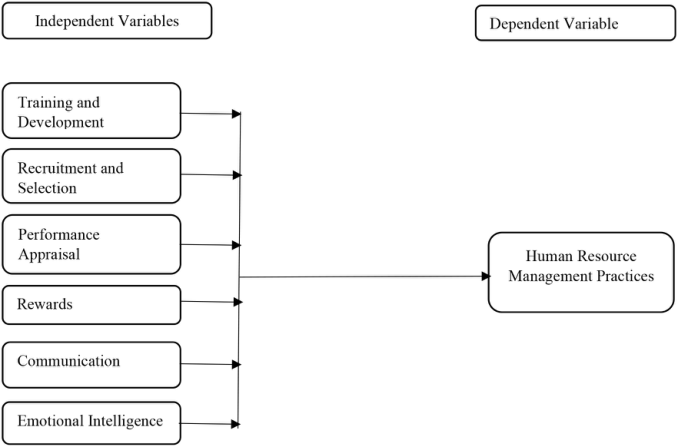
Figure 1: Conceptual framework of key elements of human resource management practices.
team performance in construction management (CM) programs through the enormous benefits of EI.
Human Resource Management Practices Framework (HRMPsF) The conceptual framework outlined the components of the independent variables known as the causal factors, the immediate effect, which is the dependent variable (Figure 1). According to Lithner (2008) and Kivunja (2018), the conceptual framework is based on an argument that the varia- bles under investigation, and any anticipated relationships among them, will be appropriate and useful under a given situation. In this study, both the independent and the dependent are the variables. The influence and effect of the dependent variable are established by the independent variables, namely training and development, recruitment and selection, performance appraisal, rewards, communication, and emotional intelligence. The dependent variable is the variable under observation and measured and depends on the inde- pendent variables. Thus, this study finds the influence of the independent variables on HRMPs for the Nigerian construction industry.
CONCLUSION AND RECOMMENDATIONS A whole lot of attributes are associated with HRMPs. The study has establi- shed the elements that influence HRMPs thereafter conducting a literature review and questionnaire technique to determine the key elements of HRMPs by ranking on existing conceptual models of HRMPs frameworks. These elements informed the conceptual framework for the Nigerian construction industry. As ranked by professionals and HR in the built environment, these
272 Babalola and Aigbavboa
factors include training and development, recruitment and selection, perfor- mance appraisal, rewards, communication, and emotional intelligence. This study shows that HRMPs impact HR performance and productivity. Based on this, the study recommends that more knowledge should be acquired by HR beyond their current job to optimize performance. Additionally, most suitable applicants should be allowed to fill existing vacancies. Also, there should be an evaluation of employees’ performance that brings about rewards. Finally, workers’ state of mind that balances their responses brings about a sound communication system. In conclusion, the present study advocate for HRMPs framework implementation in the Nigerian construction industry.
REFERENCES
Abuazoom, M. M. I., Hanafi, H. B. & Ahmad, Z. Z. B. (2017). Influence of HRM practices in project performance: Conceptual framework. International Journal of Academic Research in Business and social Sciences, 7(3), 47–54. Akpan, N. U. (2009). Public Administration in Nigeria. Lagos: Longman. Aktar, A. & Pangil, F. (2018). Mediating role of organisational commitment in
the relationship between human resource management practices and emplo- yee engagement. International Journal of Sociology and Social Policy, 38(7/8), 606–636. Alzyoud, A. A. Y. (2018). The influence of human resource management practices on employee work engagement. Foundations of Management, 10, 251–256. DOI: 10.2478/fman-2018-0019. Aman, Q., Noreen, T., Khan, I., Ali, R. & Yasin, A. (2018). The impact of human
resource management practices on innovative ability of employees moderated by organizational culture. International Journal of Organizational Leadership, 7, 426–439. Ameh, O. J. & Daniel, E. I. (2017). Human resource management in the Nigerian construction firms. Journal of Construction Business and Management, 1(2), 47–54. Amin, M., Ismail, W. K. W., Rasid, S. Z, A. & Selemani, R, D, A. (2014). The impact
of human resource management practices on performance. The TQM Journal, 26(2), 125–142. Arulrajah, A. A., Opatha, H. H. D. N. P. & Nawaratne, N. N. J. (2015). Green human resource management practices: A review. Sri Lankan Journal of Human Resource Management, 5(1), 1–16. Babalola, H. I. & Ojo, O. J. (2016). An investigation into factors affecting the per-
formance of public construction projects in Ondo State, Southwestern, Nigeria. Civil and Environmental Research, 8(1), 72–79. Boohene, R. & Asuinura, E. L. (2011). The effect of human resource management practices on corporate performance: A study of graphic communications group limited. Electronic Business Journal, 10(6), 263–269. Cesário, F. & Magalhães, S. (2016). Human resources management, citizenship
behavior, and turnover intention in the Portuguese public administration. Interna- tional Journal of Public Administration, DOI: 10.1080/01900692.2016.1242609. http://dx.doi.org/10.1080/01900692.2016.1242609. Chen, P-J., Okumus, F., Hua, N. & Nusair, K. (2011). Developing effective communication strategies for the Spanish and Haitian-Creole-speaking workforce in hotel companies. Worldwide Hospitality and Tourism Themes, 3(4), 335–353. Doi 10.1108/17554211111162453.
Conceptual Description of the Key Attributes of Human Resource Management Practices 273
Chieng, H. P., Arokiasamy, L. & Kassim, K. A. A. (2019). Human resource management practices and their impact on construction organizational performance. Global Business and Management Research: An International Journal, 11(1), 392–406. Chukwuka, E. (2015). Communication as a veritable tool for effective human
resource management in organisation. Review of Public Administration and Management, 4(8), 63–75. DeNisi, A. S. & Pritchard, R. O. (2006). Performance appraisal, performance management and improving individual performance. A motivational framework. Management and Organisation Review, 2(2), 253–277. Ebiasuode, A., Onuoha, B. C. & Nwede, I. G. N. (2017). Human resource manage-
ment practices and organisational innovation in banks in Bayelsa state. Interna- tional Journal of Advanced Academic Research/Social and Management Sciences, 3(8), 82–107. Elnaga, A. & Imran, A. (2013). The effect of training on employee performance.
European Journal of Business and Management, 5(4), 137–147. Feyerabend, R., Herd, A. M. & Choi, N. (2018). Job satisfaction and turnover intentions among Indian call center agents: Exploring the role of emotional intelligence. American Psychological Association, 21(2), 106–129. Hassan, S. (2016). Impact of HRM practices on employee performance. International
Journal of Academic Research in Accounting, Finance and Management Sciences, 6(1), 15–22. Hayton, J. C. (2005). Promoting corporate entrepreneurship through human resource management practices: A review of empirical research. Human Resource Management Review, 15, 21–41. Hsieh, Y. H. & Chen, H. M. (2011). Strategic fit among business competitive strategy,
human resource strategy, and reward system. Academy of Strategic Management Journal, 10(2), 11–32. Hussain, T. & Rehman, S. S. (2013). Do human resource management practices inspire employee’s retention? Research Journal of Applied Sciences, Engineering and Technology, 6(19), 3625–3633. Jalil, A., Shaikh, A. H. & Alam, J. (2014). Human resource management practices
and operational performance: An empirical study on Kushtia Sugar Mills Ltd. Journal of Economics and Sustainable Development, 5(1), 1–10. Jashari, A. & Kutllovci, E. (2020). The impact of human resource management practices on organizational performance case study: Manufacturing enterprises in Kosovo. Business: Theory and Practice, 21(1), 222–229. Jouda, A. A., Ahmad, U. N. U. & Dahleez, K. A. (2016). The impact of human
resource management practices on employee’s performance: The case of Isla- mic university of Gaza in Palestine. International Review of Management and Marketing, 6(4), 1080–1088. Kadiresan, V., Selamat, M. H., Selladurai, S., Ramendran, C., Mohamed, R. K. M.
H. (2015). Performance appraisal and training and development of human resou- rce management practices (HRM) on organisational commitment and turnover intention. Asian Social Science, 11(24), 162–176. Kelly, K. O., Ang, S. Y. A., Chong, W. L. & Hu, W. S. (2008). Teacher appraisal and its outcomes in Singapore primary schools. Journal of Educational Administration, 46(1), 39–54. Kivunja, C. (2018). Distinguishing between theory, theoretical framework, and
conceptual framework: A systematic review of lessons from the field. International Journal of Higher Education, 17(6), 44–53.
274 Babalola and Aigbavboa
Kokkaew, N. & Koompai, S. (2012). Current practices of human resources management (HRM) in Thai construction industry: A risk and opportunity perspective. Review of Integrative Business and Economics, 1(1), 1–14. Leonidou, L. C. Aykol, B., Fotiadis, T. A., Zeriti, A. & Christodoulides, P. (2019). The
role of exporter’s emotional intelligence in building foreign customer relationships. Journal of International Marketing, 1–23. Doi:10.1177/1069031x19876642. Ling, F. Y. Y., Ning, Y., Chang, Y., & Zhang, Z. (2018). Human resource management practices to improve project managers’ job satisfaction. Engineering, Construction and Architectural Management, 25(5), 654–669. Ling, T. C. & Nasurdin, A. M. (2010). Human resource management practices and
organisational innovation: An empirical study in Malaysia. The Journal of Applied Business Research, 26(4), 105–116. Lithner, J. (2008). A research framework for creative and imitative reasoning. Educational Studies in Mathematics, 67, 255–276. DOI 10.1007/s10649-007-9104-2. Mischung, J. J., Smithwick, J., Sullivan, K. T. & Perrenoud, A. (2015). Using
skills-based emotional intelligence training to improve team performance in con- struction management programes. 122nd ASEE Annual Conference & Exposition, 14th – 17th, June. Seattle, WA. Paper ID#13430. Naveed, R. T., Adnan, M., Ullah A. & Sohail, B. (2017). Understanding perceived organizational performance through human resource practices. European Journal of Business and Management, 9(28), 1–8. Ngwenya, L. & Aigbavboa, C. & Thwala, W. (2019). Mapping out research focus for
emotional intelligence in human resource management in the construction indu- stry. IOP Conference Series: Materials Science and Engineering. 640 012018. 1st International Conference on Sustainable Infrastructural Development, 24th–28th, June, Covenant University. Canaan Land Ota, Nigeria. Osemeke, M. (2012). The impact of human resource management practices on orga-
nizational performance: A study of Guinness Nigeria plc. An International Journal of Arts and Humanities, 1(1), 79–94. Placide, N., Gwaya, A. O. & Wanyona, G. (2019). Influence of human resource management practices on employees’ performance in construction organizations in Rwanda. International Journal of Innovative Science and Modern Engineering (IJISME), 5(12), 70–74. Saini, A. & Soni, N. (2016). Role of emotional intelligence in construction industry:
A review. International Journal of Civil Engineering and Technology, (IJCIET), 7(4), 339-344. Shen, J. K. & Edward, V. (2004). Recruitment and selection in Chinese MNEs.
International Journal of Human Resource Management, 15(4), 814–835. Suleman, Q., Hussain, I., Syed, M. A., Parveen, R., Lodhi, I. S. & Mahmood, Z.
(2019). Association between emotional intelligence and academic success among undergraduates: A cross-sectional study in KUST, Pakistan. PLoS ONE 14(7): e0219468. https://doi.org/10.1371/journal.pone.0219468. Tanveer, Y., Shaukat, M. Z., Alvi, S. A. & Munir, A. (2011). The way human resource management (HRM) practices effect employee’s performance: A case of textile sector. International Journal of Economics & Management Sciences, 1(4):112-117. Zainon, S., Ismail, R. F., Ahmad, R. A. R., Shafi, R. M., Misman, F. N., Nawi, S. N. &
Kadir, J. M. A. (2020). Factors of human resource management practices affecting organizational performance. International Journal of Organizational Leadership, 9, 184–197.
LISTED IN THE AHFE DIGITAL BOOKSTORE CATALOGUE
Explore the complete digital volume
Human Factors, Business Management and Society
Read this individual research paper free through the original publisher, or explore the full digital proceedings book.
ISBN 978-1-958651-32-2
Explore this ISBN in the AHFE Bookstore ↗Listed in the July 2026 bookstore catalogue; search by ISBN to confirm current availability · Digital book purchase optional