Xiaodong Gong, Yushun Liu, Qian Gong, Wenhan Liu (2022). The Design Method of Alarm Information Manifestation Based on Visual Attention. In: Human Factors and Systems Interaction. AHFE Open Access, vol. 52, pp. 457–465. https://doi.org/10.54941/ahfe1002189
The alarm is a core function of security monitoring information systems. With the characteristics of high information density, strong timeliness, and visual environment interference, the effectiveness of alarm information design is a significant key affecting system performance. The purpose of this paper is to study the design method of alarm information to improve the capture efficiency of users’ visual attention in complex information interfaces. By sorting out related design standards and research literature, this paper identifies 7 current alarm information coding methods. The four most used visual coding methods are chosen for combination. By selecting any two or three of the four coding methods for combination, 10 combinations are finally obtained, and 10 visual solutions are designed for experimental comparison. The experiment took the mine safety monitoring system interface as the carrier and tested 10 visual solutions as stimuli. By recording the subject’s time to first fixation to the stimulus, we compared the differences in the efficiency of guiding user’s attention under different coding combinations, then sought a better coding method for alarm information. Experimental results demonstrate that different coding combinations have impacts on the efficiency of visual attention. Compared with other solutions, the solution with the combination of three coding methods of color, flashing, and shape(size) is more efficient and takes less time to notice the alarm information. Whilst the attention level is less affected by the number of coding methods and is more affected by the types of coding methods included in the solution. For example, when the coding method includes color or flashing coding, the subjects noticed the alarm information faster and more efficiently, and no experimental failure cases occurred during the experiment when using color and flash coding at the same time. The conclusion effectively provides a solution for the design of alarm information in monitoring systems.Keywords: Alarm Information, Visual Attention, Eye Movement Measurement, Multi-dimensional Coding
In a complex security monitoring system, alarm information describes possi- ble factors hindering the operation of systems and is a concrete manifestation of system states and changes. It describes abnormalities through state chan- ges to attract users’ attention, thereby prompting users to perform correct operations (Wang & Yu, 2016).
As the prompt information of abnormal system states, the alarm informa- tion is obviously at the highest level in the importance ranking of information. However, the digital interface of a complex security monitoring system usu- ally has the characteristics of information richness and high requirements to operational timeliness. How to make the alarm information more quickly noticed by users in a complex information environment and deal with it in a timely manner is one of the key links for the effective operation of complex safety monitoring systems.
Concurrently, most of the research on the effectiveness of alarm infor- mation design focus on auditory coding, and less on visual coding. In the research on visual coding, although some scholars have pointed out when studying the visual coding of general information, certain information coding designs will affect the user’s attention level and search efficiency, and enhance the difference between the target information and backgrounds or non-target information can increase the user’s visual attention level, etc. (Ge, 2017). However, there is still a void of comparative research on the visual coding of alarm information, especially in complex information interfaces, and on the effectiveness of attention capture. Based on theories related to visual attention, this paper composes, combines, and compares the coding presen- tation forms of alarm information in complex security monitoring system contexts to explore coding methods with higher levels of visual attention capture, intending to communicate alarm information more efficiently in an information-rich environment.
CODING OF ALARM INFORMATION BASED ON VISUAL ATTENTION Visual Coding of Alarm Information
Through a review of common coding forms for the manifestation of emer- gency information in military standards of China and the United States, 7 common coding methods are summarized: color coding, brightness coding, flashing coding, graphic coding, position coding, symbol coding, and shape(size) coding (DoD, 1999; CN-GJB-Z, 2008). A review of relevant literature in Chinese or English was conducted.
Chinese literature: based on CNKI database, by screening two groups of Chinese terms related to the coding of alarm information: (i) 告警, 警示, 报 警信息(ii) 信息编码, 视觉信息编码, the two groups were cross-searched and six Chinese literature involving research on the coding methods of alarm information were found. The literature addresses the research conducted on the manifestation of alarm information in complex information systems in various fields such as aircraft pilot interface, radar interface, ship monitoring system, and other representative information systems.
International literature: two sets of English terms related to the coding of alarm information were selected based on the Science Citation Index Expan- ded in the Web of Science core collection (i) terms defining “alarm infor- mation”: warning, alarm; (ii) terms defining “information coding”: coding, encoding. A total of 695 search results were retrieved by cross-referencing
The Design Method of Alarm Information Manifestation Based on Visual Attention 459
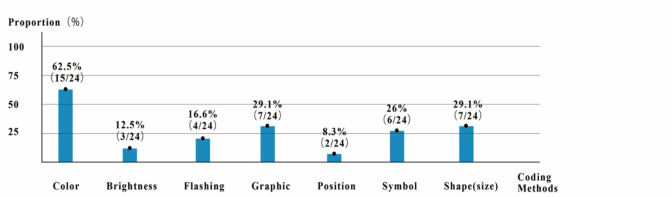
Figure 1: Proportion of research on alarm information coding methods.
the two sets of keywords, and 18 papers related to this study were selected and summarized (see Figure 1).
Based on the coding methods used by researchers for alarm information, priority was given to more frequently used coding methods for investigation, while considering that this paper focuses on the coding methods to find design methods to improve user attention and that the application areas of alarm information are different, the use of symbols is not consistent, and users have different interpretations of specific symbols, so symbolic coding was excluded from the selection. Color coding, flashing coding, shape (size) coding, and graphic coding were selected as the coding methods for the subsequent design of the alarm information presentation (see Table 1).
Evaluation of Visual Attention There are many ways to evaluate users’ visual attention, amongst which eye movement measurement technology is one of the widely used methods. Many scholars have found through research that there is a certain interaction between eye movement and attention (Kahneman, 1967; Hoffman, 1995). Eye movement measurement technology can reflect the dynamic movement trajectory of explicit attention in the process of visual search in real-time. Compared with behavioral performance indicators such as reaction time or correct rate, eye movement data can reflect more refined visual processing information.
Amongst the eye movement data information, the user’s visual attention level can be judged by extracting the user’s time to first fixation to the sti- mulus (Wang, 2016). The shorter the time to first fixation is, it proves that the stimuli are easier to attract the attention of the subjects and can enter the user’s information processing sequence faster (Li, 2019).
Summary In summary, the current research shows the multi-dimensional coding design of alarm information makes it more efficient to capture users’ visual atten- tion, and the level of visual attention can be objectively evaluated by eye movement measurement technique. Therefore, based on attention-related cognitive theories, this paper combines the dimensions of color, graphics, flashing, shape(size) in two or three dimensions to get 10 combinations, and designs 10 sets of visual solutions for alarm information based on the combinations. Eye movement measurement technique was used to evaluate
Table 1. Coding principles related to each coding method.
Table available in the original PDF paper.
Relevant Coding Principles Coding Method
Color coding
1. The characteristic areas should be coded in red (Zhang, 2018). 2. A dark background should be chosen for contrast. And try not to choose complementary saturated colors (Ge, 2017). 3. Red can be considered at the wavelength of 700nm (Shu et al., 2015). Graphic coding
1. When using graphic coding for information design, there are at most 15 kinds of geometric figures, but preferably no more than 5 kinds. In the design, try to make the designed code and the object it represents in similar shapes, and make the graphics clearly distinguishable since similar graphics will significantly increase the operator’s search time (Ge, 2017). 2. The American National Standard recommends the use of an icon with an “exclamation mark inside a triangle” to remind users that the product may cause harm (Zhao et al., 2006). Flashing coding
1. Flash the icon or frame or an area adjacent to targets that needs attention but be careful not to flash text or background. In addition, the best flash frequency range recognized by the human eye is (3∼12Hz) (Zhang, 2018). 2. Do not use more than two frequencies in flash coding. If only one flash frequency is used, ensure the flash frequency is 3-5 Hz (Shu et al., 2015). Shape(size) coding
1. The shape of the alarm information should be easy to understand, remember and identify, and try to use closed outline graphics. The boundary should be clear, stable, and differentiated from the background, which is conducive to attracting and accumulating eyes. (Li, 1996). 2. It is best to use a rectangle as the outer outline, because If the rectangle has the right ratio of length and width, it is pleasing to the eye, as in the case of the golden ratio rectangle, but if the ratio is not appropriate, it brings a sense of tilt, instability, and breakage. (Fan, 1996). 3. Its size should be 1.5 times or greater than the control, but not more than three times (Shu et al., 2015).
the visual attention level of the 10 solutions in the interface environment. By comparing the visual attention levels of different solutions, the optimal coding method of alarm information is discussed, which provides theoretical support for the design and presentation of alarm information in the security monitoring system.
EXPLORATION ON A REASONABLE MULTI-DIMENSIONAL CODING METHOD OF ALARM INFORMATION BASED ON EYE MOVEMENT EXPERIMENTS Experiment Introduction
According to the previous research, the author explores an alarm information coding method that can effectively improve the users’ visual attention level through the design and preparation of experimental materials, experimental
The Design Method of Alarm Information Manifestation Based on Visual Attention 461
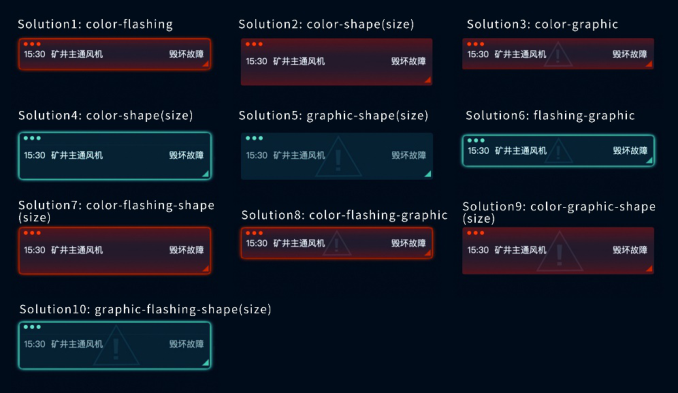
Figure 2: 10 groups of alarm information design solutions.
process design, experimental object recruitment, and experimental result analysis.
Experiment Implementation Based on the 10 kinds of multi-dimensional coding combinations determined above, combined with the design principles of each coding method, 10 kinds of alarm information visual solutions are designed (see Figure 2), and named according to the multi-dimensional coding methods.
The relevant equipment and materials are prepared according to require- ments, including the site with stable lighting, interface and interactive motion design, eye-tracking equipment (Tobii Glasses II), computer for recording data, etc.
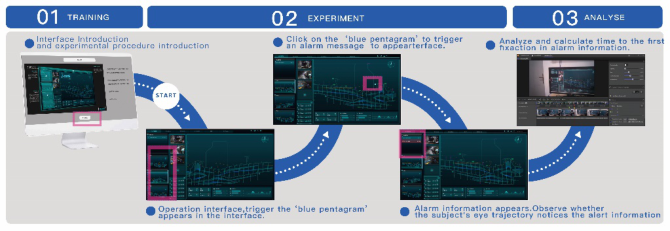
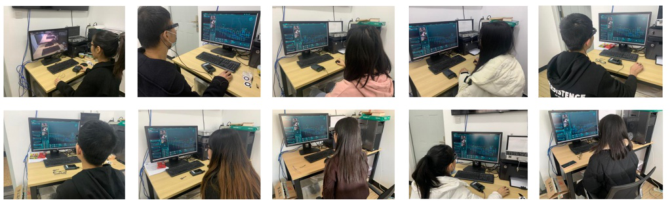
In the early stage of the experiment, 50 subjects without color blindness, color weakness, and intellectual disability were called for the test. To improve the accuracy of the test results, if the within-subject design was adopted, it would be easy for the subjects to be affected by legacy effect. There- fore, 10 groups of solutions were tested with the between-subjects design, and the experiment took the mine safety monitoring system interface as the experimental environment. The experiment is divided into three stages: pre- experiment training stage, visual comprehension stage, and experiment stage. First, introduce the interface layout, related functions, and experimental tasks to the subjects; give the subjects a certain amount of time to understand; in the formal experiment, the subjects need to perform a secondary search task in the page environment, and trigger the presentation of the experimental materials through the operation of the secondary task, while recording the presentation time. To prevent the subjects from groping out the regularity of stimulus appearance, each subject was tested only once. The specific expe- rimental process is shown in Figure 3. Some of the subjects’ experimental records are shown in Figure 4.
Figure 3: The specific process of the experiment.Figure 4: Some subjects in the experiment.Table 2. Summary of the time to first fixation of each solution.
Table available in the original PDF paper.
Standard Deviation
Solution Coding Combinations Average Time to First Fixation Solution 1 color-flashing 738ms 471.03 ms Solution 2 color-shape(size) 1466 ms 702.34 ms Solution 3 color-graphic 4784 ms 4837.24 ms Solution 4 flashing-shape(size) 5572 ms 5631.23 ms Solution 5 shape(size)-graphic 15096 ms 16472.74 ms Solution 6 flashing-graphic 1094 ms 460.96 ms Solution 7 color-flashing-shape(size) 696 ms 187.56 ms Solution 8 color-flashing-graphic 1136 ms 427.94 ms Solution 9 color-shape(size)-graphic 9808 ms 13067.40 ms Solution 10 flashing-shape(size)-graphic 1911 ms 1715.83 ms
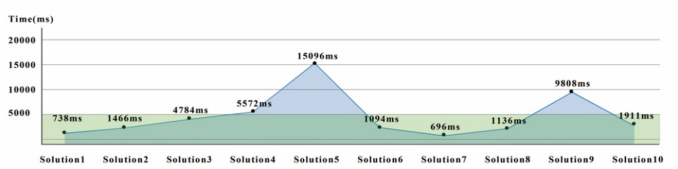
Experiment Results and Analysis It can be concluded from experimental data that subjects have different levels of visual attention to alarm information of different coding combinations (see Table 2). This paper therefore uses a one-way Anova test, and a line chart of average time to first fixation to analyze the data.
Before using the one-way Anova test to verify all the experimental data of the 10 groups, the homogeneity of variance test was carried out, and p = 0.0504 (p>0.05) was obtained, which met the conditions for the Anova test. The Anova variance test was performed on the data results of the 10 groups and p = 0.034 (p<0.05) was obtained, so there was a significant
The Design Method of Alarm Information Manifestation Based on Visual Attention 463
Figure 5: Line chart of the average time to first fixation in 10 groups.
difference between the data of the 10 groups. Afterward, LSD post-hoc com- parison was performed to obtain the data results of 10 groups. The results of pairwise significant comparison are as follows (see Table 3).
As it shows in Table 3, the data of Solution 5 is significantly different from other solutions, except the comparison result between Solution 5 and Solu- tion 9 is p>0.05 which shows no significant difference. The average of the time to first fixation of Solution 5 is relatively large, so it is not recommended to use the coding combination method (shape, size, and graphic combination) to design the alarm information. The comparison results between the data of solution 9 and solution 1 or solution 7 are all p = 0.049 (p<0.05), so there is a significant difference between Solution 9 and solution 1 or solution 7, and no difference between Solution 9 and the other 7 solutions.
The data in the line chart was compared. From the line chart (see Figure 5), the average time to first fixation of Solutions 1, 2, 3, 6, 7, 8, and 10 are all distributed in an interval of less than 5000ms. And the common feature of these 7 groups is that the coding combination methods used by the solutions all include one of color, flashing coding, or both.
From the line chart the averages of Solution 7 and Solution 1 are both lower than 1000ms and lower than the averages of other solutions. The common feature is that the coding combination method used in the solu- tion includes two coding methods of color and flashing light. Therefore, it can be seen from the results that using the coding combination of solution 7 or solution 1 to design the alarm information can effectively improve the attention capture level of the information, and when comparing the average time to first fixation of Solution 7 and Solution 1, the time to first fixation
Table 4. Failures in each group of visual solutions.
of Solution 7 is shorter, and the efficiency is slightly better than Solution 1. In addition, after the occurrence of the alarm information triggered, subjects did not notice the alarm information and were still browsing. The detail of failures in each group of visual solutions is collected (see Table 4). Therefore, for the groups with failures, it is necessary to search for new subjects to carry out the experiment again.
It shows when the code combination does not contain color or flash- ing, and the group of visual solution only contains either color or flashing, the experiment failures happened. Therefore, it is further proved that the design of alarm information by combining color and flashing light can effe- ctively improve the efficiency of information being noticed. Based on the data analysis of experimental failures, only Solution 7 and Solution 1 used the combination of color and flashing coding, and the average time to first fixation is less than 1000ms, without failure case in the experiment.
CONCLUSION
As alarm information is the most important information in the security moni- toring system, this paper studies its multi-dimensional coding combination, and the design method that can be noticed by users more quickly. Through the eye movement experiment and after subjective and objective data analysis, it can be concluded: the multi-dimensional coding combination with both color and flashing effectively improves users’ attention to the alarm information compared with other coding combinations. Amongst 10 coding combinati- ons, combining the three coding methods of color, flashing, and shape(size) to design the information can more effectively improve the user’s visual atten- tion level. Therefore, when designing the alarm information in the complex information system, the combination can be considered as the design appro- ach to distinguish it from other information. Furthermore, for the design of alarm information at different levels, it is recommended to use different multi- dimensional coding combinations. When choosing coding combinations, it is not appropriate to choose coding combinations with similar levels of visual attention. It is hoped that the conclusions of this paper can provide objective indicators for subsequent exploration of the design method of alarm infor- mation. Still, this paper has certain limitations like the small sample size due to too many groups. It can be expanded for in-depth research in the future.
REFERENCES
CN-GJB-Z (2008) GJB1062A-200 General Requirements of Human-machine Engineering Design for Military Visual Displays. PRC, CN-GJB-Z. Department of Defense (1999) MIL-STD-1472F-1999 Department of defense design
criteria standard.USA, DoD.
The Design Method of Alarm Information Manifestation Based on Visual Attention 465
Fan, Y.J., Wang, X.Y., Tang, J.F., et al. (1996). Human-machine Relationship in Interface Design of Information System, COMPUTER ENGINEERING & SOFTWARE Volume S1 pp. 70–74. Ge, L.Z. (2017). Engineering Psychology. Shanghai: East China Normal University
Press. Hoffman, J.E., Subranmaniam, B. The role of visual attention in saccadic eye movements Jubis, R.M.T. (1990). Coding effects on performance in a process control task with
uniparameter and multiparameter displays, Human Factors Volume 32 No.3. pp. 287–297. Kahneman, D., Beatty, J., Pollack, I. (1967). Perceptual Deficit during a Mental Task, Science. Li, C. “Effective Visual Communication of Information in Web Interface Design”,
MA Thesis, Hebei Normal University, Shijiazhuang. Li, D. (2019) Research on visual attention of product packaging on shelves based on eye movement measurement technology, Journal of Beijing Institute Of Machinery Volume 34 No. 03. Shen, Z.Q. (2019) “Research on Visual Cognitive Behavior Model of Information
Visualization Interface”, MA Thesis, Southeast University, Shanghai. Shu, X.L., Dong, D.Y., Dong, W.J. (2006) Analysis of Basic Requirement for Visual Warning Signals in Aircraft Flight Deck Design, Advances in Aeronautical Science and Engineering Volume 6. No. 04 pp. 512–518. Swierenga, S.J., Boff, K.R., Donovan, R.S. (1991) “Effectiveness of coding sche-
mes in rapid communication displays”, proceedings of the Human Factors Society Annual Meeting, Los Angeles, CA. Wang, F.J. (2016) “Classification Model of Visual Attention Based on Eye Movement Data”, MA Thesis, Beijing Jiaotong University, Beijing. Wang, J., Yu, Y. (2016). Research on Cognitive Process of Visual Information Design
Communication, MODERN DECOR (THEORY) No. 02. pp. 114–115. Wang, X.W. (2019), “Graphical Research Based on ‘Encoding and Decoding’ Theory”, MA thesis, Dalian Polytechnic University, Liaoning. Zhang, X.Y. (2018), “Ergonomics Research on Different Visual Alerting Forms of
Digital Interface”, MA thesis, Southeast University, Shanghai. Zhao, Z.X., Rao, P.L., Liu, C.Y. (2006) A Case Study: Reaction Differences on Warning Labels between China and the US Participants, Industrial Engineering and Management No. 2, pp. 105–107.
LISTED IN THE AHFE DIGITAL BOOKSTORE CATALOGUE
Explore the complete digital volume
Human Factors and Systems Interaction
Read this individual research paper free through the original publisher, or explore the full digital proceedings book.
ISBN 978-1-958651-28-5
Explore this ISBN in the AHFE Bookstore ↗Listed in the July 2026 bookstore catalogue; search by ISBN to confirm current availability · Digital book purchase optional