Galia Kondova (2022). Electronic Product Information for Human Medicines: A Blockchain Solution. In: Healthcare and Medical Devices. AHFE Open Access, vol. 51, pp. 1–4. https://doi.org/10.54941/ahfe1002091
Electronic Product Information (ePI) is a digital alternative to the current paper leaflet found in every medicine package. The paper leaflets are costly to produce and have a high environmental impact. Moreover, once printed and distributed the leaflets are no longer possible to be updated. A blockchain-based technical solution for an ePI is currently being developed under the PharmaLedger Project following the EMA-HMA-EC principles for ePI in the EU. The paper discusses this blockchain-based ePI solution based on a data flow analysis.
Electronic Product Information (ePI) refers to authorized, statutory product information for medicines in a semi-structured format created by using the common European Union electronic standard adapted for electronic handling (European Medicines Agency, 2020). ePI allows dissemination via the world wide web, e-platforms, and print.
ePI is a digital alternative to the current paper leaflets available in medi- cine packages. Product information leaflets are found in every package and offer valuable information to both healthcare practitioners and patients such as information on the products ingredients, how to report adverse effects, how to take medicines safely, etc. These leaflets are closely regulated and require constant updates as the lifecycle of the product continues. At the same time, the paper leaflets already on the market are impossible to update after distribution. In addition, paper leaflets are costly to produce and have a high environmental impact. Moreover, currently, health authorities, manu- facturers, and end-users throughout the healthcare ecosystem are operating in what is best described as a siloed manner.
PharmaLedger’s ePI in particular aims to create a platform that would enable the switch from paper to digital by introducing ePI leaflets into the healthcare value chain. Moreover, the project closely follows the pri- nciples outlined in the European Medicines Agency-Heads of Medicines Agencies-European Commission (EMA-HMA-EC) guidance.
The EMA-HMA-EC guidance outlines the key principles for ePI in the European Union (EU). ePI should expand the access to information on medi- cines including the accessibility to users with diverse abilities. Moreover, efficiency gains are expected in the administration of regulatory procedu- res and in the process of knowledge accumulation of trends in medicines and their evolution (European Medicines Agency, 2020).
At the same time, the blockchain technology combines a ledger with a peer- to-peer distribution, producing a decentralized, irreversible, and transparent history of records or transactions (Kondova, 2021). Thus, it presents a via- ble technology for the implementation of ePI. Moreover, the PharmaLedger Project develops an ePI blockchain-based solution that is discussed in detail in this paper.
PHARMALEDGER’S EPI: OVERVIEW Sponsored by the Innovative Medicines Initiative (IMI) and the European Federation of Pharmaceutical Industries and Associations (EFPIA) under the Horizon 2020 programme, PharmaLedger is a project that brings together 12 global pharmaceutical companies and 17 public and private entities, inclu- ding technical, legal, regulatory, academia, research organisations and patient representative organisations. ePI is the first pilot use case out of total eight use cases planned in the focus areas supply chain, clinical trial, and health data (PharmaLedger, 2022).
The PharmaLedger ePI vision has a Review and Approval component and a Dissemination component. The Review and Approval component enh- ances trust and brings efficiencies to the interactions between the health authorities and the pharmaceutical companies. The goal is to streamline the review and approval process in order to have the latest approved information made available to healthcare practitioners (HCP) and patients as the product information is updated throughout its life cycle.
The Dissemination component ensures that the patient or HCP only gets approved and trusted information in addition to built-in anti-counterfeit che- cks, potential recall messages, etc. There is no need to have an individual app for each manufacturer, nor or an app for specific countries around the world. The goal is to allow the patient to have a solution that allows them to access all the required information for their medicines (PharmaLedger, 2022).
The de facto standard for serialization is the GS1 Datamatrix code, which is used in the EU, US, and many other countries. With serialization, each pack has a unique number, and the Datamatrix code serves as a “digital key,” unlo- cking the connection across the healthcare value chain from the manufacturer, all the way to the patient. By scanning the GS1 Datamatrix Code (2D data matrix code) on the drug package from a phone application, the right eLea- flet will be delivered to the user through a “resolver” on the blockchain. The 2D data matrix code, “the digital key”, opens the door to build on additional use cases, a huge steppingstone to meeting the goal of creating a trusted, tran- sparent blockchain-enabled healthcare ecosystem. The first prototype of the Pharmaledger platform was successfully developed in 2020 (PharmaLedger, 2022).
Electronic Product Information (ePI) for Human Medicines: A Blockchain Solution 3
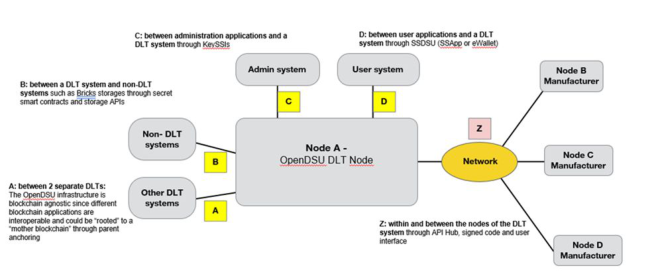
Figure 1: Data Flow Analysis of PharmaLedger’s ePI (based on ISO TC 307 WG 6 Template).
PHARMALEDGER’S EPI: TECHNOLOGY PharmaLedger’s ePI implements the blockchain technology to enable the crea- tion of trusted and secure content by the manufacturers, to enable transparent and immutable review and approval transaction records, to facilitate trusted transactions between stakeholders, and to allow interoperability with other digitally enabled services and systems.
Figure 1 presents an overview of the blockchain technology application based on a data flow analysis. The storage of the data and code is ena- bled through the OpenDSU, which stands for Open Data Sharing Units. The OpenDSU is a technology to solve data self-sovereignty based on Distribu- ted Ledger Technology/Blockchain. The OpenDSU defines a standard of how to store data and code outside the blockchain (off-chain). Namely, data and code build a container which is cryptographically secured and anchored in the blockchain and which is called a Data Sharing Unit (DSU).
As OpenDSU is blockchain technology agnostic, it supports any kind of programmable blockchain technology. In addition, it supports any kind of Self-Sovereign Identities (SSIs) or any other certificate standards. The SSI concept implies that the user (individual or organization) could present their trusted credentials (real-world identity) to a third party without having to engage an intermediary (Kondova and Erbguth, 2020). Moreover, OpenDSU provides for the creation of the so-called Self-Sovereign Applications (SSApp), a special DSU Type. These DSUs are applications in full control of the user thus providing for full data self-sovereignty or digital self-sovereignty (OpenDSU, 2022).
The interaction with the blockchain takes place through digital wallets. The OpenDSU technology enables the creation of interoperable, portable but also dynamically adaptable digital wallets, called Smart Wallets. Smart Wal- lets consist of various Self-Sovereign Applications and the wallet itself is a DSU. These Smart Wallets can run on any device such as mobile phones, wea- rables, servers, desktops. They can run in a browser or as part of a business application (OpenDSU, 2022).
Smart contracts are mainly being used for the onboarding process (vali- dation of a participant) and for anchoring data. Anchored data and its
4 Kondova
lineage are reconstructed and validated by reading both the anchor and the history stored off-chain. Minimal on-chain validation is offered, but in many cases will be accompanied by off-chain validation code called secret smart contracts (OpenDSU, 2022).
CONCLUSION
This paper provided an overview of the PharmaLedger’s ePI Project that cre- ates a platform for digital leaflets for human medicines by ensuring trusted and secure con-tent through the implementation of OpenDSU and blockchain technologies.
The main expected benefits are associated with efficiency improvements in the ePI review and approval process, improved access to product information, availability of latest trusted and transparent product information, elimina- tion of purchase costs for the paper leaflets, elimination of costs related to handling of leaflets, sampling and inspection of leaflets.
Thus, every actor in the ecosystem, starting with the manufacturer and ending up with the patient, will trust to have access to the correct version of the eLeaflet, every time a 2D matrix code on a medicine package is scanned. This will be possible due to the decentralized nature of blockchain and the application of smart contracts.
REFERENCES
European Medicines Agency. (2020). Electronic product information for human medicines in the EU: key principles. EMA/503860/2019. Kondova, Galia and Erbguth, Jörn. (2020). Self-Sovereign Identity on Public Blo-
ckchains and the GDPR. Proceedings of ACM SAC Conference, Brno, Czech Republic, March 30- April 3, 2020 (SAC’20), 342–345. Kondova, Galia. (2021). Blockchain-Based Healthcare Data Management: Current Practices and Opportunities Ahead (July 29, 2021). In: Kalra J., Lightner N.J., Taiar R. (eds) Advances in Human Factors and Ergonomics in Healthcare and Medical Devices. AHFE 2021. Lecture Notes in Networks and Systems, vol 263. Springer, Cham. OpenDSU. (January 23, 2022) The OpenDSU Standardisation Project Website: https:
Read this individual research paper free through the original publisher, or explore the full digital proceedings book.
ISBN 978-1-958651-27-8
Explore this ISBN in the AHFE Bookstore ↗Listed in the July 2026 bookstore catalogue; search by ISBN to confirm current availability · Digital book purchase optional