There is an obvious analogy between the challenges that an aircraft pilot has to cope with when fulfilling his/her long-term mission or when encountering a short-term abnormal situation, and the challenges that a surgeon faces during his/her "mission", a surgical operation, which is always a highly challenging and sometimes unpredictable effort. Kao and Thomas seem to be the first ones who paid attention to this analogy that could be viewed today as a part of what is identified as human-system-integration/interaction (HSI) field. This extraordinarily broad field includes the role of human performance in various psychological and ergonomics tasks in general and critical aspects of human interactions with an intelligent system in particular: predictive modeling (PM), both computer simulations based and analytical; vehicular engineering, such as aerospace, automotive, railway, and maritime; medical electronics; and, of course, all kind of the human-in-the loop (HITL) and human factor (HF) related activities, attributes and challenges. The outcome of these activities is highly dependent on the mental (cognitive) workload (MWL) and, mostly long-term, human capacity factor (HCF). Probabilistic predictive modeling (PPM) enables evaluating, improving, assuring and ultimately, if possible and appropriate, even specifying the acceptable (adequate and never-zero) probability of failure of a HITL mission or a situation, when the reliability of the equipment/instrumentation, the performance of the human-in-control (the pilot or the surgeon) and the response of the object-of-control (the air or spacecraft, not to mention the patient undergoing surgery), and the interfaces of these and other uncertainties contribute jointly to the importance of the outcome of the undertaking. Systemic-Structural Activity Theory (SSAT) is applicable to the analysis and improvement of the efficiency and reliability of the highly challenging types of human activity. The objective of this paper is to indicate the need for quantifying the role of the HF in making a surgical operation less risky and to indicate that the consideration of the analogy of this effort with the aircraft pilot challenges, which have been addressed and modeled in a number of recent publications, could be helpful. The paper uses a simplified double-exponential-probability-distribution function (DEPDF) to make our point and to "bring down to earth" the more general model for the probability of the human-non-failure (HnF). By predicting this probability and making it adequate for a particular surgical application, one could put various "educated guesses" and "gut feelings" about the instrumentation and human reliability during the fulfillment of the surgical mission on a really "reliable" quantified foundation. Plenty of additional, both analytical and computer simulation-based modeling, as well as experimental and clinical and statistical work should be done to “reduce to practice” the general idea of the need for quantifying, in one way or another, the numerous challenges that a surgeon faces in his/hers never-routine activity, in which the analogy with the pilot's performance might be helpful.
Kao and Thomas seem to be the first ones who paid attention to an obvi- ous analogy between the challenges that an aircraft pilot has to cope with when fulfilling his/her long-term mission or when encountering a short-term abnormal situation, and the challenges that a surgeon faces during his/her “mission”, a surgical operation, which is always a highly challenging effort. This analogy could be considered from the point of view of what is identified today as human-system-integration/interaction (HSI) field.
Systemic-Structural Activity Theory (SSAT) is applicable to the analysis and improvement of the efficiency and reliability of the highly challenging types of human activity.
The objective of this paper is to indicate the need for quantifying the role of the Human Factors (HF) in making a surgical operation less risky and to indicate that the consideration of the analogy of this effort with the aircraft pilot challenges, which have been addressed and modeled in a number of recent publications, could be helpful. The paper uses a simplified double- exponential-probability-distribution function (DEPDF) to make our point and to “bring down to earth” the more general model for the probability of the human-non-failure (HnF).
By predicting this probability and making it adequate for a particular sur- geon’s task performance, one could put various “educated guesses” and “gut feelings” about the instrumentation and human reliability during the fulfill- ment of the surgical mission on a really “reliable” quantified foundation. Plenty of additional, both analytical and computer simulation-based mode- ling, as well as experimental and clinical and statistical work should be done to “reduce them to practice”. The general idea is the need for quantifying, in one way or another, the numerous challenges that a surgeon faces in his/h- ers never-routine activity, in which the analogy with the pilot’s performance might be helpful.
LITERATURE REVIEW
We use here a simplified double-exponential-probability-distribution function (DEPDF) to make our point and to “bring down to earth” the more general (Suhir, 2021) model for the probability of the human-non-failure (HnF). By predicting this probability and making it adequate for a particular surgical application, one could strive to predict instrumental and human reliability during the fulfillment of the surgical mission on a quantified foundation.
Kao and Thomas (2008) seem to be the first ones who paid attention to this analogy that could be viewed today as part of what is identified as human-system-integration/interaction (HSI). This extraordinarily broad field includes the role of human performance in various psychological and ergo- nomic tasks in general (Suhir, Karwowski, and Bedny, I., 2021, Suhir, and Paul, 2021,Suhir, 2020, Hollnagel, 1993, Taatgen, 2002, Lehto and Buck, 2008, Gluck and Pew, 2005) and critical aspects of human interaction with an intelligent system in particular: predictive modeling (PM), computer and analytical based simulations (Suhir, 2014, 2016, 2017); vehicular enginee- ring, such as aerospace (Suhir, 2013, 2019, Suhir and Yi, 2017), automotive, railway, and maritime; medical electronics (Cain, 2007); and, of course, all kind of the human-in-the loop (HITL) and human factor (HF) related acti- vities, attributes and challenges. The outcome of these activities is due, first of all, to the short-term mental (cognitive) workload (MWL) (Suhir 2019) and, mostly to the long-term, human capacity factor (HCF) (Suhir, 2017, 2013, 2019, Suhir, Yi, 2017, Cain, 2007, Suhir, 2019). Probabilistic predi- ctive modeling (PPM) enables evaluating, improving, assuring and ultimately, if possible and appropriate, even specifying the acceptable (adequate and never-zero) probability of failure of a HITL mission or a situation, when the reliability of the equipment/instrumentation, the performance of the human- in-control (the pilot or the surgeon) and the response of the object-of-control (the air or spacecraft, not to mention the patient undergoing surgery), and the interfaces of these and other uncertainties (Tversky and Kahneman, 1974) contribute jointly to the outcome of the undertaking of importance.
DISCUSSION
Probabilistic Predictive Modeling The probabilistic predictive modeling (PPM) concept was introduced first in reliability physics (Suhir, 2021), and then applied to quantify the role of
Surgeon’s Performance: An Analogy with Aircraft Pilot’s Challenges 21
the human factor (HF) in ergonomics (HFE) (Kao and Thomas, 2008). The concept is based upon the recognition of the facts that
1) neither system reliability nor human performance are completely certain; 2) the difference between a highly reliable and an insufficiently reliable system or technology and human performance is “merely” in the level of their never-zero probability of failure; 3) the reliable performance cannot be assured, if it is not quantified; 4) such a quantification should be preferably done on the probabilistic basis (Suhir, Karwowski, Bedny, I., 2021).
HFE Specialists Could Benefit from Understanding the Analogy in Question There is an obvious analogy between the challenges that an aircraft pilot has to cope with when fulfilling his/hers long-term mission or when encountering a short-term off-normal situation (Suhir, 2021, Kao, Thomas, 2008, Suhir, Karwowski and Bedny, I., 2021), and the challenges that a surgeon faces during his/hers “mission” - a surgery, which is often a short but a highly challenging effort. While there are also fundamental differences, the overlap relates mostly to error minimization (Suhir and Paul, 2021). Kao and Thomas paid attention to this analogy back in 2008.
Objective is to Minimize the Risk of a Surgical Procedure Through Modeling its Outcome Our objective is to indicate the need for quantifying the role of the HF, speci- fically, the surgeon’s human capacity factor (HCF), in making a surgery less risky. The con-sideration of the analogy of this effort with the aircraft pilot’s challenges that has been addressed in several recent publications (Suhir, 2021, Kao, Thomas, 2008, Suhir, Karwowski and Bedny, I., 2021) could be helpful when attempting to predict the probability of the surgical operation outcome.
Surgical Training and Working Memory Issues Some major issues with surgical training and performance reliability (Alexan- der, Langub and Rosen, 2014, Joseph. Campbell and Johnson, 1999, Hyun, Lee, Kim, Tong and Park, 2013) are viewed as follows:
1) The most commonly used formula for the surgical training is “Watch it, Do it, Teach it (WDT)”. Such method puts the emphasis on memoriza- tion and using working memory. Such an extensive memory workload negatively affects human performance in unexpected and/or stressful conditions; 2) Multimedia computer aided and robot-assisted surgeries could improve the out-come of complex surgical procedures Our Simplified Double-Exponential-Probability-Distribution Function (DEPDF) Model
To make our point and to “bring down to earth “the more general and more comprehensive predictive models considered in several earlier publications
22 Suhir and Bedny
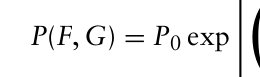
(Suhir, 2021), a simplified double exponential probability distribution function (DEPDF) for the probability of the human non-failure, when per- forming a particular mission or encountering an extraordinary situation is as follows:
"
!
!#
1 −G2
exp
1 −F2
Equation reproduced from the original PDF.
F2
0
0
In this equation G0 is the ordinary (low level, nonrandom) mental (cogni- tive) workload (MWL), F0 is the (also non-random) level of the human qualifications identified by his human capacity factor (HCF) and quantified by the HCF level, G and F are random and possibly high-level MWLs and HCFs occurring in actual flight or surgery conditions. As evident from the above governing equation, P0 is the probability of the human non-failure in ordinary MWL conditions, when G = G0. Indeed, at normal MWL level (G = G0) or at exceptionally high HCF level (F →∞) the probability of the human-non-failure is close to “one”. This probability in off-normal conditi- ons is always lower than in normal conditions, and this intuitively obvious fact is quantified by the introduced equation. If the MWL is extraordinarily high, the human will inevitably fail, no matter how high his/her HCF is, and this intuitively obvious fact is also quantified by the introduced governing equation.
A Pilot or a Surgeon does not have to be a Superman or a Superwoman to be Successful The calculated data based on the introduced equation shows also that the increase in the human capacity ratio F/F0 and/or in the mental workload ratio G/G0 above 3.0 has a minor effect on the probability of non-failure. This means particularly that a professional does not have to be trained to cope with an extraordinarily high MWL. He/she does not have to be a superman or a superwoman to successfully cope with a very high MWL level, but still has to possess adequate qualifications and experience (reflected by the level of his/her HCF), and should be trained in his/her profession to an extent that, when there is a need, he/she would be able to cope with an elevated mental workload by up to a factor of 3.0 higher than in the normal mental workload conditions. In other words, his/her human capacity factor in extraordinary situations (and the situations that a surgeon has to cope with are always “extraordinary”) should be at least by a factor of up to 3.0 higher than what is expected of a person of “ordinary skills in the art” or of a highly qualified individual in normal MWL conditions.
Systemic Structural Activity Theory (SSAT) and Human Performance Reliability Systemic-Structural Activity Theory (SSAT) (Bedny, G. and Bedny I., 2018, Bedny, G., 2015) views human activity as a complicated structure that unfold in time.
Surgeon’s Performance: An Analogy with Aircraft Pilot’s Challenges 23
It offers multiple measures of task complexity. Here we just want to men- tion one measure that reflects memory workload because it is important in the context of this paper.
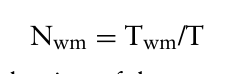
Twm quantifies the time for retaining current information in the working memory within the time T for the entire task performance.
Fraction of time for retaining current information in working memory in the time for the entire task performance is calculated as
Equation reproduced from the original PDF.
In the authors’ opinion, reduction of the memory workload during the per- formance of surgical procedures would improve the reliability and efficiency of such a procedure and reduce the stress on medical personnel.
FUTURE DEVELOPMENT AND CONCLUSIONS The authors do not claim, of course, that all the i’s are dotted and all the t’s are crossed by the taken simplified approach.
Plenty of additional, both analytical and computer simulation-based modeling, as well as experimental and clinical and statistical work should be done to “reduce to practice” the general idea of the need for quantifying, in one way or another, the numerous challenges that a surgeon faces in his/h- ers never-routine activity, in which the analogy with the pilot’s performance might be helpful.
Surgeons’ tasks are unique because they include high precision motor acti- ons, constant memory workload and decision making. Such combination makes activity of this type extremely complex. Complexity and reliability of task performance are interdependent characteristics. An increase in task complexity often result in a de-crease of reliability of its performance.
A surgeon has to work reliable under stress and when facing the work overload.
Future work should include experimental and statistical verification of the validity and fruitfulness of the suggested modeling approach, as well as development of the appropriate auxiliary experimental and modeling methodologies and test vehicles.
REFERENCES
Alexander C., Langub, L. W., & Rosen, D. (2014). “Watch it, do it, teach it”: Technology and early childhood field experiences. International Journal of Technology in Teaching and Learning, 10(2), 133-146E. Bedny, G.Z., Bedny, I.S. (2018) Work Activity Studies Within the Framework of
Ergonomics, Psychology, and Economics, CRC Press, FL: Taylor and Francis Group. Bedny, G.Z. (2015). Application of Systemic-Structural Activity Theory to Design and Training. CRC Press. Taylor & Francis Group. Cain B. (2007). A Review of the Mental Workload Literature, Report Contract
No.RTO-TR-HFM-121, Defense Research and Development, Canada, Toronto, Human System Integration Section, Toronto, Canada. Gluck, K.A. and Pew, R.W., eds. (2005). Modeling Human Behavior with Integrated Cognitive Architectures, Mahwah, NJ, Lawrence Erlbaum Associates.
24 Suhir and Bedny
Hollnagel, E. (1993). Human Reliability Analysis: Context and Control, Academic Press, London. Hyun MH, Lee CH, Kim HJ, Tong Y, Park SS. (2013). “Systematic review and
meta-analysis of robotic surgery compared with conventional laparoscopic and open resections for gastric carcinoma”. The British Journal of Surgery. 100 (12): 1566–78. Joseph K. Campbell and Cindy Johnson (1999). Learner centered approaches in medical education, British Medical Journal, Vol. 318, No. 7193, pp. 1272–1275. Kao L, Thomas E. (2008). “Navigating Towards Improved Surgical Safety Using
Aviation-Based Strategies”. J Surg Res. 145(2). Lehto M.R. and Buck, J.R. (2008). Introduction to Human Factors and Ergonomics for Engineers, Lawrence Erlbaum Associates, Taylor and Francis Group, New- York-London. Suhir, E. (2021). “Astronaut’s Performance vs. His/Hers Human-Capacity-Factor
and State-of-Health: Application of Double-Exponential-Probability-Distribution Function”, Acta Astronautica, v. 178. Suhir, E., Karwowski, W., Bedny, I. (2021). “Some Major Human Issues in Aerospace Engineering: Review and Extension”, International Ergonomics Associate (IEA) Triennial Conference, Vancouver, CA, June 13–18, 21st Congress of the IEA, Nancy L. Black, W. Patrick Neumann & Ian Noy, eds. Lecture Notes in Networks and Systems. Vol. III: Sector Based Ergonomics, Springer. Suhir, E. and Paul, G. (2021). “Probabilistic HSI Models”, Ibid. Suhir, E. (2020). “When Instrumentation and Human Performance Contribute Join-
tly to the Outcome of a Human-System-Integration (HIS) Mission: Brief Review”, Ibid. Suhir, E. (2019). “Helicopter-Landing-Ship: Undercarriage Strength and the Role of the Human Factor”, ASME Offshore Mechanics and Arctic Engineering (OMAE) Journal, 132 (1). Suhir, E. (2014). “Three-Step Concept in Modeling Reliability: Boltzmann- Arrhenius-Zhurkov Physics-of-Failure-Based Equation Sandwiched Between Two Statistical Models”, Microelectronics Reliability Journal. Suhir, E. (2016). “Analytical Modeling Occupies a Special Place in the Modeling
Effort”, Short Comm., J. Phys. Math., 7(1). Suhir, E. (2017). “Human-in-the-Loop: Application of the Double Exponential Probability Distribution Function Enables Quantifying the Role of the Human Factor”, Int. J. of Human Factor Modeling and Simulation, v. 5, No. 4. Suhir, E. (2013). “Miracle-on-the-Hudson”: Quantified Aftermath”, Int. J. of Human
Factors Modeling and Simulation. Suhir, E. (2019). “Assessment of the Required Human Capacity Factor (HCF) Using Flight Simulator as an Appropriate Accelerated Test Vehicle”, Int. J. of Human Factor Modeling and Simulation, 7(1). Suhir, E. and Yi, S. (2017). “Probabilistic Design for Reliability (PDfR) of Medical
Electron Devices: When Reliability is Imperative, Ability to Quantify it is a Must”, Journal of Surface Mount Technology, 30(1). Suhir, E. (2019). “Adequate Trust, Human-Capacity-Factor, Probability- Distribution-Function of Human Non-Failure and its Entropy”, Int. J. of Human Factor Modeling and Simulation, v. 7, No. 1. Suhir, E. (2019). “Mental Workload vs. Human Capacity Factor: A Way to Quantify Human Performance”, in G.Z.Bedny and I.S.Bedny, eds. Applied and Systemic- Structural Activity Theory, CRC Press. Taatgen, N. (2002). “A Model of Individual Differences in Skill Acquisition in the
Kanfer-Ackerman Air Traffic Control Task”, Cognitive Systems Research. Tversky, A. and Kahneman, D. (1974). “Judgment Under Uncertainty: Heuristics and Biases”, Science, p. 185.
LISTED IN THE AHFE DIGITAL BOOKSTORE CATALOGUE
Explore the complete digital volume
Neuroergonomics and Cognitive Engineering
Read this individual research paper free through the original publisher, or explore the full digital proceedings book.
ISBN 978-1-958651-18-6
Explore this ISBN in the AHFE Bookstore ↗Listed in the July 2026 bookstore catalogue; search by ISBN to confirm current availability · Digital book purchase optional