Aimee Roundtree (2022). Speech Recognition Technology for Users with Apraxia: Integrative Review and Sentiment Analysis. In: Human Factors in Accessibility and Assistive Technology. AHFE Open Access, vol. 37, pp. 125–138. https://doi.org/10.54941/ahfe1001651
This research exposes the need for more user experience and usability research on speech recognition software for users with apraxia, a speech disability. It provides feedback about common speech recognition devices from users with apraxia and speech impediments. The relatively high prevalence of apraxia and other speech disorders suggests that a large population may need technology to help improve quality of life and socialization. Speech and audio processing software might help improve both. Voice-controlled software and personal assistants can only improve this community’s lives if they provide parity of user experience. The article provides an overview of research insights and public feedback to help designers create more user-centered speech recognition software for this population. First, the article offers an integrative review of article findings from 2009 to 2020. Only 9 of 120 provided sufficient detail about the 20% of the users diagnosed with apraxia. The studies covered therapeutic rather than mundane settings. Only about a fifth of the users and participants recruited for the studies were diagnosed with apraxia of speech, a particular disorder that directly impacts speech recognition accuracy and precision. The samples were often heterogeneous in speech diagnosis, gender, and age. Others were homogeneous in terms of race and ethnicity. These factors are important because they may impact tone, texture, intonation, and other speech detection variables. Study methods were primarily orthodox user testing involving task scenarios. Second, the research gathers user feedback from users with speech impediments on Twitter. Most of the 143 tweets were negative about the performance of speech recognition technologies. There was far more negative feedback about the technologies and their inability to understand users with apraxia and speech impediments. The tweets did not reveal a wide range of activities, suggesting that the technology is only marginally useful to users with apraxia or speech impediments. Future studies should include more homogeneous samples in terms of speech conditions and more heterogeneous samples in terms of demographics. Future studies should also gather more direct feedback from users and compare technologies, which might require modifying user experience and usability research methods. Furthermore, more research studies reporting product design for this community should detail the user experience and usability testing involved. Finally, product designers should not only test products with diverse populations, including those with disabilities, but they should also test in mundane and therapeutic settings and applications and develop personae to help them keep in mind their particular needs. While recruiting and retaining these users might be difficult, any extra effort will pay dividends in product quality and marketability.
This integrative review examines the user experience and usability research on speech recognition software for users with apraxia. Apraxia is a disor- der that, among other things, can make it hard to speak (Parker 2021). Apraxia is a broad neurological disorder that sometimes affects speech pro- duction, at which point it is referred to as speech apraxia. No good data exists concerning apraxia in different age groups or the prevalence of apra- xia versus apraxia of speech (Chawla 2020). However, it is one of the most common speech disabilities in children. A recent study confirmed that one child in 1000 has childhood apraxia of speech (Shriberg et al. 2019). General apraxia is also estimated to be common in older age groups with high frequencies of stroke and dementia, leading to apraxia of spe- ech. Apraxia of speech makes it difficult for people to make specific motor movements necessary for full speech articulation or the process of forming words. The nature of apraxia makes it an excellent site for technological intervention. Its prevalence is high among a growing number of children. It is also high among speech disorders acquired by older adults due to ill- ness and aging. The relatively high prevalence of apraxia of speech and other speech disorders underscores the potential need to help improve the
population’s quality of life and socialization. Speech recognition and pro- cessing software might help with both. However, voice-controlled software and personal assistants can only enhance lives if they provide parity of user experience.
User experience research and usability research of speech recognition and voice-controlled technologies are critical, given the growing demand in the market. The global speech and voice recognition market is projected to rise at a compound annual growth rate of 19.8% to over $25 billion by 2026 (Fortune Business Insights 2020). As the market grows, so does the likelihood that these technologies will be leveraged and used by disability communi- ties. Furthermore, disability communities might benefit from therapy and quality of life provided by new technologies. New technologies may make tasks and processes more accessible. Recent coverage has identified some limitations in speech and audio processing software. For example, the Wash- ington Post reported that Alexa and Google Assistants are 30% less likely to understand non-American accents (Harwell 2018). Furthermore, Slate reported several cases of users with speech impediments for whom voice- controlled software failed (Corcoran 2018). Users with cerebral palsy and stuttering, for example, report experiencing great difficulty with Alexa, Goo- gle, and other popular personal assistant technologies working for them. The extent to which these pain points persist across communities of users with speech differences and impairments is a lingering question that remains unanswered by the literature. One study of voice-controlled personal assi- stants by people with disabilities reviewed several Amazon reviews of these technologies by self-reported people with disabilities ranging from visual impairment, motor or mobility impairment, speech impairment, cognitive impairment, and hearing loss (Pradhan et al. 2018). This study also found that almost 20% of all the reviews mentioned limitations, criticisms, or sug- gestions such as missing features, limited use, and affordability. A review of ambient assisted living products designed for users with disabilities, inclu- ding apraxia, also enlisted user tests (Colomer et al. 2014). The study found that 67 participants could use the technology as expected, and ten sessi- ons were discontinued due to system errors (Colomer et al. 2014). It is important to consider the ethics and usability of new software and techno- logies to serve better all communities who might benefit (Lazar et al. 2017, Roundtree 2021). These studies suggest that disabilities, particularly speech conditions, might negatively impact the user experience of voice-controlled technology.
This integrative review extends the research by providing an overview and synthesis of existing findings on this subject. It also analyzes user feedback posted on social media. In collecting data for the review, the study exposes major limitations in reporting and coverage of usability and UX in this disa- bility community. The research question for the review was as follows: What does current research tell us about the user experience and usability of speech recognition software for people with apraxia of speech? What is the quality of reporting of this body of research? What does user feedback on Twitter tell us? What are future directions?
Speech Recognition Technology for Users with Apraxia 127
METHODS
This study employs integrative review methods. An integrative review invo- lves using research databases to compile and synthesize systematically the literature published on a topic. The integrative review allows researchers to integrate qualitative and quantitative findings (Whittemore and Knafl 2005).
Study characteristics included peer-reviewed articles and excluded theses and books for this review. They included English language peer-reviewed arti- cles published from 2009 to 2020. I used EBSCO, Web of Science, Scopus, ACM, IEEE, and Google Scholar to identify sources, and library holdings limited me by accessing the full-text versions of the articles. Search terms included the following: speech, voice, and audio recognition and control, apraxia, user experience, user test, usability, users, and participant (root words). Databases were limited to finding these words in the abstract and titles of the article to isolate those studies that would most likely contain per- tinent information. Database previews and article abstracts were screened for eligibility.
Once eligible studies were screened, I read the entire article to extract infor- mation, including the number and demographics of participants, the methods used, and study findings. Articles that did not pertain and were not written in English were eliminated. Student assistants and I organized and synthesi- zed details from the literature with a spreadsheet. Inductive coding analysis and consensus were used to handle and interpret data and combine the study results (Fereday et al. 2006). To analyze the impact and quality of the articles, I also used Web of Science and Google Scholar to find how many times each included article has been cited and to determine each article’s h-index, which measures the productivity and citation impact of the publications.
To cross-reference user feedback, I also gathered Twitter content about apraxia and speech impediments about Siri, Bixby, Google Assistant, Alexa, and Cortana, speech recognition software deployed in everyday life. We used the names of the programs and the keywords apraxia and speech impediment to search Twitter Advanced Search. Each tweet was read and characterized as positive and negative using close reading. LIWC and R-Studio were used to analyze the content. Linguistic Inquiry and Word Count (LIWC) codes files on several dimensions (Dey et al. 2018). Tweets received a set of 87 scores, each indicating the percent of occurrence relative to the total number of words in the file. RStudio is an open-source R programming language with a graphic user interface that facilitates R libraries and coding access. The interface supports direct code execution and a variety of robust tools for plotting, viewing history, and debugging. The R packages OpenNLP, NLP, and CRAN Task View enabled calculations of n-gram and word frequencies. N-grams are contiguous sequences of n items from a given sample of text or speech; they can determine sentiment. NLP methods confirmed the close reading using topic modeling to confirm categories.
RESULTS
The keyword search yielded a total of 120 articles across all databases. Seve- ral articles were eliminated for the following reasons: Some were inaccessible
128 Roundtree
(n=2). Some were in a language other than English (n=3). Some only menti- oned apraxia rather than it being the focus of the study (n=39). Some only mentioned speech recognition software without it being the focus of the study (n=8). Some included study citations rather than original user experience, usability testing, or research (n=56). Two were repeats of other articles, and one was not peer-reviewed. Nine articles met all the inclusion criteria for this integrative review.
Study Participants The articles included a total of 484 participants (median=20.5). See Table 1. The participants ranged from children to the elderly, and they had a vari- ety of conditions, including apraxia and other speech conditions (n=109, 22.5%). One study mentioned apraxia as a target condition for the appli- cation but tested users with aphasia, which impairs linguistic capabilities differently than apraxia. Some forms of aphasia make constructing clear grammatical sentences difficult. These issues can also thwart speech recogni- tion technologies’ expected use and accuracy, but differently from apraxia. Neither apraxia nor aphasia was represented in the studies for their analyses. It was unclear whether the participants were diagnosed with apraxia in three studies. Only two studies mentioned and considered the level of disability (i.e., mild to severe). Four studies recruited children as participants. Three included therapists as a part of testing, and two included parents as a part of testing. Only one study considered participants with comorbidities and other issues that might impact user experience and usability. Five studies also did not report gender demographics, and no studies reported race or ethnicity demographics, which might affect user experience and usability.
Study Methods
Table 2 summarizes the study methods. Most studies tested some form of game or application for therapy (n=7). The exceptions were a study of user attitudes about a voice-controlled personal assistant and another about a rehab system for assisted living facilities. Two articles used formative and summative or pre-and post-tests. Two involved user engagement for more than one session—one asked the users to engage with the software for two weeks and another for a month. Most of the studies were typical usability tests, including some form of task scenario, product engagement, or obse- rvation during product use. One article was a retrospective study that used content analysis to analyze pre-existing reviews of users with disabilities. Four of the studies were tested with users under therapist supervision. Five studies solicited standard usability feedback on user satisfaction, employing the system usability scale or its dimensions to assess user satisfaction with the interface.
Six of the studies evaluated both technology performance and user atti- tudes. Performance metrics included automatic speech recognition-human agreement, task completion and duration, recording, rhythmic, and spe- ech accuracy. User attitude metrics included ease of use, likes, dislikes, and interest level. One study evaluated an adapted version of the technology
Speech Recognition Technology for Users with Apraxia 129
Table 1. Participant numbers and demographics.
Table available in the original PDF paper.
Study N Demographics Ahmed et al. 2018 23 10 children with apraxia, mild to severe. (9 male and 1 female. Mean age: 7.9 years. Range: 6–11 years.) 6 typically developing children (1 male; 5 female; mean age: 8.7 years; range: 7–11 years). 7 speech-language pathologists (7 female; median experience: 12 years; ages 8–28 years) Ballard et al. 2019 5 5 participants with apraxia and aphasia secondary to stroke Hair et al. 2018 21 21 English speakers. 14 children with speed disorders ranging from mild to severe (7 motor-speech and 7 phonological impairments; 13 male and 1 female; mean age: 7.4 years, range: 4-12 years old).7 children reported by parents to be TD (4 male and 3 female; mean age: 8.7 years; range: 5-12 years old). Lan et al. 2014 6 6 children. 5 male. Ages 4-12 years. 3 CAS, 3 control. Pastorino et al. 2014 36 36 users in groups according to their age and neurological condition. 27 typically developing. 9 with apraxia and action disorganization syndrome. Mean age = 51.20 years. 21 females. 15 males. Pirovano et al. 2014 7 7 subjects between ages 68 and 82. With therapists and physical comorbidities, such as past strokes, hypertension, heart problems (pacemaker or arrhythmia), arthritis, hip prosthesis, and glaucoma with macular dystrophy. Pradhan et al. 2018 346 346 Amazon Echo reviews that include users with disabilities: visual impairment (37.9% of reviews), motor or mobility impairment (30.6%), speech impairment (13.6%), cognitive impairment (11.8%), and hearing loss (4.6%) Shalash et al. 2015 20 20 in two groups of users: 5 therapists and 15 parents as one group and 15 children their ages range from two and half years to seven years as second group Shepherd 2014 20 Tested on people with normal speech to verify. Pilot study on speakers with fluency deficits. Say thirty words depicted using photographs of various objects. Pre-test & post-test for accuracy.
acceptance model, which asked about dimensions in closer alignment with user experience research, such as whether the technology will enhance job performance.
Study Findings
Table 3 gathers the study findings. All studies found improved technology and user performance, such as improved word production, automatic speech recognition-human agreement, improved word production accuracy, about 80% success rate, and positive spoken and rhythmic accuracy trends. Howe- ver, five studies reported problems with performance, such as ASR-human
130 Roundtree
Table 2. Methods and evaluation metrics.
Table available in the original PDF paper.
Study Tech Methods Evaluation Ahmed et al. 2018 Speech driven mobile games Task scenarios. During therapy. 1 session.
Automatic speech recognition-human agreement. Word length. Likes. Dislikes. Ease of Use. Interest level. Ballard et al. 2019
Tablet app for therapy
Summative test. During therapy. Several sessions (one month).
Automatic speech recognition-human agreement. Word length. Satisfaction. Hair et al. 2018 Speech therapy game
Hierarchical Task Analysis. 1 session.
Play and survey. 1 session. Satisfaction
Concentration. Completion. Satisfaction. Lan et al. 2014 Mobile game for speech timing, prosody skills Audio cue and recording accuracy. Satisfaction.
Technology acceptance. Ease of use. Success rate. Pradhan et al. 2018
Voice-controlled personal assistants Shalash et al. 2015 Therapy app Usability tests. Therapist supervision. 1 session
Rhythmic & speech accuracy.
Completion. Ease of use. Clarity. Shepherd 2014 Therapy game Pre- & post-test. In game scores. 2 weeks.
disagreement, particularly considering apraxia severity, interaction errors, equilibrium problems, limited control over speech output, and some com- pletion errors. Despite these problems, participants in six studies reported positive user experience and satisfaction, including finding the technology fun, interesting, enjoyable, and potentially useful. One article only reported user attitudes about technology effectiveness and efficiency. Another did not report user experience or satisfaction information.
Most reported user enjoyment of some kind. However, those five studies only comprised 84 participants out of 484 across all studies. Two studies reported therapeutic improvement for participants. Two others reported some form of adverse event and challenges for participants, such as equi- librium problems. Only two reported that participants found the technology easy. Another reported ease for younger users and difficulty for older users.
Study Quality Reporting quality was low in most of the studies. All the articles were mis- sing some form of information or another. Many failed to provide basic information about users or enough details about the methods (including samples of questions asked). Furthermore, not all included user experience variables, such as satisfaction or system usability scales that focus more on users’ immediate attitudes about the interface than therapeutic outcomes.
Speech Recognition Technology for Users with Apraxia 131
Table 3. Findings.
Table available in the original PDF paper.
Study Findings Ahmed et al. 2018 Users said speech-controlled games are interesting & fun, despite ASR–human disagreements. Automatic speech recognition–human agreement was higher for SLPs than children, similar between typically developing & apraxia unaffected by apraxia severity (77% TD, 75% CAS = incorrect; 51% TD, 47% CAS, 71% SLP = correct). Manual stop recording yielded higher agreement than automatic. Word length did not influence agreement. Ballard et al. 2019
ASR–human agreement on accuracy averaged about 80%. All had improved word production accuracy over time with the ASR-based feedback (after 1 month). All reported enjoying using the app with speech pathologist support. Hair et al. 2018 Most children indicated that doing exercises after completing each level was less disruptive and preferable to doing exercises scattered through the level. Children liked having perceived control over the game (character appearance, exercise behavior) Lan et al. 2014 Six said it was “fun.” One said it was a “bit hard to control at times.” One said it was “not as hard.” Users with CAS liked the assisted mode; controls liked the free mode. Three did not like the headset microphone. Pastorino et al. 2014
Audio cue selected nearly 80% of the time. Text cue selected 20%. 90.1% of sessions were correctly recorded, with interaction errors. AADS patients solicited technical support (M = 3.0, SD = 1.2). Mental workload very low for young (M = 1.2, SD = 0.4), elderly (M = 1.7, SD = 1.4). Arduous (M = 2.6, SD = 1.4) for AADS patients. Pirovano et al. 2014
All the subjects found the games engaging and stimulating and rated them positively. The success rate approached 80%. No pain or stress was reported except for a subject with equilibrium problems. Pradhan et al. 2018
Some accessibility challenges exist; limited control over speech output settings for users with hearing loss. Users with disabilities utilize the Amazon Echo, including for unexpected cases such as speech therapy and support for caregivers. Shalash et al. 2015
All five therapists and 13 of 15 parents did all the tasks directly and navigated easily without mistakes. Fourteen of 15 children played level 1 in a short time. 12 of 15 played level 2 in a short time. 11 of 15 played level 3 correctly. Generally, the children’s impression was good, and they liked the animated picture response a lot. Shepherd 2014 There was a definite upward trend in their rhythmic and speech accuracy. There was a positive trend showing participants’ abilities improved. Small trial shows how spoken accuracy increased. A trial showed how rhythmic accuracy increased after playing the game. The in-game scores showed that spoken accuracy became better after playing.
The articles also had low citation and h-index scores. The content analy- sis was cited the most by others (n=42). It achieved the highest h-index score of 5. The others were cited between 0 and 9 times only, and they rea- ched no more than a one in an h-index score. All but one of the articles
132 Roundtree
Table 4. Study quality.
Table available in the original PDF paper.
Study Cites h-index IRB COI Ahmed et al. 2018 5 1 1 1 Ballard et al. 2019 0 0 1 1 Hair et al. 2018 4 1 1 1 Lan et al. 2014 11 0 0 1 Pastorino et al. 2014 7 1 1 1 Pirovano et al. 2014 9 1 0 1 Pradhan et al. 2018 42 5 0 0 Shalash et al. 2015 1 0 0 1 Shepherd 2014 0 0 0 1
declared conflicts of interest or acknowledged funding sources. Only four of the articles—just under half—reported receiving permission from Institutio- nal Review Boards, Committees from the Protection of Human Subjects, or ethics committees to test users.
User Feedback There was virtually no user feedback provided in the research articles, and the research articles reported primarily clinical uses of speech recognition rather than everyday uses. Twitter content provided some insight into user feed- back. The search yielded 247 tweets from November 30, 2011, to January 23, 2021. Forty-nine (n=49) of the tweets did not pertain to users with apra- xia or speech impediments; they mentioned the names of people rather than speech recognition technologies. Fifty-five (n=55) tweets were of users who felt that the robot voice of the speech recognition software itself had a spe- ech impediment. These tweets fell outside of the scope of this study—namely, understanding the challenges faced by apraxia users use speech recognition technologies in their daily lives. Overall, 143 tweets reflected the attitudes about these technologies held by users with self-described, self-reported apra- xia or speech impediments. Of these, 20 tweets reported a combination of both positive and negative evaluations by comparing two different techno- logies or by describing how frustration with the technologies instilled pride or positive feelings about themselves or their family members with apraxia or a speech impediment. Because some tweets contained both positive and negative sentiment, the total close reading count of the overall evaluations was larger than the number of tweets.
Within the 143 tweets, there were 116 (81.1%) negative evaluations and 47 (32.9%) positive evaluations. The evaluations were derived from close reading each tweet and manually coding the overall sentiment and overall technology assessment. Not all tweets indicated the use for which the tech- nologies were deployed. However, some users discussed how they use these speech recognition technologies for general speech tasks (n=161), playing songs (n=8), writing (n=2), and playing videos (n=2). See Table 5.
Positive evaluations included complements for devices that understand users with disabilities. For example, this user was pleasantly surprised that
Speech Recognition Technology for Users with Apraxia 133
Siri understood her child with a speech impediment: “My child was playing with my phone, and I was afraid Siri wouldn’t understand him. But she did. Loud and clear. #Apraxia #speech #CAS.” Still, others reported how the pre- cision with which they had to speak to these technologies helped treat their speech impediments: “I think writing my jokes using Siri is starting to fix my speech impediment.” An article reporting one person’s memoir about how the technology seemed to cure their child was retweeted 22 times: “Alexa Cured My Daughter’s Speech Impediment http://dlvr.it/PdNjjw.” Some users percei- ved that everyday speech recognition technology had therapeutic benefits.
In evaluations containing both positive and negative feedback, users sha- red that one technology was better than the other at understanding users with disabilities. For example, this user expressed frustration at using other’s technology because their technology was not imprinted with their unique voice recognition: “I hate using other people’s Siri because only my Siri understands my weird speech impediment.” Still another compared Siri to Cortana: “I must say I’m impressed with Cortana - it seems to under- stand everything I say, unlike Siri, which makes me feel I have a speech impediment.” Finally, other tweets with positive and negative evaluations praised the tenacity and effort of the user with apraxia and speech impe- diments for persisting and finding affordances that help the technology work for them. For example, a parent expresses pride in their child’s persistence in using Alexa despite the child’s speech impediment: “8yo daughter has Down syndrome. Speech hard to understand (apraxia), yet she got @ama- zon Alexa to play her favorite @Eminem song this am!” Users with speech impediments used affordances and workarounds to use speech recognition technology.
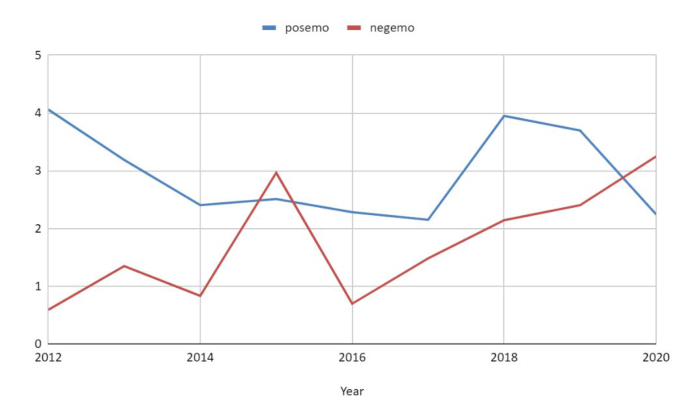
Finally, the negative feedback expressed frustration at the technology’s inability to understand the voices of those with a speech impediment and with apraxia. One user called the technology useless to them: “Having a speech impediment makes Siri pretty much useless. Actually, very useless.” Another complained about Google Assistant: “Using google assistant with a speech impediment is terrible.” Still others complained about Alexa: “If you have any sort of speech impediment, then dealing with @amazon Alexa can be very disheartening and infuriating.” Every technology—Google Assi- stant, Cortana, Bixby, Alexa, and Siri—had more negative evaluations than positive ones. Overall negative words used in the tweets increased over time from 2010 to 2021, except for one spike in positive feedback in February
134 Roundtree
Figure 1: Positive and negative sentiment over time.Table 6. Sentiment per product.
2019 when the link to the memoir about the technology during a speech impediment was retweeted several times. See Figure 1.
Ninety tweets received some form of interaction, including replies, retwe- ets, and likes. The interaction score was derived by adding replies, retweets, and likes. There were 671 interactions. Some tweets with interactions contai- ned both positive and negative evaluations; therefore, the numbers of positive and negative interactions exceeded the raw total of tweets.
Overall, interactions were more negative (87.8%) than positive (26.7%). Alexa and Siri received the most interactions. Alexa received a more signifi- cant percentage of positive interactions than did Siri.
CONCLUSION
This research revealed that much more research is necessary for helping voice control and speech recognition software to better serve communities with speech therapy in general and apraxia of speech in specific. Overall, publi- shed studies are limited to clinical contexts for users with apraxia, where the technology is meant to help treat and train pronunciation and diction. The studies do not examine how users with apraxia deploy these technologies in
Speech Recognition Technology for Users with Apraxia 135
their personal lives for their quality of life. The studies suggest that the tech- nology has a minor benefit for users with apraxia in clinical settings. Still, the studies do not answer to what extent speech recognition systems work for users with apraxia.
Current research does not tell us about speech recognition software’s user experience and usability for people with apraxia of speech. It reports clini- cal applications of the technology for therapeutic purposes. The quality of the reporting could be significantly improved insofar as current articles were missing information and were not published in prominent journals. Future research should provide reporting guidelines and investigate the everyday use of the technology by people with apraxia and other speech impedi- ments. Speech recognition systems might work for clinical purposes to help in therapeutic activities for people with apraxia. Still, it is unclear if users with apraxia face more challenges with everyday use than their counterparts without speech impediments. It was also unclear from the literature how these systems fail this population in everyday settings. Future studies should include formative and summative investigations, user tests, feedback, and in situ observations, to determine more clearly how these systems fail and what changes are necessary to improve the performance of such speech recognition systems for users with apraxia.
The analysis of tweets of feedback from users with apraxia and speech impediments shows room for improving the precision and accuracy of these technologies as used in the lives of people with apraxia and speech impe- diments. There was far more negative feedback about the technologies and their inability to understand users with apraxia and speech impediments. The tweets did not reveal a wide range of activities users with apraxia and spe- ech impediments undertake. This finding might suggest that the technology is only marginally helpful to users with apraxia or speech impediments or that users have abandoned the hope of using these technologies for anything but basic functions. The negative feedback outweighed positive feedback, but positive feedback suggested differences in the programming and responsive- ness of name brand speech recognition products to the needs of users with apraxia and speech impediments. Mixed feedback also indicates that, for some conditions, it might be the case that repetition in interaction with the technologies might provide some form of practice or therapy for some, but it presents a point of frustration and inequity for others. Future research should deploy user experience and usability research methods to gather observatio- nal, formative, and summative user feedback to learn how users with apraxia use and adapt these technologies. It should also compare the effectiveness of different speech technologies used with apraxia in daily life.
Of 120 articles referencing the subject matter, only 9 provided enough detail to suggest that the technology developed for this community was tested with users in the community. Of the studies that met inclusion criteria, only about a fifth of the users and participants recruited were diagnosed with apra- xia, a very particular speech disorder that directly impacts speech recognition accuracy and precision. Furthermore, while the samples were often hetero- geneous regarding speech diagnosis, gender, and age, the sample may have been homogeneous in terms of race and ethnicity. These factors are essential
136 Roundtree
to consider because they may impact tone, texture, intonation, and other spe- ech detection variables. Study methods were primarily orthodox user testing involving task scenarios. However, most of the applications were designed for use in or for therapy rather than for use in the daily lives of users with apraxia.
The samples and methods of most of the studies were heterogeneous, which complicates generalizing the findings to the apraxia community spe- cifically or at large. They were diverse in their sampling as well. The research also employed a mixed design, where participant health condi- tions or outcomes were pertinent in some cases, and the effectiveness of speech recognition was pertinent in others. In instances where therapists were tested alongside disabled users, the design was specific to clinic set- tings rather than quotidian settings. The diversity also made meta-analysis findings more challenging to obtain. Most of the studies examined therapeu- tic rather than lifestyle applications. And there were fewer longitudinal tests where user interactions were observed over time rather than in one session. These details suggest that we have more to learn from disabled users’ daily interactions and engagement with speech recognition and voice-controlled technology.
Only one study examined voice-controlled personal assistants and other, more pervasive forms of speech recognition technologies. Furthermore, some of the studies were with users and therapists, and only two requested that users engage with the software over several sessions and weeks. In this way, the research studies do not help confirm or provide helpful information about the in-situ experience of users with apraxia. The therapy-focused applications also impacted the findings insofar as all studies reported user and techno- logy performance metrics meant to confirm the integrity and internal validity of the software. Furthermore, we should also understand the almost unani- mous user satisfaction through the lens of the therapeutic purposes of the applications. Users might have higher standards, expectations, and needs for technology that they use every day for their quality of life rather than for therapy.
Finally, overall, the studies did not report enough details to confirm the quality of the findings. These factors might also have impacted the articles’ overall low h-index and citation numbers. It is essential to generate more insights and findings from user experience and usability research of people with disabilities to ensure parity and accessibility of the everyday technology that impacts and potentially improves the quality of life.
Recruitment can be a barrier when testing in disability communities, as can administering user tests in these communities (Shepherd 2014). Standard protocols may require modifications and accommodations, as might unique adaptations for informed consent and scheduling sessions. User testing can take more time and require changes to traditional research methods. The researchers of the articles included in this review might have encountered these barriers. However, including diverse participants, especially people in disability communities that could very much benefit from new technologies, is vital throughout the design process. Their input can improve technology design in ways that designers do not anticipate.
Speech Recognition Technology for Users with Apraxia 137
Future studies should include more homogeneous samples in terms of spe- ech conditions and more heterogeneous samples in terms of demographics. Furthermore, more research studies reporting product design for this com- munity should detail user experience and usability testing. Finally, product designers should test products with diverse populations, including those with disabilities, and develop personae to help them keep in mind their needs. While recruiting and retaining these users might be difficult, any extra effort will pay dividends in product quality and marketability.
REFERENCES
Ahmed, B., Monroe, P., Hair, A., Tan, C. T., Gutierrez-Osuna, R., & Ballard, K.
J. (2018). Speech-driven mobile games for speech therapy: User experiences and feasibility. International journal of speech-language pathology, 20(6), 644–658. Ballard, K. J., Etter, N. M., Shen, S., Monroe, P., & Tien Tan, C. (2019). Feasibility of automatic speech recognition for providing feedback during tablet-based tre- atment for apraxia of speech plus aphasia. American journal of speech-language pathology, 28(2S), 818–834. Booher, H. R., & Minninger, J. (2003). Human systems integration in army systems
acquisition. Handbook of human systems integration, 663-698. Booher, H. R. (2003). Handbook of human systems integration (Vol. 23). John Wiley & Sons. Chapanis, A. (1996). Human factors in systems engineering. John Wiley & Sons,
Inc.. Colomer, J. B. M., Salvi, D., Cabrera-Umpierrez, M. F., Arredondo, M. T., Abril, P., Jimenez-Mixco, V., ... & Medrano, A. (2014). Experience in evaluating AAL solutions in living labs. Sensors, 14(4), 7277–7311. Corcoran, M. (2018). When alexa can’t understand you. Slate (online), Oct. Dey, A., Jenamani, M., & Thakkar, J. J. (2018). Senti-N-Gram: An n-gram lexicon
for sentiment analysis. Expert Systems with Applications, 103, 92-105. Fereday, J., & Muir-Cochrane, E. (2006). Demonstrating rigor using thematic analysis: A hybrid approach of inductive and deductive coding and theme development. International journal of qualitative methods, 5(1), 80–92. Folds, D., Gardner, D. L., & Deal, S. (2008). Building up to the human systems
integration demonstration. Insight, 11(2), 15–18. Friedenthal, S., Moore, A., & Steiner, R. (2014). A practical guide to SysML: the systems modeling language. Morgan Kaufmann. Hair, A., Monroe, P., Ahmed, B., Ballard, K. J., & Gutierrez-Osuna, R. (2018, June).
Apraxia world: A speech therapy game for children with speech sound disorders. In Proceedings of the 17th ACM Conference on Interaction Design and Children (pp. 119–131). Harwell, Drew. (2018) The Access Gap. Washington Post. Retrieved from https://www.washingtonpost.com/graphics/2018/business/alexa-does-not- understand-your-accent/ Honour, E. C. (2006, July). 2.3. 1 A Practical Program of Research to Measure Systems Engineering Return on Investment (SE⣳ROI). In INCOSE International Symposium (Vol. 16, No. 1, pp. 299–308). Lan, T., Aryal, S., Ahmed, B., Ballard, K., & Gutierrez-Osuna, R. (2014, October).
Flappy voice: an interactive game for childhood apraxia of speech therapy. In Proceedings of the first ACM SIGCHI annual symposium on Computer-human interaction in play (pp. 429–430).
138 Roundtree
Lazar, J., Feng, J. H., & Hochheiser, H. (2017). Research methods in humancomputer interaction. Morgan Kaufmann. Meilich, A. (2008). INCOSE MBSE Initiative Status of HSI. MBSE Activity (Presen-
tation). Pastorino, M., Fioravanti, A., Arredondo, M. T., Cogollor, J. M., Rojo, J., Ferre, M., ... & Wing, A. M. (2014). Preliminary evaluation of a personal healthcare system prototype for cognitive eRehabilitation in a living assistance domain. Sensors, 14(6), 10213–10233. Pirovano, M., Mainetti, R., Baud-Bovy, G., Lanzi, P. L., & Borghese, N. A.
(2014). Intelligent game engine for rehabilitation (IGER). IEEE Transactions on Computational Intelligence and AI in Games, 8(1), 43–55. Pradhan, A., Mehta, K., & Findlater, L. (2018, April). “ Accessibility Came by Accident” Use of Voice-Controlled Intelligent Personal Assistants by People with Disabilities. In Proceedings of the 2018 CHI Conference on human factors in computing systems (pp. 1–13). Roundtree, A. K. (2020). ANT Ethics in Professional Communication: An Integrative
Review. American Communication Journal, 22(1). Shalash, W. M., Sait, N., & Hashem, D. (2015). Three stagesA Interactive System for Solving Children Communication Disorder. International Journal of Computer Applications, 130(16). Shepherd, J. J. (2014). Benefits of video games in multidisciplinary scientific research
(Doctoral dissertation, University of South Carolina). Taubman, P. (2008). Top engineers Shun Military; concern grow. The New York Times, 25. Whittemore, R., & Knafl, K. (2005). The integrative review: updated methodology.
Journal of advanced nursing, 52(5), 546–553.
LISTED IN THE AHFE DIGITAL BOOKSTORE CATALOGUE
Explore the complete digital volume
Human Factors in Accessibility and Assistive Technology
Read this individual research paper free through the original publisher, or explore the full digital proceedings book.
ISBN 978-1-958651-13-1
Explore this ISBN in the AHFE Bookstore ↗Listed in the July 2026 bookstore catalogue; search by ISBN to confirm current availability · Digital book purchase optional