Luisa Barreto, Hugo Gonçalves (2022). Language and Visual Perception as a Communication tool for Children with Autism Spectrum Disorders. In: Human Dynamics and Design for the Development of Contemporary Societies. AHFE Open Access, vol. 25, pp. 361–367. https://doi.org/10.54941/ahfe1001409
This study aims to create a tool to facilitate pedagogy for children with autism spectrum disorders, with a primary focus on investigating how different alternative communication systems can improve the daily lives of these children.Autism is a psychological disorder that expresses itself in the development of different degrees of affectation of the individual in relation to family and social interactions, revealing very specific behavioral characteristics, and deficits in communication and language. Due to the difficulty of diagnosing this pathology in the first years of a child's life, the treatments implemented are not always the most appropriate. On the other hand, there are several degrees of development of the disease, which are relevant to their ability to interact with people and the world around them. Therefore, and in association with an early diagnosis, it is necessary to find ways to stimulate them towards social interaction and the development of self-esteem and communication, through didactic-pedagogical monitoring. It is estimated that autism affects one in every 160 children in the world, where pedagogical programs do not contemplate the needs of these children, they become discriminated and segregated from the community.The main goal of this study is to create a pedagogical object adapted to individuals with cognitive disabilities, particularly children with autism spectrum disorders, allowing them to develop their cognitive and interaction skills with others. With the support of studies and institutions that work with children with autism spectrum disorders, information was collected to identify which visual elements are more stimulating and provide interaction with other children.Having Communication Design as a tool for creating communication objects, it was concluded that the best way to provide this interaction would be with the creation of a children's storybook suitable to the interests of children with autism spectrum disorders.Thus, a character Miguelito, who travels through the stars and planets, was created. "Miguelito's Journey" is characterized by a specific language, with the objective of improving and adapting its characteristics as much as possible to the perception capacities of children with cognitive disorders in order to facilitate communication between them. The book/game was presented to a sample of five children with autism, with ages ranging from six to ten years old, who were asked to make a joint and final analysis about the storytelling in the book. From this interaction with the developed project, we started observational study, through the collection of qualitative data. This study revealed that illustrations are a key point of help for individuals with cognitive difficulties, since textual production in these cases becomes a difficult medium to understand. These illustrations should be simple, which makes them easier to understand, and the insertion of textured materials is an added value, creating more interest and interaction of children with autism spectrum disorders.
Through graphic design, an extensive analysis of scientific information and together with professionals who have direct contact with children with cogni- tive problems, you intend to create objects that are facilitators of the learning process, through the application of the principles of visual perception.
The recognition by society that a child with cognitive problems should have the right to the same education as any other child, allow us to deve- lop new projects of inclusion in the community, through the acquisition of knowledge and development of the ability to interact.
In this scenario, this study has a specific focus on children with Autism Spectrum Disorder (ASD), who may benefit their daily life and learning with alternative communication systems applied to their characteristics.
Thus, the problematic of this study covers the analysis of the contribution of language and visual perception in patients with cognitive impairment. To mitigate the communication difficulties experienced by children with ASD, we propose the creation of a children’s book entitled “Miguelito’s Journey”, with alternative characteristics to normal writing, namely Pictographic Sym- bols for Communication (PSC). Thus, it was intended to create a book that includes children with autism spectrum disorders with other children.
CHILD WITH AUTISTIC SPECTRUM DISORDERS Autism was defined in 1943 by Kanner as “autistic disturbances of affective contact”, after verifying cases of children with marked behavioral variations, who stood out essentially for their social isolation (Lima, 2012; Ozonoff, Roger & Hendren, 2003). In the definition of autism, Kanner identified social isolation, difficulties in the use of language and communication, the anxiety present in the daily routine of individuals with autism and the atypical rea- ctions to the environment. However, he did not associate this neurological disorder with an intellectual development deficit. Thus, Asperger contribu- ted to a closer definition of autism, where it was concluded that an individual of this group presented not only intellectual difficulties but also speech dysfu- nction and motor and sensory impairments (Jordan, 2001). Later, Wing established a triad of abnormalities that comprised a set of criteria for the diagnosis of autism. The spectrum of complexities that make up this triad is divided into difficulties in social relationships, communication difficulties, and lack of flexibility (Oliveira, 2007).
The average age for onset ASD is estimated to be around 3 years old. How- ever, this fact is not completely linear, and there are cases in which the signs of the pathology appear earlier than others (Lima, 2012; Howlin and Moore, 1997).
Signs and Symptoms According to Ozonoff, Dawson & McPartland (2002), signs of the pre- sence of autism can be subdivided and classified in the following ways: Qualitative deficits in reciprocal social interaction; Qualitative deficits in communication; Patterns of restricted and repetitive behaviors, activities or interests.
Language and Visual Perception as a Communication Tool to Children 363
Each of these qualifiers has its own characteristics, but for this study we will focus only on the following: Absence of social and emotional recipro- city; Difficulty in language development, such as the exchange of personal pronouns and immature grammar; Difficulty in maintaining a coherent dialo- gue; Unusual, stereotyped and repetitive language, generally repeating what is said to him (echolalia) and use of words created only by himself; They usually play with toys that are not appropriate for their developmental level.
Within the behavioral patterns it should be noted: Interest in unusual topics such as movie rating and topics like astronomy; Uncompromising insi- stence on stereotypes in following usual routines, being easily disturbed by minor changes in routine reacting anxiously and with concern; Repetitive motor behaviors; They have high memory capacity for details but have an inability to remember the main points of a story.
Oral language is poorly developed in these individuals, and they may even be unable to progress or compensate for this lack with other alternative means of communi-cation (Lima, 2012).
The pragmatics of language is also a point greatly affected by such disor- ders, where the individual cannot coherently follow the context of a dialogue or complete speech, simultaneously manifesting emotional rigidity (Lima, 2012).
“Miguelito’s Journey” Project This book aims to understand visual language applied to children with Autism Spectrum Disorder (ASD), through the following parameters:
1 - Bridging the absence or difficulty of verbal language through visual language; 2 - Verify if the adapted book, with signs Pictographic Symbols for Communication (PSC) is a structuring and communication facilitator.
3 - To verify if the use of materials with different textures in the adapted book represents an alternative way in the socio-educational development of children with ASD. As illustration is usually seen as a visual art of image production with the purpose of communicating concrete information from a descriptive or analytical content, this will be the focus in the project. Munari (1981) mentions that from his experience in the field of Visual Communica- tion he highlights fantasy as a human faculty that acts simultaneously with others, invention, imagination, and creativity. He interprets the connection of these faculties to a common point in the search and discovery. The creative individual learns from his own experiences and from pro-blems experienced, being linked to a fast flexible intelligence than to a mental goal.
According to Lins (2003), the children’s book has the role of stimulating the child, and the image complements and enriches the written story, cha- racterizing the story’s characters, giving them personality, age, clothing, and placing them in different times and places. When children cannot read, the role of illustration is even more important since they use only the images to interpret the story. The use of color is also crucial, since the colorful- ness of the books gives the child the satisfaction of “visual play”, arousing curiosity.
364 Barreto and Goncalves
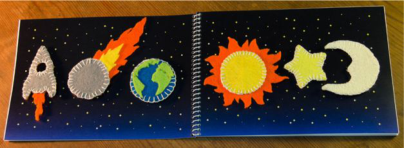
Figure 1: From the book “Miguelito’s Journey”. (Image by author).
It was chosen as an alternative communication system because it is the most widespread in Portugal with children with ASD. The narrative was developed in a short and simple way along with the PSC language so that chil- dren can read and not create disinterest in them. As argued by Tetzchner & Martinsen (2000) when communicating with individuals with language disor- ders one should simplify the way of speaking or writing, avoiding complex sentences, and the simultaneous use of text and signs, in this case graphics. The illustrations and colors are simple and consistent throughout the book. The felt pieces have the function of stimulation and a certain autonomy in the unfolding of the story, thus trying to have a different dynamic than the conventional book that may stimulate the interest in reading.
The last pages were intended for creative stimulation, where it is suggested that the child draw and paint, thus trying to create greater interaction and proximity with the book. The book was designed to help children with ASD to play with the others, because it can be read by children with or without other developmental problems.
The Book We opted for a book size of 210x148 mm (A5 format) with horizontal ori- entation, thus allowing easy handling and use by children. The selection of a neutral (grotesque) font with greater legibility provides higher levels of under- standing than a font with a too geometric and minimal design that may have too similar characters. The font chosen was DIN (size: 14pt), because it is a geometric typeface with conventional shapes, creating a clean and quite legible text spot (readability and legibility).
The chromatic palette is diversified, opting for pastel and soft colors, being put aside the use of more vivid and/or florescent colors because one of the characteristics of autistic people is to feel more comfortable in routine envi- ronments and sudden changes, in this case in terms of stronger colors, may cause some discomfort.
Pictographic Symbols for Communication (PSC) The program “AraWord” was used to create the pictograms that accompany the narrative of the story. Freeware from Department of Computer Science and Systems Engineering of the University of Zaragoza, available in seve- ral languages. It is a word processor that combines pictograms and text to
Language and Visual Perception as a Communication Tool to Children 365
facilitate communication for people with disabilities. The alternative commu- nication system (PSD) was created according to the standards including the colors, thus facilitating phrasal construction and interpretation by children.
Making a more detailed analysis of the book “Miguelito’s Journey”we can perceive issues related to Autism. The main character, Miguelito, has a taste and interest in astronomy as is common in many children with ASD. Blue was chosen as the color of his shirt, since it is the color that represents Autism, but we chose a light blue to avoid confusion with the dark blue background of the illustrations, the space. This character, like many children, has a large mind and an imaginary world, which leads him to “travel in space”. Although one could associate Autism with this character, this is not mentioned any-where in the story or the book. The remaining characters, the secondary ones, were created with the same graphic style, introducing some variations in terms of skin colors, eyes, hair, face shapes, among other aspects.
We considered what was studied in the chapter on Visual Perception, where Doak argues that a simplified visual language with simple line drawings, rather than a more complex format, is more functional in individuals with perceptual difficulties.
In relation to the background, it facilitates comprehension when it is simple and with few colors, not diverting the attention of children from the focus of the image.
Testing the Book Five students with ASD characteristics, therefore with special educational needs, from the Escola Básica Integrada Santo Onofre in Caldas da Rai- nha, are part of the analysis unit of this research work. These children are between six and ten years old, and the study aims to evaluate their socio- educational behavior when in contact with the book “Miguelito’s Journey” with alternative language characteristics.
The teachers prepared the children a few days in advance, explaining that they were going to have an afternoon a little different from normal, so as not to abruptly change the routines of these children, which could affect their emotional states.
For this reading we used only one copy of the book “Miguelito’s Journey” in order to create interaction and dialogue among the children. Thus, we all sat at a single table. Upon opening the book, they were quickly excited by the felt pieces, which were chosen and distributed in order, one for each child. The reading was done by all the children together, reading aloud one at a time, dividing the reading pages among all. It should be noted that some tried to decipher the story only through the illustrations, without being asked, and that most of the time they agreed with the text when they were going to read it. When they agreed with the piece of felt destined to each illustrated page, the child with that piece completed the illustration. The text was read without difficulty, and the word that sometimes became a little complicated to say was “Miguelito”, the name of the main character. As it sometimes presented some complexity when spoken, the children reduced the name by calling it “Tito”.
366 Barreto and Goncalves
After the reading was over, each one was given loose sheets of paper printed with these pages and markers were provided so that everyone could partici- pate. The drawings were quite diverse, with four children starting by drawing and only one by coloring the characters. It should be noted that this part of the book proved to be very important because it created interaction and communication among the others.
CONCLUSION
The only maxim fulfilled in these cases is the quality of language because these children are very concrete, concise and direct in what they say, and to some extents are not concerned about respecting the criteria of social or cultural background. In their language they have a lot of difficulties in understanding the use of metaphors, and therefore it is not advisable to apply them throu- ghout a discourse with a child with autism (Lima, 2012). In this exploratory study, with such a small number of participants, with specific characteri- stics, we cannot be frivolous enough to draw extensive conclusions, but we can observe verbal interactions, communicative acts and, above all, become aware of the importance of enabling the natural contexts of children with ASD through appropriate materials, attitudes, and strategies.
The objectives set at the beginning of the project were successful, since the difficulty of verbal language was mitigated through visual language, either through illustrations or PSC signs. Regarding the book and the materials used with textures (felt and Velcro) we must emphasize that they were deve- loped according to the characteristics of these children and proved to be an alternative form in their socio-educational development. The verbal intera- ctions provoked were more easily incited by the alternative and augmentative language system, the PSC.
It was concluded that the applicability of an easy communication strategy should be as simplified as possible, with simple line drawings rather than more complex formats. If a background is needed, it should be simple, with few colors and, if possible, a dark color, so that it is easier to perceive what is on its surface. It should also be noted that illustrations are an aid to the memorization of a theme by individuals with cognitive difficulties since tex- tual production in these cases becomes a difficult means of understanding. It should also be noted that the insertion of objects with texture also stimulates the pedagogical process of children with ASD.
More than confirming the objectives we set ourselves, we intend to raise awareness among parents, professionals, and all people in general to the need to structure and adapt attitudes, strategies, and materials to minimize diffe- rences and give these children the possibility to increase their self-esteem, autonomy and mitigate or eliminate their inability to communicate and socialize.
ACKNOWLEDGMENT
This research was funded by LIDA - Arts and Design Research Lab, UIDB/05468/2020, with the financial support of FCT – Fundação para a Ciência e a Tecnologia, I.P, through National funds.
Language and Visual Perception as a Communication Tool to Children 367
REFERENCES
Doak, C. C., Doak, L. G. & Root, J.h. (1985) Teaching patients with low literacy skills. Phi- ladelphia: J. B. Lippincott Company. Howlin, P & Moore, A. (1997). Diagnosis in autism: a survey of over 1200 parents in
the UK. Autism: the International Journal of Research & Practice. 1. pp. 135–162. Jordan, R. (2001). Educação de Crianças e Jovens com Autismo. (1ed.) Lisboa: Instituto de Inovação Educacional. Lima, C. B. (2012). Perturbações do Espectro do Autismo: Manual prático de
intervenção. (2a ed.). Lisboa-Porto: Lidel. Lins, G. (2003) Livro Infantil?: projeto gráfico, metodologia, subjetividade. São Paulo: Edições Rosari. Munari, B. (1981). Fantasia, invenção, criatividade, imaginação. Lisboa, Editorial
Presença/ Martins Fontes. Munari, B. (2008). Das coisas nascem coisas. São Paulo: Martins Fontes. Oliveira, G. (2007) Autismo: Comorbilidade, Diagnóstico Diferencial, Prognóstico e Inter- venção Farmacológica. Retirado da Revista Diversidades no15 pp. 4–9. Ozonoff, S., Dawson, G. & Mcpartland, J. (2002). A Parent’s Guide to Asperger
Syndrome and High-Functioning Autism: How to meet the challenges and help your child thrive. Nova York: Guilford. Ozonoff, S., Rogers, S. J. & Hendren, R. L. (2003) Autism Spectrum Disorders: A research review for practitioners. Washington DC: American Psychiatric Publishing Inc. Tetzchner S. V. & Martinsen H. (2000). Introdução à Comunicação Aumentativa e
Alter- nativa. Porto: Porto Editora, Lda.
LISTED IN THE AHFE DIGITAL BOOKSTORE CATALOGUE
Explore the complete digital volume
Human Dynamics and Design for the Development of Contemporary Societies
Read this individual research paper free through the original publisher, or explore the full digital proceedings book.
ISBN 978-1-958651-01-8
Explore this ISBN in the AHFE Bookstore ↗Listed in the July 2026 bookstore catalogue; search by ISBN to confirm current availability · Digital book purchase optional