Dietmar Jakob, Sebastian Wilhelm (2022). Imparting Media Literacy to the Elderly Evaluating the Efficiency and Sustainability of a two- part Training Concept. In: Human Interaction & Emerging Technologies (IHIET-AI 2022): Artificial Intelligence & Future Applications. AHFE Open Access, vol. 23. https://doi.org/10.54941/ahfe100841
Elderly people often feel overstrained by the increasingly fast progress of digitization. Due to the strongly informal learning behavior of the elderly, particular concepts for improving their media literacy are needed to reduce existing barriers. Numerous concepts for this have already been developed, but their success has not yet been comprehensively evaluated.This study examines the suitability of an existing, two-part training concept consisting of seminars and supportive consultation hours for the sustainable teaching of media literacy in dealing with smartphones, tablets, or PCs. For this purpose, a quantitative study is conducted among participants of a corresponding offer (N=100). This work confirms that seminars in small groups combined with supportive consultation hours are very well suited to impart the media literacy of elderly people in the long term. 82% of respondents stated that their media literacy had improved after taking part in a seminar (n=74), and 86% now claim to use at least one digital device more often (n=74).
Elderly people often feel overstrained by the increasingly fast progress of digitization (Berg, 2020; Bundesministerium für Familie, Senioren, Frauen und Jugend, 2020). A quantitative study from 2018 shows that, in addition to the fear of fraudsters (47%), a lack of knowledge in operation (46%), a lack of support (41%), as well as the difficult operation (36%) are reasons for the non-use of digital technologies by elderly people (Wilhelm et al., 2019). For this reason, training concepts and support offers are needed to reduce these barriers (Sczogiel et al., 2020).
Based on the findings of market analysis and a survey of citizens, Wilhelm et al. developed a concept that considers citizens’ wishes and media education aspects and the particular requirements of geragogy. This concept provides for a combination of non-modular seminars in small groups (6-8 participants) and regularly scheduled consultation hours. The authors implemented the concept in practice from March 2019 to September 2019.
Wilhelm et al. deduced the effectiveness and suitability of the concept from the positive feedback from the participants and the number of participants in the seminars and consultation hours. However, an evaluation of the learning success and the resulting long-term effects for the participants has not yet been investigated (Wilhelm et al., 2019).
This article fills this gap by surveying all seminar and consultation hour participants again in mid-November 2019 using a semi-structured questionnaire on their experiences and opinions of the training concept, personal learning success, and general framework conditions.
The main contribution of this work is to investigate whether the senior-friendly training concept for imparting media literacy, according to Wilhelm et al. (Wilhelm et al., 2019), is suitable for teaching people aged 55+ how to deal with digital technologies sustainably and reduce fears of use. In addition, it is determined how people aged 55+ assess the entire two-part training concept of seminars and consultation hours.
2. RELATED WORK
Elderly people are open-minded towards digitization and digital technologies. A majority (69%) even consider digital technologies to be an opportunity (SINUS- Institut Heidelberg, 2016). Nevertheless, many elderly people do not use digital technologies or their services for various reasons, which are investigated in several studies (Sczogiel et al., 2020; SINUS-Institut Heidelberg, 2016; Wilhelm et al., 2019). A study by Deutsches Institut für Vertrauen und Sicherheit (DIVSI) shows that many elderly people consider internet-enabled devices (e.g., laptops, smartphones,
Human Interaction & Emerging Technologies (IHIET-AI 2022) Artificial Intelligence & Future Applications https://openaccess.cms-conferences.org/#/publications/book/978-1-7923-8989-4 tablets) to be too complicated (33%). However, the elderly are also partially prevented from using the internet by security concerns or a self-assessed low level of internet literacy (SINUS-Institut Heidelberg, 2016). Berg notes in his study that 41% of respondents aged 65+ claim to be unfamiliar with the internet (Berg, 2020). Also, the fear of fraudsters (47%), lack of knowledge (46%), lack of support (41%), and the difficult operation (36%) of the devices are further obstacles mentioned by Wilhelm et al. (Wilhelm et al., 2019).
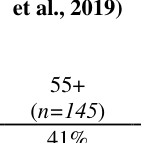
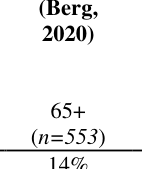
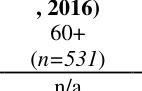
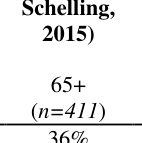
Table 1 reviews the corresponding studies on the main reasons for the non-use of digital technologies by the elderly.
Table 1. Review of studies on the reasons for the non-use of digital technologies by the elderly.
Equation reproduced from the original PDF.Equation reproduced from the original PDF.Equation reproduced from the original PDF.Equation reproduced from the original PDF.
2014) 60+ (n=1000) lack of support 41% 14% n/a 36% n/a lack of knowledge 46% 41% n/a n/a 18% too difficult 36% n/a 33% 70% n/a fear of being monitored 47% 30% 28% 64% n/a fear of fraudsters 24% n/a no devices 18% 49% n/a n/a n/a too expensive 13% 13% n/a 38% n/a unnecessary 15% 52% 48% n/a 41% no interest n/a 30% 50% 63% n/a Training and assistance for the elderly are needed to overcome these barriers. Only a few studies have so far investigated whether training offers and their conception are suitable for increasing the media literacy of elderly people (Blažič & Blažič, 2019; Sczogiel et al., 2020).
However, the conceptualization of such educational measures requires a basic understanding of how elderly people learn. Siebert concludes in his work that the content-independent, formal learning ability can hardly be improved in old age. Meaningful and significant knowledge is learned more easily in old age than unimportant knowledge, and the learning processes require more time (deceleration factor). In their work, Wiest et al. point out that it is significant to perceive elderly people as a heterogeneous group and to differentiate according to educational needs (Wiest et al., 2018). This presents a particular challenge for providers of training to create educational programs for heterogeneous target groups which do not intend to learn in isolated, age-homogeneous groups (Tippelt, 2009). Witt concludes, for elderly people who are far away from education, instrumentally organized
Human Interaction & Emerging Technologies (IHIET-AI 2022) Artificial Intelligence & Future Applications https://openaccess.cms-conferences.org/#/publications/book/978-1-7923-8989-4 educational offers and instructor-centered settings can be the ideal learning concept (Witt, 2017).
Elderly people require offers that reduce barriers and find suitable ways to impart media literacy (Telefónica Deutschland Holding AG, Stiftung Digitale Chancen, 2017). Initiative D21 found that institutionalized educational offerings are largely lacking and that an overall concept is needed (Müller et al., 2016). Results from practical studies are therefore lacking.
Szogiel et al. examined a multiplier concept for promoting media literacy among elderly people. They concluded that educational offers with basic pedagogical skills are helpful and suitable, but additional informal support in consultation hours is necessary (Sczogiel et al., 2020).
Altogether, it can be seen that although numerous concepts have been developed to promote media literacy among the elderly, there is a lack of studies evaluating these approaches and their success (Rasi et al., 2020). With this article, we continue the work of Rasi et al. (Rasi et al., 2020) and examine the concept developed by Wilhelm et al. (Wilhelm et al., 2019), consisting of seminars and consultation hours, for acceptance and learning success among the elderly.
3. METHODOLOGY
To evaluate whether the senior-friendly training concept for imparting media literacy, according to Wilhelm et al. (Wilhelm et al., 2019), is suitable for teaching people aged 55+ how to use digital technologies sustainably and for reducing fears of use, we conduct a quantitative cross-sectional study using a partially standardized questionnaire with open and closed questions among all participants of the seminars and consultation hours conducted by Wilhelm et al. in practice. The questionnaire method ensures reliable, objective, and valid data (Diekmann, 2004; Döring & Bortz, 2016).
The questionnaire is divided into six sections. Section 1 asks about personal learning success, and Section 2 assesses the participants’ personal media literacy. In Sections 3, 4, and 5, the participants were asked about their satisfaction and their assessment of the overall concept of the seminars and consultation hours, before finally in Section 6, socio-demographic data could be provided. The original questionnaire is published as supplementary material to this article.
The questionnaire was sent by mail on 11-11-2019 to all persons who participated in either one seminar or at least one consultation hour and consent to data processing. A postage-paid reply envelope was enclosed for the questionnaires, and returns were possible until 11-30-2019.
In this Section, the results of the survey are presented. For reasons of simplification, all values have been rounded to the nearest integer.
A total of precisely 100 questionnaires were sent out to participants of the seminars/consultation hours. Up to the deadline, 76 questionnaires were returned (gross response rate: 76%). 2 persons stated that they were younger than 55 years and did not belong to the defined target population. The net response rate is 74%.
4.1. Socio-Demographic Characteristics
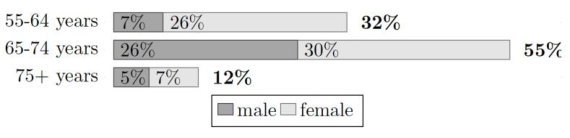
32% of all participants are aged between 55 and 64 years. More than a half (55%) are between 65 and 74 years old, 12% are aged 75+. Figure 1 shows the age structure combined with the sex of the survey participants who returned the questionnaire and belonged to the target population.
Figure 1. Distribution of survey participants by age group and sex. (n=74) All respondents live in the southeastern part of the German state of Bavaria. Mainly the persons are from the municipalities Mauth or Frauenau or surrounding villages.
4.2. Learning Success
To classify the learning success, the participants were first asked to what extent they agree with the statement ’Even before attending a seminar, I knew a lot about digital technology and was able to operate it.’ 10% of participants stated they agree with the statement, 30% stated they rather agree, 36% rather disagree, and 25% disagrees (n=73).
Furthermore, the participants had the opportunity to indicate to what extent their knowledge had improved as a result of participating in at least one seminar on digital devices and services, whether they felt encouraged to use them on their own in everyday life, and whether their fear of using them had decreased. The results are shown in Table 2.
Table 2. Responses from participants when asked what has changed in terms of digital devices and services since they attended a seminar.
Table available in the original PDF paper.
agree rather
disagree agree rather disagree
67% 25% 3% 3%
My knowledge has improved (n=74) 72% 22% 1% 3% I feel encouraged to use this by myself in everyday life (n=72) My fear of using them has decreased (n=74) 58% 24% 7% 5%
After participating in at least one seminar, 86% (n=74) of the participants reported using at least one digital device (smartphone, computer, or tablet) more frequently than before. The results are shown in Table 3, broken down by the individual devices.
Table 3. Change in frequency of using digital devices after participating in seminars.
Table available in the original PDF paper.
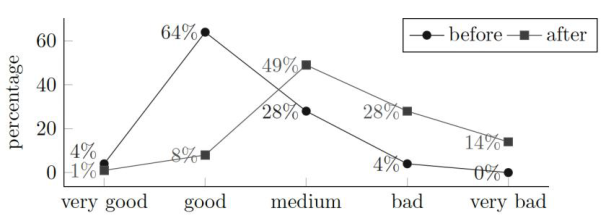
frequency smartphone computer (n=71) (n=54) tablet (n=33) more frequent 72% 50% 45% equal 25% 46% 42% less frequent 4% 4% 12% Overall, 82% of respondents (n=74) reported that their literacy in digital technologies had improved after attending seminars, 15% reported that it had stayed the same, and 3% reported that it had worsened, which is outlined in Figure 2.
Figure 2. Participants’ self-assessment on their competence in using digital technologies before and after attending the seminars. (n=74)
In summary, 84% of the participants agree at least rather with the statement that new technologies make their everyday life easier, and 66% even state that it would be very difficult or difficult for them to dispense the use of new technologies. Only 8% stated that it would be very easy or easy for them to dispense with new technologies (n=74).
We asked participants about their overall satisfaction with the seminars and/or the consultation hours. On a scale of 1-5 items, where item 1 means very satisfied and item 5 means dissatisfied, 95% (n=76) of respondents stated at least item 2 for the seminars, and 96% (n=50) stated at least item 2 for the consultation hours. Furthermore, 97% (n=74) claimed they were more likely to recommend the seminars to a friend, and 96% (n=50) claimed the same for the consultation hours.
Out of the participants on their own, 81% (n=69) say that it is rather likely that they would also participate in similar seminars themselves, respectively 83% (n=48) in similar consultation hours.
Within a free text field, the respondents had the opportunity to describe what they liked about the seminars and/or consultation hours and express suggestions for improvement. A qualitative analysis of the responses showed that the participants in the seminars particularly liked the intensive support with the opportunity to ask questions, the small group sizes, and the detailed and practical step-by-step instructions. Nevertheless, the desire for even more intensive support and even smaller groups was expressed frequently. According to the participants, improvements could be made by asking the individual level of knowledge of the participants in advance and forming more homogeneous groups according to their level of knowledge. There were different opinions about the time frame for the seminars of 2-3 hours in the afternoon. While some participants found the time frame to be suitable, others stated that a longer time frame would be beneficial and that the course times would fit better in the mornings. The desire for advanced and follow-up courses was also expressed in many cases.
Whether consultation hours have a decisive advantage over other support offers (e.g., help from the family or friends) was answered in the affirmative by 83% of the participants. In comparison, 2% answered the question in the negative, and 15% were undecided (n=48). In a free-text field, participants most frequently cited the expertise and patience of the instructors as benefits of the consultation hours. Fixed appointments and prompt help with problems were cited as other benefits.
In this context, it was often expressed that one is ashamed to ask in the family or does not want to stress it. For example, a participant’s statement: ’Children have no patience, it means right away, I’ve already shown you that.’ (transl.),’ You are not a” burden” to anyone’ (transl.) or ’You don’t have to be a burden to anyone’ (transl.).
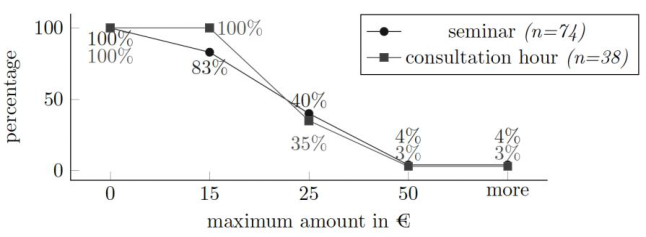
Further, we asked the participants about the price they would pay for a similar offer and the distance they would drive to participate in such an offer. The results are shown in Figure 3 and Figure 4.
Figure 3. Accepted price for participation in similar offers to the seminars/consultation hours.
Figure 3 shows that most are willing to pay up to 15€ for seminars and/or consultation hours (seminars 83%, consultation hours 100%). Less than half would be willing to pay up to 25€ (seminars 40%, consultation hours 35%), while only a small proportion would pay a higher price (seminars 4%, consultation hours 3%).
Figure 4. Accepted distance to attend similar offers to seminars/consultation hours by age group.
Figure 4 shows that, on average, 89% of all participants are willing to drive up to 15km to attend seminars and/or consultations.
In the overall result, it can be stated that 51% of the participants reported that the seminars helped them the most, and 41% think that the combination of consultation hours and seminars was the most helpful. Just 9% stated that attending consultation hours alone was the most helpful. None (0%) of the participants expressed that none of the offers were helpful (n=69). This is outlined in Figure 5.
Figure 5. Participants’ assessment of the helpfulness of seminars and/or consultation hours in comparison.
CONCLUSION AND FURTHER WORK In this article, we investigate whether the senior-friendly training concept for imparting media literacy, according to Wilhelm et al. (Wilhelm et al., 2019), implemented in practice, is suitable for teaching people aged 55+ how to deal with digital technologies sustainably and to reduce their fears of using them. Therefore, a quantitative cross-sectional study was conducted among all persons who participated in at least one seminar or at least one consultation hour and gave their consent to data processing.
82% of respondents stated that their media literacy had improved after participating in a seminar, and 86% now claim to use at least one digital device more often.
In a 2018 survey, most respondents in the 55+ age group said they do not use digital devices for fear of fraudsters. Table 2 shows that this fear can be reduced for most people with the help of seminars (agree: 58%, rather agree: 24%). In the study by Wilhelm et al., 46% of all respondents cited their lack of knowledge as a reason for not using digital technologies. 72% of the seminar participants fully agreed that their skills had improved as a result of the seminar, 22% somewhat agreed with the statement.
In terms of the learning success of the individual participants, this work shows that the concept, according to Wilhelm et al., is suitable for teaching and promoting media literacy among people aged 55+ sustainably (Wilhelm et al., 2019).
Furthermore, we examine how the participants rated the overall training concept, consisting of seminars and consultation hours. They confirmed that the small groups with intensive support specified in the implementation concept, according to Wilhelm et al., were key to the success of the training. In addition, the practical relevance of the topics dealt with and the detailed step-by-step instructions and bookmarks were rated positively.
The comments on the short course times (2-3 hours) specified in the concept, and the non-modular structure is mixed. Some participants expressed the desire for longer courses and more advanced and supplementary courses on the topics covered.
However, our work cannot confirm that seminars have to be held directly in the immediate area of residence. According to Figure 4, 89% of the participants are willing to drive up to 15km to such offers.
In summary, it is clear that seminars alone already promise success, but a combination of seminars and supportive help through consultation hours are most effective. Only 9% of respondents consider consultation hours alone to be helpful.
In further work, alternative training concepts (e.g., multiplier training, intergenerational learning groups) should be evaluated accordingly so that the
Human Interaction & Emerging Technologies (IHIET-AI 2022) Artificial Intelligence & Future Applications https://openaccess.cms-conferences.org/#/publications/book/978-1-7923-8989-4 learning success of the individual offers can be compared. Furthermore, this work’s results should help to adapt further the training concept developed by Wilhelm et al. to the needs of people 55+.
ACKNOWLEDGMENTS
This work was funded by the Bavarian State Ministry of Family Affairs, Labor, and Social Affairs.
REFERENCES
Berg, A. (2020). Senioren in der digitalen Welt. bitkom.
https://www.bitkom.org/sites/default/files/2020-08/bitkom-prasentation- senioren-in-der-digitalen-welt-18-08-2020.pdf Blažič, B. J. & Blažič, A. J. (2019). Overcoming the digital divide with a modern approach to learning digital skills for the elderly adults. Education and Information Technologies, 25(1), 259–279. https://doi.org/10.1007/s10639- 019-09961-9 Bundesministerium für Familie, Senioren, Frauen und Jugend. (2020). Achter
Altenbericht zur Lage der älteren Generation in der Bundesrepublik Deutschland: Ältere Menschen und Digitalisierung und Stellungnahme der Bundesregierung. Drucksache / Deutscher Bundestag: 19/21650. Bundesministerium für Familie, Senioren, Frauen und Jugend. Dandrea-Böhm, L. (2014). Die Seniorenstudie von A1.
https://newsroom.a1.net/news-die-seniorenstudie-von- a1?id=59351&menueid=12658 Diekmann, A. (2004). Empirische Sozialforschung: Grundlagen, Methoden, Anwendungen. Rowohlt-Taschenbuch-Verl. Döring, N. & Bortz, J. (2016). Forschungsmethoden und Evaluation in den Sozial-
und Humanwissenschaften. Springer Berlin Heidelberg. https://doi.org/10.1007/978-3-642-41089-5 Müller, L. S., Stecher, B., Dietrich, S., Wolf, M. & Boberach, M. (2016). D21- Digital-Index 2016 - Jährliches Lagebild zur Digitalen Gesellschaft. Initiative D21. Rasi, P., Vuojärvi, H. & Rivinen, S. (2020). Promoting Media Literacy Among
Older People: A Systematic Review. Adult Education Quarterly, 71(1), 37–54. https://doi.org/10.1177/0741713620923755 Sczogiel, S., Busch, A., Göller, A., Gabber, A., Williger, B., Schmitt-Rueth, S., Ahrens, D., Jakob, D. & Wilhelm, S. (2020). DIGITAL FIT IM ALTER Handlungsempfehlung für Gemeinden zu Bildungsangeboten für Senioren. Unpublished. Seifert, A. & Schelling, H. R. (2015). Digitale Senioren. Nutzung von Informations-
und Kommunikationstechnologien (IKT) durch Menschen ab 65 Jahren in
Human Interaction & Emerging Technologies (IHIET-AI 2022) Artificial Intelligence & Future Applications https://openaccess.cms-conferences.org/#/publications/book/978-1-7923-8989-4 der Schweiz im Jahr 2015. Pro Senectute Verlag. https://www.zora.uzh.ch/id/eprint/116078 SINUS-Institut Heidelberg. (2016). DIVSI Ü60-Studie Die digitalen Lebenswelten der über 60-Jährigen in Deutschland. Deutsches Institut für Vertrauen und Sicherheit im Internet. https://www.divsi.de/wp- content/uploads/2016/10/DIVSI-UE60-Studie.pdf Telefónica Deutschland Holding AG, Stiftung Digitale Chancen. (2017). Digital
mobil im Alter. Telefónica Deutschland Holding AG, Stiftung Digitale Chancen. https://www.telefonica.de/file/public/1016/2017-Digital-mobil- im-Alter-So-nutzen-Senioren-das-Internet-Zentrale-Befunde-einer- Studie.pdf Tippelt, R. (2009). Bildung Älterer - Chancen im demografischen Wandel. W.
Bertelsmann Verlag. Wiest, M., Hoffmann, M., Widany, S. & Kaufmann, K. (2018). Trends in nonformaler Bildungsbeteiligung in der zweiten Lebenshälfte. Zeitschrift für Gerontologie und Geriatrie, 51(8), 897–902. Wilhelm, S., Jakob, D. & Dietmeier, M. (2019). Development of a senior-friendly
training concept for imparting media literacy. Tagungsband: INFORMATIK 2019: 50 Jahre Gesellschaft für Informatik – Informatik für Gesellschaft. Vorab-Onlinepublikation. https://doi.org/10.18420/INF2019_83 Witt, S. (2017). Geragogik (Altenbildung/Altersbildung). www.diebonn.de/wb/2017-geragogik-01.pdf
Read this individual research paper free through the original publisher, or explore the full digital proceedings book.
ISBN 978-1-7923-8989-4
Explore this ISBN in the AHFE Bookstore ↗Listed in the July 2026 bookstore catalogue; search by ISBN to confirm current availability · Digital book purchase optional