Lorena Olmos Pineda, Jorge Gil Tejeda (2021). The Activation of the Focal Attention Sub-System as a Product of a Hierarchical Process during the Interaction with Virtual Products. In: Human Systems Engineering and Design (IHSED2021): Future Trends and Applications. AHFE Open Access, vol. 21. https://doi.org/10.54941/ahfe1001145
In studies related to the behavior patterns that are generated from the interaction processes of a group of users with virtual products., It was detected that the acti-vation of Focal Attention sub-system is a constant not only for persons with normal vision also for persons with vision weakness. However, there are behav-ioral differences depending on the user´s dominant sensory mechanism related with physio-anatomical and cognitive characteristics of the user. The effects are observed in the time of execution of the tasks, number of sensory mechanisms used during the process, stress responses generated by the fulfillment of objec-tives among others.The aim of these studies is to promote reflections on the attentional processes that are carried out from the interaction of a user with virtual products and their work systems. And explore how Focal Attention processes change with the personal characteristics of a person.
At the end of 2019 to the beginning of 2021, a great variety of technological devices were gradually as well as disruptively integrated in various environments from everyday life until scientific environments, which potentiate many of our capacities and abilities from cognitive until physical. However, the same characteristics of the devices also seem to limit the user in the execution of various tasks in an ambivalence that is emphasized by the characteristics of the user and their dominant sensory system(s) in spatial localization. Because of this we have proposed considering a wide range of devices from Industry 4.0 with a singular requirement for a correctly interaction not only with its work system but with its virtual products, and it is the precision spatial-localization. Which demands highly visuospatial skills from the users (Gil and Olmos 2020), Specific interaction processes are generated in the work systems (WS) from this kind of devices and their products., in a relationship between all WS variants as well as the physio-anatomical and cognitive characteristics of the user. In this writing aspects related to the differences in the interaction processes with a specific device between a group of users with normal vision and users whose dominant sensory system of localization is not vision will be discussed. In this sense, one of the highly remarkable characteristics in this process of interaction and inter-relationship generated by the qualities of WS and its products, basically virtual, is the activation of the Focal Attention sub-system. Users performs a diversity of interaction and cognitive activities directly related to the stimuli and phenomena to which they are exposed. Today thanks to great thinkers and their studies such as Locke, Broadbent, Ashby, Pribram, Posner, Petersen, Marliave, Ahissar and Hochstein, among many others, we know that not all information is processed and perceived by a user and this is due in a great extent to the attentional system. There is no precise definition of the concept of attention., but it has been found that various scientists describe it in relation to the observable effects in humans. Based on this, it can be considered as a system whose function is to keep us in a state of alert as well as to select and process the information (Posner and Boies 1971). The selection process is defined by some authors as a neuronal selection mechanism (Ahissar and Hochstein 2004), so they refer to internal processes to the user. In addition studies carried out in 1973 allowed us to understand attention like a process with differentiated phases. In relation with this, Marliave identified two forms of attention: the inspectional, referring to a selection process, and the comprehensional, which refers to complex cognitive processes (Marliave, 1973). In more recent studies Posner and Petersen suggested studying attention as a system integrated by three subsystems that performs different but interrelated functions (Posner and Boies 1971).
Human Systems Engineering and Design (IHSED 2021) https://openaccess.cms-conferences.org/#/publications/book/978-1-7923-8987-0
Considering the contributions of these researchers., In our studies we have observed that Focal Attention (FA) originated in sight is related to the sensitive characteristics that born into the object and these characteristics impact on cognitive processes of the person. Hence FA can be considered as an anisotropic factor and requires a sensory input channel. The aim of these studies is to promote reflections on the attentional processes that are carried out from the interaction of a user with virtual products and their work systems. And explore how FA processes change with the personal characteristics of a person.
INTERACTION WITH VIRTUAL PRODUCTS AND ATTENTIONAL PROCESSES In previous studies it has been observed a difference with the interaction processes carried out by each user with the virtual products of a technological device (Gil et al., 2020, Pineda et al., 2021). These studies were carried out in learning environments with an assigned task in which outstanding characteristics of virtual products were observed. With this background we have conceptualized virtual products, specifically belonging to a technological devices of industry 4.0, as meta-representations of new media and meta-media based on Manovich's concept of new media (Manovich, 2002) and adding the perceptual and cognitive characteristics that involves a human meta-representation like a product. These type of Meta- Representations are visible with a great range of configurations constituted by their sensitive elements which are determined by the designers and by technology characteristics., Nevertheless this sensitive factors will tend to be partially perceived by a user and they are able on generate experiences from the spatio-temporal until the emotional ones. The perception about sensory information of these objects will be determined, in part, by the senses and their activation and factors determined by the attention processes directly related with the particular characteristics of the user. Additionally the symbolic content of the Meta- Representations must be considered like an outstanding characteristics of virtual products.
RELATIONSHIP BETWEEN ATTENTIONAL PROCESSES AND THE ACTIVATION OF SENSORY MECHANISMS In previous works it has been observed that the processes of interaction with the work systems with flat screen technology were not carried out continuously., They were executed from a variety of Temporal Micro-processes of interaction (TMP-I) interrelated (Pineda and Tejeda 2021).. In this sense, TMP-I can be classified for a better study in physical processes, that can be described with physical contact with the work system, and cognitive processes, where mental processes such as memory, reasoning, etc. are developed. Both TMP-I are
Human Systems Engineering and Design (IHSED 2021) https://openaccess.cms-conferences.org/#/publications/book/978-1-7923-8987-0 interrelated during the interaction process, generating a complex phenomenon that takes place in cycles of human interaction and requires multiple dimensions and responses from the user. In this sense, the studies were developed from the observation of the interaction process carried out by two users of the design area, one with normal vision (Nv) and another user with visual weakness., this visual impairment in the user can be enunciated as advanced retinitis pigmentosa. Both users were observed in the physical interaction with a Virtual Product used in a learning environment: the class´s Website. It is stated as a physical interaction because the WS could never be separated from the virtual product interaction. The technological device that integrated the work system of the Website was each user's smartphone so it was a clear habituation with the WS by users.
The methodology used was the comparative analysis of data and the use of static networks for the visualization of information. In the construction of the networks, the interaction processes determined by the interrelation of the User-Virtual Product factors were considered. Likewise, the user's activity was delimited from the assignment of two tasks: 1) Locate the class Web Page, 2) Enter the virtual product. 3) Explore the Meta-Representation.
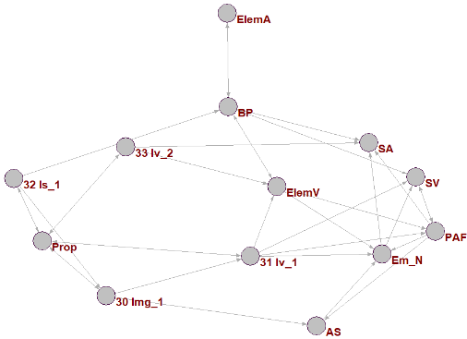
Figure 1. Static Network. Shows the relationship of the sensory mechanisms in the process of interaction in a Web Page with flat screen technology WS. Normal vision User (U10). Elaboration Olmos P.L & Gil T.J. 2020
Figure 1 shows the relationship between sensory mechanisms (SM) during the interaction process with the virtual product (VP) and a person with normal vision. The active SM during the whole process were Propioception (Prop), gross motor interaction (Img), visual Interaction (Iv) and sound Interaction (Is). In a first phase hierarchical factors internal to the user were perceived, which included the activation of the interaction subsystems: spatial location of the WS -conformed by the activation of the SM of Prop, Img, Iv-, and the activation of the Focal Attention sub-system (FAP-s). This phase had the purpose of reducing
Human Systems Engineering and Design (IHSED 2021) https://openaccess.cms-conferences.org/#/publications/book/978-1-7923-8987-0 the distance between the user and the device. In a second phase an interaction process with the WS was generated with the following characteristics: haptic and contact interaction -the activation of the Prop, Iv, ImfD and Pd were involved-. It is important to clarify that the second phase occurred after the activation of the focal attention subsystem, in other words after a precise spatial location in relation to the components of the WS. In a third phase the interaction process with the virtual product were carried out -the active SMs were Prop and Iv at least-. The focal attention subsystem was present in all three phases. In this sense FAP- s propitiate a precise spatial location of the sensitive elements of the object, and this phenomenon is observed as a more complex activity compared to a general spatial location of objects. Likewise, FA as a sub-system was integrated by hierarchy of: Selection, Focalization and generation of a break point (BP). The total time required for the user to enter in the virtual product was 8 seconds, which reduces the possibility in repetition of TMP interrelated, the average time of interaction with the virtual product was 13.33. The activation of FAP-s was observed like a constant in all the process of interaction with a group with normal vision and the virtual product, as is shown in Table 1. Where the most dynamic SMs were Prop and Iv related with virtual products. The Is was related with the learning environment stimuli.
However, it is observed that these objects do not maintain the same attention times in a group of users because there are substantial variations in navigation patterns like browsing behavior and search behavior because the sensible qualities in virtual products in present tense, interest of the user, understanding of information and consequently all these factors depend on activation of FAP-s. The phenomenon linked to attentional processes forms an important part in the processes of interaction and interrelation due to its degree of affectation not only in the perception of the subject but also in the affectation in cognitive processes. In like manner, it is important to observe the cycles of human interaction generated during the process directly related to the anatomical and physiological factors of the user that integrate their dominant sensory system (Gil et al., 2020, Pineda et al., 2020), as well as cognitive factors. In the case of people with normal vision behavioral patterns were generated such as those of
Human Systems Engineering and Design (IHSED 2021) https://openaccess.cms-conferences.org/#/publications/book/978-1-7923-8987-0 habituation to the WS and the tendency in the generation of repetitive tasks observed in the cycles related with the activation of MS of Prop and Iv, which were directly related to the activation of PAF-s. These cycles´ tendency can lead to ligament injuries, a bad posture, a decrease in focal attention (Tejeda et al., 2020a, Tejeda et al., 2020b), among others. On the other hand, it is relevant to highlight that the interaction processes were not executed continuously but from a large number of temporal interaction micro-processes determined by Break Points (BP)., Consequently, the phenomenon of interaction and interrelation of a normal vision user with a technological device is meta-systemic, as is shown in Figure 1.
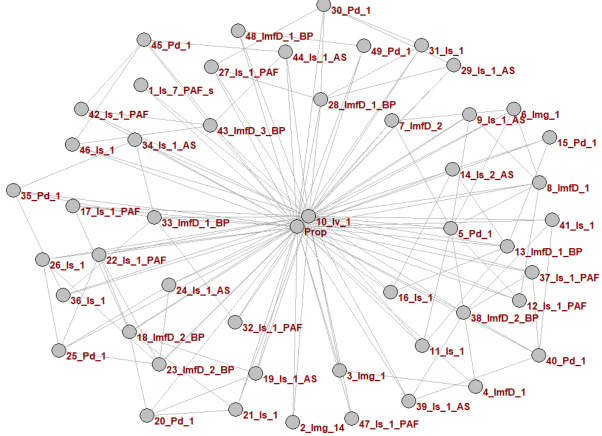
Figure 2. Static network. Shows the relationship of the sensory mechanisms in the process of interaction in a Web Page with flat screen technology WS with a weak visual person. Elaboration Olmos P.L & Gil T.J. 2021
Figure 2 shows the relationship between the sensory mechanisms during the process of interaction with the VP and a person with visual impairment (Dv). The active SMs during the whole process were Prop, Img, Iv, Fine motor Interaction with Fingers (ImfD), Digital pressure (Pd) and Is. In a first phase, hierarchical factors internal to the user were perceived which included the activation of the interaction subsystems: spatial location of the WS - conformed by the activation of the SM of Prop, Img, Iv, ImfD, Pd-, And the activation of the FAP-s. This phase had the purpose of reducing the distance between the user and the device. In a second phase, an interaction process with the WS was generated with the following characteristics: haptic and contact interaction -the activation of the Prop, Iv, ImfD and Pd SM were involved-. It is important to clarify that haptic interaction occurred after the activation of the FAP-s after a precise spatial location in relation to the components of the
Human Systems Engineering and Design (IHSED 2021) https://openaccess.cms-conferences.org/#/publications/book/978-1-7923-8987-0
WS. In this second phase the person with visual impairment notably showed greater activation of SM compared with normal vision users. In a third phase, the interaction process with the VP was carried out -the active SMs were Prop, Iv, ImfD, Pd, Is at least-. The FAP- s was present in all three phases like a constant and occurred after a precise spatial location of the artifact. However, it is clearly observed that for the person with Dv it was difficult to locate precisely the diversity of virtual objects that integrate his technological device, the location was carried out with the help of vibration commands, audio and the use of his poor vision to be able to locate and differentiate the elements., It is evident that this process required more time compared to users with normal vision. Therefore, a person with visual impairment requires a more precise location of objects using other SM as a reference for their location –like Img, ImfD and Pd-. Because of this, it is suggested that the activity of spatial location of the virtual objects is more complex than the location of the WS. Likewise, the FAP-s was integrated by phases of: Selection, Focalization and generation of BPs. The total time required for the user to enter in the VP was 75 secs.
Table 2: U=User; G=Gender, M=Man, T=Time, T/Max= Maximum Time. Elaboration Olmos P.L &
Table available in the original PDF paper.
Gil T.J. 2021
In this studies we still don’t have a comparative of processes of interaction with persons with Dv, It is surprising to see that in educational environments there is not great inclusion, acceptance and help to this sector. In Table 2, notable behaviors was observed such as a tendency to constant spatial location as well as a constant use of all MS in whole process, this compared to people with normal vision. Also a longer average time delegated to the FAP-s. In 260 seconds the user doesn´t locate properly the virtual objects and originate a very precise exploratory activity and repetitive activities, in the end, it was notable a high response related with stress
CONCLUSIONS
It was observed that the interaction processes with virtual products from the use of technological devices with a flat screen technology such as cell phones cannot be separated from WS, referring to current technology. Taking as a reference that smartphones can be classified like artifacts which demands a high spatial location of precision in their interaction processes, significant variations were observed in the interaction and interrelationship carried out by a person with normal vision compared to a person with visual weakness. Among the most significant was the execution time of the task. Another factor was the number of SMs required throughout the process, as can be seen in both figures. Therefore, people who have vision as the dominant system of spatial localization will not have many problems in the location of the virtual objects or meta-representations of new media when
Human Systems Engineering and Design (IHSED 2021) https://openaccess.cms-conferences.org/#/publications/book/978-1-7923-8987-0 they interact with this type of devices, since it gives them a precise location of the objects., However for people whose dominant sensory system is motor interaction including haptic processes, require other sensitive referents such as vibration and sound to achieve, from these SM, a referent with great precision. It was after the precise location and identification of the sensitive elements, directly related to the activation of the focal attention subsystem, that the execution of more complex processes such as fine motor interaction occurred. Which marks a hierarchy in all process. Also it is interesting to observe that in both cases exist the activation of Focal Attention sub-system in a hierarchical process but it tends to vary when the user tries to locate a specific object in a specific meta-representation of the new media like a product. With the consideration of these devices with a high demand in the user in the precise spatial location of meta-representations for a correct processes of interaction, new strategies can be generated for inclusion with users in a wide range of diversity. With this work we have the approach that the activation of the focal attention subsystem keeps like a constant during the entire interaction process with multiple breaks in the focus of attention., Generating hierarchical interaction cycles in the temporal micro-processes of interaction and modifying the interrelation between the user and the artifact, this activity increase in users who do not have vision as dominant SM of spatial localization.
REFERENCES
Ahissar, M. and Hochstein, S. (2004). The reverse hierarchy theory of visual perceptual learning. Trends in cognitive sciences, 8(10), pp. 457-464. Gil Tejeda J. and Olmos Pineda L. (2020). Comparative Studies of the Behavior of Sensory
Mechanisms in a Weak-visual Person and a Normal-vision Person with an Object of the New Media. In: Ahram and T., Falcão C. (eds.) AHFE. Springer. 1217(121), pp. 914-919. Manovich, L. (2002). The language of new media. MIT press Marliave, R. (1973). Selective attention and cognitive learning. Theoretical Paper. ERIC No.45. Pineda L.O. and Tejeda J.G. (2020). Analysis of the Behavior of a User’s Sensory Mechanisms During the Interaction Processes with an Object of the New Media and Its Work System. In: Nunes I. (eds.) AHFE. Springer. 1207(44), pp. 326-331. Pineda, L. O. and Tejeda, J. G. (2021). The Hierarchy in the Temporary Interaction Micro-processes
and the Effects Generated in the Processes of Interaction with a Weak-Visual Person. In: Ahram T. et al. (eds.) IHIET. Springer, 1152 (105). pp. 696-701.
Human Systems Engineering and Design (IHSED 2021) https://openaccess.cms-conferences.org/#/publications/book/978-1-7923-8987-0
LISTED IN THE AHFE DIGITAL BOOKSTORE CATALOGUE
Explore the complete digital volume
Human Systems Engineering and Design (IHSED2021): Future Trends and Applications
Read this individual research paper free through the original publisher, or explore the full digital proceedings book.
ISBN 978-1-7923-8987-0
Explore this ISBN in the AHFE Bookstore ↗Listed in the July 2026 bookstore catalogue; search by ISBN to confirm current availability · Digital book purchase optional