Maria Cadarso (2022). Cognitive Ergonomics in the Communication Design Process: Results from a Study Carried Out with a Sample of Students. In: Advances in Ergonomics In Design, Usability & Special Populations: Part II. AHFE Open Access, vol. 19. https://doi.org/10.54941/ahfe1001281
The paper here presented is part of a PhD research that focused in the communication design process. The creative process and the design process even though having many simultaneously moments are very different. While the former has a shorter duration and is rather chaotic, the second is longer and tends to be more organized. To understand the design process is essential to identify the decisive factors in the two different processes, therefore we have conducted a study with a group of thirty-three students from the Faculty of Architecture from the University of Lisbon, which aimed to identify the cognitive ergonomics factors that contributed to both processes.Our qualitative analytical line was carried out through the data collected with two research methods. The first method was applied in two questionnaires, marking temporally, the beginning and end of data collection. The first questionnaire aimed to establish a starting point, gathering information about the individual design process from students, prior to the course, whereas the second questionnaire sought to understand what had changed after working with the proposed methodology. The second research method was the dairy, which for this study was in the form of a graphic dairy; a tool much used for graphic and communication designers. With this we guarantee that the method was easy to grasp by the sample, and particularly suitable for students to make their recordings. On the other hand for the research, the graphic dairy, allowed us to have access to an individual internal and continuous process, which otherwise would have been difficult to witness. This study provided us with two types of results the confirmations and recommendations, which were summarily divided in 4 areas: the methodology, the process of design, research methods and the graphic dairy as a tool.
FRAMEWORK The paper here presented studies key aspects from the Cognitive Ergonomics in the communication design process. Cognitive Ergonomics studies the mental process, such as perception, reasoning, memory, and motor response in terms of human response, between each other, and when interconnecting with elements of a system, or a interface. Nevertheless, from a Cognitive Ergonomics perspective, for this research I was focused in the Communication Designer’s mental process, when designing.
In the vast existing literature about the design process, it can be found the absence of a conclusive model for the Ergonomics In Design, Usability & Special Populations II design process that is unanimously recognized by the scientific academic. Best [cited in Design Council 2007, p. 3] argues that the design process refers to a coordinated application of actions, tasks, and methods in order to achieve a particular result; however we must have in mind that this definition fits both, the individual mental process, and the process for instance, for industrial production. This is because the debate on the Design process initially was more focused on the production management and its impact on business management.
The authors Clarkson and Eckert [cited Design Council 2007, p. 4] have produced a comprehensive and critical review of the practical and procedural methodologies of the design process; and have rightly concluded that there is not a single model that describes satisfactorily the design process. There are many Design processes but none is consensual, or conclusive.
The Design process started to be taken more seriously, in the beginning of the 20-century, through the Bauhaus movement, when the attitude towards design changed dramatically. Bauhaus proposed a new approach “form follows function” which ended up for deeply influencing many businesses that embodied the concept and re- addressed the market based on this new theoretical approach [Fiedler & Feierabend 2000, p. 28]. Papanek [1985, p. 18] was one of the first authors to recognize the relevance of this contribution, when we wrote that Bauhaus had been the first school that considered the design process as a vital part of the production process.
Bruce Archer had a decisive role in implementing research in design, through research methods. Bruce Archer Archer [cited Design Council 2007, p. 5] in 1963, divided for the first time the design process, in crucial key steps. In addition, by recognized the overwhelming presence of conditions in the flow of creativity, we implemented the research methods framework, while attempting to address that complexity.
The first design process models were linear, in other words, it was suggested that steps, or tasks, were sequential. However in time such a model has been further criticised, as it suggest that problems could be solved in one go. On the other hand, for the last 40-year, business have researched other models, that would take in consideration competitive aspects in the business activity. The revisited models enabled the designer to consider a number of different ideas at one time, to test ideas, and to evaluate then.
Another important step further was taken by Cooper and Press [cited in Design Council 2007, p. 7] who recognizing the specific role that the designer plays within the design process. The authors acknowledge the difference between the process used by individual designers and the design skills they use to solve a problem, and the design process as the strategic planning of product development. And therefore, they proposed a model, within the designers internal perspective, in which, culture, education and experience, play a decisive role.
Within this framework, this research attempted to understand the most relevant steps in a communication design process, from the internal perspective. In cognitive ergonomic terms the mental process that has to deal with complex information, abstract concepts, and concrete outcomes. Finally the purpose of this research was to learn, when new variables could be inserted, that would enable the designer, to deliver truly innovative and sustainable solutions.
METHODOLOGY
To implement this research I used a survey methodology. In general terms, the main intent for a survey research, is to generalize from a sample, to population. However, in this case, and because we have worked with a very small sample with around thirty students, we focused on a qualitative approach. Our aim was to understand, what was the impact, of a given design methodology, that combined a design process and research methods, in our sample.
For the purpose of this survey, two research methods, questionnaires, diaries (and an authorization form) were designed. Even though the research did not require formal approval of an ethical committee, I wrote a text asking the sample for their permission and informing them that their work was going to be observed and analyzed for research purposes.
Ergonomics In Design, Usability & Special Populations II
The sample was given two questionnaires, one at the beginning and one at the end of the research. With regard to the first questionnaire, the goal was to learn about the students’ designing process prior to the course. To prepare the first questionnaire, I took a pilot case. Findings from the pilot test uncovered some errors that were corrected before delivering the first questionnaire. At the end of the course students were asked to fill a second questionnaire, with the aim of understanding what had changed in relation to the first one and to the beginning of the course.
The second research method consisted of diaries, also a self-administrated tool. Diaries were designed as graphic diaries, a well-known tool for communication designers. Questionnaires were analyzed in a quantitative and qualitative manner, whereas diaries were analyzed only in a qualitative way.
The sample The sample was a group of design students, aged between 19 and 24 from a Graphic Design course of the Faculty of Architecture of the University of Lisbon, in the second semester of 2011 / 2012. There are many types of sampling. In this case a convenience sample [Robson 2002, p. 265] chosen for its pragmatic factor, of “opportunity”, was used. Robson explains that this kind of sampling has the advantage of enabling working with people close to the researcher, and therefore it is widely used. He also draws attention to the fact that in some cases, unspecified or undetected biases may influence the replies from participants, which the researcher may find difficult to isolate or control.
The first reason to use the students in the research was the fact they were initiating their academic course in Graphic Design and were about to begin their second semester. In the first semester they had learned about typography rules and how to make a graphic design poster. So, they had some basic knowledge about graphic design, but not so much as to have developed a self-built in design process yet.
Secondly because they knew very little about design process and research; they had to be guided through the process, meaning that every stage had to be well explained to them. That also represented an extremely valuable advantage, as I could observe and study in detail how students responded to each stage of the communication design process and research.
Course methodology The work with the sample lasted around four months and involved research with students using a teaching methodology combining the course project, research exercises, and creative exercises, and which fostered recording data in a graphic diary, as it follows:
Building the design process - To deliver the project by steps to students, I chose the design process proposed by Jorge Frascara [2004] because it explains each stage in detail, thus very helpful for students.
The museum corporate identity project in six stages - The project was on corporate identity as defined by programme from the Faculty of Architecture, from the University of Lisbon. With this condition, I chose to work the corporate identity from a museum in Lisbon, and the project was divided, in six main stages according to the built design process, that was based on the one from Jorge Frascara.
Designing an “identity” - To introduce students in designing an “identity”, we gave then a first self-reflective exercise, asking students to research on their own identity.
Designing the creative exercises - The exercises were collected from Boninici [1998; 2000]; and to learn how to prepare the creative exercise in the most interesting way, I read Sherwin [2010], an experienced author and professor in graphic design. The goal was to foster a creative “work out” without constraints.
Designing the research exercises - The research exercises used methods collected from several authors, Robson Ergonomics In Design, Usability & Special Populations II
[2002], Lupton [2011], Martin & Hanington [2012], and O’Grady & O’Grady [2006]. To learn how to prepare the research methods and delivered them as interesting exercises, I based myself again in Sherwin [2010]. The goal was to guide students in collecting data about the museum, the audience, corporate identities and types of paper in general and in particular sustainable papers Graphic Diary - We fostered recording by providing each student a blank notebook
DATA COLLECTION Method # 1 – the questionnaires
According to Robson [2002, p. 253], questionnaires are a reliable process of data collection. However, a few aspects should be taken into consideration. First, we may never know what influences a respondent’s answers. To overcome such risk the author suggests asking the same question in different ways and test the respondent for coherence. In questionnaire # 1 we specifically inserted some question to purposely test the coherence of the responses. The second problem with the questionnaires is the refusal to respond rate. In this particular case, students accepted to be part of this research while doing their course project, which means the refusal rate was absent.
In Robson’s opinion, the third main reason for questionnaires to fail may be due to problems in understanding the actual questions, which in this case was overcome by doing an initial pilot test. I have followed Robson’s [2002, p. 245] indications on how to built, test and deliver a questionnaire, looking for simplicity, clarity, and objectivity in designing the questions.
After designing the draft from the first questionnaire, I conducted a pilot case to ascertain from the responses if questions were being properly asked, testing for explicitness, time (not too long), and also for a clear understanding of form, like whether it was clear which box to tick. The pilot test was given to a sample of four students from another class group of the same course in the same university. After the pilot test, the final questionnaires were designed with two types of questions - closed and open-ended ones. In the closed questions students could choose from two or three options. In the open-ended questions, students had the chance to explain their points of view about the topic question.
While in the first questionnaire the goal was to learn how the design process was for students before taking the course, in the second questionnaire the some questions were addressed to uncover what had changed. In order to have not just a quantitative analysis but also a qualitative perception, students were asked to rate their replies according to a Likert scale [Robson 2002, p. 293] with five options: “a lot”, “fairly”, “more or less”, “little” and “nothing”.
Method # 2 – the diaries The second research method used was a diary, which, like the questionnaires, is a self-administrated tool. The diary was chosen because they relate very closely to another tool, the graphic diary, often used by graphic and communication designers.
Robson’s [2002, p. 258] explains that a diary is an attractive tool because it can provide the means to generate very substantial amounts of data. However, they mainly serve as a proxy for observation in situations where it would be difficult or impossible for direct observation to take place. On the other hand, as Robson’s highlights, diaries place a great deal of responsibility on the respondents, which in is this case was minimized as students were monitored in class twice a week.
Ergonomics In Design, Usability & Special Populations II
Robson [2002, p. 260] also mentions the “reflective journal” where participants are asked to provide an account of their experiences in a particular setting or situation, and to reflect on that experience, stating that this can be viewed as an unstructured variant of a diary. I found that reference to be particularly relevant, as I was looking for that type of tool, which allows observing and analyzing the students’ designing process.
There is a difference between diaries and journals. The diary is a report, for instance of what happened during the day; it details routines, or records specific research data; a journal is more unstructured and open to reflection. A graphic diary is a journal that deals mainly with visual information.
Many communication designers use this type of recording tool. Some may call it a graphic diary, others a sketchbook, or even a visual diary. Even in advertising we find a more sophisticated version of a graphic diary, called brand books, which, according to Lupton [2011, p 46], is a way to visualize the personality and life story of a product, company or organization.
According to Leonard & Ambrose [2012 p. 18], a sketchbook is a very basic way to record research, inspiration and ephemera. Lupton [2011, p. 100] emphasizes the communication designers’ need to escape from routine, explaining “designing something new everyday can be as healthy for the creative mind as eating fruits and vegetables is for the body” [Lupton 2011, p. 100].
With this in mind, the diaries were designed as graphic diaries using a plain blank notebook in which students had to add the exercises given in class and complement it with their recordings. Students were given three types of exercises, as explained in the course methodology.
Given that the graphic diary is a well know tool used by communication designers, it was the most suitable instrument for students to record their designing process, and also easy to grasp. On the other hand, with regard to the research, the graphic diary allowed collecting a personal, almost internal, process that otherwise would have been impossible to follow. It provided detail sequence, and a direct reply to the challenge proposed to students.
The diaries were monitored during classes, enabling assessing the difficulties experienced by students, or how well they responded to the task. At the end the diaries were collected and analysed.
Designing diaries as graphic diaries The graphic diaries were designed to be a more comprehensive tool. The goal was to observe and analyse the students’ designing process through their recordings. The diary itself was a plain A4 notebook. To work in the diary students were given a communication design project consisting of: a corporate identity for a museum (as requested by the University programme), research and creative exercises.
The materials were given to students, who added (glued) them to the graphic diary, thus starting the recording process. They were asked to do the exercises in the graphic diary. After that point students decided what to record: it could be research, reflective thinking, related information, or it could be simply doodling.
Ergonomics In Design, Usability & Special Populations II
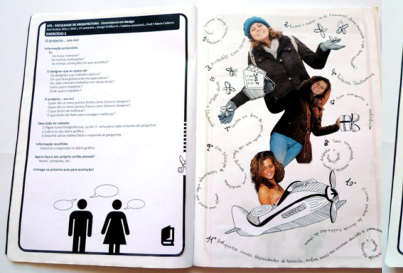
Figure 1. Some examples from the graphic diaries
Ergonomics In Design, Usability & Special Populations II
DATA ANALYSIS Quantitative
In the first questionnaire, in the questions about the students’ creative process, prior to beginning of the course, we found that answers were somewhat contradictory. Students indicated they followed a process as it happened along the way; however, when asked if they were organized or not in their process, 82% clearly stated that they were. So this may indicate that they perceived their creative process to be more unstructured than it in fact was. Therefore, this also indicates that they prefer an organized design process.
Also in the first questionnaire, in the questions about: sharing or not ideas, research, concept, and innovation, students tended to reply in a non-conclusive manner. However, the replies of those who answered conclusively by choosing just one option indicate that: ˚ Only 9% have an open and shared creative process.
˚ 24% of students, which is almost a quarter of the sample, know what research is.
˚ Only 15% define a concept and follow it ˚ Only 15% aspire to innovation in their work
The first questionnaire confirmed the need to work the design process with students, step by step. But it also demonstrated that students need tools that help them share ideas and become more participatory, increase research, foment strategy, and drive innovation.
Findings from questions about the research exercises also confirm the previous findings, showing that students engaged well and benefited from the research and that they found the exercises to be fairly easy, with most of them generating considerable relevant information. This confirms that when properly presented to students, research is accessible and their projects gain from the collected information.
Another interesting result of the second questionnaire is that students found it difficult to have a critical stance and capacity for self-evaluation about their work. Although this may be probably natural, especially at this early stage, it could be critical as future professionals, because they will not be working for themselves but mostly for others. It can thus be stated that design students need tools that help them assessing and testing their findings.
Probably the most expressive finding from the second questionnaire is the fact that 82% of students declared that their way of designing had changed by the end of the semester. In other words, students felt they had improved the way they design through the cumulative experience obtained from: ˚ The creative exercises,
˚ Design process, ˚ Research exercises,
˚ Diary use.
The analysis of their comments was also very revealing of the way that change happened for each of them. The analysis of the content of students’ replies indicates that process and organization appear as an improvement in 27% of the responses, which is a very significant result. Nevertheless, it is with regard to research that findings were most expressive, with 52% of students, more than half of the sample, stating, in one way or another, that they had improved or valued research more. It can be affirmed that learning and using research played a central role in their training as designers, and also that they liked to have a process that guided them step by step and helped them work Ergonomics In Design, Usability & Special Populations II in a more organized manner.
Ergonomics In Design, Usability & Special Populations II
Qualitative The graphic diaries of the sample of thirty-three students were collected for analysis. To guide the process of the graphic diaries analysis a method was developed, having two sets of criteria:
˚ One, using a set of cognitive skills, because what students put on paper is the result of their thinking / creative process; ˚ And secondly, according to the different types of actions recording that are most recommended by authors who advocate the use of a diary and graphic diary.
Benjamin S. Bloom [cited in Bowers 2011, p. 7], a renowned educational psychologist, developed a sequential cognitive set of skills necessary for critical thinking: knowledge, comprehension, application, analysis, synthesise and evaluation. With regard to the last skill, “evaluation”, it was not taken into account, as students were not requested to do so, in a formal manner in the graphic diary.
The five cognitive skills were combined with the most frequently recommended actions (or uses) from authors such as Leonard & Ambrose [2012, p. 18], Robson [2002, p. 258], Roberts & Wright [2010, p. 5], Martin & Hanington [2012, pp. 66 - 67], and Lupton [2011, p. 100]. These authors suggest eight possible actions (or usages), such as recording information, ephemera, defining the problem, collecting data, recording research, refreshing doodling, recording inspiration, and solutions.
Combining the five skills with the eight actions provided a structure used to analyse the graphic diaries, as it follows: Knowledge
Recording information this is the obvious information related to the project and the market.
Recording ephemera it refers to the ephemeral information that students collect, such as movies they saw and events they attended, among others.
Comprehension Defining the problem information about the project, such as dividing it into phases, mind mapping, in an attempt to understand it.
Application Collecting data it is recording data.
Analysis Recording research data generated through direct research
Synthesise Refreshing doodling it is sketching and doodling related or not to the project.
Recording inspiration drawing in search of ideas and solutions.
Recording solutions it is the experimentation of more concrete solutions.
Refreshing doodling may, or not, be related to the project. In this particular case it was correlated, as these diaries document only one project, and this is why it was left as part of the process. Students were not asked to do “doodling” or register “ephemera” but those actions are exactly the kind of contributions needed to understand how they assist the project development.
Ergonomics In Design, Usability & Special Populations II
A scale from zero to five was used to structure observation and analysis, in which zero showed no recordings and five contained many developed recordings. That analysis was done for the eight categories and for each of the thirty- three graphic diaries. That analysis was complemented with notes from observations.
From diaries observation, the result that immediately stands out is how students engaged so promptly, so lively and so creatively with the exercise about themselves. Out of the total sample only two students did not come up with some kind of personal presentation, whereas the majority (94%) of the students did the exercise in a manner above expectations, which is a very expressive result.
Diaries featured in this research as a privileged research tool to observe students work and learn from their design process. Graphic designers have a long tradition in using graphic diaries for their daily recordings, and, in fact, many students engaged with their dairies, working on them with care, filling them with information, beyond what was requested in classroom. Diaries were a “place” for thinking, playing, doodling, experimenting, planning, discovering, recording, for saving “for later”, and for thinking about themselves.
The analysis suggests that students prefer to have their information organized; they have remounted pages so that exercises could be in “order”, and this confirms what I had already learned from the questionnaires. The content analysis indicated that students prefer to follow the process, step-by-step. Whereas the creative process is never linear [Bowers, 2011; Frascara, 2004; Kumar 2013; Lupton 2011; Sanders & Stappers 2012;] I could observe that students preferred also to follow an order when recording in their diaries. For the research purpose the diary also proved to be an interesting recording tool to see the students project, and the process, in perspective, with their personal cultural references and affinities.
The relevance of research methods used by students can be clearly seen (once more), as it played a central role in students’ diaries. It was an area in which they have engaged tremendously, and we can see it in their graphic diaries, which contain so many research recordings and analysis. Mind mapping as a concept generator was something new to them, and it was the method they engaged in more vibrantly.
One last thing needs to be said that is not related directly to the design process, which is how much I got to know the students through their diaries. They have revealed their aspirations, dreams, fears, interests and so much more. In research terms, the graphic diary, allowed us to collect a personal, and internal process, that otherwise, would have been impossible to analyze.
RESULTS
Findings have been summarized in four areas: methodology, design process, research methods, and graphic diaries as a tool. Two kinds of findings emerged from this research: the confirmations and the recommendations. The former contain the results that have been proved to have a positive impact on students; whereas the “recommendations” are the results that have not been confirmed, but show strong indicators that they could have positive impacts on students (and provably also on designers).
About the course methodology: Confirmation 82% of students have improved their projects by using a methodology that combines a design process, research exercises, creative exercises, and uses graphic diaries to record findings and other data.
About the design process: Confirmation Having a design process with steps is positive.
They work predominantly in an organized manner.
Ergonomics In Design, Usability & Special Populations II
About the research methods: Confirmation When properly presented to students, research is accessible, and that their projects gain from the collected information.
Projects have improved from having used information generated through research methods.
Recommendation Students would benefit from research methods that increase the sharing of ideas and foster participation, foment strategy, and drive innovation, Students would benefit from research methods that help them assessing and testing their findings
About the graphic diary as a tool: Confirmation There is an advantage in using the graphic diary as a tool to collect, analyse and synthesize information that helps the designing process.
Recording in the graphic diary was useful and helped find solutions.
The graphic diary was a “place” for self-reflective thinking.
CONCLUSIONS
I undertook a survey research by working with a sample of thirty-three design students of a Graphic Design course from the Faculty of Architecture. There were several advantages in working with this sample. Students had some basic knowledge of graphic design, but not so much as to already have a self-built design process. In addition, they knew nothing or very little about design process and research, so I could observe and study how they responded to each stage of the communication design process and research.
The survey lasted around four months, as long as the course. During that time I delivered and collected questionnaire # 1 at the beginning along with the authorization form. For four months the sample was piloted and monitored through the use of the diaries; in which the students’ design process was observed. At the end of the course students were asked to respond to a second questionnaire, to enable my understanding of what had changed in the way students design after following the course methodology proposed to them.
Survey methodology was followed with the aim of understanding whether the proposed course methodology would be an asset to the design process, quantitative and qualitative data needed to be collected. Questionnaires were used to uncover the preferences of the sample by percentage. Diaries were used to observe, qualitatively analyse and understand the students’ work and their design process. Furthermore to guide us in the process of analyzing graphic diaries, we defined two kinds of criteria, one were the students cognitive skills, needed to analyze the collected information by them; and secondly, informed by literature, we identified a set of the most common types of recordings.
Results were summarised in four areas: methodology, design process, research methods, and graphic diaries as a tool, using two different approaches - confirmations and the recommendations. The former contains the results that have been proved to have a positive impact on students. The “recommendations” include the results that could not be confirmed but that show strong indicators that they could have a positive impact on students.
From analyzing the graphic diaries, the result that jumps out, is how students have engaged, so promptly, so vibrantly, and so creatively in the exercise about themselves. From the total sample, only 2 students did not come up, with some kind of personal presentation. All the others did the exercise in a manner that was more then the Ergonomics In Design, Usability & Special Populations II expected one, which is a very interesting result. Students engaged with their diaries, working on them with care, filling them with information, sometimes beyond what had been requested in classroom. Diaries were a “place” for thinking, for playing, for doodling, for experimenting, for planning, for discovering, for recording, for saving “for later”, and for thinking about themselves.
The most expressive result is the 82% of our sample, stating that their work has improved after working with the proposed course methodology, and therefore, confirming the benefits from working with a design process, research and creative exercises, and that uses a graphic diary, as a tool, to record all kinds of findings.
Furthermore we could confirm that following a design process was positive and allowed the sample to structure their work. In what concern research, we could confirm that it was accessible, and that generated relevant information that clearly improved their course project. In addition we learn that the graphic diary, as a tool, was an advantage to collect, analyse and synthesize information; and that undoubtedly contributed to their final results (project).
In conclusion, we accept the general idea that our research does not validate a design process per se, but it does offer strong indicators of what may or may not be useful when presenting a design process to students and designers. More importantly, it was clear that students (and most likely also designers) can benefit from using a design process as a way to structure and guide them when designing. Also we could conclude that research methods foster empirical grounded results, informing concepts, and questioning solutions. And finally the practice of making all kind of recordings can enhance their practice and foster their critical thinking.
REFERENCES
Bell, J 2008, Doing your Research Project: a guide for first-time researchers in education, health and social sciences, 4th edition, Open University Press, Maidenhead, pp. 43 - 60 Boninici, P 2000 Linguagem Visual: o misterioso meio de comunicação, Portuguese edition, Destarte, Lisbon. Boninici, P & Proud, L 1998, Designing with photographs, RotoVision, Switzerland. Bowers, J 2011, Graphic Design, methodologies and processes, Wiley, New Jersey Design Council 2007, Eleven lessons: managing design in eleven global companies, Desk Research Report, accessed via Design
Council website, in 29 October 2012, < http://www.designcouncil.org.uk/≥ Fiedler, J & Feierabend, P, ed. 2000, Bauhaus, Spanish ed., Konemann, Barcelona. Frascara, J 2004, Communication Design: principles, methods and practice, Allworth Press, New York. Kumar, V 2013, 101 design methods: a structured approach for driving innovation in your organization, Wiley, New Jersey. Leonard, N & Ambrose, G 2012, Design research: investigation for successful creative solutions, AVA, Lausanne, p 18 – 82. Lupton, E, ed. 2011, Graphic Design: Thinking beyond brainstorming, Princeton Architectural Press, New York, p 100. Martin, B & Hanington, B 2012, Universal Methods of Design: 100 ways to research complex problems, develop innovative ideas, and design effective solutions, Rockport, Beverly. O’Grady, J & O’Grady, K 2006, A designer’s research manual: succeed in design by knowing your client and what they really
need, Rockport Publishers, Massachusetts. Papanek, V 1985, Design for the real world, 2nd ed., Thames & Hudson Ltd, London. Roberts, L, Wright, R 2010, Design Diaries: Creative Process in graphic Design, Laurence King Publishing, London. Robson, C 2002, Real World Research, 2nd ed., Blackwell Publishing, Oxford, 245 – 246 / 259 Sanders, L & Stappers, P 2012, Convivial Toolbox: generative research for the front end of design, BIS Publishers, Amsterdam Sherwin, D 2010, Creative Workshop, Amy Schell Owen, Ohio.
Ergonomics In Design, Usability & Special Populations II
LISTED IN THE AHFE DIGITAL BOOKSTORE CATALOGUE
Explore the complete digital volume
Advances in Ergonomics In Design, Usability & Special Populations: Part II
Read this individual research paper free through the original publisher, or explore the full digital proceedings book.
ISBN 978-1-4951-2107-4
Explore this ISBN in the AHFE Bookstore ↗Listed in the July 2026 bookstore catalogue; search by ISBN to confirm current availability · Digital book purchase optional