Ana Moreira da Silva (2022). Sustainable Design Through the Case Study Daciano da Costa. In: Advances in Ergonomics In Design, Usability & Special Populations: Part I. AHFE Open Access, vol. 18. https://doi.org/10.54941/ahfe100770
This paper, which stems from a PhD research, aims to disseminate among the international scientific community the thought of Daciano da Costa (1930-2005) throughout his teaching career and his professional practice. Daciano conceived numerous interior and installation design projects of outstanding quality from the early 60’s onwards. His work made him one of the most important figures of Design in Portugal. Through this case study we focus on the role played by Daciano on his teaching and professional practice concerning Sustainable Design concept. He brought to practice and teaching a modernization of processes, a new perspective on the emerging themes of Design during the XX century. Daciano da Costa believed that designing was providing a service to the community and so designers should assume new social roles towards a sustainable development. On his own practice and teaching he implemented a design process which deals with sustainability and social commitment, searching for simple long-term solutions that could last and fulfil human needs, causing minimum material waste. Some of the design products he developed and implemented during the 60’s are still in use nowadays, fulfilling human actual needs and their simplicity combines with the aesthetic paradigm changes of the XXI century.
Daciano da Costa criticized many designers position, hegemonic and egocentric, in an only search for originality and repudiate the effect of the culture of immediacy and the useless design. For him good design should last, solving relevant problems, giving form to common useful objects, with a user centered design and ergonomic perspective.
This research focus on his work for the furniture industry adding the value of handmade tradition to mass-produced objects. In the case of Longra we can find his concern with social sustainability avoiding unemployment by the closure of a section on this factory, by the creation of a new furniture line that could maintain working places. Longra Steelworks was a Portuguese workshop, factory, company, which was established in 1920, in a rural space (Felgueiras). In 1970, it became one of Portugal's leading companies in the office furniture and industrial furniture design sector, until 1993 (Lage, 2007). For Longra he managed to achieve a furniture production for internal consummation instead of importing from abroad, using local resources combining lasting natural materials with Portuguese technology and handmade tradition. Although being industrial serial production, he introduced human control and human resources incorporating a Portuguese identity through the use of local long lasting materials, local workers and local technology in search of what he intended to be the real concept of sustainability.
Ergonomics In Design, Usability & Special Populations I (2022) https://openaccess.cms-conferences.org/#/publications/book/978-1-4951-2106-7
We also focus on his work as a teacher at the Technical University of Lisbon where Daciano created its first Design degree. Developing and supervising students’ exercises he always insisted on the use of ergonomics and sustainable principles.
Daciano da Costa envisioned a smart product innovation anticipating one of the main transversal aspect of nowadays Design: the culture of Sustainability.
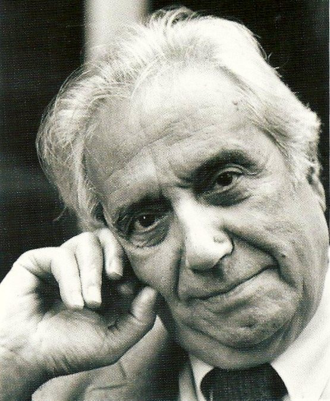
Figure 1. Daciano da Costa (1930-2005)
DACIANO DA COSTA - DEVELOPING SUSTAINABLE DESIGN Design for Sustainability requires generating solutions that are equally beneficial to the society in general and to the communities around us, to the natural environment, and to the global, but especially to the local, economic systems (Vezzoli and Manzini, 2008; Vezzoli, Kohtala and Srinivasan, 2014).
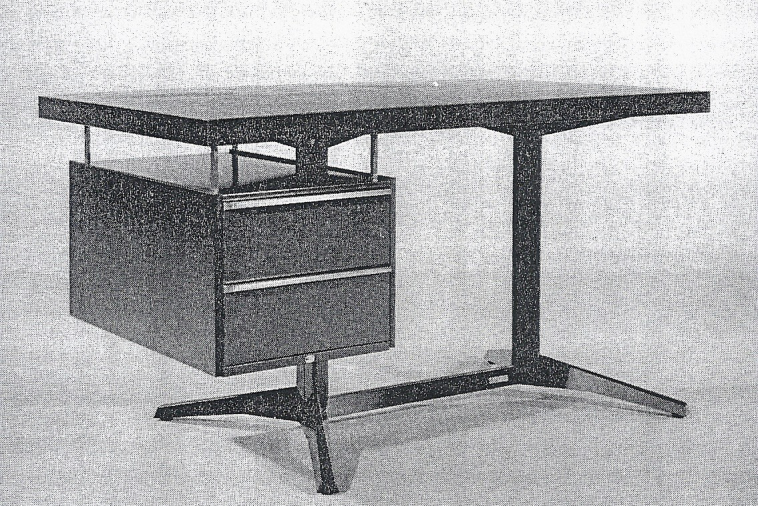
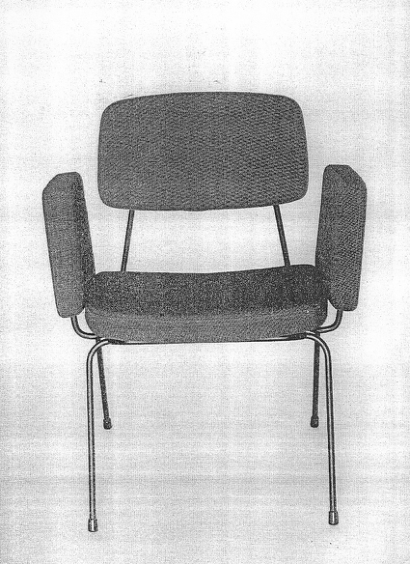
Daciano da Costa brought a modernization of processes to the Design practice and teaching, a new perspective on the emerging themes of Design during the XX century, as Sustainable Design values. He believed that designing was the contribution to a shared responsibility in achieving sustainable products. This commitment meant to him designing solutions while seeking for a balance between social, environmental and economic aspects. In spite of Sustainable Design being a recent discipline, Daciano in the early sixties tried and achieved new experiences in this context proposing solutions to help then finding ways socially, economically and environmentally sustainable. This was the case of Longra, a furniture factory dealing with huge problems that would lead to unemployment of numerous workers. For Longra, Daciano managed to achieve a furniture production for internal consummation instead of importing from abroad, using local resources combining lasting natural materials with Portuguese technology and handmade tradition. Although being industrial serial production, he introduced human control and human resources incorporating a Portuguese identity through the use of local long lasting materials, local workers and local technology in search of what he intended to be the real concept of sustainability. His association with Longra Steelworks was decisive in achieving these objectives, resulting in the famous Cortez line of furniture and other innovative pieces, such a series of stuffed metallic chairs, widely used in theatre and cinema stalls.
Ergonomics In Design, Usability & Special Populations I (2022) https://openaccess.cms-conferences.org/#/publications/book/978-1-4951-2106-7
Figure 2. Cortez Line produced by Longra Steelworks, 1963, Daciano da Costa. (1985, p.79)Figure 3. Stuffed metallic armchair produced by Longra Steelworks, 1963, Daciano da Costa, (1985, p.79)
Ergonomics In Design, Usability & Special Populations I (2022) https://openaccess.cms-conferences.org/#/publications/book/978-1-4951-2106-7
At a time when the fledgling industry offered was limited and undefined, there was so much to be done. These particular circumstances produced a need for opportunity to design a global project with a sense of coordination and coherence. An integral relationship between the nature of project production (the time frames, the means and the processes associated with it) and the cultural, economic and social context. Daciano believed that designing was providing a service. This task was understood as the building of a relationship with users, with those who commissioned it and even with those who produced it (Martins and Spencer, 2009).
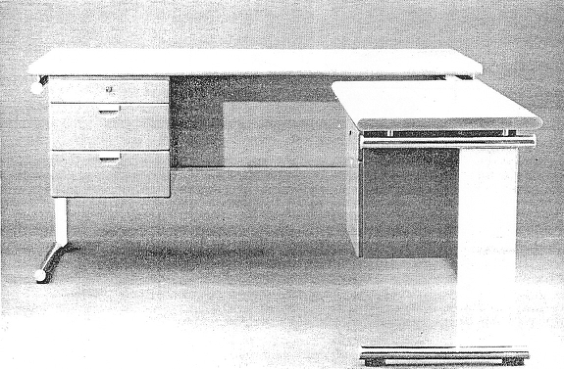
The commitment with the industry was indeed evinced in the exploration of the office furniture systems, with the choice of long lasting materials and with the rationalization of the industrial production reusing old methods and machinery. This Daciano´s options permitted to obtain pieces of furniture that are still in use nowadays, because of their timeless linear shapes and the quality of the materials in which they were made.
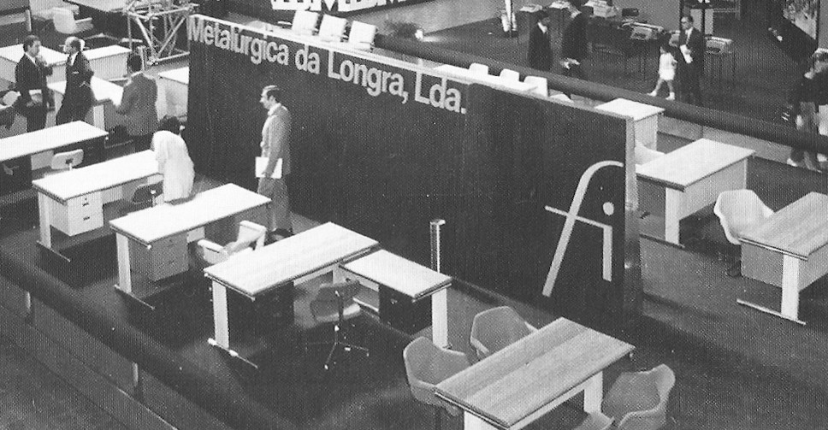
Figure 4. Desk produced by Longra Steelworks, 1971, Daciano da Costa, (1985, p.79)Figure 5. Longra´s stand at FIL-Lisbon International Fair, 1971, Daciano da Costa (2001, p.269)
Ergonomics In Design, Usability & Special Populations I (2022) https://openaccess.cms-conferences.org/#/publications/book/978-1-4951-2106-7
In the interiors he designed for the National Library (1965-1968) and the Calouste Gulbenkian Foundation Library (1966-1969), the comfortable armchairs and their surroundings create an atmosphere, in the relation between the architecture and its furnishings, where users set and remain in such spaces specially created for the purposes of pushing their capacity for study and concentration. It would not simply be a case of distributing areas and uses; in the design of the interior spaces, the physical dimensions of the spaces and their metric relations would have to be closely aligned with the sensory dimensions of the space, which are measured by the quality of the environments (lighting quality, color effect, furnishing comfort, etc.) humanizing this spaces under the emotional and sustainable values point of view.
Figures 6 and 7. National Library, 1965-68, Lisbon, Daciano da Costa (2001, pp.123-125)
Ergonomics In Design, Usability & Special Populations I (2022) https://openaccess.cms-conferences.org/#/publications/book/978-1-4951-2106-7
Figures 8 and 9. Calouste Gulbenkian Foundation Library, 1966-69, Lisbon, Daciano da Costa (2001, p.132; 1985, p.54)
Ergonomics In Design, Usability & Special Populations I (2022) https://openaccess.cms-conferences.org/#/publications/book/978-1-4951-2106-7
At the beginning of the seventies, Victor Papanek, in his book “Design for the Real World, Human Ecology and Social Change” challenged designers to act upon a social responsibility and that they could propose simple solutions to be used by the community (Papanek, 1985). Designers need to acknowledge and play new roles based on the fast changes of the world and in the massively produced artifacts.
Daciano revealed an early interest in the values of rationality and functionality, which he aimed to incorporate into his work, in common with what he saw happening with other pioneers of modern design abroad (Neves, 2009). Of the many interior design projects he was involved with, his chairs are particularly special. He managed to obtain the collaboration of some firms in their construction, adding the value of handmade tradition to a mass-produced object.
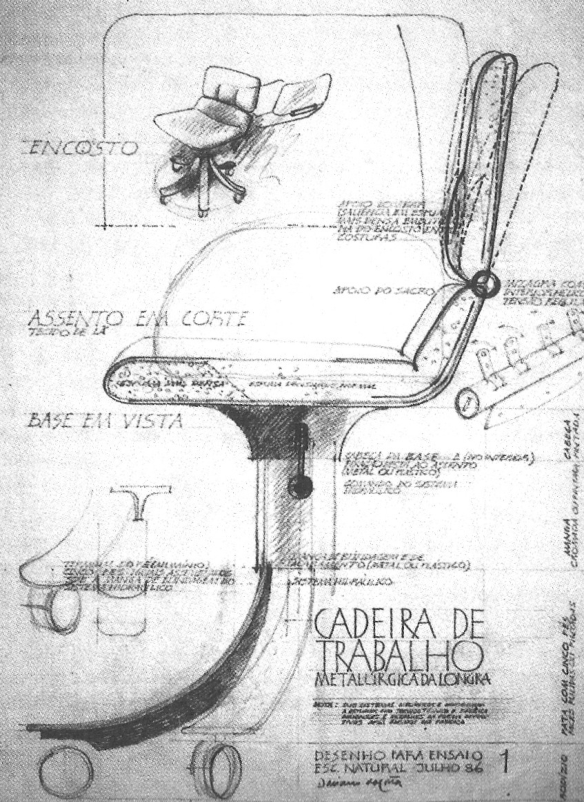
Figure 10. Daciano da Costa, 1986, working chair sketches for Longra Steelworks production. (2001, p.26)
Like in many other objects designed by Daciano, its apparent simplicity illustrates how the creative process corresponds to the ability to achieve synthesis. They are simultaneously discreet, useful, ergonomic, simple and timeless and also engaged with the industry in a sustainable way.
Ergonomics In Design, Usability & Special Populations I (2022) https://openaccess.cms-conferences.org/#/publications/book/978-1-4951-2106-7
Daciano was involved in the process of understanding the need for comprehensive integration of human capabilities, social needs and local resources into the design system. His creative process improved to conciliate the ability of the designer with the needs of the producer and his workers skills, but also with the local resources and long lasting forms and materials.
As a professor when designing, developing and supervising the exercises he set, recognition by the students of the Sustainable Design importance was one of his main concerns. Design production applied to daily life constituting a new territory of social, cultural and environmental interest, representing the several thematic and conceptual approaches carried out by Daciano’s teaching principles, providing for the future designers the enrichment of their training and knowledge. Daciano da Costa stands out because of the unique way that along his career he was able to conciliate with brilliance his project work, strongly committed with industry, and his Design teaching at the Technical University of Lisbon where he implemented its first Design Degree.
Throughout several decades, Daciano was a striking figure in the development of a culture for Design, not only because of the relevance of his project work, but also because of his influence as a teacher and a spreader of the new project thinking ruled by Sustainable Design principles. He criticized the desperate search for originality and repudiate the effect of the culture of immediacy and “high pressure success” which encourages useless and the production of “visual junk” (Costa, 1998). The products he created maintain the same synthetic sense where complexity becomes simplified, where tradition is integrated into contemporaneity in the process of industrial design. He always possessed a desire to adopt the processes of systematic thinking and rationalization of production. He was an apologist for the principles of the division of labor and teamwork (Martins and Spencer, 2009). Since the early sixties he always tried to develop a close relationship between human systems integration and production systems engineering when dealing with the Portuguese industry.
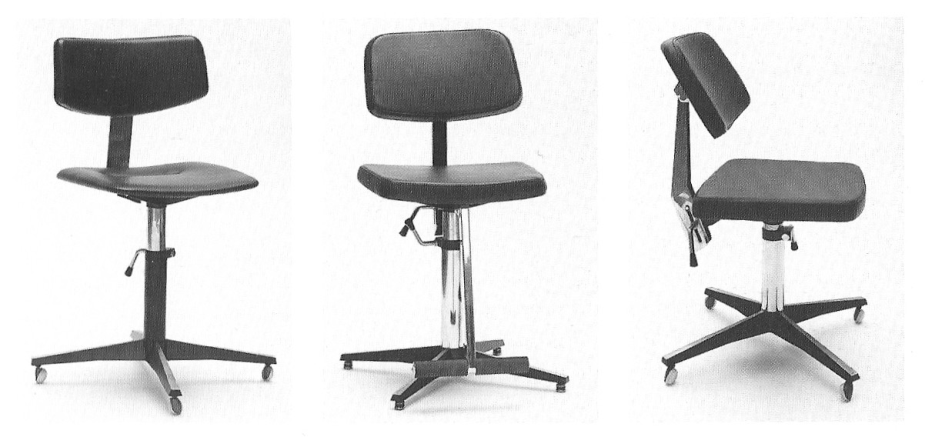
Figure 11. Daciano da Costa, desk chairs, 1962, produced by Longra. (2001, p.257)
Daciano’s Design culture shows a superior technical and methodological control of the industrial product and a distinguished ecological and social consciousness, on the sense of a refined design thinking that operates the mediation between the designer, the industry and the society.
Ergonomics In Design, Usability & Special Populations I (2022) https://openaccess.cms-conferences.org/#/publications/book/978-1-4951-2106-7
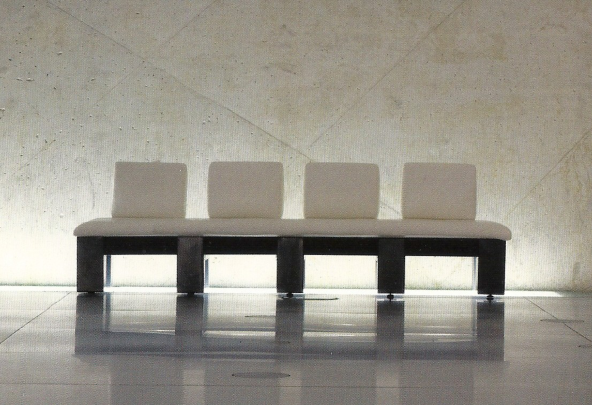
One of his last works, in 2005, was the design project for furnishing the Music House (Casa da Música) in Oporto. It came about through the personal input of the well know architect Rem Koolhas, the project director, who made a point of choosing Daciano’s work. Koolhas selected models of armchairs and chairs from various eras and contexts from the Daciano da Costa retrospective work from the sixties to the nineties. All the pieces were meticulously chosen for their new setting in this Music House, maintaining their timeless qualities in a sustainable way.
Figures 12 and 13. Daciano da Costa, Music House, 2005, Oporto. (2009, pp.28-33)
The shapes of the chosen pieces of furniture were slightly transformed by Daciano within the new times paradigm, also changing some of the materials or colors to fit in their new architectural settings. These objects, whose design and original purpose fitted the logic of ‘design in context’ and assumed a clear commitment to their surroundings (something that Daciano considered to be the basis for his project work) would come take on a new role at the Music House, by assuming a prominent position in a new context.
Ergonomics In Design, Usability & Special Populations I (2022) https://openaccess.cms-conferences.org/#/publications/book/978-1-4951-2106-7
Figure 14. Daciano da Costa, Music House, 2005, Oporto. (2009, p.31)
CONCLUSIONS
Design projects from Daciano da Costa can prove that the real dimension of his work greatly exceeds its strict physical function as objects and they take on an eminently social dimension implementing interaction between the interests of the industry and his workers needs and skills, but also with the local resources in a sustainable way. His design thinking successfully operates the mediation between the designer, the industry and the society.
We can considerer Daciano’s working solutions for Longra Industry as ‘sustainable’ achievement (we must point out that in the sixties this concept was not yet established and meaningful), an innovation anticipating one of the main transversal aspect of nowadays Design: Sustainability. He managed to avoid unemployment for almost one hundred workers reusing local technology for new furniture design projects, combining long lasting natural materials with the steel structures that this steelwork industry usually produced, taking economic advantage and social profits from human skills and resources that could be wasted away.
Daciano da Costa created simple long-term solutions that could last and fulfilling human actual needs, even their simplicity combines with the aesthetic paradigm changes of the XXI century. The contemporaneousness of his objects, their timeless quality, their solid social consistency and permanence is a testament of the Sustainable Design values in Daciano’s work and legacy, according to the Sustainability Culture that all designers should encounter.
REFERENCES
Catálogo da Exposição Daciano da Costa Designer (2001), Fundação Calouste Gulbenkian, Lisboa. Costa, D. (1985), “Curriculum Vitae 1985”, FA-UTL, Lisboa. Costa, D. (1998), “Design e Mal-Estar”, CPD - Centro Português de Design, Lisboa. Lage, M. O. P. (2007), “Metalúrgica Longra (1920-1993)”, in: Revista da Faculdade de Letras. História, Lisboa. pp. 217-236 Martins, J. P. Spencer, J. (2009), “Continuity and Change”, in: Atelier Daciano da Costa, True Team, Cascais. pp.15-25 Neves, J. M. (2009), “Two Generations”, in: Atelier Daciano da Costa, True Team, Cascais. pp.4-7 Papanek, V. (1985), “Design for the Real World, Human Ecology and Social Change”, Thames & Hudson, London. Vezzoli, C. and Manzini, E. (2008) “Design for Environmental Sustainability”, Springer, London. Vezzoli, C., Kohtala, C. and Srinivasan, A. (2014), “Product-Service System Design for Sustainability”, Greenleaf Publishing, Sheffield, UK.
Ergonomics In Design, Usability & Special Populations I (2022) https://openaccess.cms-conferences.org/#/publications/book/978-1-4951-2106-7
LISTED IN THE AHFE DIGITAL BOOKSTORE CATALOGUE
Explore the complete digital volume
Advances in Ergonomics In Design, Usability & Special Populations: Part I
Read this individual research paper free through the original publisher, or explore the full digital proceedings book.
ISBN 978-1-4951-2106-7
Explore this ISBN in the AHFE Bookstore ↗Listed in the July 2026 bookstore catalogue; search by ISBN to confirm current availability · Digital book purchase optional