Audrey Abi Akle ab, Katarzyna Borgieł ac, Stéphanie Minel, Christophe Merlo ac (2022). Recommendations for User Centered Design of Interfaces for Seniors in the Context of Health Care. In: Advances in Ergonomics In Design, Usability & Special Populations: Part I. AHFE Open Access, vol. 18. https://doi.org/10.54941/ahfe100833
The aim of the research presented in this paper is to identify behavior and generic expectations of elderly people (mean=65 years) relevant to Human-Machine Interface (HMI) in the context of health. Our work is based on two industrial cases of health care services. In one case, we conducted user tests on HMI coupled with an eye-tracker to identify one behavior pattern (16 subjects). And in both industrial cases, we realized interviews that reveal generic expectations in terms of information from seniors (16+8 subjects). Then, this double-case approach has enabled us to emphasize the explorer behavior of seniors and expectations “in the periphery of health” with a need for both social and reassuring projection. Based on our results, we propose recommendations for HMI design in our context and which levers (action parameters) for design in other fields.
With the constant aging of world’s population (Christensen et al., 2009), the spreading use of information and communication technologies (Hart et al., 2008) and the growing interest in patient-centered healthcare (Davis et al., 2005), the subject of use of computers by seniors in the context of health care is of utmost interest. As state (Koch et al., 2009): “In the light of an aging society, effective delivery of healthcare will be more dependent on different technological solutions supporting the decentralization of healthcare, higher patient involvement and increased societal demands.”
The senior-centered design is a vast field of human factors and ergonomics research (Denno et al., 1992; Fisk et al., 2009). More particularly, the design of interfaces for seniors has obtained a special attention in this domain. One of the subjects most studied is the impact of aging on abilities relevant to HMI use. For example Hawthorn (2000) provides a deep analysis of age-impacted abilities and provides a set of suggestions to consider for the design of interfaces for older users. He lists numerous characteristics that need to be taken into account: vision, speech and hearing, psychomotor abilities, attention and automated responses, memory and learning, and finally intelligence and expertise. In the same direction, Demiris and his colleagues (Demiris et al., 2001) provide a set of guidelines for a web-based system for elderly. They list functional impairment and computer inexperience as two main reasons for the need of senior-specific guidelines for the HMI design.
The objectives of use of computers and Internet for seniors are another domain of research. The most common uses of computers by older adults are communication and social support, leisure and entertainment, information seeking about health subjects and about education subjects, and productivity (Wagner et al., 2010). Other authors mention as well e-banking or e-shopping and argue that the use of computers by seniors is not that different from the use made by younger users (Vuori et al., 2005).
The use of ICT in the health care context by seniors has been merely from the perspective of patient-centered provision of care. The most popular service categories addressed by ICT and identified in research literature are: handling adverse conditions, assessing the state of health, consultation and education, motivation and feedback, service ordering, and finally social inclusion (Ludwig et al., 2011).
In this paper we present a perspective on seniors as users of computers in two different contexts of health care services: thermal resort and home care. More particularly, we put attention to the behavior of seniors while using the websites and to their needs about the content of health care-oriented interfaces. As states the World Health Organization (WHO, 2010): "Health is a state of complete physical, mental and social well-being and not merely the absence of disease or infirmity". The social dimension of wellbeing is equally important to physical and mental health. In this context, it seems important to consider the expectations of seniors going beyond medical information. For the purposes of this paper we define seniors (or older adults, elderly users) as people aged of more than 65 year and without a professional activity.
Our initial problematic is derived from the Case 1, concerning the replacement of the paper patient record (situated at patients’ home) by a technological tool. In this context, the population of end-users is very heterogeneous and the tool will be merely addressed to medical actors. However, as the seniors represent most users of home care services and the tool will be placed in their household, they need to be considered as the potential users of the ICT. That’s why we have decided to make reference to another health care structure, the Case 2, concerning a reform of an information tool (website) of a thermal health resort. In this case, the end-users are mainly seniors which are readily available (on the spot). Our two industrial cases are comparable within the HMI design for the elderly people in a health context. Indeed, the usage of tools (i.e. HMI) is made by seniors in the private sphere (at home). In addition, although one case deals with hospitalization and other with well-being, they both address the use of HMI for access to care.
In order to identify the expectations of seniors and the « HMI behavior » we have conducted two experiments. Firstly, we have performed a campaign of user tests on HMI in our Case study 2 to analyze the senior-HMI- behavior. Secondly, we have realized semi-structured interviews within the population of seniors from Case 1. This second phase helped us to draw generic recommendations, based on the expectations of seniors in the context of health.
The remainder of this paper is organized as follows. It begins with a presentation of the scope of our work and of the different issues addressed, in relevance to our two case studies. Then the context is described, and the method of their analysis is presented in three steps. After the results section we propose operational-oriented design recommendations. We finish this paper with a general discussion, and we draw conclusions about the transfer of our recommendations to other contexts and for other profiles of users.
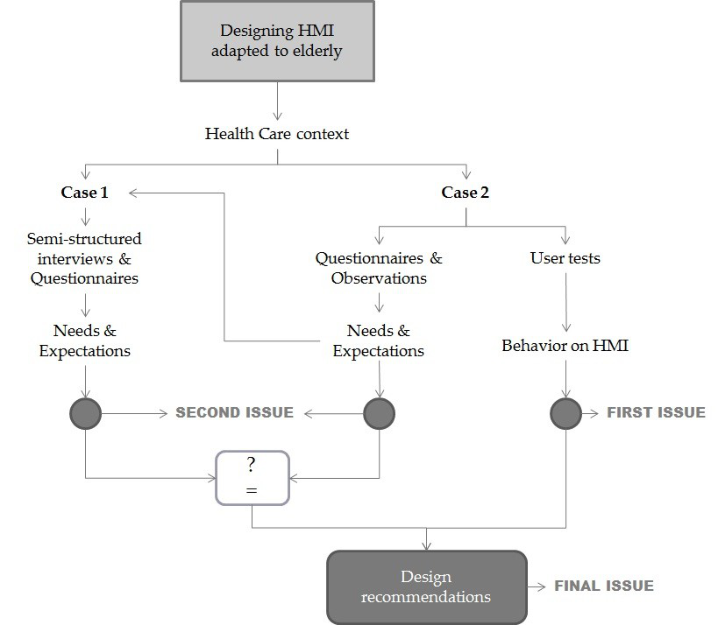
SCOPE OF THE PAPER We base our work on two different case studies linked by the context (health care) and target HMI users (seniors). Figure 1 on the next page presents the scope of our work.
Our research focuses on two aspects of user-centered design of human-machine interfaces for the elderly people in the field of health care services. As mentioned above, these 2 cases are comparable according to the usage of HMI in the private sphere and the accessibility of care.
Figure 1: The scope of the paper.
The first issue concerns the behavior of elderly people on human-machine interfaces: How do elderly people explore web pages? In this part we focus on clicks location, on the areas of interest and on the gaze paths (eye-tracking).
The second issue concerns the needs and expectations of seniors related to the health care services, accessible through the interfaces. More particularly, we want to find answers about the information found important in the context of thermal care and home care. Observations realized during the experiment in Case 2 have allowed us to identify the needs that we have called "the information in the periphery of health". Indeed, besides information about medical care services, seniors show great interest for information such as "planning", "location", "activities", etc. linked with the care services. Through interviews and questionnaires we have verified the importance of both types of informations (medical and “peripheral”) in the context of the Case 1.
The final issue, and the core of this paper, is to propose design recommendations for HMI in the context of health care, issued from our findings in both case studies. In this paper our recommendations are operational-oriented and we see them as design levers (action parameters) for other contexts and fields.
INDUSTRIAL CONTEXT To achieve our objectives we have conducted experiments in two distinct structures of health care. The first case (Case 1) is part of a multi-level long-term research project i.e. 3 years and multi-actors project (Borgiel et al., 2013). The second case (Case 2) is a specific short-term study i.e. 1 month and senior-users (mean= 65 years) project.
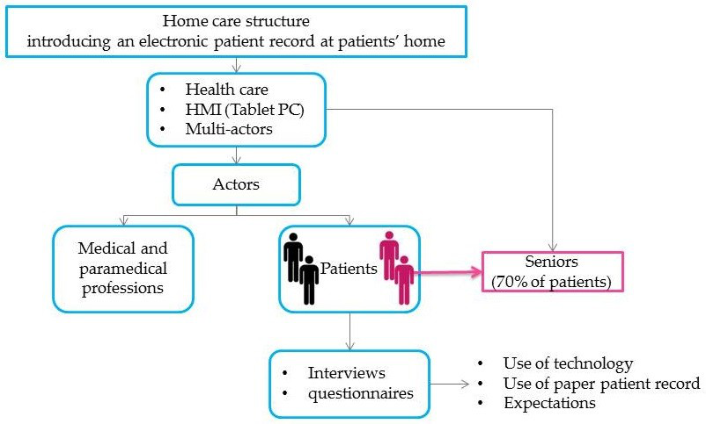
Case 1: Multi-level long-term research project The industrial Case 1 (see Figure 2) is a French home care association offering two kinds of distinct services: hospital at home and nursing at home. The first one, hospital at home, is an alternative to classical hospitalization and allows people with serious, acute or chronic diseases to stay in their family environment. The second one addresses elderly or disabled people that need coordinated nursing services. The home care structure takes care of about 500 patients every day, with a level of 20% within the hospital at home service. The service of hospital at home addresses all ages of patients; however the population of patients of the studied structure is represented mostly by elderly people. Indeed, for the years 2010-2013, 70% of patients in the hospital at home service was aged of 65 years and more.
The home care structure has engaged recently a project of replacing the paper health record, situated at patient’s home, by a tablet PC with health care traceability software. This project is destined to the hospital at home service and is motivated by different issues that we will not present here (see Borgiel et al., 2013).
Given the hypothesis that the patient medical record is seen as a tool mostly for health care professionals, the initial project didn’t take into account the patients’ use of the future system. However the patient and his/her entourage (mostly represented by his/her family) is the central actor in home care activities. S/he is not simply a “customer” but participates actively in the care process. S/he can be responsible for some of the care tasks and is very often in charge of medication delivery, and sometimes – administration. His/her constant presence makes him/her the best source of knowledge about the evolution of care. In the context of the new project, it seems then obvious to include patients and their families into the group of the future users Thus we have decided to approach the definition of the future use of the tools form the patient perspective.
Figure 2: Illustration of the Case 1 - general long-term study.
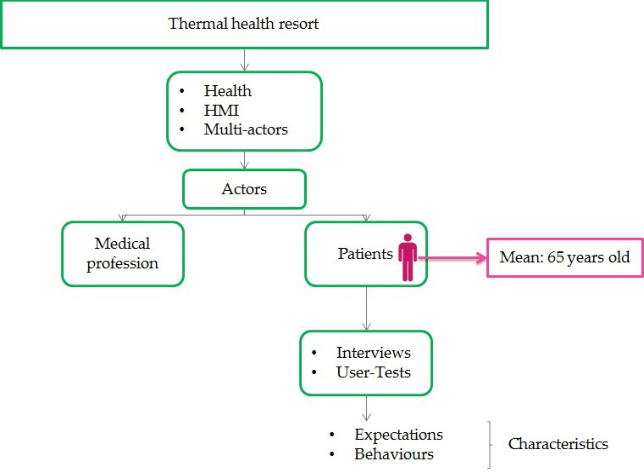
Case 2: Specific short-term study The industrial Case 2 (see Figure 3 on the next page) is a thermal resort. It proposes medical cures for three weeks. The care services depend on the type of cure (Rheumatology or Phlebology). The thermal doctor prescribes treatment (72 seances in total). Cares are varied, so we are in a multi-actors context. In this project, we are interested solely by patients whose average age is 65 years.
In this case, the industrial demand is the ergonomic analysis of the home page of the thermal resort website. For us, it is mainly to study the behavior of the elderly on an HMI in the context of health care to define design recommendations. We want to identify the appropriation of web tools for seniors, the image they have and how they explore a web page, locate clicks and areas of interest.
Figure 3: Illustration of the Case 2 - specific short-term study.
METHOD
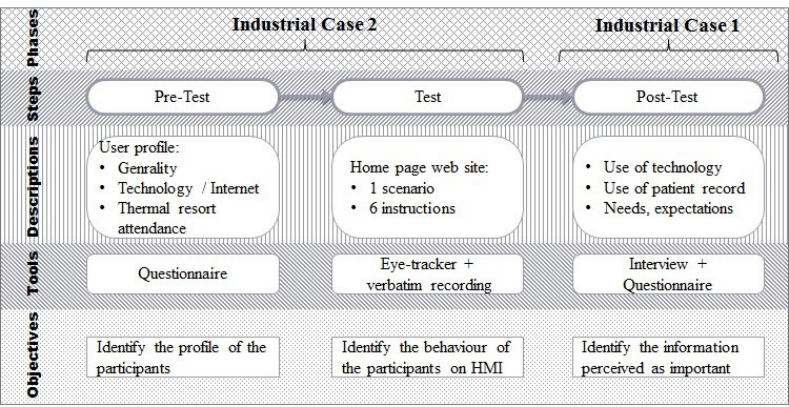
Our experiment is divided into two distinct phases represented by our two industrial cases. The first phase conducted in the industrial case 2 is composed of two steps: "pre-test" and "test" and the second phase conducted in the industrial case 1 is composed of one step. In this paper we call this step "post-test" (see Figure 4).
Figure 4: The experiment proceeding.
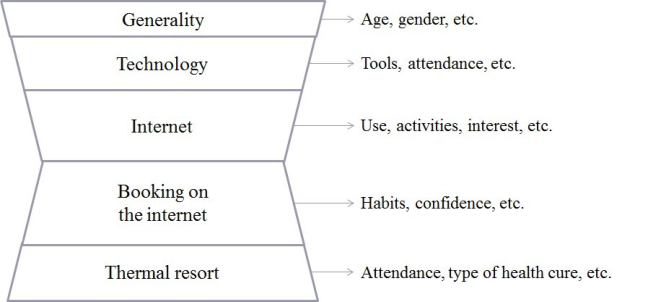
Step 1: the pre-test The first step (pre-test) used to identify the user profile of participants (seniors). We seek here mainly to identify the relationship of the elderly with technology and internet. To achieve so, we have conducted semi-structured interviews with a questionnaire for support. We used an “hourglass” structure to conduct the interviews (Figure 5). We started with very open questions at first, semi-open question afterwards for narrowing the answers, and reopen the issues in the end. Reopening the questionnaire is mainly useful to increase the feeling of freedom of the interviewed persons.
Figure 5: Structure of questionnaire in the pre-test step.
Step 2: the test Step 2 consists in test the home page of the website of the thermal resort by patients. To do this, we have developed a scenario composed of 6 instructions. The scenario and instructions during the test on HMI are:
“Imagine that your doctor prescribes a health cure in Dax town (France) whose orientation is rheumatology” Instruction 1: “We are going to do as if you were on the website of the thermal resort and looking on the web for information about the cure prescribed by your doctor”
After the participant has selected the item in the web page containing information about rheumatology, the scenario continues with the following instruction. Thus, each time an instruction is given, the participant explores the web page and interacted with it until the click of the expected item (according to the instruction).
Instruction 2: “Now, we are going to do as if you are looking for activities and care complementary to your cure”.
We pursue the scenario: “Now that you have chosen your cure and your complementary care, we are going to imagine that you want to come to thermal resort in train during the month of May / June.”
Instruction 3: “As you come by train, we are going to do as if you are looking for where is the Dax station relative to the location of the thermal resort” Instruction 4: “Now let's imagine you want to stay in a studio for one person in Thermotel and are looking for rental rates”
Instruction 5: “We are going to pretend that you are within a hair’s breadth from booking your stay at the thermal resort and want the list of things to expect before the start of your cure” Instruction 6: “Finally, we are going to do as if the text was too small and difficult to read and you want to increase the text size.”
The material used for the test is: a screen, a keyboard and a mouse and an eye-tracking system: the Tobii X2.
During this step, we measure the time taken to complete the task, the number of "incorrect» and “correct” clicks and its location (different possibilities) and the time elapsed between the first fixation item and click the item. Also, we observe areas of interest on the web page and the path of participant eyes on the web page.
Note that during the test, we operate a verbatim record to identify "invisible" information.
Step 3: the post-test In order to define the future use of the tools by patients and their entourage (PE) we have decided to analyze the present context form different perspectives. Firstly, we found it important to define the PE’s use of technological tools in general. Secondly, we have decided to analyze present activities about the paper medical record. Thirdly, we have decided to analyze patient’s needs related more generally to the organization of care activities, including rounds of health care professionals. The data was gathered through semi-structured interviews and through questionnaires. The evaluation of the frequency of use of technological tools was based on a 5-point Likert scale, from “never” to “daily”. The evaluation of the importance of access do medical and organizational data was based also on a 5-point Likert scale, from “very important” to “not important at all” (1- Not important at all, 2 – Little important, 3 – Relatively important, 4 – Important, 5 – Very important).
We gathered data from 8 households where patients have been taken in charge under the hospital at home service. The participation was voluntary, thus the patients have been previously contacted by a nurse manager. The interviews have been organized in the households and depending on the situation, both the patient and / or his family member have been interviewed.
RESULTS
In this part we present results obtained from the research relevant to our industrial case studies. Given our method (Figure 4), we describe firstly the results obtained from the industrial case 2, and then from the industrial case 1.
Results from Industrial Case 2 The sample of subjects who participated in the user tests is composed of 11 women and 5 men whose average age is 65 (S.D.=13). The questionnaire carried out during the pre-test indicates that 80% of participants are daily internet users and 100% of the sample uses the Internet through a computer (compared to a tablet or a smartphone).
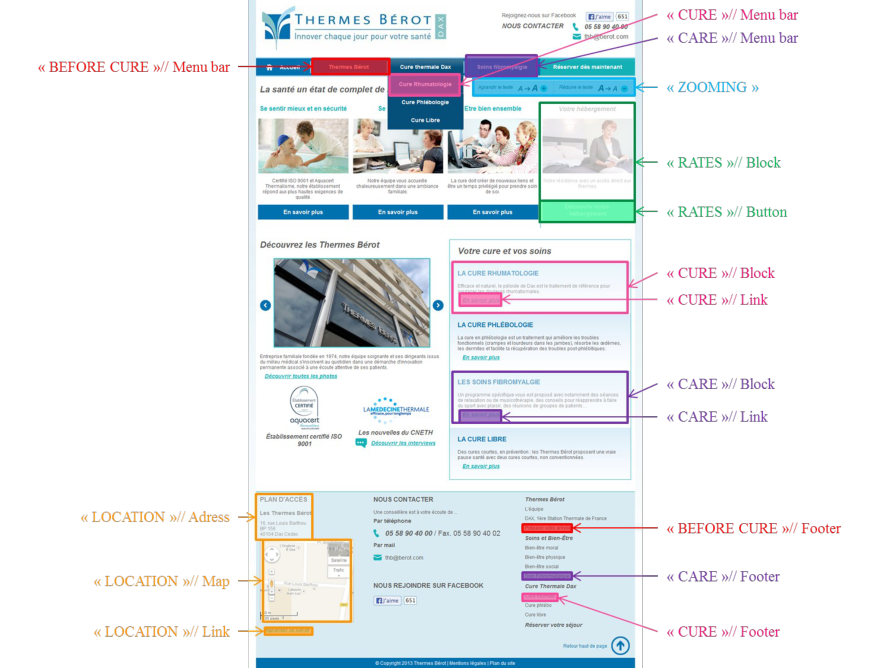
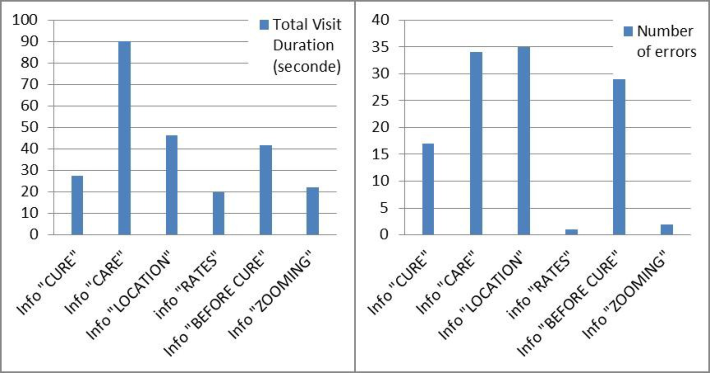
As specified in the previous section, for each instruction from the scenario the participant interacts with the web page. To lighten the results presentation (Figure 7), we gave a title to each instruction: instruction 1 = Info « CURE », instruction 2 =Info « CARE », instruction 3 = Info « LOCATION », instruction 4= Info « RATES », instruction 5= Info « BEFORE CURE » and instruction 6= « ZOOMING ». Figure 6 (next page) presents the homepage (screenshot) of the website. The rectangles filled with colors correspond to clickable items (defined by the HMI designer) and the rectangles without fillings correspond to items that we propose to make clickable.
We observe (Figure 7) that the information in "CARE" is long to find on the homepage with nearly 90 seconds. We also retain the time relevant to find the location of thermal resort (info « LOCATION ») and the list of things to expect before arriving (info « BEFORE CURE ») with respectively 46.5 and 42 seconds. Time to find the information needed to cure Rheumatology (info « CURE »), the rates for Thermotel (info « RATES ») and the zooming button (info « ZOOMING ») within acceptable limits (less than 30 seconds).
We note that for info "RATES" and info "ZOOMING" errors are almost non-existent (0.8%). Errors when looking for info about "CURE" amounted to 17 which correspond to about one «bad» click per person which is quite acceptable. On the other side, the errors related to research information for further care (info "CARE"), the location of thermal resort (info "LOCATION") and the list of things to expect before cure (info " BEFORE CURE ") are too important and point out a lack of clarity and confusion for participants.
Figure 6: Screenshot of the thermal resort webpage and the indication of clickable items.Figure 7: Total visit duration and number of errors for each instruction given.
Clicks in block correspond to clicks on the block + on the title in the block + on the link in the block. Only the click on the link (or in the menu bar) allows to finish and to pass to the next instruction (because these are the clickable items defined by the HMI designer).
The clicks result for each instruction is:
Instruction 1 (info “cure”): 26 clicks in block (with 10 on the link) vs. 6 clicks in the menu bar
Instruction 2 (info “care”): 26 clicks in block (with 12 on the link) vs. 4 clicks in the menu bar
Instruction 3 (info “location”): 28 clicks on the map vs. 3 clicks on the address of the resort (textual)
Instruction 4 (info “rates”): 16 clicks on the button (in a block) (there is 1 error due to the label)
Instruction 5 (info “before cure”): 11 clicks in the footer page vs. 5 clicks in the menu bar
Instruction 6 (info “zooming”): no real mistakes (2 errors due to label) Thus we observe that for instructions 1 and 2, participants (who are seniors) tend to interact with thematic blocks. For instruction 3 we can also consider the "block-clicking" behavior because we obtain 28 clicks on the map that can be seen as a thematic block. In addition, the resulting clicks of the Instruction 5 clearly indicate that seniors interact very little with the menu bar on the web page. Indeed, we obtain 11 clicks in the footer of the web page against 5 in the menu bar.
Also, during the tests, we were able to identify certain information expressed by participants regarding their needs and expectations. So we decided to check these points more quantitatively through the Industrial Case 1.
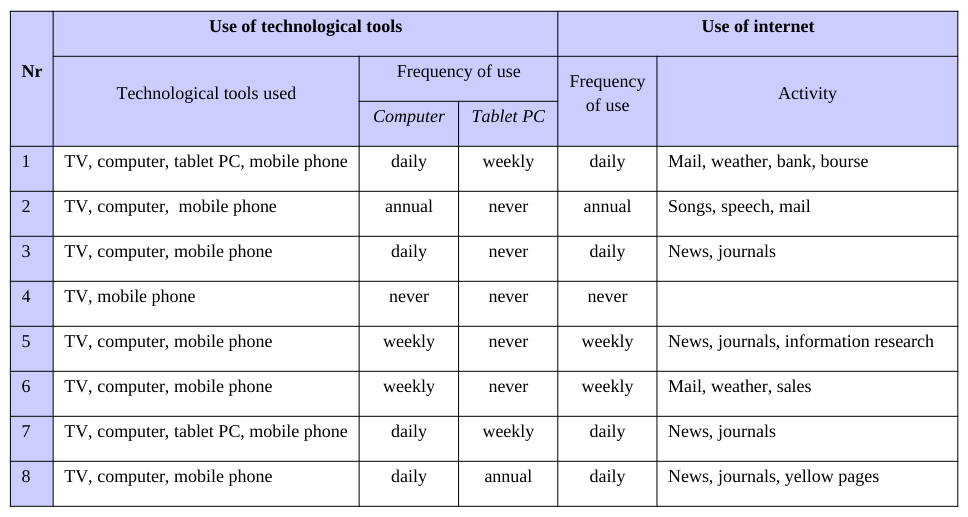
Results from Industrial Case 1 Up to date, we have studied 8 different households. From all the households, only one patient lived alone, the rest of them lived with their spouse. Three patients were unable to express their opinion due to their pathologies and one patient didn’t participate in the interview, though he was present in the same room. The age of participants varied between 60 and 81 years (Mean = 71.6). Given the small sample size, we present here mostly descriptive statistics of obtained results.
Table 1 presents results about the use of technological tools and of internet. The results show that computers and internet are popular technological tools among the population studied. Only one household of 8 doesn’t have a computer or internet. The remaining 7 used computers mostly for internet access and the most popular activities were mail checking, news or journals reading, and information seeking.
Table 1: Use of technological tools and of internet.
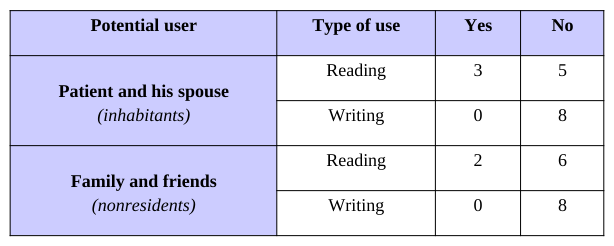
Table 2 presents results from the questionnaire about the use of paper patient record.
Table 2: Use of paper patient record.
The results show that only in 37.5 % of interviewed households the habitants read the paper patient record. However more detailed interviews showed that this activity of reading is not regular and is limited to only few documents, particularly medicine prescriptions. Similar conclusions may be drawn about the consultation of the paper record by others, i.e. the patients’ children or friends. Finally the fact that nobody writes any information on the record is a confirmation about the perception of the document by PE’s – they see it as a caregiver’s tool, and do not dare to add any comments about medical data.
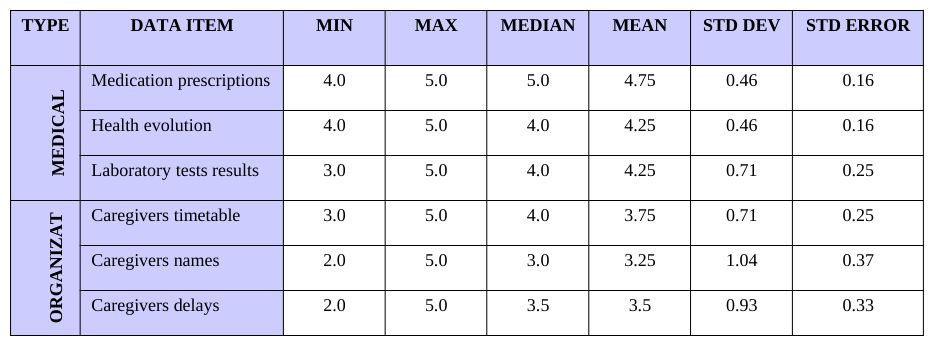
Table 3 presents descriptive statistics for results about the perception of importance of access to diverse data linked to patients stay within the home care structure, both medical and organizational.
Table 3: Descriptive statistics for the evaluation of importance of access to medical and organizational data.
The obtained results show that access to medication prescriptions is of outmost importance to PEs in the context of home care. Other medical data like global evolution of health or laboratory test results are important as well. On the other hand, the information about the organization of health, seem to be still important, but not as much as the medical data. With reference to the initial problematic, it is important to specify that today the access to most of data listed in Table 3 is not provided in a written form, except of the medication prescriptions and laboratory tests results. The medication prescriptions are created by the family doctor at home, and the results are sent by laboratories directly at patients address. The remaining information are communicated to patients and their families verbally, directly at the moment of care (health evolution, caregivers names, delays, etc.).
Table 4 on the next page presents descriptive statistics for results about the evaluation of importance of access to medical vs organizational data.
Table 4: Descriptive statistics for the evaluation of access to medical vs organizational data.
The results obtained can suggest that even if access to organizational information is seen as important in the home care context, the access to medical information is still more important.
To summarize, our research about the use of ITC by seniors in the home context allows us to state following facts. The patients and their spouses are active users of computer and internet in their daily lives, so they will be probably interested by the use of the new tool. Even if their use of actual paper medical record is not very frequent, the binder contains very important data that need to be left accessible for free use, especially the medication prescription. Thus the future system needs to provide an easy and direct access to these data. Finally, the organizational data, or the “informations in the periphery of health” are seen as important. The future system could support the provision of this information.
Recommendations From the results obtained in our two industrial cases we propose recommendations for user (seniors) centered design of HMI in the field of health care. Our recommendations concern two aspects of the HMI: the structure and the selection of information.
First, we propose "hybrid" interfaces i.e. mosaic type (e.g. windows 8 interface) but equipped and preserving menu bar for a more "traditional" navigation. Indeed, we observed that seniors had exploratory behavior on the HMI, they surf. They tend to operate / click on thematic blocks rather than links or menu bar. In view of this, we recommend reducing the visual emphasis of links to bring more relief to the buttons and clearly visually distinguish thematic blocks for example using visual variables such as separation, continuity, etc. (Khöler, 1964; Card et al., 1999; Bertin, 1999) or using pre-attentive variables such as color, size, orientation, etc. (Tidwell, 2009).
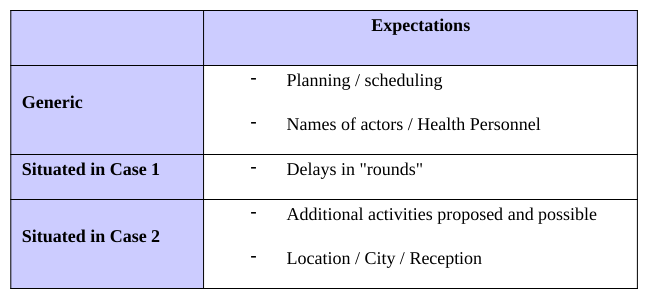
Our second level of recommendation concerns the selection of information to display. Our work has highlighted a need for information at the "periphery" of health. In fact, being in a health context, the information relating to it is expected in nature. Thus, seniors have expectations which do not relate directly to health. Expectations of seniors (see Table 5) denote a need either for social projection or to be reassured. The first part of observed expectations is common for both case studies; we call them “generic”. The second part is situated for each of case studies, given the specificities of the health care context.
Table 5: Needs and expectations.
DISCUSSION & CONCLUSION The objective of this paper was to propose design recommendations for HMI for seniors in the context of health care. We based our work on two industrial case studies which cover a large scope of use of HMI by seniors for the accessibility of care in the private sphere (thermal resort and home care) in an attempt to bring a generic framework. The proposed recommendations are distinguished in two parts. The first part transmits information regarding the structure of the HMI whereas the second part diffuse information in periphery of health expected by seniors.
Our research does not pretend to offer solutions to all elderly people. Here, we wanted to consider a user panel as any other with its characteristics, experiences, etc. because seniors are not only a research topic related to "reduced capacities" or handicaps for HMI design (Widlroither et al., 2003).
To promote the recommendations in more generic framework, we plan to continue our work by implementing our recommendations into the design of the future tool within the Case 1 and to experiment upon tablets with more user profiles (seniors, active people, young people, etc.). Indeed, our results do not guarantee that our recommendations apply to other ITC tools such as tablet. In addition, it would be interesting to verify the transfer of our recommendations to a context other than health such as shopping or more precisely booking. In fact, our industrial Case 2 is very close to this type of context.
These design recommendations will be used subsequently for the research work within the Case 1, in reference to the future use of the electronic health record by home care patients and their families. We believe that the adoption of the new tool by patients and their families will promote new relationship between the home care structure and its customers, and thus will be a source of organizational innovation for all the actors. We assume that work presented in this paper is just a part of a project with a larger span and we plan to verify the validity of our results with other profiles of actors of the home care context, mainly different health care professionals. Even if the health is in the center of their activity, they could as well express needs “in the periphery of health”.
REFERENCES
Bertin, J. (1999), "Sémiologie graphique: Les diagrammes - Les réseaux - Les cartes", Editions de l'Ecole des Hautes Etudes en Sciences (31 janvier 1999). Borgiel, K., Latortue, X., Minel, S., Merlo, C. (2013), "Holistic approach to management of innovation: a home care case study”
Proceedings of Confere 2013, July 4th-5th, Biarritz, France. Card, S., Mackinlay, J., Shneiderman, B. (1999), “Readings in Information Visualization - Using Vision to Think”, Morgan Kaufmann. Christensen, K., Doblhammer, G., Rau, R., Vaupel, J.W. (2009), “Ageing populations: the challenges ahead”, The Lancet,
Volume 374, Issue 9696, pp.1196-1208. Davis, K., Schoenbaum, S.C., Audet, A.-M. (2005), “A 2020 Vision of Patient-Centered Primary Care”, Journal of General Internal Medicine, Vol. 20 Issue 10, pp. 953-957. Demiris, G., Finkelstein, S.M., Speedie, S.M. (2001), “Considerations for the Design of a Web-based Clinical Monitoring and
Educational System for Elderly Patients”, Journal of the American Medical Informatics Association, Vol. 8, pp.468-472. Denno, S., Isle, B.A., Ju, G., Koch, C.G., Metz, S.V., Penner, R., Wang, L., Ward, J. (1992), “Human Factors Design Guidelines for the Elderly and People with Disabilities”, Honeywell SSDC. Fisk, A.D., Rogers, W.A., Charness, N., Czaja, S.J., Sharit, J. (2009), “Designing for older adults: Principles and Creative
Human Factors Approaches”, RC Press, Boca Raton, FL, USA, 2nd edition. Hart, T., Chaparro, B., & Halcomb, C. (2008), “Evaluating websites for older adults: Adherence to senior-friendly guidelines and end-user performance”, Behaviour & Information Technology, Vol. 27 No.3, pp.191–199. Hawthorn, D. (2000), “Possible implications of aging for interface designers”, Interacting with Computers, Vol.12, pp. 507–528. Koch, S., Hägglund, M. (2009), “Health informatics and the delivery of care to older people”, Maturitas, Vol. 63, pp.195-199. Köhler, W. (1964), « Psychologie de la forme », 1929, Paris, Gallimard (collection "idées"). Ludwig, W., Wolf, K.-H., Duwenkamp, C., Gusew, N. (2011), “Health-enabling technologies for the elderly – An overview of
services based on a literature review”, Computer Methods and Programs in Biomedicine, Vol. 106, pp. 70-78. Tidwell, J. (2009), “Designing Interfaces: Patterns for Effective Interaction Design”, O'Reilly Media. Vuori, S., & Holmlund-Rytkönen, M. (2005), “55+ people as internet users”, Marketing Intelligence & Planning, Vol. 23 No.1, pp.58–76. Wagner, N., Hassanein, K., Head, M. (2010), “Computer use by older adults: A multi-disciplinary review”, Computers in Human
Behavior, Vol. 26, pp.870–882. Widlmither, H., Man-Panou, L.H.S.B. (2003). “On designing automotive HMIs for elderly drivers: the AGILE initiative”, Human-Computer Interaction: Theory and Practice, Vol. 2 No. 323. World Health Organization (2010). WHO Constitution: http://apps.who.int/gb/bd/PDF/bd47/EN/constitution-en.pdf?ua=1
LISTED IN THE AHFE DIGITAL BOOKSTORE CATALOGUE
Explore the complete digital volume
Advances in Ergonomics In Design, Usability & Special Populations: Part I
Read this individual research paper free through the original publisher, or explore the full digital proceedings book.
ISBN 978-1-4951-2106-7
Explore this ISBN in the AHFE Bookstore ↗Listed in the July 2026 bookstore catalogue; search by ISBN to confirm current availability · Digital book purchase optional