Helen Omole, Guy Walker, Gina Netto (2021). Extracting Cultural Factors from Helicopter Accident Reports Using Content Analysis. In: Advances in Human Aspects of Transportation: Part I. AHFE Open Access, vol. 15. https://doi.org/10.54941/ahfe100603
Accident reports from the United Kingdom and Nigerian civilian helicopter industry were compared in order to explore the wider socio-cultural factors and their impact on human error. These two countries share many common features of helicopter operations, including a prominent offshore oil industry, but they differ in terms of the cultural context these operations take place within. Content analysis was carried out in order to explore the cultural variables influencing human error leading to accidents. Results show Nigeria accident reports revealed more of the high cultural contextual differences themes (cultural traits associated with Third World or traditional countries) with patches of low cultural differences (cultural traits associated with Western countries), while the United Kingdom accident reports revealed more of the low cultural contextual differences themes, but surprisingly higher patches of the high cultural differences. Analysis of these results enhances the understanding of the relationship between culture, human actions and various system parts contributing to unsafe acts leading to helicopter accidents. Cultural factors are prominent in the sampled accident reports, yet culture is currently not well represented in accident analysis methods. This is a significant omission. This paper demonstrates that culture plays a significant role in helicopter accidents, and that these factors can be extracted for real life scenarios.
Despite making up only 12% of the total aviation fleet, helicopters account for around 70% of accidents, despite this they comprise 71.26 percent of all accidents in 2010. While the worldwide airline safety trend is improving, helicopter accident safety trends are not (IHST, 2012). Research shows that human error is thought to be responsible for 70 to 80 percent of aviation accidents (Wiegmann and Shappell, 2003), and an important modifier of human behavior is the culture in which it takes place. However, few studies have focused on the socio-cultural interactions and implications in the aviation industry at the crew, organization and so on levels. No comprehensive study has been carried out to identify the cultural themes within the whole interactive system; in particular, studies primarily focused on the cultural influences on human actions that lead to the errors identified within the investigation proceedings.
This paper explores these cultural influences for several reasons: first, it identifies the underlying cultural factors which lead to the accident. Secondly, it explores the contextual environment in which key interactions took place, specifically those related to decision making. Thirdly, it examines the cultural dimensions that contributed to these interactions. Fourthly, it highlights the benefits of paying more attention to socio-cultural interaction to the accident investigation process and its outcomes, including its usefulness in training program for better cultural interaction within the industry and within the investigation process.
Human Aspects of Transportation I (2021)
Culture is defined by Merrit (1993) as “the values/norms and practices that we share with others that help define us a group, especially in relation with other groups”. The most important aspect of culture this paper explores is the “national culture” of individuals, which defines the way of life of a particular group of people and, in turn, has wide ranging influences on their values and behaviors. “National culture” of individuals influences their values and behaviors and defines the way of life of a particular group of people. Culture can control the attitude of an individual to act in an individualistic or collective manner, influence the way an individual relates to interpersonal power – power distance, the manner in which an individual can tolerate uncertainty and the way an individual relates with the opposite gender (Hofstede, 1991). To expose the role of national culture in helicopter accidents this paper will reveal the analysis of a comparison between the UK and Nigeria.
These two countries share many common features of helicopter operations, but many important differences in national culture. Culturally, the UK is categorized as falling within a low cultural context characterized by a. High individual autonomy – self centered, b. Dislike of risk and ambiguity, c. Striving for power equalization, d. Quick and efficient decision making, and e. Rapid change. Whilst Nigeria is categorized with the high cultural context characterized by a. Low individual autonomy-we centered, b. Tolerance of deviance c. Unequal power distribution d. Lengthy process decision-making and e. Slow pace of change (Hall 1974, 1979; Graham 1985; Adler, 1991).
Content analysis was used to identify, explore and understand the contextual cultural characteristics of the accident as reported in the investigation process. The aim is to identify cultural themes to help define the field of socio- cultural influences in helicopter accident. More specifically, this paper will: Examine the links between cultural influences and unsafe acts; b. Identify the cultural dimensions shared by different parts of the system and c. Examine the whole system role and actions leading to unsafe acts.
Culture in Aviation In spite of the extensive availability of theoretical knowledge on safety culture and the growing link between the system performances and safety, the aviation safety community has been faced with the major challenge of developing a practical model to deal with the relationship between culture and the accident investigation process. Increasingly, within multinational companies employees from different ethnic groupings are applying for jobs in and around aviation. The influence of culture within the aviation industry is manifested within accident cases as documented by Maurino (1998) in “Culture at work in Aviation and Medicine”. These accidents cases built a window of opportunity for studies into culture in aviation. While the vast majority of aircraft are built by a small number of manufacturers in the United States and Western Europe, most of the work environment involves Asia and Africa (Foushee, 1984). In other to address this, the industry focused on human failures with an outcome oriented view, with the intention of developing a professional culture, however it was through a series of human failures in the accident investigation process that the history of cultural impact in the industry was born.
Consequently, for any safety initiative to be effective it is essential to take into account cultural beliefs and social context. However, the fact that cultural awareness is increasing within the aviation community does not necessarily mean that it has been fully accepted. Accordingly, Maurino 1998 (p.xxiii) added that “cultural factors should routinely be considered during the safety investigation process although this might be the toughest nut in the entire lot to crack, owing to the resilient conservatism of accident investigation.’’ Hitherto, there has been limited research on the impact of cultural differences on socio-technical systems such as the aviation industry; much of the studies carried out focused on identifying these differences are based on attitude surveys and other instruments that might not cover various situations within the context of a socio-technical system. The majority of cultural research respondents cannot fully represent the intense pressure (for instance, time, commercial, rules and regulations) and the severe consequences of errors within socio-technical systems (Strauch, 2010).
For instance, Merrit and Helmreich (1996a and b) studied the “cockpit Management attitudes with Asians and American flight crew and attendants using two of Hofstede cultural dimension perspective – power distance and individual-collective. It was revealed that American crew was more independent, self-reliant, and had personal responsibility in contributing to becoming an effective crew, in contrast to the Asian crew, who were more likely to support the authority of the superior and satisfied with acting in a supportive role. Other studies that revealed similar observations are Soeters and Boer (2000) who compared (NATO) air forces accidents from a period of 1991-1995 and Jing, Lu and Peng, (2001) who compared the accident outcome in 59 countries Both studies also suggested the effect of cultural difference in aviation accidents.
Human Aspects of Transportation I (2021)
The role of culture in the Colombian aircraft accident in 1990 where the aircraft fuel was exhausted and crashed on the approach into New York City (NTSB, 1991) has been suggested by various studies such as Orasanu, Fisher and Davison (1997), Helmreich (1994) and Meshkati (2002). The report concluded that if the crew had made an emergency declaration identifying the cultural difference between the crew and the air traffic (the crew communicated in Spanish and the air traffic controller in English), efforts would have been made to advent the accident. Li, Harris and Chen, 2007 used the Human Factors Analysis and Classification System (HFACS) framework on to compare aircraft accidents in China with that in the United States and India for cultural difference with regard to the causal factors of the reported accidents. There was a significant difference in the accident outcome of the three countries in seven HFACS categories. However, certain causal factors could not be accounted for, leading Strauch (2010) to argue that the overall research methodology had serious flaws (Strauch, 2010).
Many of the studies on human error relate to fundamental philosophies regarding the impact and influence of culture on individual and group behaviour and attitude to safety. Even though some researchers’ believe that it is possible to produce "culture free" work environments, there is little doubt that there is a diversity of cultures within which aviation professionals carry out their daily duties which impact considerably on the operations of the industry (Helmreich and Davies 2004). As pointed out by Helmreich and Davies, 2004, most studies on human error are ideas regarding the influence of culture on individual and group behavior. Despite the belief of some observers that it is possible to create "culture free" work environments; there are a variety of cultures within which aviation professionals carry out their daily duties which impact significantly on airline’s operations. Therefore culture difference as regards to investigation outcome should be a priority within the aviation industry and more attention should be paid to examining the socio-cultural themes that contribute to human actions within a whole systems approach. As a result, this paper explores key socio-cultural themes/dimensions that contribute to the human actions identify in the system interaction
EXTRACTING CULTURAL FACTORS Design
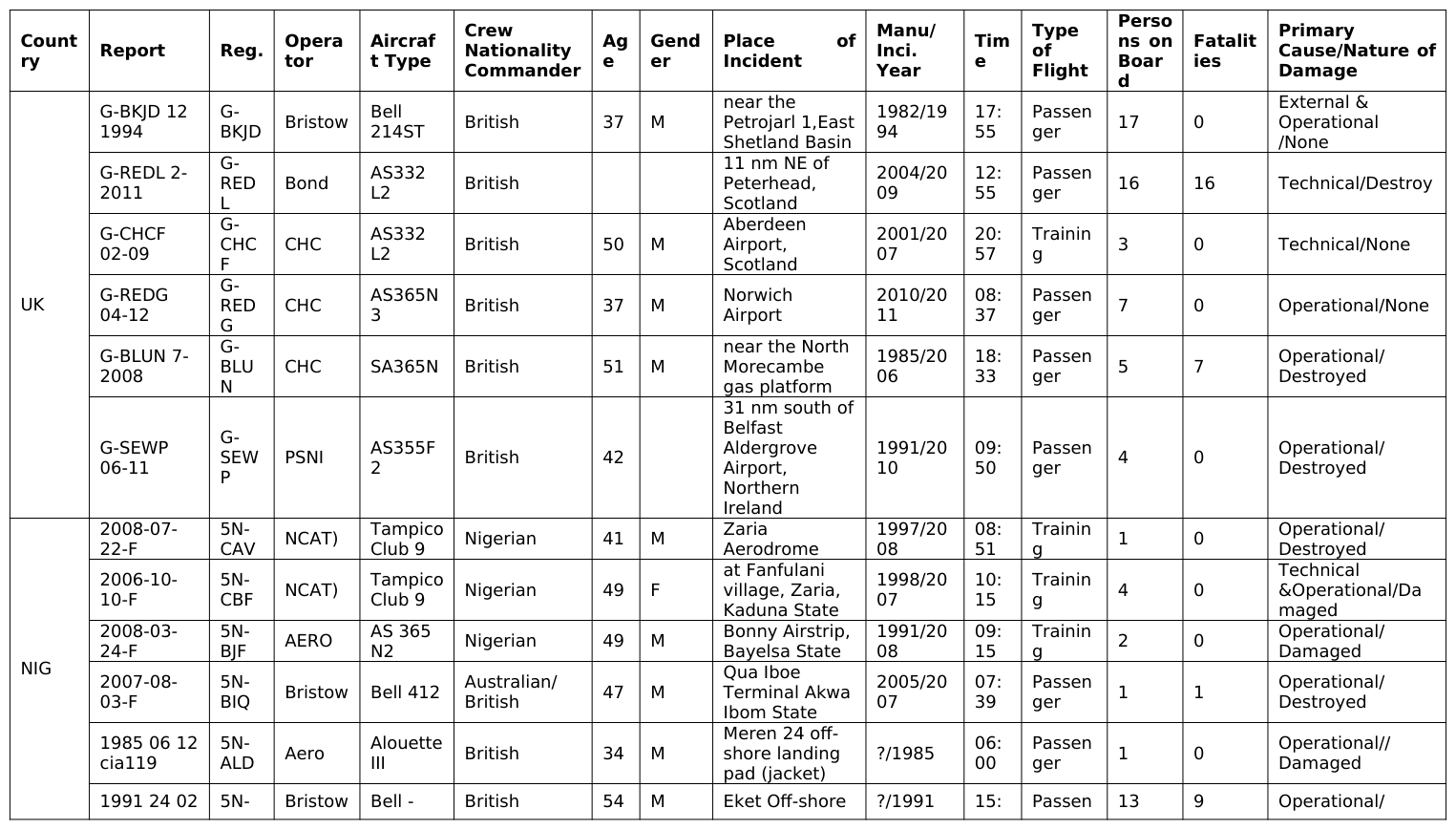
Twelve formal air accident reports were subjected to a theme-based content analysis. The independent variable was culture and it had two levels: six reports were from the Nigerian Air Accident Department and six were from the UK Air Accident Investigation Branch, Table 1 shows the summary of the accident reports represented by country and the accident characteristics. The analysis was exploratory in nature using content analysis Procedure
Themes associated with the study were extracted from literature which includes culture (Hofstede, 1980, 1991; Hall and Hall, 1990; Hall, 1976); human factors (Reason, 1990; Wiegmann and Shappell, 2003; Coury, Ellingstad and Kolly, 2010); and systems (Reason, 2000; Naikar and Saunder, 2002; Rasmussen, 1997). Triangulation was derived from these literature sources to build a coherent classification for the themes used. These themes were categorized into clusters and then transformed into categories. The categories derived from the triangulation were human actions; organization system parts; cultural dimension and cultural contextual difference Concepts validation used were discussed to compare the themes and categories selection to past literatures. Nodes were created from these concepts for the coding process.
Data analysis Each of the accident reports were coded based on the socio-cultural/human factors concepts created as nodes. Inter- coding reliability was assessed through the triangulation process by providing six accidents report (three each from Nigeria and the United Kingdom) to three individuals with no prior knowledge of the study; training was given for the coding process. This process was required to assess the internal consistency of the coding process. The process also helped to identify conflicts in coding which were re-assessed and either resigned or rejected. The highest coder showed above 90 percent Cohen kappa coefficient inter-rated agreement reliability of the selected reports coding
Human Aspects of Transportation I (2021)
scheme.
Human Aspects of Transportation I (2021)
Table 1: Accident report characteristics
Human Aspects of Transportation I (2021) https://openaccess.cms-conferences.org/#/publications/book/978-1-4951-2097-8
cia161 AJY 212 Near BOP Oil Rig 50 ger Destroyed
Human Aspects of Transportation I (2021) https://openaccess.cms-conferences.org/#/publications/book/978-1-4951-2097-8
Proceedings of the 5th International Conference on Applied Human Factors and Ergonomics AHFE 2014, Kraków, Poland 19-23 July 2014 Edited by T. Ahram, W. Karwowski and T. Marek
The frequency of codes identified in relation to the themes was calculated which was used to explain the differences established in the accident reports of the two countries. Cluster analysis was used as an exploratory tool to observe patterns by grouping the nodes that share similar themes. This was statistically tested using the Pearson correlation analysis to establish the strength of the relationship of the coding cluster similarity interconnectivity between the cultural dimensions, human actions and the cultural contextual differences. The similarity index was created when coding themes are grouped into a number of clusters, making use of the complete linkage hierarchical clustering algorithm.
A text analysis tool ‘Nvivo’ was used to perform a content analysis of Nigerian and UK air accident reports in order to discover the key differences in cultural variables influencing actions leading to accidents. This software permits the creation of themes, and highlights all the related areas from the data to be categorized by computer under the created headings. This will enable the study to build and modify subsets of the categories aiming to elucidate the full range of the dataset (Bowling, 2002).
RESULT/DISCUSSION Descriptive analysis
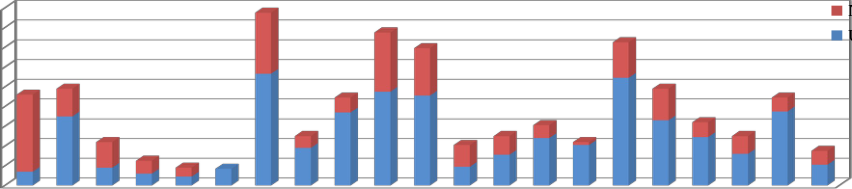
The samples covered a total of 74 individuals (crews and passengers) and 27 fatalities ranging from the period 1985 – 2011. From figure 1, most of the aircrafts with fatalities either in the Nigeria or the UK context were flown by British pilots. Addressing the aim of this study, could this observed differences be linked to the different cultural influences in the two countries?
G-BKJD/British 5N-AJY/British G-REDL/British
20 Fatalities Injuries
5N-ALD/British
G-CHCF/British
10
0
5N-BIQ/Australian-British
G-REDG/British
5N-BJF/Nigerian
G-BLUN/British
G-SEWP/British 5N-CAV/Nigerian 5N-CBF/Nigerian
Figure 1: Flight crew and accident outcomes
Figure available in the original PDF paper.
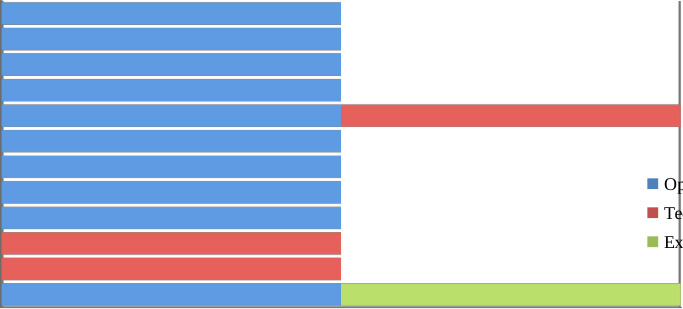
The causes of accident were categorized into operation – day to day activities, technical – design and maintenance and external – environment. Most of the selected reports identified operations as the main cause or major contributing factor to the accident, most especially, the Nigeria reports (figure 2). Two of the reports (one from the UK and the other from Nigeria) had more than one major contributory factor leading to the accident. Another interesting observation from the selected reports was that all the accidents that led to fatalities occurred either during the day or at twilight, for instance, G-REDL occurred during the day with 16 fatalities and 5N-AJY with 9 fatalities occurred during the day.
Proceedings of the 5th International Conference on Applied Human Factors and Ergonomics AHFE 2014, Kraków, Poland 19-23 July 2014 Edited by T. Ahram, W. Karwowski and T. Marek
Content Analysis This section of the analysis covers the summary of the number of coded references to all the reports; the group query analysis and word/cluster analysis which provides the Pearson correlation analysis.
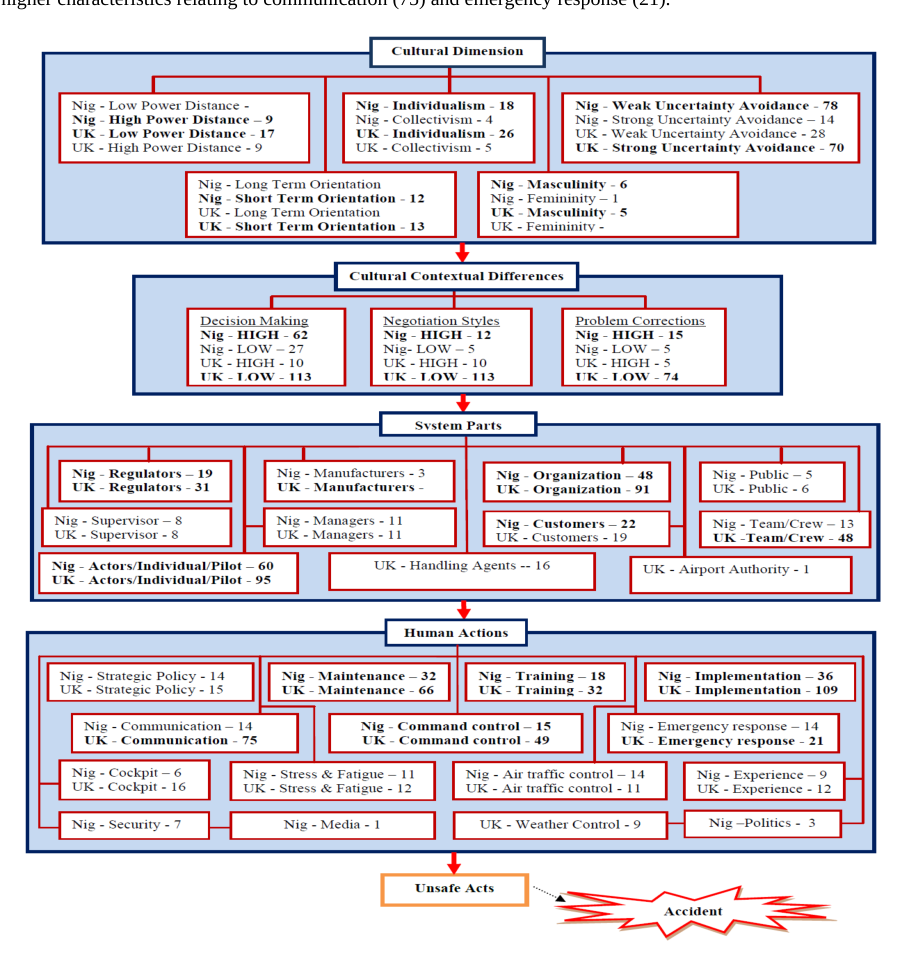
Summary of coded references The content analysis was carried out based on coded statements in the reports using the pre-coded themes – cultural dimension, cultural contextual differences, system parts and human actions in figure 3 and 4. The Nigeria reports from the cultural dimension perspective were mostly linked to weak uncertainty avoidance followed by individualism and short term orientation; while the UK reports were linked to strong uncertainty avoidance, followed by individualism and low power distance. These observations could be traced directly or indirectly to the individuals taken the human actions within the system leading to unsafe actions.
0 20 40 60 80 100 120 140 160 180 NIG UK
C. Dimension C.Context System H. Actions
Figure 3: Socio-cultural interactions and accident prominent coding nodes summary Predominantly the UK reports were linked to low cultural context in terms of decision making (113), negotiation styles (38) and problem correction (74). In the Nigeria reports, the high cultural contextual differences were observed in these areas, (62), (12) and (15) respectively. However, it should be noted that in each situation the opposite contextual difference was also revealed. At the system level, in the Nigeria reports the actors (60), organization (48), consumers (22) and the regulators (19) played major roles. Similarly in the UK reports the actors (95), organization (91), team (48), manufacturers (41), and the regulators (31) played major roles in the process leading to the observed unsafe acts.
The human actions are the defined collaborating practices contributed by the system parts which led to the accident.
Proceedings of the 5th International Conference on Applied Human Factors and Ergonomics AHFE 2014, Kraków, Poland 19-23 July 2014 Edited by T. Ahram, W. Karwowski and T. Marek
In term of similarity, the UK and Nigeria reports revealed human action relating to Implementation (109, 36), Maintenance (66, 32), Command control (49, 15) and Training (32, 18) respectively. The UK reports also revealed higher characteristics relating to communication (75) and emergency response (21).
Figure 4: Socio-cultural interactions and accident coding summary
Group query analysis Cultural dimensions
To understand the cultural dimension (and the other themes) links to unsafe actions, accident reports from each country were group coded to the different cultural dimensions. The aim is to reveal how the accident reports are linked to the various dimensions. This was carried out using the group query analysis in Nivio for all the reports. In the Nigeria reports, short term orientation was linked to the six reports, weak uncertainty avoidance and collectivism linked to 4 and high power distance linked to 3 of the six reports. This reveals that short term orientation, weak uncertainty avoidance and collectivism are the observed predominate cultural dimension linked to the reports
Proceedings of the 5th International Conference on Applied Human Factors and Ergonomics AHFE 2014, Kraków, Poland 19-23 July 2014 Edited by T. Ahram, W. Karwowski and T. Marek
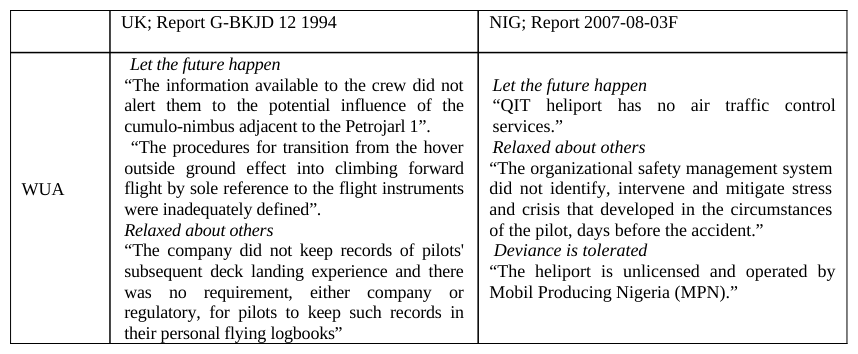
For instance, report 2007-08-03F is linked to 7 of the 8 cultural dimensions observed in the Nigeria reports. This could be related to the actions of the directly and indirectly system parts linked to their cultural dimensions and the cultural contextual differences. To explore the specific circumstances the cultural dimensions were demonstrated in the report, the coded references for the observed dimensions are stated below. In the UK report, strong uncertainty avoidance was linked to the six reports, while individualism was linked to 5 reports. Weak uncertainty avoidance and masculinity were linked to 4. This reveals the strong uncertainty avoidance, individualism, weak uncertainty avoidance and muscularity are the observed predominate cultural dimensions linked to the selected reports using the group query analysis. For instance, report G-BKJD 12 1994 was positively linked to 8 of the 8 cultural dimensions observed in the UK reports. This can be attributed to the same observations made in the Nigeria reports; an example the coded references for the observed dimensions are shown in table 2.
Table 2: coded references for the cultural dimensions UK; Report G-BKJD 12 1994 NIG; Report 2007-08-03F
Culturally, most Western countries show low contextual characteristics while the reverse was identified for the non- Western countries. These characteristics were shown in the individual’s decision making, negotiation style and problem correction processes. In Nigeria, high cultural contextual differences in decision making and problem correction were shown in six of the reports, and four reports revealed high negotiation styles. As a result, Nigeria reports were predominantly linked to high cultural contextual differences, however both high and low contextual differences were observed.
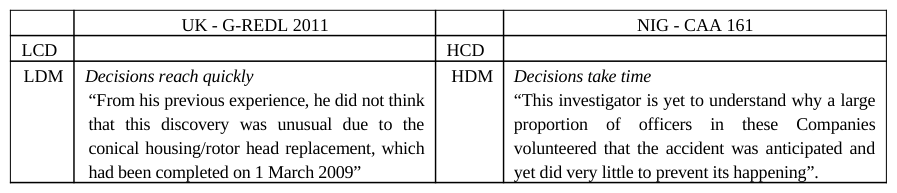
For instance, CAA 161 is linked to both the high and low cultural contextual differences, which could be linked to the actions of the system parts relating to the cultural contextual differences. The UK report G-REDL 2011 was linked to low cultural contextual differences, although both high and low contextual differences were observed. The high contextual differences were often linked to the safety culture. For instance, the organization unsafe operational pattern revealed high contextual characteristics while the reverse was the case for the individual actions towards unsafe acts. These characteristics are shown in the decision making, negotiation style and problem correction linked to the reports within the group query analysis. The specific instances where the cultural contextual differences were demonstrated in the report, is shown in table 3. It is interesting to note that in both the Nigeria and UK accident reports, analysis revealed high cultural contextual differences and these observations should not be generalized in all situations.
Table 3: coded references for the cultural contextual differences UK - G-REDL 2011 NIG - CAA 161 LCD HCD LDM Decisions reach quickly
Proceedings of the 5th International Conference on Applied Human Factors and Ergonomics AHFE 2014, Kraków, Poland 19-23 July 2014 Edited by T. Ahram, W. Karwowski and T. Marek
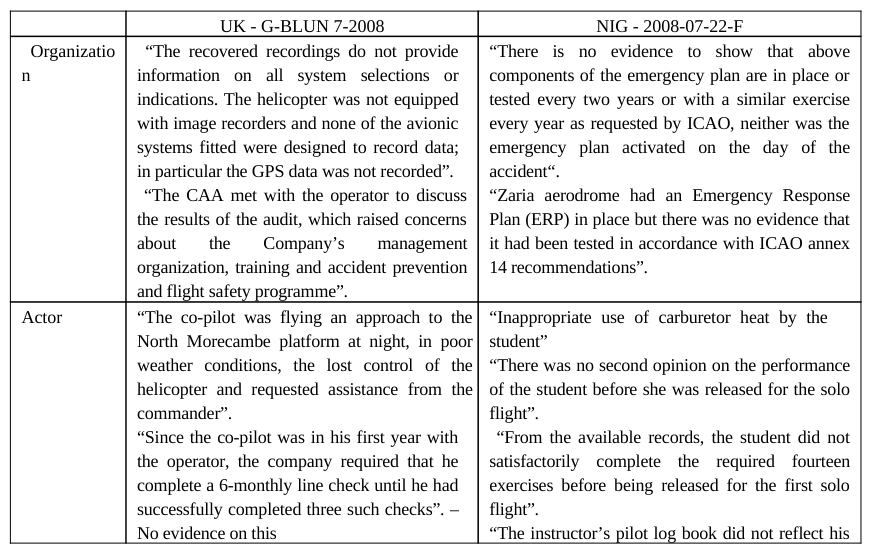
System parts associated with the observed human actions The organization and the actors are the main system parts linked to the Nigeria accidents analyzed. In addition the regulators, team, supervisor, managers also played prominent roles, linked to four of the six reports. These are parts of the whole system involved in the complex interaction facilitating the unsafe acts. For instance, report 2008-07-22- F is linked to five of the nine identified system parts in the Nigeria reports, which are supervisor, public, organization, managers, and the actors. In the UK, the organization and the actors were also main system parts linked to the accidents analyzed. In addition, the regulators, team, supervisor, manufacturers were linked to five of the six reports. For instance, G-BLUN 7-2008 is linked to ten of the eleven identified system parts in the UK reports; Table 4 shows specific instances where various parts of the system took actions in the Nigeria and UK reports
Table 4: coded references for system parts UK - G-BLUN 7-2008 NIG - 2008-07-22-F Organizatio n
Proceedings of the 5th International Conference on Applied Human Factors and Ergonomics AHFE 2014, Kraków, Poland 19-23 July 2014 Edited by T. Ahram, W. Karwowski and T. Marek
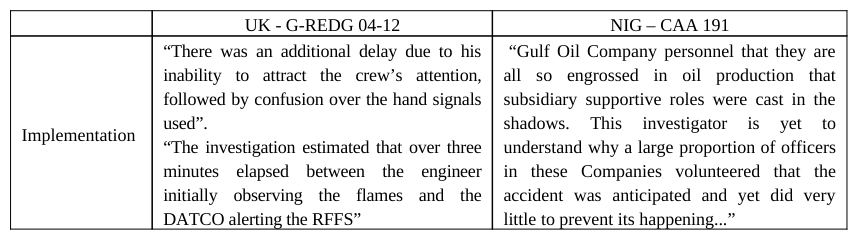
Human action contribution Task implementations within the system and the actors’ command control were the main human actions linked to the six Nigeria accidents analyzed leading to unsafe acts. In addition the strategic policy, communication and air traffic control also plays prominent roles linked to five of the six reports. These were actions carried out by various parts of the system leading the unsafe acts; for instance, CAA 191 is linked to seven of the fourteen human actions leading to unsafe acts. These actions according to the framework of this study are linked to the system parts, and the cultural contextual difference and the cultural dimensions. Implementation processes i.e. Training, safety concerns, emergency response, aircraft and helipad design and management, cost was priority, lack of regulatory oversight within the system were the main human actions linked to the six UK accidents analyzed leading to unsafe acts. In addition the maintenance, communication and command control also played prominent roles in the activities leading to the unsafe act, in five of the six reports. UK Report G-REDG 04-12 is linked to eight of the fourteen human actions leading to unsafe acts. Specific instances where the human actions were demonstrated in the reports are stated below in table 5.
Table 5: coded references for the cultural contextual differences UK - G-REDG 04-12 NIG – CAA 191
Word/Cluster Analysis Nvivo calculated a similarity index between each pair of items (each pair of rows) using Pearson correlation coefficient the similarity metric (-1 = least similar, 1 = most similar). The r values show where correlation coefficients are less than 0.35 are considered to be low or weak correlations, 0.36 to 0.67 modest or moderate correlations, and 0.68 to 0.89 strong or high correlations with r coefficients greater 0.90 very high correlations (Weber and Lamb, 1970; Mason, Lind and Marchal, 1983). The result revealed 1892 possible similarity combinations ranging from r value 0.93 to -0.021 and we were restricted to present only the similarity with high and very high correlation coefficients. The analysis of the Nigeria reports reveals a strong positive relationship between high contextual differences (HCD) and weak uncertainty avoidance (0.76). It also revealed a high positive relationship between individualism and high power distance (0.71). As a result, short term orientation and high power distance affect the way individuals make decisions, negotiate and correct problems leading to unsafe acts.
Similarly, the analysis of the UK reports revealed a strong positive relationship between low contextual differences (LCD) and strong uncertainty avoidance (0.71).The report also revealed a high positive relationship between LCD decision making and strong uncertainty avoidance (0.72). Individualism and high power distance strongly correlated (0.71). Accordingly, there is a strong relationship between low cultural contextual differences and some cultural dimensions - strong uncertainty avoidance, individualism, low power distance and high power distance. On the other hand, high cultural contextual differences are linked to weak uncertainty avoidance, and short term orientation. Therefore, there is a strong relationship between high and low cultural contextual differences and the identified cultural dimension.
The coefficient between the cultural contextual differences and human actions in Nigeria revealed a strong positive relationship between HCD and training (0.69), and a moderate positive relationship between HCD and implementation (0.66). On the other hand, there is a strong positive relationship between training and command control (0.75), maintenance and implementation (0.70) and a moderate positive relationship between communication
Proceedings of the 5th International Conference on Applied Human Factors and Ergonomics AHFE 2014, Kraków, Poland 19-23 July 2014 Edited by T. Ahram, W. Karwowski and T. Marek
and command control. There was also a strong positive relationship between weak uncertainty avoidance and implementation (0.69). In the UK, the coefficient reveals a strong positive relationship between LCD and communication (0.75), and LCD and implementation (0.72). Other strong/moderate positive relationships observed were command control and cockpit (0.85), communication and command control (0.69), implementation and communication (0.68). Most high contextual differences similarity index with other themes fell within the moderate and low coefficient which could be linked to the number of codes created and the length of the reports i.e. Nigeria reports.
Exploring and identifying key cultural themes from helicopter accident reports had been the aim of this paper. The distinctiveness of this study is that it is one of the few that relates national cultural differences to the rising incidence of helicopter accidents. This study is significant because its findings contribute to the knowledge of the underlying reasons for human factors in aviation accident. Cultural factors are prominent in the sampled accident reports, yet culture is currently not well represented in accident analysis methods - a significant omission.
In spite of the extensive availability of theoretical knowledge and the growing link between the system performances, the aviation safety community has been faced with the major challenge of a practical model to deal with the relationship between culture and the accident investigation process. Secondly, the study reveals the risk of not given full attention to solving the present and predicted burden of the steady increase in human/system related issues influencing helicopter accidents, characterized by potential loss of lives and financial damages. Therefore, a major contribution of this exploratory study is that it defines culture and how an individual relates or make decisions stemming from his/her social-cultural influences.
CONCLUSIONS
This study contributes to the accident investigation processes, showing the differences between Nigeria (developing) and the UK (developed) cultural traits, the increasingly interlinks of the traits from cultural dimensions and cultural contextual differences with the whole system and human actions. These can be regarded as framework in understanding why and how culture influences individual or group action in a work environment. Accordingly, when these cultural traits are adopted in an investigation process, it will assist in understanding why actions are taken, which directly influence the process of problem correction, recommendation and identifying lessons learnt. It will also be a useful tool in understanding training and implementation protocols which might have been somehow ineffective.
In interpreting the findings of the present study, it would be inappropriate to generalize these findings to the individual countries considering the differences in their individual situations. Therefore, caution should be taken because the data used for this investigation are estimated values from the individual countries, and might not necessarily be accurate (Bryman, 2008). Nevertheless, the study was faced with the difficulty of making generalized statements from these findings, because of the specific socio-political and economic factors and situations prevailing in each country and the circumstances that drive human actions in each situation. For instance, organizational actions in both countries revealed high contextual differences in contrast to individual actions that were more distinctive – either high or low cultural difference In summary, this paper demonstrates a) that culture plays a significant role in helicopter accidents; b) that these factors can be operationalized and extracted from real life scenarios; c) add to the knowledge gap by identifying additional contributory factors. Future research aims at addressing cultural gaps in accident investigation processes, safety awareness and training. Accordingly, this can be incorporated into existing analysis methodologies in order, improve the development of a useful investigating model that will be a representative tool for both countries.
Proceedings of the 5th International Conference on Applied Human Factors and Ergonomics AHFE 2014, Kraków, Poland 19-23 July 2014 Edited by T. Ahram, W. Karwowski and T. Marek
REFERENCES
Adler, N. (1991), “International Dimensions of Organizational Behavior”, Boston: PWS Kent. Bowling, A. (2002), “Research Methods in Health: Investigating Health and Health Services” (2nd ed) Open University Press. Bryman, A. (2008), “Social Research Methods”, Oxford University Press. Coury, B., Ellingstad, V., Kolly, J. (2010), “Transportation Accident Investigation: The Development of Human Factors Research and Practice” Reviews of Human Factors and Ergonomics Volume 6: No 1 Foushee, H.C. (1984), “Dyads and Triads at 35,000 feets: Factors Affecting Group Process and Aircrew Performance”,
American Psychologist, 39, pp. 886-893. Graham, J. (1985), “The Influence of Culture on the Process of Business Negotiation: An Exploratory Story”, Journal of International Business Studies, Spring, pp. 79-94. Hall, E. (1974), “Beyond Culture”, New York: Doubleday. Hall, E. (1976), “Beyond Culture”, Garden City, New York; Anchor Press/Doubleday, pp.79. Hall, E., Hall, M. (1990), “Understanding Cultural differences: German, French and Americans”, Yarmouth: Intercultural Press. Helmreich, R. (1994), “Anatomy of a System Accident: The Crash of Avianca Flight 052”, International Journal of Aviation
Psychology, 4(3) pp. 265-284. Helmreich, R.L., Davies, J. M. (2004), “Culture, threat, and error: lessons from aviation”, Canadian Journal of Anesthesia, 51, R1-R4. Hofstede, G. (1991), “Culture and Organizations: Software of the Mind”, McGraw-Hill. IHST, International Helicopter Safety Team, in Gardner, S. (2012), “Update 2011 overview”
WWW.IHST.ORG assessed 08/20/12 Jing, H-H., Lu, J., Peng, S. (2001), “Culture, Authoritarianism and Commercial Aircraft Accidents”, Human Factors and Aerospace Safety, 1(4), pp. 341-359. Li, W., Harris, D., Chen, A. (2007), “Eastern Mind in Western Cockpits: Meta-analysis of Human Factors Mishaps from Three
Nations”, Aviation, Space and Environmental Medicine 78, pp. 420-425. Mason, R., Lind, D., Marchal, W. (1983), “Statistics: An Introduction”, New York: Harcourt Brace Jovanovich, Inc, pp 368-383. Maurino, D., (1998), in: “Culture at Work in Aviation and Medicine: National, Organizational and Professional Influences”, Ashgate Publishing Limited, Brookfield USA Merrit, A. (1993), “The Influence of National and Organization Culture on Human Performance”, The CRM Advocate, 93-1,
pp. 5-6. Merritt, A., Helmreich, R. (1996a), “Human factors on the flight deck, the influence of national culture”, Journal of Cross- Cultural Psychology, 27 (1) pp. 5-24 Merritt, A., Helmreich, R. (1996b), “Culture in the cockpit: A multi-airline study of pilot attitudes and values”, in: Proceedings
of the Eighth International Symposium on Aviation Psychology, Columbus, USA: Ohio State University, .April 24-27, 1995, pp. 676-681. Meshkati, N. (2002), “Macroergonomics and Aviation Safety: The Importance of Cultural Factors in technology Transfer”, in Hendrick, H., Kleiner, B. (eds), Macroergonomics Theory, Methods, and Applications, Mahwah, NJ, Lawerence Eribaum. pp. 323-330. Naikar, N., Saunders A. (2002), “Crossing the boundaries of safe operation: training for error detection and error recovery”, in:
Proceedings of the 21st European Conference on Human Decision Making and Control, Glasgow, Scotland, 15–16 July, 2002. National Transportation Safety Board (1991), “Aviation Accident Report: Avianca”, The Airline of Columbia, Boeing 707-321B, HK 2016, Fuel Exhaustion, Cove Neck, New York, January 25, 1990 (Report No. AAR-91-04), Washington, DC Orasanu, J., Fischer, U., Davison, J. (1997). “Cross-cultural barriers to effective communication in aviation” in: Oskamp, S.,
Gransone, C. (Eds.), Cross-cultural work groups: The Claremont Symposium on Applied Social Psychology Thousand Oaks, CA: Sage, pp. 134–160. Rasmussen, J. (1997), “Risk management in a dynamic society: A modelling problem”, Safety Science, 27, pp. 183-213. Reason, J. (1990), “Human Error”, New York Cambridge University Press Reason, J. (2000), “Human error: models and management”, British Medical Journal, 320 (7237), pp. 768-770. Soeters, J., Boer, P. (2000), “Culture and flight safety in military aviation”, International Journal of Aviation Psychology, 10 (2), pp. 111-133 Strauch, B. (2010), “Can Cultural Differences Lead to Accidents? Team Cultural Differences and Sociotechnical System
Operations” Human Factors: The Journal of the Human Factors and Ergonomics Society, 52: pp. 246 Weber, J., Lamb, D. (1970), “Statistics and Research in Physical Education”, St. Louis: C.V. Mosby Company, pp 59-64, 222. Wiegmann, D., Shappell, S. (2003), “A human error approach to aviation accident analysis”, Aldershot, England: Ashgate.
LISTED IN THE AHFE DIGITAL BOOKSTORE CATALOGUE
Explore the complete digital volume
Advances in Human Aspects of Transportation: Part I
Read this individual research paper free through the original publisher, or explore the full digital proceedings book.
ISBN 978-1-4951-2097-8
Explore this ISBN in the AHFE Bookstore ↗Listed in the July 2026 bookstore catalogue; search by ISBN to confirm current availability · Digital book purchase optional