Tilo Mentler, Michael Herczeg (2021). Human Factors and Ergonomics in Mobile Computing for Emergency Medical Services. In: Advances in Human Aspects of Healthcare. AHFE Open Access, vol. 13. https://doi.org/10.54941/ahfe100522
Emergency Medical Services (EMS) are an essential part of pre-hospital medical care. While paper-based tools and organizational workflows are still the status quo in this field of application, they are increasingly replaced or complemented by telemedical solutions and mobile computer-based documentation and information systems. Enhanced data quantity and quality as well as a more pervasive flow of information are benefits associated with these developments. Less frequently it has been emphasized that from an emergency physician’s or paramedic’s point of view, introducing mobile computing changes the tasks that have to performed and mastered. Considering both the system and the personal view is important for developing usable approaches to pre-hospital medical care. Time delays, faulty records or additional workload caused by usability deficiencies and poor human computer-interface design would not be acceptable neither for EMS employees nor patients. Furthermore, they would compromise the overall goals of different stakeholders, e.g. health authorities, insurances, hospitals and public safety organizations. Based on the experiences and findings during a two-year project with several EMS, we consider human factors and ergonomics in mobile computing for EMS from societal and cultural needs and expectations over group and individual behavior to ergonomics of physical devices.
Emergency Medical Services (EMS) are “[...] the ambulance services component that responds to the scene of a medical or surgical emergency, stabilizes the victim of a sudden illness or injury by providing emergency medical treatment at the scene and transports the patient to a medical facility for definitive treatment” (World Health Organization, 2008). Considering human factors and ergonomics in this domain is especially important because it can be characterized both as
safety-critical, because slips, lapses or mistakes could result in loss of patients’ life or worse medical conditions;
time-critical, because effectiveness of pre-hospital medical actions is mainly determined by the factor of time.
Matching EMS employees’ capabilities, limitations, equipment and working environment as well as optimizing workload and overall system performance can be a matter of life and death.
Our findings are based on results and lessons learned during a two-year project with different EMS. It resulted in an interactive prototype for managing extraordinary missions in the field. While analyzing the context of use within a user-centered system design process, we conducted intense literature review, observed two large EMS exercises in different German districts, accompanied daily routine of EMS employees and, above all, utilized experienced-based knowledge. For this purpose we
interviewed several EMS employees, e.g. paramedics, emergency physicians, incident commanders;
attended meetings, conferences and specialized fairs for emergency medicine;
organized presentations and workshops with more than 40 members of different EMS.
The participants represented voluntary workers, private aid agencies and fire services on different positions and levels of qualification. Some of them had previous experience with mobile computing solutions in daily professional life. Others were completely new to the topic. In this manner, we studied the current state of research, technology and organization and derived requirements. They have been refined in many iterations by formative and summative evaluations.
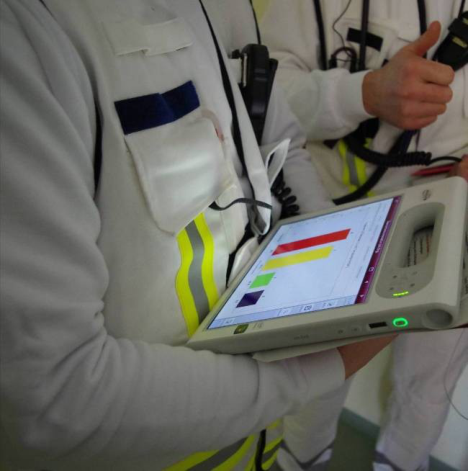
We presented an advanced prototype to professional visitors of the leading German emergency medicine and rescue fair “akut 2012” at a stand for two days. Their feedback both confirmed our basic approach and drew attention to room for improvement. Furthermore, the prototype was tested during an MCI exercise with EMS employees of a professional fire service and 40 virtual patients represented by card-based descriptions (see Figure 1). Staging, triage, treatment, transport and assembly areas as well as an emergency control room were in place and equipped with tablet PCs. The usability of the application has been evaluated by conducting the validated ISONORM- questionnaire (cf. Figl, 2009) and debriefing following the exercise. Despite some problems with network connectivity, the results confirmed our Care & Prepare approach. It states in a nutshell that an application system for managing extraordinary events by EMS has to be designed with consideration of the users’ contexts (physical, mental, temporal) and has to be a “natural” extension of a mobile data gathering system for regular transport und emergency missions (Mentler et al., 2012; Mentler & Herczeg, 2013).
Figure 1: (left) Incident commander looking at a triage bar chart during the exercise and (right) demonstrating the prototype to a visitor of the emergency medicine and rescue fair "akut 2012" Following an introduction to background and related work, we consider human factors and ergonomics in mobile computing for EMS systematically from societal expectations to physical ergonomics. Finally, conclusions are drawn regarding further research on this topic.
BACKGROUND AND RELATED WORK Emergency physicians’ and paramedics’ job routine includes transport and emergency missions with one or few patients. Infrequently, mass casualty incidents (MCIs) characterized by an at least temporary mismatch between EMS employees and casualties on the scene have to be managed (World Health Organization, 2007). Although occurring rarely, they are possible anywhere and anytime (cf. Bemelman & Leenen, 2008; Shepherd, Gerdes, Nipper, & Naul, 2011). In such situations, all EMS employees involved are confronted with unusual activities. Standard treatment procedures have to be deferred and incident commanders bear responsibility for command and control of larger groups in spatial distribution.
While examining and treating patients are the primary concerns of EMS under all circumstances, recording and sharing operational data are important tasks, too. Further actions to be taken in medical facilities are derived from recorded medical conditions, measurements and procedures. Inaccurate or incomplete data could lead to wrong treatments. In MCIs, communication, coordination and cooperation between many EMS employees have to be accomplished. Information management and situation awareness of incident commanders are crucial in such situations. Furthermore, emergency medicine protocols are the basis in the event of later legal issues and the source for accounting, quality management as well as statistical surveys.
Most EMS in developed countries mainly rely on diverse paper-based media. Workflows from pre-hospital medical care over stationary treatment to accounting are characterized by forwarding, copying and filing forms and protocols. This is expected to change within the next few years. Pervasive computer-based solutions will replace or complement established tools and aids. In the following section, related work to mobile computing in EMS will be described. After that, important research on human factors and ergonomics in EMS will be summarized.
Mobile Computing in EMS For more than 20 years, authors of several studies and articles discuss the application of electronic data processing systems, machine-readable protocols and mobile computing in pre-hospital medical care (Ellinger, Luiz, & Obenauer, 1997; Koval & Dudziak, 1999; Windolf, Inglis, Dickopf, & Pannike, 1992). In this regard, “enhanced quantity and quality of patient data at hand” (Leitner, Ahlström, & Hitz, 2007), a more pervasive flow of information and immediate support from remote professionals are often mentioned potential advantages, as far as usability and technology acceptance can be ensured. With respect to different scenarios and use cases, four basic approaches to mobile computing in EMS can be distinguished:
pervasive solutions for documentation and information in daily routine,
support of subtasks in MCIs,
pervasive solutions for collaboration and coordination in MCIs, and
telemedical applications.
In several projects (e.g. CANIS , NAPROT or NOAH) prototypical solutions and field studies with laptops or PDAs resulted in improved documentation of transport and regular emergency missions (Ellinger et al., 1997; Leitner et al., 2007; Schächinger, Stieglitz, Kretschmer, & Nerlich, 1999). Feasibility and reliability of mobile devices and infrastructure were very important aspects, but analysis of the context of use was limited to daily routine. MCIs have not been high-profile and have not been a common research topic for computer science communities until the turn of the millennium. Resulting from changed safety concerns after terrorist attacks and in preparation for upcoming major events, numerous projects and studies have been launched since then. They differ in scope and scale due to the various challenges associated with design and development, e.g. reliable ad-hoc networking, shared databases or usability in extreme conditions.
Computer-based support of certain subtasks in MCIs was primarily directed to triage, cf. determining patients’ treatment priorities based on objective criteria. To support this, several algorithms have been developed by physicians (Garner, Lee, Harrison, & Schultz, 2001). Most of them take essential vital signs into account which can be determined without medical technology or tools. Except for basic life support, triage is the most important single task in MCIs (Peter, Weidringer, & Clemens-Mitschke, 2005).
Projects were devoted to several aspect of computer-supported triage, e.g. data transmission, user interface design, usability and evaluation of added values compared to established tools. Hybrid approaches, i.e. combining paper- based and electronic tags, have been considered as well (Inoue, Sonoda, & Yasuura, 2008; Jokela et al., 2008; Nestler, Artinger, Coskun, Endres, & Klinker, 2010). Although digital triage tags were based on radio frequency identifiers in many studies without further consideration, we can confirm that “the introduction of RFID technology in MCIs leads to more challenges as […] expected” (Nestler et al., 2010).
Other important task areas, e.g. tactics, taking care, transport and treatment, have not been addressed in detail so far with respect to mobile computing. However, they are interrelated aspects of more pervasive solutions for MCI management. In projects like AID-N, ALARM, SOGRO, e-Triage or WIISARD, different prototypes (see Figure 2) have been developed and tested in the field at large MCI exercises (Chaves et al., 2011; Ellebrecht & Latasch, 2012; Lawatschek, Düsterwald, Wirth, & Schröder, 2012; Lenert, Chan, Kirsh, & Griswold, 2008; White, 2007).
Figure 2: (left) Documenting triage results with a PDA (Ellebrecht & Latasch, 2012) and (right) scanning a triage tag with a tablet PC (Chaves et al., 2011)
By processing and providing wide-ranging information about patients’ conditions, availability of vehicles, hospital capacities and chronology, they have especially proven to work with respect to ad-hoc networking, infrastructure and overall reliability. Moreover, communication, coordination and cooperation of involved EMS employees were eased. Apart from realizing extensive applications, researchers dealt with questions of common quality standards and indexes. These projects were focused solely on MCIs and disregarded daily job routine. Some publications mention the need for users’ being familiar with applications in extraordinary circumstances of MCIs in order to ensure efficient and safe usage. However, questions about usability, user interface or interaction design derived from such statements about familiarity have not been considered.
Telemedical applications enable medical professionals to provide support from a distance. Such remote supervision and advice would be helpful in rural areas or in critical care situations, if experienced or appropriately qualified personnel were not available in time. Systems facilitate real-time transfer of vital signs, images, video streams and communication with EMS employees on scene (Kessatis, Stathi, Mavratzotis, & Papanastasiou, 2008; Plischke, Wolf, Lison, & Pretschner, 1999).
Human Factors and Ergonomics in EMS Contrary to the aforementioned developments, research on human factors and ergonomics in EMS is currently rare and usually directed to established equipment and procedures. Nevertheless, they clarify the need for studying the work of EMS employees and applying suitable human factors and ergonomics principles. For example, Feufel, Lippa, and Klein (2009) observed ambulance crews at five representative fire stations in the United States and found that many tools were difficult to use and organizational structures poorly suited. They call EMS in need of human factors.
Occasionally, such approaches are used to provide suggestions to single EMS providers. While restructuring organization in general, the Alberta Health Service (Canada) involved human factors experts to standardize the design of new ambulances. They interviewed EMS employees, participated in regular missions and made observations on treatment, staff behavior and workflows. 32 recommendations related to workspace (e.g. replacing a bench seat with an individual chair), labeling (e.g. text instead of numbers), and accessibility (e.g. adjusting position of a chair) were developed. 25 of them have already been applied but need to be evaluated further by simulations and test runs. (Biesbroek & Teteris, 2012) Although pre-hospital medical care is on high standards in Central Europe, physicians and paramedics seem to be not sufficiently knowledgeable in topics like crisis resource management, team training, incident reporting and safety culture. It has been pointed out that putting such issues into practice is no longer “nice to have” but mandatory like in other safety-critical domains (Koppenberg, Henninger, Gausmann, & Rall, 2011; Rall & Lackner, 2010).
St. Pierre, Hofinger, and Buerschaper (2008) systematically examine human factors and team psychology in the high stake environments of acute care both inside and outside the hospital. They state that “[…] there is still scarce information concerning the performance and error rate of healthcare professionals in the prehospital emergency care setting. The question of whether or not emergency medical care on-site (characterized by constantly changing environments, uncertainty and time pressure, performance as ad-hoc teams) carries an inherently higher risk for committing an error as compared with the provision of patient care in familiar working situations (i.e., in-hospital) has still to be answered”. Medical and clinical expertise is usually not sufficient to master the challenges associated with time pressure, stress and organizational deficits.
Croskerry, Cosby, Schenkel, and Wears (2009) adress patient safety in emergency medicine. While focusing on organizational, team and individual behavior in emergency departments (ED) and intensive care units (ICU) of hospitals, the interfaces between EMS, ED and ICU are critically judged. Because EMS employees are often on their way to the next mission immediately after patient hand-over, further communication with clinical staff after an initial assessment is virtually impossible. Moreover, current structures foster fragmented care and inefficient resource allocation. Communication and coordination between involved critical care providers have to be organized more efficiently.
Badiru and Racz (2013) edited a handbook of emergency response following a human factors and systems engineering approach. Contributions address several topics with respect to technical challenges (e.g. robotic support of first responders), human factors issues (e.g. emergency management, false alarm effects) and managerial models (e.g. incident command, organizational cooperation, and resilience of supply chains).
Other studies and articles are devoted to
specific mission types or situations, e.g. human factors analysis to an incident during which paramedics were exposed to high levels of carbon monoxide or transport-related injuries (Levy, Seaman, & Levy, 2012; Slattery & Silver, 2009);
ergonomic interventions, e.g. reducing the magnitude of trunk muscle exertion or the low back musculoskeletal loads (Lavender, Conrad, Reichelt, Gacki-Smith, & Kohok, 2007, Lavender, Conrad, Reichelt, Kohok, & Gacki-Smith, 2007a, 2007b);
cognitive ergonomics of emergency medical responders and physicians by examining mental models in the field and the hospital, utilization of situated actions as well as volatility and ambiguity of medical emergencies (Rahman, 2012; Smith et al., 2013).
The usability of medical mobile devices has not been regarded substantially yet. Sellen and Harper (2002) pointed out, replacing or complementing paper-based workflows with interactive systems “is not simply a case of giving workers a computer and links to a network”. Human factors and ergonomics in mobile computing for EMS have to be considered systematically, in order to ensure efficient usage, technology acceptance and avoid errors.
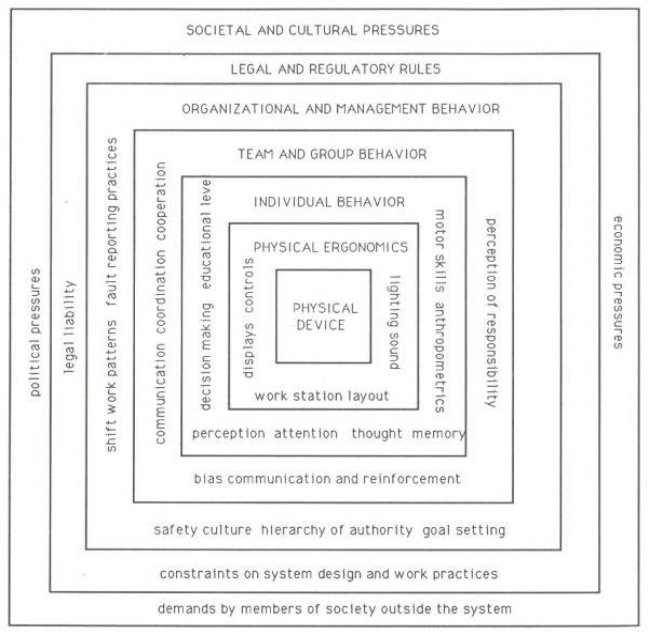
A SYSTEMATIC APPROACH Moray (1994) points out that complex systems like healthcare delivery are composed of various subsystems which are hierarchically organized and asks whether error reduction can be limited to one of them or has to be regarded as systems problem in total. His approach to analyzing and designing human-machine systems is shown in Figure 3.
Figure 3: A generic hierarchical systems oriented approach to design and analysis (Moray, 1994) Following a top-down-approach from social and cultural pressures to physical devices, this model will be applied to the context of pre-hospital medical care in the next sections.
Societal and Cultural Pressures EMS can be seen as the link between (amateurish) first aid and professional medical care in hospitals. Therefore, they are an essential part of the overall healthcare system. As such, they have to measure up to high expectations from society and politics. In countries with technologically advanced EMS providers, emergency physicians and paramedics may even be regarded as extensions of clinical care (Ahnefeld et al., 2003). Due to demographic change, unprecedented threat scenarios (e.g. terrorist attacks) and demanded efficiency enhancements, they will have to meet increasing requirements in the future.
As mentioned before, mobile computing solutions in EMS are associated with enabling quality management and improving information management both in daily routine and MCIs. Meeting political and economic demands could be eased by introducing them. However, procurement costs of pervasive and usable solutions might be high and in conflict to short-term profitability requirements associated with general critique about cost explosion in the healthcare sector. Nevertheless, in competitive tendering procedures usability should be taken into account as a crucial factor.
Introducing more technical solutions, ranging up to remote diagnosis and treatment, will influence the interpersonal relationship between patients and medical professionals and raise questions about trust and acceptance. Automation and decision support in EMS systems (e.g. mandatory triage algorithms) need to involve ethics and social sciences.
By no means, such applications and systems should become a “technological fix” (Degele, 2002), i.e. a technical solution to a non-technical respectively social problem. For example, telemedical applications can be part of the solution to a lack of emergency physicians but should not be the only approach.
Legal and Regulatory Issues EMS employees are responsible for treating patients appropriately and documenting actions and anamnesis accurately. Due to legal and regulatory rules, certain procedures may only be applied by EMS employees with necessary qualification. Complying with Standard Operating Procedures (SOPs) might be mandatory for some workers, while others could act on their own responsibility. Nevertheless, actual conditions might require spontaneous actions, e.g. first arriving units undertake initial supervisory positions in the case of a MCI.
Mobile computing solutions for EMS have to allow for different roles and rights without rendering such flexible adjustments impossible. Furthermore, they should be regarded as medical devices to some extent. Certification solution based on advanced legal and regulatory rules have to be considered. A well documented usability engineering process should be mandatory in addition to traditional risk management approaches. Such a user- centered approach to product development has to be based on observations in the field, user feedback and iterative refinements. Formative and summative evaluations have to be performed in order to prove the degree of usability.
Finally, advanced interactive systems with multimodal interfaces have to be incorporated in curriculums of EMS employees’ qualification and training. This must not be neglected, even though various demands are made on pre- hospital medical care providers from several disciplines, e.g. emergency medicine, educational and social sciences (Luiz, 2003).
Organizational and Management Behavior Although organizational and managerial influence can have a major impact on individual performance in high- stakes environments, blaming single employees for errors and mistakes is a “longstanding and widespread tradition” in healthcare (St. Pierre et al., 2008). With respect to mobile computing these would be frequently called “human error”, although they should be considered as “interaction errors” for expressing interdependences within a socio-technical system (Herczeg, 2004).
Managers and decision makers of EMS providers often have a professional medical background but are not human factors and ergonomics experts. Nevertheless, they are responsible for choosing equipment and tools. When it comes to pervasive mobile computing solutions, they should get support by human factors or usability professionals and form an interdisciplinary team.
Further availability of Incident Reporting Systems might be a reasonable addition to current fault reporting practices and safety culture. In contrast to comparable solutions in hospital environment, they should be part of or accessible by the particular mobile computing solutions. EMS employees might work on several missions in fast succession without being able to document or even report incidents at the station or hospital.
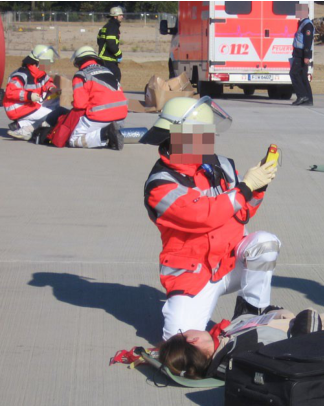
Team and Group Behavior Communication, cooperation and coordination issues of EMS teams and groups mainly depend on the mission type. While regular transport and emergency missions are handled by small teams which mostly act in sight and reach, MCIs necessitate more complex organizational structures, workflows and hierarchies of authority. Especially, incident commanders depend on information gathered in the field. They are responsible for EMS employees’ workload and patients’ conditions, although operational areas might be spread large-scale, evolve dynamically and complicate overview of the situation (see Figure 4).
Figure 4: Emergency physicians and paramedics at the triage area in an MCI exercise Mobile computing solutions for EMS have to be developed taking these different requirements into account. While enabling users to solve documentation tasks efficiently and easing treatment of single patients are the major design challenges in daily job routine, supporting team work, appropriate information sharing and visualization of wide- ranging datasets are important aspects under extraordinary circumstances.
Individual Behavior No matter whether emergency physicians and non-medical staff as in the Franco-German model of EMS delivery or paramedics on different levels of qualification as in the Anglo-American model work together (cf. Al-Shaqsi, 2010), EMS employees represent a heterogeneous group with respect to education, physical abilities and experience. Especially, MCIs are rare events in terms of a single worker. While some of them have professional fire fighter background, other members are voluntary workers. Therefore, decision making or command and control skills vary strongly.
Developing usable mobile computing solutions for EMS means regarding all of the potential users from novices to routiniers as well as from early adopters to skeptics. Acceptance has to be ensured and evaluated widely. Transferring research results and experiences according to certain EMS systems is limited by comparability of users’ characteristics.
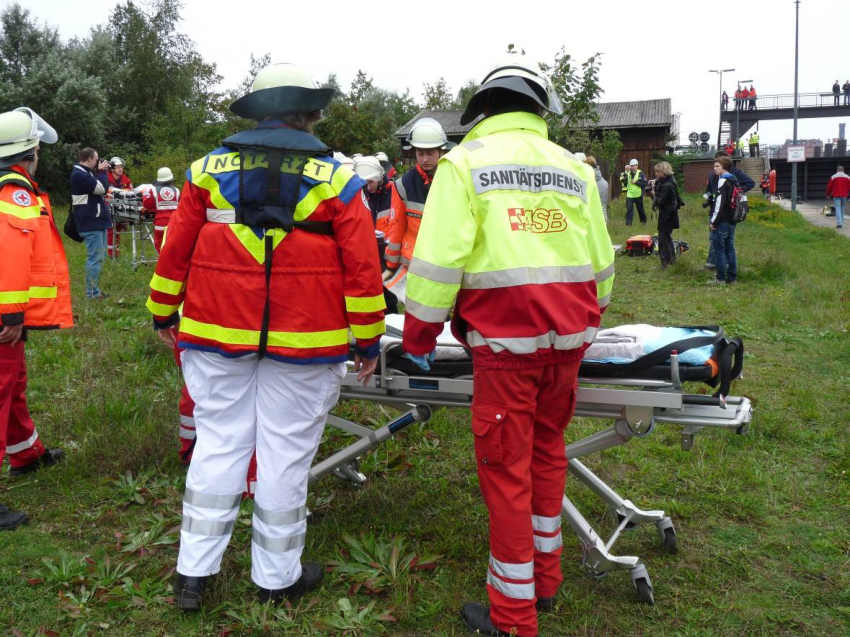
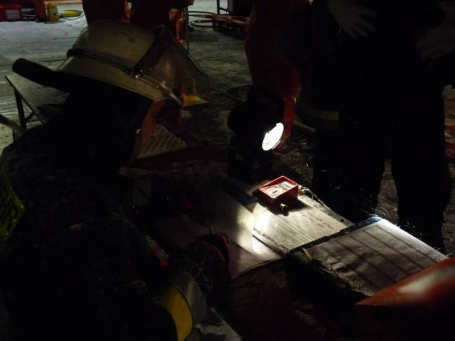
Physical Ergonomics Workstation layout, lighting, noise and other factors can influence human performance to a great extend. Figure 5 shows typical working environments of EMS employees in ambulances, command vehicles and in the field at day and night. These examples of work contexts are not intended to be exhaustive.
Figure 5: Exemplary working environments of EMS employees
The fact that regular and extraordinary missions cannot be limited to certain environmental conditions or working environments has to be carefully considered, while designing and evaluating mobile computing solutions for this field of application. EMS employees have to count on reliable functionality and sufficient usability under all realistic conceivable circumstances.
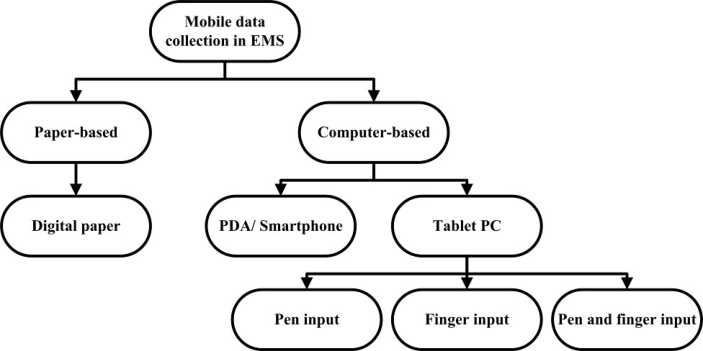
Physical Device With respect to the aforementioned approaches to mobile computing in EMS, a variety of devices and technology might be applicable. Figure 6 shows technological approaches to mobile data collection, exemplarily.
Figure 6: Technological approaches to mobile data collection in EMS In the future, a major challenge will be the development of devices which are suitable for different use cases. EMS employees should not be burdened by the use of computer applications (e.g. classification and documentation systems) together with medical devices (e.g. defibrillator) with incompatible information models and non-pervasive connectivity. Standardized interfaces (e.g. data exchange between defibrillator and mobile computing solutions) and consistent interaction design have to be ensured.
CONCLUSIONS
It has to be expected that mobile computing solutions will change emergency physicians’ and paramedics’ work within a few years significantly. In order to ensure usability as well as added values and benefits for users, human factors and ergonomics have to be regarded systematically for the design and evaluation of mobile devices. Applying methods and processes of usability engineering is recommended. Otherwise, history might repeat itself, like with the first and failed computer-based solutions in hospitals in the late 1960s (Cantrill, 2010). This could lead to serious consequences with respect to patient safety and EMS employees’ workload. As in other safety- and time- critical domains causes of incident and accidents might then be classified with the buzz word “human error” but this is often too narrowly considered, as many of them should be classified as “interactions errors”. Further research on this topic is necessary.
ACKNOWLEDGEMENT
The research leading to these results has received funding from Innovationsstiftung Schleswig-Holstein, Behra Unternehmensberatung GmbH and University of Lübeck.
LISTED IN THE AHFE DIGITAL BOOKSTORE CATALOGUE
Explore the complete digital volume
Advances in Human Aspects of Healthcare
Read this individual research paper free through the original publisher, or explore the full digital proceedings book.
ISBN 978-1-4951-2093-0
Explore this ISBN in the AHFE Bookstore ↗Listed in the July 2026 bookstore catalogue; search by ISBN to confirm current availability · Digital book purchase optional